Polar Bear-Drawn Sleighs
Next month is the tenth anniversary of a blog post I wrote for the Barnes and Noble Sci-Fi and Fantasy Blog.
Like many cool art blogs owned by corporations, it is no longer online, so I don't feel too bad about scavenging that particular post off of the humble Wayback Machine and presenting it here for your reading entertainment.
I've actually improved on it, too – the final paragraph is new, and includes a great Frazetta quote that I didn't know about back when I first put this together.
The Taxonomy of Crazy Fantasy Art: A Visual History of 1970s Polar Bear-Drawn Sleighs
The book covers and album art of Frank Frazetta remain some of the most well-known in fantasy and sci-fi pulp.
His takes on bare-chested heroes like John Carter, Tarzan, and Conan cemented his talent for musculature accuracy within kinetic action scenes. Alongside most modern superheroes, his heroes and heroines are refreshingly lifelike.
Frazetta’s dioramas and character portraits endure thanks to his understanding of visual balance—a trait that even extends to his name. Born “Frazzetta,” he trimmed out one z early in his career, saying that “the two z’s and two t’s [were] too clumsy.”
His flair for making a scene look right sometimes eclipsed his desire to make it literally function correctly, as in the case of one of his more famous pieces.
Let’s take a look at why it works anyway.
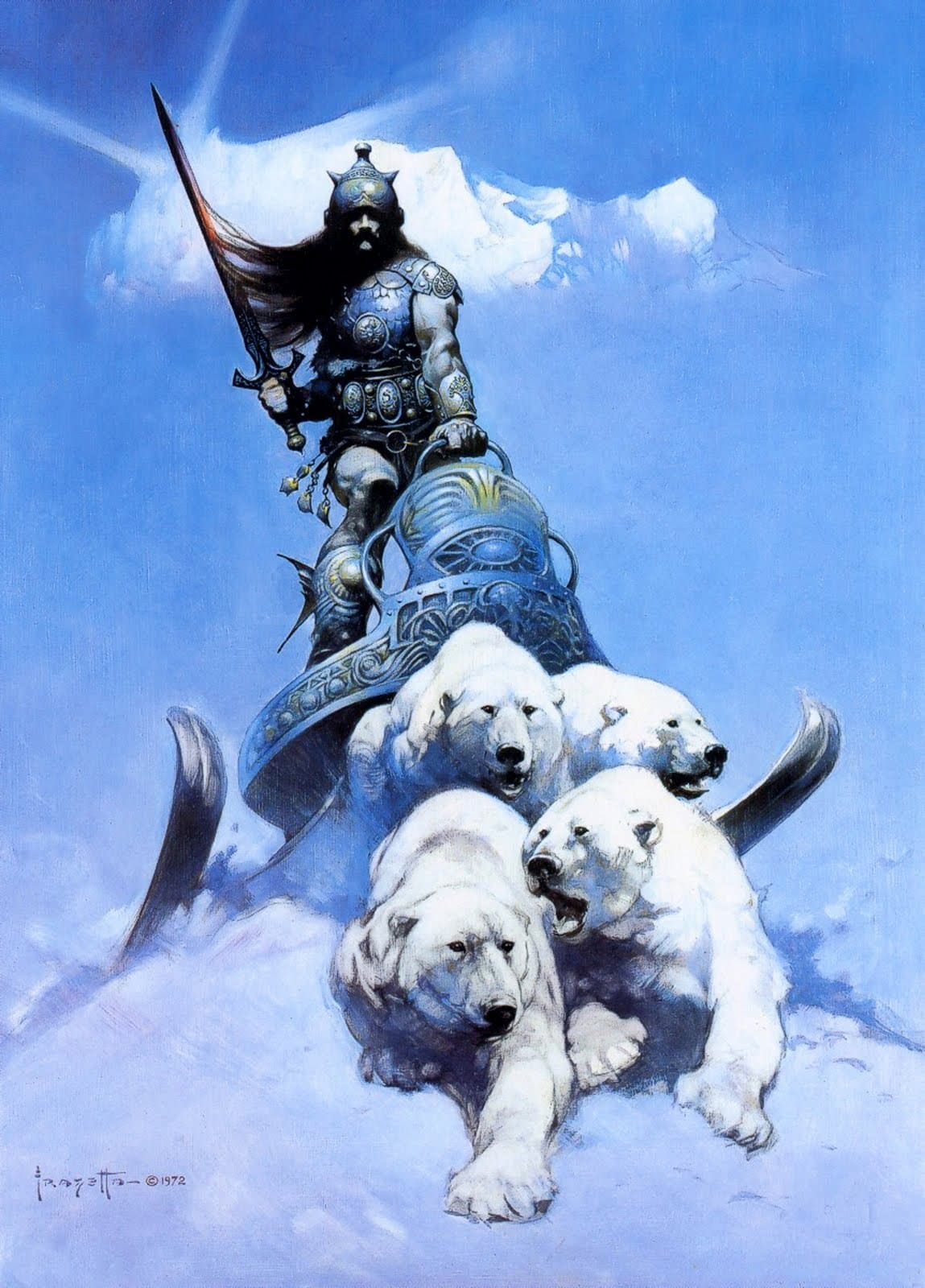
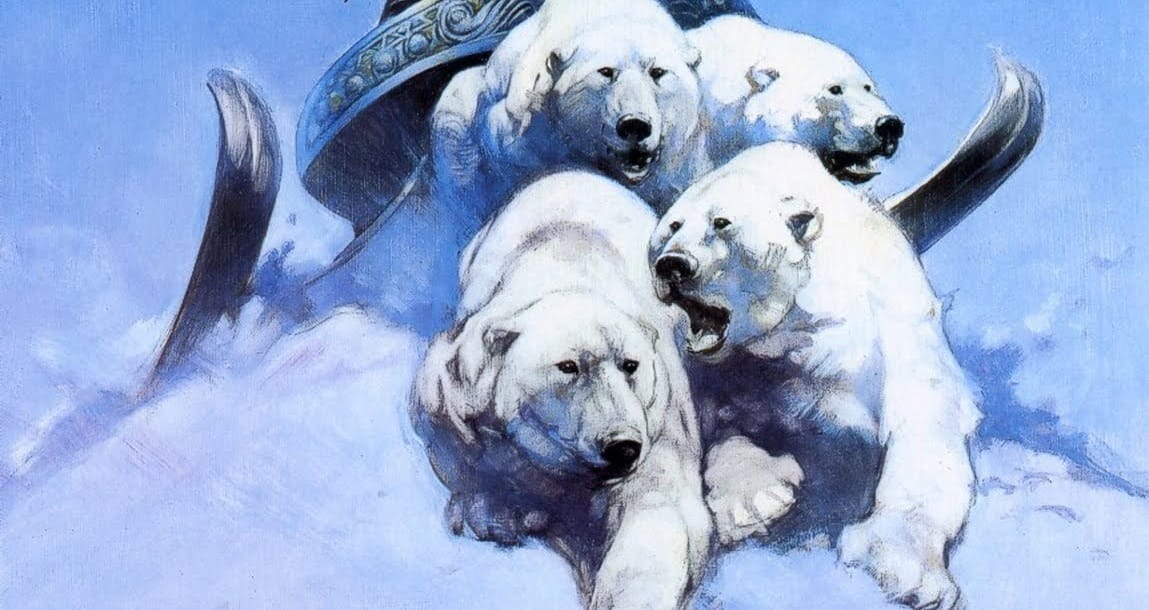
This illustration was created for a 1973 edition of Michael Moorcock’s 1970 novel Phoenix in Obsidian, which was also titled The Silver Warriors, and features the Count Urlik Skarsol as he leads a polar bear-drawn chariot across an icy wasteland.

Note the harnesses. Or the lack of them. To the dismay of any fantasy-loving engineers, Frazetta is entirely unconcerned with the nitty-gritty of his transport.
To be fair, anyone who picks the polar bear as their beast of burden is clearly more concerned about looking hardcore than they are about basic logic.
Count Skarsol and his unrealistic sleigh returned in the 1979 graphic novel The Swords Of Heaven, The Flowers Of Hell. Respected comics artist Howard Chaykin illustrated, crafting one full-page panel to replicate Skarsol’s vehicle of choice.
The harnesses make an appearance hooked to inner tube-sized bear collars, though now the rest of the sleigh is hidden in the snow.
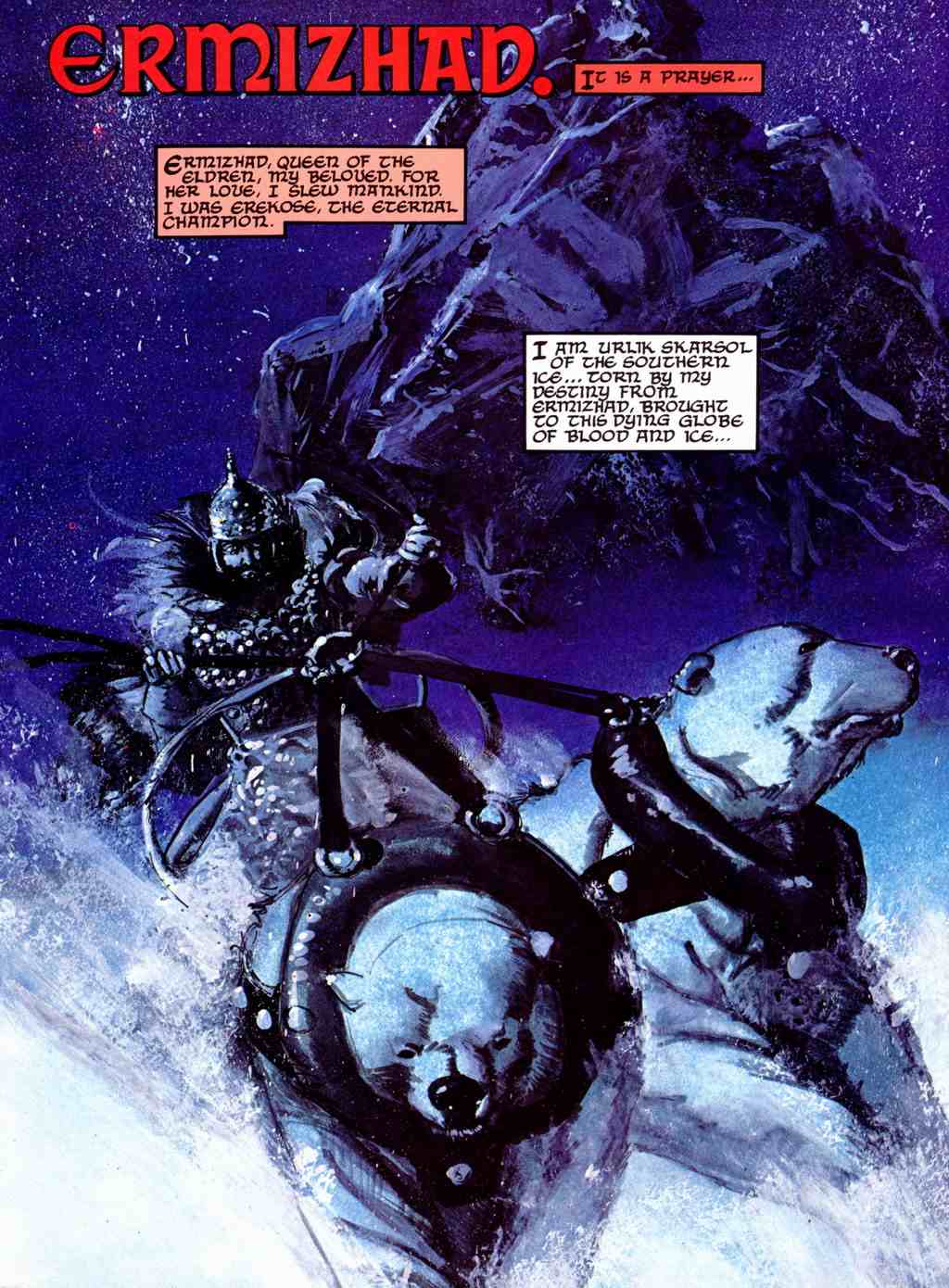
While Chaykin’s visual chops and design skill are well-documented in the pages of this novel—as well as in his zesty run of 1970s Star Wars comics—his sleigh isn’t the instant classic that Frazetta’s was.
As one blogger at the Ragged Claws Network puts it, “Chaykin’s attempt to supply Urlik Skarsol’s polar bear team with a semi-plausible harness […] actually diminishes rather than enhances Frazetta’s gloriously silly original concept by drawing undue attention to the mundane question of how, exactly, the fantasy hero’s cool mode of transportation could be made to work in the real world and whether Chaykin’s design is, in fact, a viable solution.”
Polar bears have been ridden since, as the His Dark Materials trilogy ensured, but I haven’t seen any bear-drawn sleighs dashing through the snow, polar or otherwise (Those who want to prove me wrong may form an orderly line in the comments).
If there’s a moral to be taken from this incredibly specific visual history, it’s to embrace the idiosyncrasies of crazy fantasy art. There’s no need to bother harnessing your bear steeds when a simple dead-eyed stare and a menacing grip on your bloodied sword will do the trick.
As Frazetta himself put it in a June 1977 Esquire interview: “Harness? HA! Who needs a harness? This is emotion; those bears are coming for you, you don’t have time to see a harness. I paint feelings. I of course thought of the harness, but it would make a ridiculous clutter.”
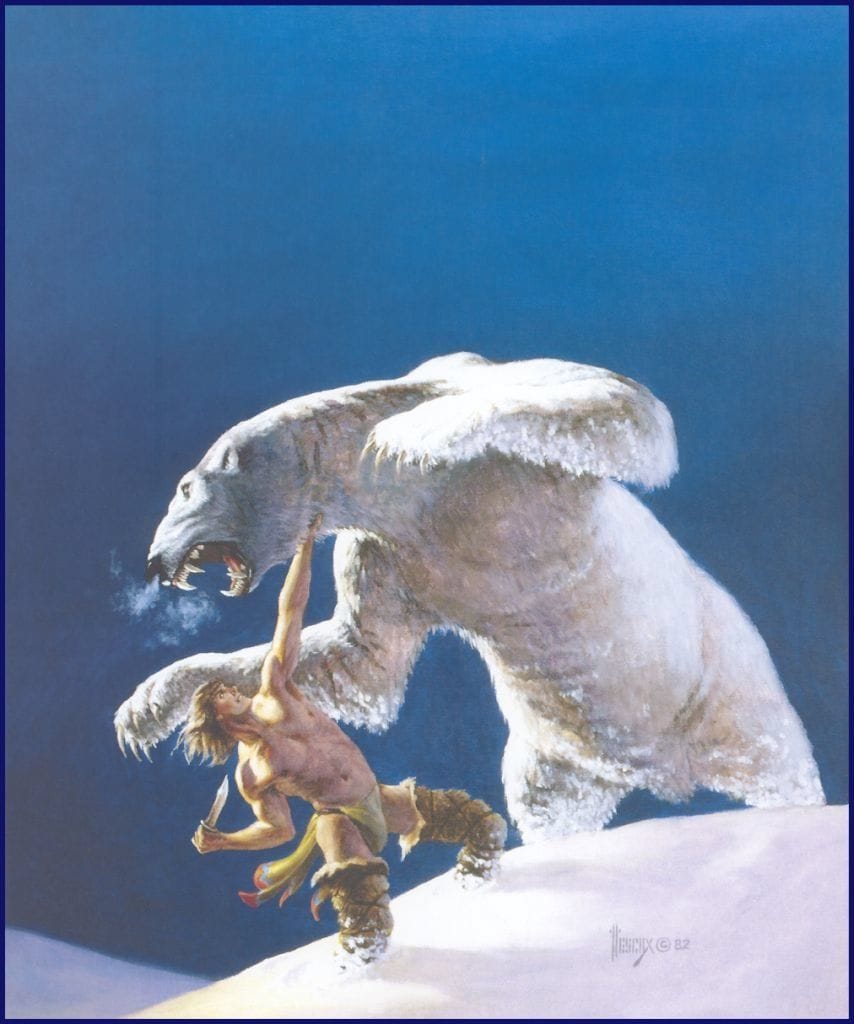
Wow, not many images, huh? Here, let's pad this out with a couple more polar bears from sci-fi and fantasy art, starting with a little hand-to-hand combat in this 1982 Richard Hescox illustration.
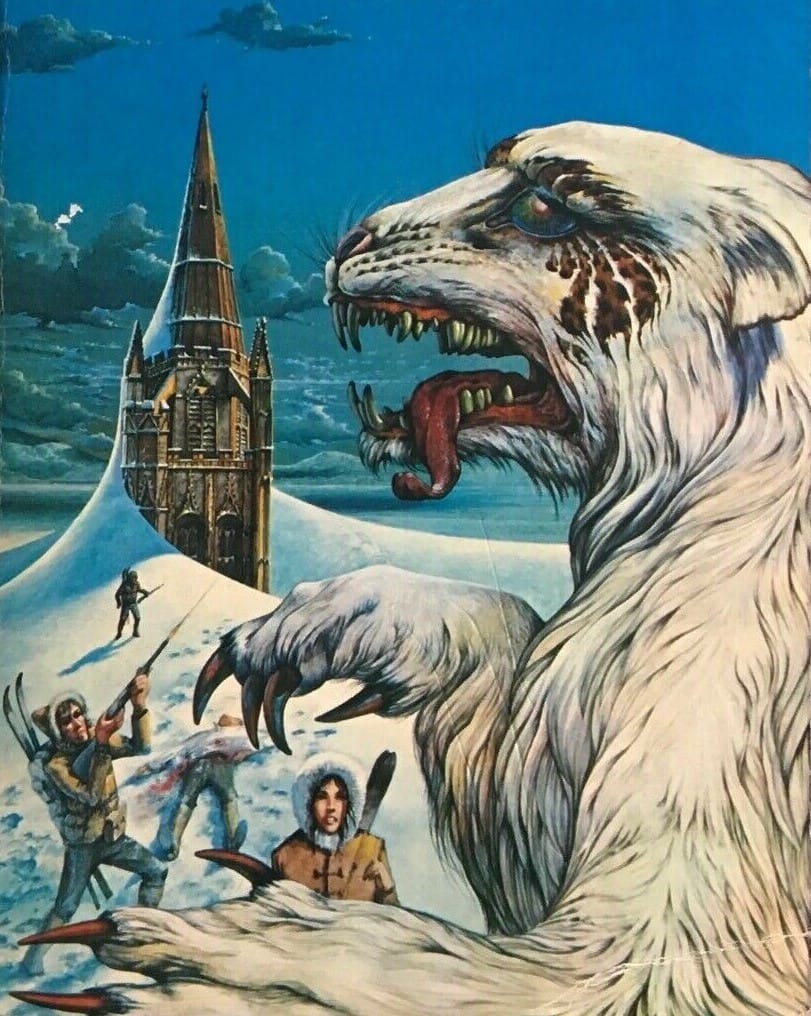
Patrick Woodroffe has a haunting 1977 cover to Michael G. Coney’s Winter’s Children.
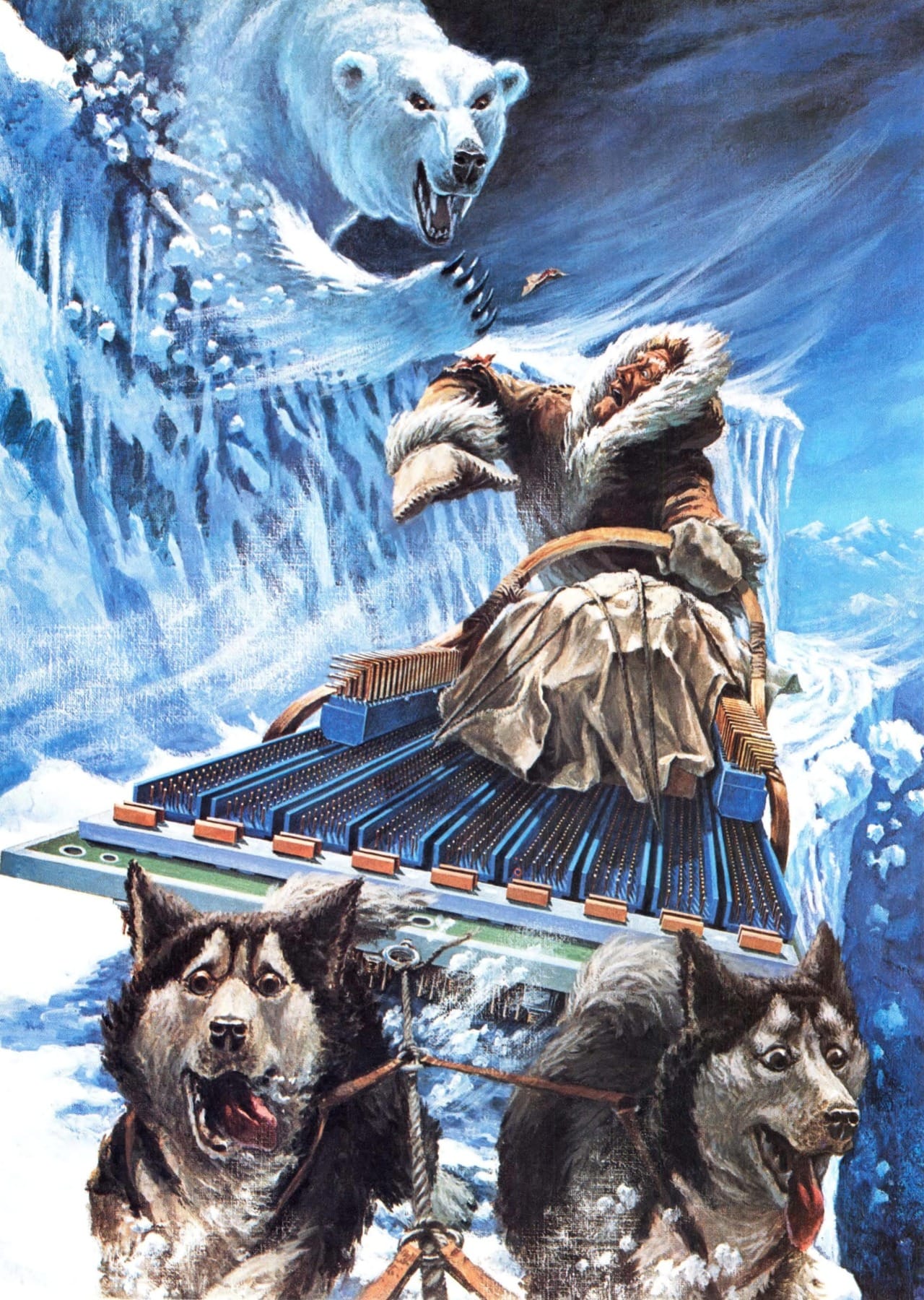
This uncredited computer ad ran in Electronic Design's December 13, 1984 issue.
The caption that accompanied it claims that "there's always a way out with the High Density Plus Backplane System."
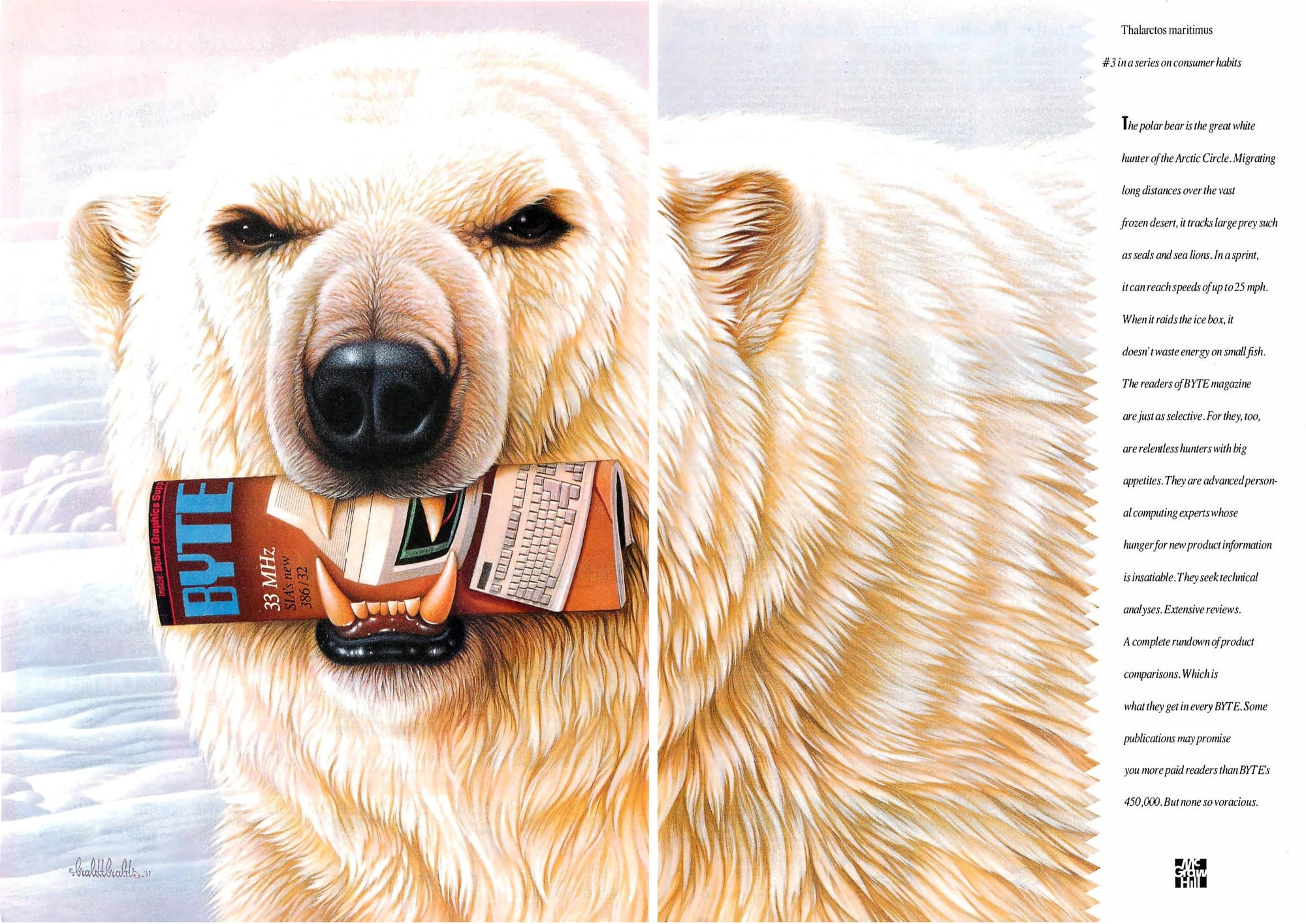
Here's a 1982 Byte magazine ad, done by Braldt Bralds, which ran in the magazine's December 1989 issue. Why? Because BYTE magazine readers are "relentless hunters with big appetites."
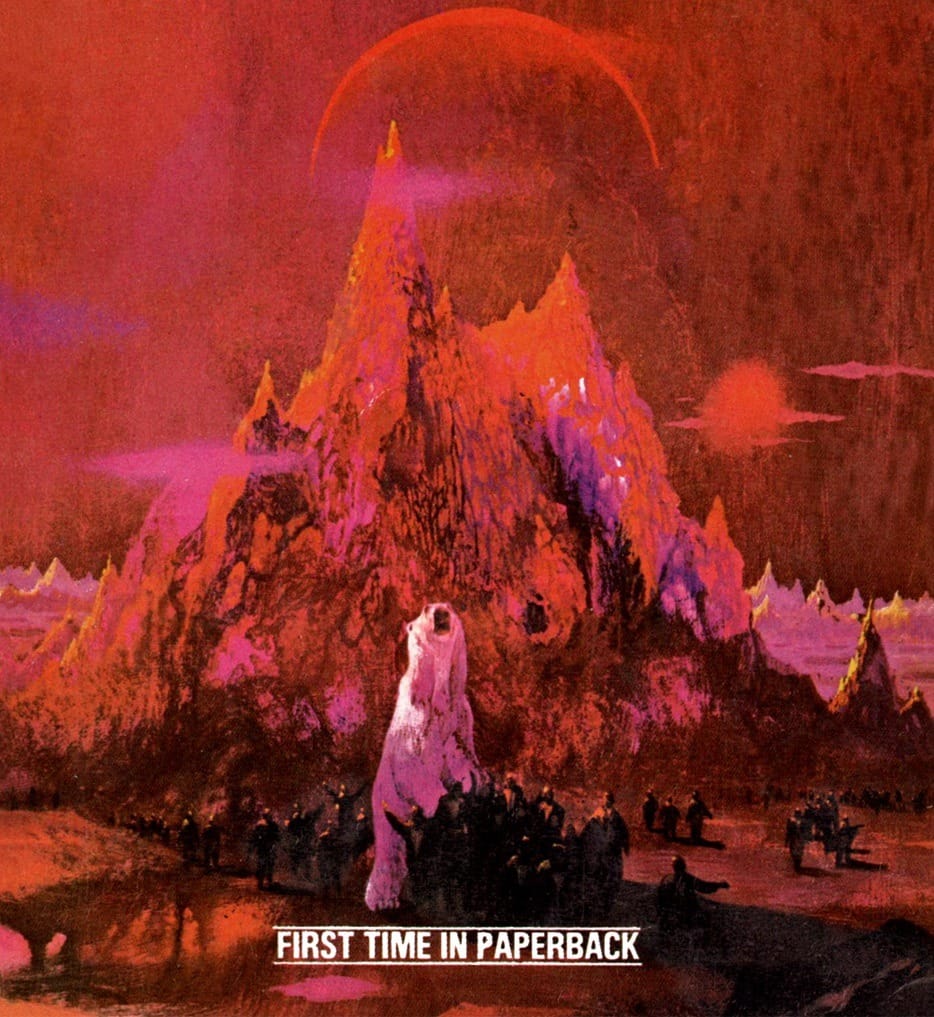
Finally, a telepathic polar bear is attacked by angry mutants in this 1975 Paul Lehr cover art for Dean Koontz’s Nightmare Journey.
Last year, I put together a fun post about the history of the year 2025 in science fiction art.
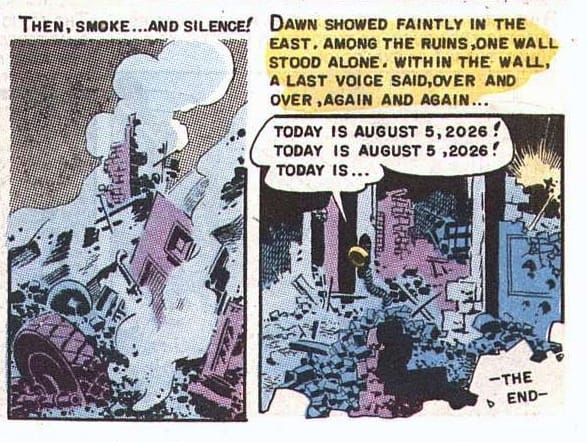
For 2026, pickings were much more slim. Here, I present the only image I could scrape up that featured the year 2026 – thanks to tumblr user cirnineball for pointing me to it.
Spoilers for the end of the 1953 EC Comics adaptation of Ray Bradbury's "There Will Come Soft Rains," first published in Weird Fantasy #17.
Another (uncredited) comic book panel is also relevant to this year, if you can do a little math:
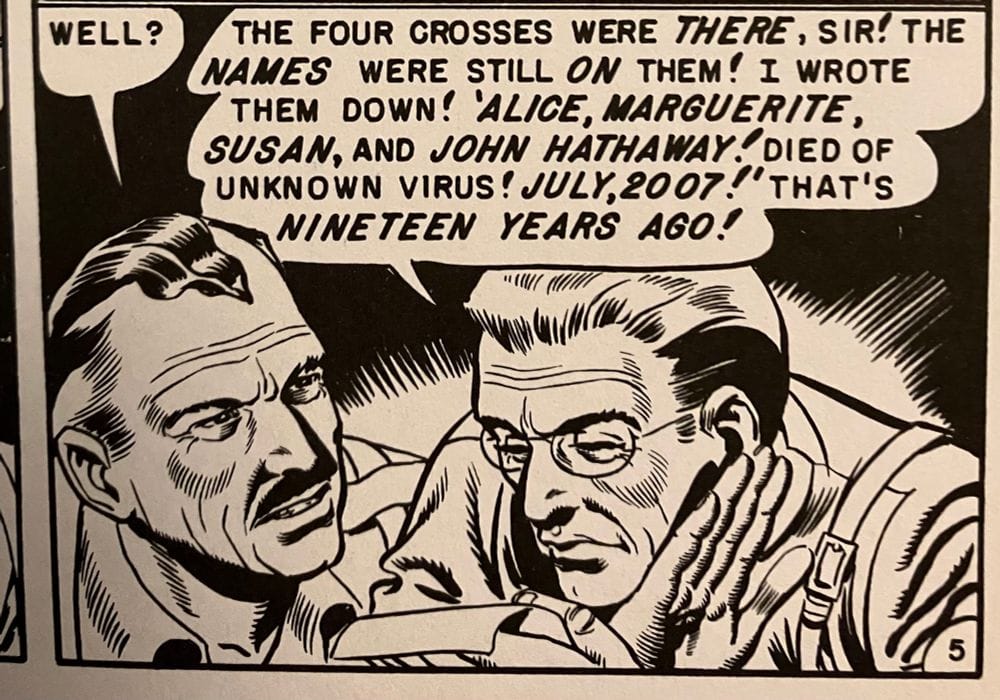
Plus, it'll be the tenth anniversary of this prediction!

Cool Links
How One Guy Got Legal Permission to Mash Up 'Calvin & Hobbes' with 'Dune'
Here's another repost originally written in my Barnes and Noble blogging days. Bill Watterson famously avoids licensing Calvin & Hobbes, but he did approve this Dune webcomic mashup. Everyone loves hearing what Watterson is up to, so this was the most popular post on the blog back in 2016.
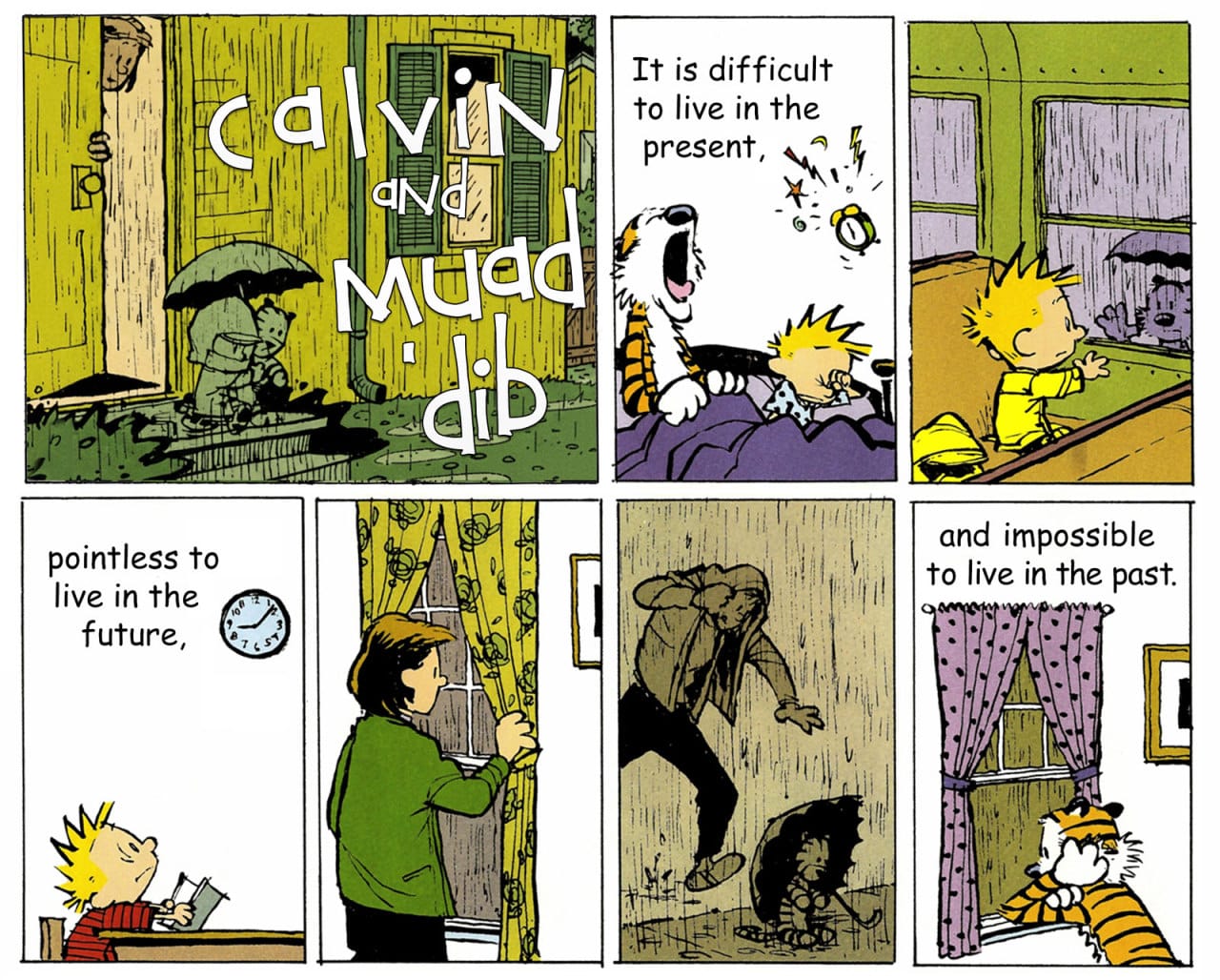
The Calvin & Muad'Dib project is still going! Here's a recent one:
10 of the Greatest Murder Mysteries Ever - BBC
This multi-media list includes a couple films alongside novels and short stories. It comes recommended as "surprisingly good" by golden-age mystery expert Caroline Crampton, who would know.
Music rec: Christmas Carols, but Dungeon Synth [No AI]
Next Time: Ray Guns