How One Guy Got Legal Permission to Mash Up 'Calvin & Hobbes' with 'Dune'
Hobbes is the mind-killer

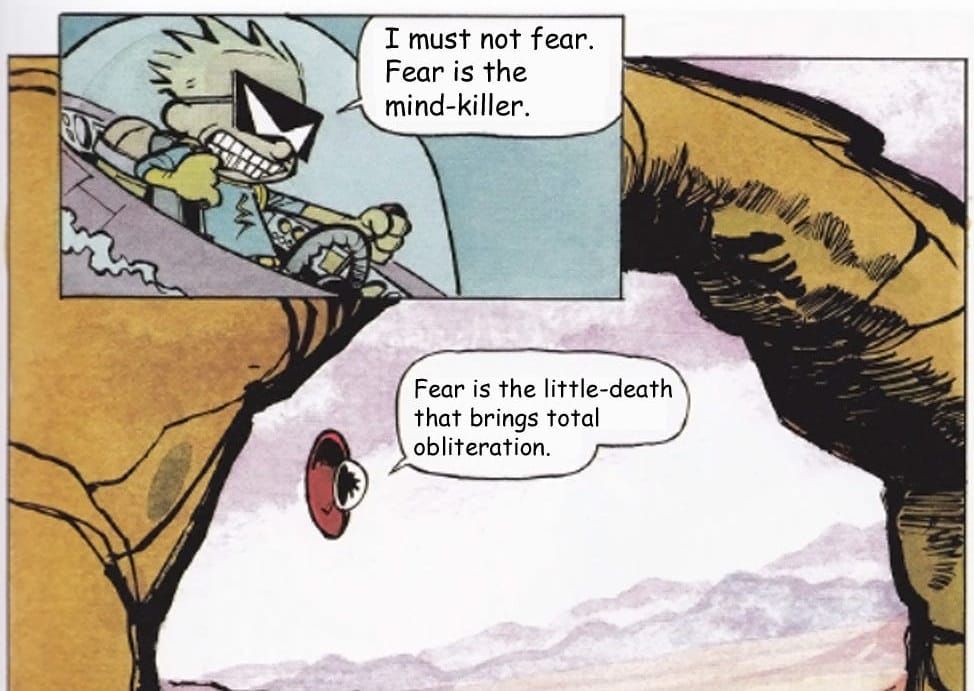
As the architect of a retro sci-fi art newsletter, I’m obligated to do a Dune-themed issue now that the latest film adaptation has debuted.
I could discuss the all-time best Dune artist, John Schoenherr. Schoenherr was the first to ever illustrate Dune, starting with the cover and interior art for the December 1963 issue of Analog Science Fact and Science Fiction, which launched a three-issue serialization of Frank Herbert’s short story “Dune World.”
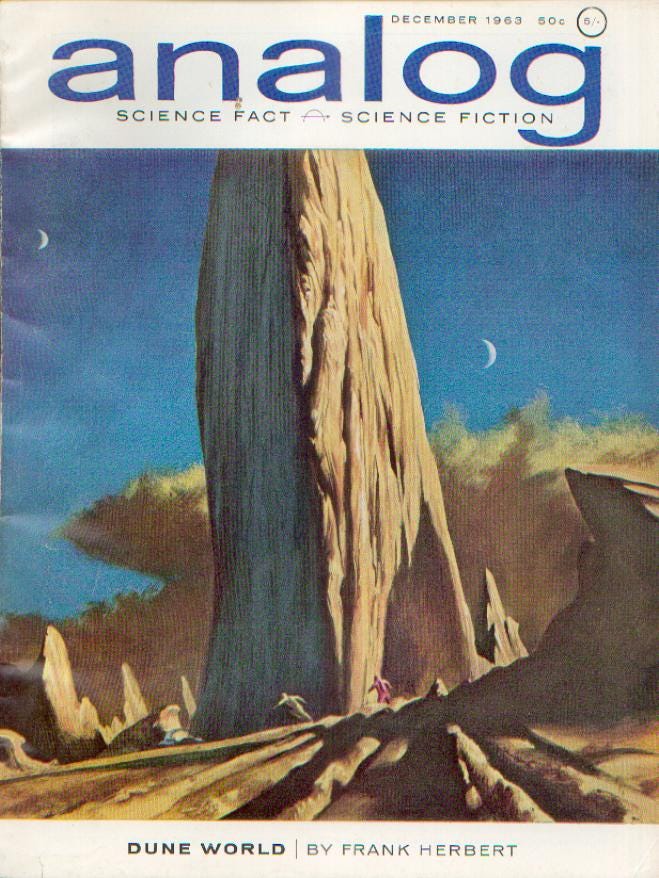
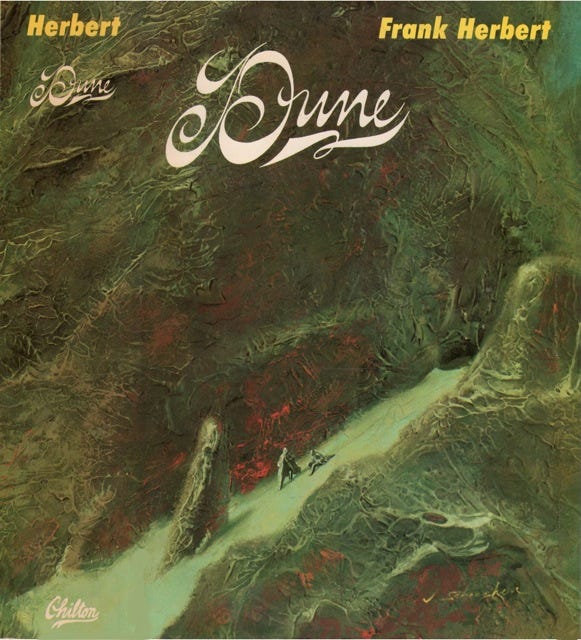
Schoenherr’s art always has amazing compositions, and frequently uses muted colors that bring a grounded realism to his scenes, in contrast to the bright publisher-mandated look of most sci-fi cover artists. Herbert loved it, which is probably why Schoenherr kept returning to Dune-related illustrations for decades, including the very first cover for the novel Dune, in 1965.
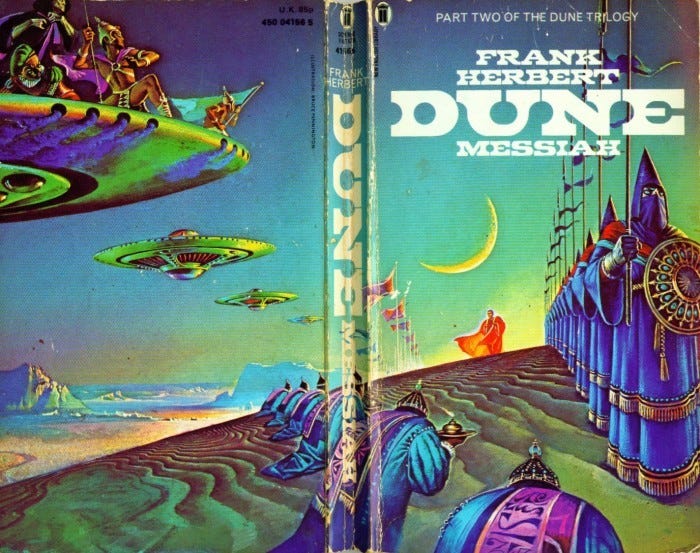
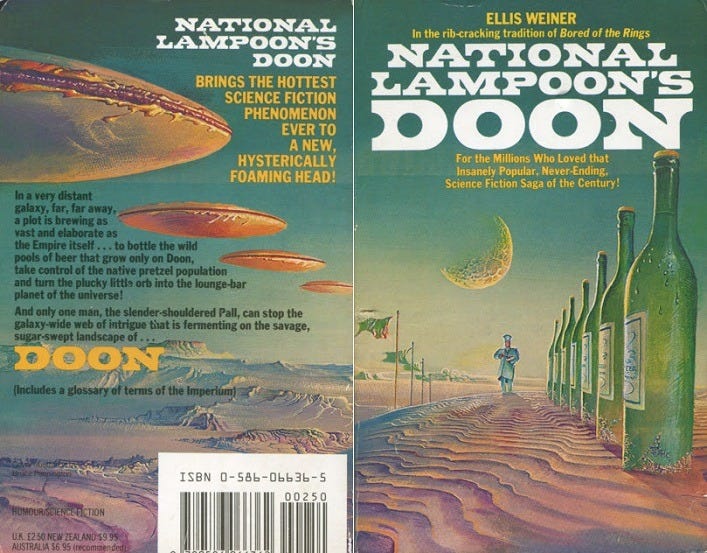
Bruce Pennington also did some stone-cold classic Dune covers, and I’m always amused that he was game to parody one of his own covers for the National Lampoon Dune spoof.
I could also talk about the never-completed Dune film adaptation by director Alejandro Jodorowsky — sci-fi nerds basically have a moth/lamp relationship with the 2013 documentary about it.
But others have written much more comprehensively about it than I could. Check out this Boing Boing article if you want the overview. The concept artists were a rogue’s gallery:
“Fanboys and girls would have drooled over the visual team. A then-obscure H.R. Giger designed the creepier Harkonnen settings. Dan O'Bannon, known at the time for his work with John Carpenter on the sci-fi film Dark Star, was brought on as the special effects wiz. (Jodorowsky rejected Douglas Trumbull because he found him too full of himself.) British artist Chris Foss designed the space craft. And Jean Giraud, aka French comic book artist Moebius, brought Jodorowsky's dreams to life in some 3,000 storyboard drawings that perfectly capture a character or scene with a few quick pencil marks on the page.”
A truly bizarre collection of actors would have been in it, including Mick Jagger, Salvador Dali, and Orson Welles, the latter of whom was “lured by promises of on-set French bistro food,” which is further evidence that he was the coolest person ever.
Instead of talking about all that, I’m covering what I personally find to be the most fascinating Dune-related story: The time one mashup artist on Tumblr got legal permission from Bill Watterson to do a bunch of Calvin & Hobbes/Dune mashups.
I first brought this story to public attention back in 2016 in a post on the Barnes and Noble Sci-Fi and Fantasy blog, and then right after I published it, the guy stopped updating his site for four years. He’s back at it with the release of the new movie, though!
Here’s my revisited article, with some additional comics to illustrate it.
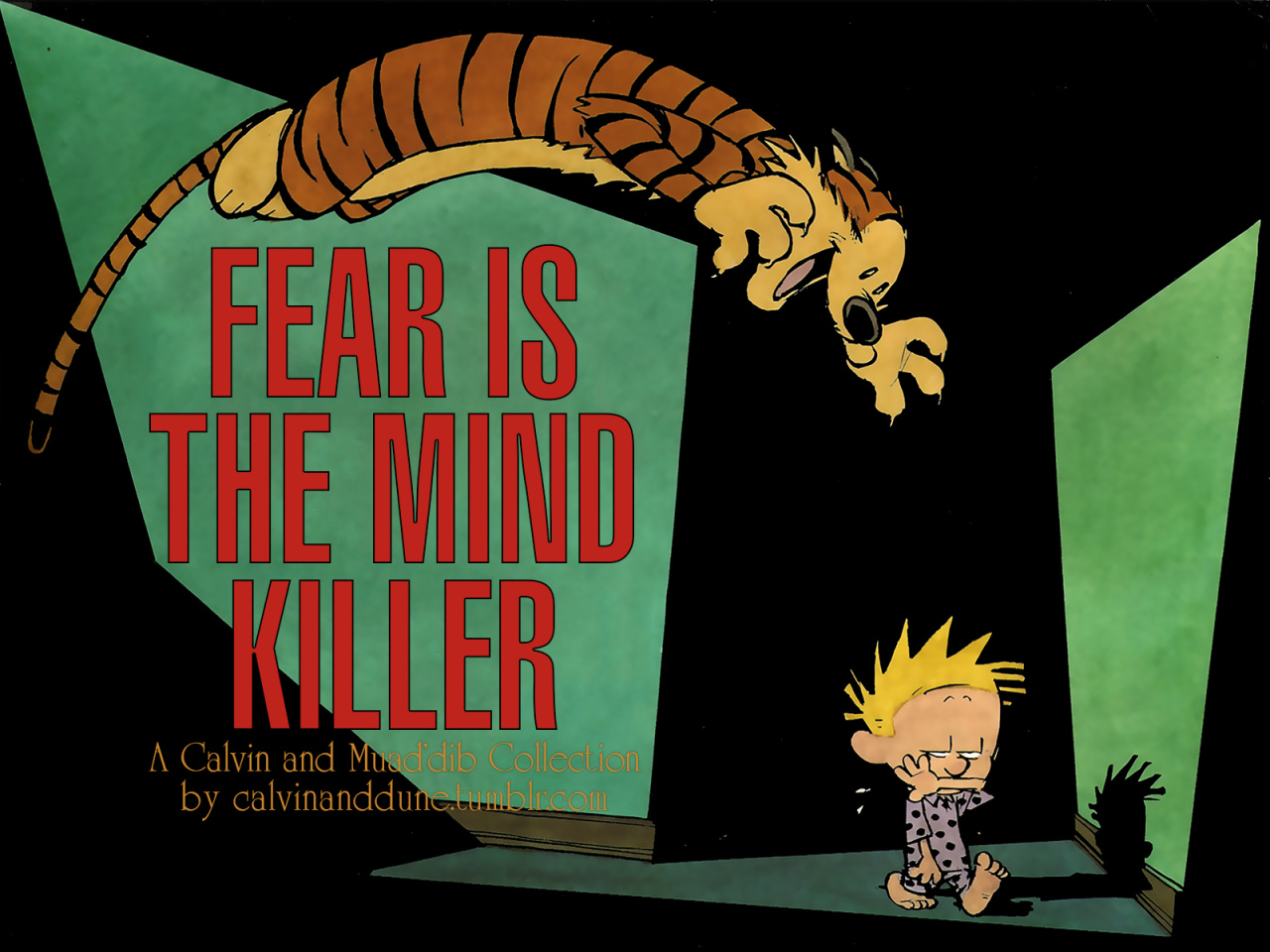
Bill Watterson, creator of the beloved comic strip Calvin & Hobbes, is notoriously private. Since he retired in 1995, he has given so few interviews that his latest one, for Mental Floss in 2013, shocked even that magazine’s editor in chief. Few writers mention Watterson’s name without the adjective “reclusive” immediately prior. When he collaborated with Stephan Pastis for a week of Pearls Before Swine, Pastis dubbed him the “Bigfoot of cartooning.” On top of all that, Watterson hates merchandizing: he’s considered licensing his creation, but says he couldn’t find a product that didn’t “violate the spirit of the strip” or “contradict its message.”
So when I realized that a mash-up artist who blends Calvin & Hobbes with the sci-fi classic Dune had gotten explicit permission to reimagine the Calvin & Hobbes legacy, I knew I had to learn more.
The creator, a graduate student in the UK, goes merely by Joe—presumably keeping his cartooning side-hobby separate from his academic career. His first began his project in early 2012, sharing strips with his friends for fun before starting up a Tumblr account, Calvin & Muad’Dib, later in the year.
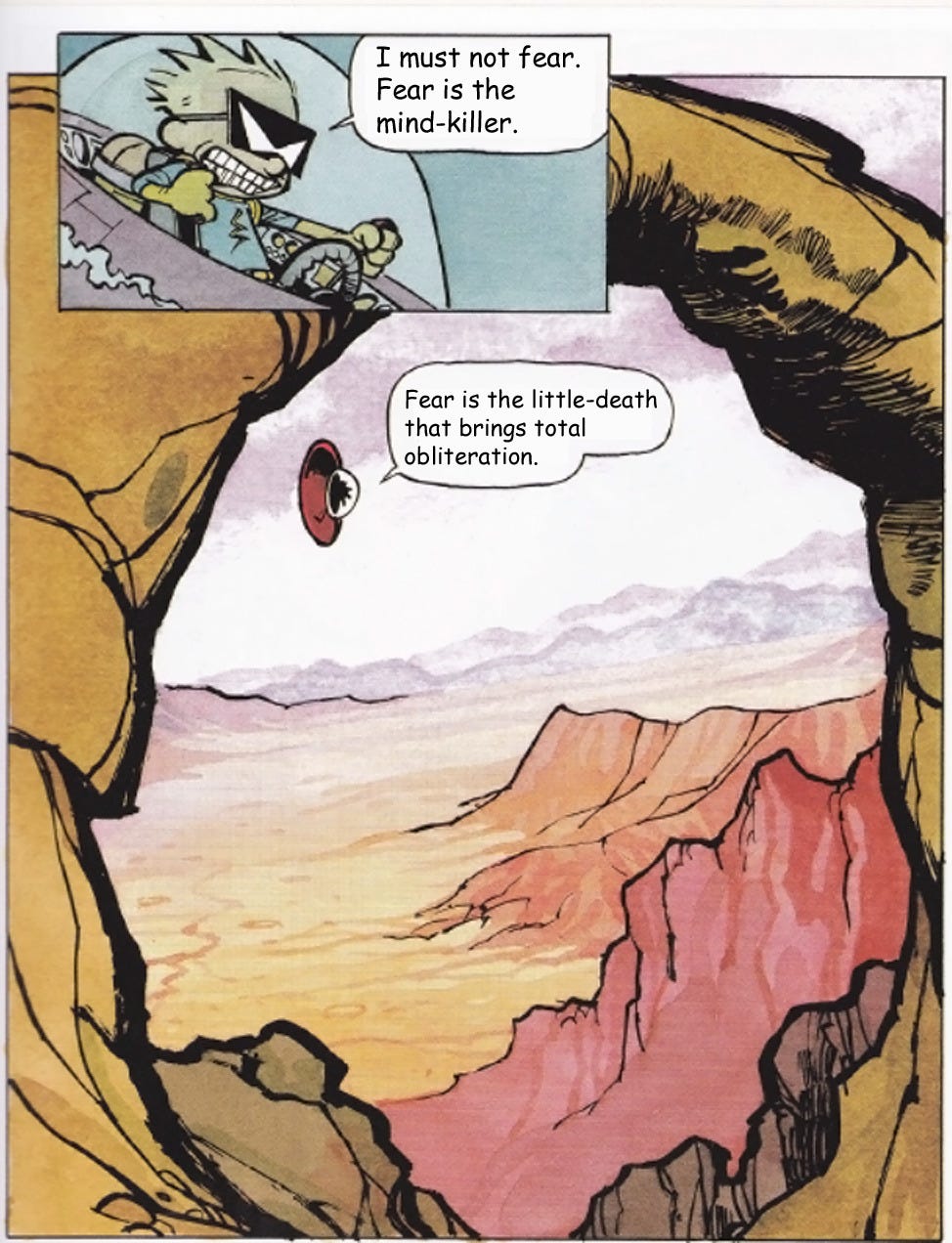
Here at Barnes and Noble, we’re fans of Dune—we ran an entire series on it for its 50th anniversary last year—and even though Dune and Calvin & Hobbes are clearly different, they share several traits. They’re both deeply philosophical, concerned with issues of humanity, nature, and life. And they both have an distinct, unmistakable style: Dune is solemn and unflinching, while Calvin & Hobbes undercuts its nihilism and loneliness with a suburban setting, a six-year-old’s imagination, and frequent punchlines.
When a grandiloquent phrase from Dune is paired with Watterson’s whimsical art, there is no punchline. The result feels almost like an anti-joke, a la the similarly tweaked comic Garfield Minus Garfield; the text rarely fails to breathe new life into the art.
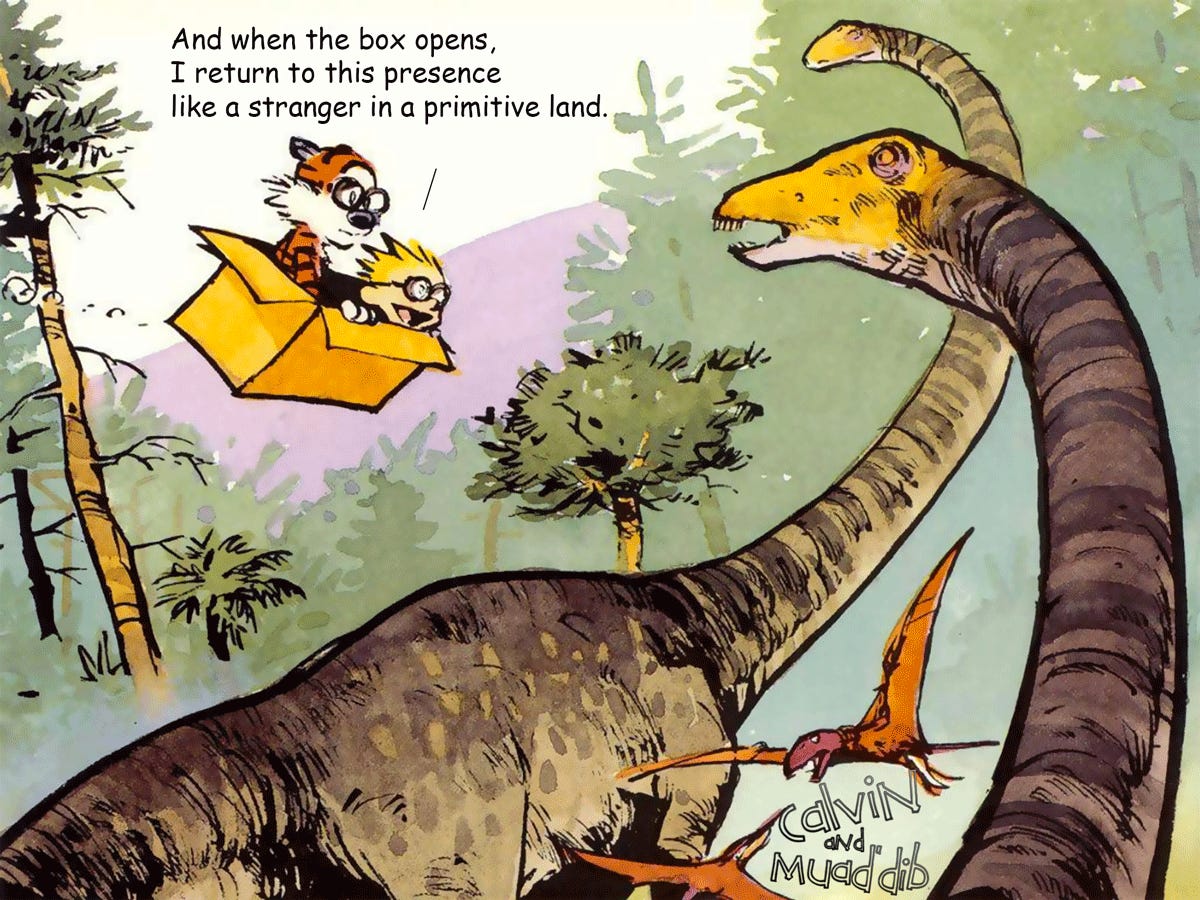
The connection between the two might be hilariously literal, as when Calvin says that “when the box opens, I return to this presence like a stranger in a primitive land” while flying in an actual cardboard box over a prehistoric jungle; It might be a sharp contrast, as when Calvin claims to have “achieved everything” while staring at a model plane he has just destroyed; or the connection may simply be poignant.
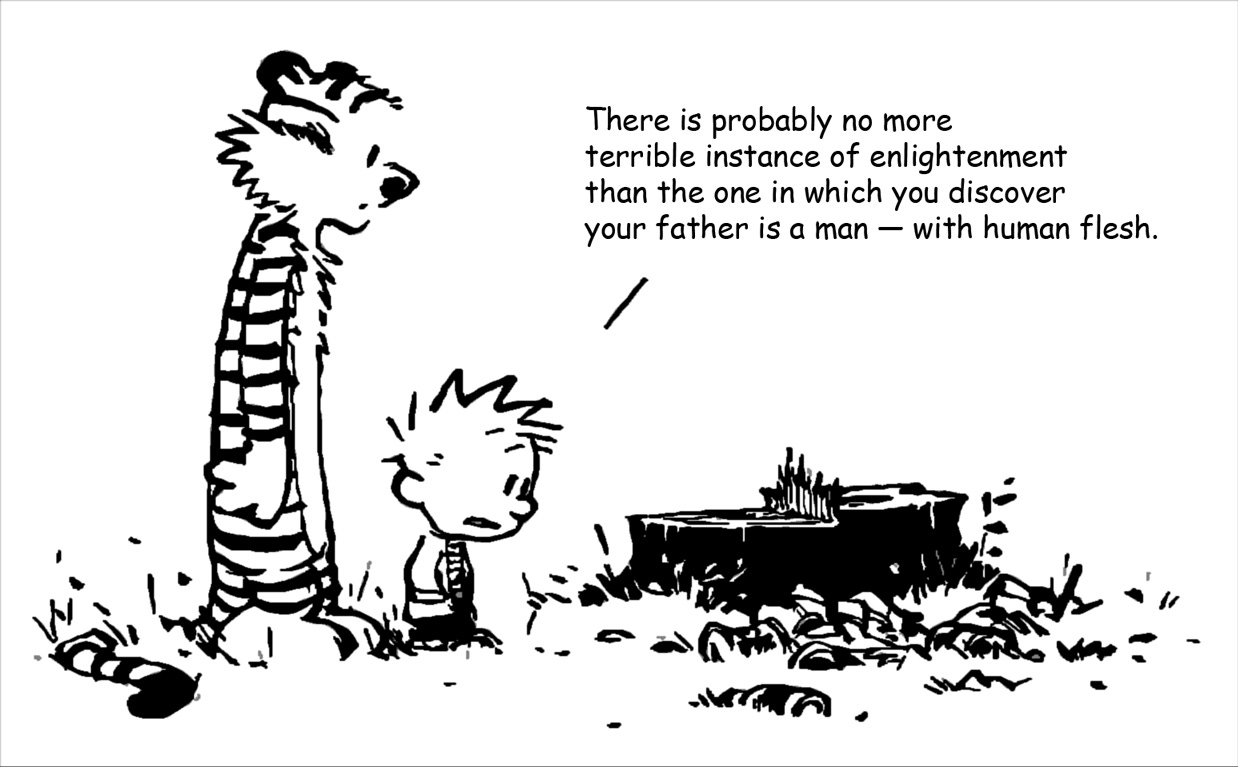
“I’ve read all the content published under both works of art, but like any fan of a great discontinued series, I crave more,” Joe explained to me. “I continually search for ways to continue enjoying them and one result of that searching was the creation of my Calvin & Muad’Dib comics—or Calvin & Dune as it’s more often called. I can tell you that my enjoyment of the Dune series has never been higher: hours and hours of flipping through the Dune books looking for suitable quotes allows me to experience Frank Herbert’s universe in a novel way. Similarly, having a reason to look back through the Calvin & Hobbes strips gives me a good chuckle or two at Calvin’s antics as I look for good panels to use for my chosen quote.”
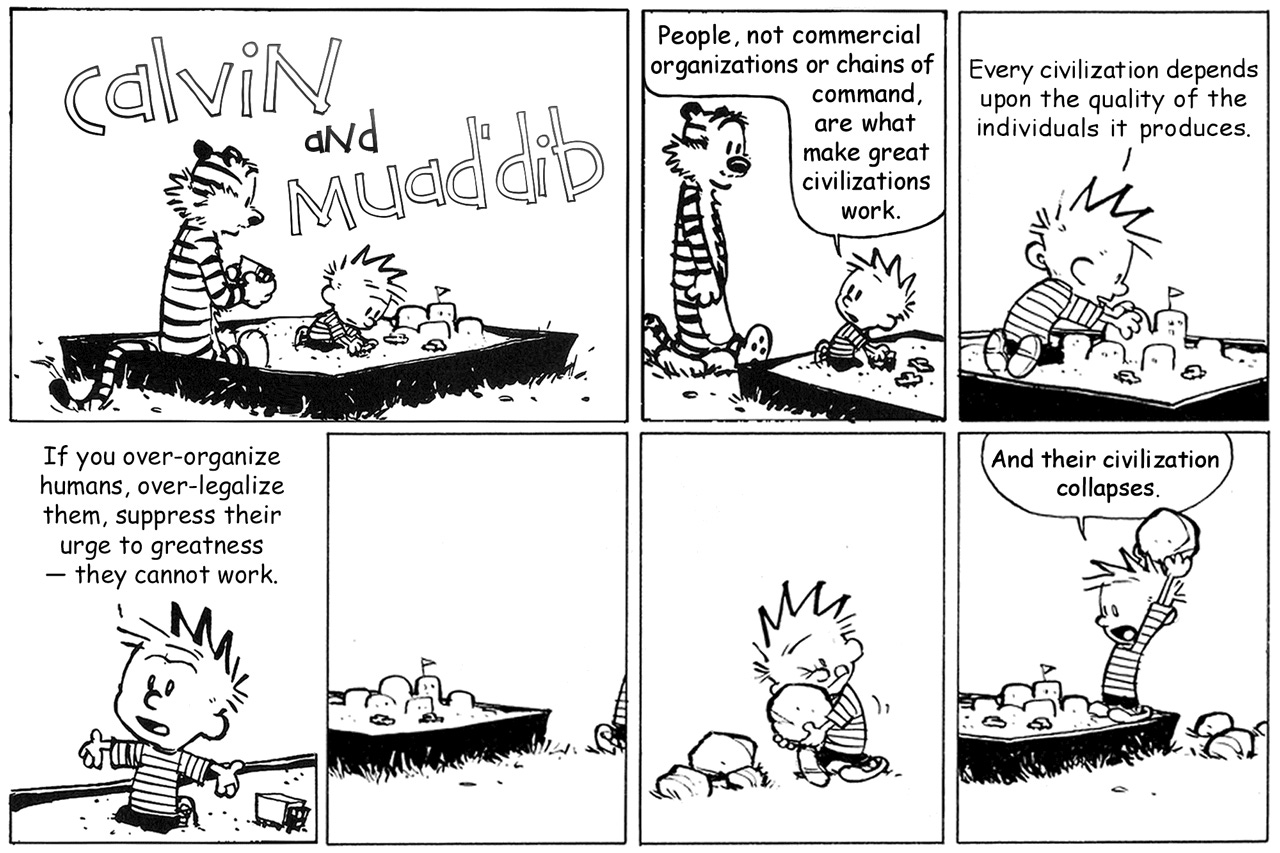
Joe’s method of blending the creations reveals how seriously he takes a project some might shrug off as an exercise in copying and pasting. First, he finds an enjoyable quote from one of Frank Herbert’s six Dune books. He then turns to Calvin & Hobbes. For many comics, he combines panels from multiple strips. The result is an often sober morality play, as enacted with characteristic Watterson goofiness.
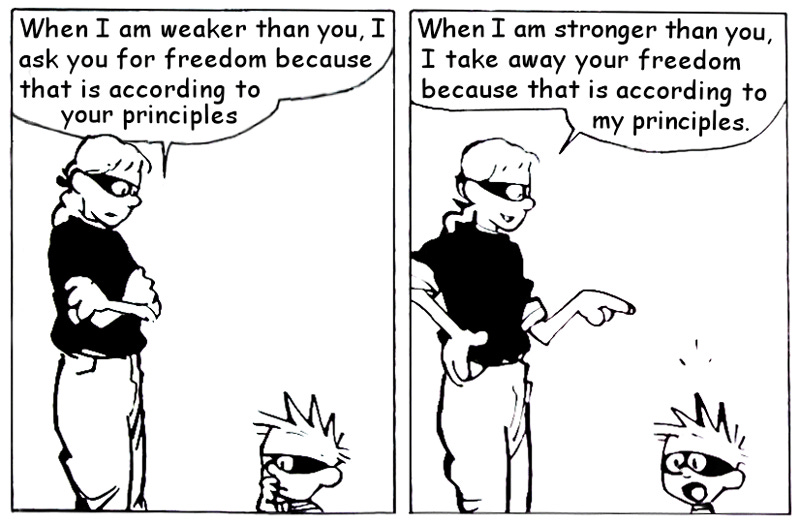
Calvin & Muad’Dib picked up international attention after a shout-out from io9 in September of 2014, and this attention led to an immediate DMC takedown. But unlike most bloggers, Joe lawyered up.
“I did this because it was clear that I wasn’t profiting in any way from Calvin and Hobbes,” Joe says. “There were no advertisements on my blog, nor did I sell or intend to sell any merchandise or even ask for donations. I felt I had a solid ground to defend myself, and I also happen to believe that most DMCA takedowns are inherently unjust due to the ‘guilty until proven innocent’ nature of DMCA.”
Joe entered into talks with the lawyers of Calvin & Hobbes’ publisher. Though he never spoke directly to Watterson, he did succeed in his goal: Calvin & Muad’Dib went back up six months later, in February of 2014.
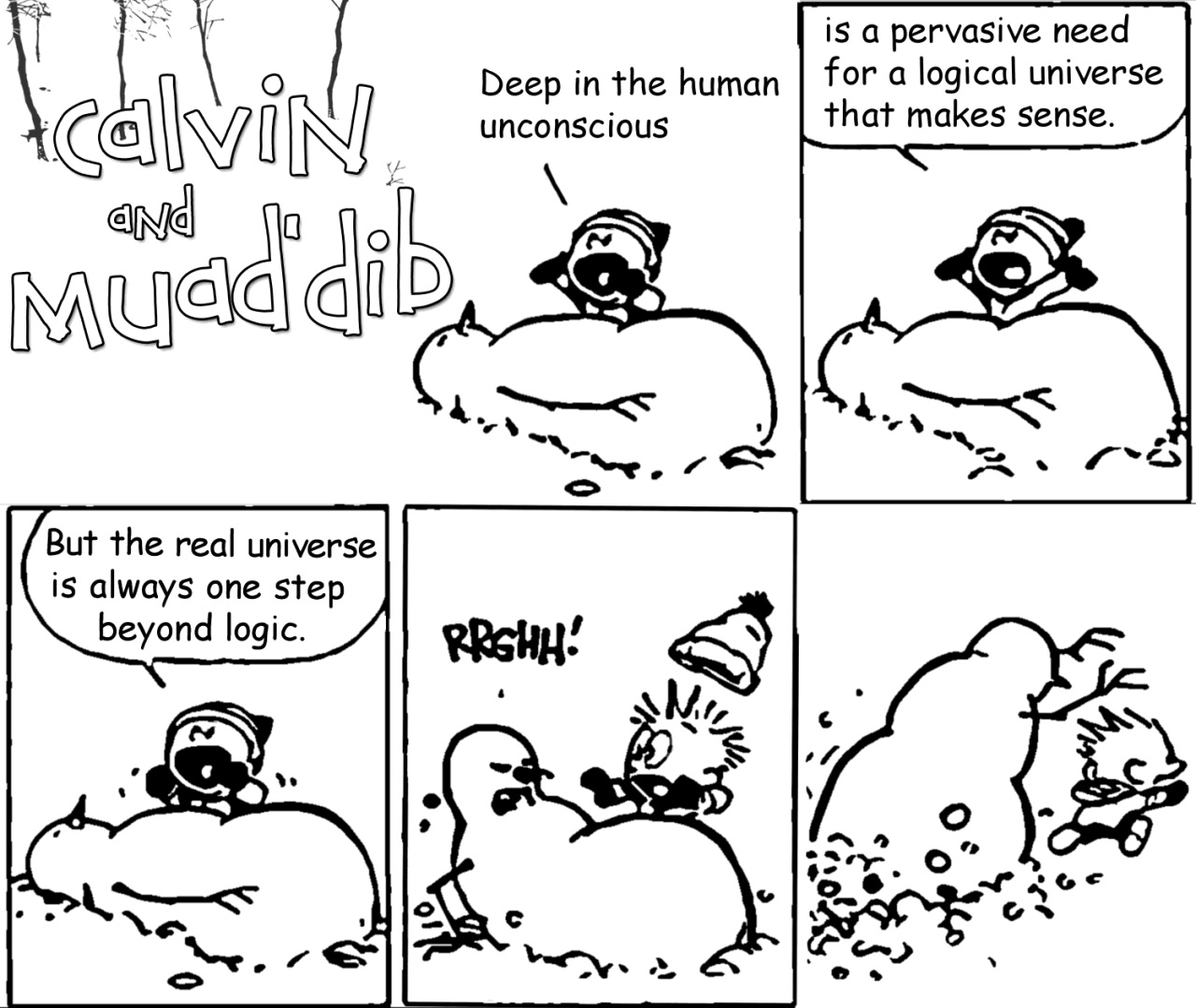
“We worked out a licensing deal where I could continue to make comics in the way I intended, and the Calvin & Hobbes lawyers could be ensured that abuse of Bill Watterson’s original works would not occur,” Joe says of the discussion. Every comic on his site now comes with a reminder that the mash-up is legit: “Calvin and Hobbes: © and ™ Bill Watterson, used with permission.”
Joe also shed some light on the differences between the two series: “I would actually say there’s few connections or similarities between them due to their different approaches. The philosophy in Calvin & Hobbes is a lot more down-to-earth compared to Dune, and deals more with relatable issues, such as cultural commentaries of commercialization, personal happiness, and priorities in life. Dune focuses a lot more on the big picture stuff like society, cultural movements, and religion. So although they are quite different I believe they can be complimentary, which is a point I try to tease out in my comics. The biggest similarity I’ve found between the two works is that both Watterson and Herbert share a similar message they try to communicate: live life to its full potential.”
Updates can be slow now that low-hanging fruit like “fear is the mind-killer” is all used up, but fans of sci-fi and webcomics shouldn’t kill their own minds about Calvin & Muad’Dib’s future: Joe plans to continue indefinitely, cultivating his tiny corner of internet weirdness to its full potential.
You can sign up for this newletter here