Skull Architecture
Buildings, landmarks, and planets built from or shaped like skulls, bones, and skeletons.

Happy Halloween! Last year I did just one blog post for the holiday, covering the most Halloweeny sci-fi art, but this time I've already covered space vampires.
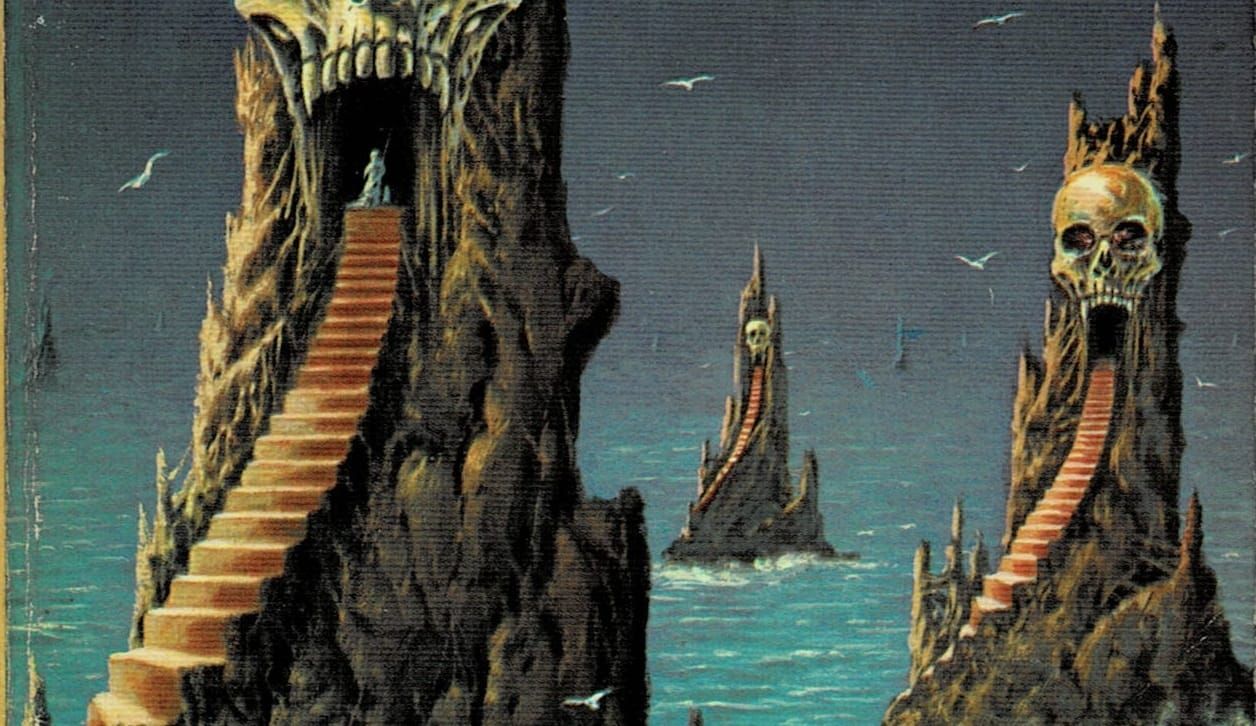
Here's my attempt to top that with one of the most overtly horror-themed topics: Buildings, landmarks, and planets that are built out of (or shaped to resemble) skulls, bones, and skeletons.
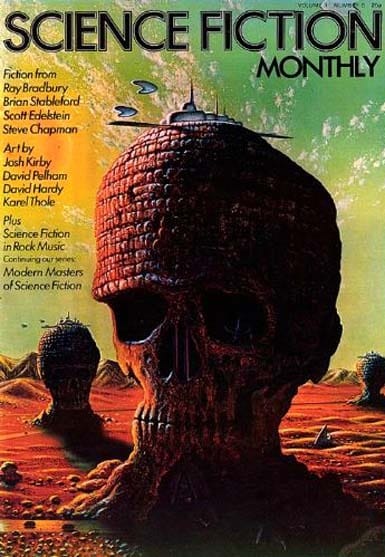
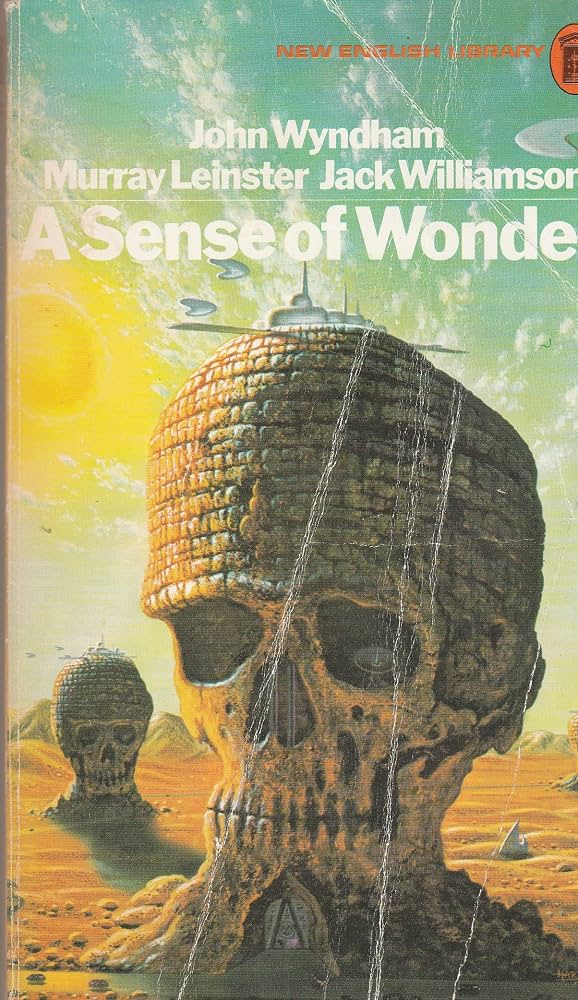
David A Hardy's August 1974 cover for Science Fiction Monthly is a great example of a skull building. Here it is, along with the same illustration on a 1974 anthology cover that lightens it up so the details are more clear – a radar dish in the left eyesocket, bars shoring up the nose cavity, and a triangular doorway at the bottom.
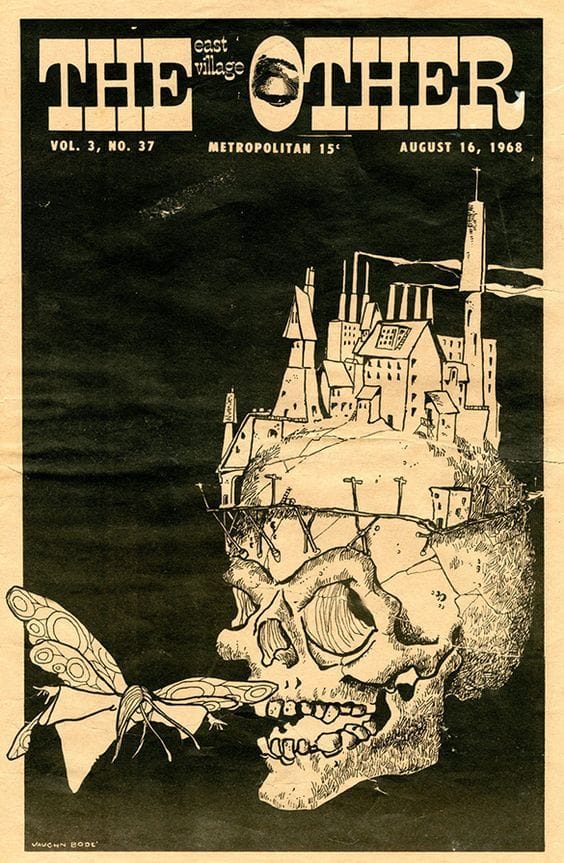
You can also build directly on top of a skull, as in this cover by Vaughn Bode for the August 16, 1968 issue of The Other, which appears to be an old East Village alt weekly.
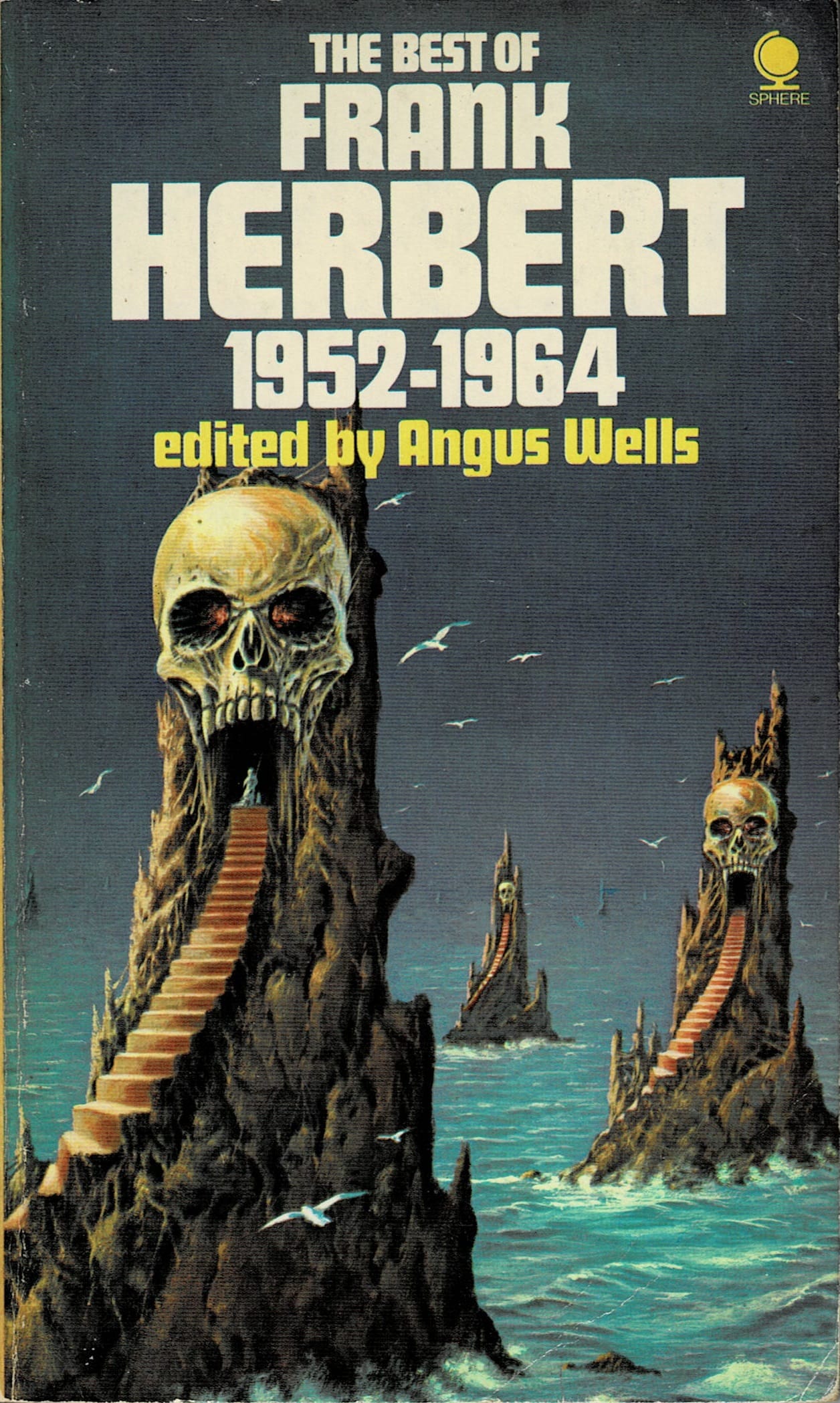
This is the perfect opportunity to, once again, show you all one of my favorite uncredited covers: This 1976 cover for The Best of Frank Herbert 1952-1964. It's probably by Ray Feibush, a noted skull enthusiast.
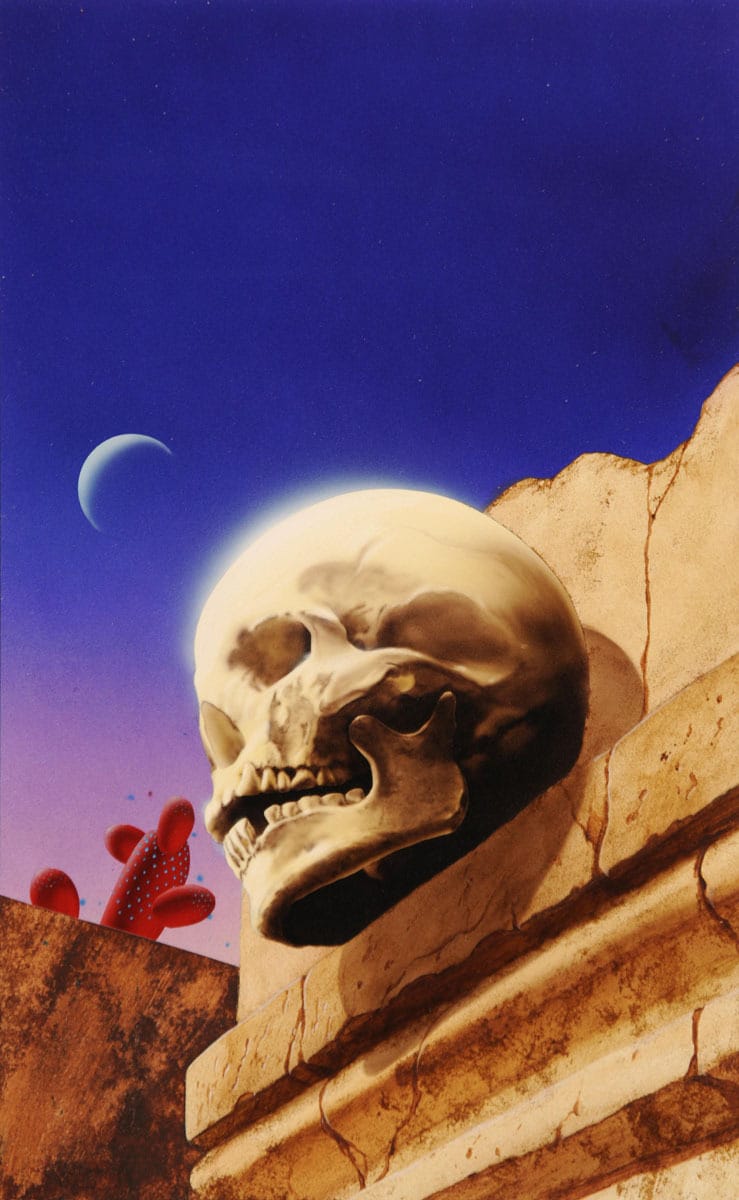
Chris Moore's 1986 cover to Clifford D. Simak's Shakespeare's Planet puts a shimmering skull front and center as gargoyle-style building accent. Or maybe it's just resting on the edge.
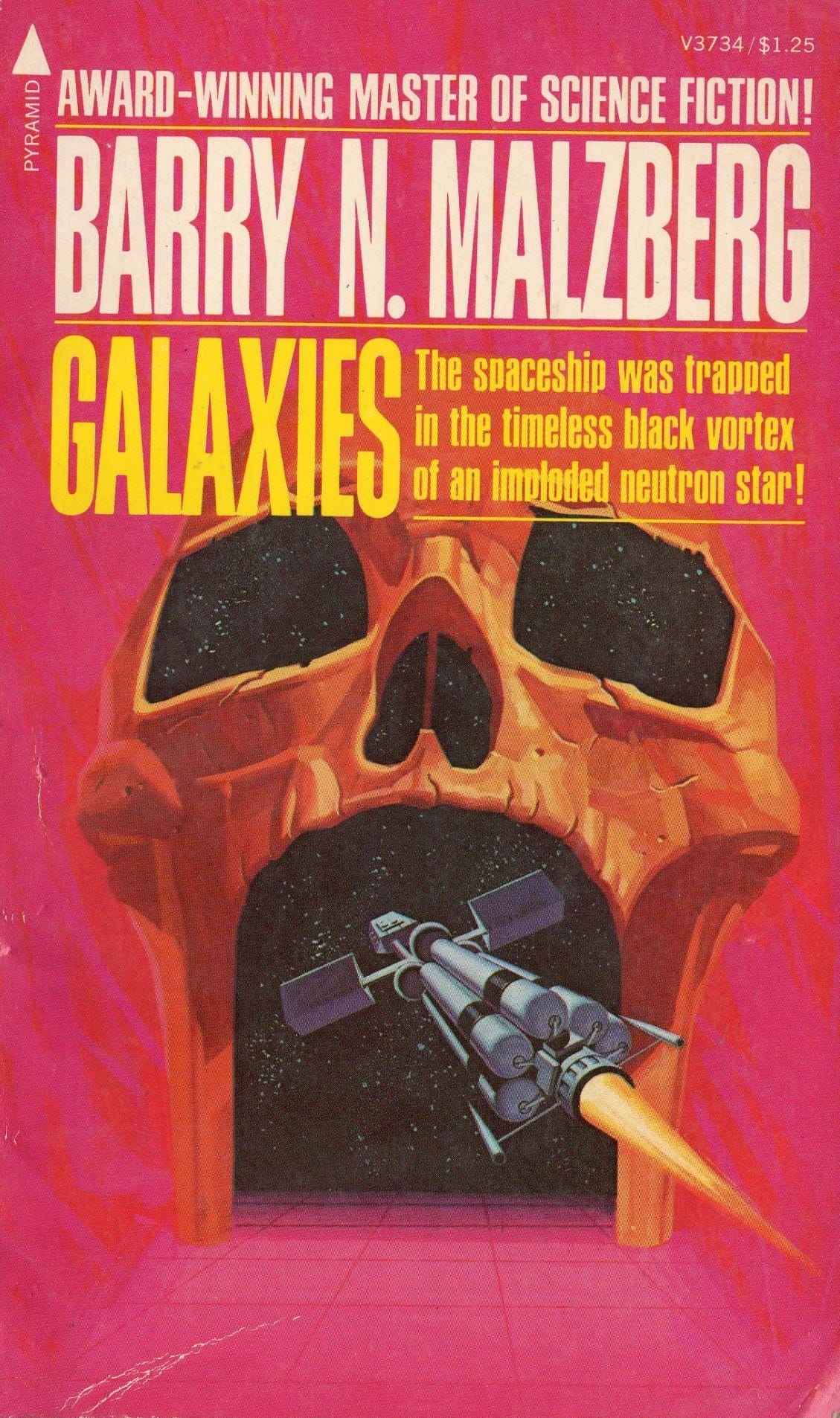
Skull buildings often pop up as a surrealist short-hand for a deathly situation. This uncredited 1975 cover art to Galaxies, by Barry N. Malzberg, uses the skull as a portal to a "timeless black vortex."
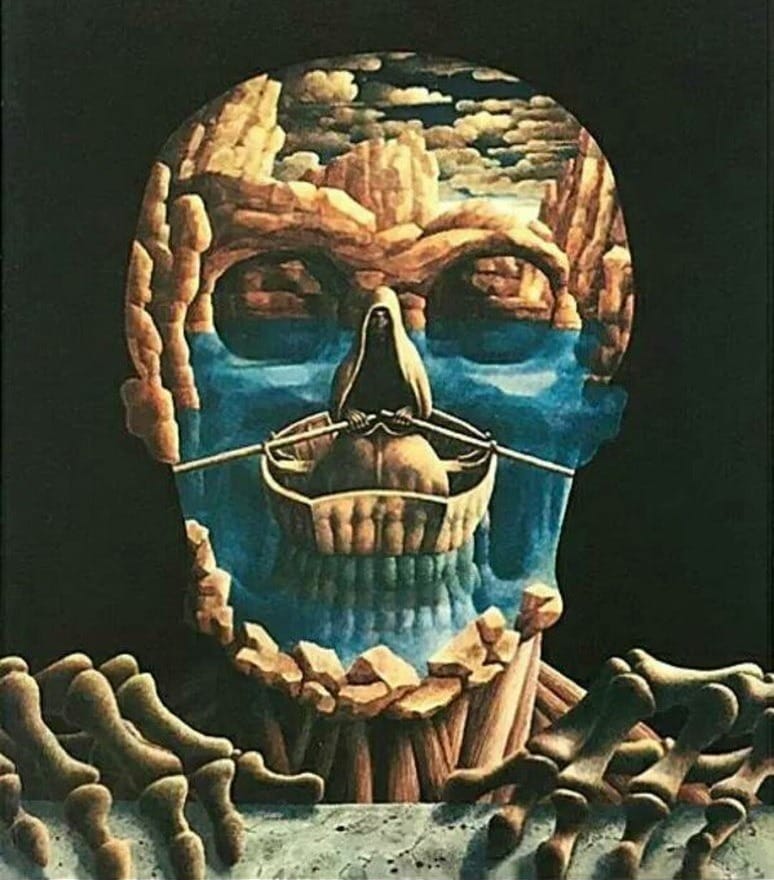
Justin Todd’s 1976 cover to The Supernatural Omnibus Volume 1: Hauntings and Horror is an example of the hidden face.
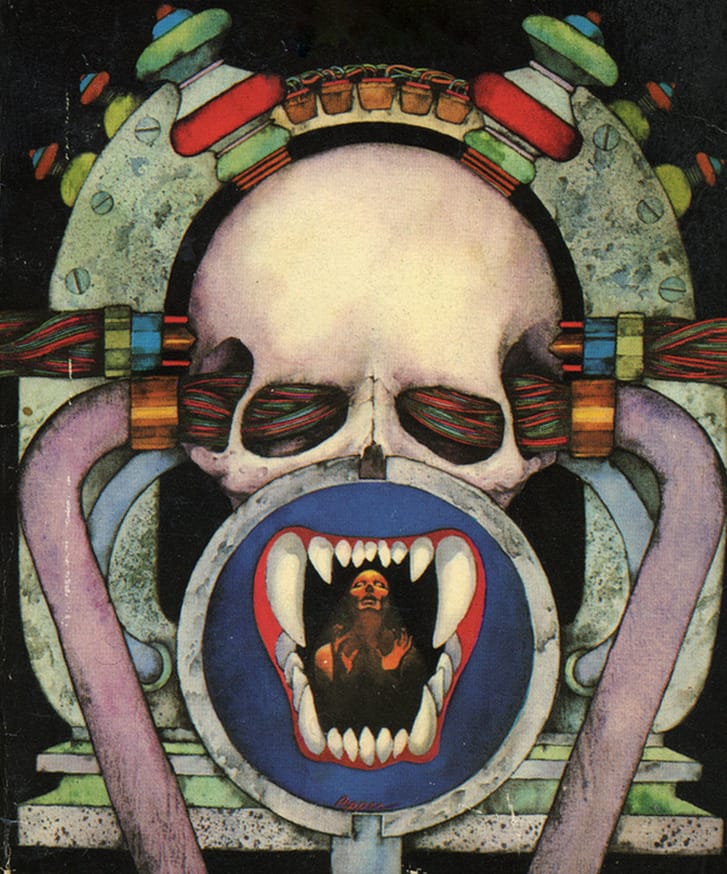
Bob Pepper has a surreal skull machine on his 1969 cover to The Beast that Shouted Love at the Heart of the World, by Harlan Ellison. Pepper loved constructing montages of intertwined concepts on his science fiction covers.
Tim White's 1976 "Eater of Worlds" illustration appears to merged a skull with a crystal ball.
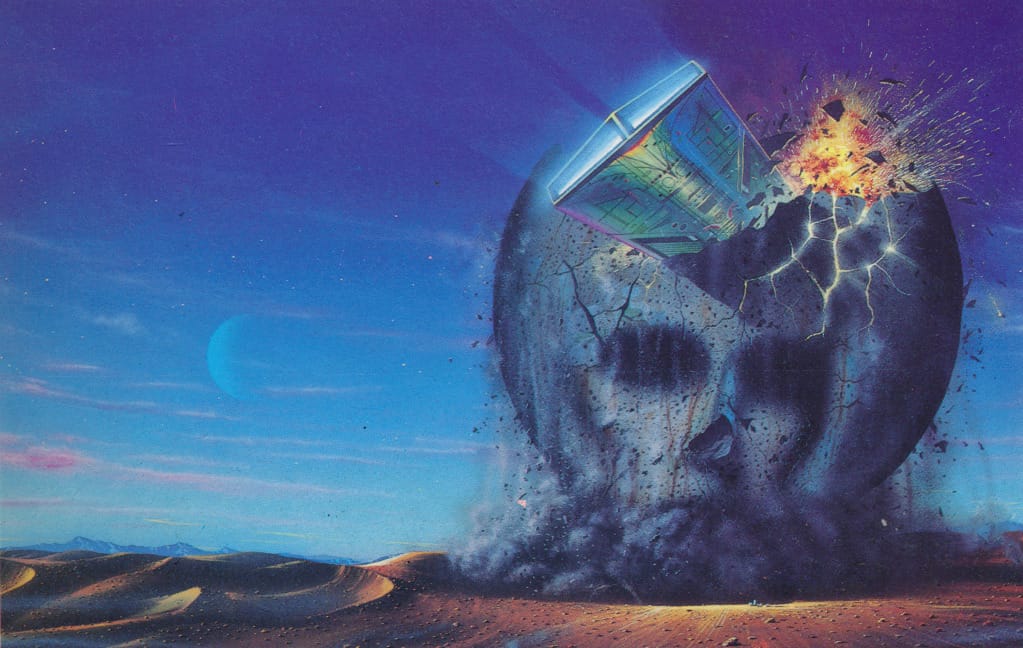
Robert Adragna relied on the surreal skull a few times for his late-'70s Three Investigators covers. I would stop investigating the giant ominous skulls if I were them!
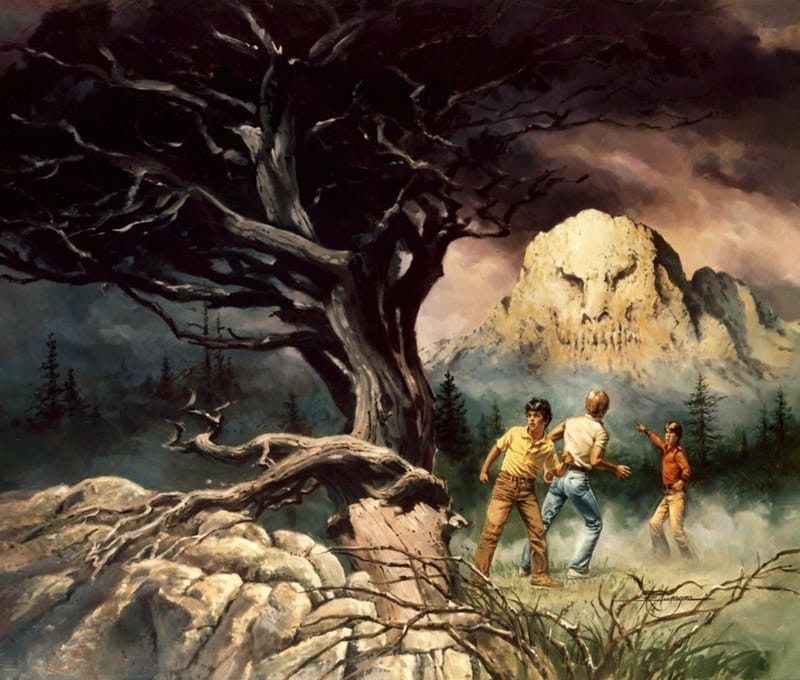
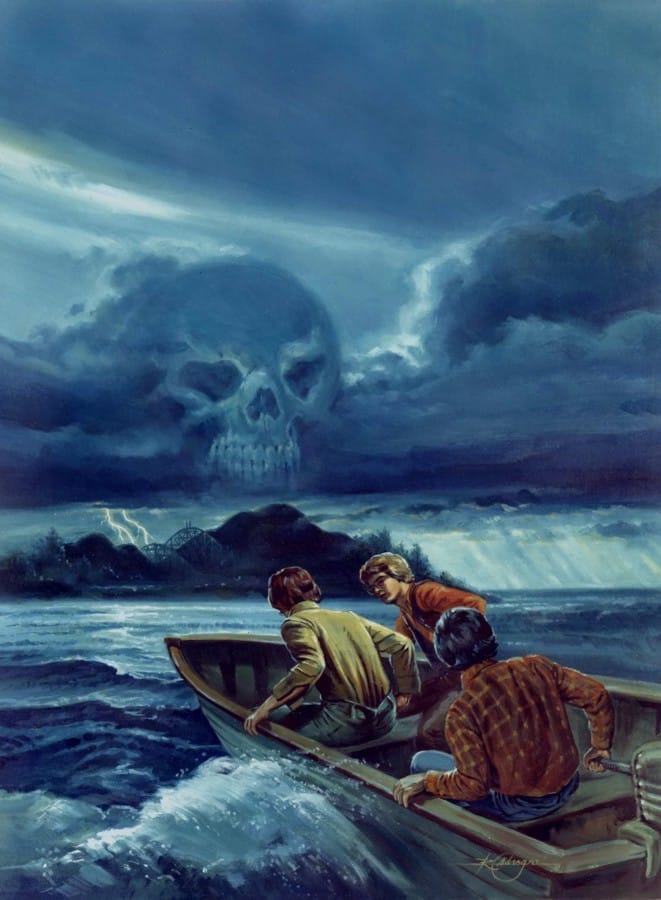
Rudolf Sieber-Lonati has a great skull-carved mountain as well.
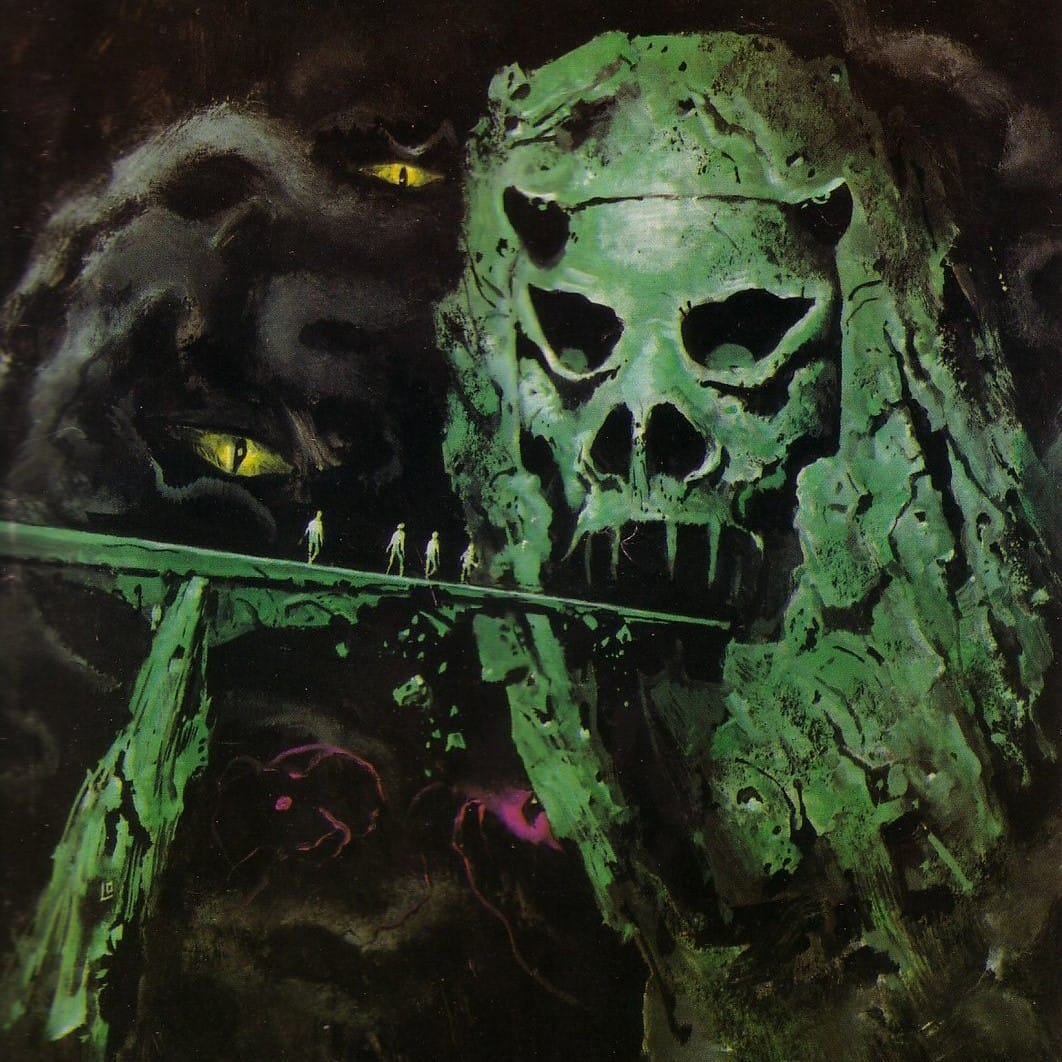
Skull buildings and structures are more common in fantasy than in science fiction. Here's Bob Eggleton's "Blood Brothers."
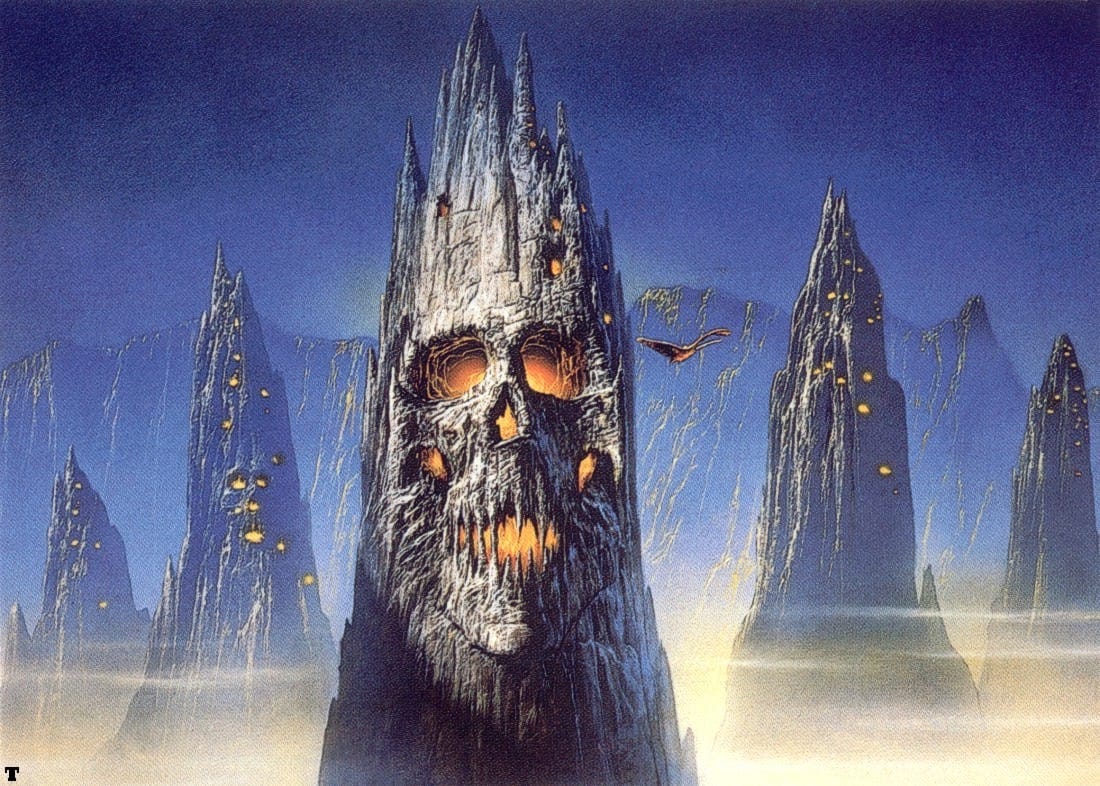
Rodney Matthews likes his skull-shaped fantasy fortresses.
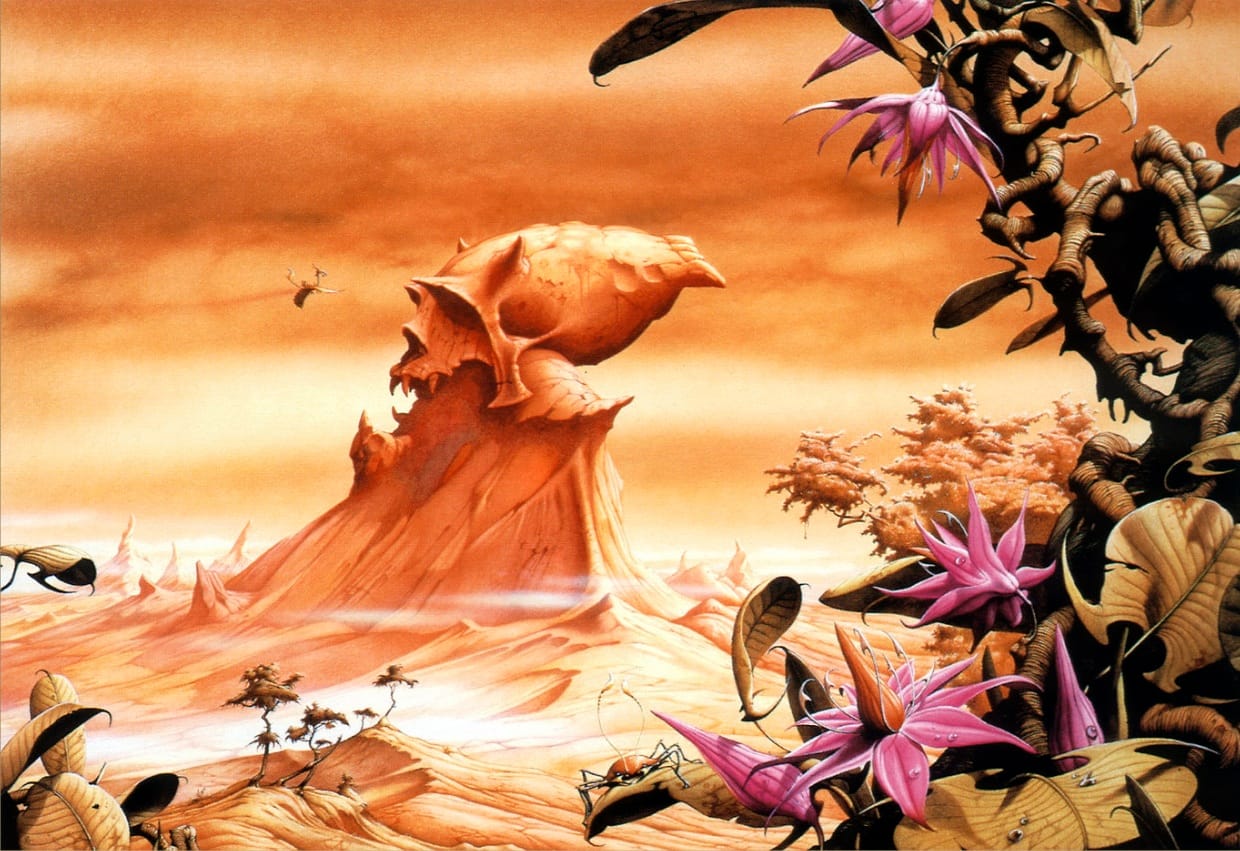
This one's by Robin Hidden, for Science Fiction Monthly magazine.
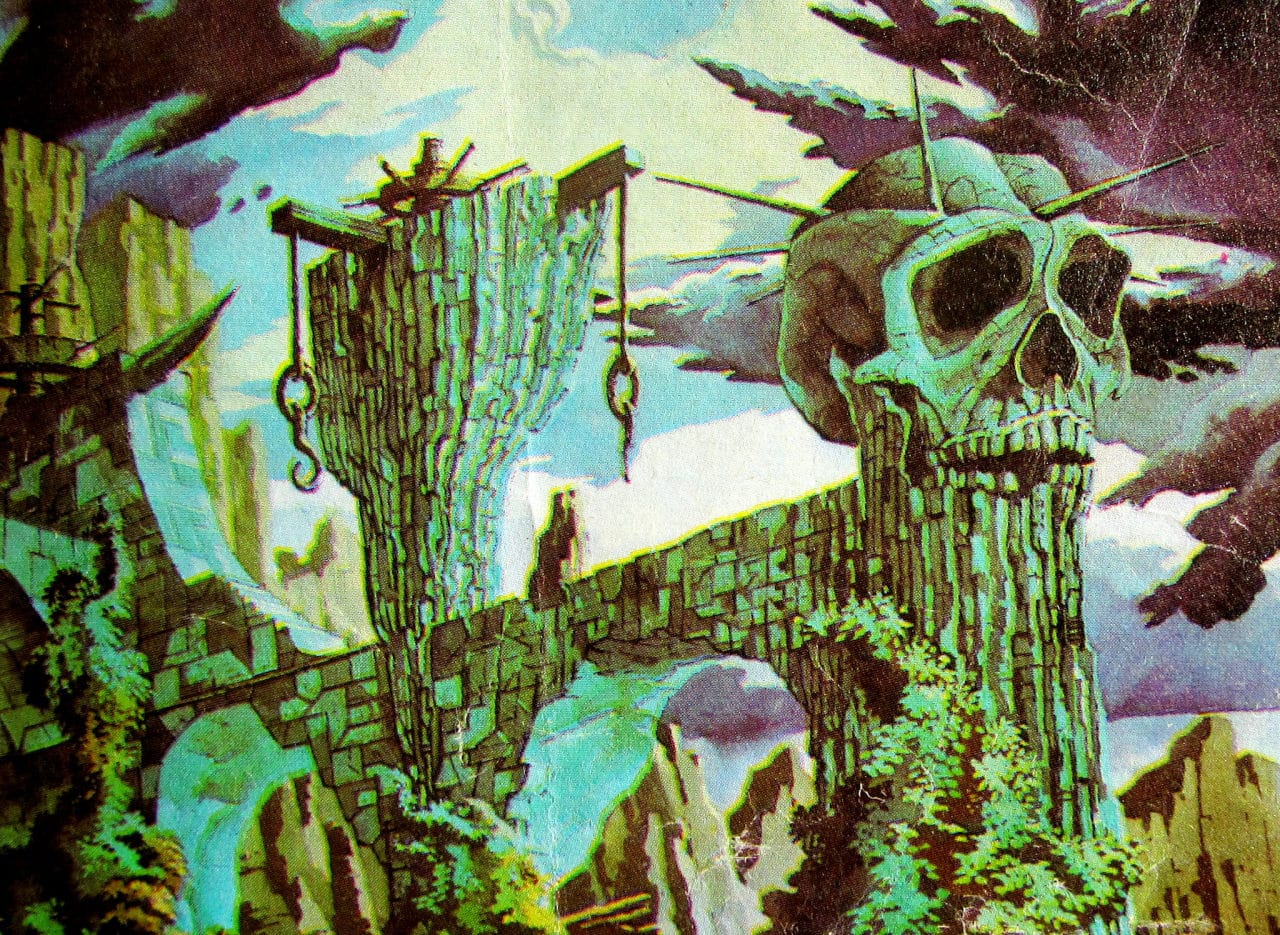
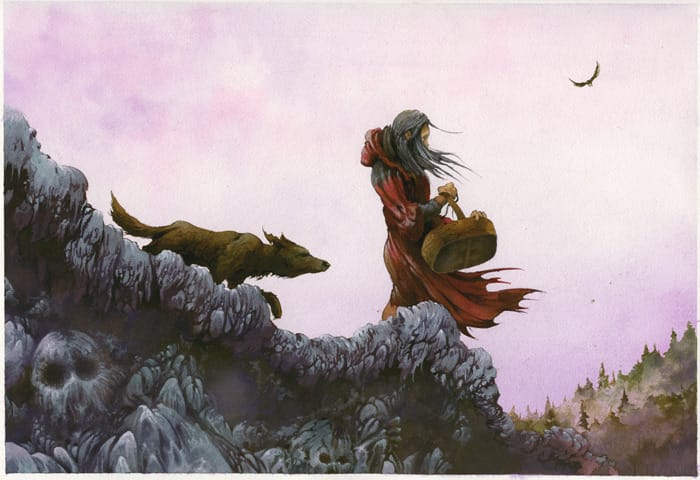
At first I spotted just one skull-like visage in this illustration by Arik Roper. Then I spotted the second one, and now I'm wondering if the entire mountain ridge is formed out of skulls and bones.
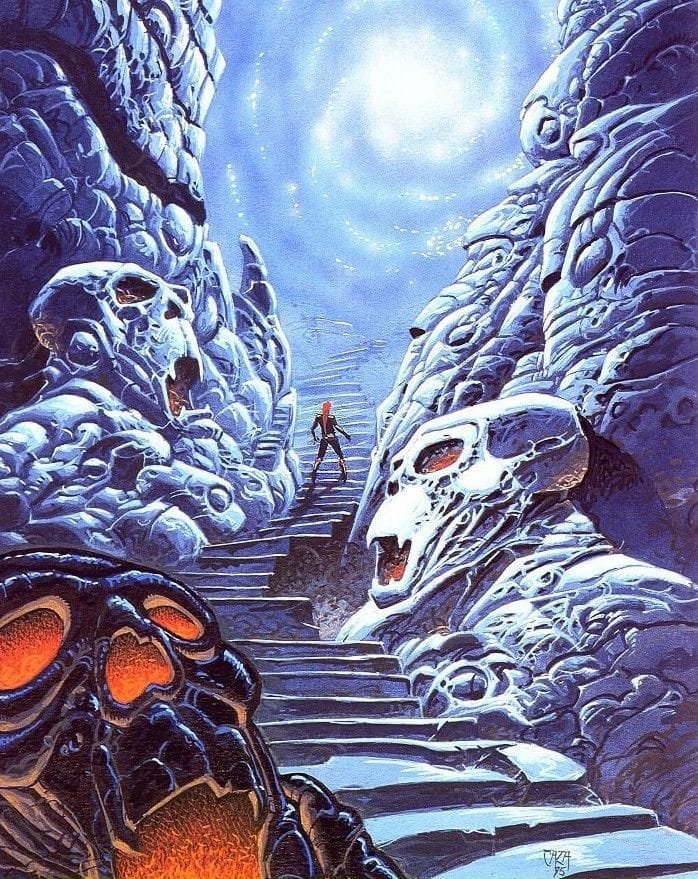
Philippe Caza has a less subtle version in this 1975 illustration.
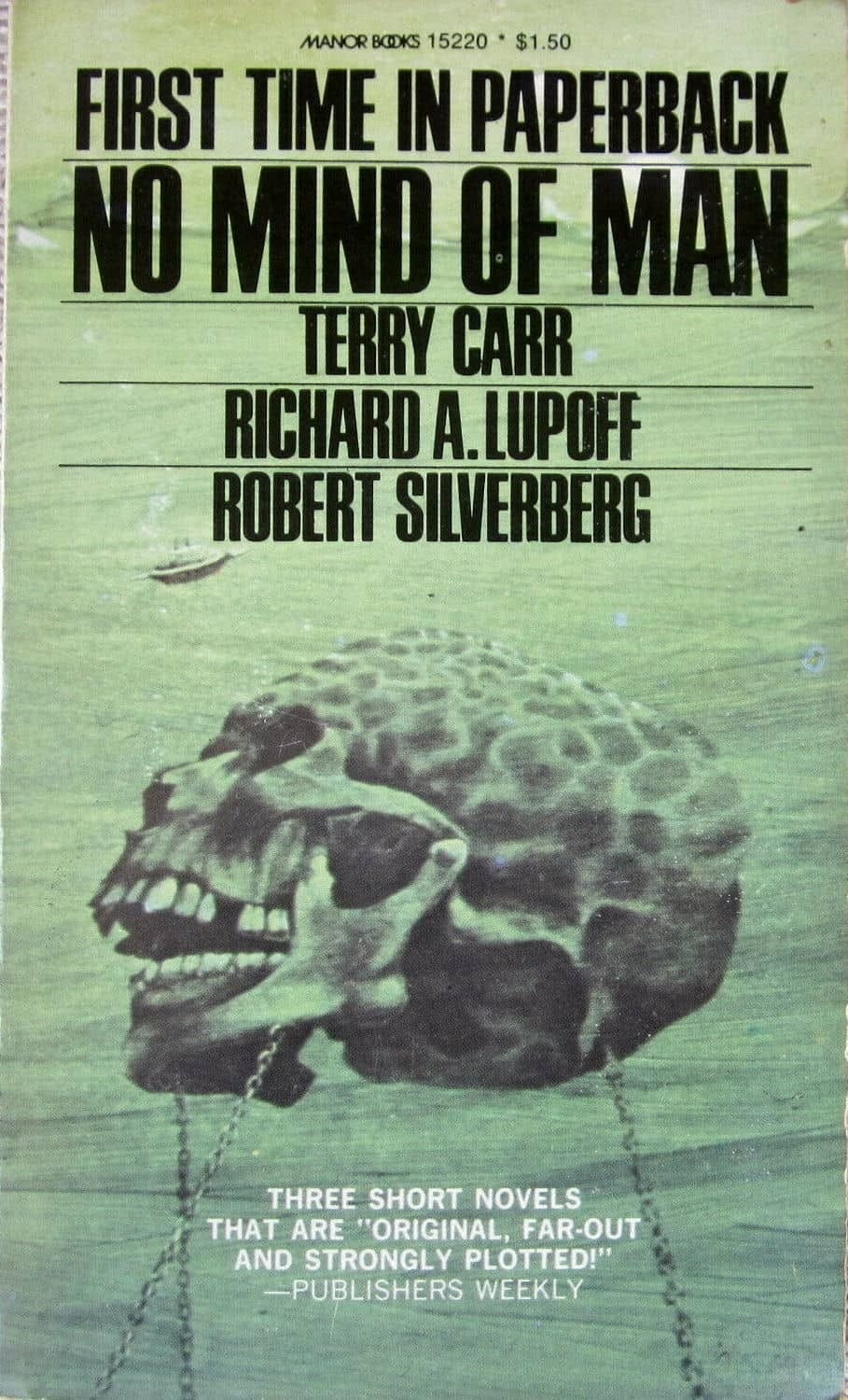
An uncredited artist depicted this big underwater skull-buoy for a 1974 cover to No Mind of Man, by Robert Silverberg.
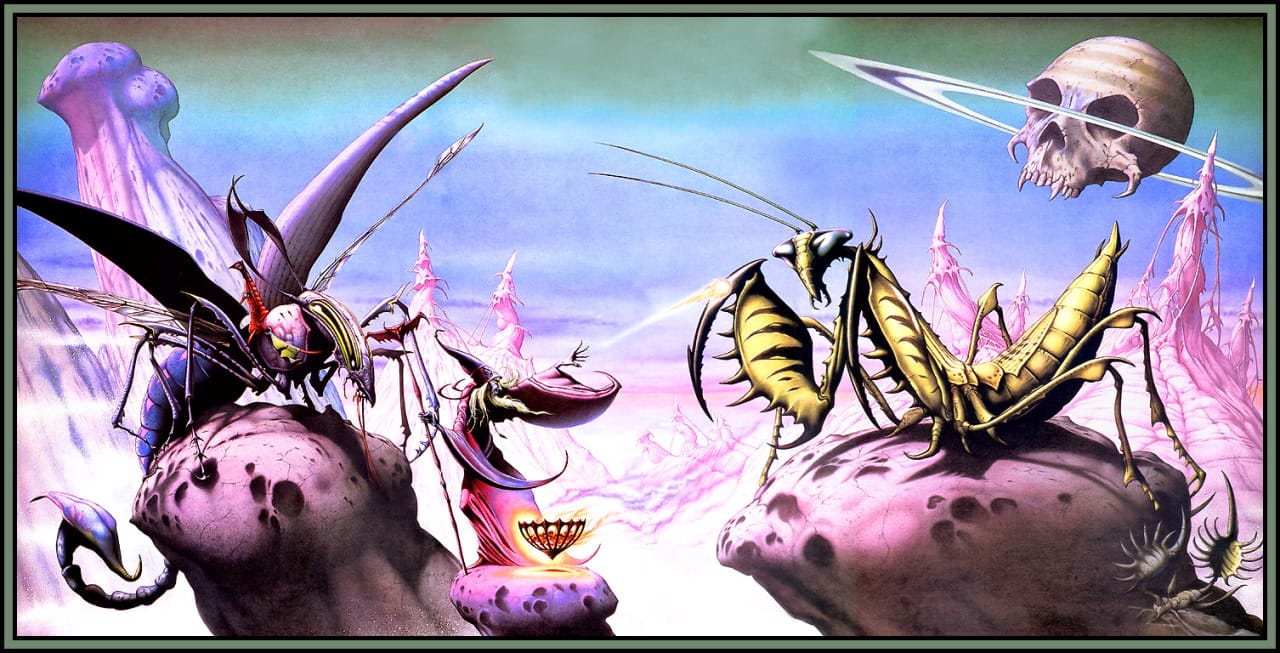
Rodney Matthews did a few skull planets, like this one.
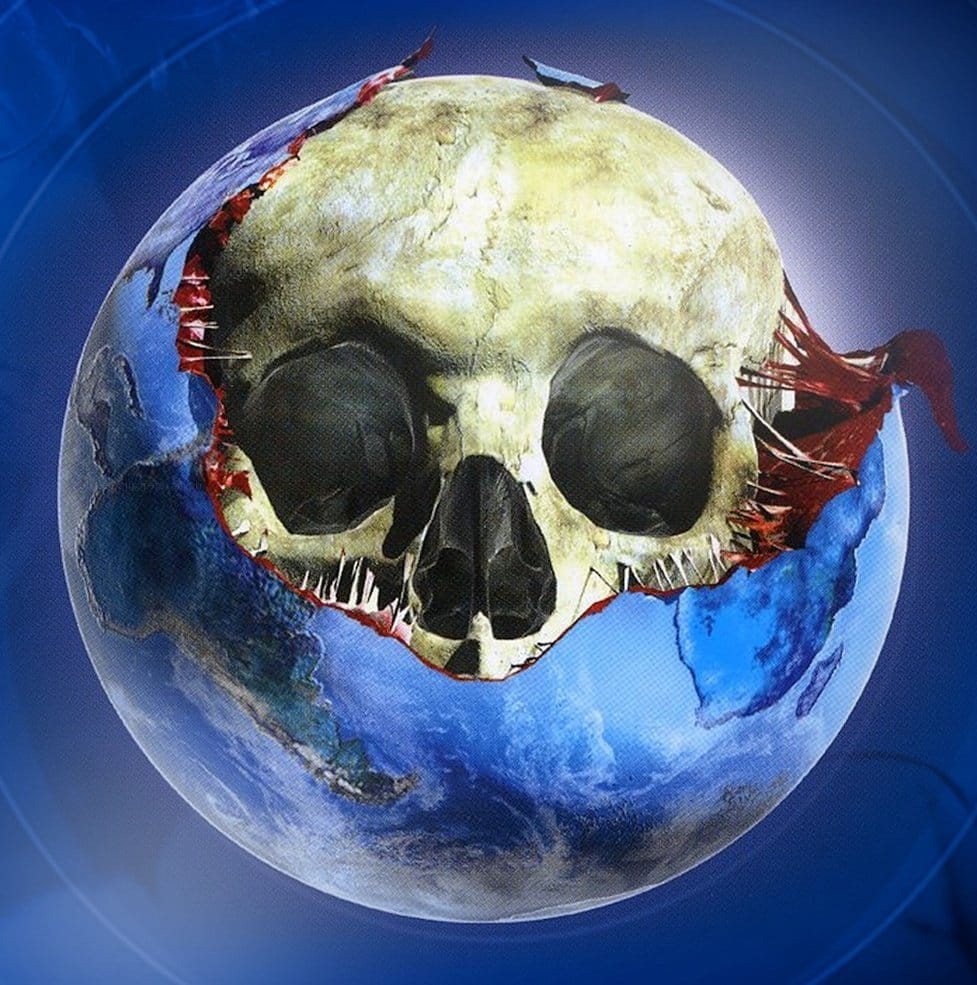
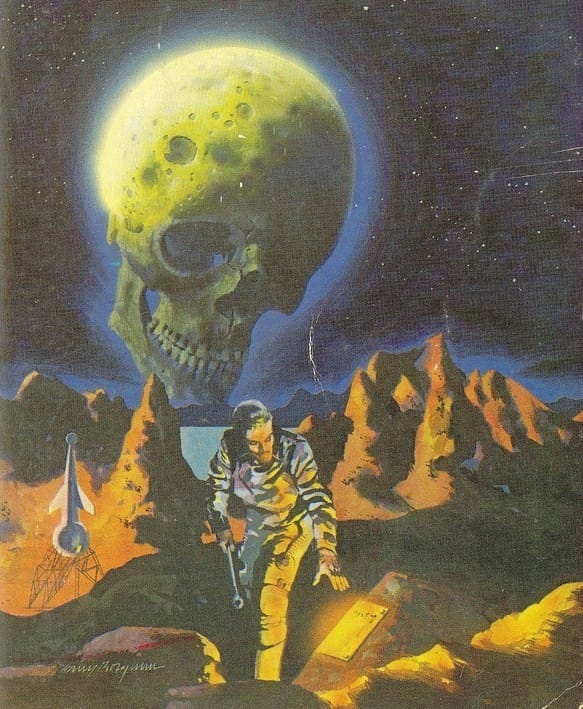
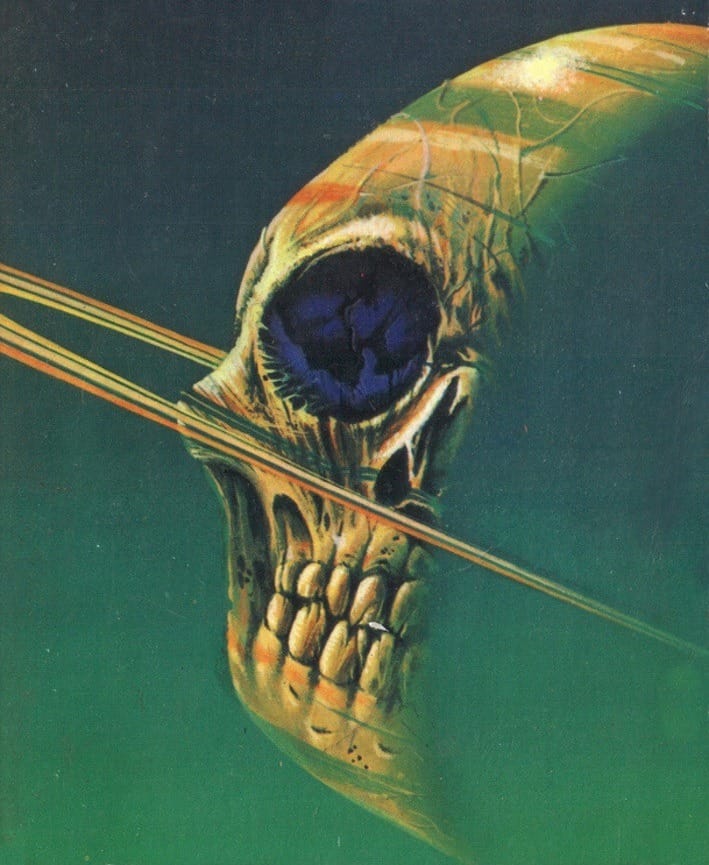
Here are a few more examples, from Michel Granger, Harry Borgman, and Ray Feibush.
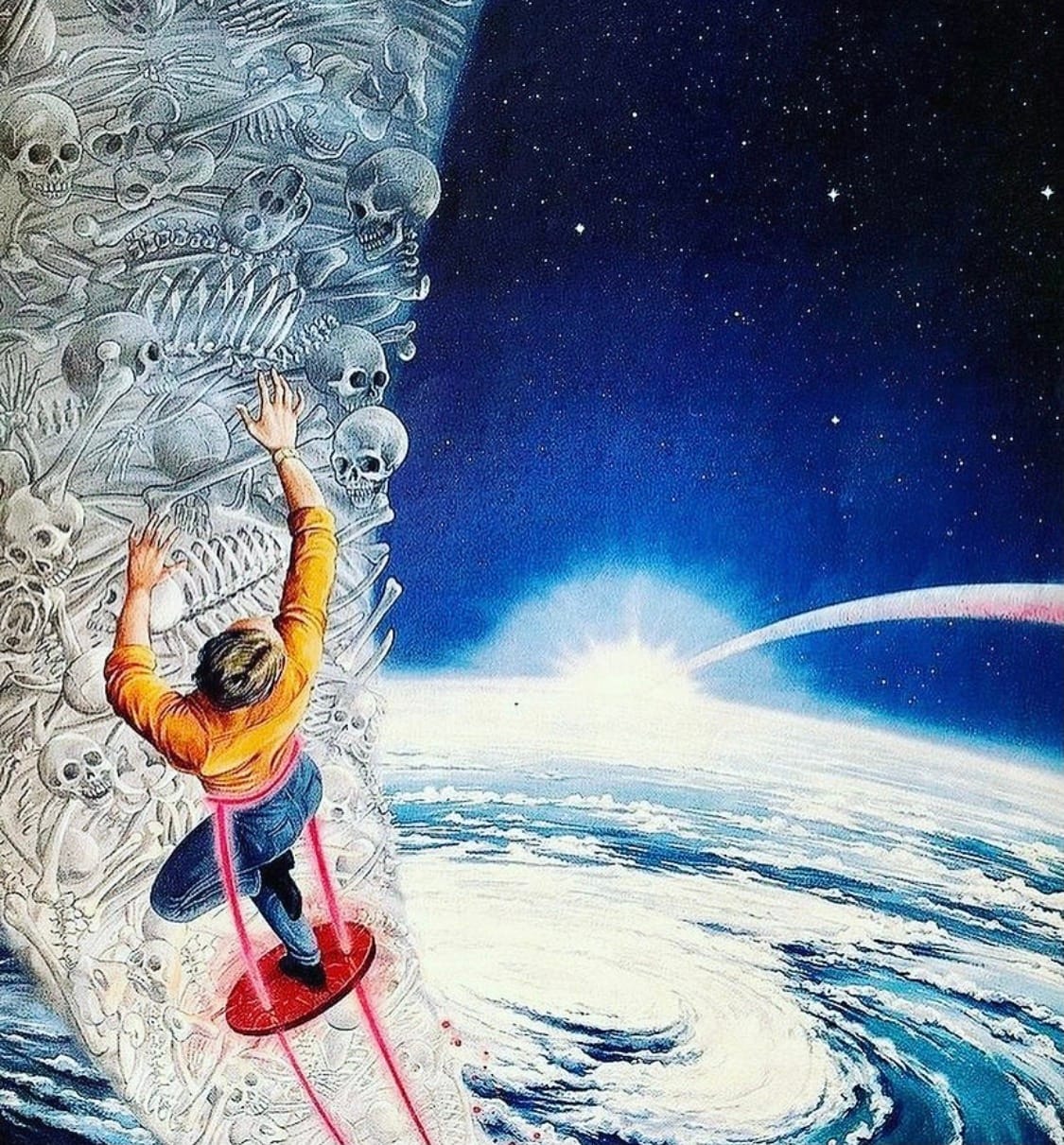
Patricia Morrissey's interior art illustrating "In the Shadow of Bones," a short story by Robert A. Metzger, for the March-April 1989 issue of Aboriginal Science Fiction.
I don't know anything about the story behind this one, so I assume it's the worst space elevator ever made.
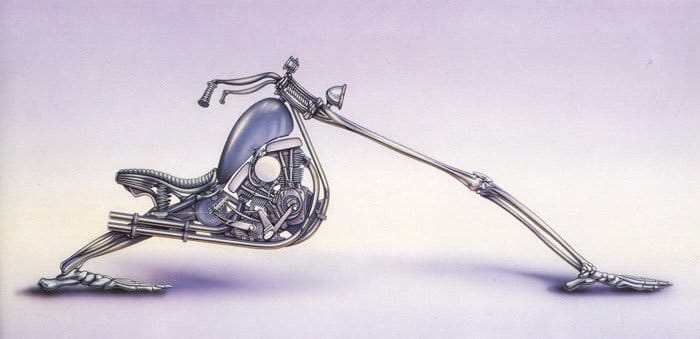
For transportation to all these sights, you've gotta ride Takashi Yamazaki's skeleton-mobile.
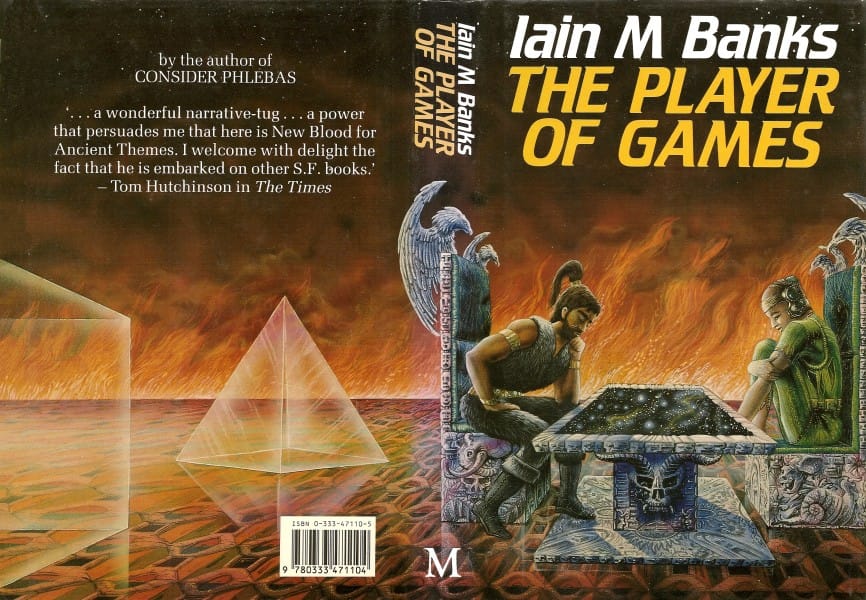
Finally, once your tour of skeletal architecture is over, you can relax with this matching table and chair set from Richard Hopkinson's 1988 first-edition cover to Iain M. Banks' The Player of Games.
Cool Links
A New Way of Life: Dead & Buried at 45 - From the Desk of The Horror Chick
If you're looking for a lesser-known horror movie to check out for Halloween, this is my recommendation: 1981's Dead & Buried, an atmospheric practical-effects chiller co-written by Alien screenwriter Dan O'Bannon. You'll need to sign up for this newsletter to read this retrospective, but it's free and well worth the effort.
"Even now, forty-five years later after its release, Dead & Buried remains difficult to categorize, and that’s precisely why it has endured. It is neither a traditional zombie movie nor a straightforward supernatural thriller. It carries the texture of a ghost story while unfolding like a detective procedural. There are moments that feel ripped from the pages of an E.C. Comics anthology and others that resemble the existential dread of H. P. Lovecraft. And threaded throughout all of it is a persistent sense that something is fundamentally wrong in Potters Bluff, long before the audience fully understands what that something is."
Tech Hype is Cannibalizing the Future - Tech Policy Press (via Sentiers)
"It is the job of global consultancy firms to issue precise-sounding numbers, like '$2.6 trillion to $4.4 trillion' in anticipated economic growth through AI, which politicians may then treat as objective evidence for justifying grandiose commitments in national budgets with equally unclear outcomes. [...] Like a rotating deck of credit card debt, each prediction borrows credibility from the future to purchase legitimacy in the present — and then flees to the next topic of speculation before the bill comes due."
Music Rec: Here's a fun collection of obscure 80s horror movie music: Vintage Obscura Halloween Mix [2026] – SIDE C.
And I'd be remiss not to once again highly recommend the "It Came From the 80s" synthwave mixtape playlist, which debuted an 11th installment this year.
Next Time: Gray Morrow