Odds and Ends: July 2026

I posted these two iterations of the same Chris Foss canvas on Tumblr a while back.
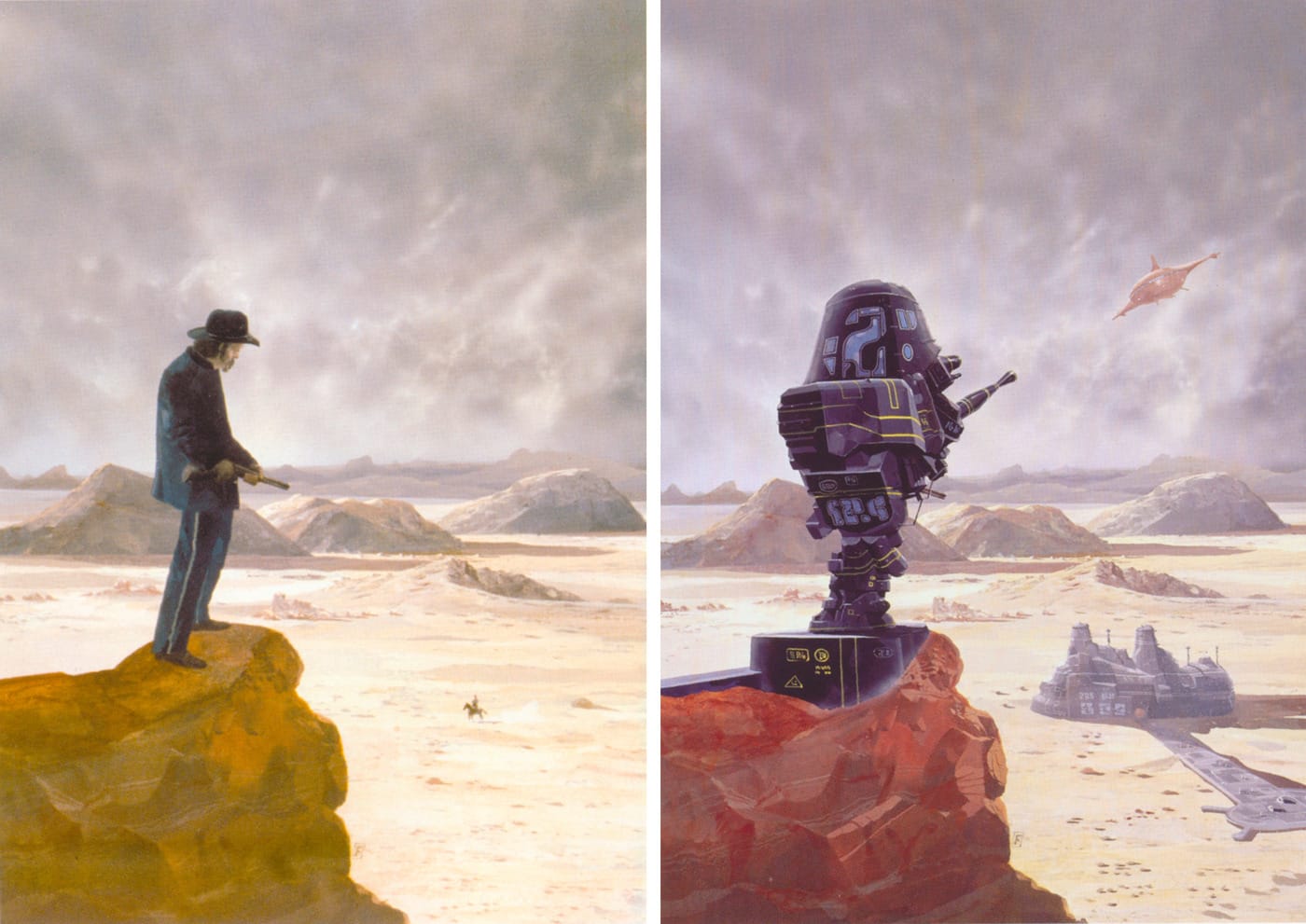
Foss had a habit of painting over his previous work to create a new scene (Frank Frazetta would do something similar). In its science fiction form, this one was the 1973 cover art for Asimov's The Naked Sun.
However, there's one other big fun fact about this particular artwork, which is that it directly inspired a droid design in Star Wars: A New Hope!
You can see the exact same colors and "2" shaped sigil on both machines.
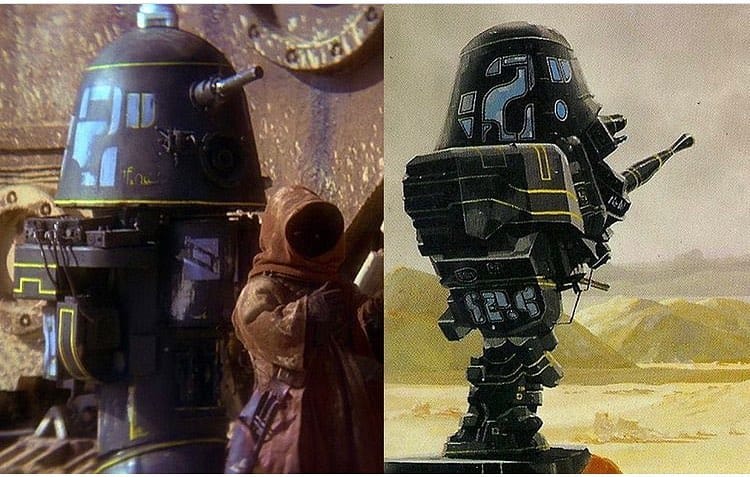
Art director Roger Christian said this about it in an interview:
"In Star Wars, there's a robot in the line-up with the sandcrawler when they're buying R2-D2 and C-3PO… I did do a homage, because I felt I should, to Chris Foss, because he did some very early designs for that and he was always a favourite of mine. So I made one and designed it up out of scrap as if it might have been in a Chris Foss painting, and that was my homage to him, because I always thought he was a genius as an artist."
It's yet another addition to the long list of '70s science fiction paperback artists that Star Wars has drawn heavy, heavy inspiration from – Chewbacca's entire look was swiped from John Schoenherr, and the Death Star came from a John Berkey painting.
1970s UK science fiction illustrator Bob Fowke has an exhibition coming up, and he wrote me to help him get the word out! If you live near Shropshire, get out your calendar:
"The exhibition runs from Friday 21 August to Tuesday 22 September and it's in the Town Hall of Bishop's Castle in south Shropshire, which is, we hope, becoming a significant venue."
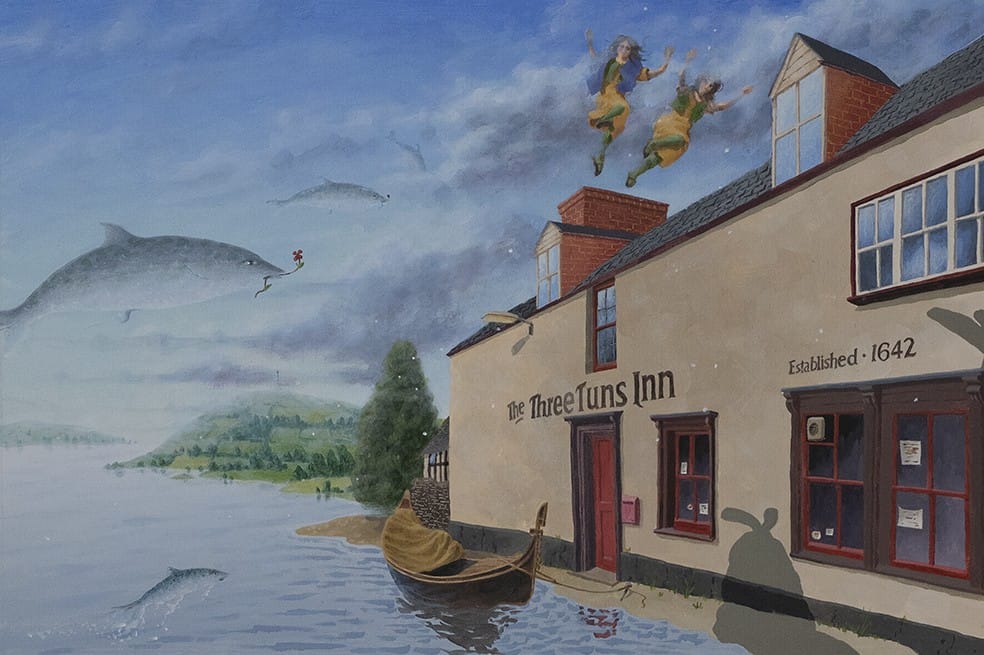
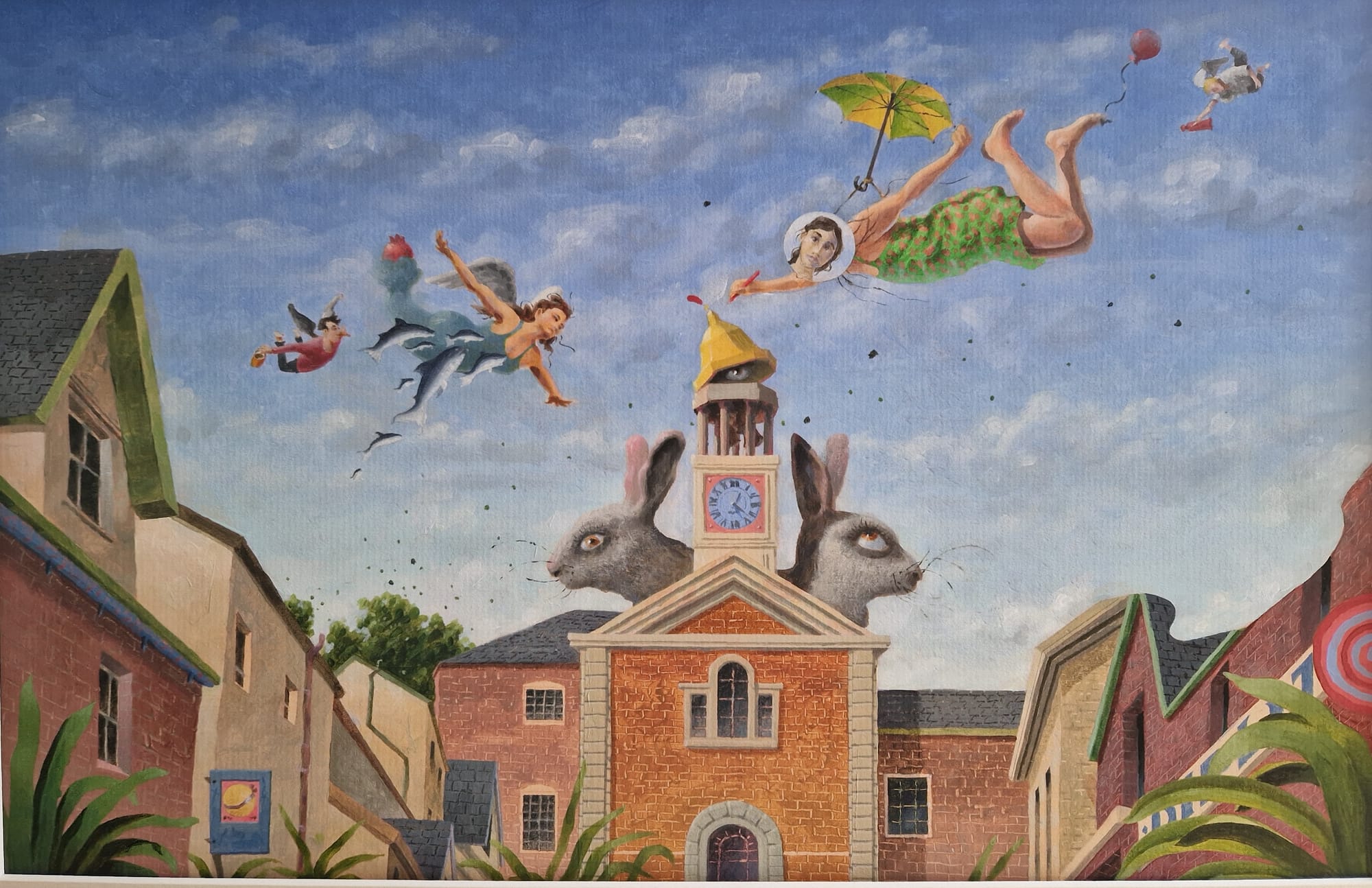
It'll be a combination of recent artwork and some originals for 1970s book jackets. Here are two recent works – "The first imagines water levels rising in a local landscape (one that's dry in reality), the other is of a town hall," Fowke says.
Here are Fowke's three 1975-'76 covers for Armada Sci-Fi anthologies – I don't think they'll be in the exhibition, but I like them!
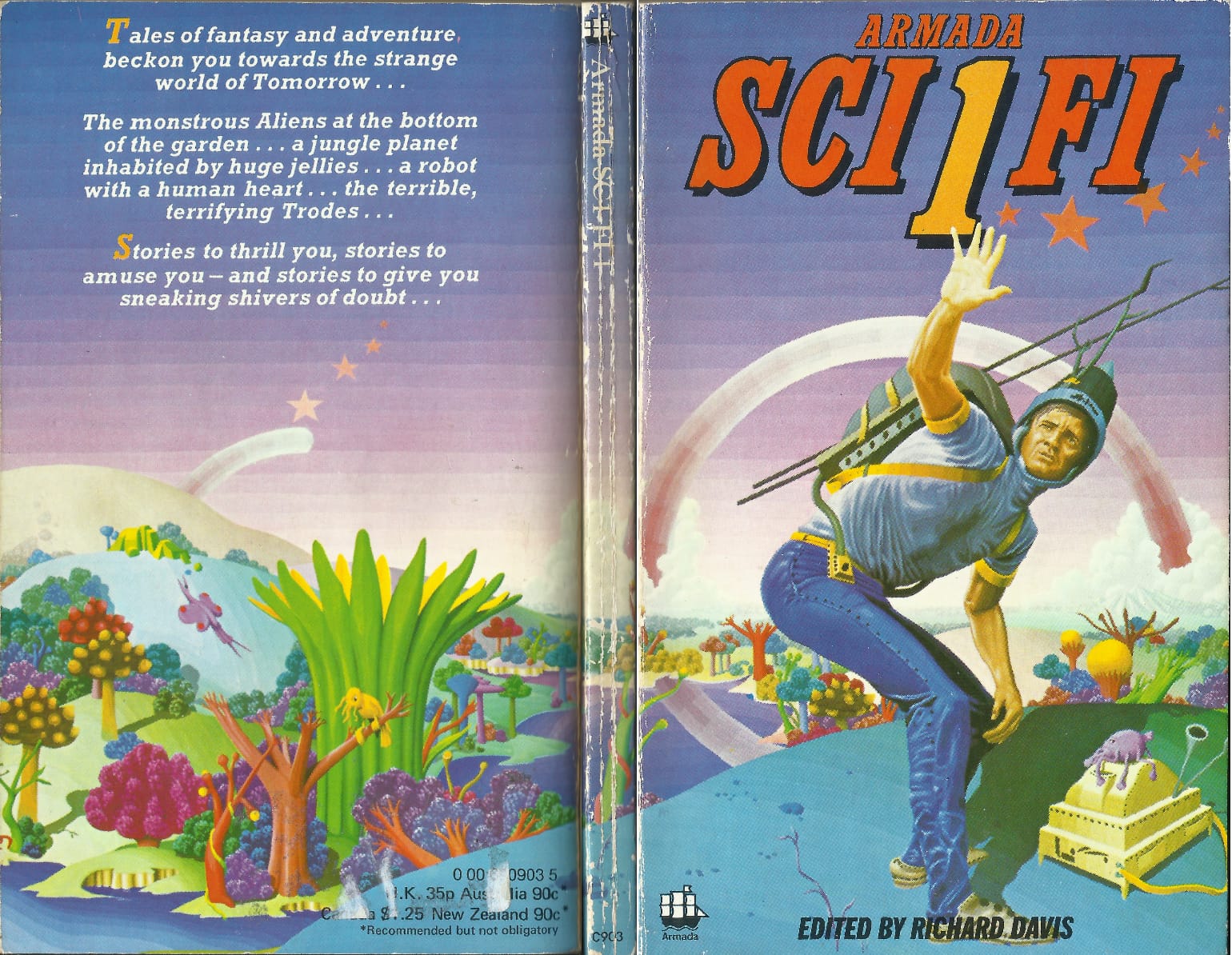
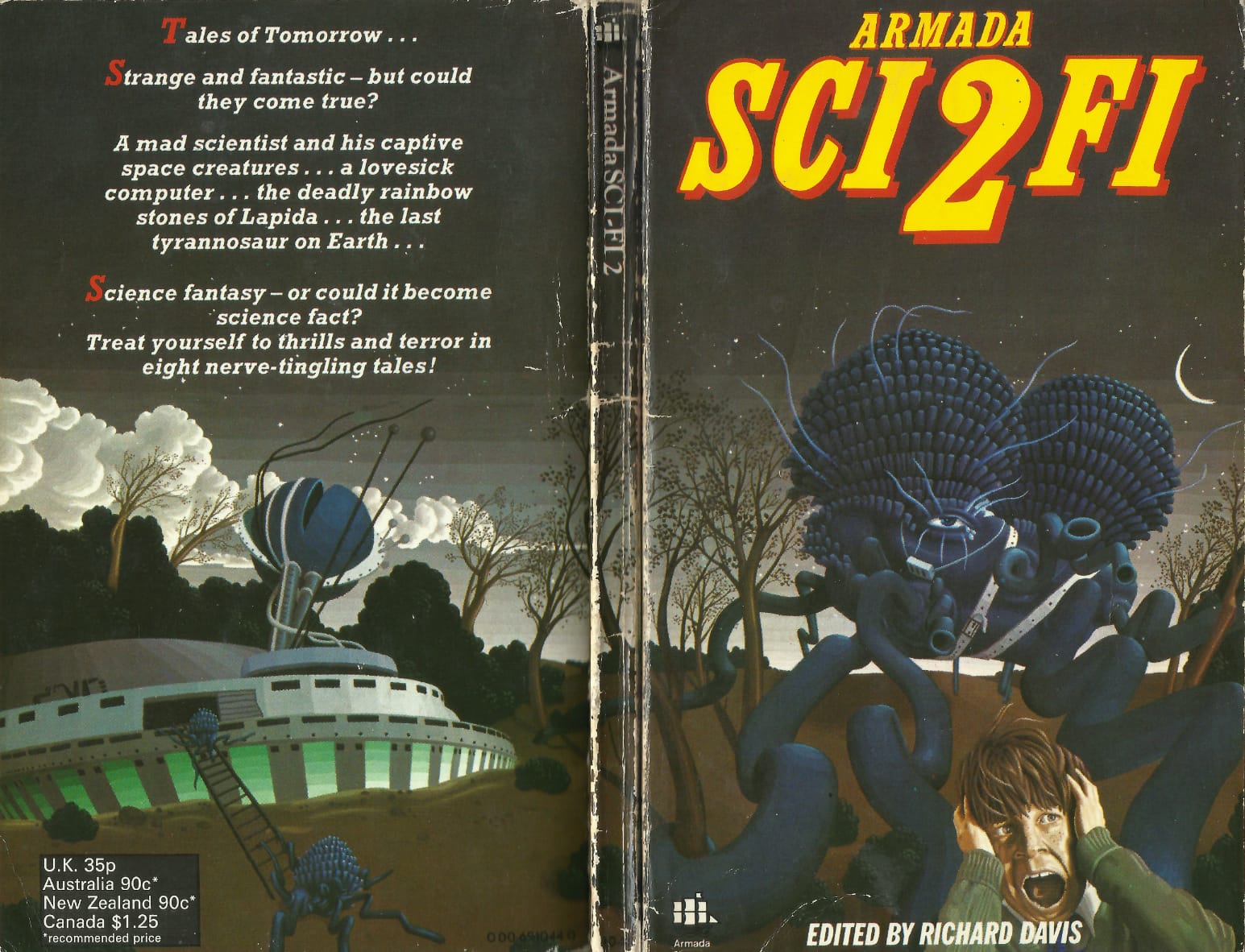
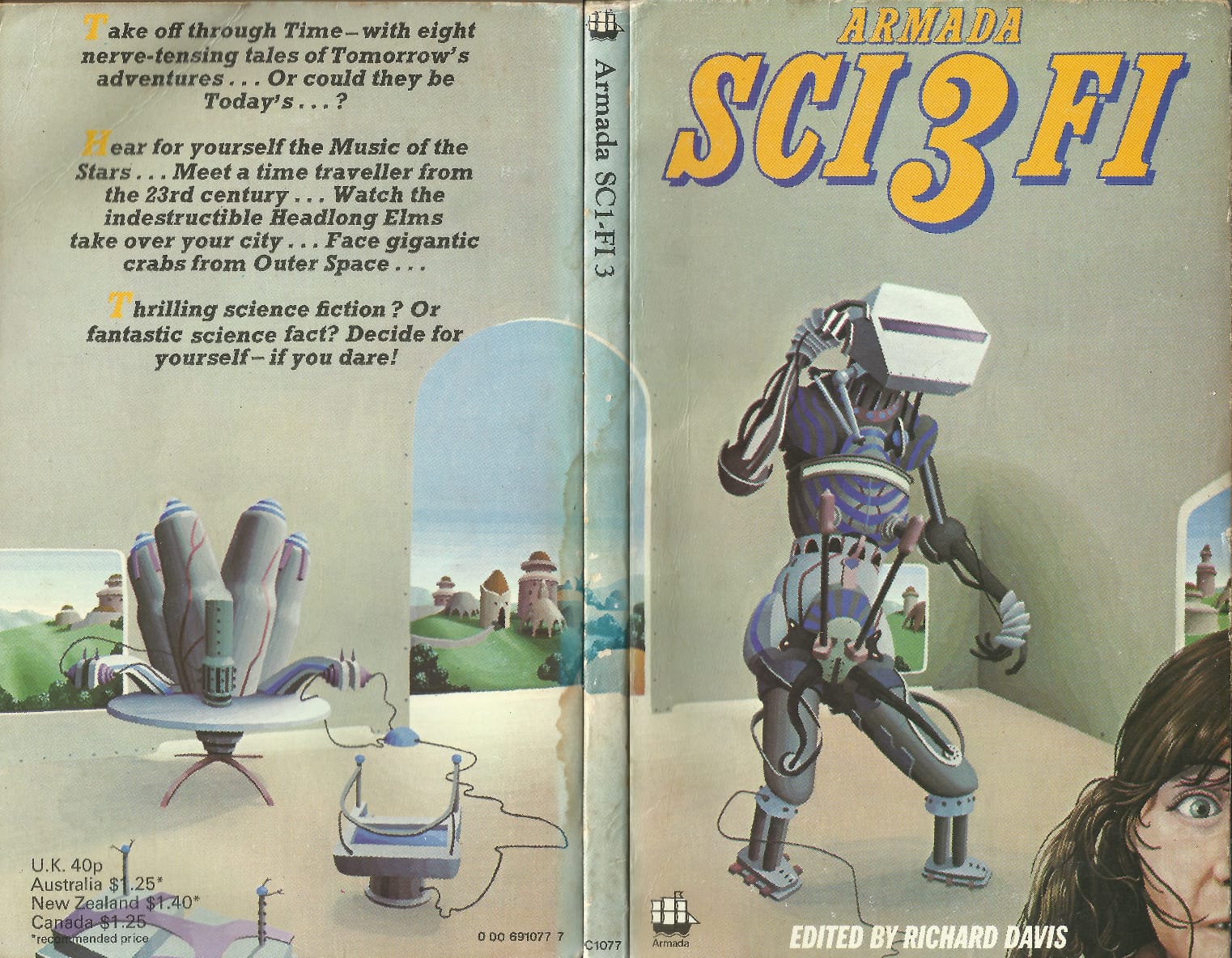
Check out Fowke's website here for more of his cover illustrations, or read a 2024 interview with him here.
One more addition to my big Robert Tinney post that's worth highlighting: I had already linked to Tinney's final interview, from the August 2025 issue of Compute! magazine, but I neglected to include that issue's cover illustration.
It's by Robert Tinney, dated 1991. It seems likely that he originally did it as a commissioned illustration for a tech publication of some sort, but I wasn't able to find an original source anywhere with a quick online search.
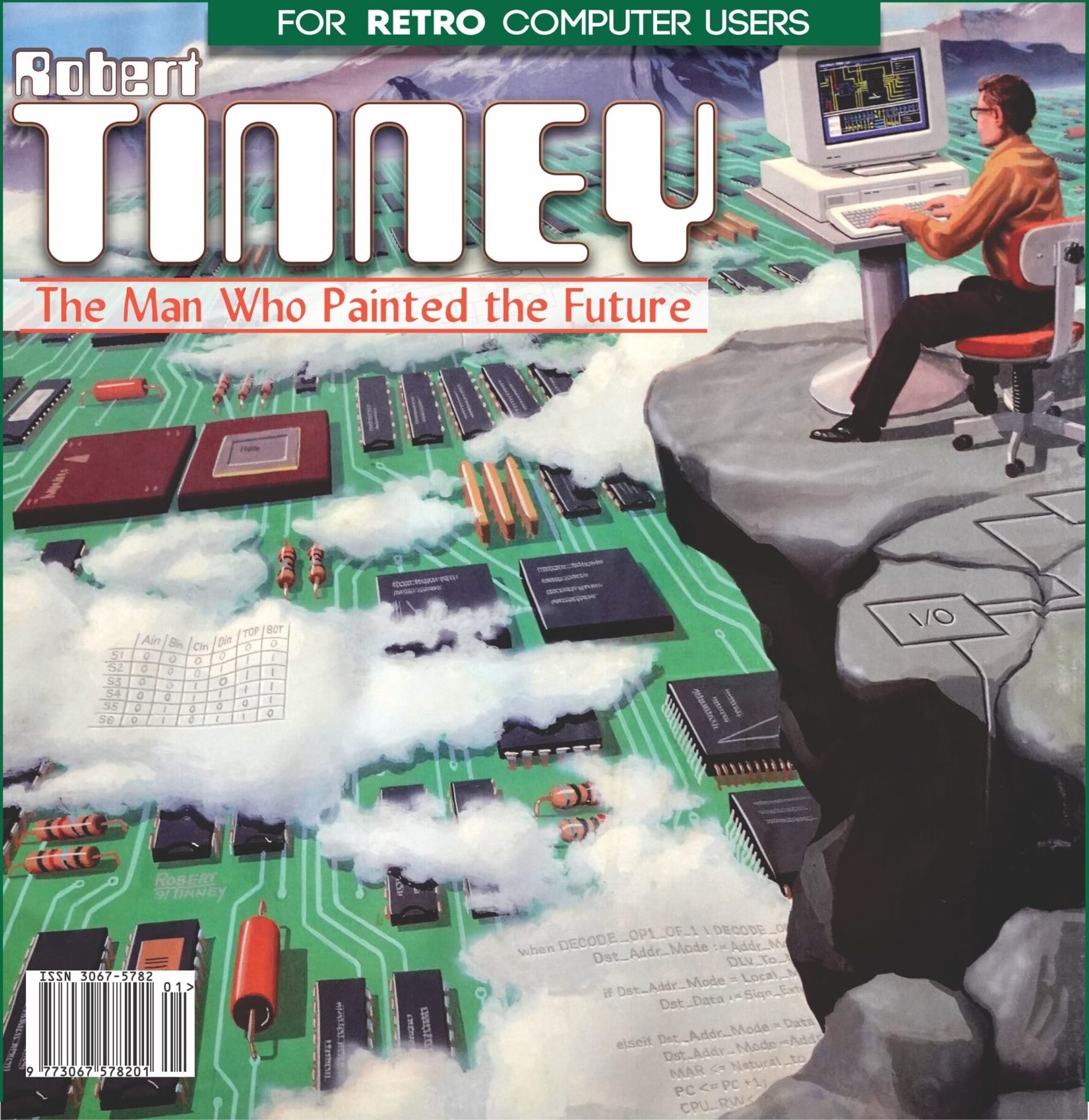
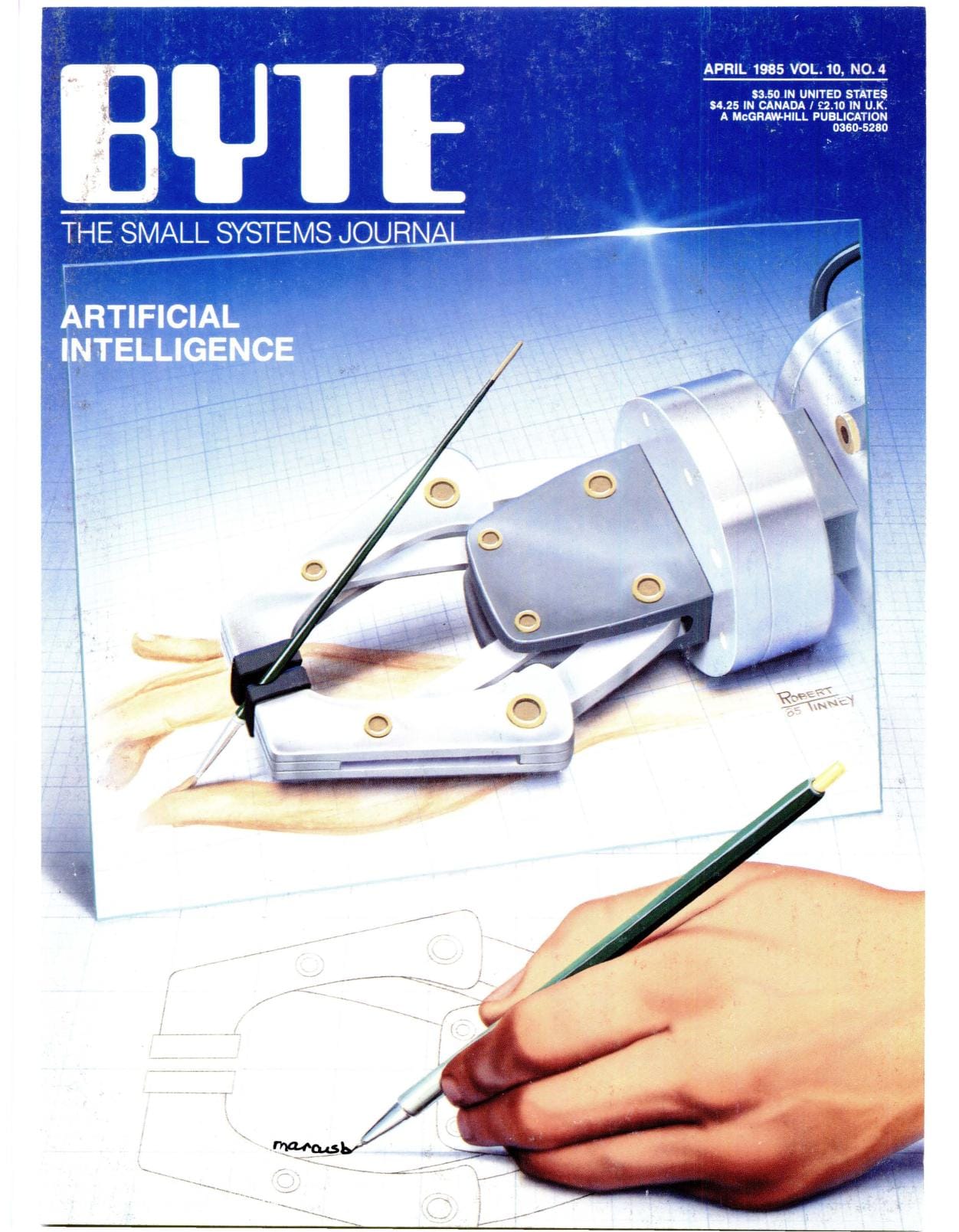
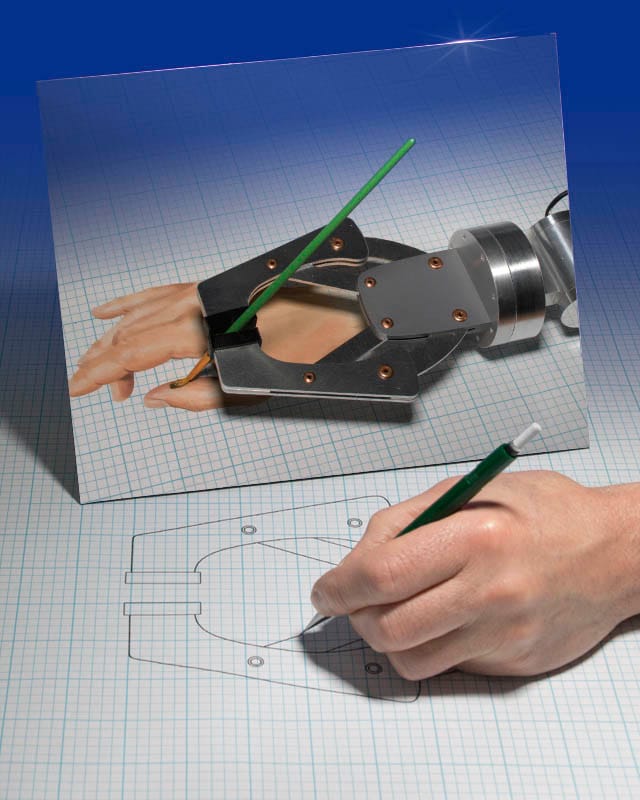
Thanks to Bob at Galactic Studios for pointing me to that Tinney image. Speaking of, he's the guy behind an ongoing series of impressive photographic re-creations of certain Tinney Byte covers. Here's his most recent:
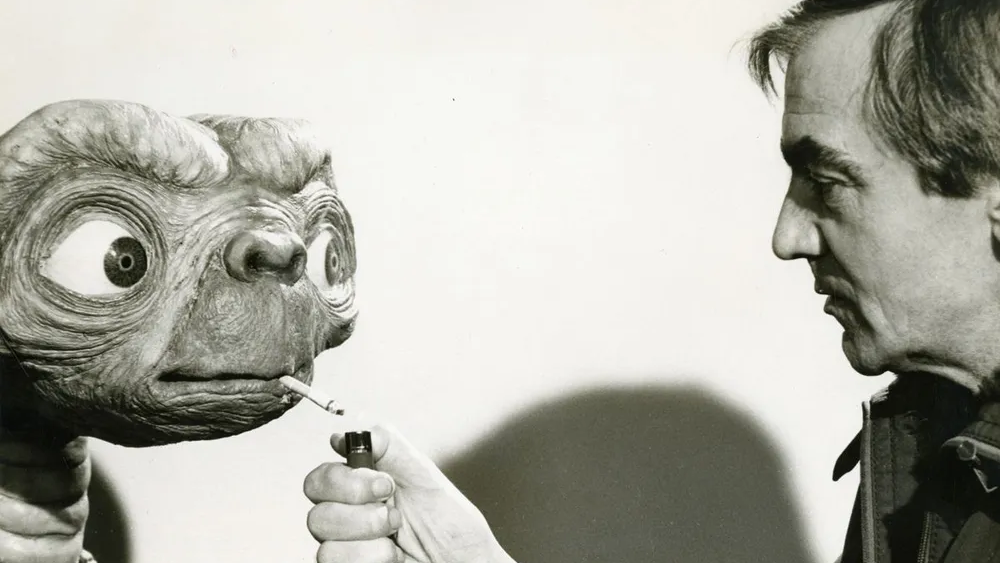
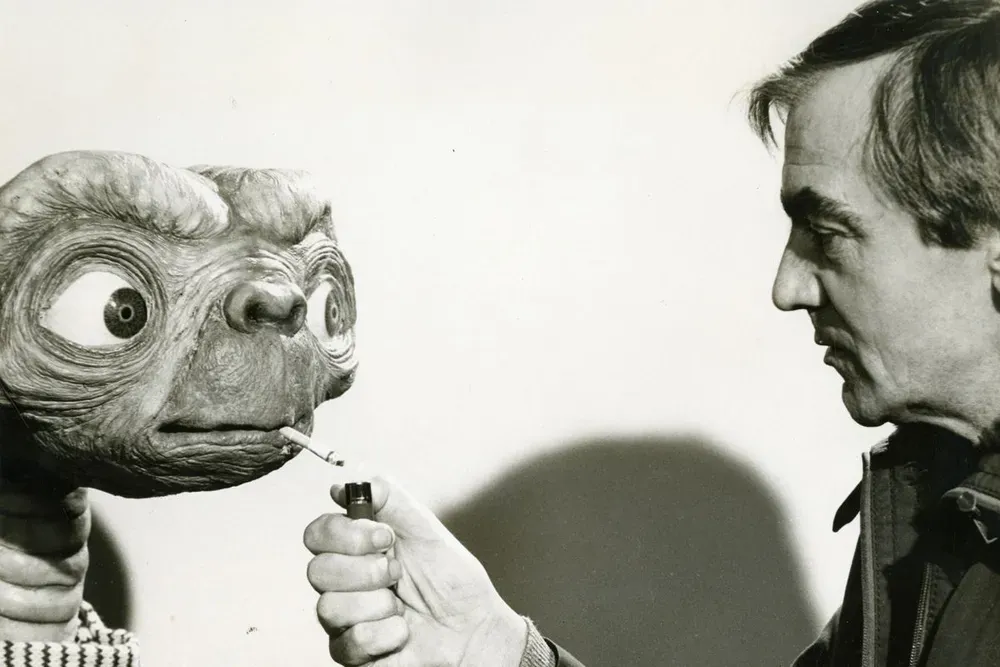
I also found one more addition to my years-old roundup of behind-the-scenes pics of people taking breaks while on the sets of fantasy and sci-fi movies. This is ET's special effects supervisor, Carlo Rambaldi.
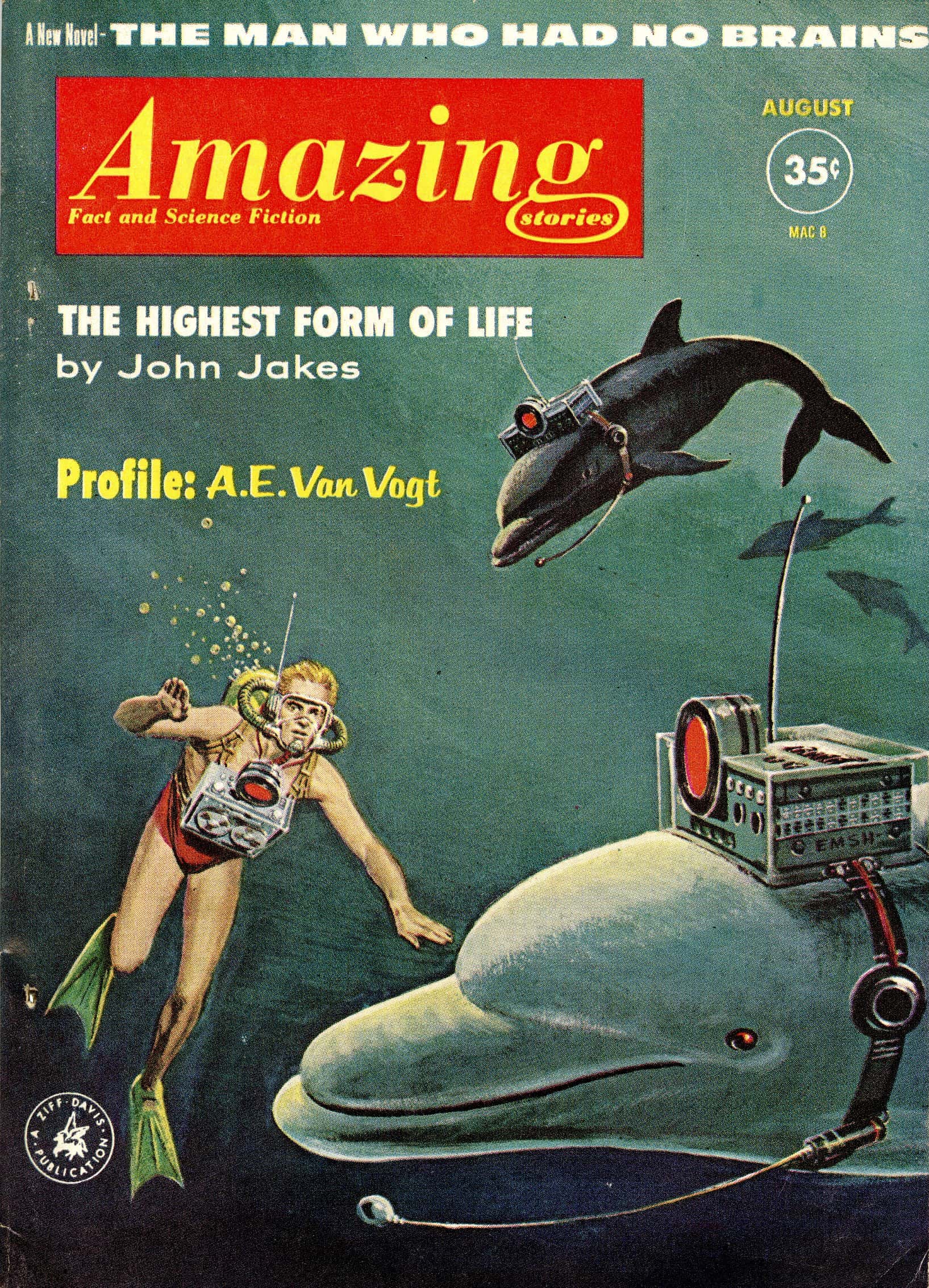
And while I'm pointing out years-late additions to posts, here's a 1961 Ed Emshwiller illustration I just added to my post about dolphins wearing sci-fi suits.
Emsh's communication headset might be the earliest example of a suit on a dolphin, although it might be too simple to qualify as a "suit." Anyway, you might want to check out the full post if you haven't yet – it's one of my most popular.
A newsletter reader found me on Tumblr a while back to mention an interesting connection.
Turns out the dragon on Clyde Caldwell's 1980 cover for Dragon Magazine #72, which I first posted here, bears a strong resemblance to the Hellkite Drake's head in the Dark Souls video game.
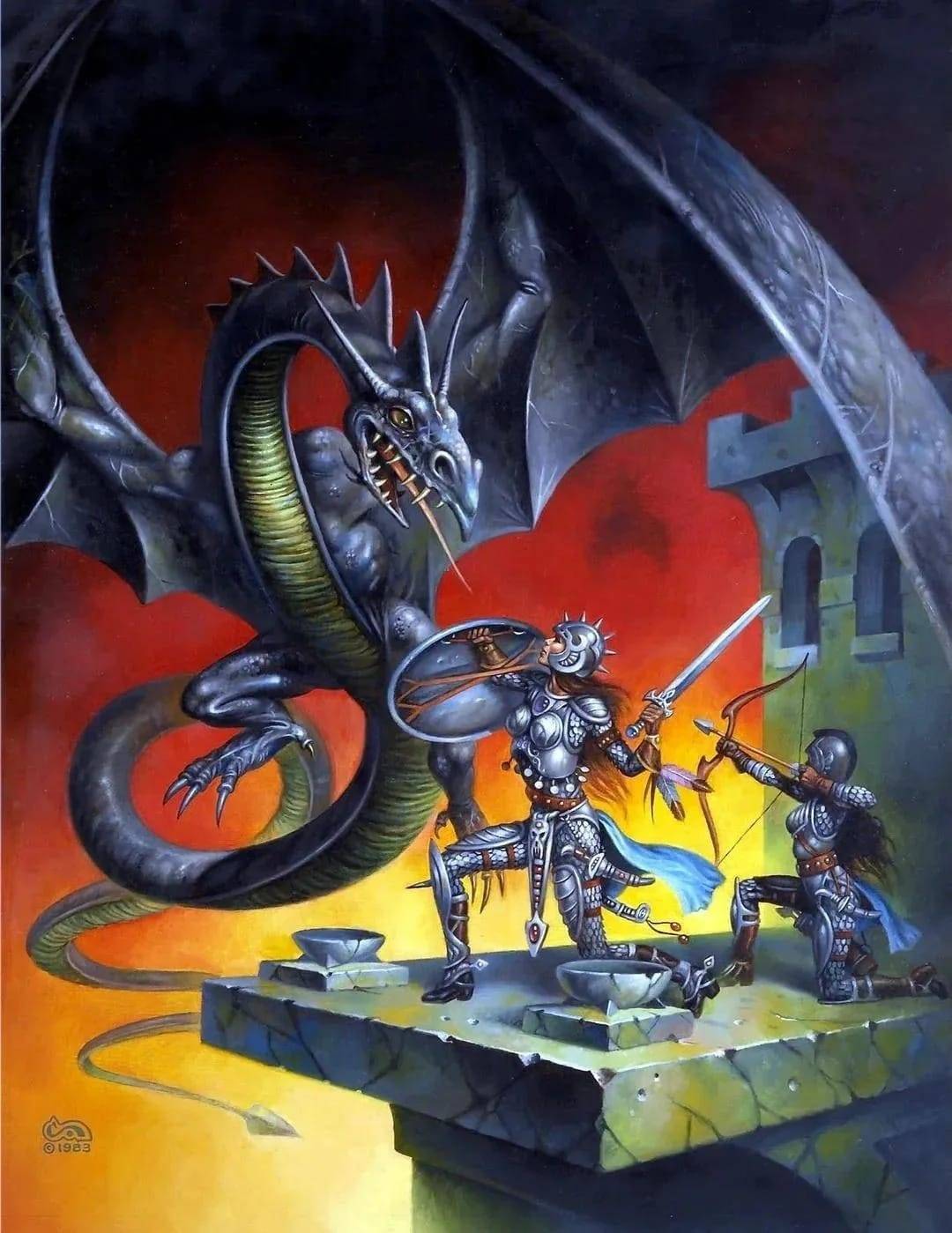
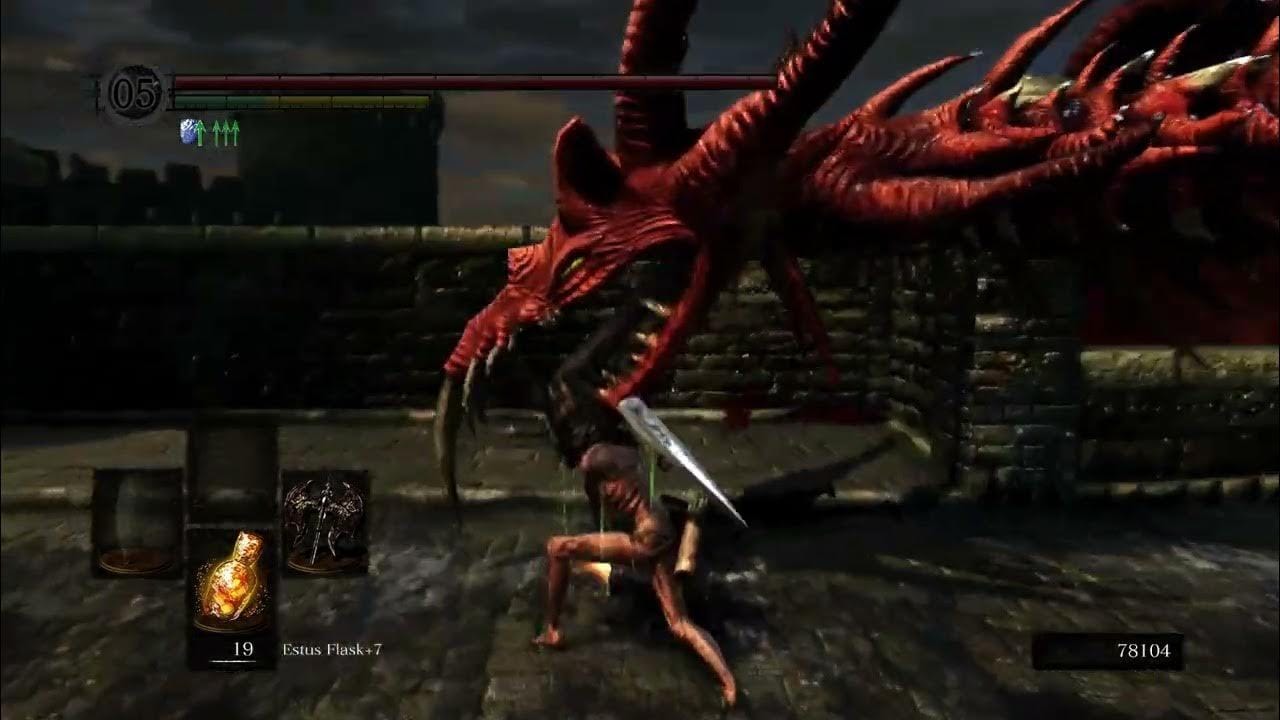
At least, I think they're similar! Caldwell's such a well-known D&D artist that it seems likely Dark Souls would have drawn inspiration from his work.
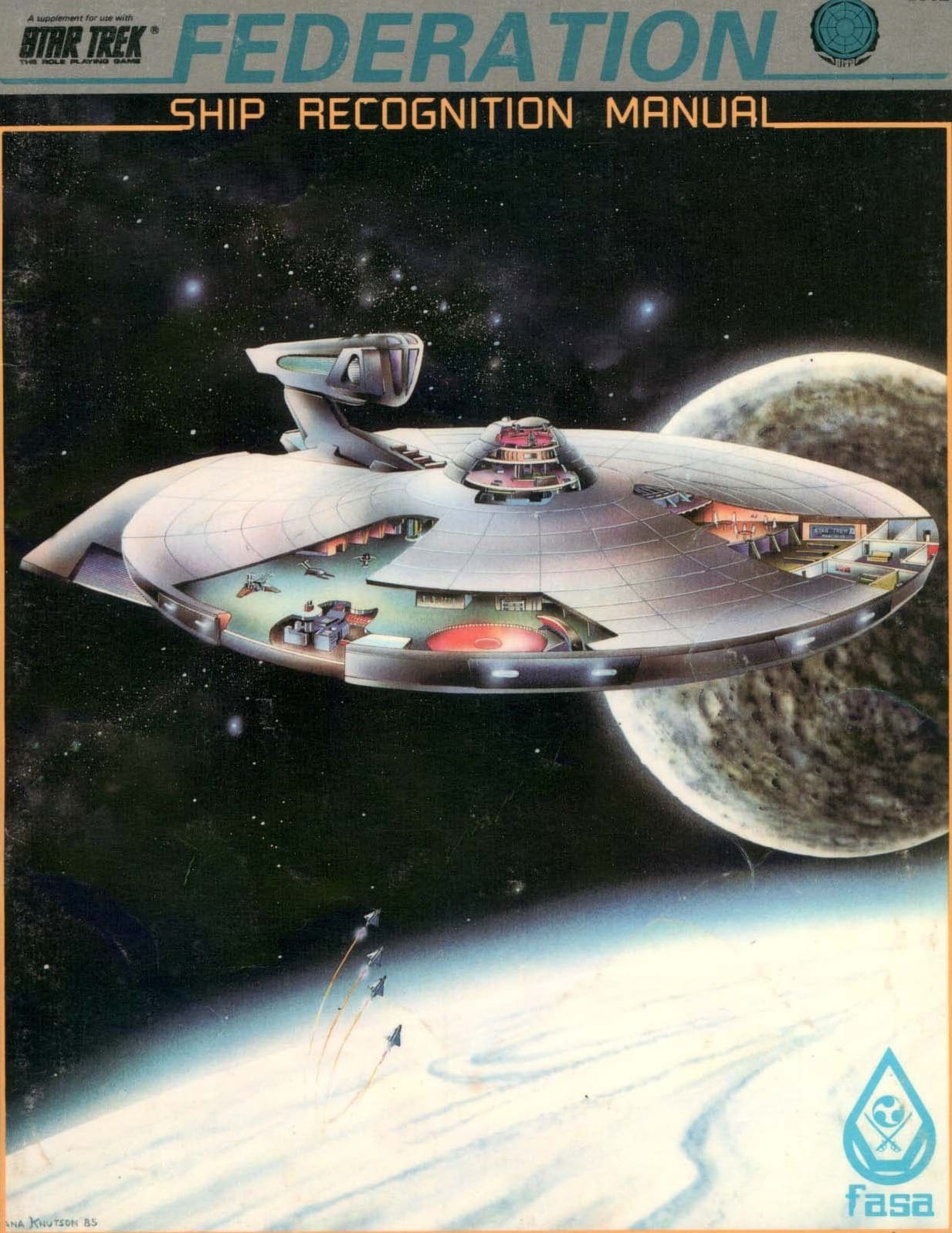
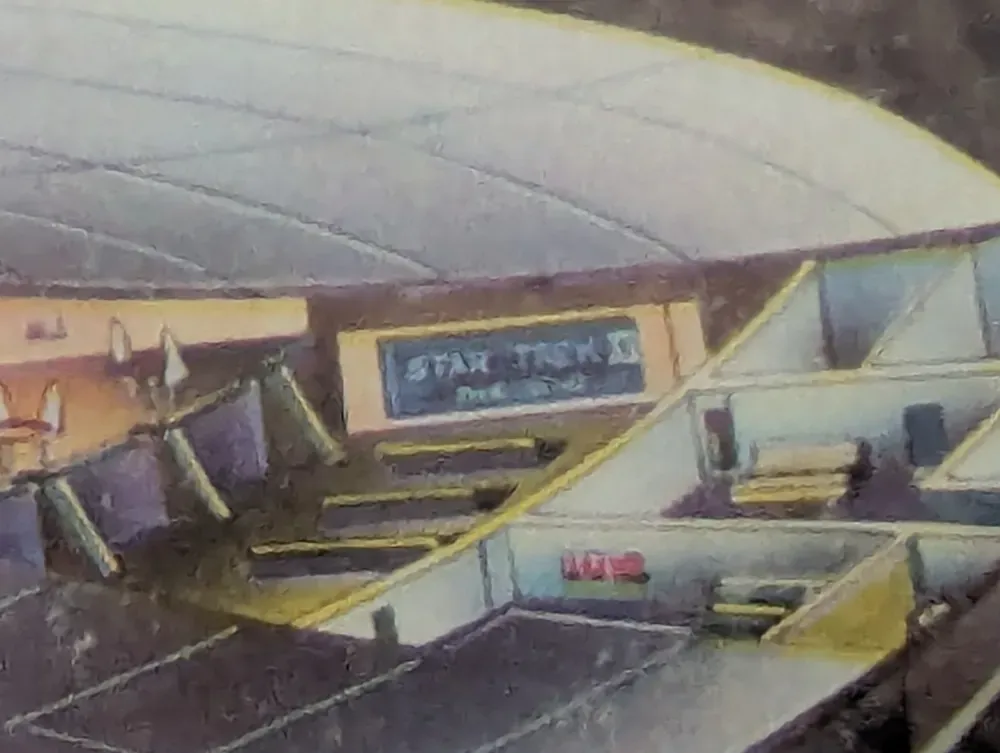
Here's a fun fact about Dana Knutson's 1985 cover for the Star Trek Federation Ship Recognition Manual (a supplement to Star Trek: The Role Playing Game) that Tilly Bridges pointed out to me on Bluesky. The onboard theater towards the right-hand side is playing a Star Trek film!
Someone appears to be impersonating Chris Foss in order to sell prints on Fine Art America. Pretty sad to see, and it's obviously a scam because most of the art isn't even Foss – there's a lot of Penningtons, a John Berkey, one work by Danny Flynn, etc.
Someone on Tumblr sent me this cool 1979 Greek funk/soul Panama album cover by Gilbert Raffin.
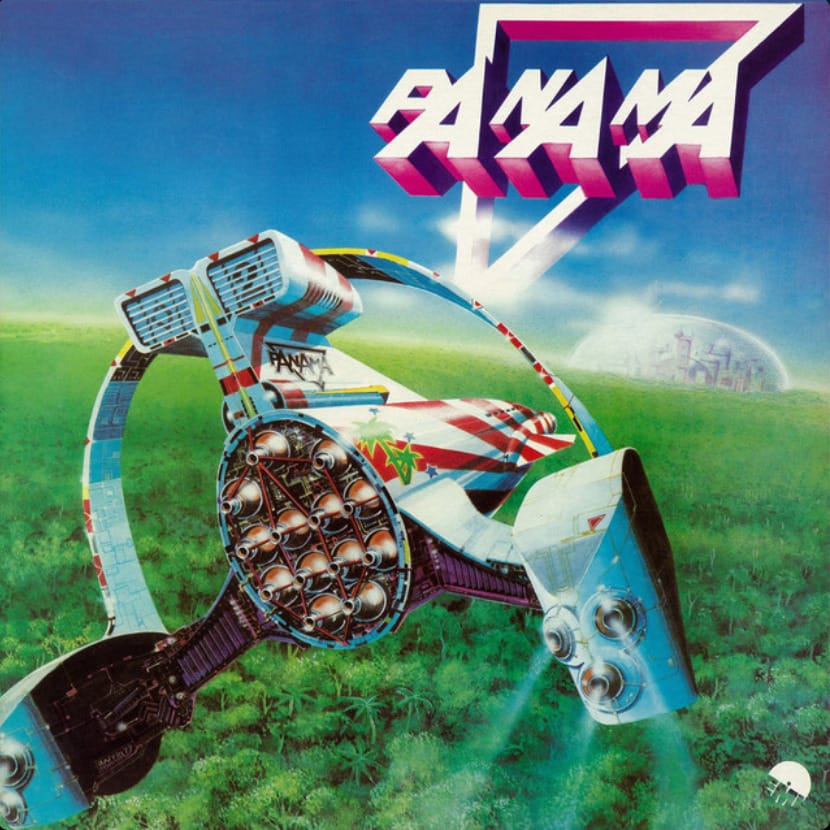
It's new to me, and I really like it... it has that authentic airbrushed 70s feel and what looks like a Chris Foss/Peter Elson influence, but the actual elements of the spaceship are more closely inspired by race cars and propane tanks than what you see with most spaceships.
Here's an interesting interview with Roger Dean, initially done in 2020 and available online as of 2025.
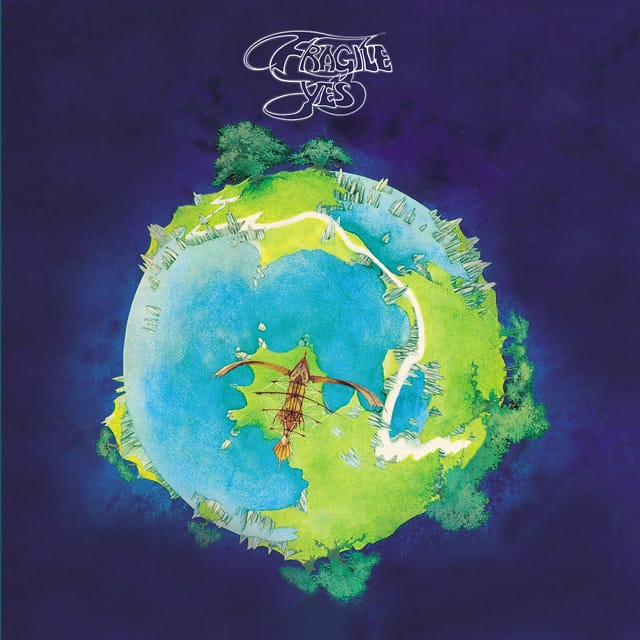
Here he talks about the very first album he did for the band Yes, and how he
“They had the title Fragile, and Bill Bruford said the idea was to put the ‘fragile’ label you see on flight cases onto the album cover. I didn’t want to do anything so literal – I wanted to do something that took the idea of fragility and wrapped it around the world, which would be very relevant in these days. It was more of an abstract idea then. They liked it and it worked.” His sleeve added to the sense of growing confidence around the band. The booklet stitched into the inside of the gatefold reinforced the sense that this was an artistic force to taken very seriously.
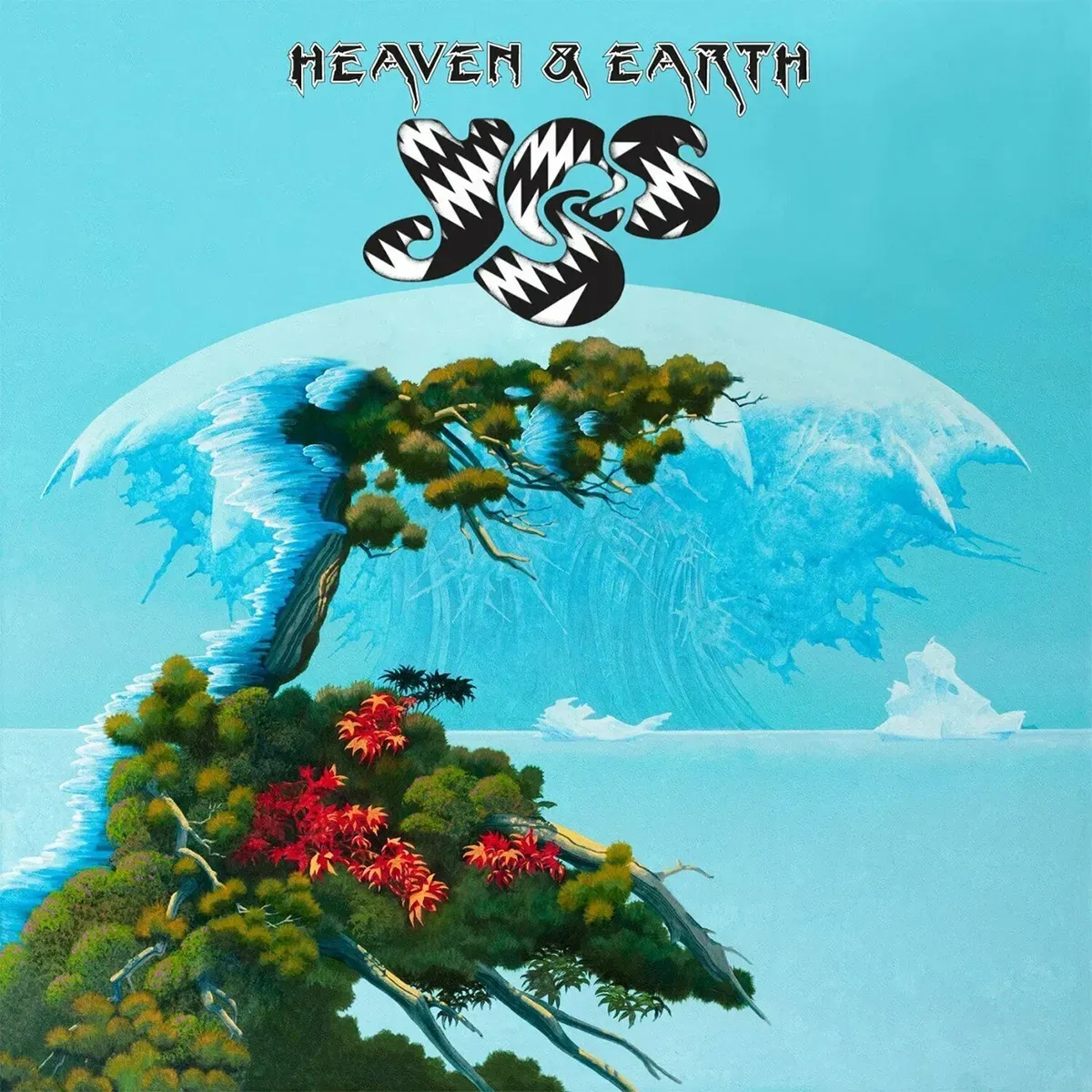
The same article also has this anecdote about how Dean apparently accidentally gave the 2014 Yes album Heaven & Earth its name by failing to hear whatever it initially was:
Occasionally that closeness can get its wires crossed, says Dean, recalling the band’s perplexed reaction to his suggestion for 2014’s Heaven & Earth. “It’s not that they didn’t like it – rather that they were bemused. It quickly became clear to me that they weren’t looking at what they were expecting to be looking at!
“To me, the title Heaven & Earth is a partial quote from Hamlet, where he says: ‘There are more things in Heaven and Earth, Horatio, than are dreamt of in your philosophy.’ What I wanted to achieve was the idea of something massive and mysterious in some hidden place like the Arctic. Then they asked me, ‘Where did you get the title Heaven & Earth from?’ And I said, ‘That’s your title – that’s the title you gave me.’ And they said, ‘No we didn’t; we gave you something totally different!’
“They may well have given me something totally different. I got it over the phone and clearly I misheard, but it made enough sense to me that I went ahead with it. At the meeting, they were very bemused – but they said, ‘Well, let’s go with it!’”
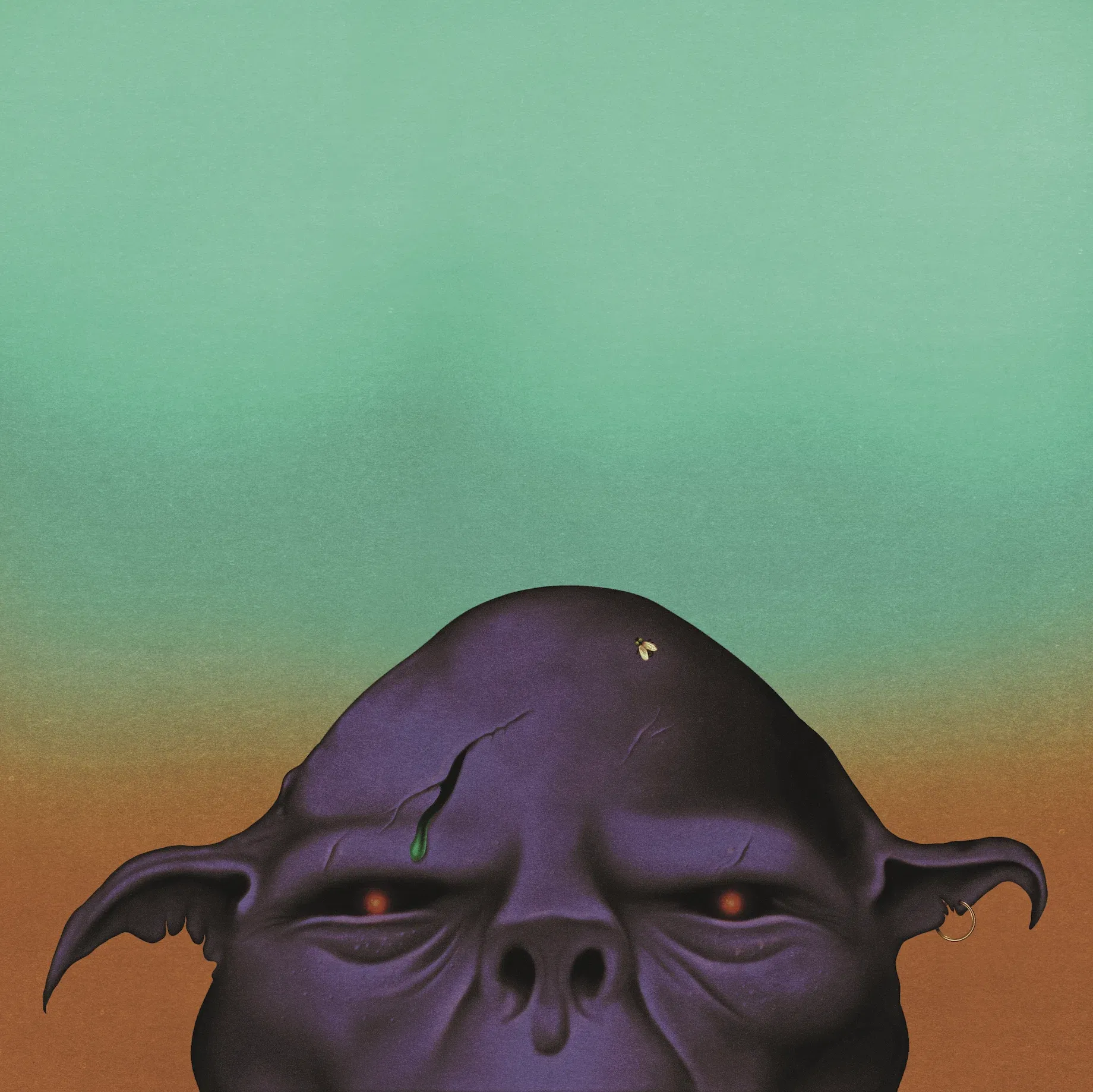
Speaking of interviews about album cover creation, here's a chewy one with Robert Beatty for It's Nice That. He talks about his process, creativity in the AI age, and how people don't respect image sampling the same way they do audio sampling.
It also has this sick album cover: Robert Beatty, "Orc" (Copyright © Thee Oh Sees, 2017).
Finally, here's an old Syd Mead interview from a website with an interface that must be seen to be believed. Here, he discusses the one artwork that got him the concept artist position for Blade Runner – it sounds a lot like he's describing the 1961 illustration I included at the top of this post!
Interviewer: So, does that mean Ridley Scott already had his own vision of L.A. 2019, or was it left entirely up to you to realize it?
Syd Mead: Ridley had his London staff round up available books by 'futurists' and sci-fi illustrators. My first book, SENTINEL, had just been published by an English publishing group. That was the link. Ridley specifically liked one rainy, mega-structure city expressway view, and when he came to Los Angeles to start the film, called me, we had a meeting and I was hired on the spot. He had a very definite vision of how he wanted the film to look from the start.
Music Rec: I'm still listening to the big 60s/70s orchestral jazz playlist I recommended to my paid tier a while back. There's a lot of it!
Next Time: On Friday, paying users get quotes and art from the Cathy Fenner-edited 2015 art collection Women of Wonder.