Gwen Howerton on the History of the Houston Blacklight & Poster Company

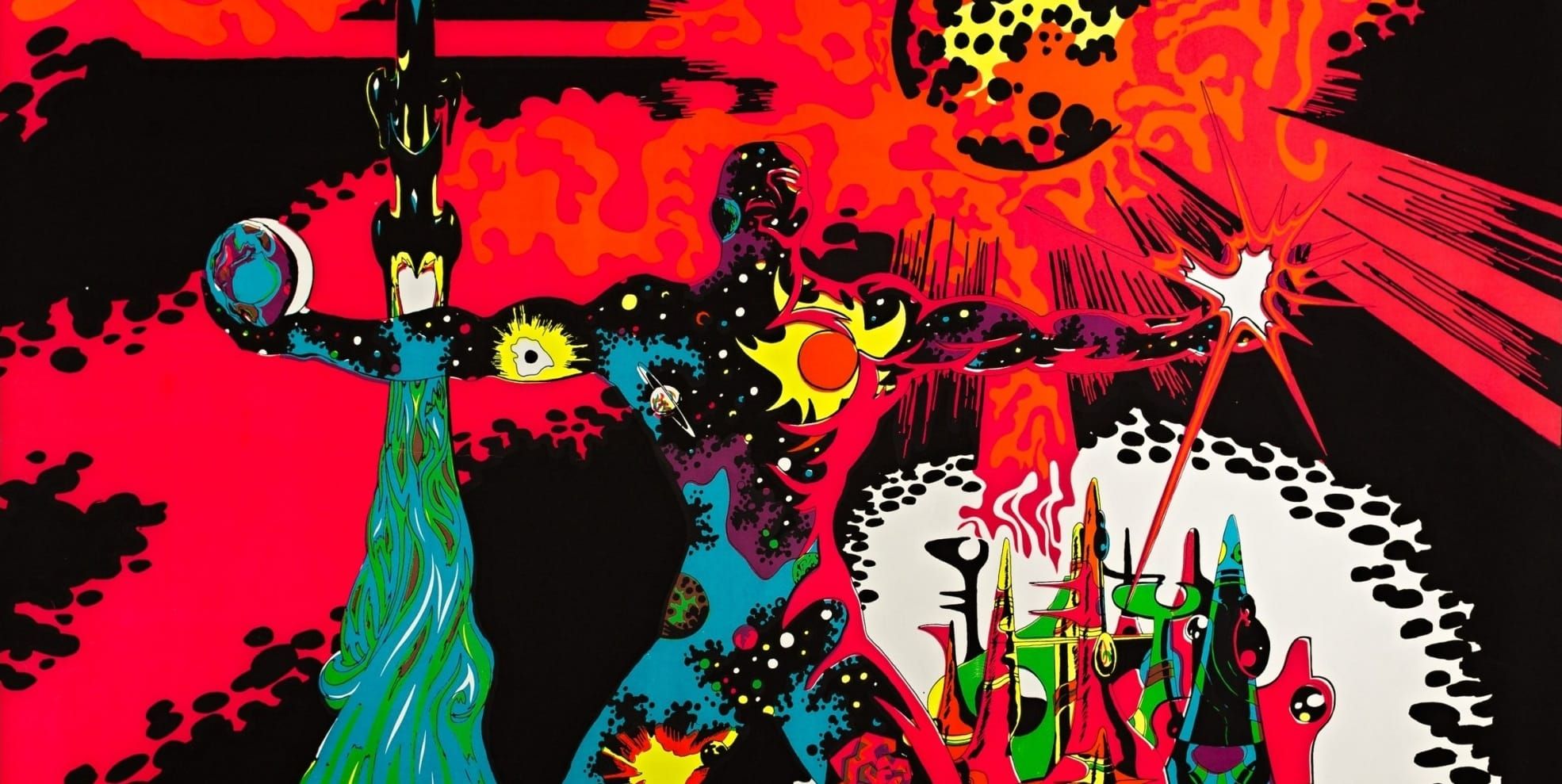
The history of a lot of disposable media is somewhat under-recognized, from pulp magazines to paperbacks. But the more gimmick-heavy formats have it worse than others. In my experience, the '70s blacklight poster fad is one of the least documented (well, 4DX movies might have them beat, but that's another newsletter).
The zany fluorescent ink posters tended to feature sci-fi and fantasy landscapes in stark colors that activated a vibrant second-stage change under ultraviolet light. I've rounded up examples in the past, but nine times out of ten, I couldn't find any artist to credit – info is much harder to track down for blacklight posters than for the retro book covers I typically focus on.
That's why I was thrilled to read this fascinating new article about the history of the Houston Blacklight Poster Co, out from Chron.com Texas culture reporter Gwen Howerton. The company produced the finest wall art for hippie stoner counterculture dorm rooms and basements from 1969 to 1973.
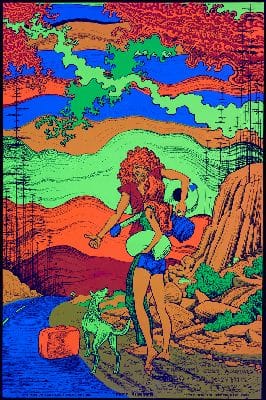
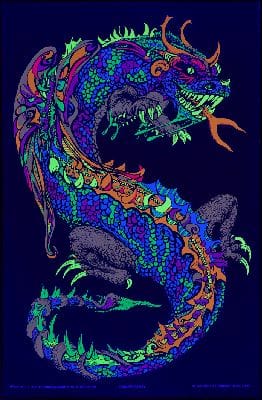
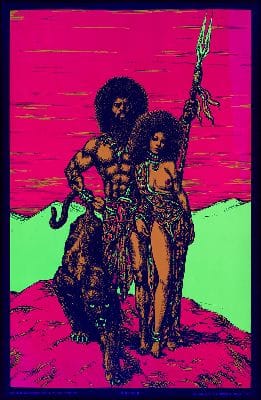
Two illustrators are covered in the article. First is the one artist that I had already heard of before: George Goode, a then-high schooler who did more than 40 posters for Houston Blacklight. He later moved to Los Angeles and worked on TV shows including "Star Trek: The Animated Series, Fat Albert and the Cosby Kids, and the original run of Transformers cartoons."
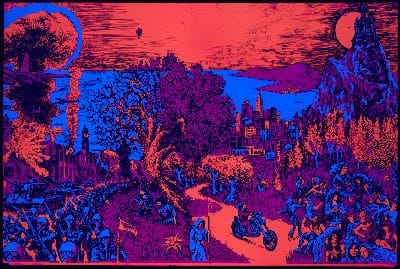
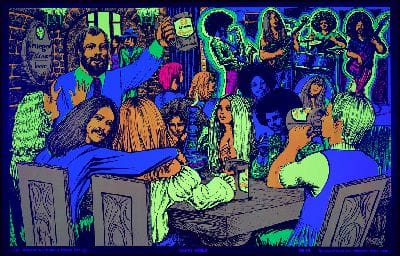
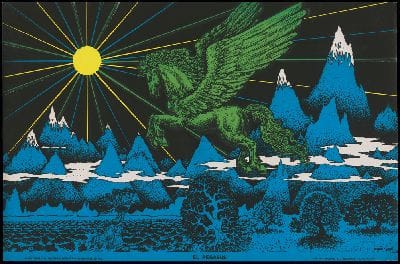
Here are a few of Goode's posters, taken as thumbnails from the University of Houston's digital collections.
The other artist was Horace Mitchell – he did sketches that became four Houston Blacklight posters. From the article:
That experience would serve him well in a much different role. After he finished his master's and PhD, Mitchell went on to work at NASA's Goddard Space Flight Center, running the agency's Scientific Visualization Studio in 1991, making hundreds of videos explaining everything from Mars' magnetic fields to hurricane animations. His work has been on news channels around the nation and even appeared in Leonardo DiCaprio's 2016 documentary Before the Flood. But he has always seen his work for the Houston Blacklight as the foundation of his career.
"I always had a joke: people would ask, 'Well, are you a real artist?' And I'll say, yes, I am. I'm published, but only because of those four things that got printed," Mitchell joked.
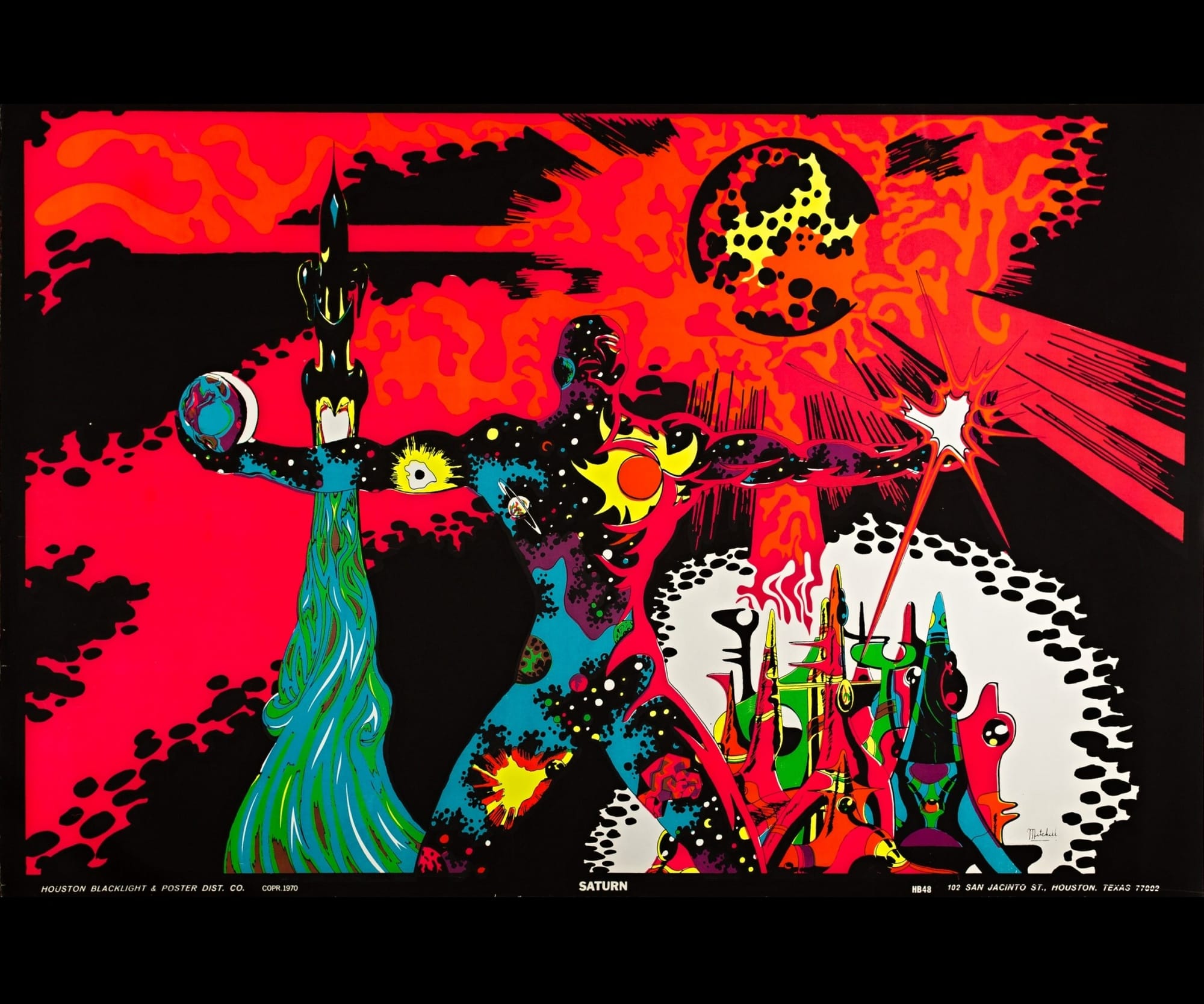
One of Mitchell's posters is my favorite, and the only one that I have a really nice scan of: "Saturn." You can really see the impact of Jim Steranko and Jack Kirby, two artists Mitchell was influenced by.
You should definitely read the entire article! When you're done, check out this quick written interview I did with Gwen Howerton to learn even more context.
How'd you get the idea to write this?
I can’t take all the credit for it. My old colleague Brittanie Shey, who wrote for a bunch of different Houston outlets and who knew so much weird Houston history, actually was the one who told me about The Houston Blacklight & Poster Co. If I recall correctly, she had come across one of the posters during a trip to New Orleans around 2022 or so. That led to some research and her finding out about the Portland bar called The Houston Blacklight, which I think she visited. She did started writing it up and then life got in the way, eventually she decided to get out of journalism and moved to London. It sort of became a running gag among a few of my coworkers to be like “one day we’ll finish the Houston Blacklight story.”
I had kind of been thinking about it and decided, “why don’t I just finish this for real?” I really love Houston and I think the city has so much fascinating history that doesn’t get told. We don’t take very good care of our civic history, either, and so it sort of falls to random people who really care about one particular thing. That was the case with some of the former Blacklight employees who started a Facebook group to share their memories of working there. I’ve always loved stories about the place Houston once was and the place it is now, and this was a case of that.
I also really love a chance to do a visual story, which this very much is.
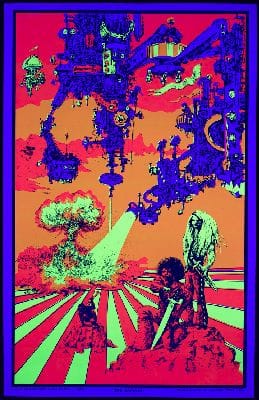
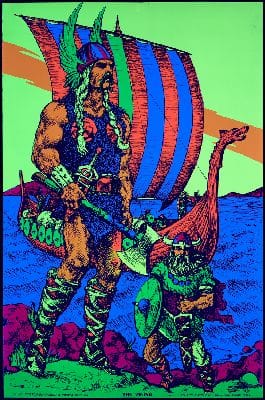
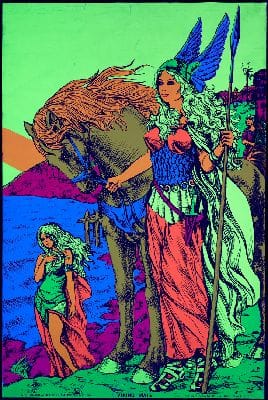
More posters by George Goode.
Do you have more research on the history of blacklight posters or the Houston Blacklight that you couldn't fit into the article? Maybe any info about the medium after Houston Blacklight ended in 1973?
I kept my focus on the Houston Blacklight Co. just because I have a tendency to get really in the weeds on stories with lots of off-ramps. But I will say that besides Houston, the HBLPC had a huge impact on Atlanta, too. It had a big distribution site on Atlanta’s Peachtree St., which was a hub for the hippie and counterculture scene in Atlanta.
As for The Houston Blacklight Poster Co., Jerry Jones sold it to his brother Lewis in 1973 and it became Zodiac Distributing. It moved its headquarters to an address at 309 Travis St. There’s really scant info on what became of it after that but from what I understand, it continued to print posters for a time.
And as for blacklight posters, it seems like the medium just kind of faded out for a lot of reasons. Maybe the 70s ended and everyone got sick of them, maybe stores stopped selling them and the distributors went out of business. From what I was able to tell, there’s really scant history on not just the Houston Blacklight Poster Co. but most of the big companies that made them like Pandora Productions, though there are a lot of scans of their posters online.
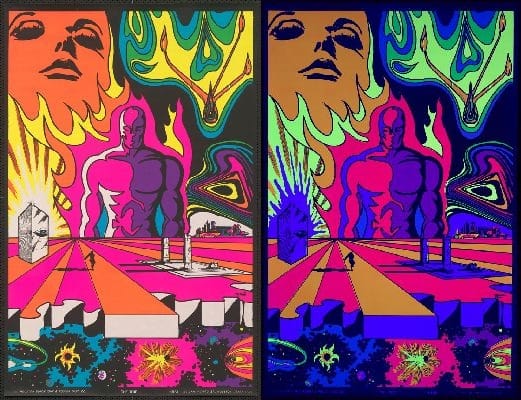
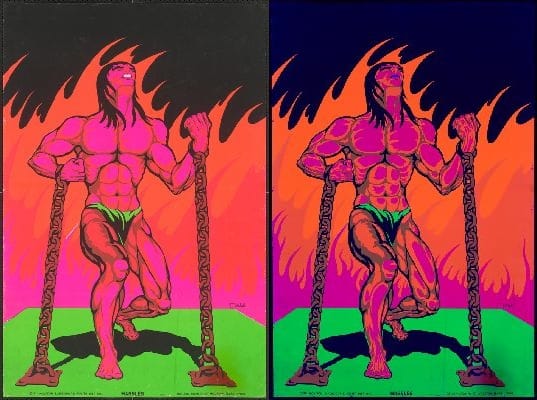
The normal light and blacklight versions of two Horace Mitchell posters.
What are the odds Jerry Jones was really part of COINTELPRO?
Now that’s a question I’d love to answer, and something I would’ve loved to dig into more, but it was a little tangential. Nothing I found in my (albeit brief) research pointed me towards Jones being involved in COINTELPRO, but I figured I would have to FOIA that information and that feels like a second story if it strikes my fancy. Unfortunately, he and his wife died some years ago and his son doesn’t seem too interested in talking, so we may never know. COINTELPRO operations were definitely going on in Houston at the same time that the Blacklight was open and operating, so never say never definitively .
Just to speculate, the recording everything is strange if true. What I wouldn’t give to get my hands on those tapes! Though it seems like a lot of trouble to set up a whole poster company just to arrest hippies and left-wingers, stranger things have happened, especially when it comes to the FBI. Very little is known about Jones’ life outside of a few mentions in news stories, though again part of that is a gap in research because I was so focused on the birds-eye-view.
I will share this sort of bizarre anecdote that didn’t make it into the story, courtesy of Mark Townes who ran the Atlanta operation at just 17. He told me that on the last day of operations before selling the Houston Blacklight Poster Co. to his brother, Jerry Jones gave Mark $100 in twenty dollar bills and told him to go to the liquor store, buy a bunch of bottles of wine, and set them out in the middle of Market Square in Downtown Houston to watch the drunks and homeless people go and try to grab them.
TOWNES: "On the last day, like right before Jerry sold it, I put this story on that Houston Blacklight [Facebook] Group, but Jerry gave me 100 bucks in twenties and said he was closing it and said, 'Go down to the liquor store, buy a bunch of bottles of wine and go set them out there.’”
"Remember this is 309 Travis right across the street from Market Square, and like there are a bunch of homeless people out there in Market Square.”
“'Go down there to liquor store, buy a bunch of bottles of wine and go set them out there in the middle of the street on Travis so I can watch all these homeless people go out there and grab them,’” Townes recalled Jones telling him.
TOWNES: "What an idiot. So I did it, but, you know, I put him them there, but it's like it didn't turn into like a feeding frenzy like he was hoping, you know.”
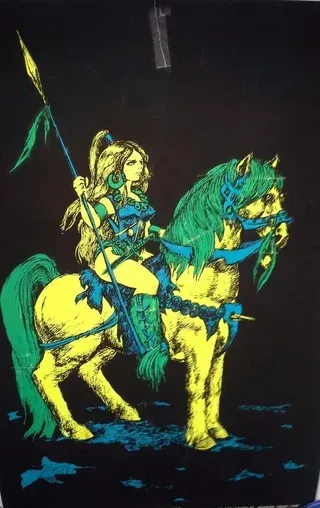
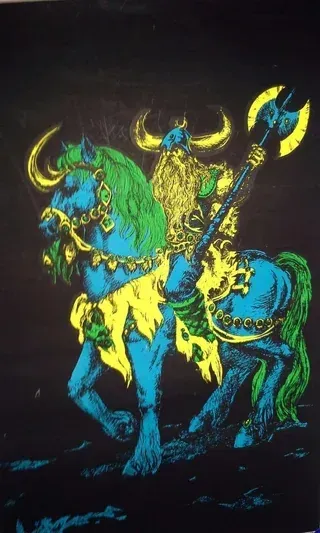
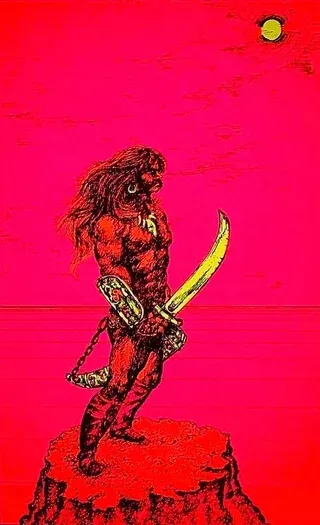
A few more George Goode posters.
I wish I knew more about the history of black light art, but it seems pretty under-recognized. I like what you already said online about why it deserves to be appreciated - want to reiterate/expand on that?
What I really love about these posters, and blacklight art in general, is that they combine so many things. Christian Kelleher, the librarian at UH who showed me his collection, explained this best in how many topics you can teach off of something like this. There's science in how they were made, there's all sorts of anthropological stuff to be mined from the imagery, there's lots of history lessons. It sounds silly but they're really important artifacts from a brief but profoundly impactful time in American history.
I also really love "low culture" art and artifacts that is kind of ephemeral, too. The posters served both a function (provide something for your wall) and fulfilled spiritual and political needs. They signaled membership in a scene, a subculture. But then they were discarded when you moved on, and now they're rare. The stories they tell about our country and the city of Houston are really worth saving, IMO.
It might be a pipe dream, but I'd love to write an entire art book about blacklight posters (printed with fluorescent ink, of course).
The article mentions two other big blacklight poster companies – Ohio-based Pro-Arts Poster Company and Minnesota's Pandora Productions – so I have a few starting places for more research, in addition to the digital collection I mentioned earlier. If anyone has any other tips for good resources, drop them in the comments!
Cool Links
10 gimmick-driven shark movies trying to outswim Jaws - AV Club
I love a good gimmicky shark movie (Deep Blue Sea, The Shallows, Dangerous Animals) but I hate the bad ones (kick rocks, Sharknado). This article has alerted me to the existence of what sounds like a pretty good one: Beast Of War, about a handful of Aussie WWII soldiers fighting a shark.
Interesting look at what the 100-year-old Book of the Month company is getting up to these days.
Algorithms ⇆ Folklore - Algofolk
Very cool article about a topic I find consistently fascinating: What internet-native urban legends look like.
"There are countless examples of algorithmic folklore. Attentive readers latch onto recurring words like “delve" to identify LLM-generated text, amidst rumors that AI is developing its own language (it wasn't). Counting fingers in photos of celebrities becomes a conspiracy-fueling pasttime. [...] TikTok users embrace the #xyzcba hashtag believing an urban legend about its magical effect of boosting recommendations, which in turn makes it actually work."
Music rec: One hour of Jason Bourne soundtrack focus music
Next Time: Gold Key's Twilight Zone