Paintings of Paintings

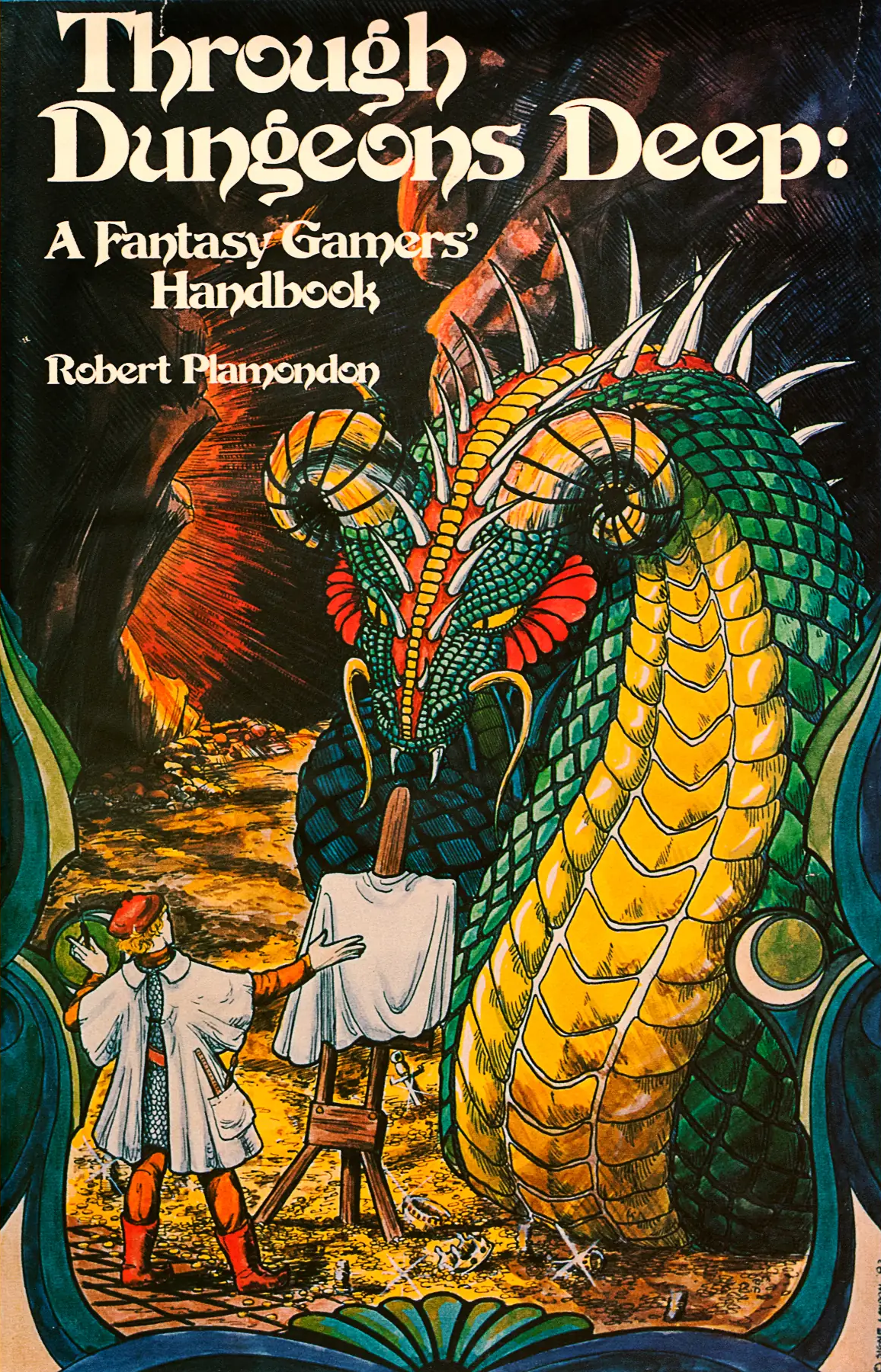
Stu Horvath recently reviewed the 1982 RPG introductory guide Through Dungeons Deep: A Fantasy Gamer’s Handbook on his blog.
The cover art by Signe Landon depicts an artist at an easel, about to unveil their masterpiece to a dragon, and it got me thinking about meta paintings – artwork that is itself a depiction of an artwork.
This particular style of self-reference is popular across the art world in general, and many speculative fiction artists are homaging the masters. Take Carlos Ochagavia's 1979 cover to the Terry Carr-edited Universe 8 anthology, for example.
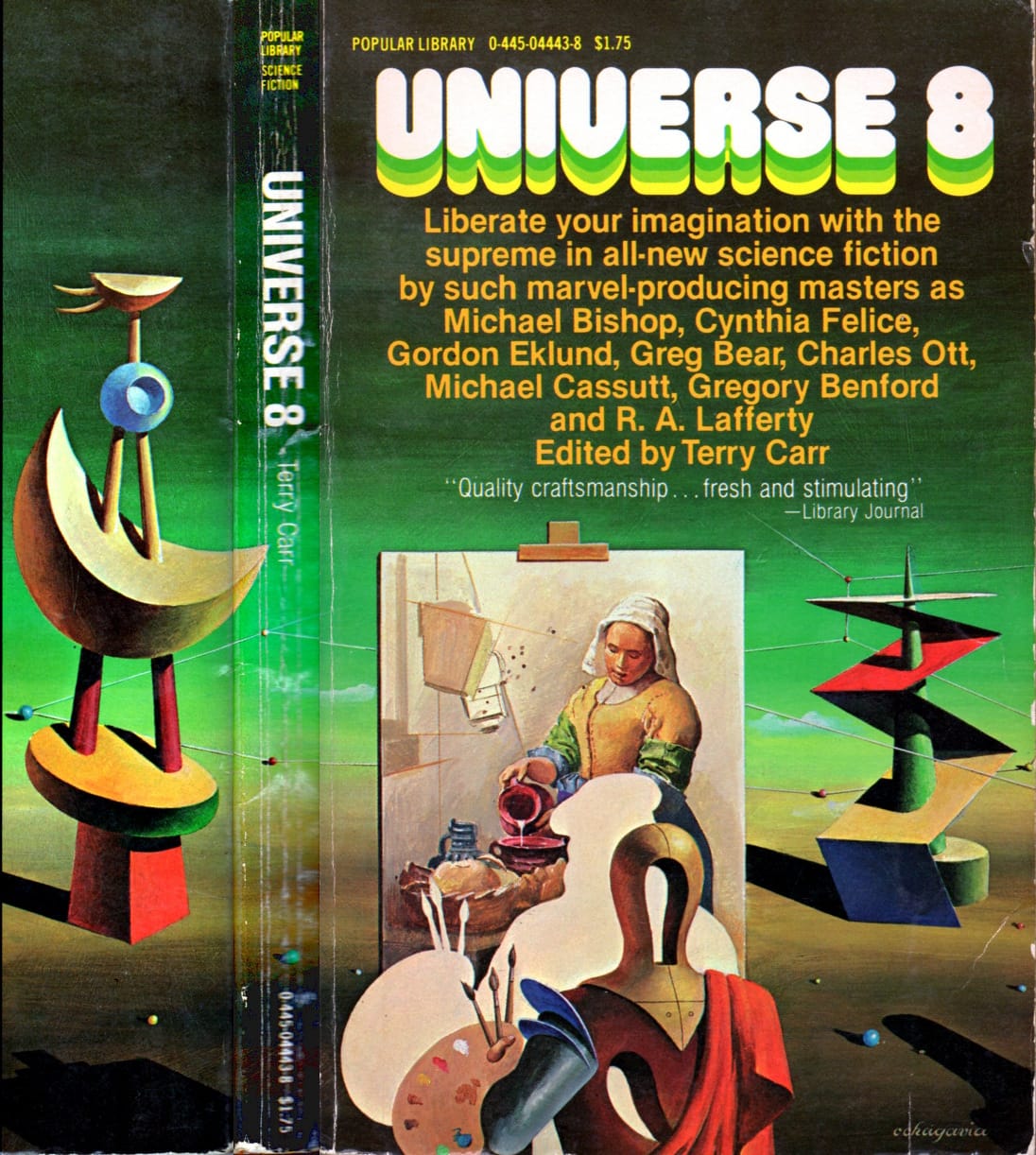
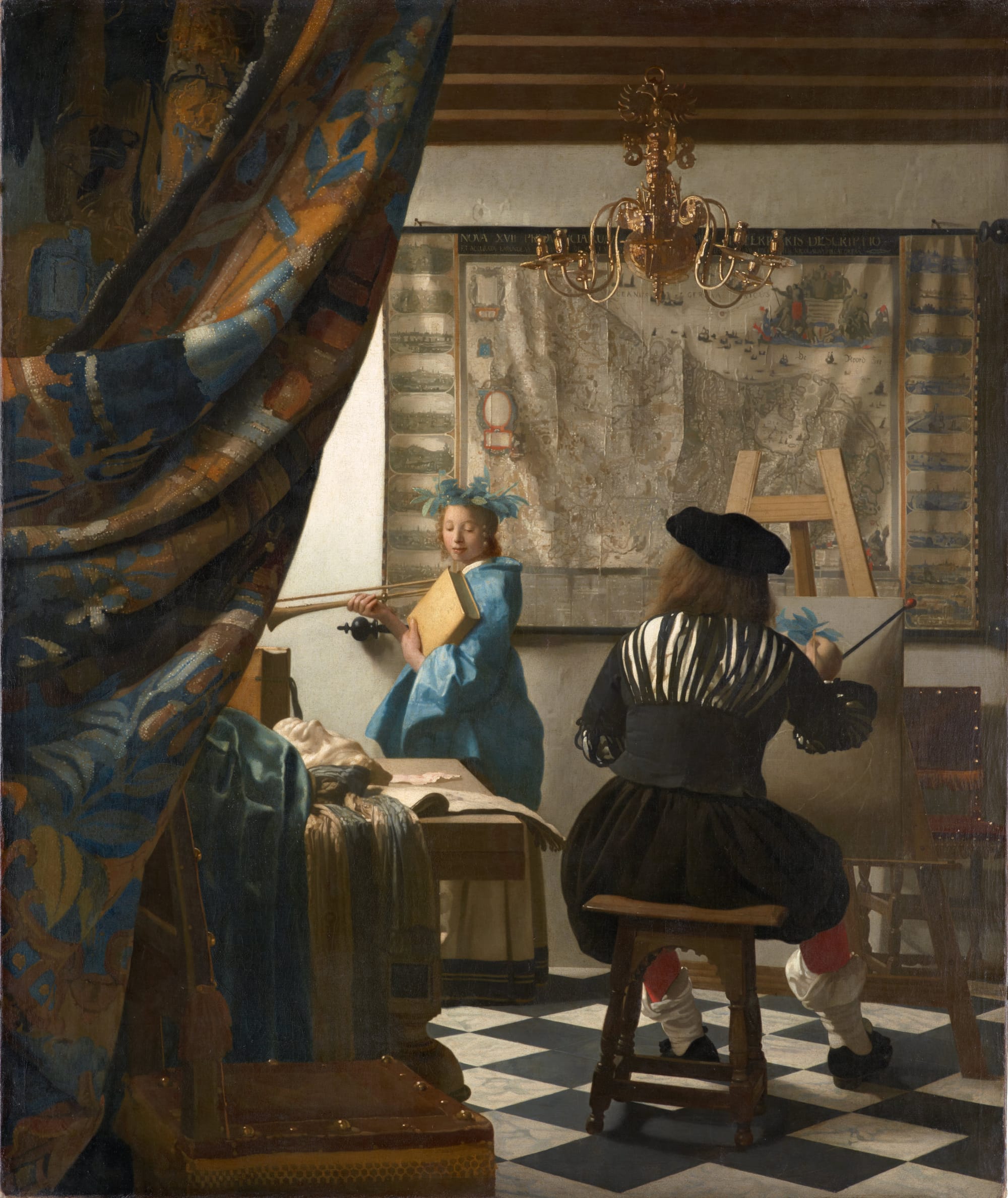
As the Ragged Claws blog points out, it's an homage to Johannes Vermeer's famous 17th century work The Art of Painting, one of the most well-known meta paintings, in addition to homaging Yves Tanguy's surrealist figures.
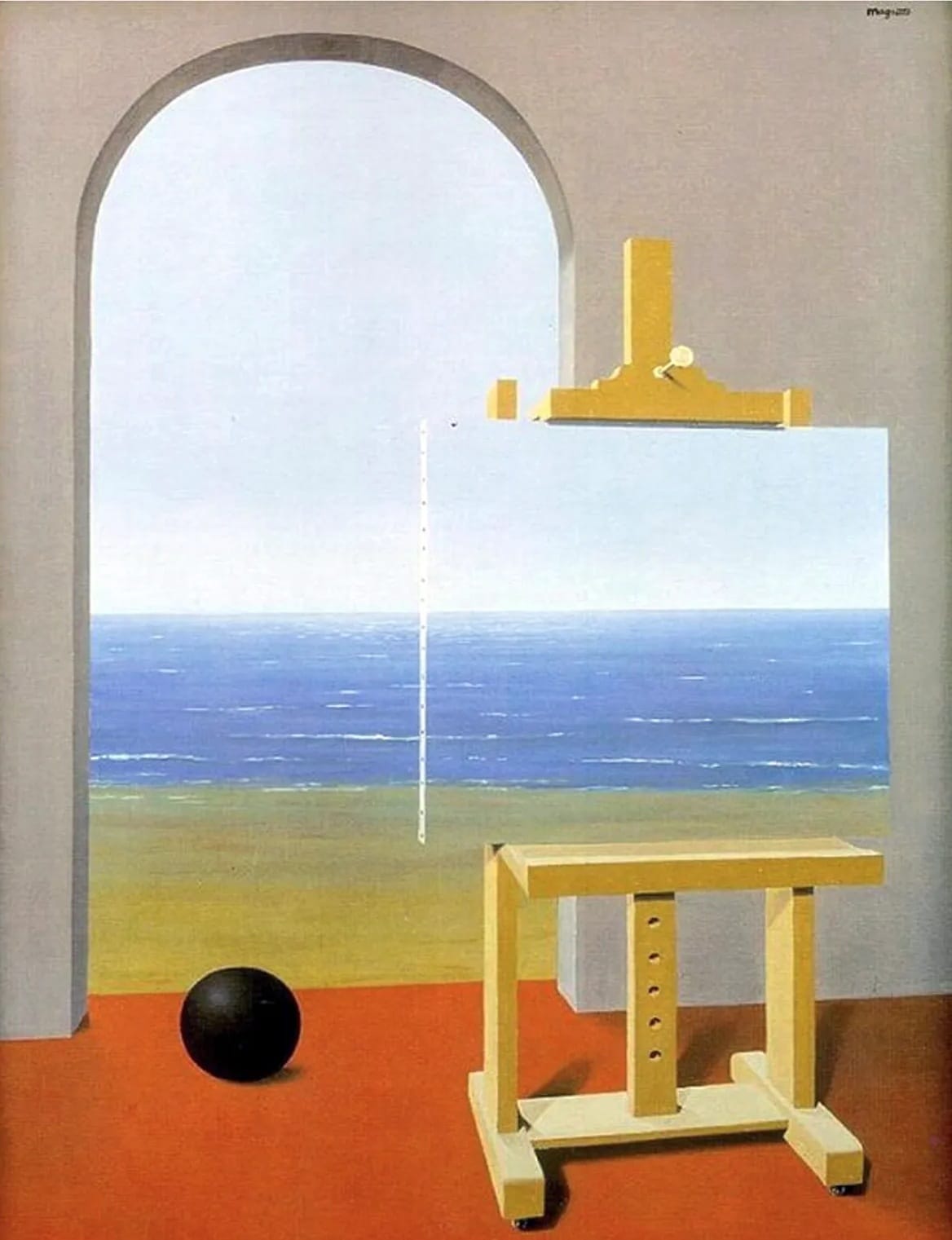
The classical painting influences continue: Here's one of René Magritte's four paintings titled "The Human Condition," followed by a 1994 illustration by Paul Davis.
Davis adds one more layer of metatexuality, complete with a cheeky power outlet.
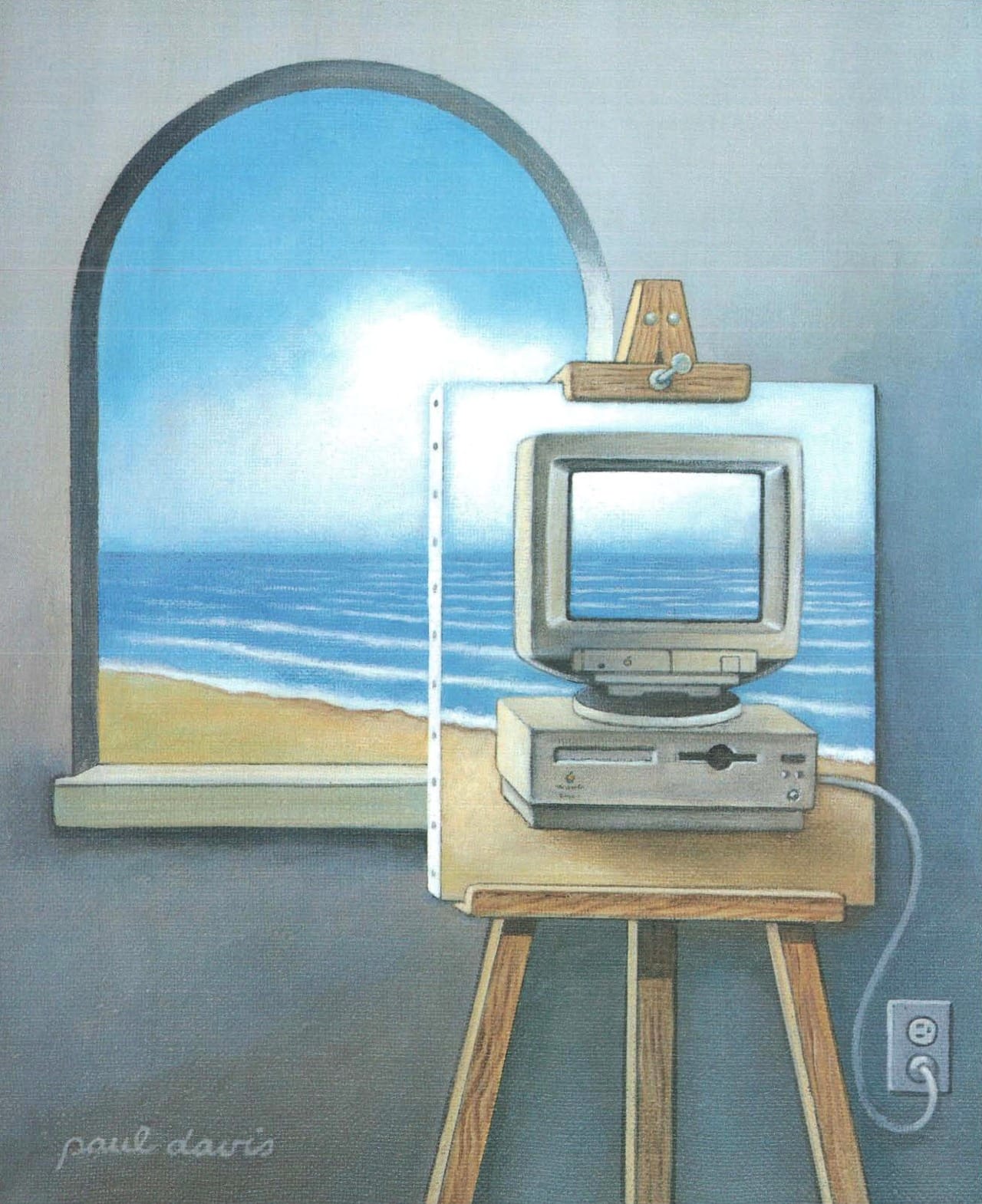
It's for an article in the December 1994 issue of Wired. A few pages earlier, Brook Meinhardt had contributed another Magritte send-up:
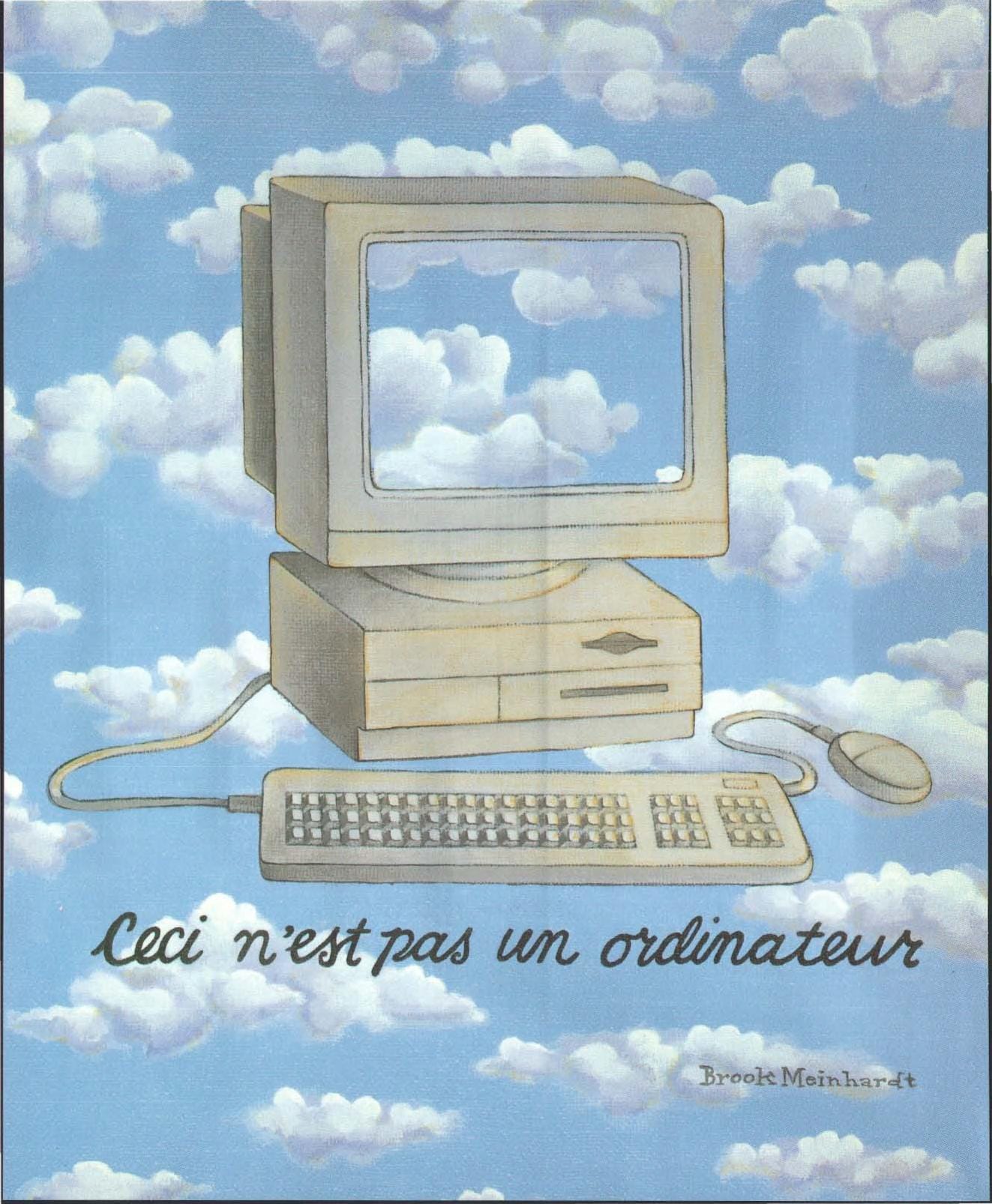
Interestingly, Robert Tinney appears to have arrived at the same Magritte-riffing concept eight years ahead of Wired and Paul Davis.
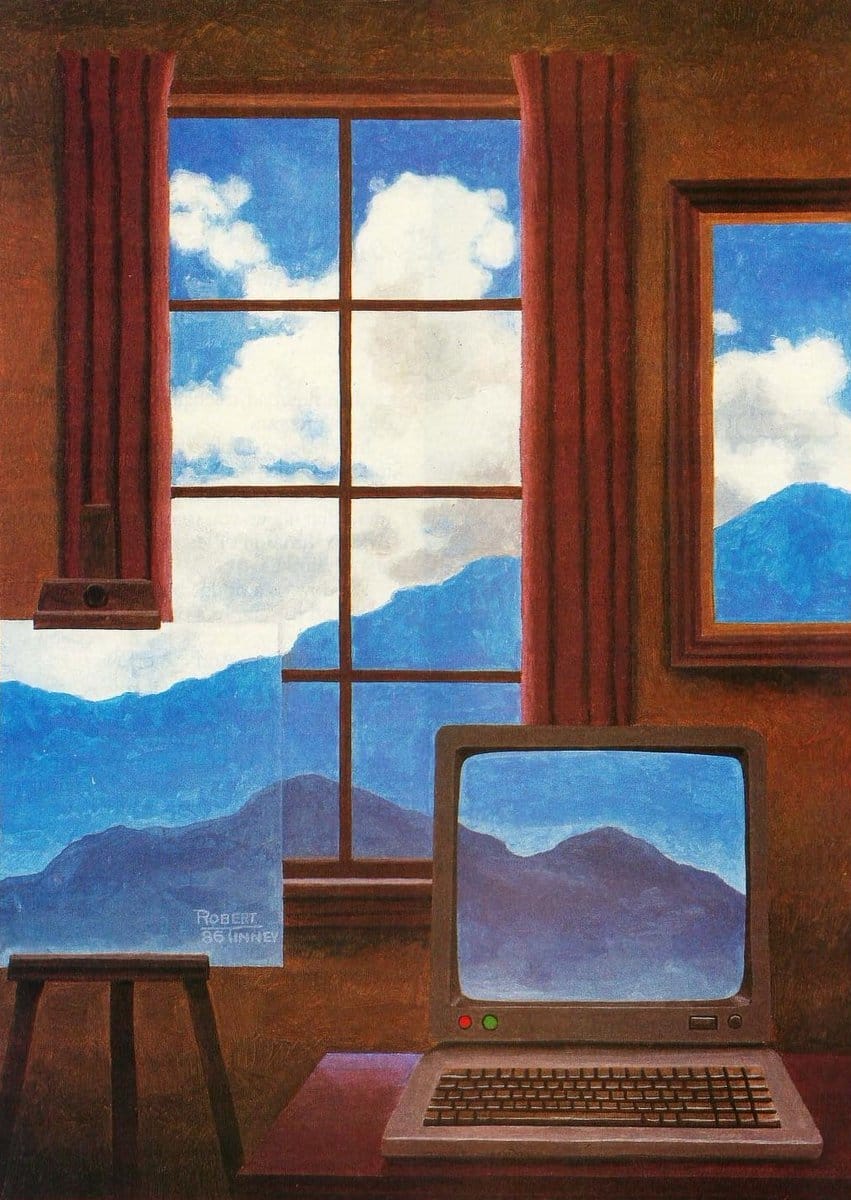
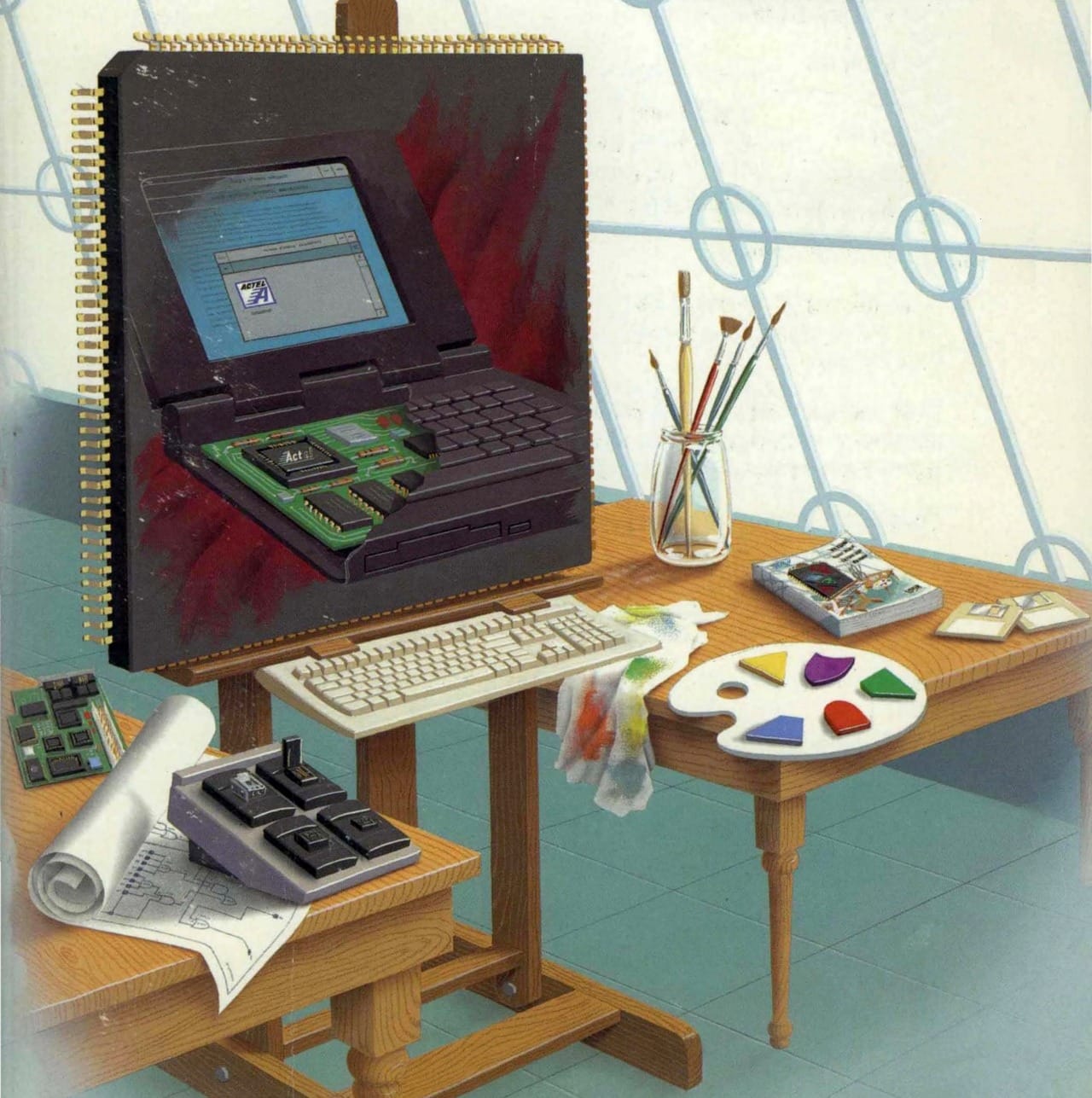
Robert Tinney's frequently playful tech illustrations dipped into the "meta painting" well a few times. Here's his 1994 cover to the Actel FPGA Data Book and Design Guide.
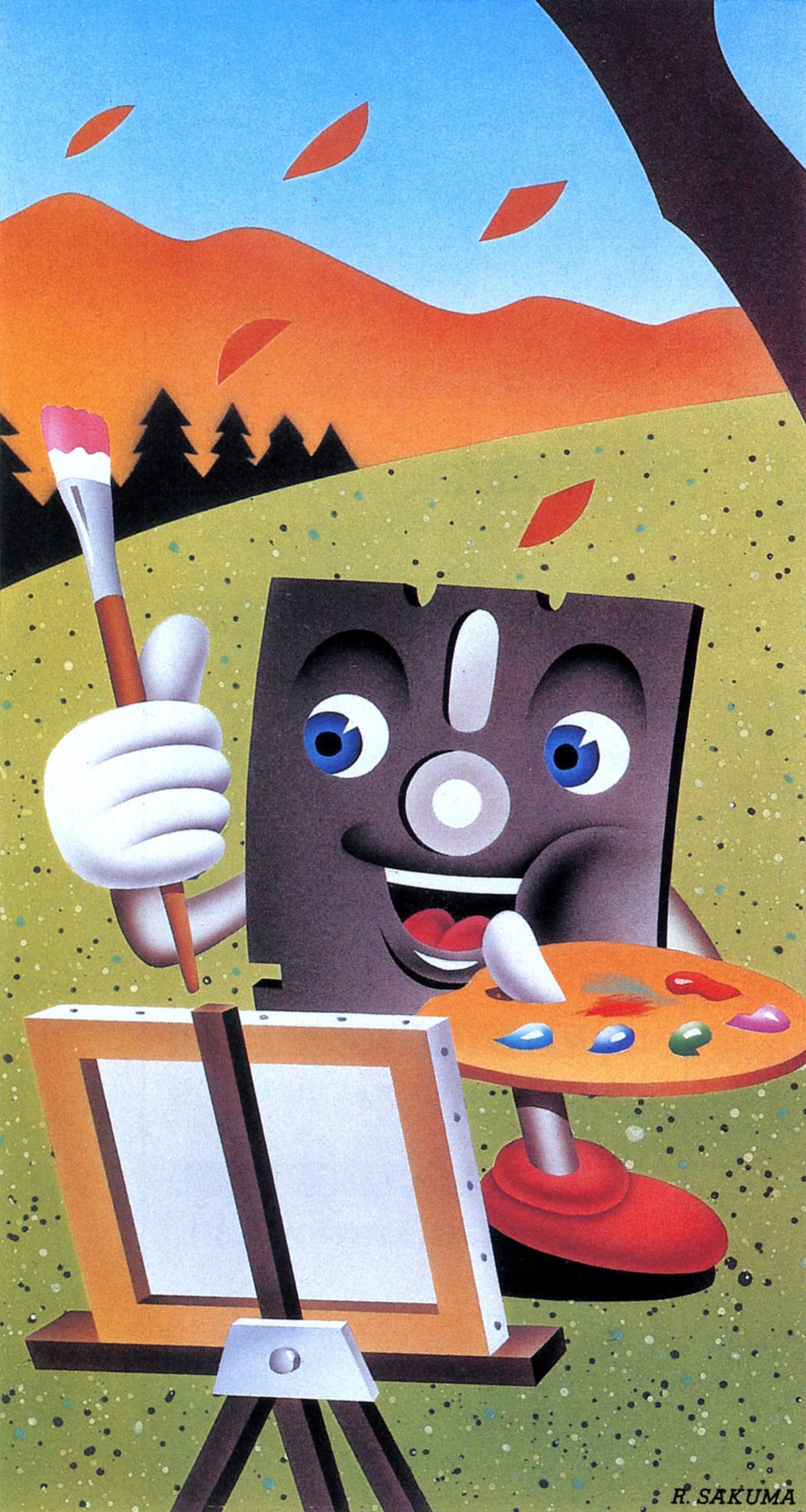
This next example is by R. Sakuma, which I think is for LOGiN Magazine's December 1985 issue – that's what the inimitable Lookcaitlin links to, but I couldn't find which page it was on with a quick flip through.
I have to admit that I don't love this Fisher-Price style, but for inclusivity's sake, it's worth throwing into the mix.
I like the next one a lot more. It's by Mike Saenz, for an article about illustration software in the February 1987 issue of MacUser.
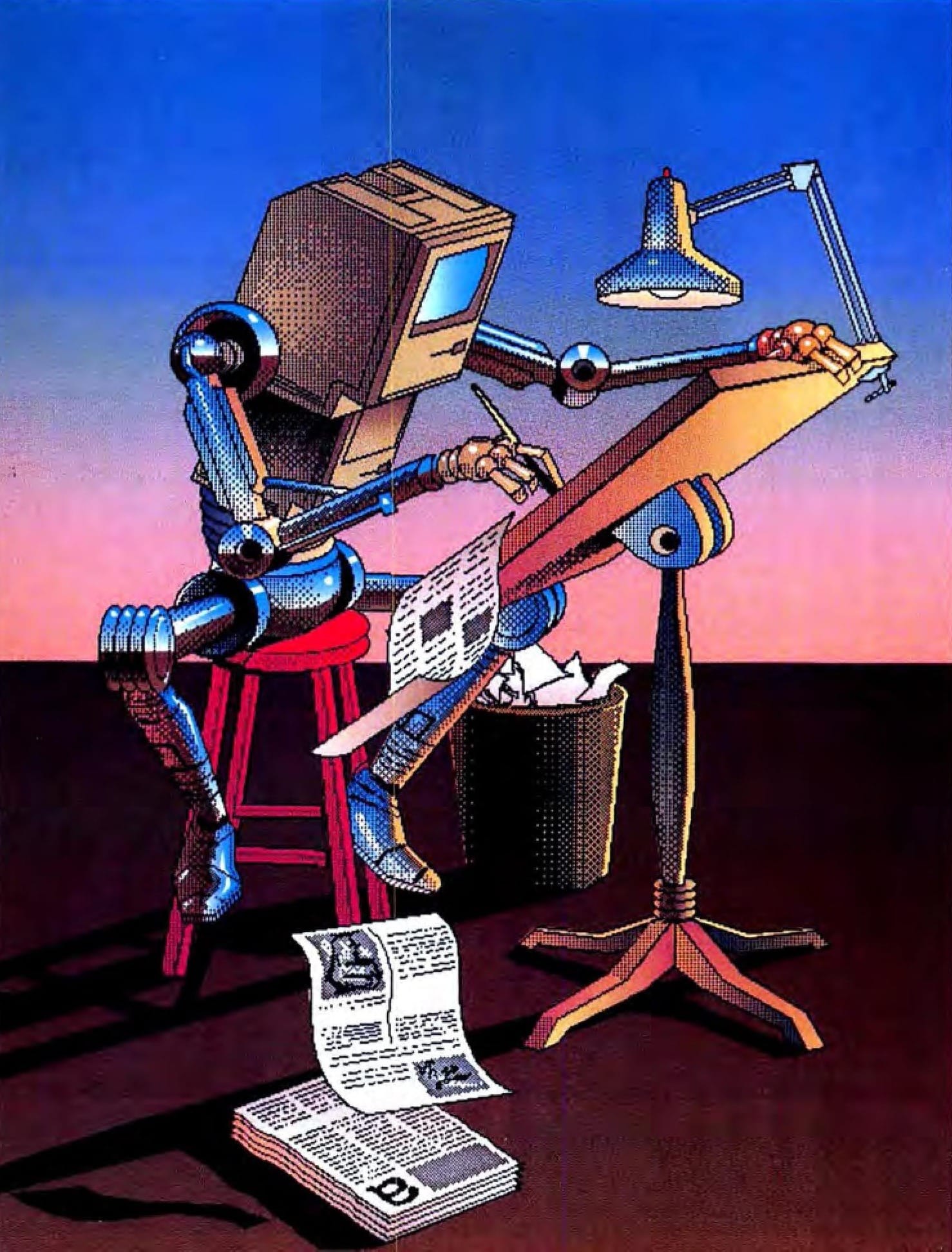
It's a return to the same theme as the Carlos Ochagavia cover, in which a computer, robot, or automaton paints a work of art.
It's pretty easy to see why this concept is particularly appealing for artists working in the science fiction genre – the act of creating art has always been core to what makes one human. And of course, it's a particularly relevant one today, when the belief that art creation is no longer core to what makes one human is seemingly powering the entire economy. Well, 45% of the S&P 500 market cap, at least.
Mike Hinge has a robot painting that you can presumably complete yourself with the right paint-by-numbers kit.
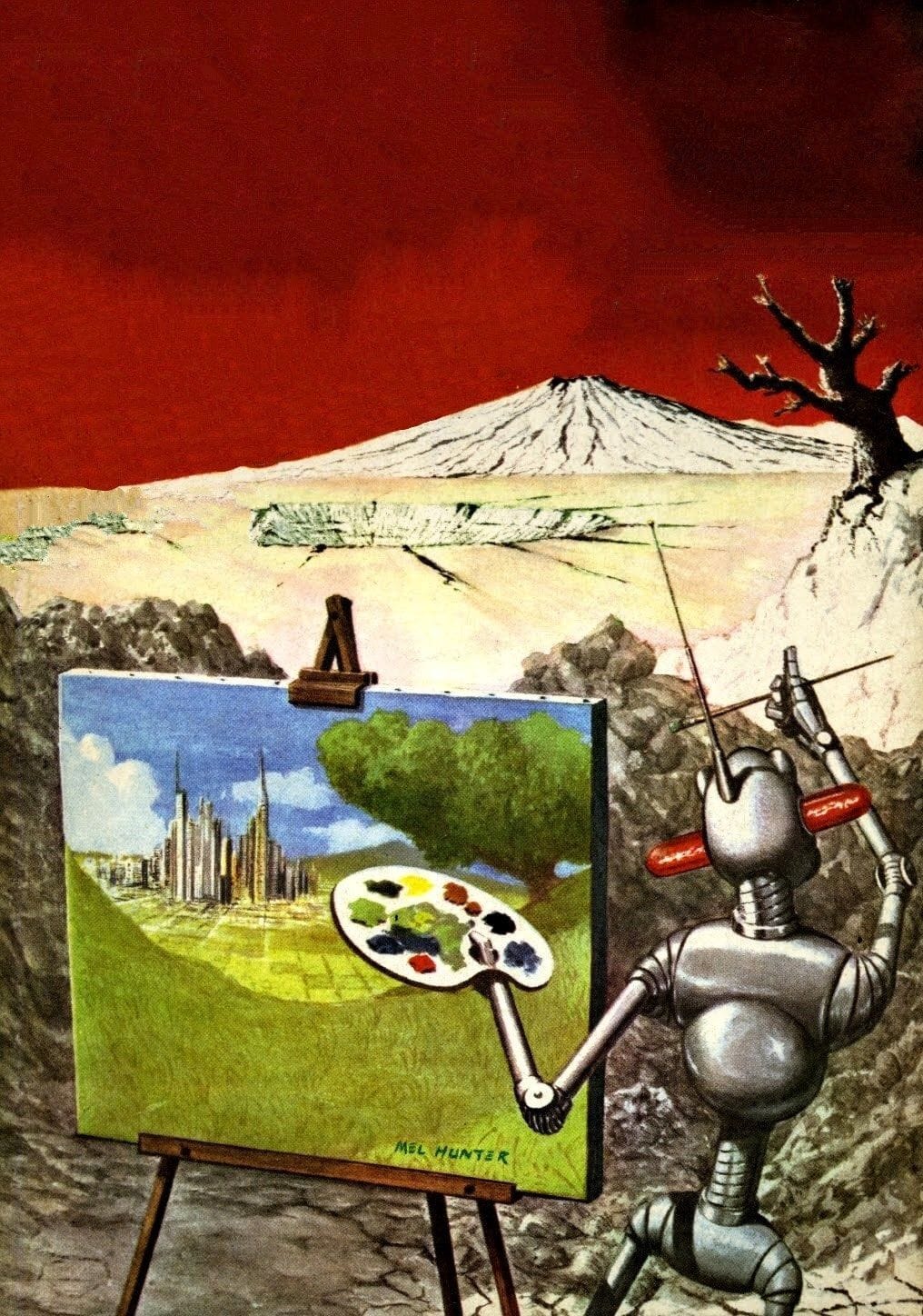
Mel Hunter painted a lengthy series of '50s-'70s covers for The Magazine of Fantasy & Science Fiction featuring a lonely robot occupying itself in a post-apocalyptic wasteland.
Naturally, the robot took a crack at painting in a March 1964 cover that stands out for the ironic contrast between the canvas and the landscape, as well as the spot that Hunter picked to include his signature.
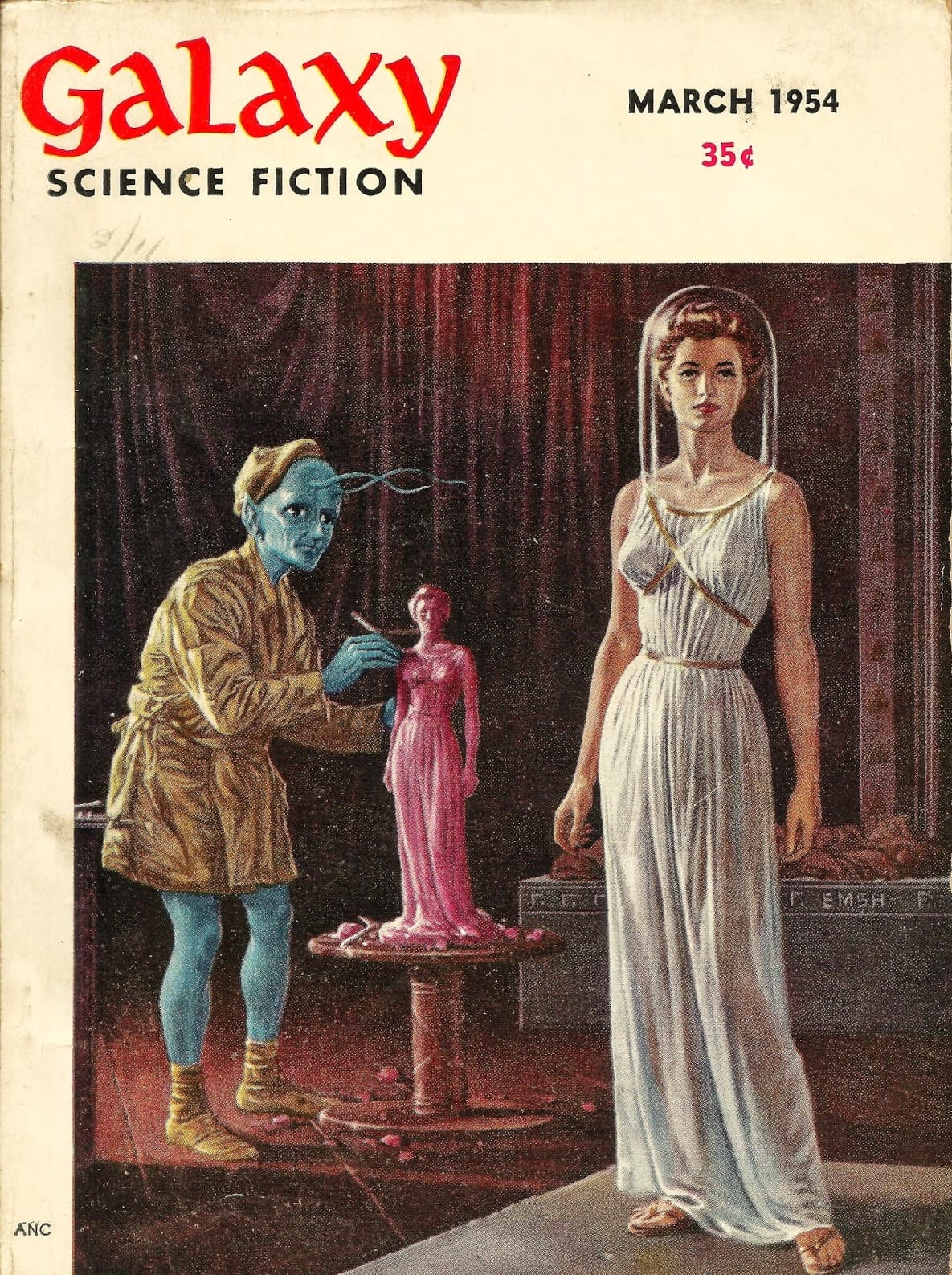
Ed Emshwiller's March 1954 Galaxy cover is worth mentioning here, too. He titled this one "Pygm-Alien and Galaxea."
John Pederson, Jr's Sept 1960 cover to Worlds of IF is titled "Why If's Art Is So Accurate."
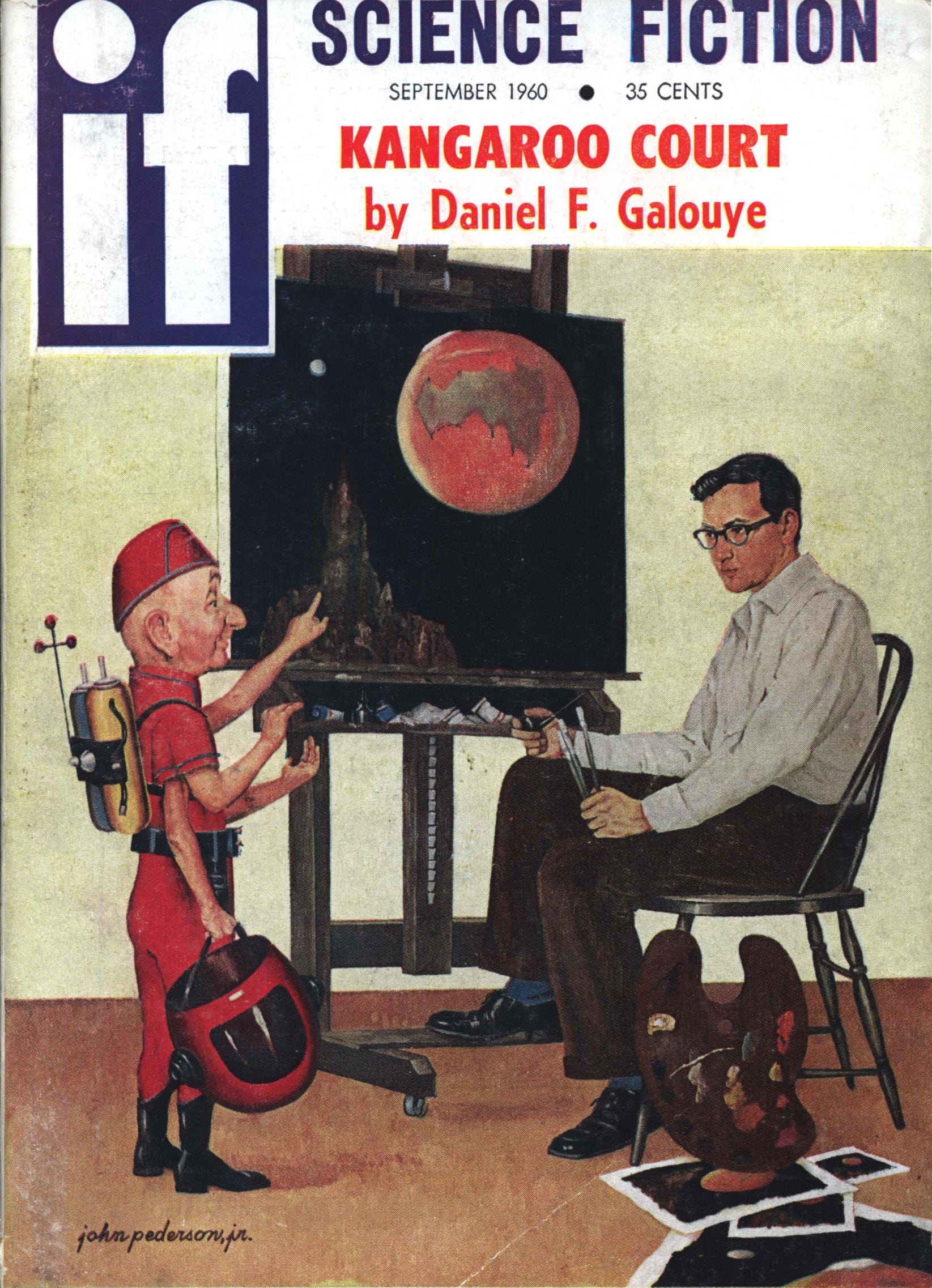
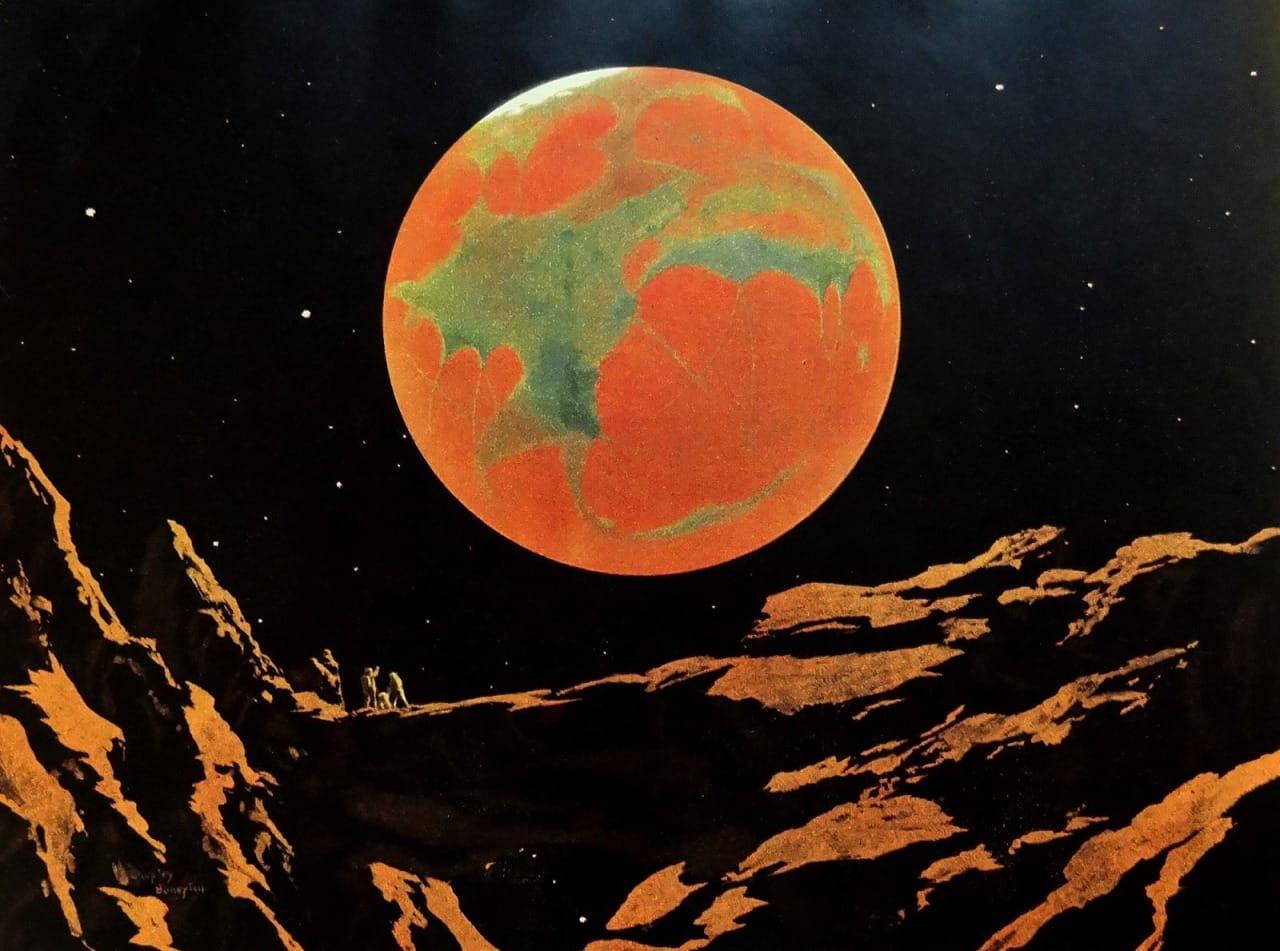
Amusingly, that painting is clearly this 1953 one by Chesley Bonestell, depicting Mars as seen from its moon Deimos (and we now know that Mars would look larger and the moonscape would be flatter).
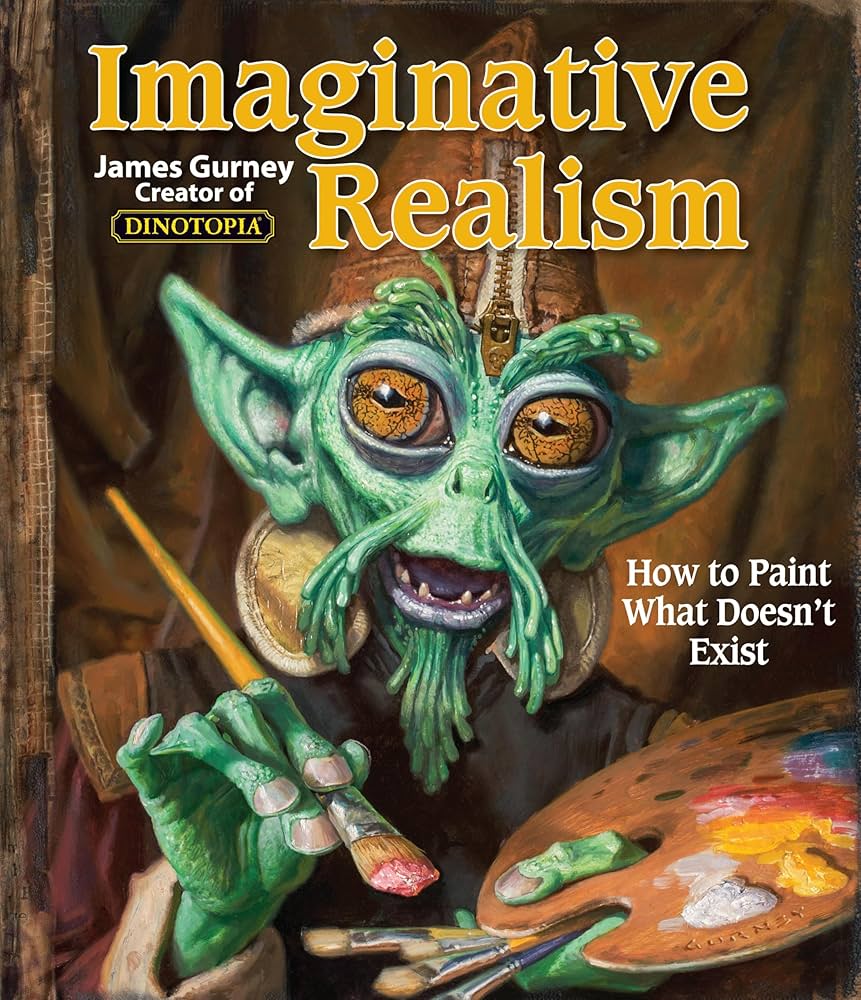
James Gurney's cover for his own 2009 book Imaginative Realism: How to Paint What Doesn't Exist features another alien painter.
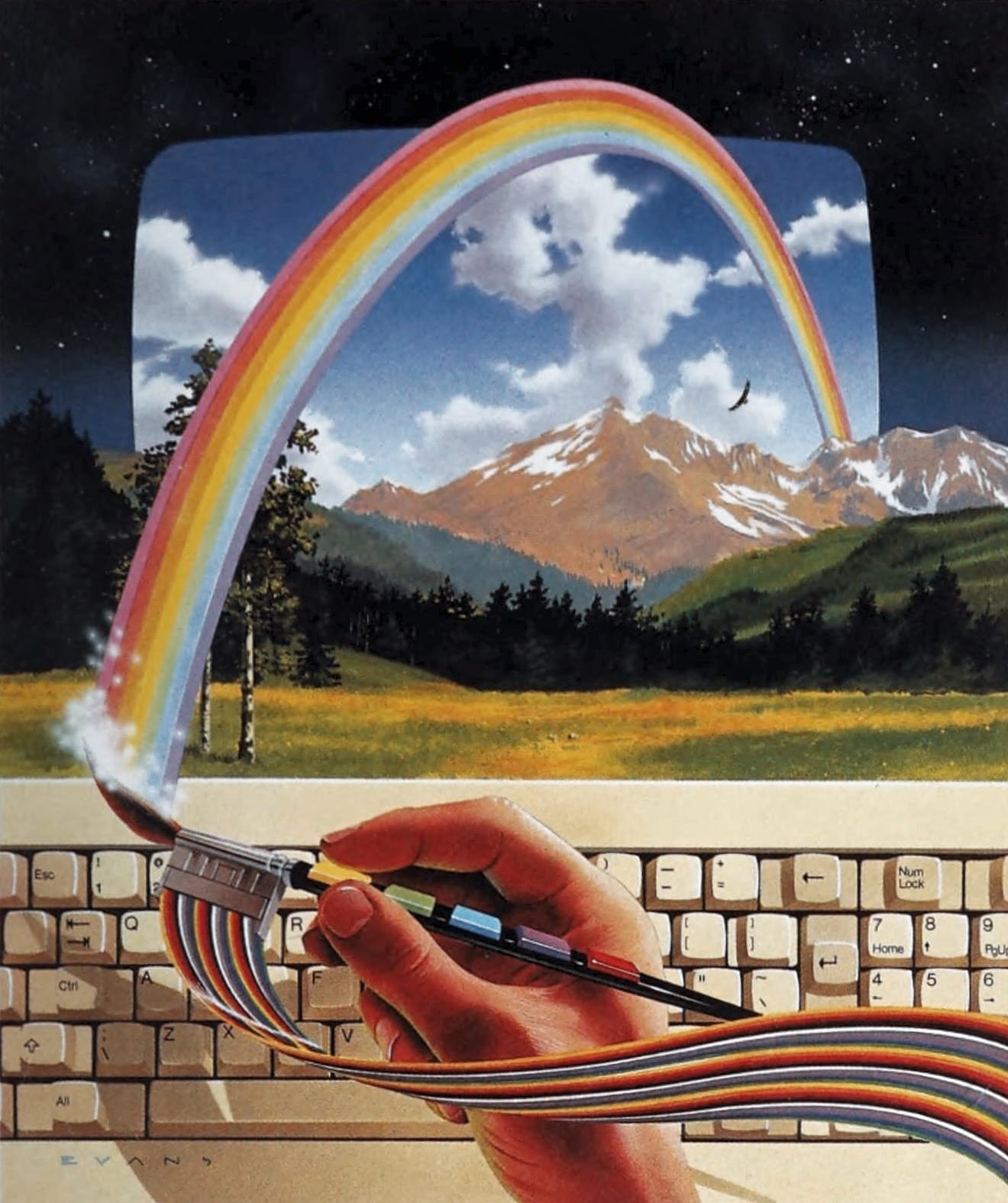
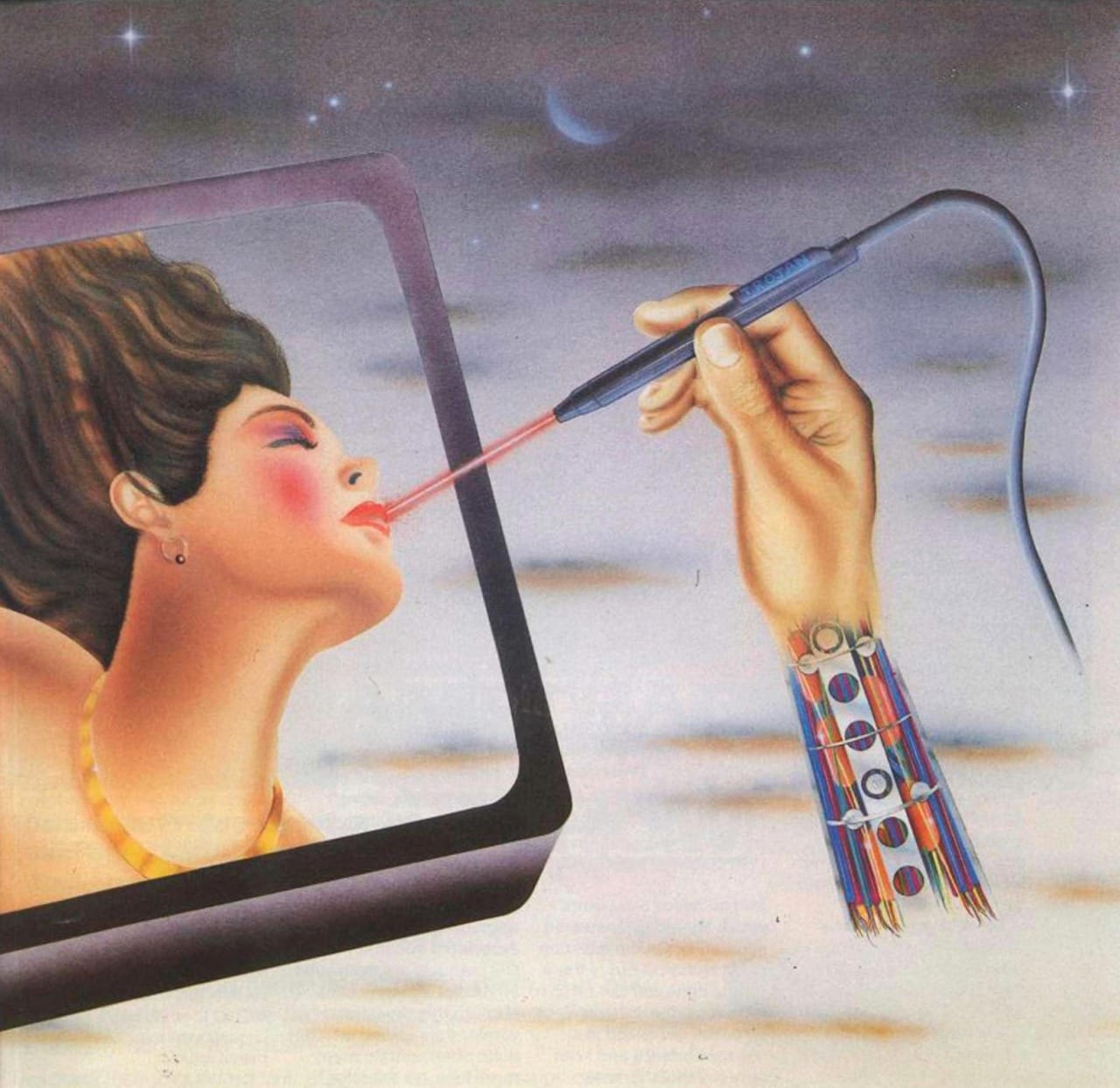
Robots and aliens aside, tech illustrators often opted for a single disembodied hand. Here's an illustration by Robert Evans, from a 1996 collection, followed by an uncredited 1987 ad for an airbrush.
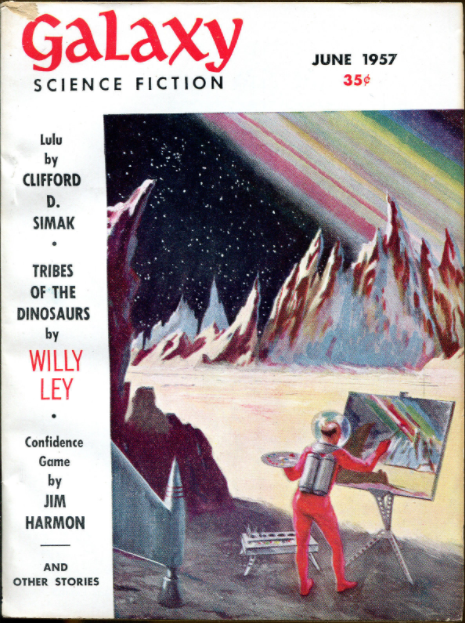
I'm sure there are many more examples of meta paintings in sci-fi than those I've been able to round up here. Here's another one that I stumbled on after I'd already written up this post: Galaxy Science Fiction's June 1957 cover by Fred Kirberger.
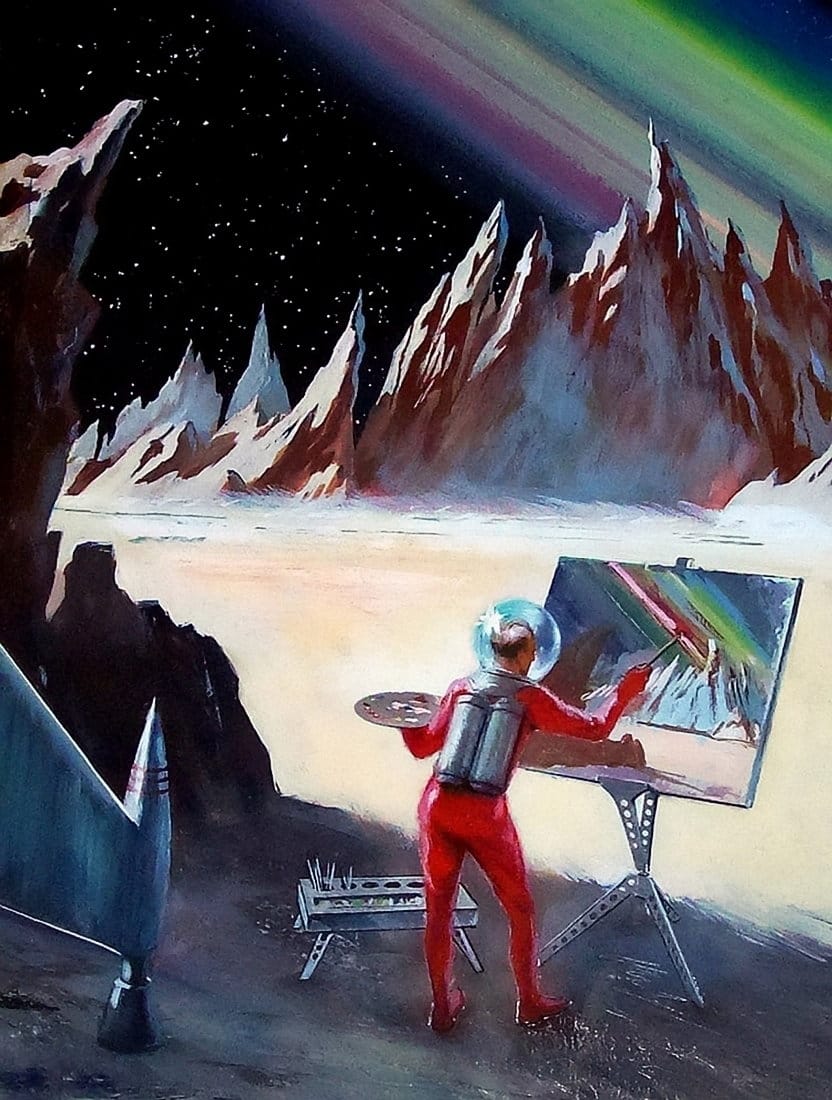
Let's end on another art homage.
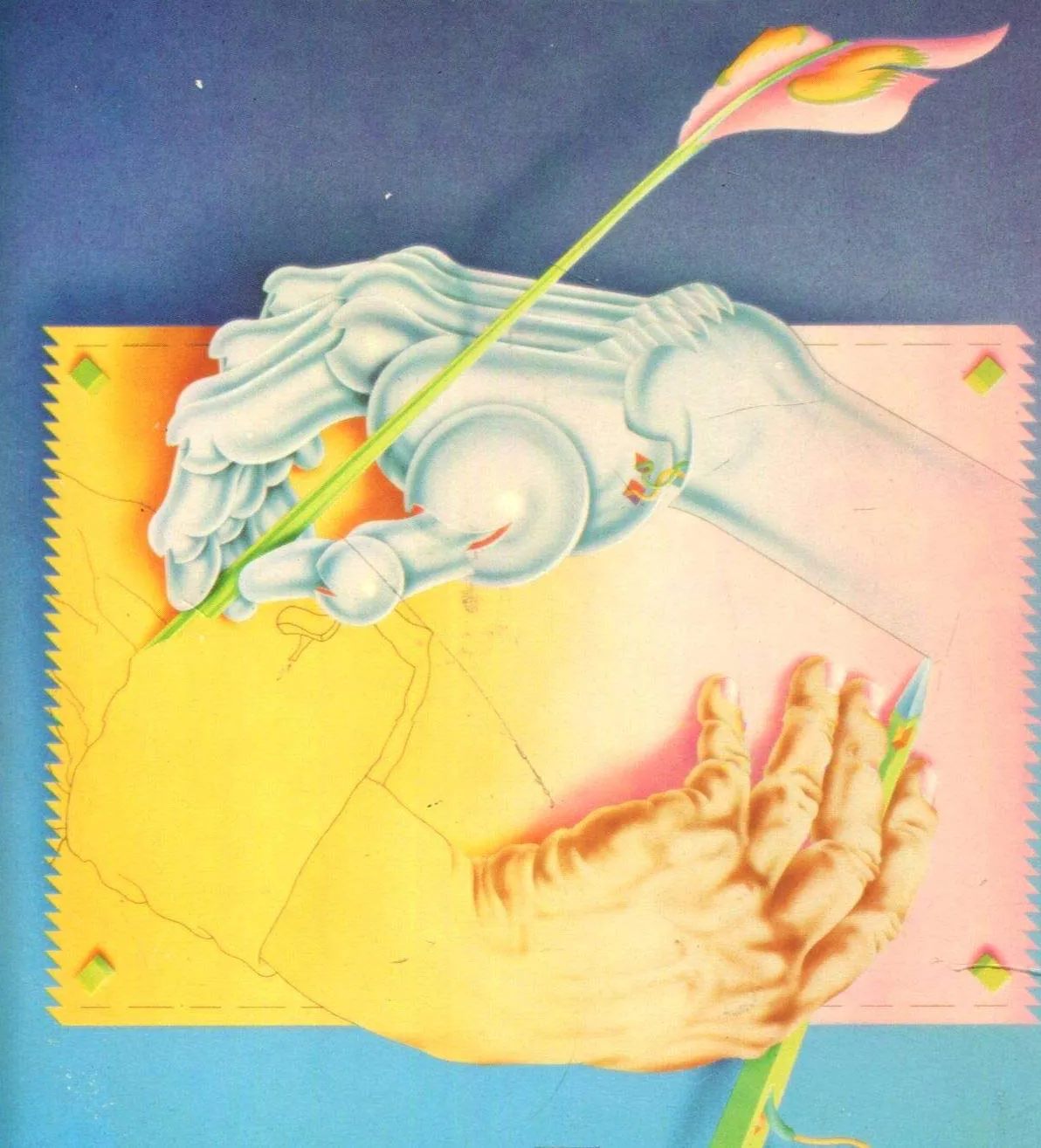
For his 1977 cover to The Cyberiad: Fables for the Cybernetic Age by Stanislaw Lem, Peter Tybus included many of the themes we've covered in this post. Not only does he feature a robot and disembodied hands, but it's all packaged into his version of MC Escher's 1948 lithograph Drawing Hands.
Cool Links
The History Behind Pink and Black Album Covers - The Art of Cover Art
Check out a quick history of the pink accent on otherwise black-and-white album covers. It ties into '70s color trends and their intersection with the punk aesthetic. You might want to follow this newsletter if you don't already! It's the only other one I know aside from mine that's in the "weirdly specific art roundup" niche.
The Peril of the Brutal Dark and the Return of Vertigo Comics - Comic Book Couples Counseling
It's tough being a fan of Indiana-Jones-esque pulp stories. I just waded through Top Cow's entire Tomb Raider (1999) run, and it wasn't great on the whole: Some okay stories, but a ton of shallow characters and broad concepts. The standalone 50th and final issue was the best one, if anyone wants to hunt it down.
The new six-issue miniseries The Peril of the Brutal Dark: An Ezra Cain Mystery is very promising. Stylish art, with enough '40s authenticity to pass muster. Here's an interview with the creators.
Music rec: I love good remixes of classical music, but they're hard to find, particularly given the AI-slopification of YouTube music over the last few years. This guy's good: Codec - The Classical Beef.
Next Time: A big new announcement from me! Mysterious!