Art Swipes
Swiper, no swiping. Featuring John Schoenherr, Frank Frazetta, and the poster to the film Twins.

In illustration, the term "swipe" refers to the practice of intentionally copying another artist without crediting them.
The term comes from the comic book illustration world specifically, likely because it required a huge output at a fast pace, leading artists to look for whatever shortcuts they could rustle up. Some would have entire swipe files of material to borrow from.
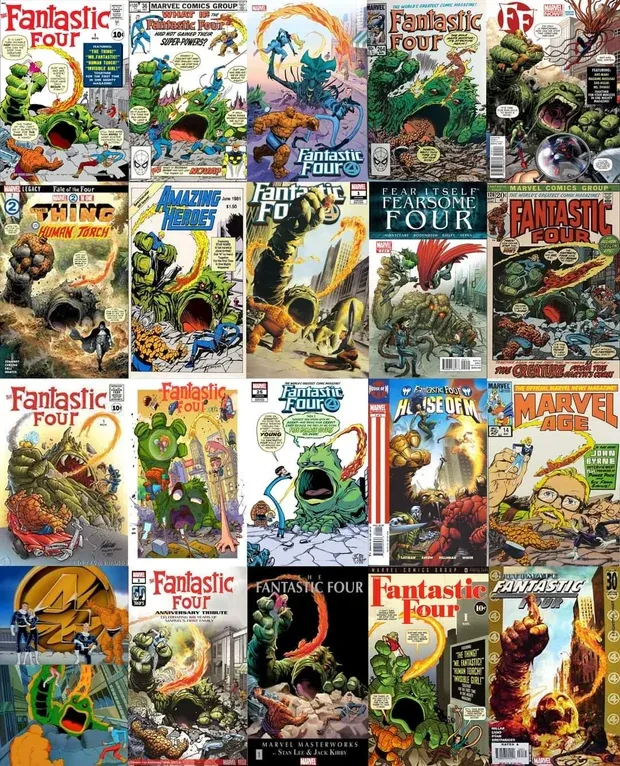
A wide range of practices are often assumed to be swipes, but don't quite qualify. There's homages, which can be basically swipes but are intended to be understood as honoring the original artist. The covers to the first issues of famous comic books are frequently homaged. Marvel alone has done at least 20 versions of the original 1961 cover to Fantastic Four #1:
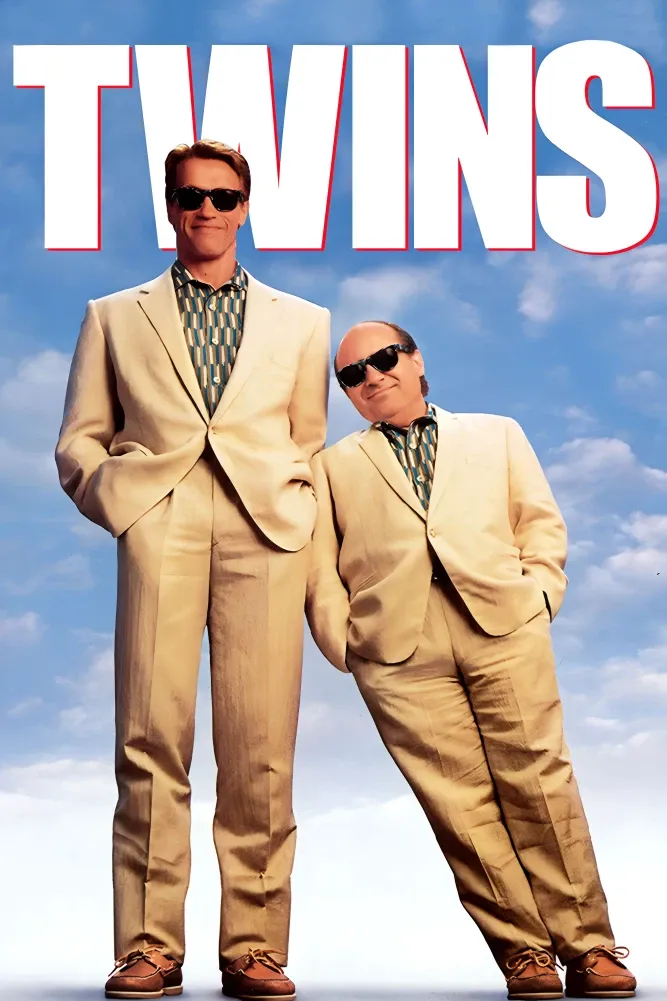
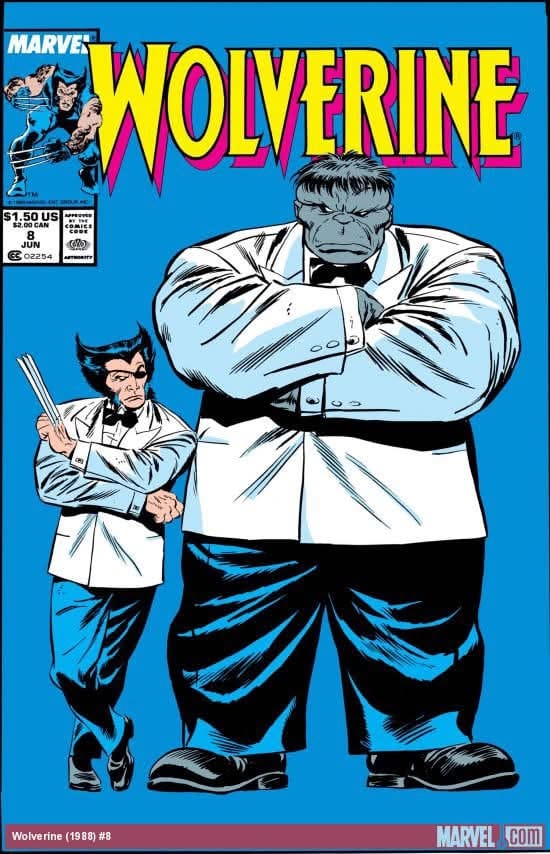
However, most of those homages wouldn't qualify as swipes, regardless, since they're not directly tracing the exact composition of the original. Here's a movie poster and John Buscema's homage from a year later – he's not copying the exact position of the figures, so I wouldn't call this a swipe.
Here's how one commenter defines swipes on a Facebook page dedicated to them:
"Seriously, I don't see anything wrong with using previous comic art as reference. I think that the line is crossed when you trace, keeping the figures and breakdown in the exact same positions. Tracing a non-published reference photo isn't usually considered a swipe, as illustrators have been doing that since the dawn of photography. Tracing a published photo leans toward a swipe, since it was staged and cropped for commercial use."
These two images were posted on that Facebook page, with the caption "Frank Frazetta Killing a Spider (1966) & Vicente Segrelles Killing a Fly (1979)."
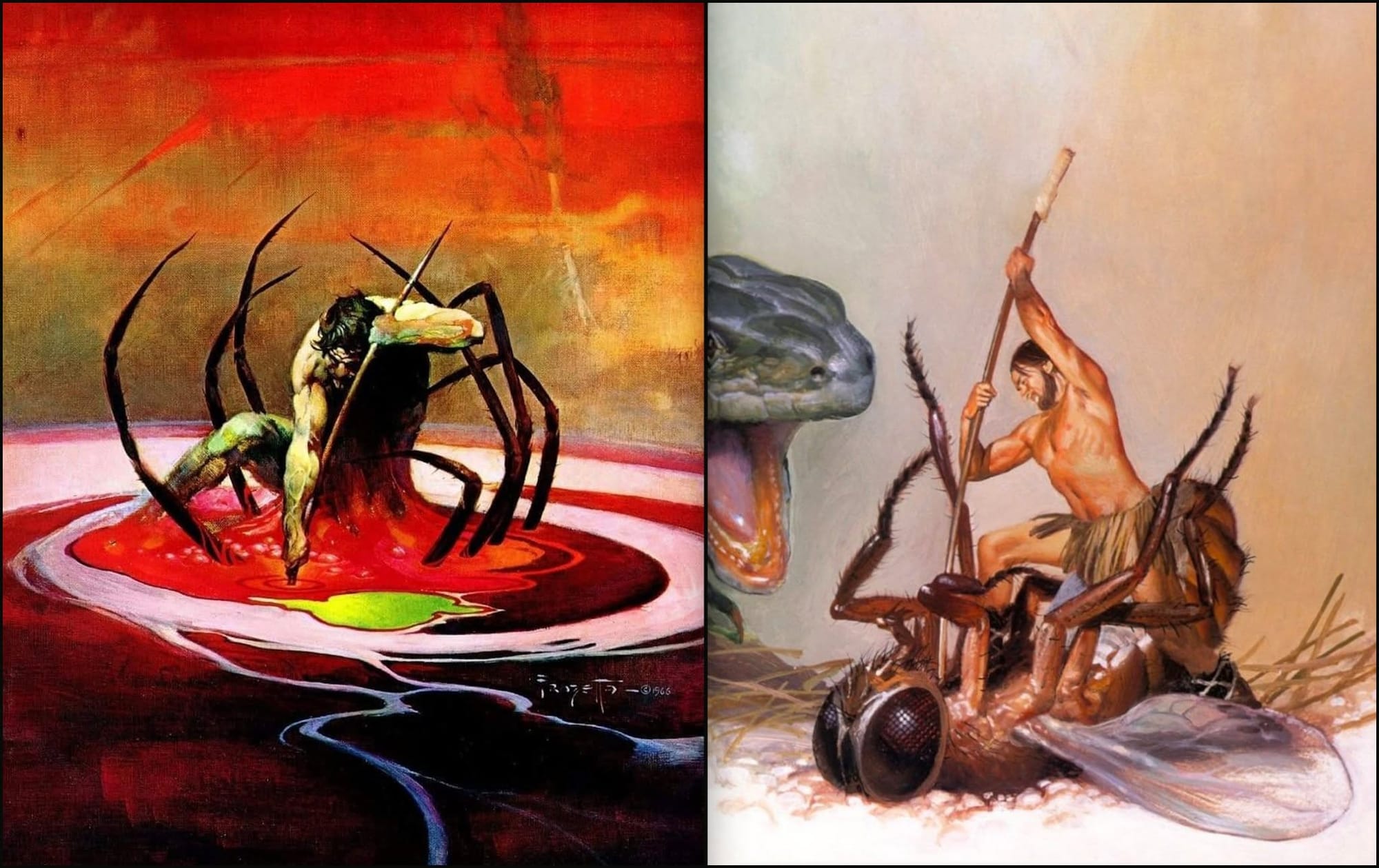
In my book, this is more of a parallel than a swipe – the man's pose is entirely different, even if the concept is the same.
Now the 1971 poster for Mario Bava's A Bay of Blood, on the other hand, is swiping from that particular Frank Frazetta illustration.
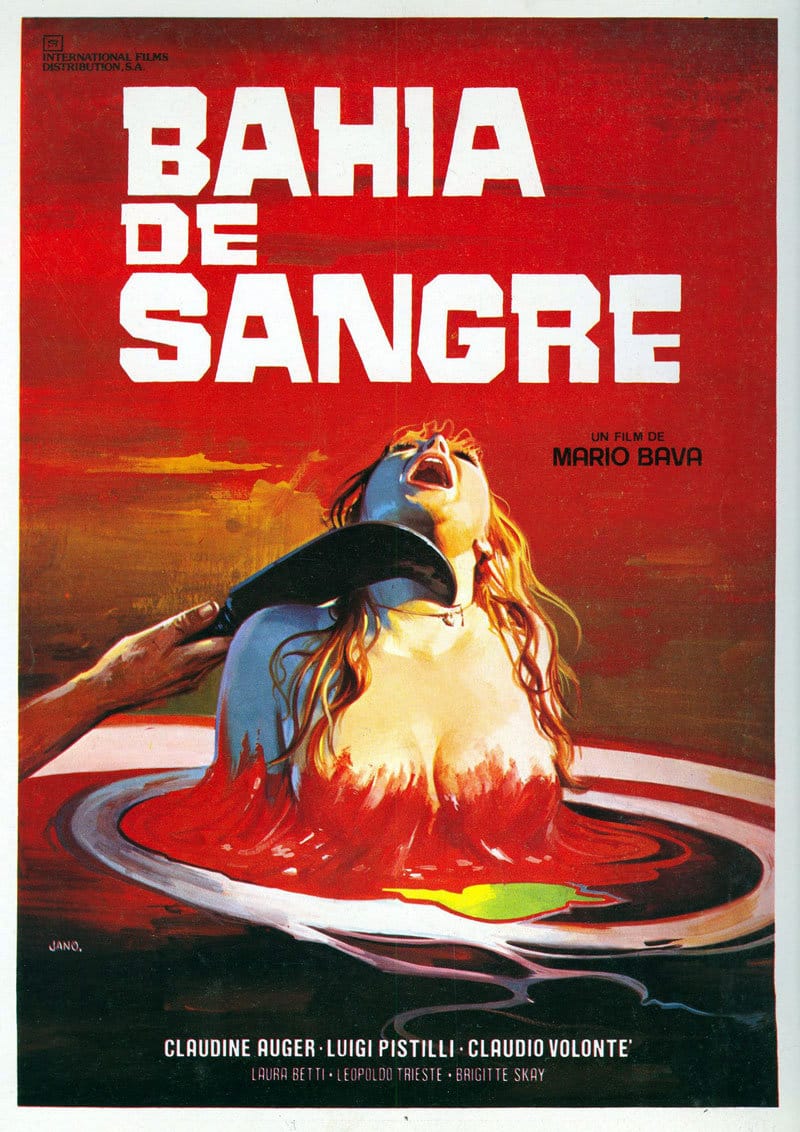
A lot of comics fans have a fun time spotting swipes, particularly in the internet age, when it's easier to create a digital side-by-side comparison.
Swiping happens outside of comics, too. Some book cover artists might swipe from another source, particularly if they were working in a completely different market in another country.
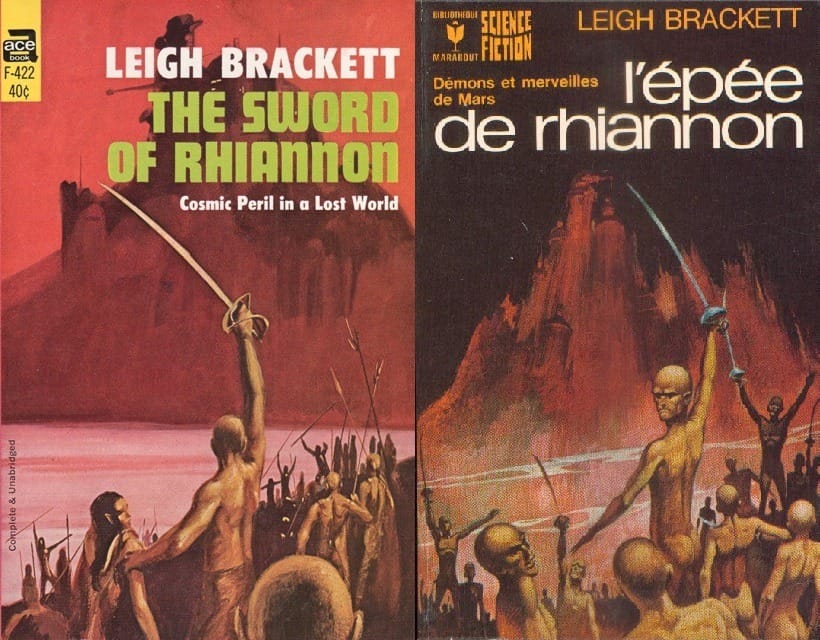
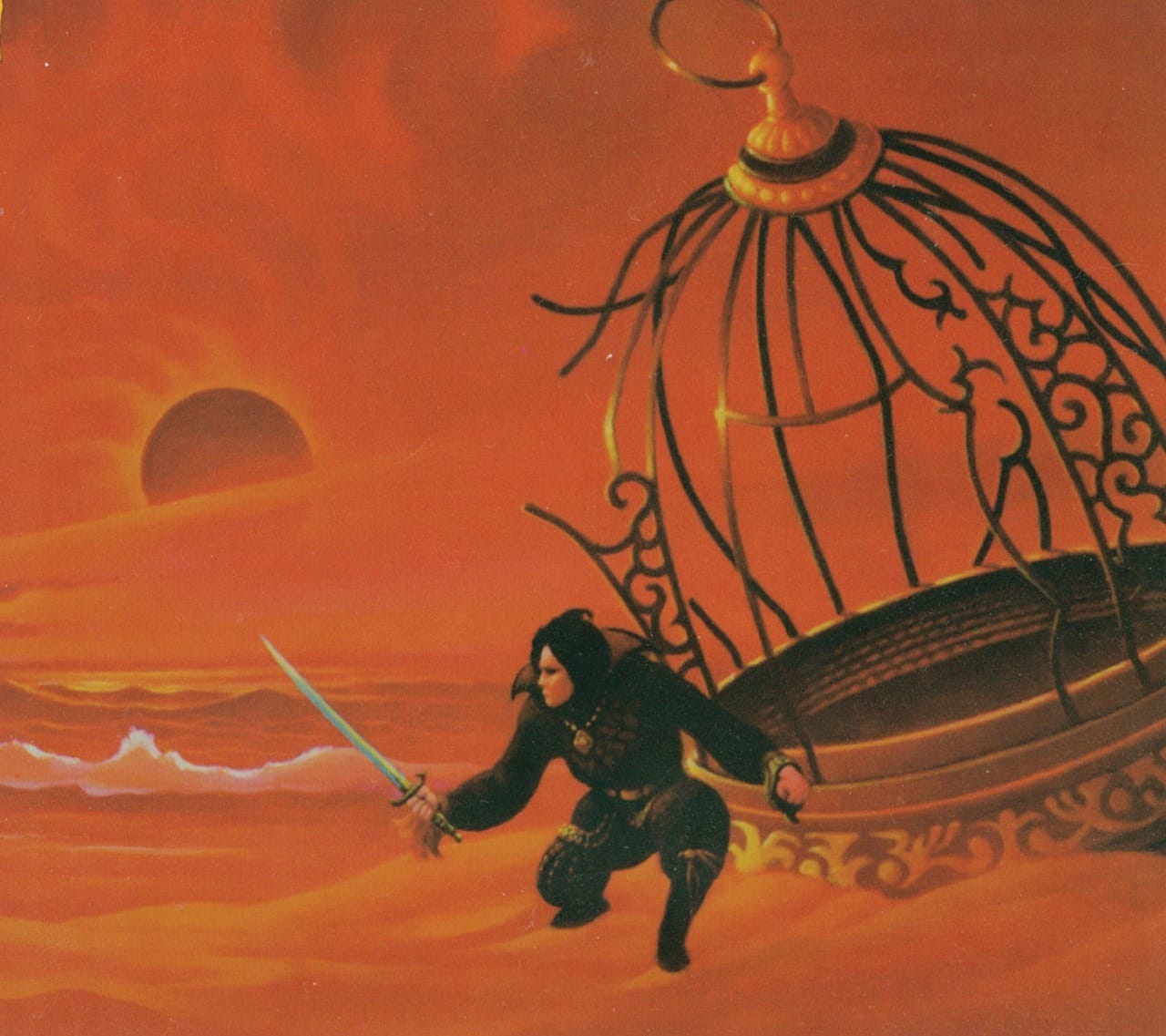
John Schoenherr was incredible at composition, so it makes sense that his work was swiped more than a few times. Here's his 1967 cover for Leigh Brackett’s The Sword of Rhiannon on the left, followed by Henri Lievens' 1974 cover for the French-language translation of the same title. Note that Lievens even adds in a thin trail of fog to break up the background in roughly the same location as the edge of the pink lake from the original image.
Douglas Chaffee’s cover art for the October 1968 issue of Galaxy magazine is thematically similar, but uses a new composition. Chaffee might not have seen Schoenherr's cover at all, but Lievens definitely did.
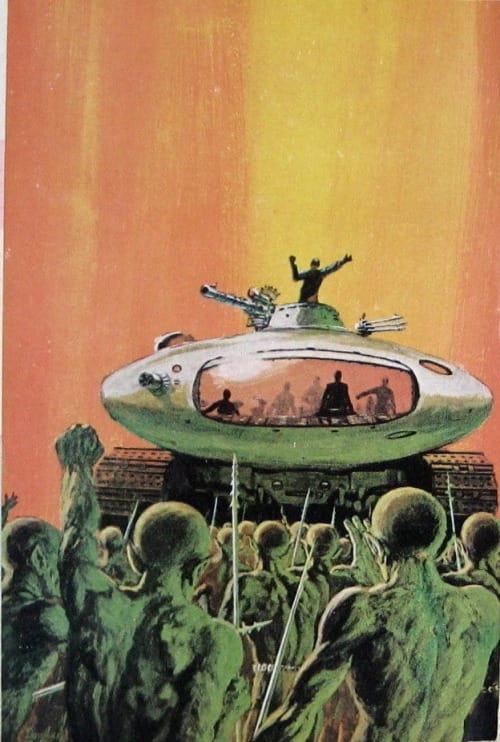
Left: 1961 cover art by John Schoenherr. Right: A 1967 panel from Strange Tales #161, pencilled by Dan Adkins.
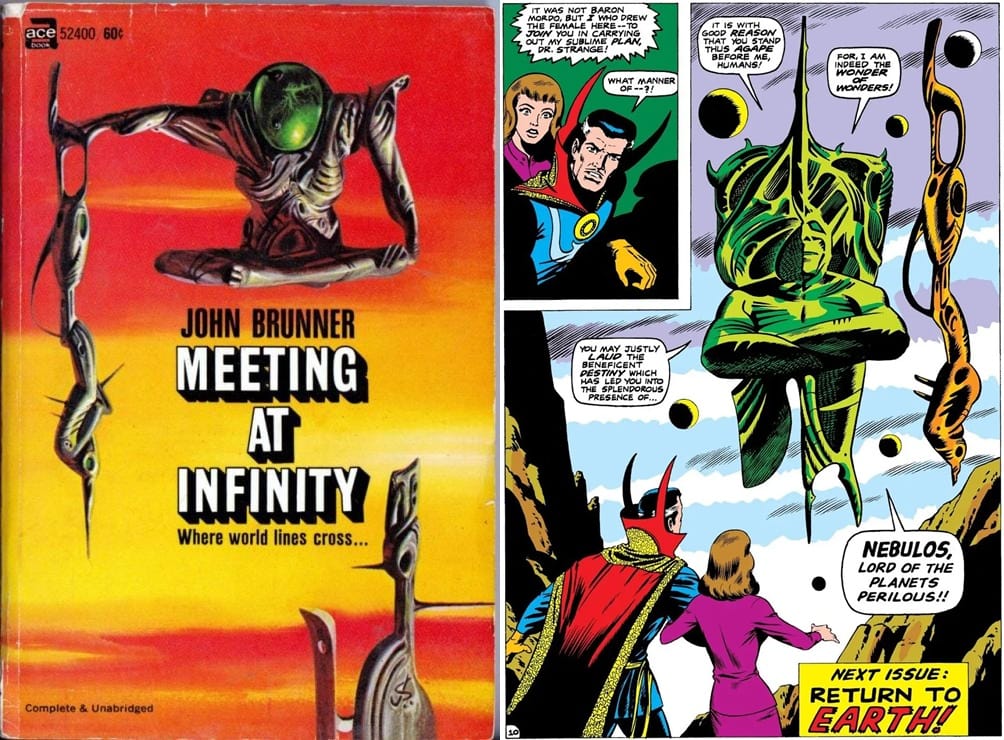
In my opinion, many comics fans get a little too invested in condemning everything that they perceive as a swipe. In the two above examples of swipes, I would agree that Henri Lievens and Dan Adkins took it too far.
But here's one example of a recent post on that Facebook page that compares John Romita, Sr's 1967 work for Amazing Spider-Man #50 against Erin Jia's illustration in “Why I Quit the Tenure Track” in The Atlantic Monthly (September, 2026).
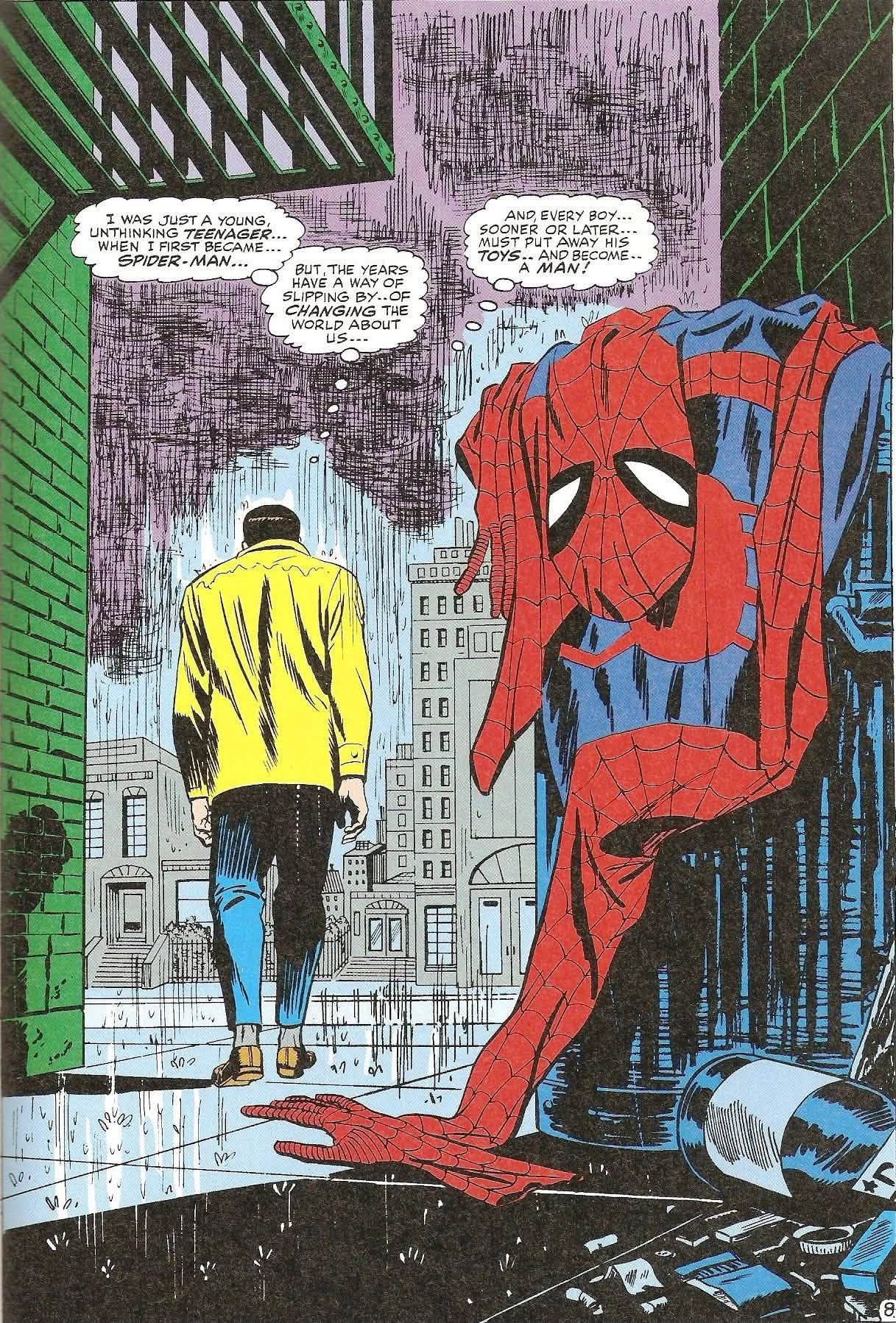
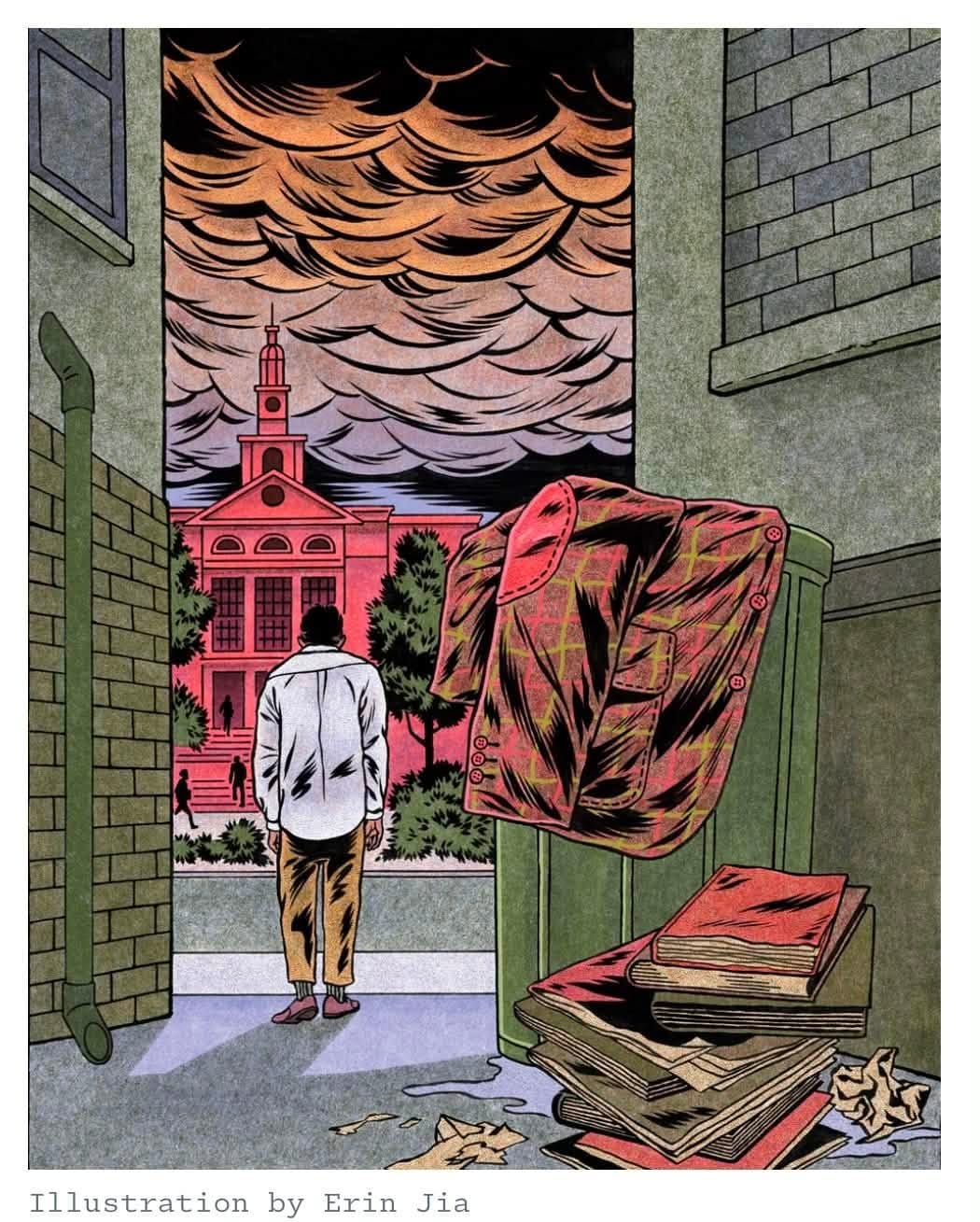
One of the commenters said this under the post: "This one should have carried an inscription describing from where the image was stolen. Especially for a non-comics reading audience. Unprofessionalism at its peak."
That's ridiculous. This is an homage – Jia has established a clear and specific thematic connection between two stories about giving up on a dream, and using a coat with elbow patch is a particularly funny way to do it, too. Not everyone will get the homage, but they don't have to.
Plus, the original comic book panel is pretty famous. Sam Raimi already homaged it on the best comic book movie of all time, 2004's Spider-Man 2!
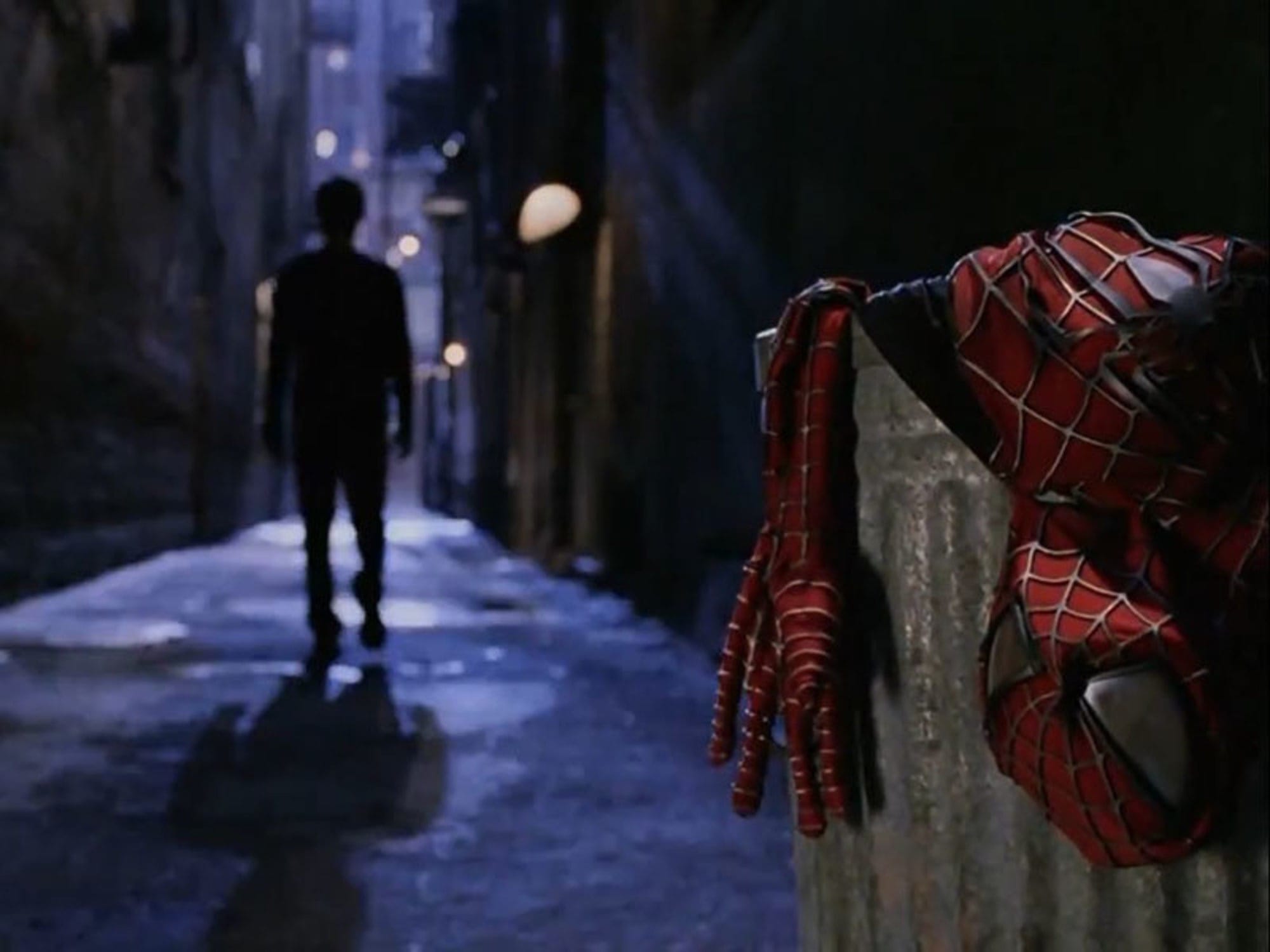
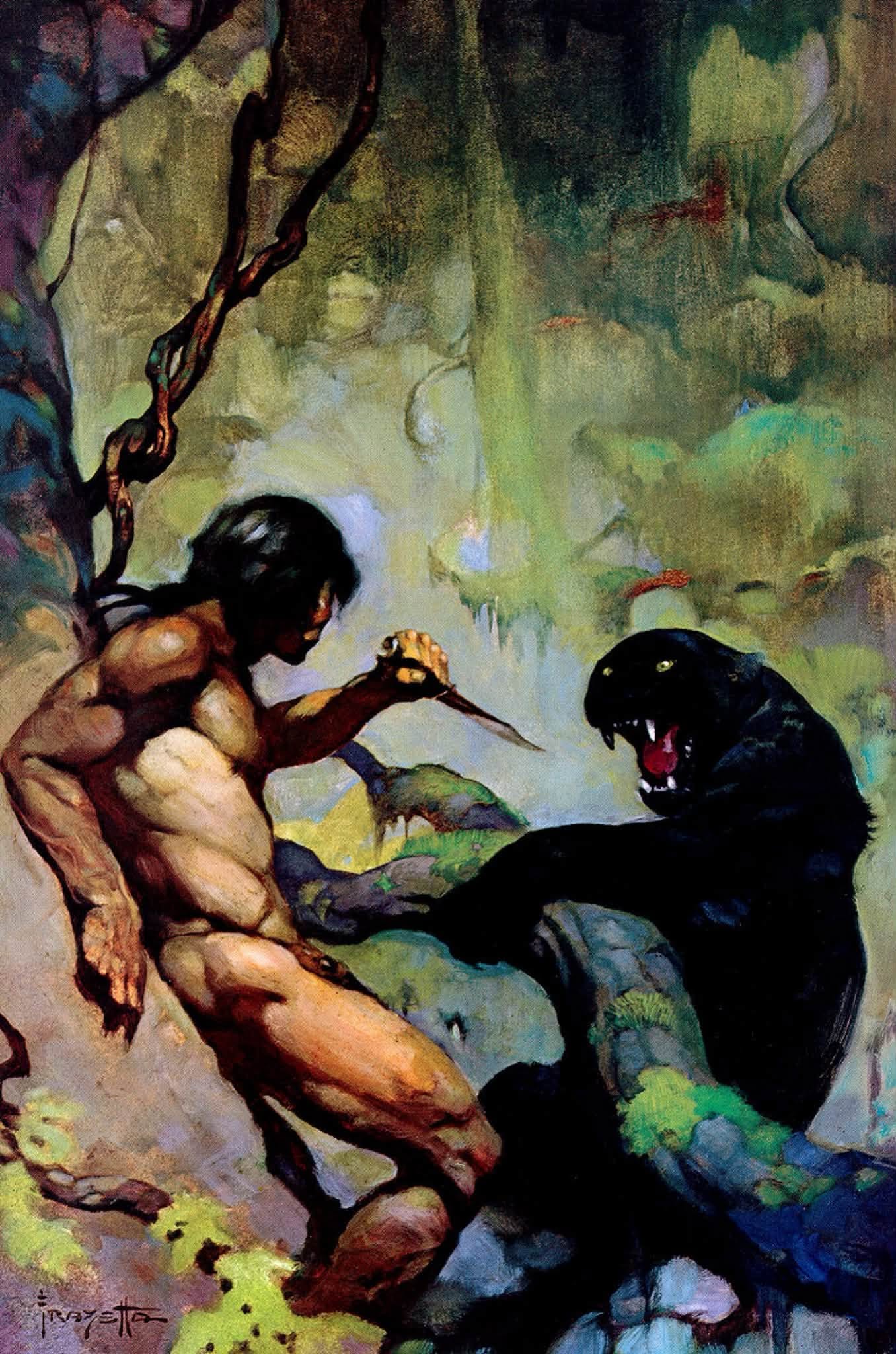
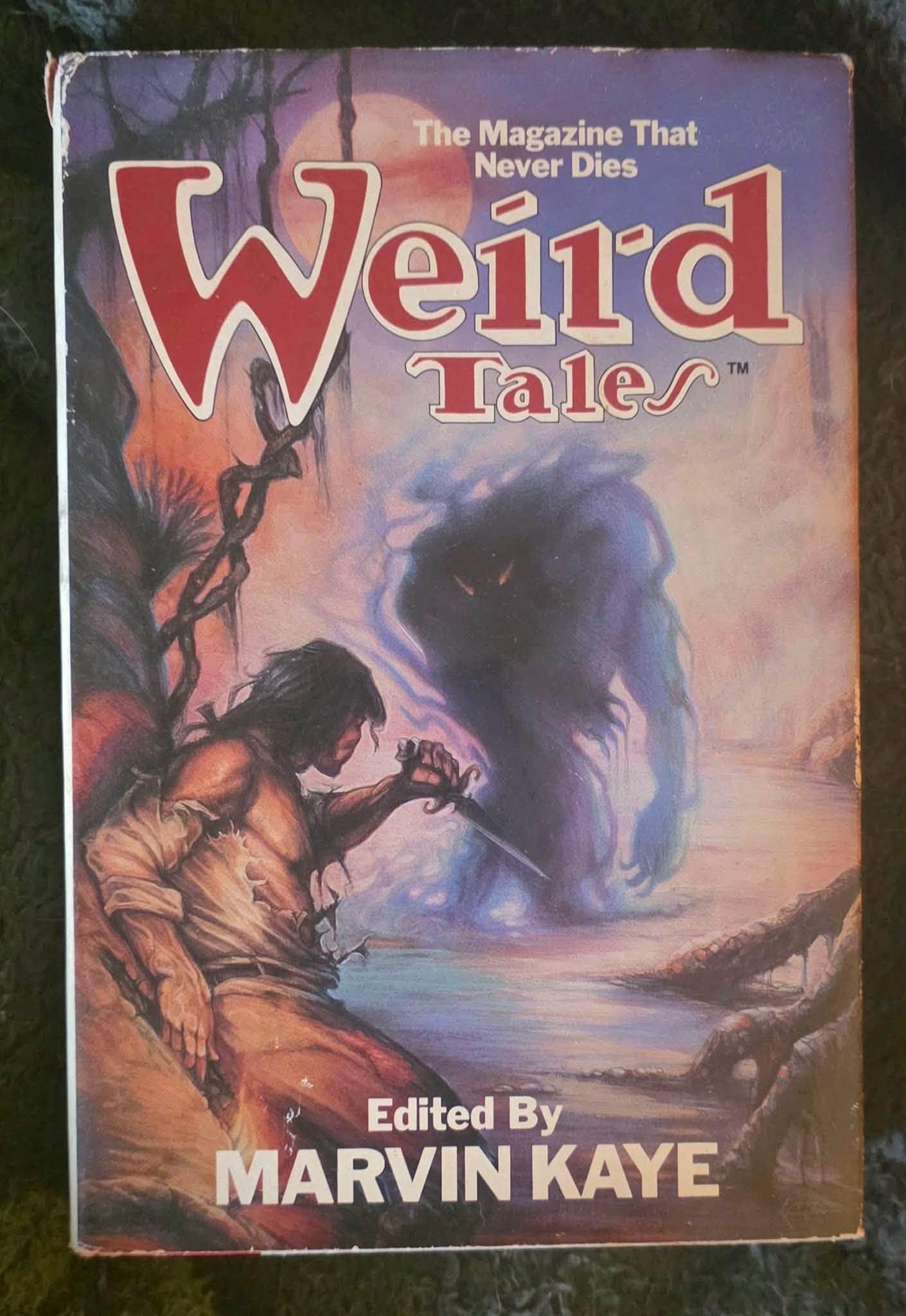
Back to some real swipes. Here's a Frank Frazetta from 1973, plus a Richard Kriegler cover from 1996.
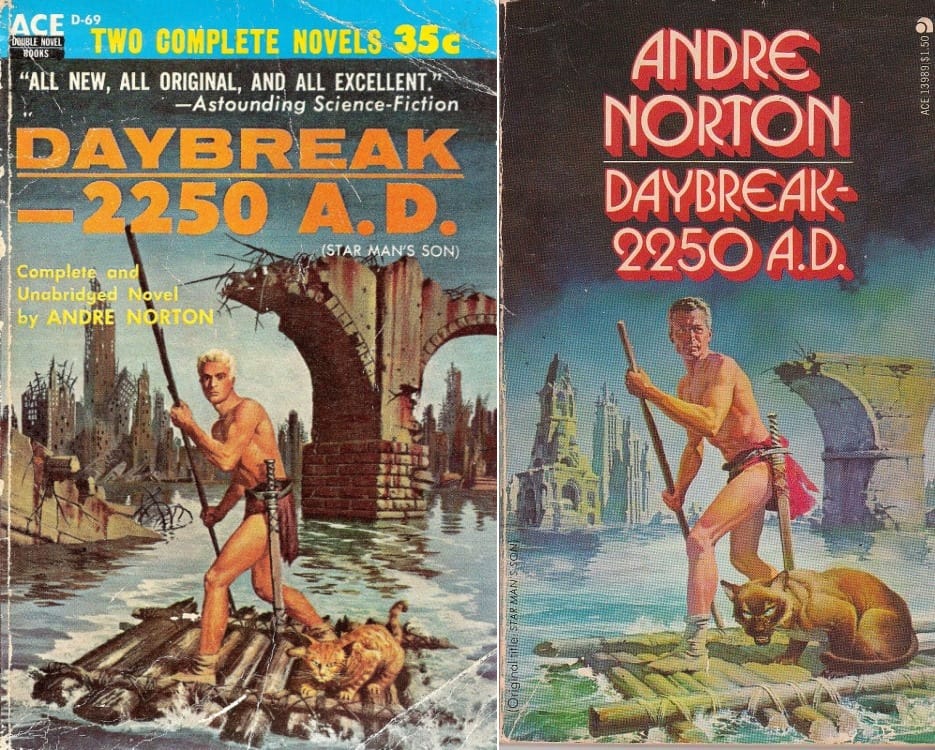
Here are a couple uncredited covers to Andre Norton’s Daybreak-2250 A.D. The left one, from 1954, might be an Ed Emshwiller, while the 1977 one on the right might be Gino D'Achille.
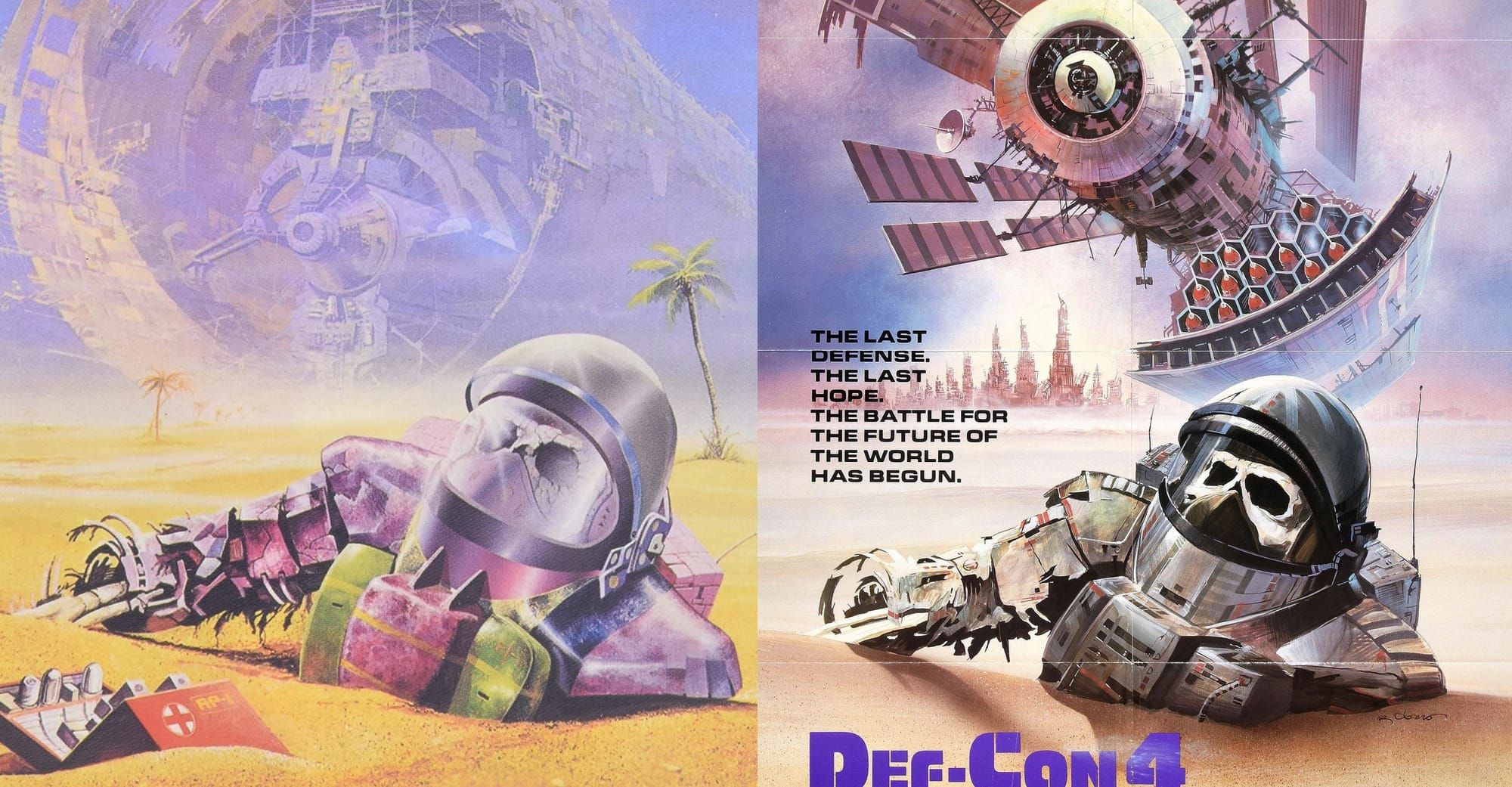
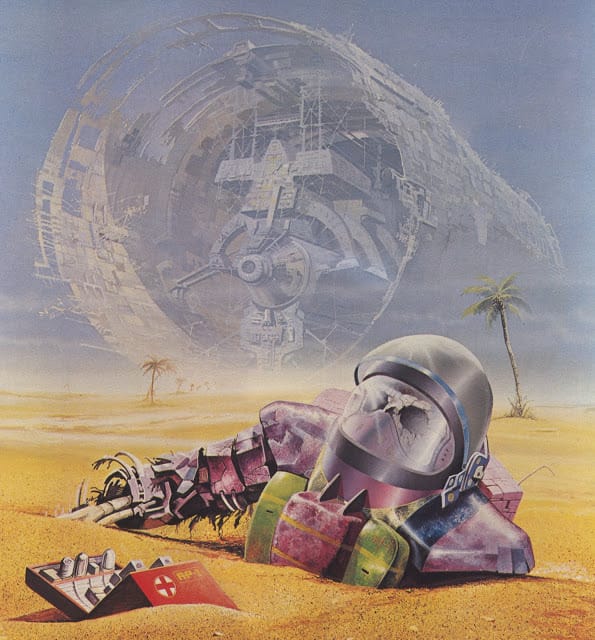
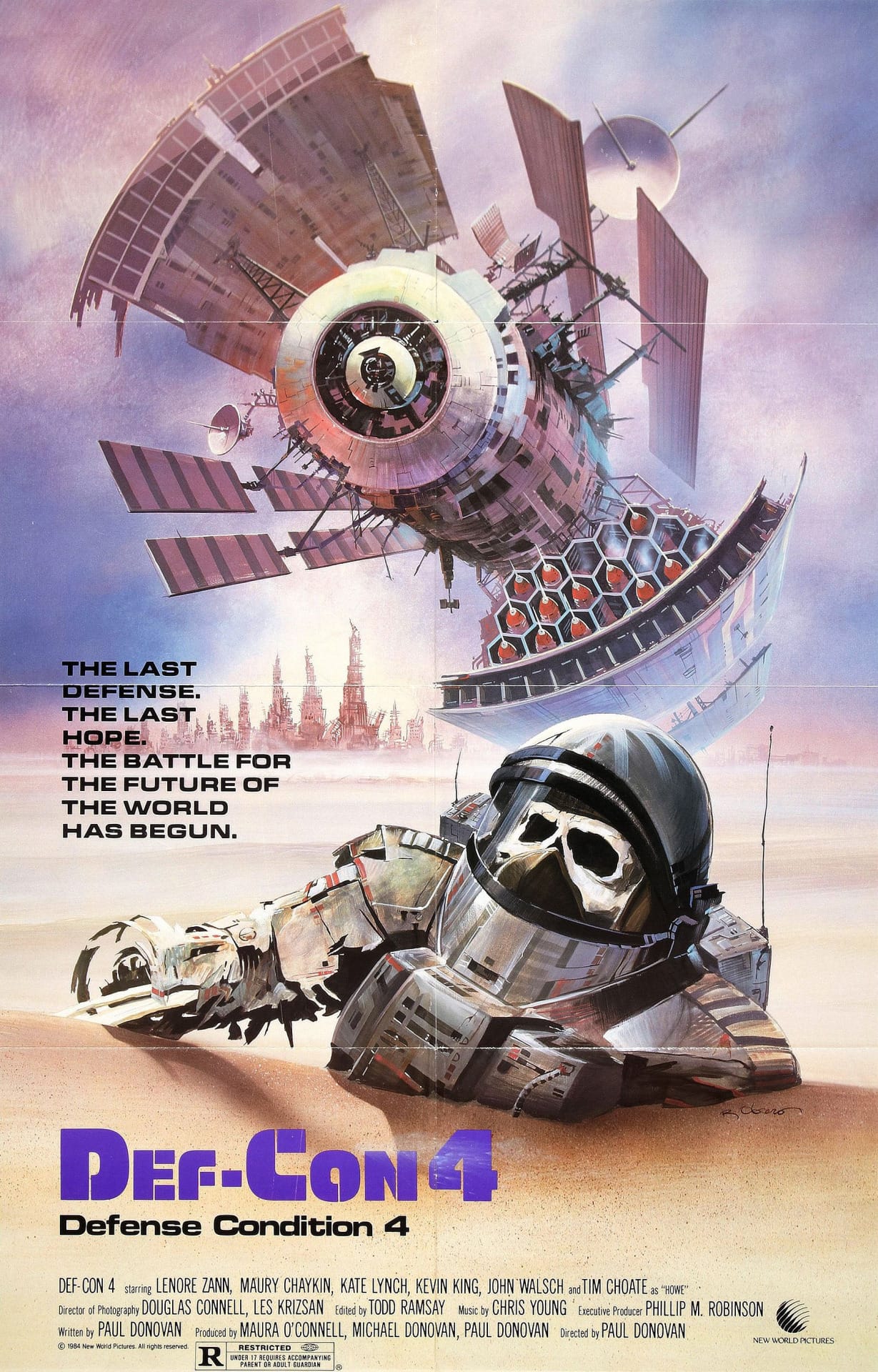
Here's a famous one: Angus McKie’s 1976 cover to The Year’s Best Science Fiction No. 8, edited by Brian Aldiss and Harry Harrison, was swiped by an uncredited poster artist in 1984 for the movie Def-Con 4.
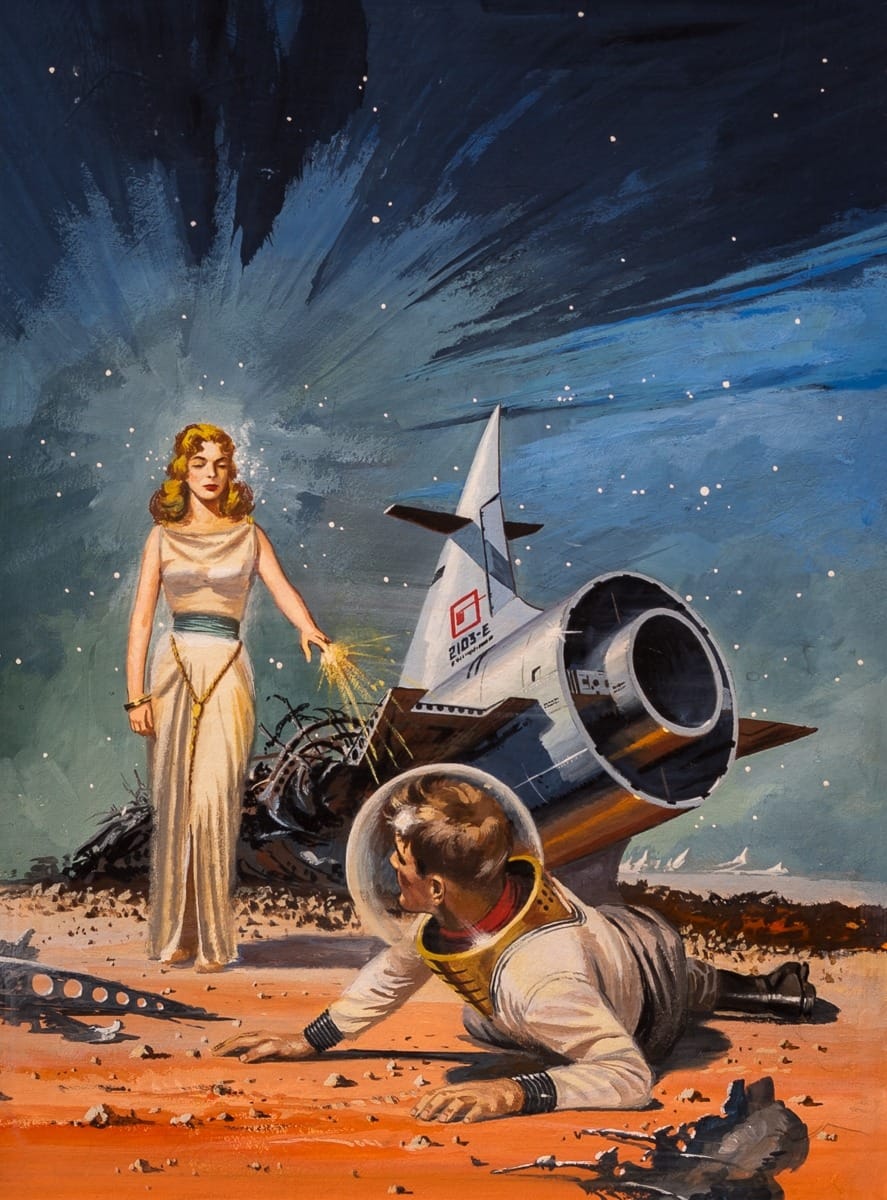
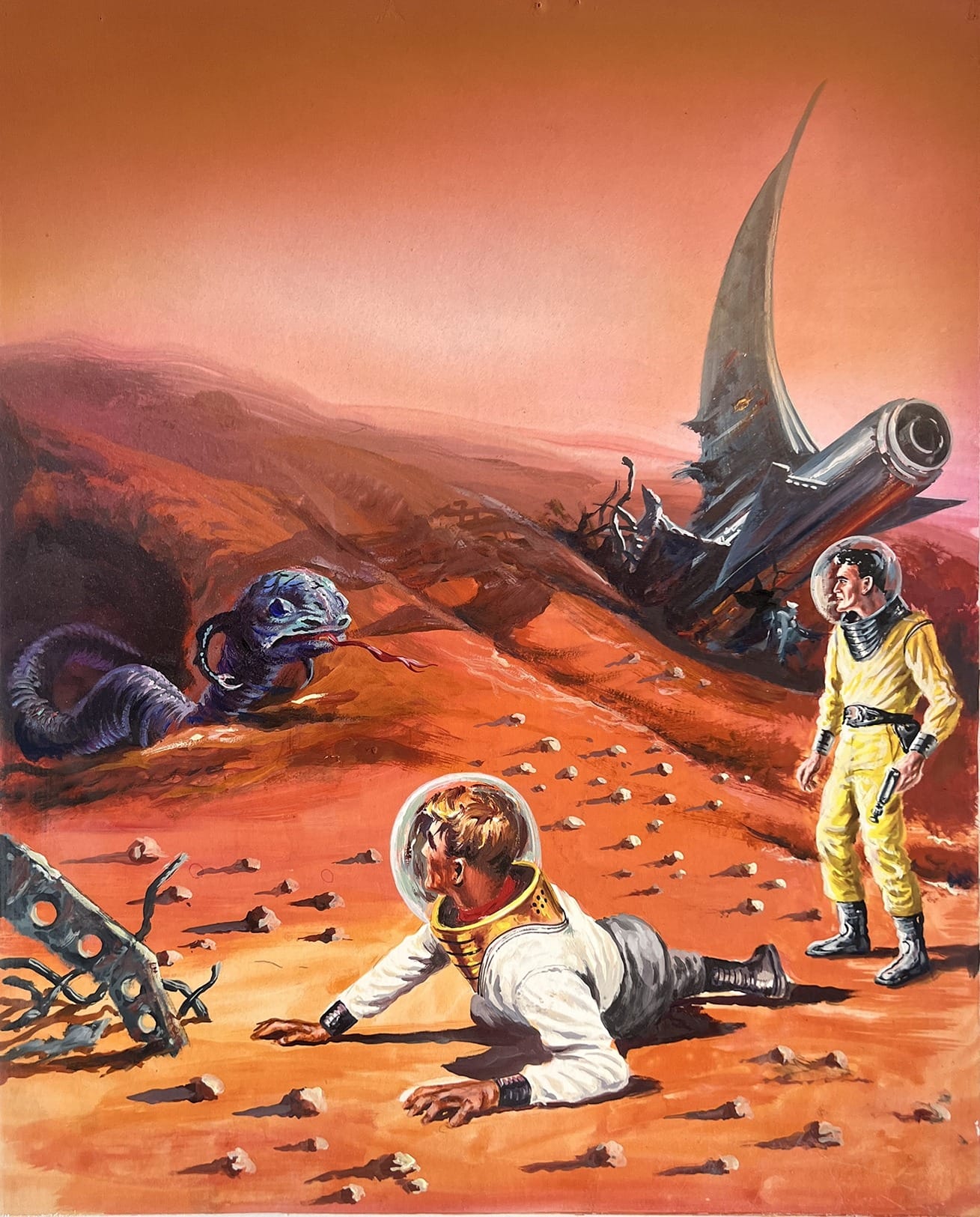
Here's Ed Valigursky’s 1956 cover for The Green Queen, followed by a similar figure on a 1964 Johnny Bruck cover for Perry Rhodan #171.
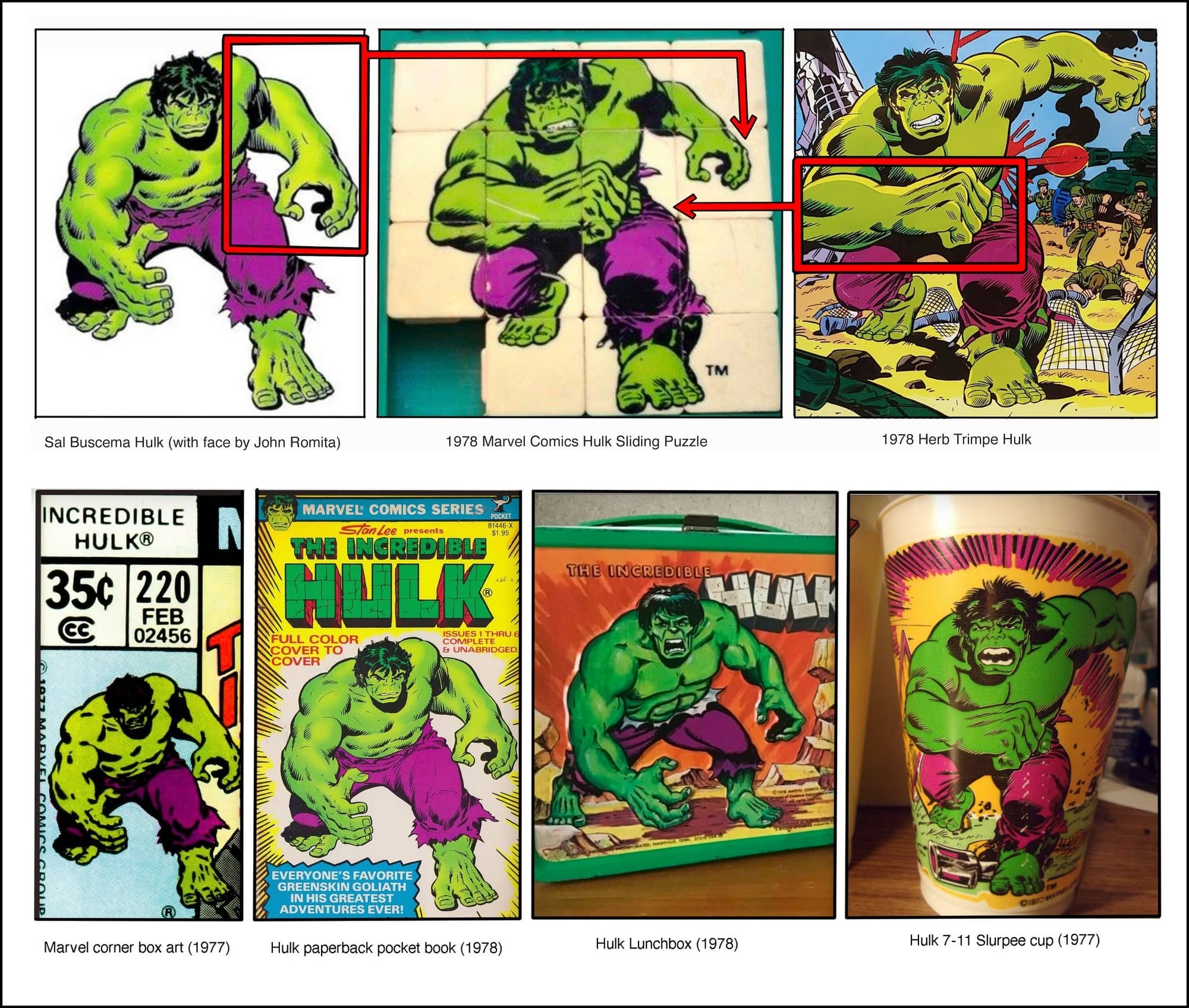
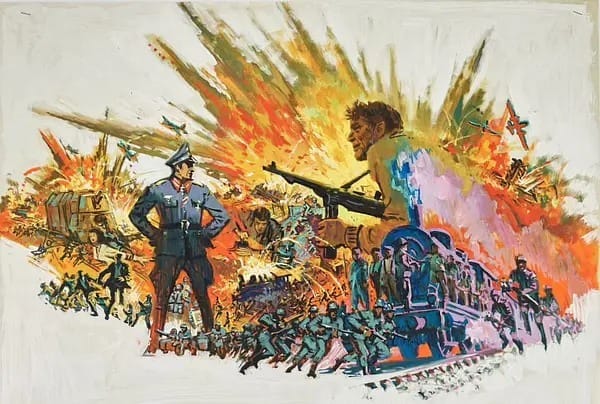
Frank McCarthy’s 1964 poster for The Train, followed by Rick Veitch & Steve Bissette's 1979 artwork for the Heavy Metal graphic novel adaptation of the film 1941.

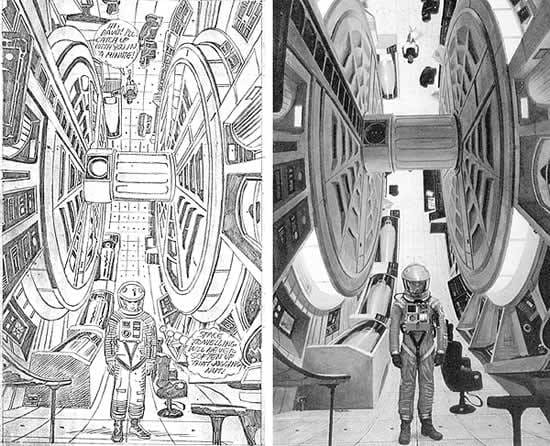
Even Jack Kirby swiped. Here's a panel from his 2001 comics adaptation, with Robert McCall's earlier promotional painting to the right.
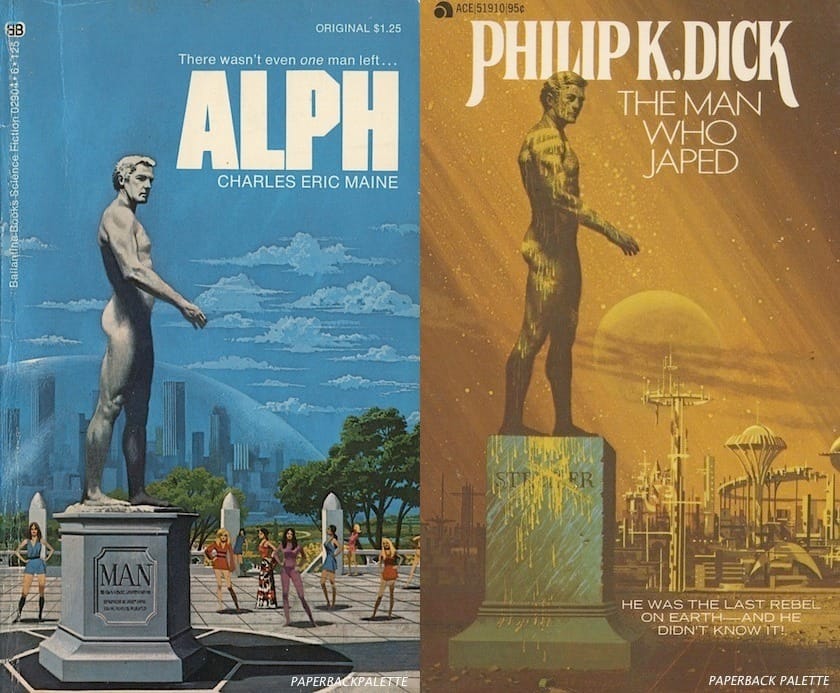
Let's wrap up with one final insight into how swiping works, and one that adds yet another wrinkle to swiping's moral fabric: The fact that some artists would occasionally swipe from themselves to save a little time.
Here are two Dean Ellis covers. The left-hand one is from 1972 and the self-swipe is from 1975. They're taken from this great blog post on the artist at Paperback Palette.
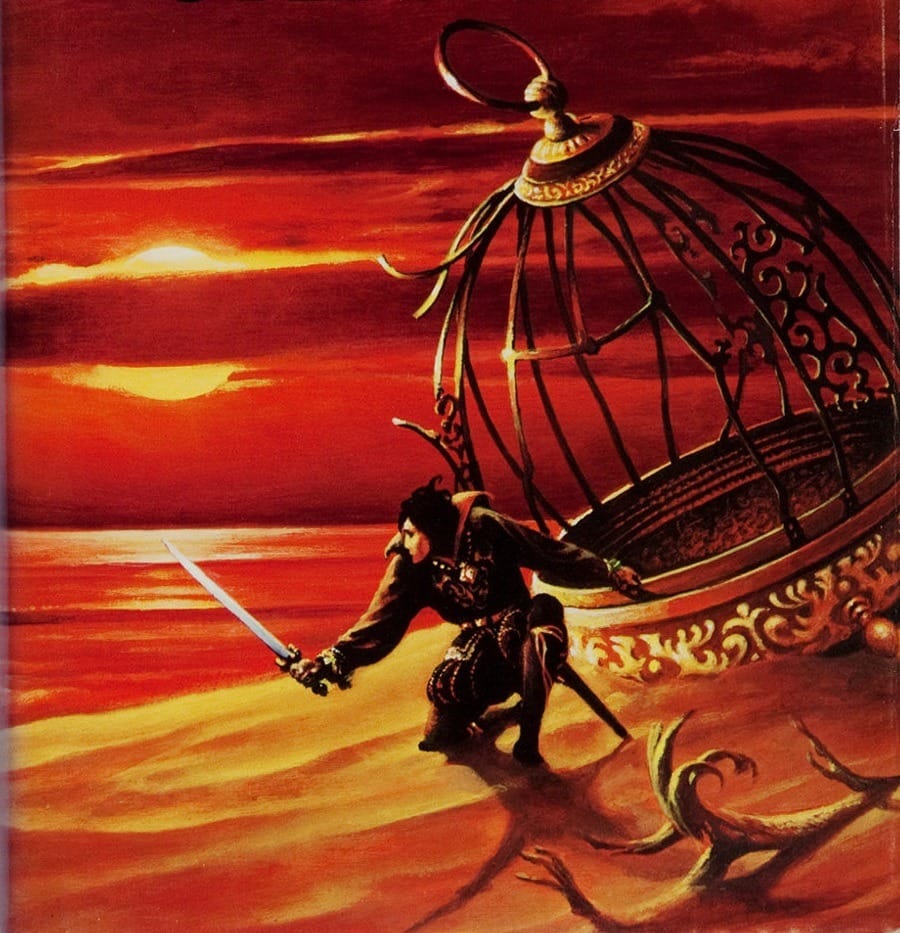
Stephen Fabian did both of these covers: A 1977 cover to The Eyes of the Overworld by Jack Vance, followed by his 1998 cover to The Laughing Magician, also by Vance.
Cool Links
What to read if you love Slow Horses - AV Club
The new very cynical, very funny season of Slow Horses has reminded me how much I love spy stories when they're good (Do I tautology? Very well, then I tautology), so this list of interesting novels in the genre is intriguing.
Interview with C.J. Cherryh - Transfer Orbit
Andrew Liptak at Transfer Orbit has posted an old interview with author C.J. Cherryh, originally done a decade back for a profile on Kirkus Reviews. Cherryh cites her earliest influences: Tarzan, Conan, and Flash Gordon. Check it out (and follow Transfer Orbit if you want to keep up on science fiction news beyond just the art).
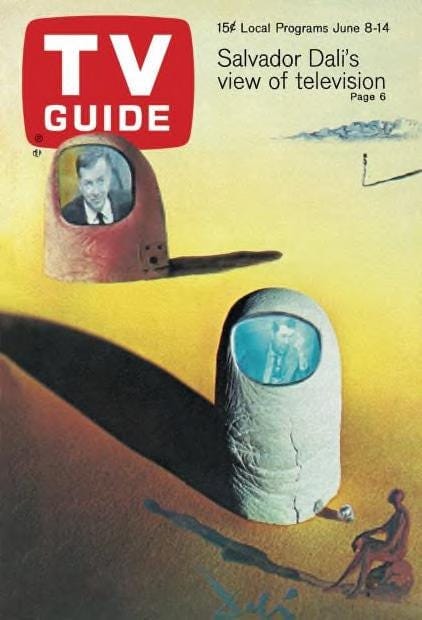
That Time Salvador Dalí Painted the Cover of TV Guide - Popcultural Precursors
TV Guide’s June 8–14 1968 cover featured an original painting by Salvador Dalí, and included a bizarre interview with him. Here's a great blog post summing up the event. The cover:
Music Rec: I just found out about Dreamcastle™, a creator who does retrowave concept albums themed after specific '80s-'90s LEGO lines. These are all incredible. They're on Bandcamp, too.
Next Time: Paying subscribers get a look at my notes and photos covering Franz Rottensteiner's 1978 title The Fantasy Book: An Illustrated History From Dracula To Tolkien.