Time Machines

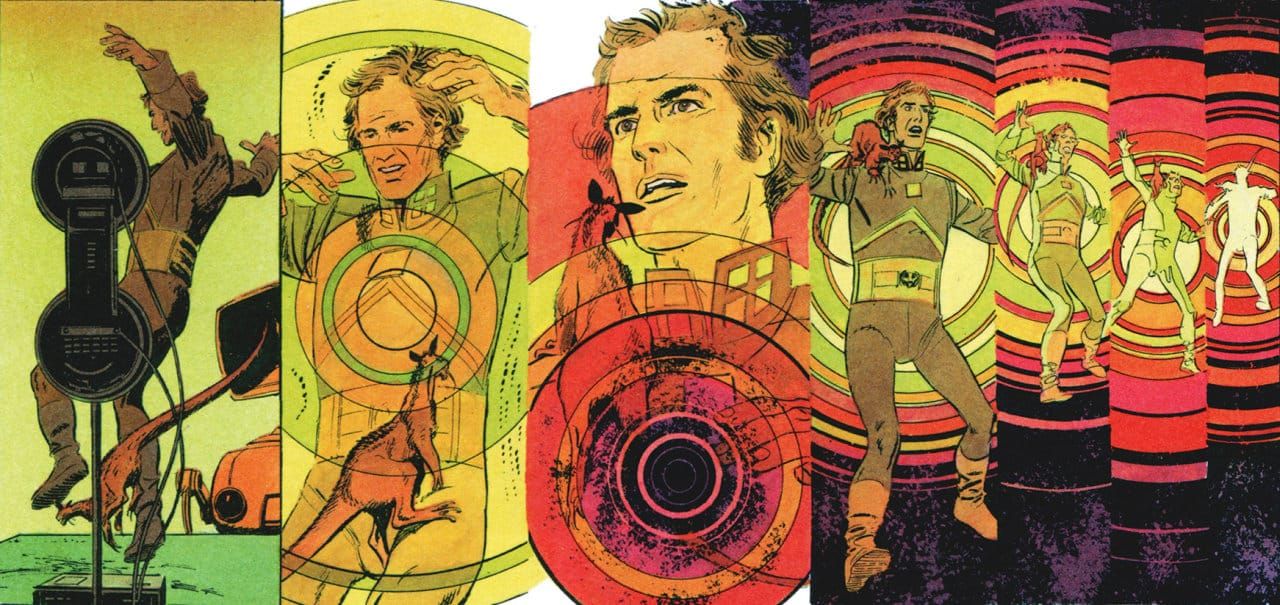
Everyone knows, more or less, what a spaceship looks like: The exact shape varies, sure, but if it travels through space, it needs a hull and some thrusters. But what about a time machine? What does moving through time look like? No one knows.
In his classic novel The Time Machine, avid cyclist HG Wells features a contraption with similar specs to a bicycle: Gears, metal tubes, leather.
Back to the Future even has its bamboozled main character turn to the camera when he realizes what the time machine is built out of. (A Delorean was the second choice, after the writers rejected a refrigerator due to concerns kids would climb inside them).
Writers and illustrators have come up with plenty of other ideas over the decades.
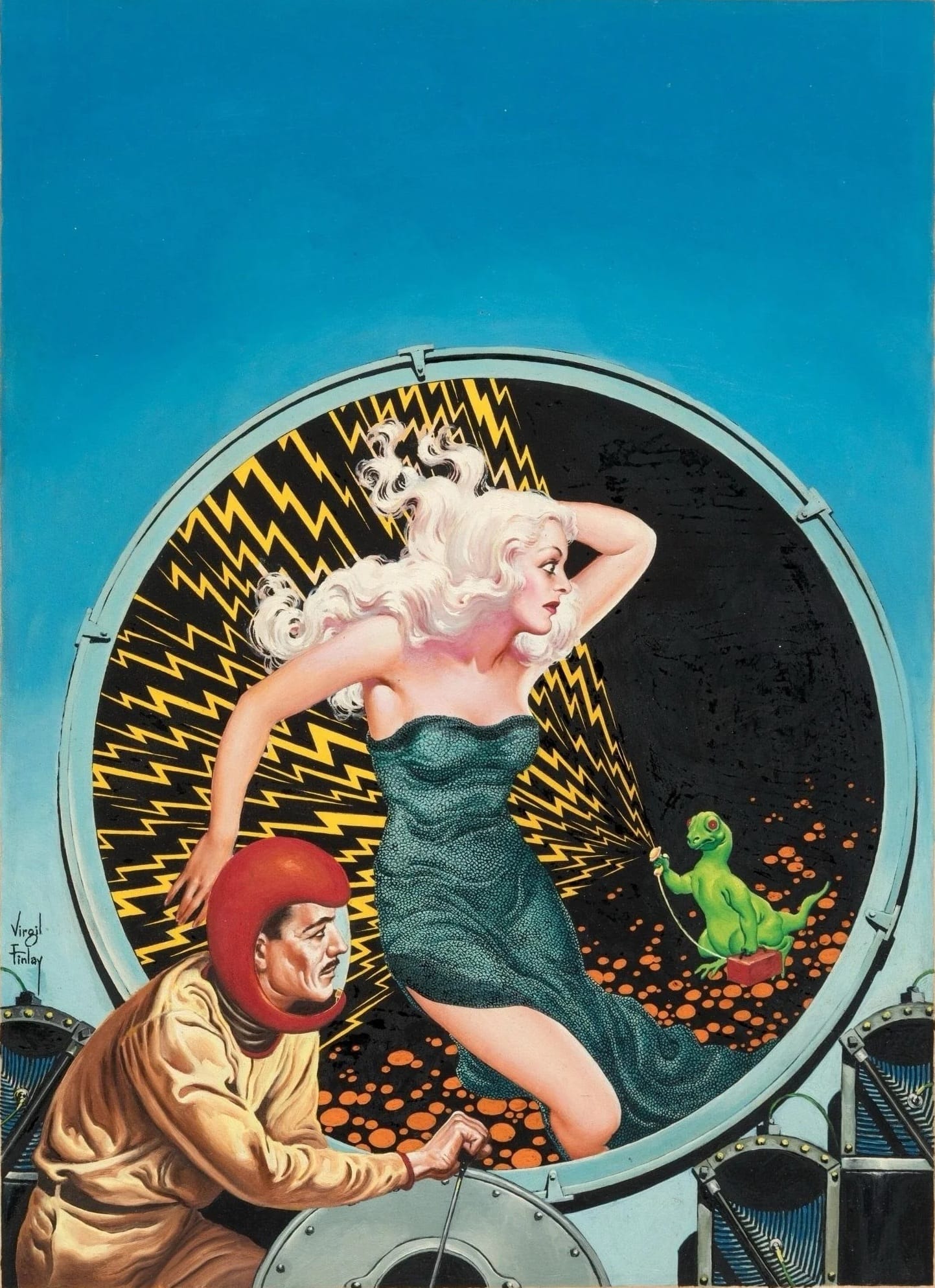
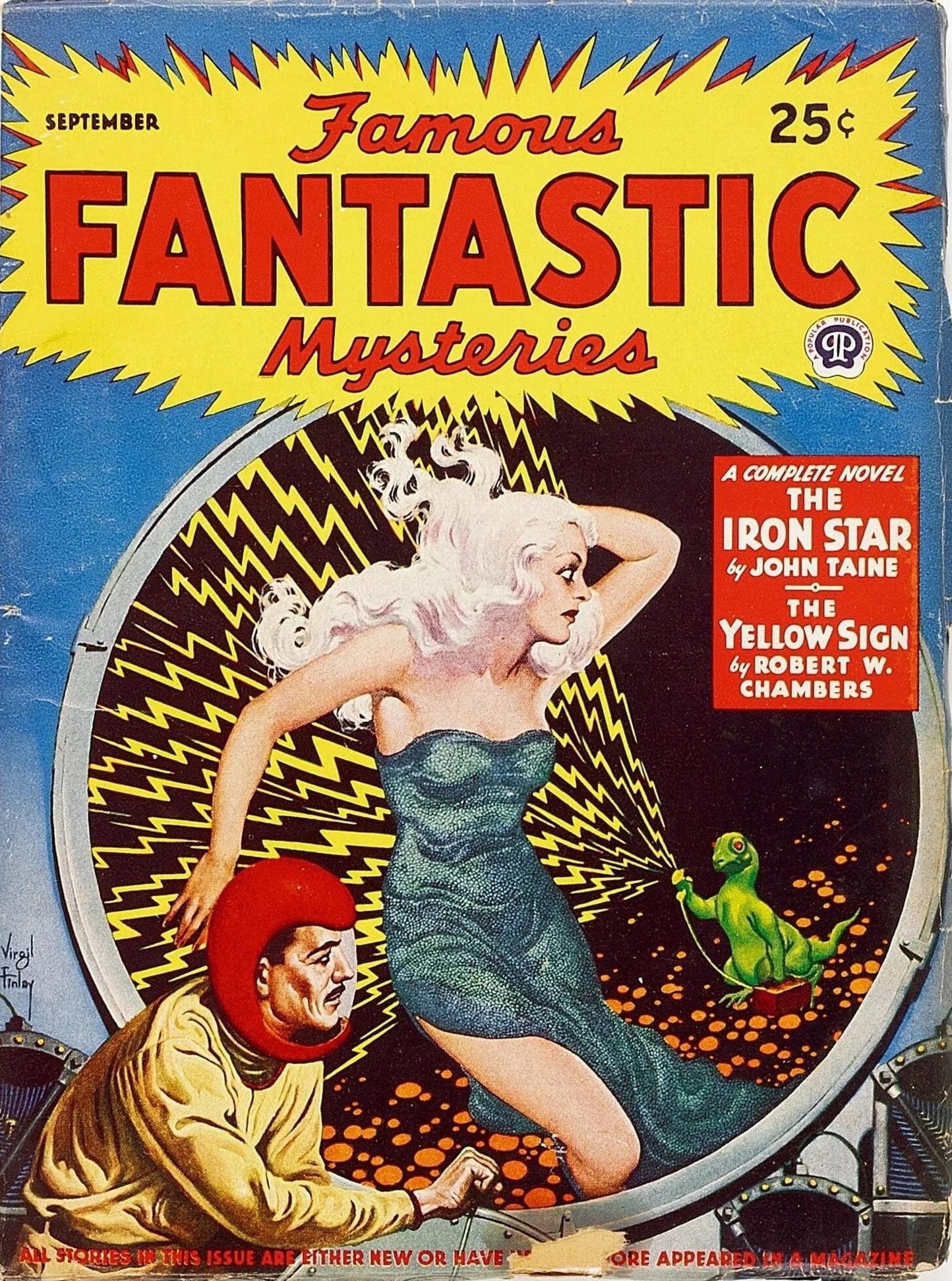
Virgil Finlay's September 1943 cover to "Doorway Into Time" for Famous Fantastic Mysteries is an early example: He includes a big lever or a hand-crank, a big window-portal, and some... are those batteries?
Via this reddit post
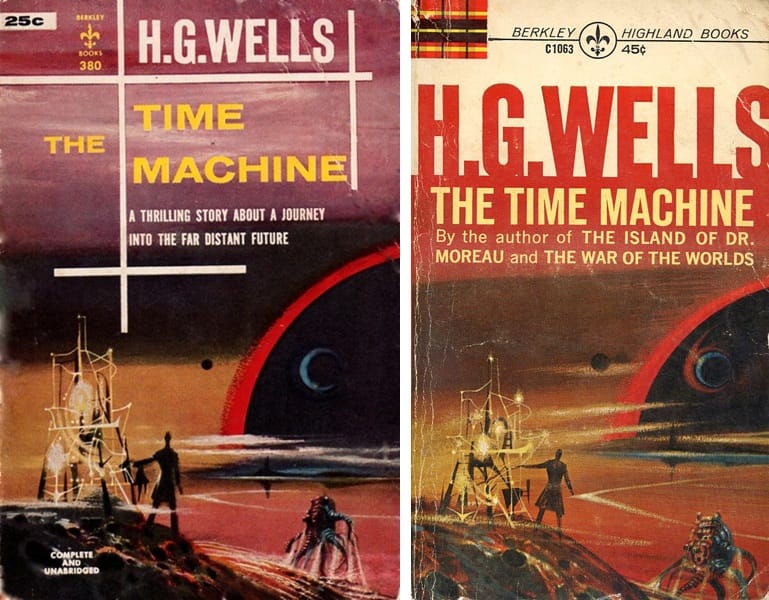
Richard Powers was seemingly trapped in a Berkley Books time loop of HG Wells Time Machine covers. Here's his 1957 cover (left), along with his 1965 revamp of the same scene.
In 1978, Powers did yet another Time Machine cover, again for Berkley.

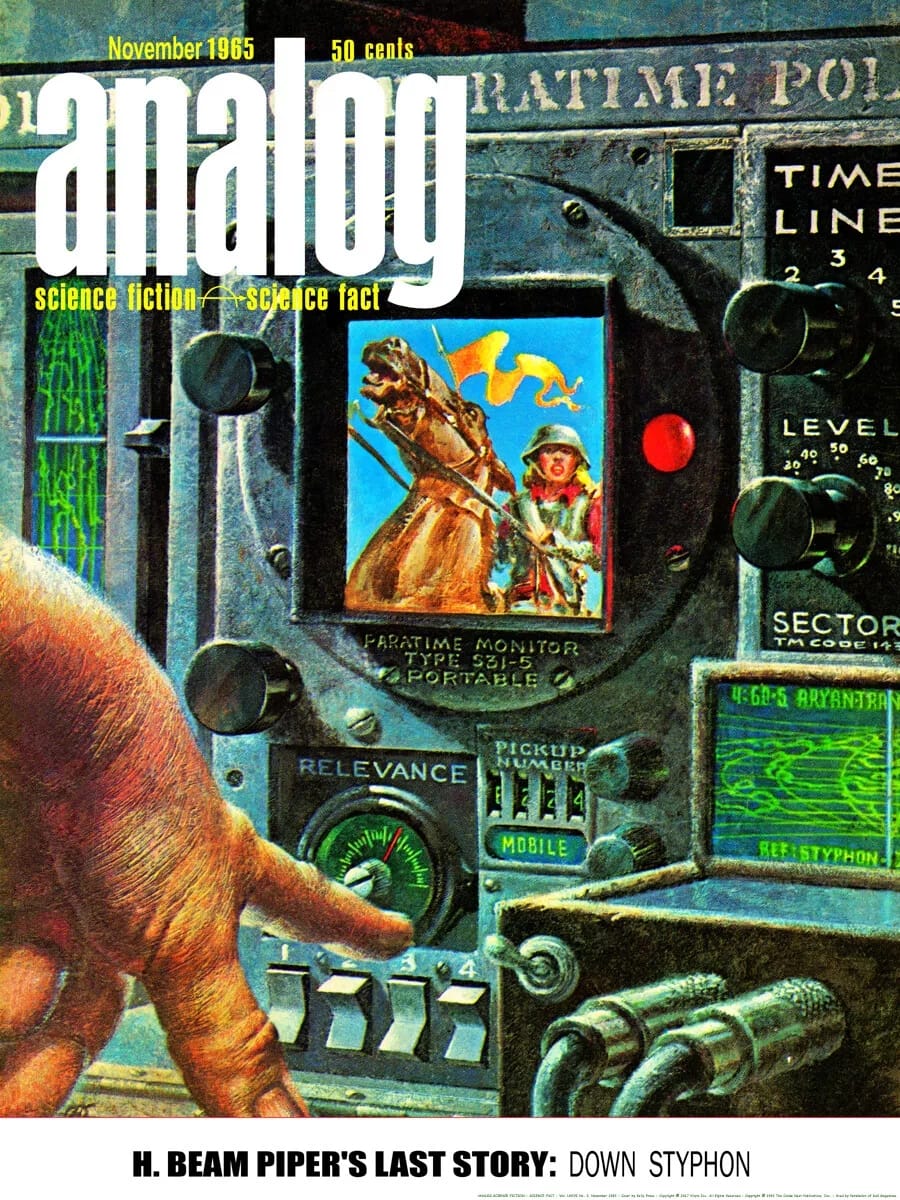
Frank Kelly Freas doesn't even bother with the exterior of the time machine on the Nov 1965 issue of Analog, instead giving us a delightful array of controls: A "timeline" dial, a "relevance" radar, and "paratime monitor."
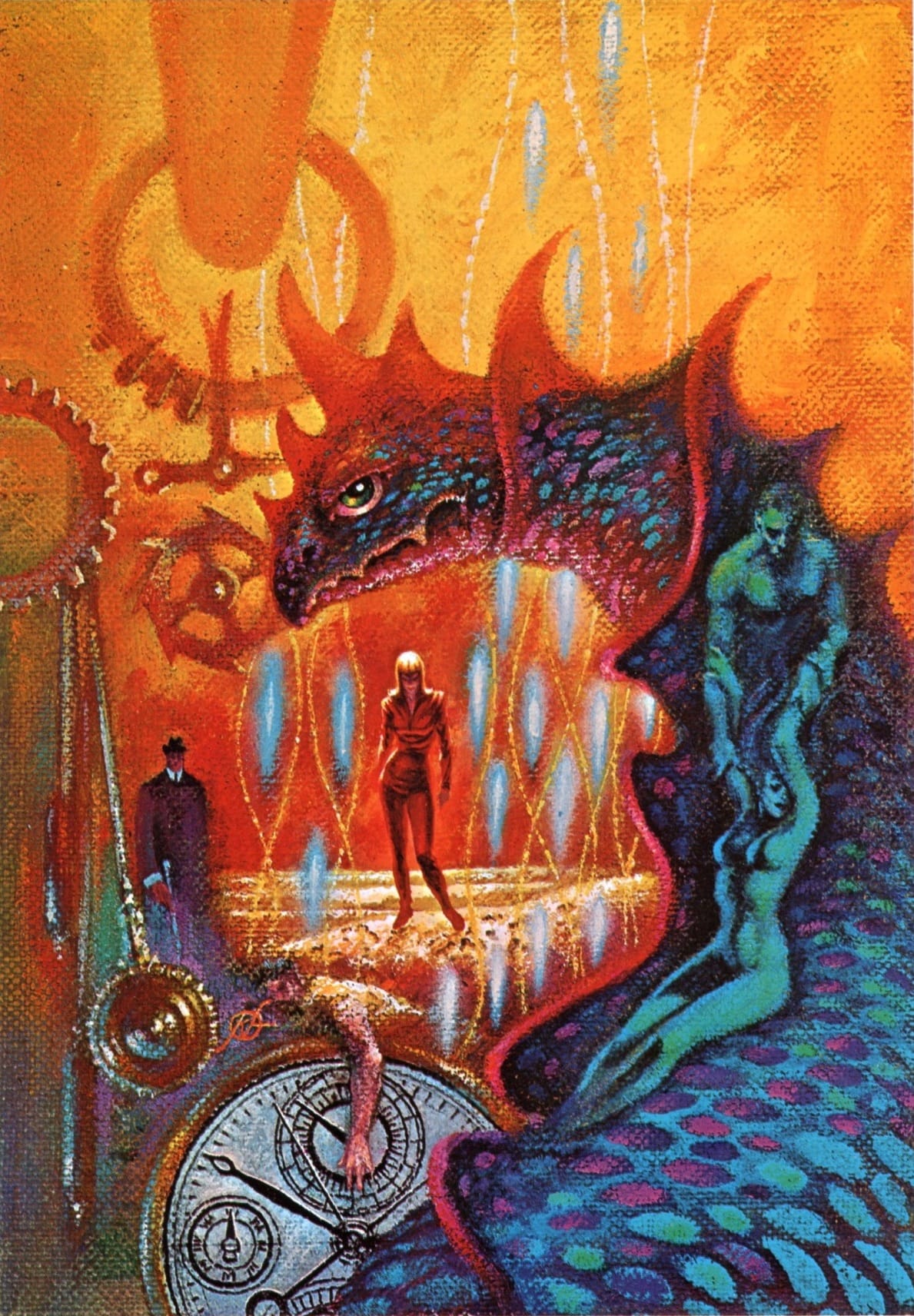
Frank Kelly Freas has another time travel cover that relies on a tried-and-true trope: Chucking a clockface or two into a collage.
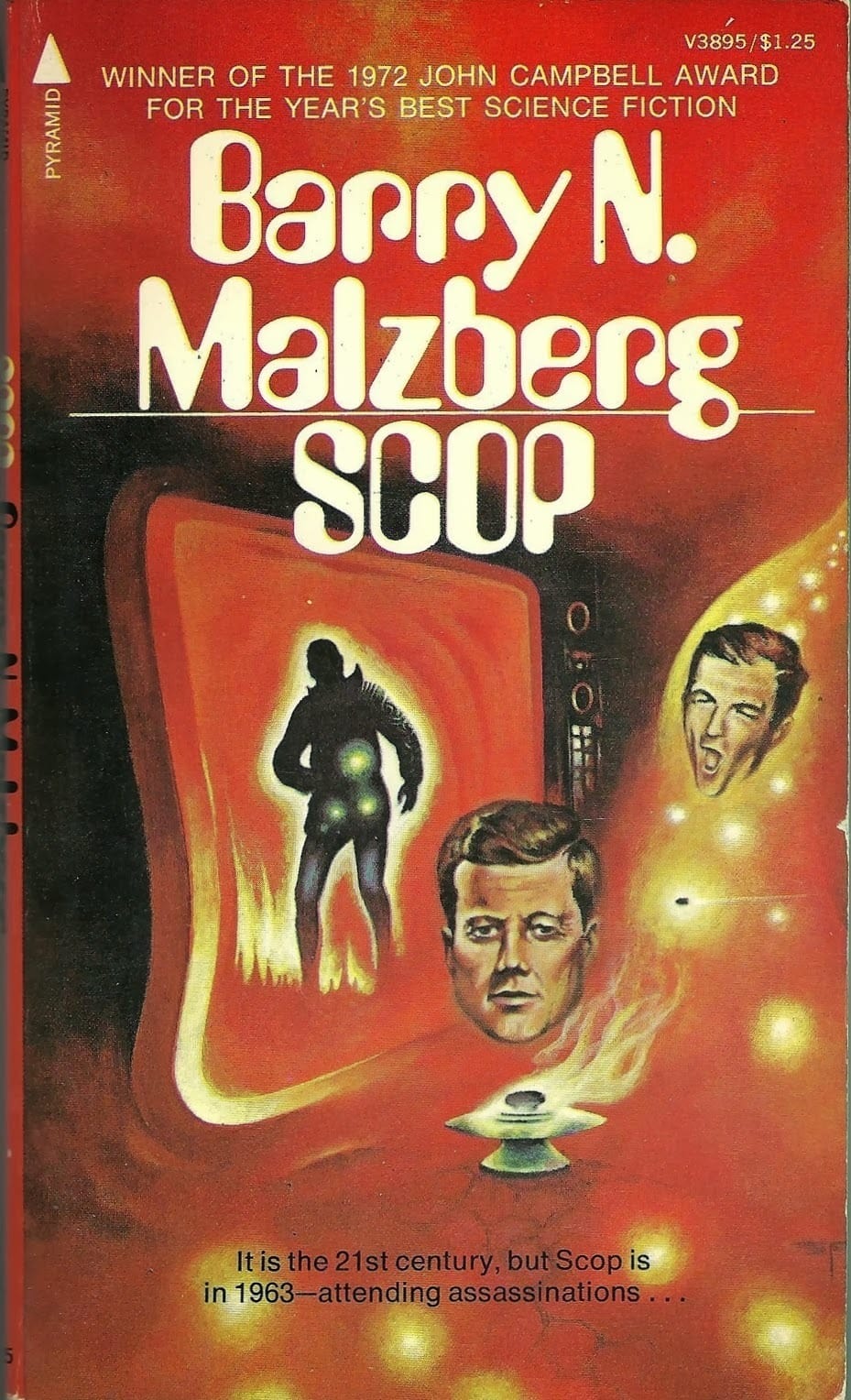
Including the face of JFK also works! Stephen Fabian's 1976 cover to Barry N. Malzberg's Scop features a time machine that looks like a microwave.
I love Paul Alexander's 1978 cover for The Very Slow Time Machine, a collection of Ian Watson short stories. Sounds like the titular story is a good one – it won the 1979 Hugo Award for its category.
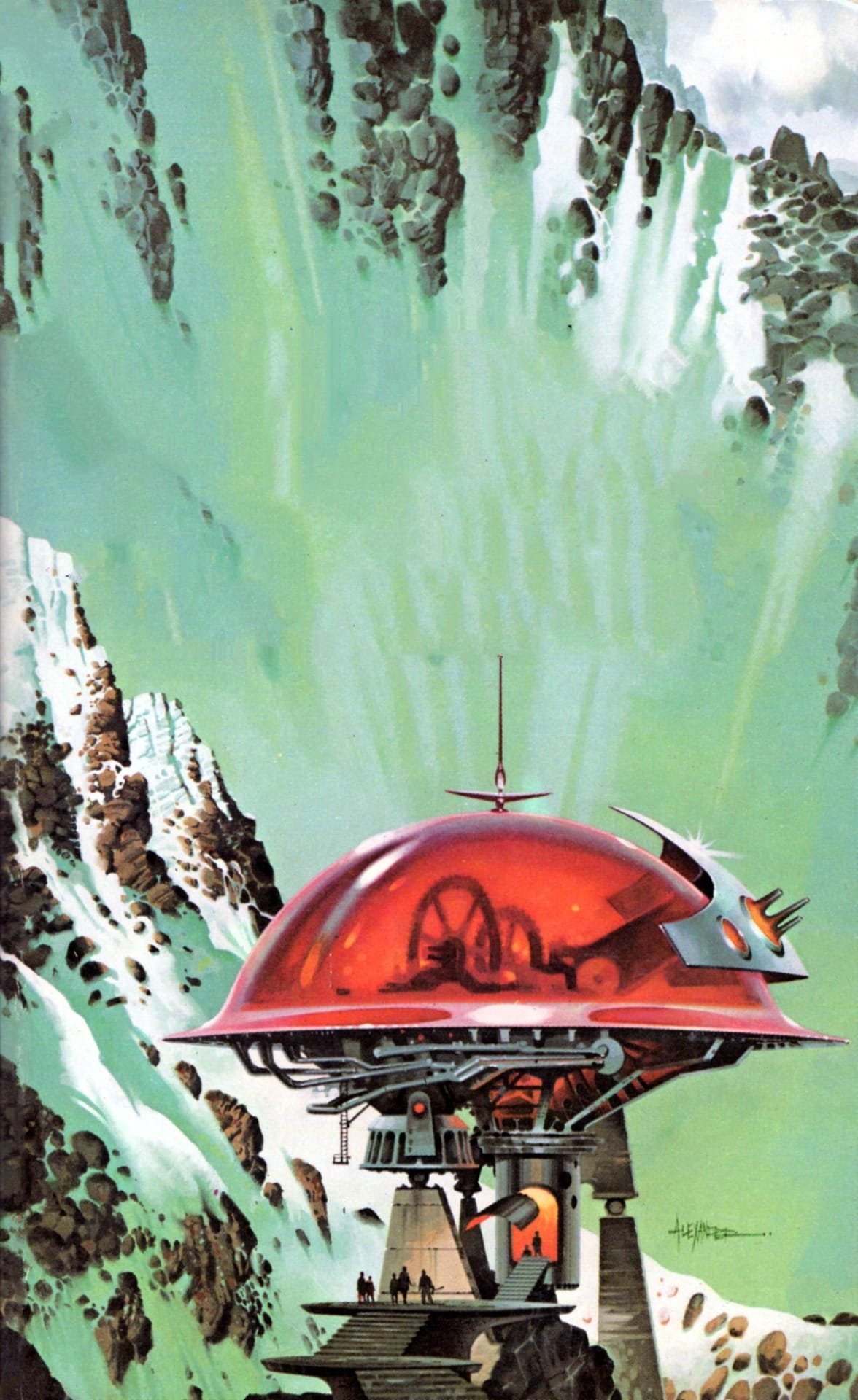
Trevor Webb did this 1981 cover for the same title, featuring a more spaceship-inspired take on a time machine.
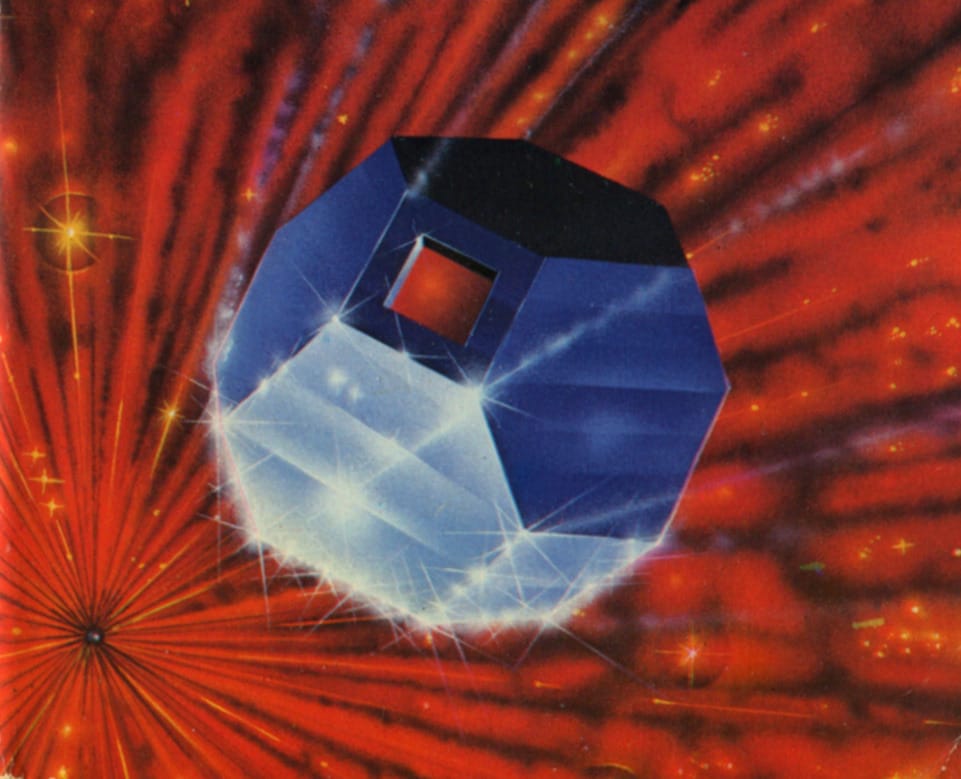
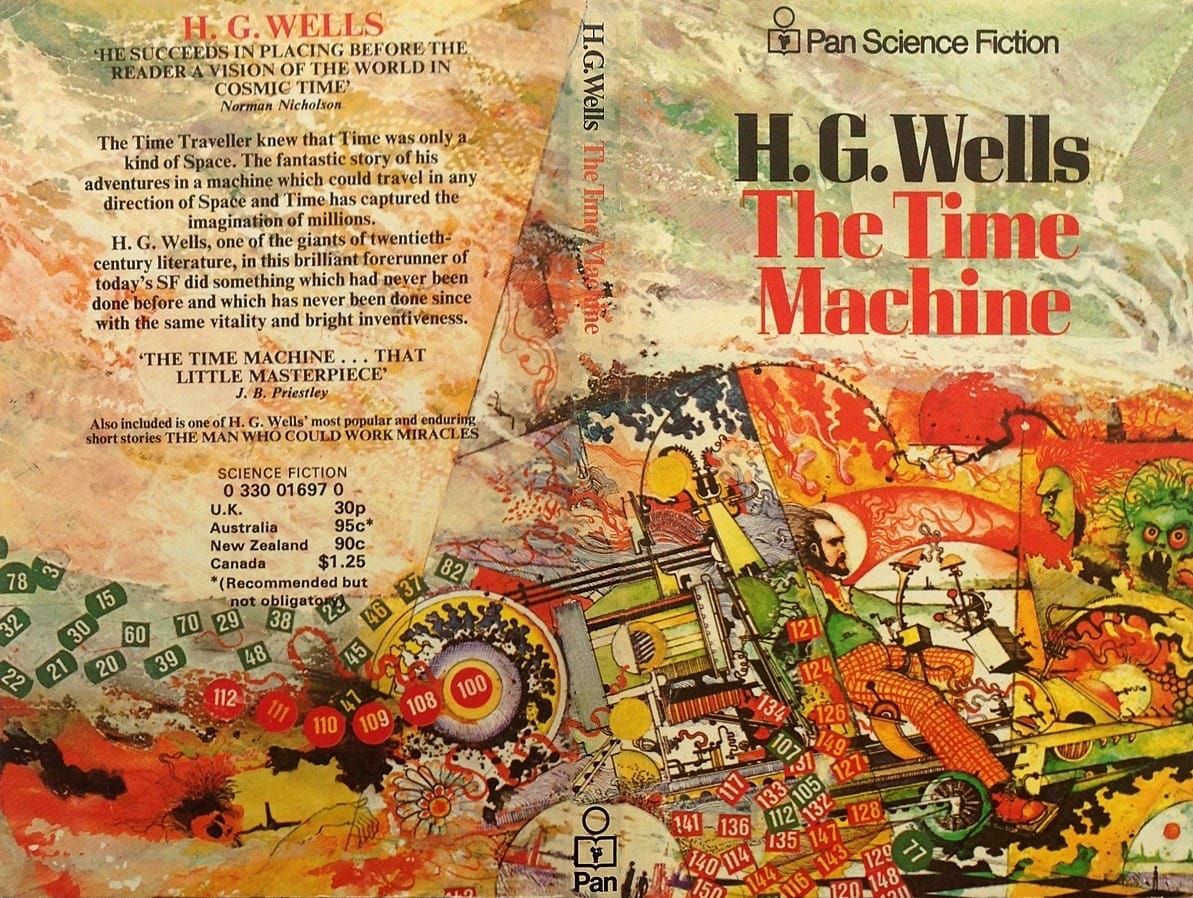
Ian Miller has a splashy cover to the HG Wells title, depicting the impossibilities of time travel with a barrage of images that even includes a flurry of calendar days.
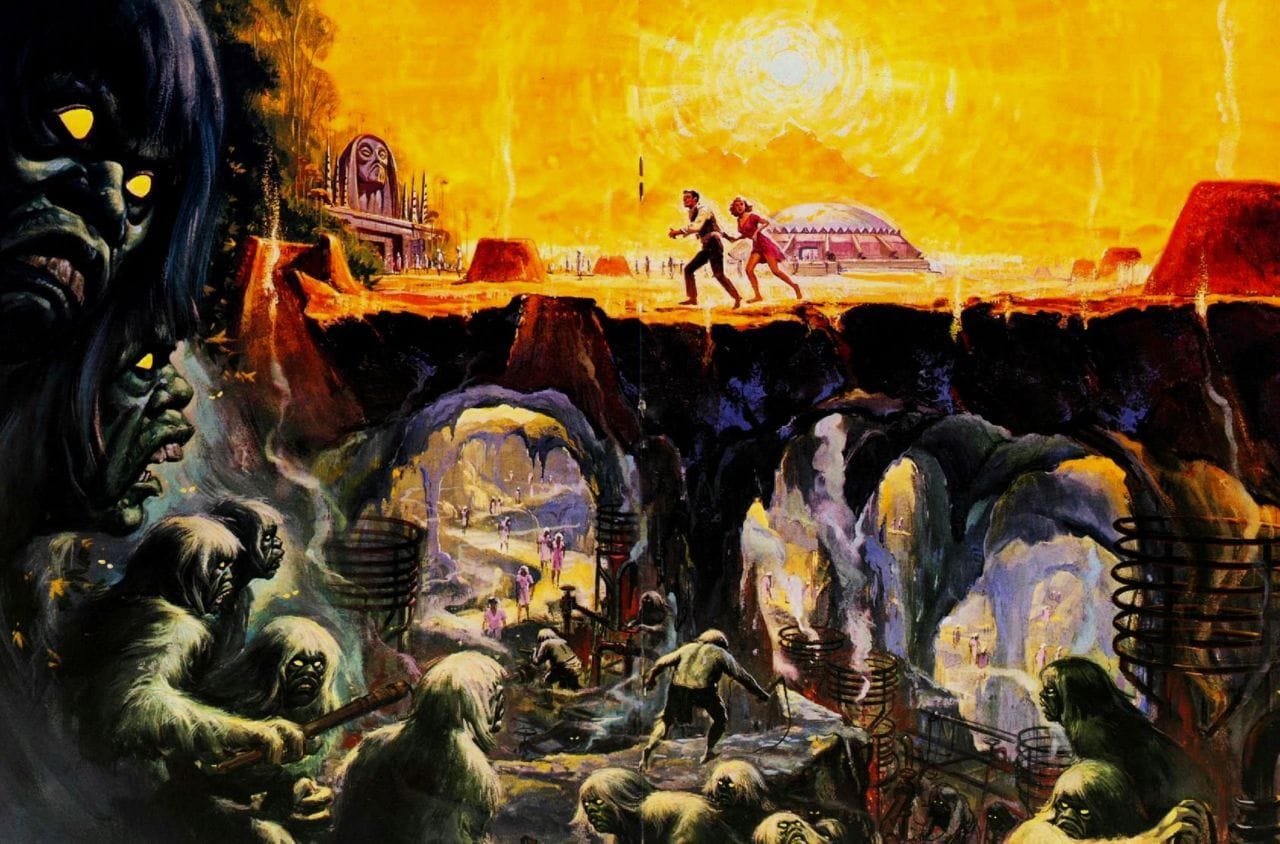
We'll see a lot of Wells in this post – I believe Reynold Brown did this next artwork for the 1960 film adaptation of Wells' Time Machine story, featuring the Morlocks instead of the machine itself.
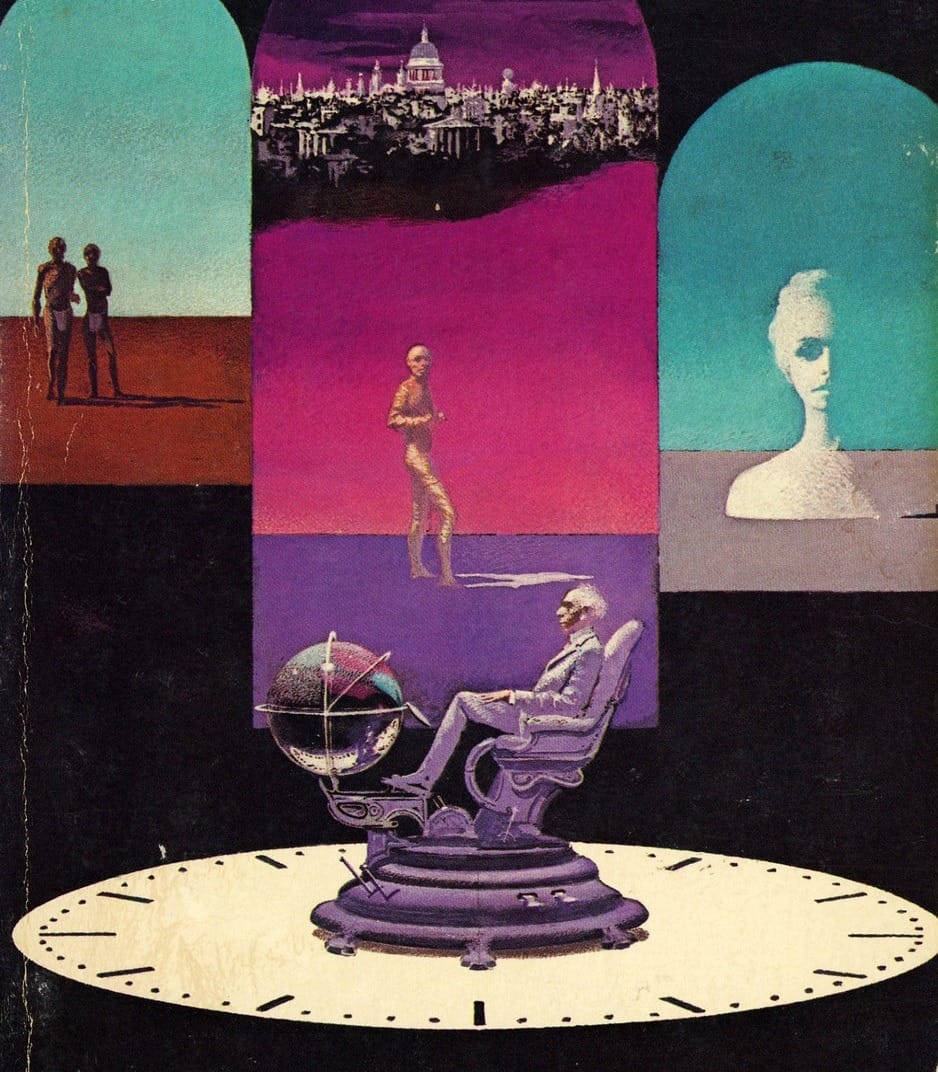
The long shadow of Wells' Time Machine even extends to a sequel from another author, Egon Friedell's The Return of the Time Machine. Here's Karel Thole's 1972 cover.
It's a good example of the visual shorthand many artists rely on for conveying movement through time: Simply combining several different settings in a collage behind the machine itself.
This beautiful Peter Knifton illustration appeared in a May 1980 issue of Omni, illustrating an article on time travel.
RIP to Knifton, who passed away in late October this year. We only emailed briefly, when he kindly granted me permission to use this illustration in Worlds Beyond Time.

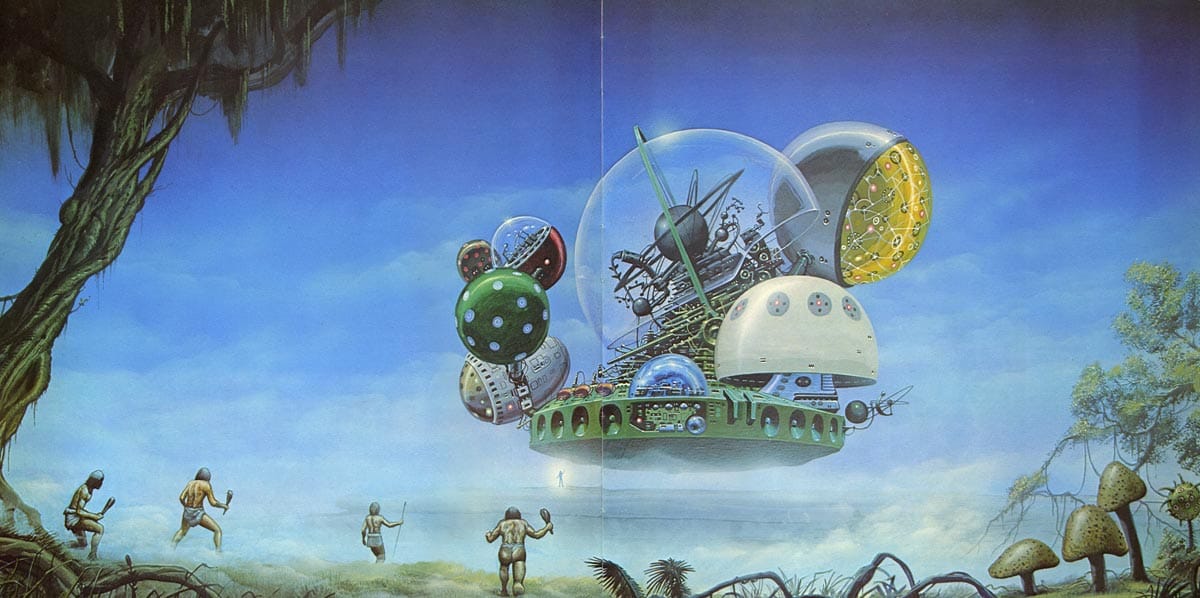
Speaking of time machines in Worlds Beyond Time, here's an Angus McKie illustration of a time traveller meeting some wary neanderthals. McKie's eye for detail is as great as ever.
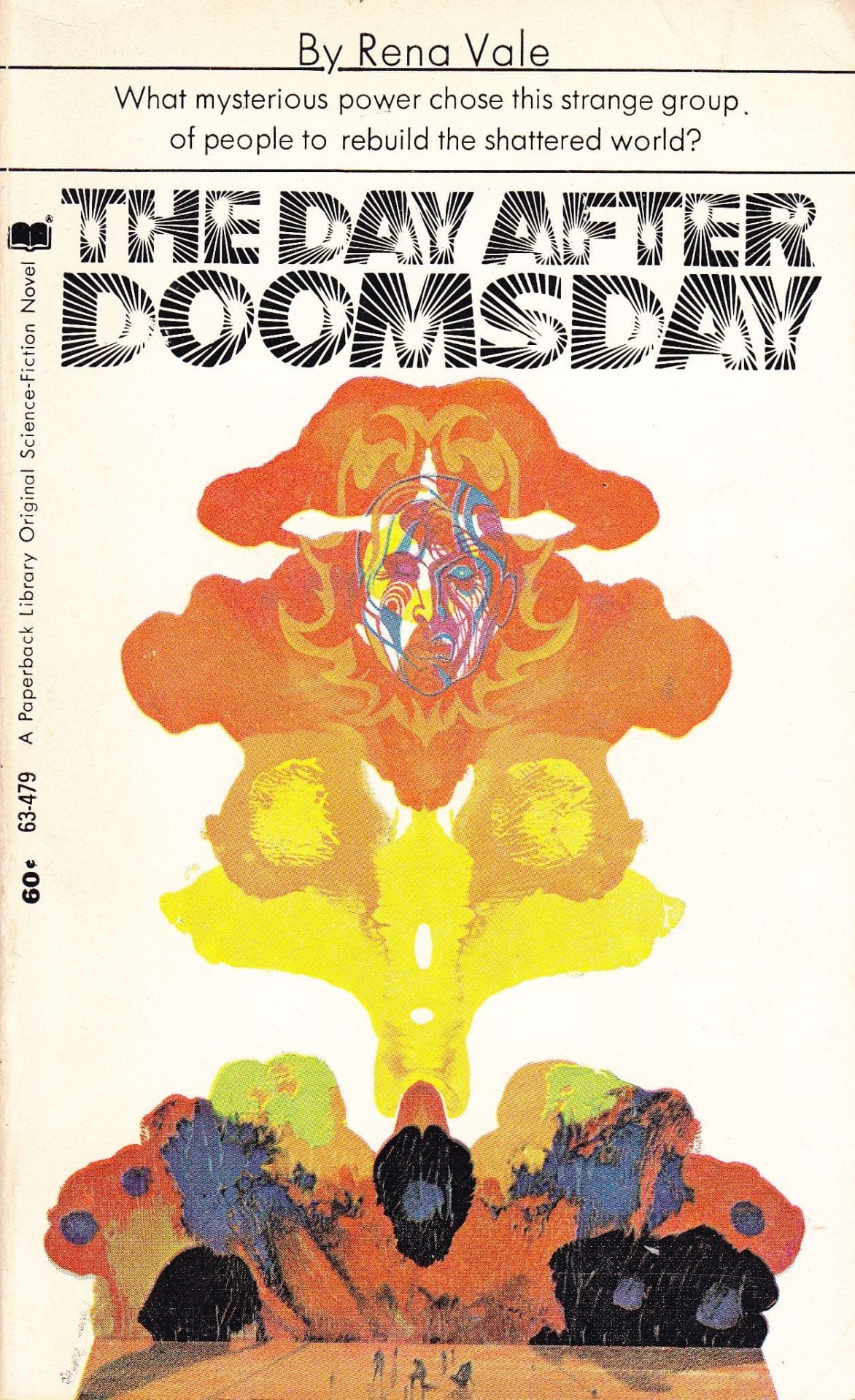
Richard Powers returns with his abstracted mushroom cloud on this 1970 cover to The Day After Doomsday, by Rena M. Vale. The story features a small group of people who escape a nuclear apocalypse by travelling 50,000 years back in time.
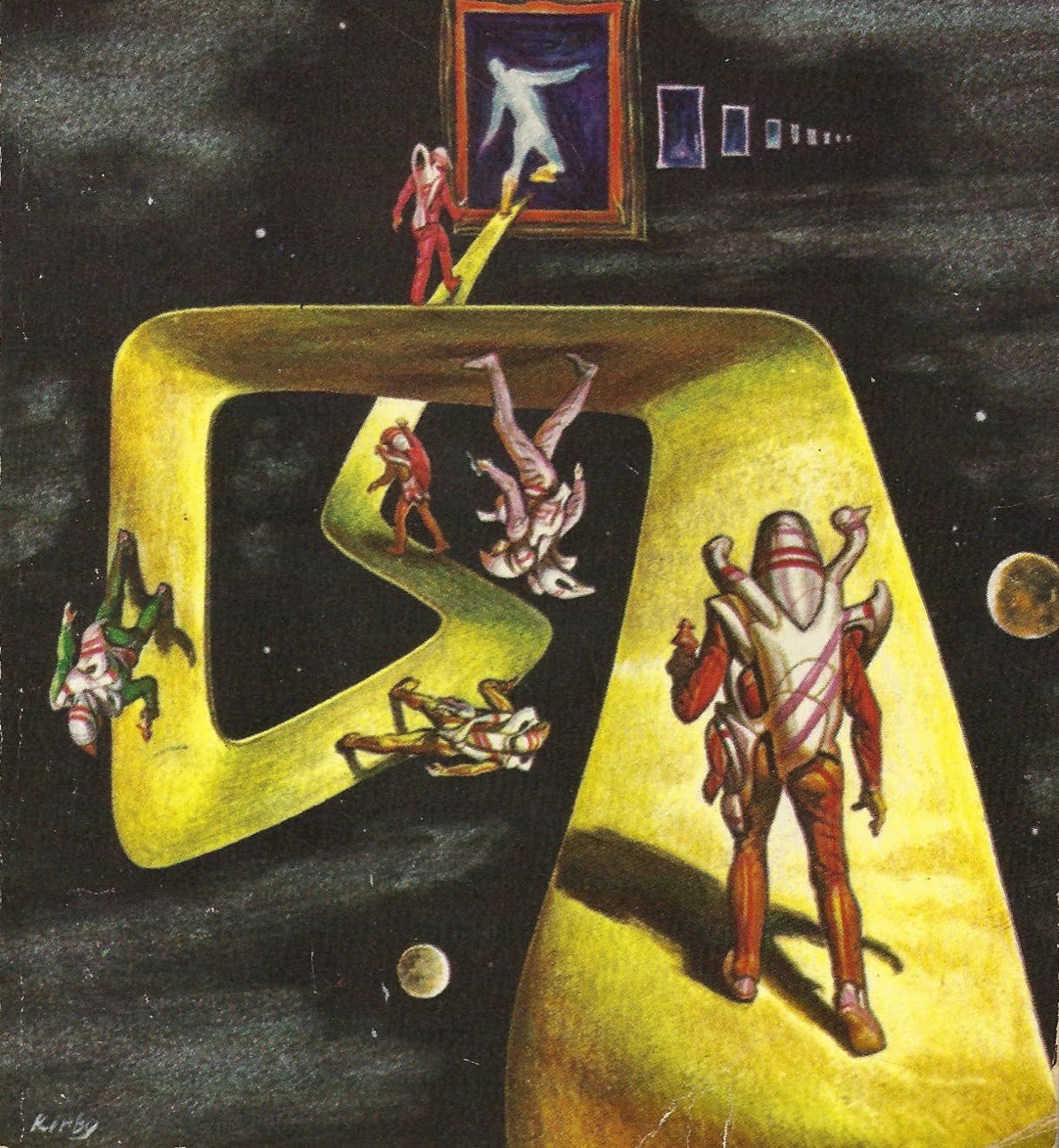
Gérard Klein's The Day Before Tomorrow deals with temporal paradoxes, so Josh Kirby's 1972 cover borrows a little MC Escher inspiration, presumably to hint at the mental backflipping soon to be required of the reader.
However, the prize for the all-time coolest depiction of a time machine on a book cover? I might just give it to Mark Harrison for his 1989 cover to Robert Silverberg's Project Pendulum.
The story is about an experiment in which identical twins Sean and Eric both travel through time. One's a paleontologist in the distant past, the other's a physicist in the distant future, and there's a "time pendulum" connecting the two somehow.
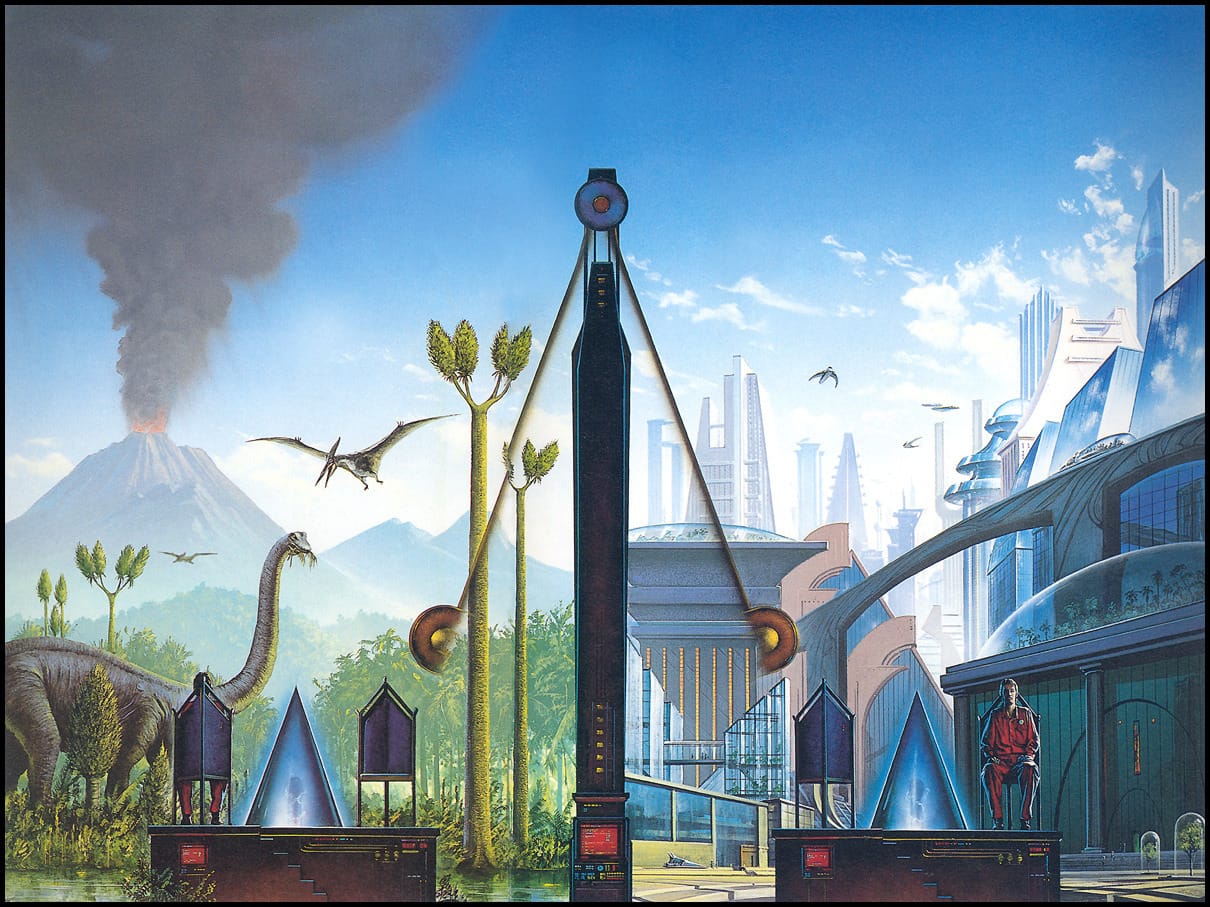
The swinging pendulum and the reversed seats for the two travellers are clever, but I really love how this image was designed to work as a wraparound cover. Readers would initially just see the future city, and would have to flip over the physical copy in order to find out that the book features dinosaurs, too.
The time machine column in the center serves both as a bridge between the eons of time represented in the narrative of the artwork and as the book-spine null-space that practicality demands for all wraparound covers.
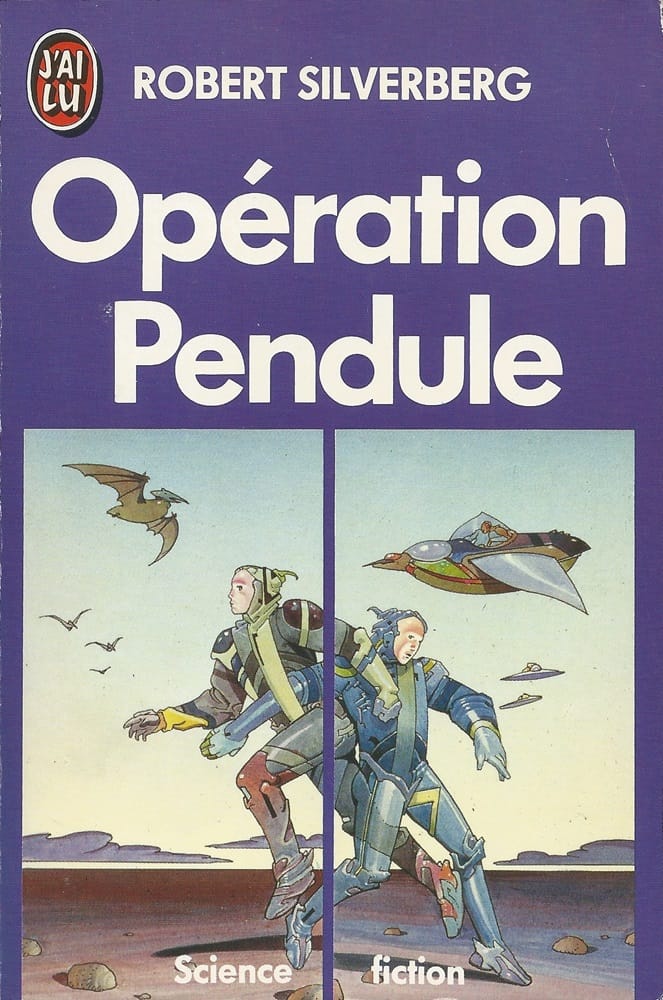
Most publishers, then and now, wouldn't have enough faith in their readers to save any revelations for the back cover. Here's how Moebius paired the past and the future for his cover to the same title:
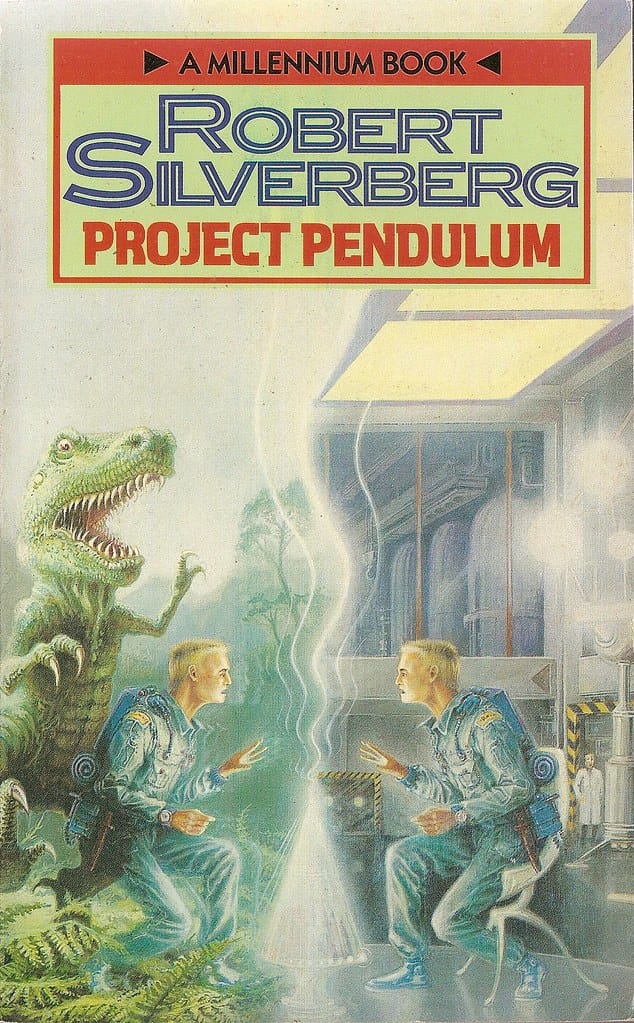
And Pete Lyon's 1990 cover:
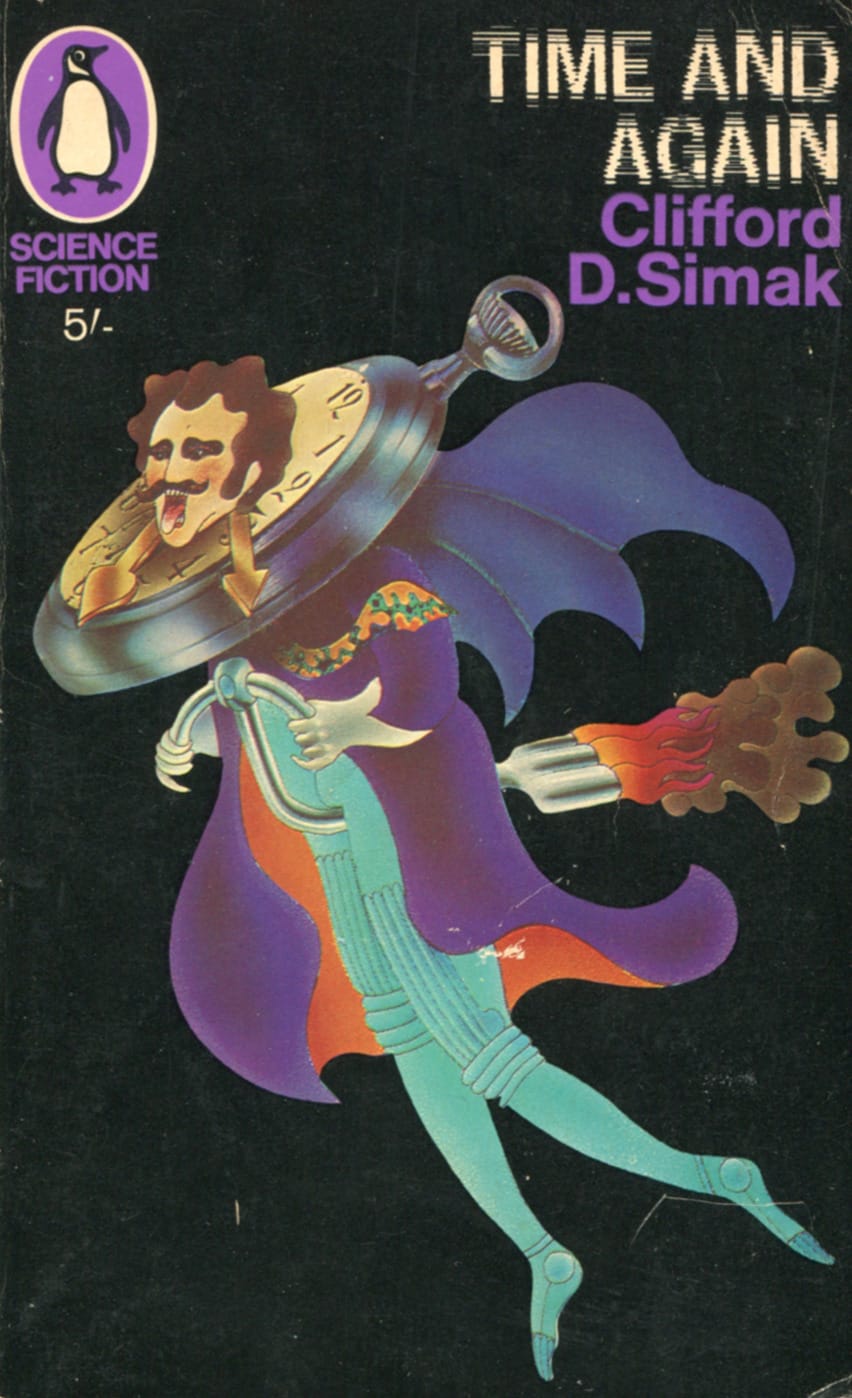
I'll wrap up on a cautionary tale, as illustrated by Alan Aldridge for a 1967 edition of Clifford D. Simak's Time and Again. Getting your head caught in a watch is a rookie time traveler mistake.
Cool Links
To ‘Dune’ and beyond: The interstellar hyper-realism of Wojciech Siudmak - Dangerous Minds
This roundup of Wojciech Siudmak art doesn't actually seem to be online anymore, so you're getting it through the magic of the Wayback Machine. Very cool artist – and the only one I know to be highly praised by both Federico Fellini and Denis Villeneuve.
The Unspeakable Oath (1990-2018) - Vintage RPG
A cover art round-up blog post showcasing all 25 issues of a magazine that was "originally a Call of Cthulhu fanzine full of rules expansions, scenarios, creepy art and all the fun, edgy stuff you’d expect from a self-published zine in the ’90s."
Reflection in a Dead Diamond - RogerEbert.com
A review of what sounds like a very wild 60s-era spy film pastiche.
Music rec: This cool Turkish cover of "People Are Strange" was on the last episode of Pluribus. Love the show.
Next Time: Orange and Teal