Spherical Spaceships
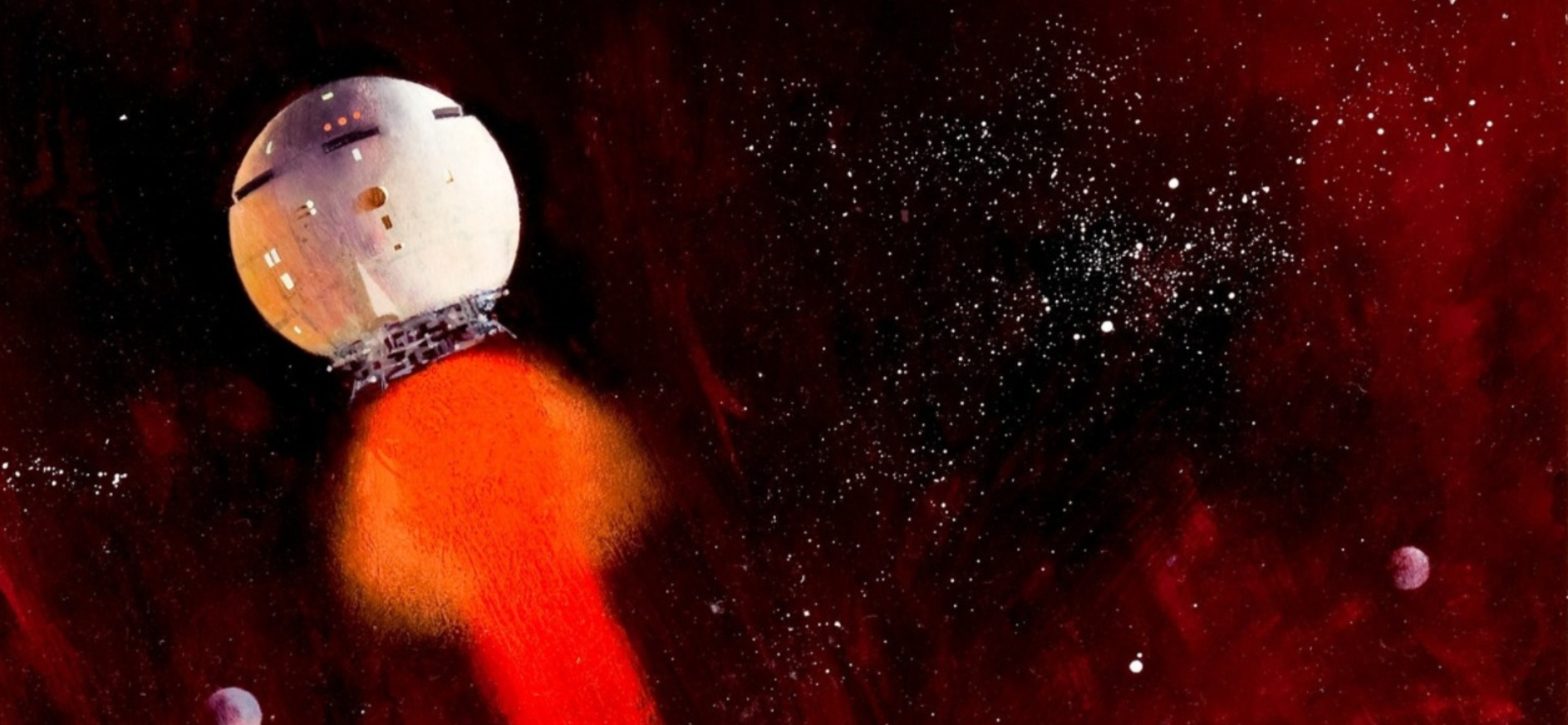
Spherical forms of transportation have a rich history in science fiction illustration.

Hey, quick announcement before we start: I'm running a Black Friday 20% off deal on my paid plan - It's just $4/month or $40/year if you click those links and sign up within the next week.
If you've been waiting for the right time to support me, now's good! You'll get bonus emails on Fridays – right now I'm doing some behind-the-scenes on my art selection process for my next collection. Sign uppp
The 1931 artwork "Voice of Space" is one of famed surrealist René Magritte's most striking works – it depicts three big bells hanging in the air over an otherwise normal landscape.
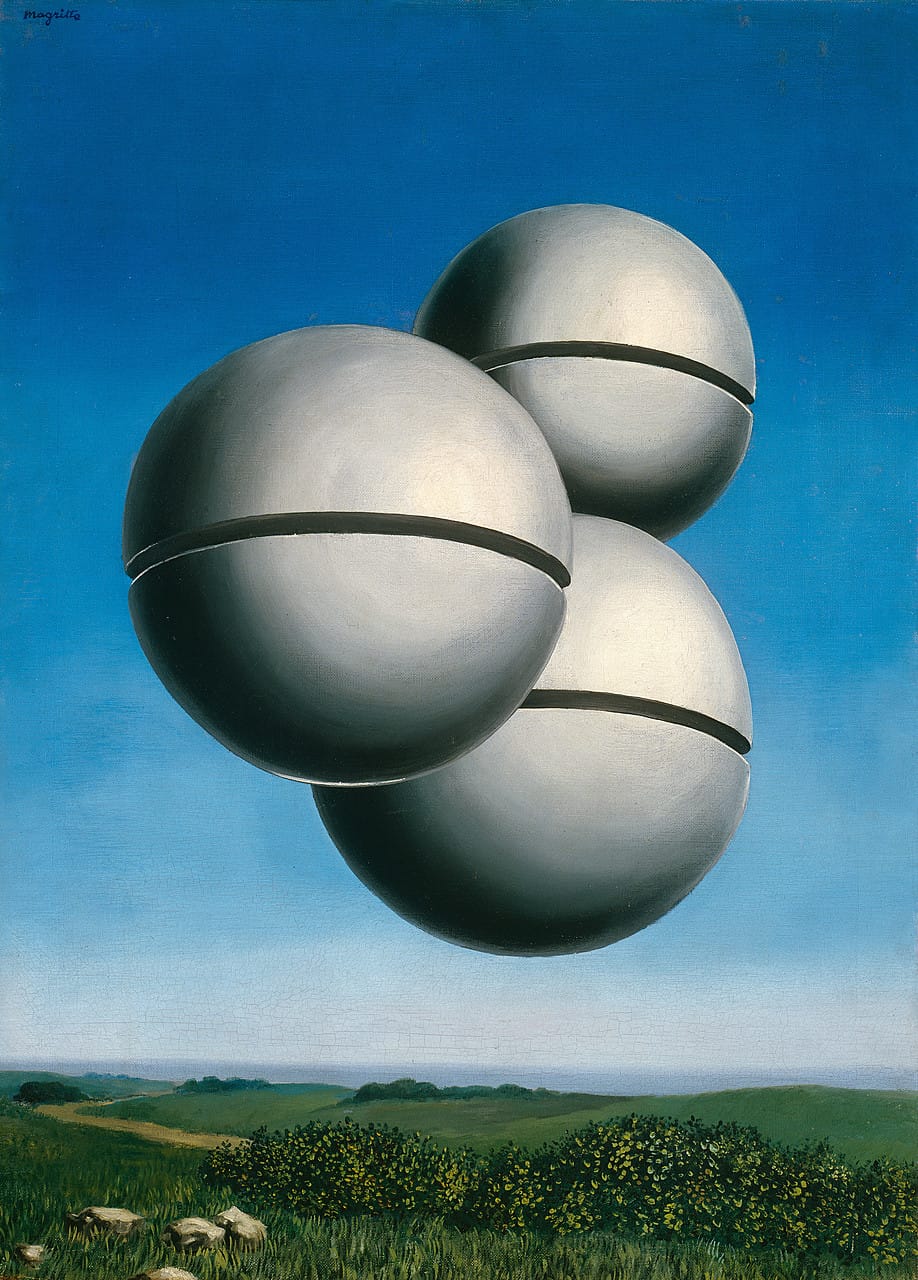
Along with MC Escher, Magritte stands out as one of the biggest fine artists to influence science fiction illustration, with dozens of homages to many his artworks emerging over the decades.
Here's how the Guggenheim breaks down his use of bells:
"By distorting the scale, weight, and use of an ordinary object and inserting it into a variety of unaccustomed contexts, Magritte confers on that object a fetishistic intensity. He has written of the jingle bell, a motif that recurs often in his work: 'I caused the iron bells hanging from the necks of our admirable horses to sprout like dangerous plants at the edge of an abyss.'
The disturbing impact of the bells presented in an unfamiliar setting is intensified by the cool academic precision with which they and their environment are painted. The dainty slice of landscape could be the backdrop of an early Renaissance painting, while the bells themselves, in their rotund and glowing monumentality, impart a mysterious resonance."
Now, take a look at John Schoenherr's Nov 1962 cover to Analog Science Fiction magazine.
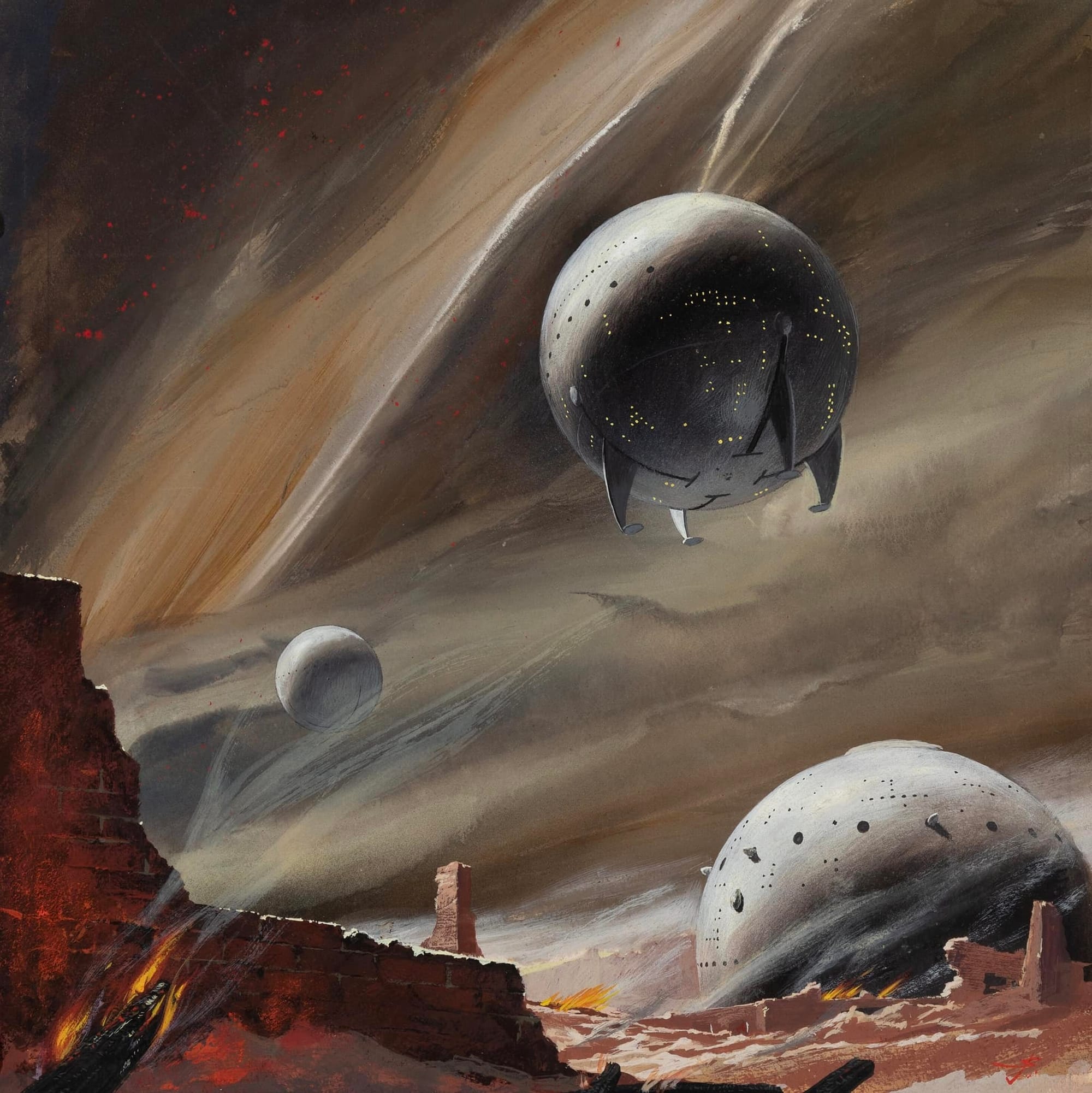
"Voice of Space" immediately came to mind when I saw that one, mostly because the empty space left by the four legs on the decending spacecraft is so strongly reminicent of the four-leaved shape of a classic jingle bell.
Looking back to the Magritte, however, I can see that his bells don't look like that. Schoenherr may very well have had Magritte's famous painting on his mind – he would largely avoid hoary sci-fi tropes in his work, and he seems like the type of artist who, like Magritte, hoped to "impart a mysterious resonance" – but I don't have proof that there's a connection.
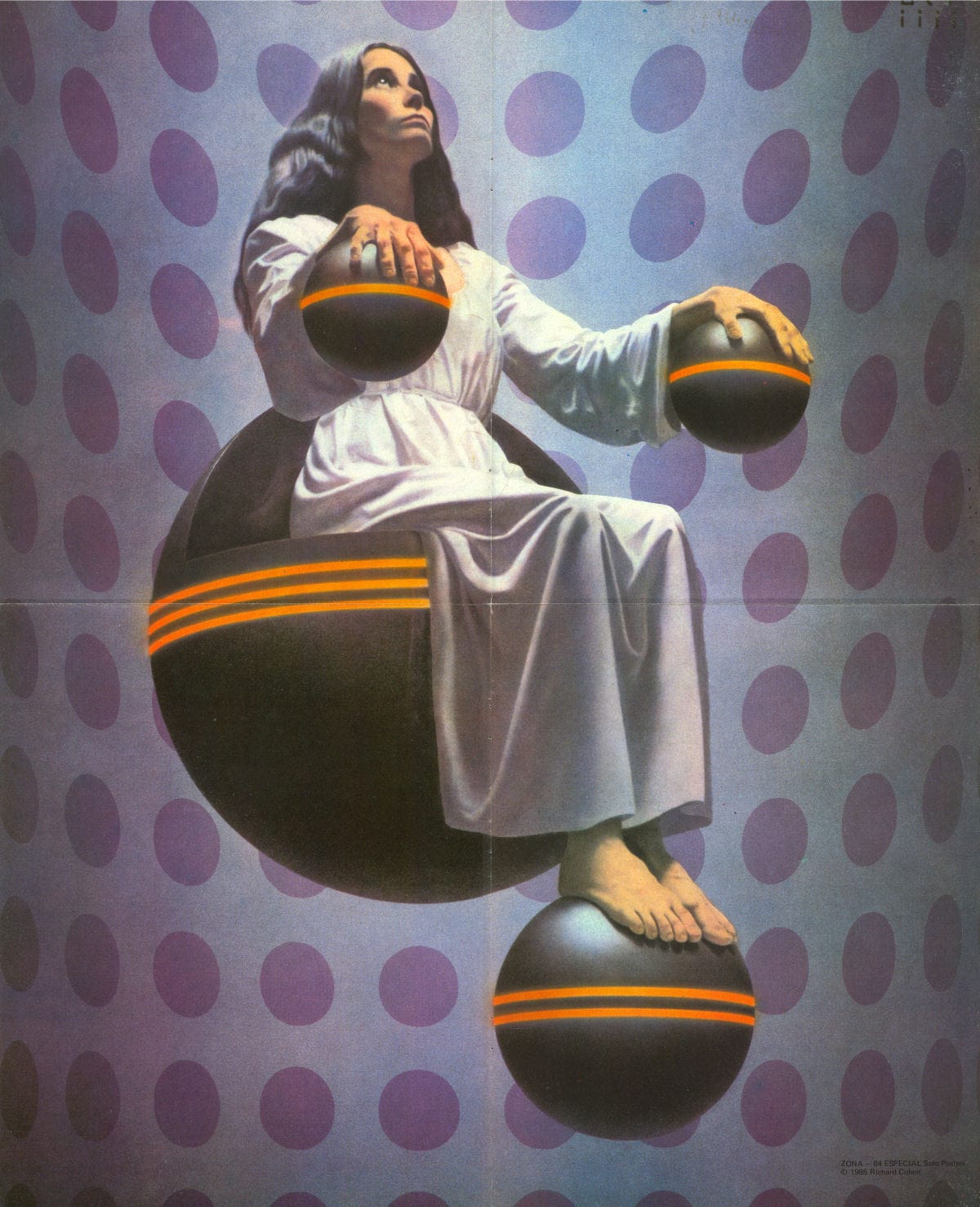
This one's even more reminicent of Magritte's bells, however: "Spheres," Richard Cohen's Heavy Metal Magazine May 1982 cover art.
Tibor Czernus, a renowned Hungarian artist who did quite a few science fiction covers for the French market in the 1970s and 1980s, would definitely have had plenty of knowledge of Magritte.
This article about Czernus namechecks Magritte in its very first sentence: "Tibor Czernus is a pioneer of the so-called 'super-naturalist' style, which blends naturalistic elements with surrealist distortions (René Magritte, Leonora Carrington)."
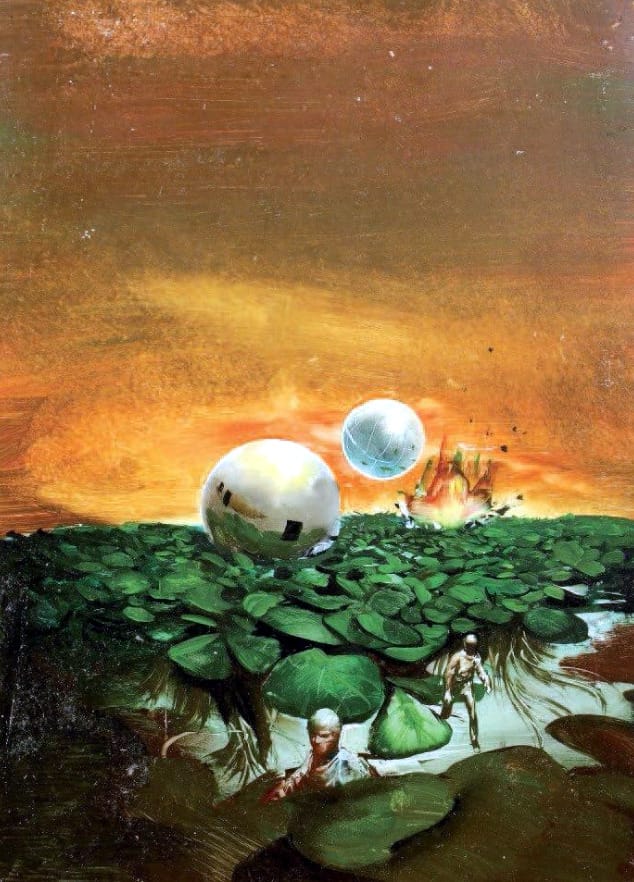
Anyway, here's an illustration by Czernus featuring some familar metallic spherical spaceships – his 1983 cover to the French translation of Thomas Disch's The Genocides.
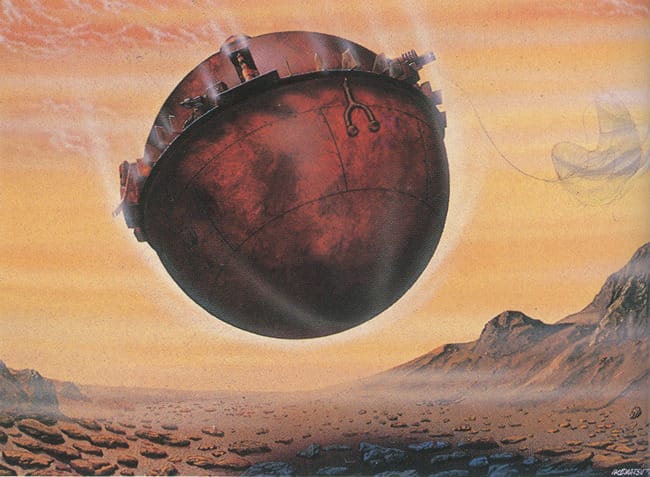
This 1980 illustration by Hitoshi Ikematsu features a spaceship with a very similar design to the bells from "Voice of Space."
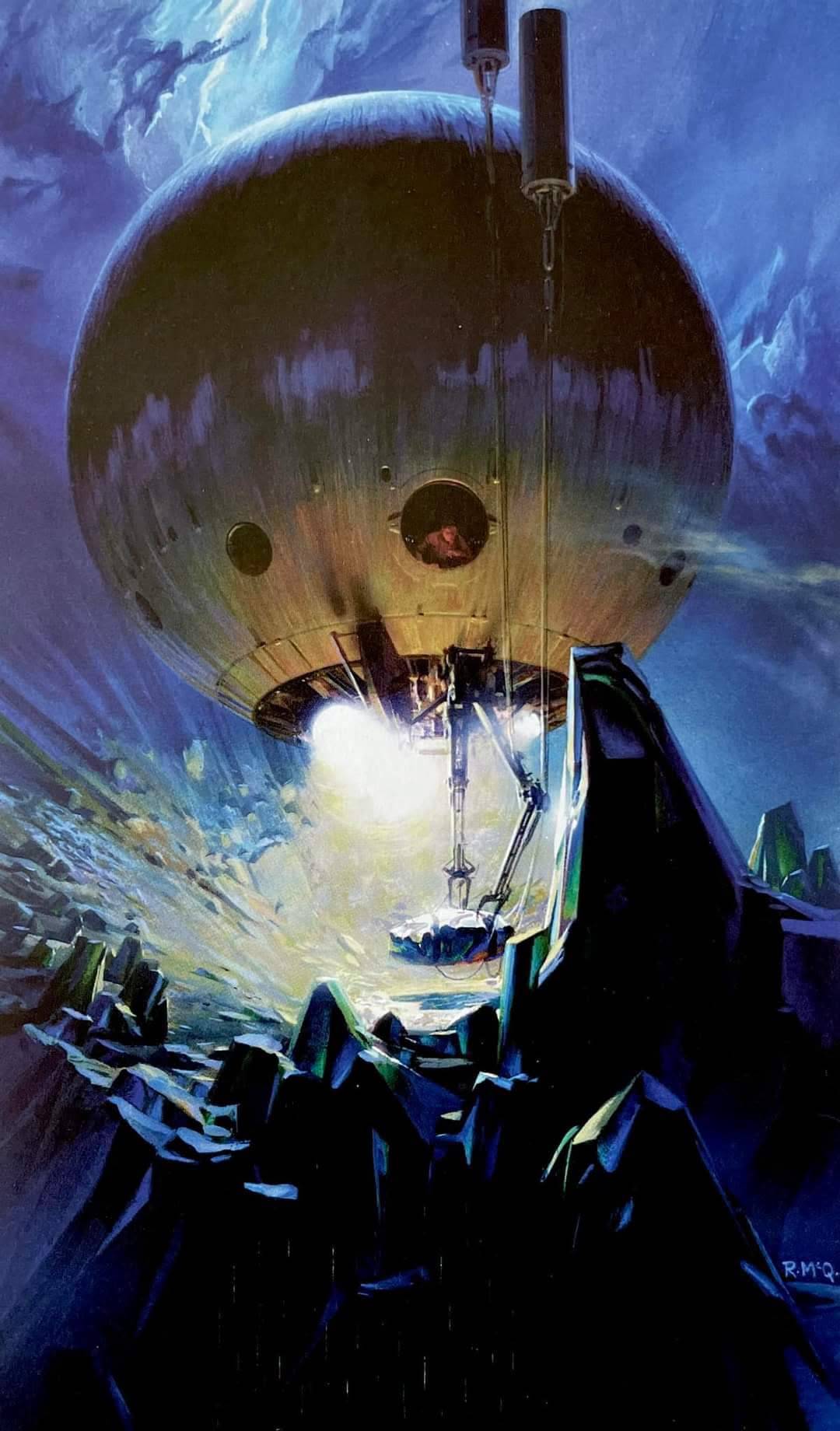
Spaceship that look like metal spheres have a long history that doesn't necessarily include Magritte, however. Here are a bunch of examples: I'll leave the determination of each one's Magrittiness as an exercise for the reader.
Ralph McQuarrie:
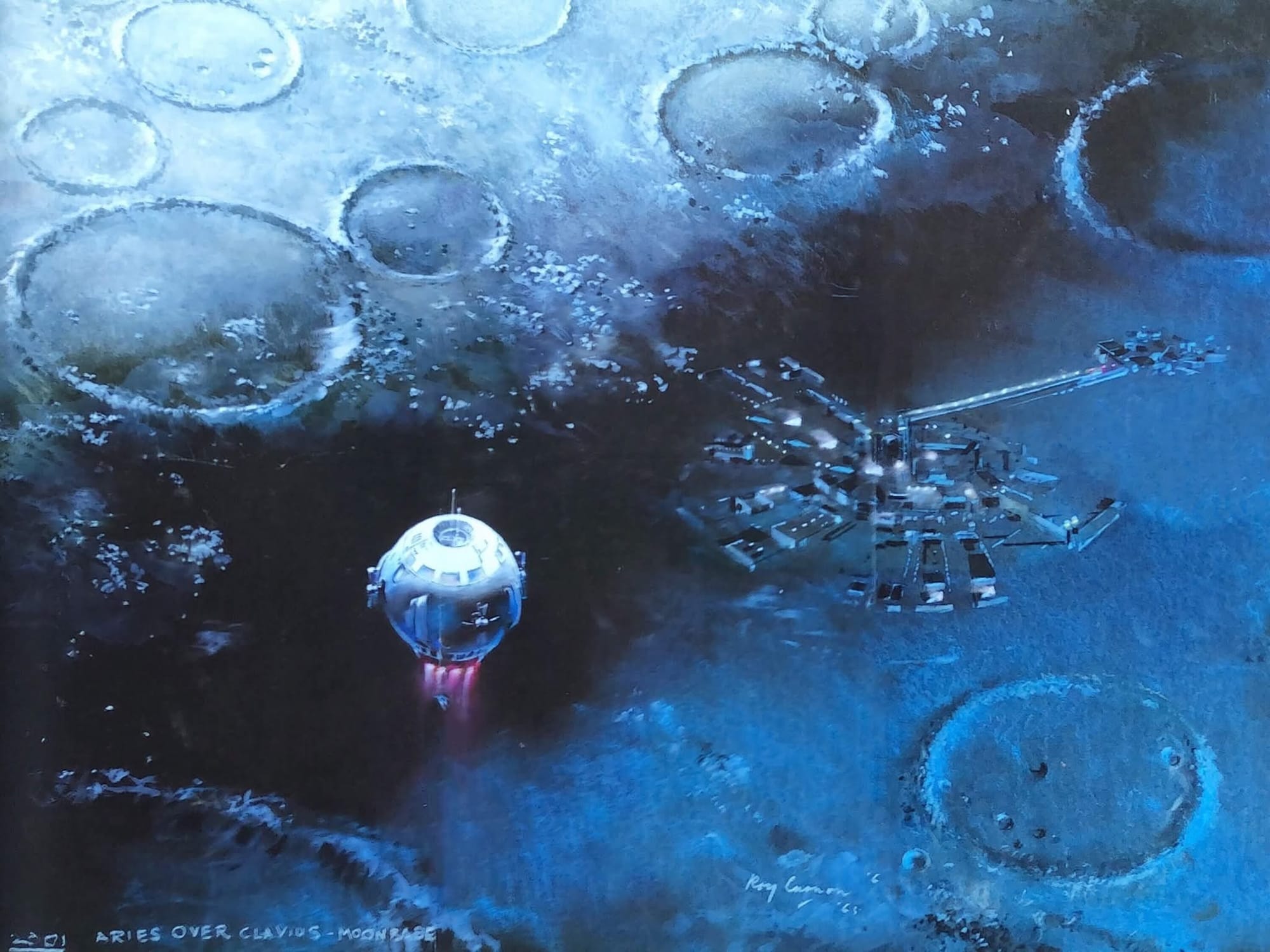
2001 A Space Odyssey concept art by Roy Carnon.
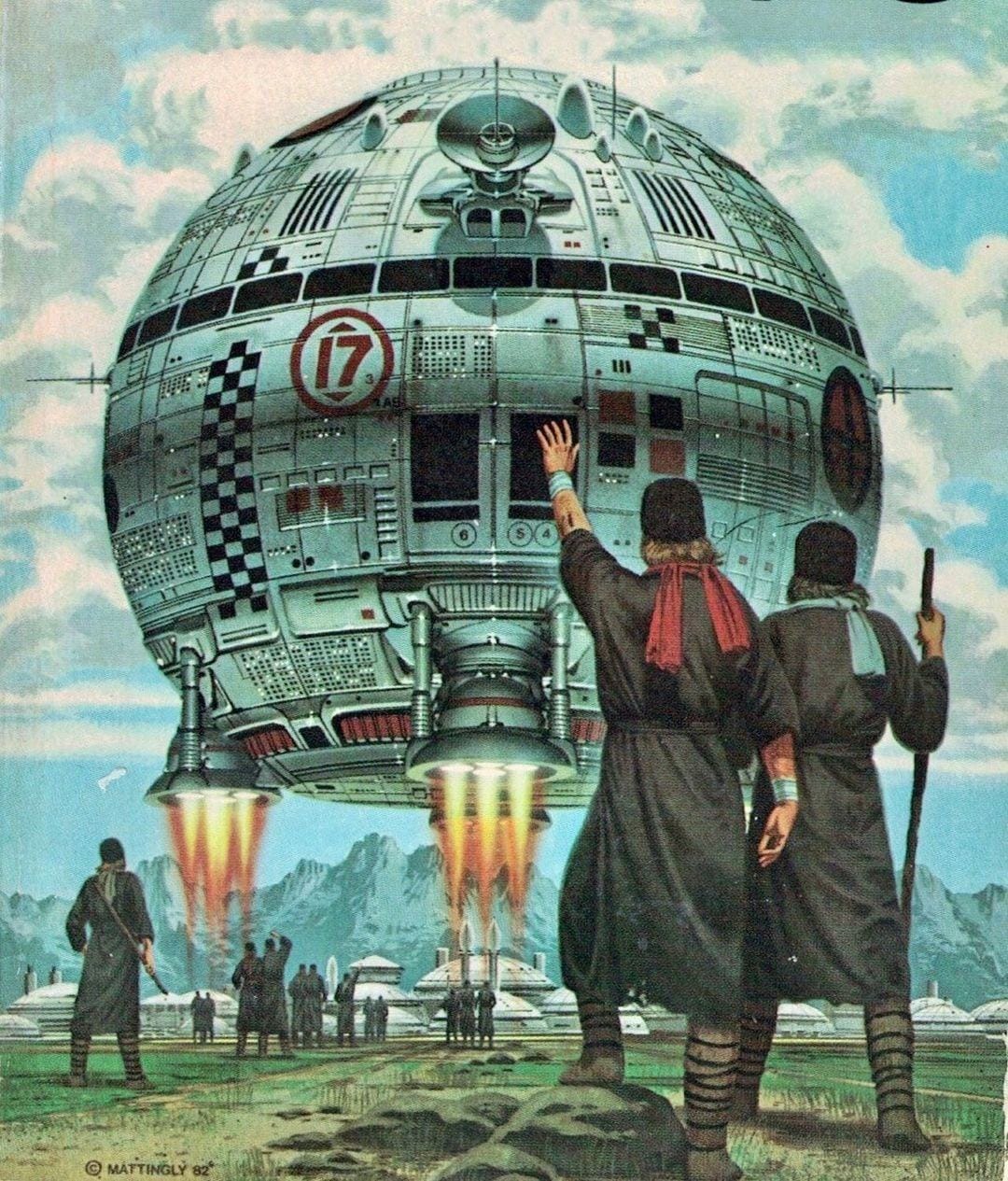
David B Mattingly's 1982 cover to Manshape by John Brunner.
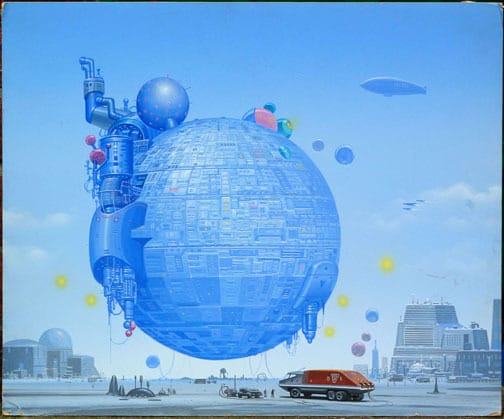
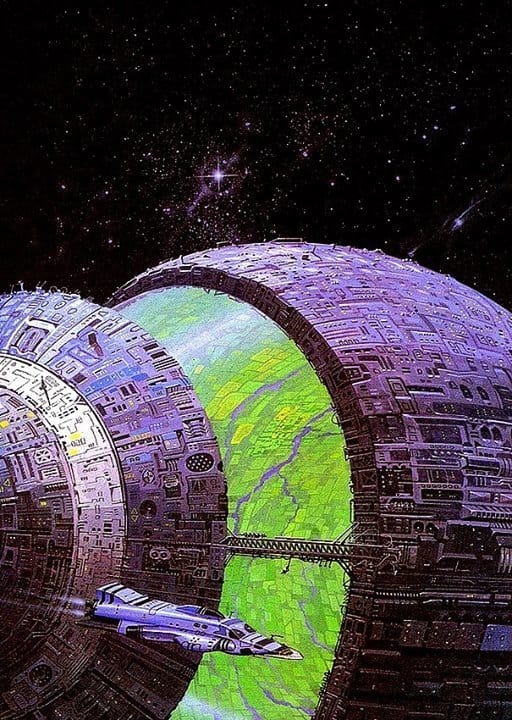
Angus McKie has one called "Floating World," along with a similar illustration that cracks open the sphere to reveal an green world within.
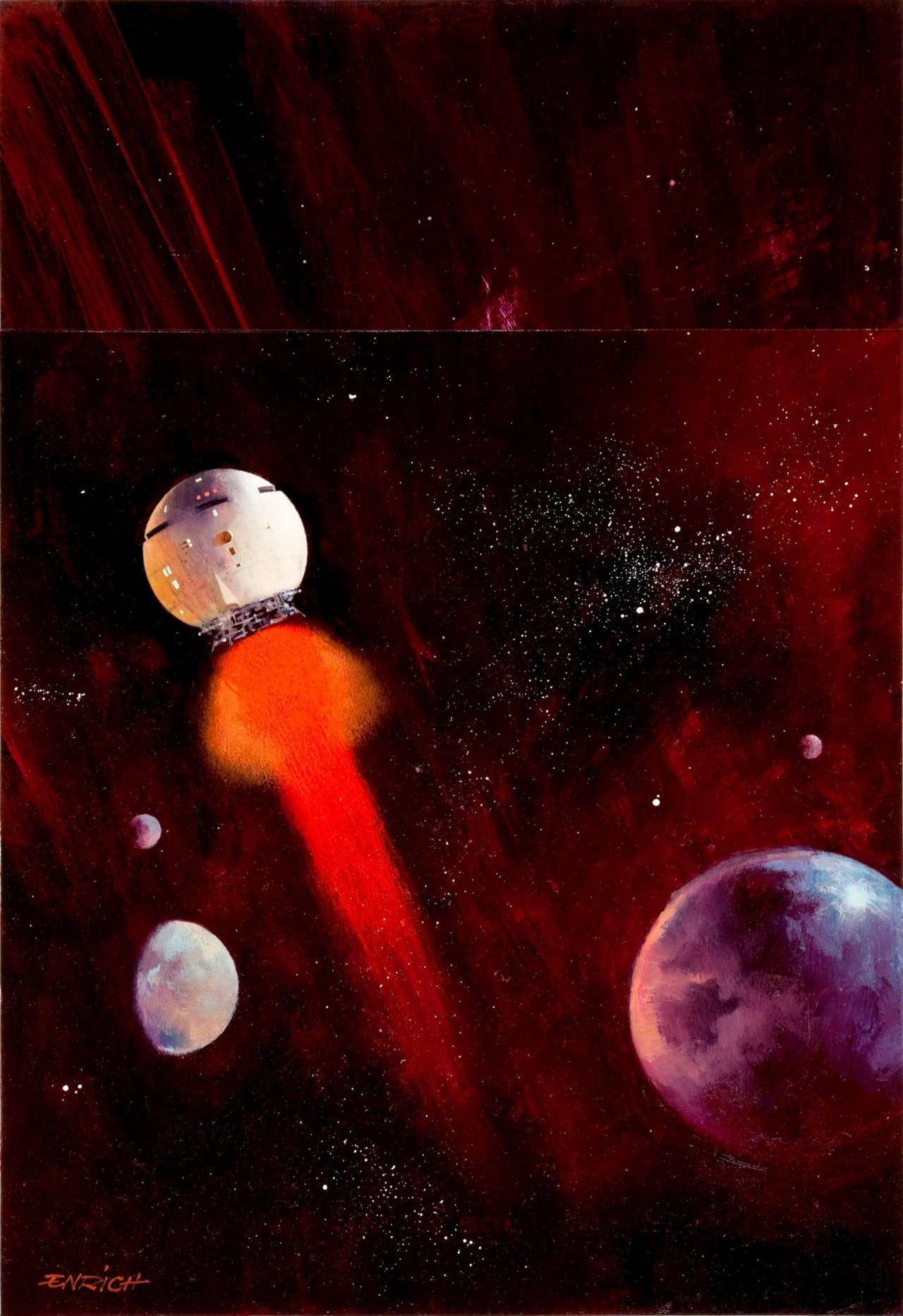
Here's a Spanish cover by Enric Torres-Prat for an installment in the Nueva Dimensión series.
Davis Meltzer’s 1972 cover to Galactic Derelict, by Andre Norton, alongside an uncredited artwork.
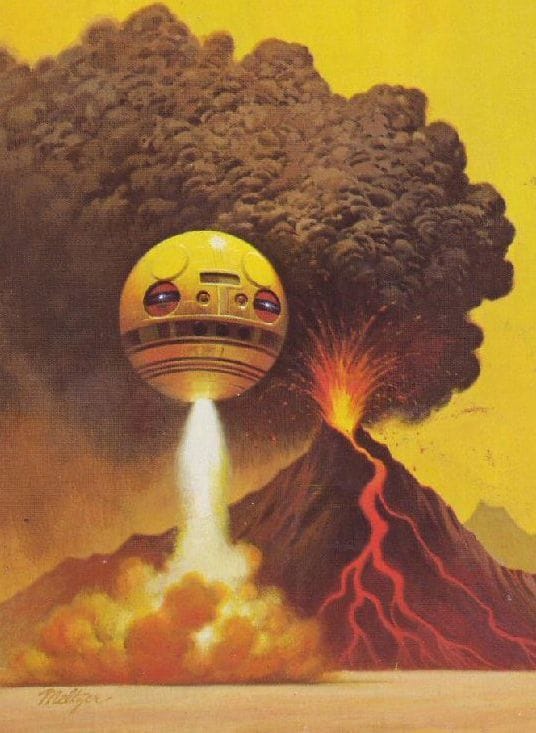
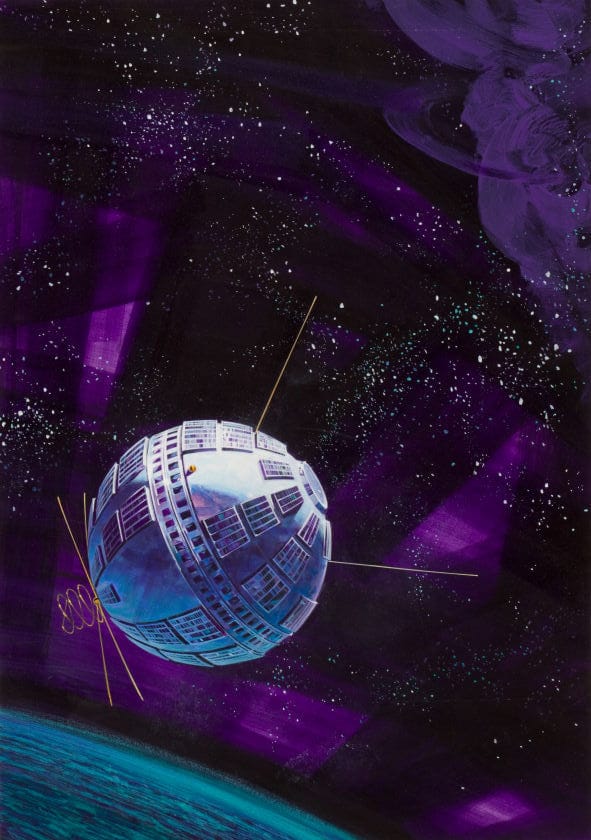
Prolific Perry Rhodan illustrator Alfred Kelsner has two examples of spherical ships:
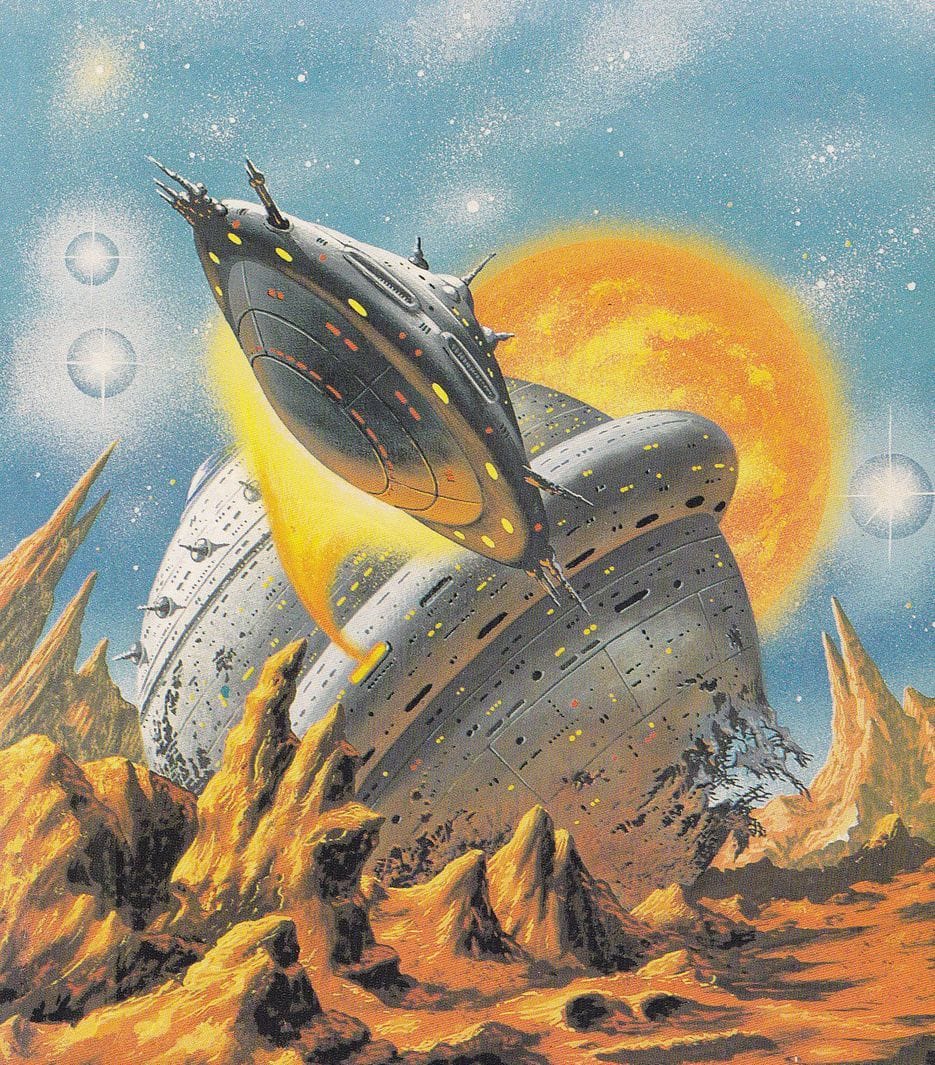
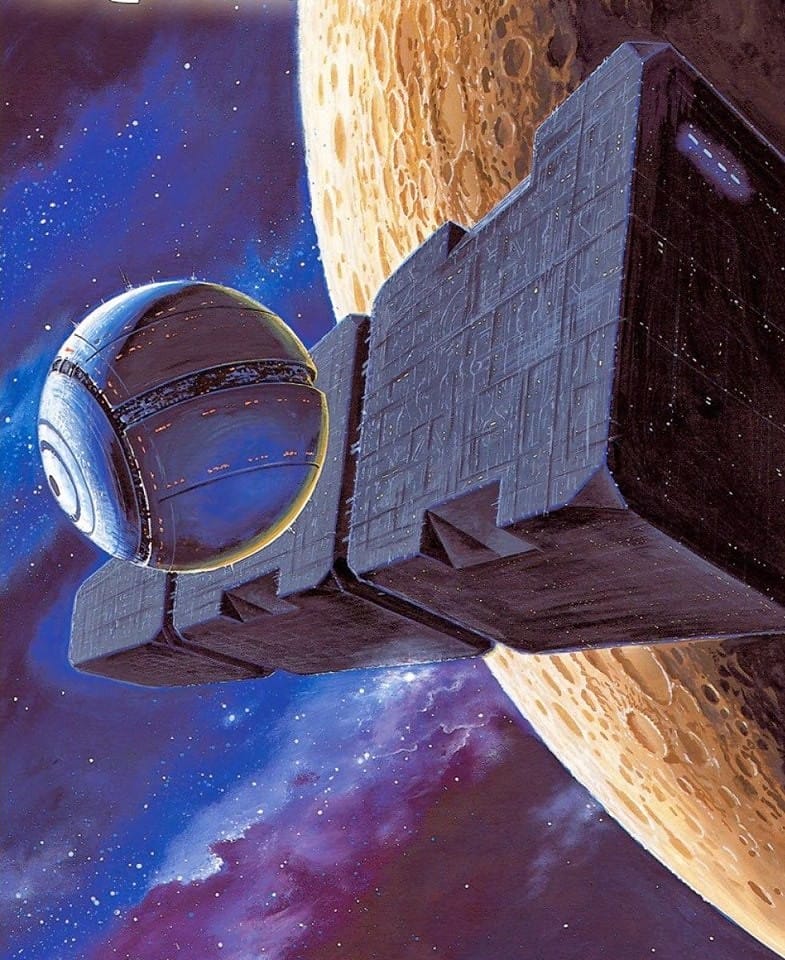
These next two feel kinda similar: They're both examples of parked spheres. Paul Lehr's 1967 cover art for HG Wells' The First Men in the Moon, followed by Bernard Symancyk’s 1970 cover art to CS Lewis' Out of the Silent Planet.
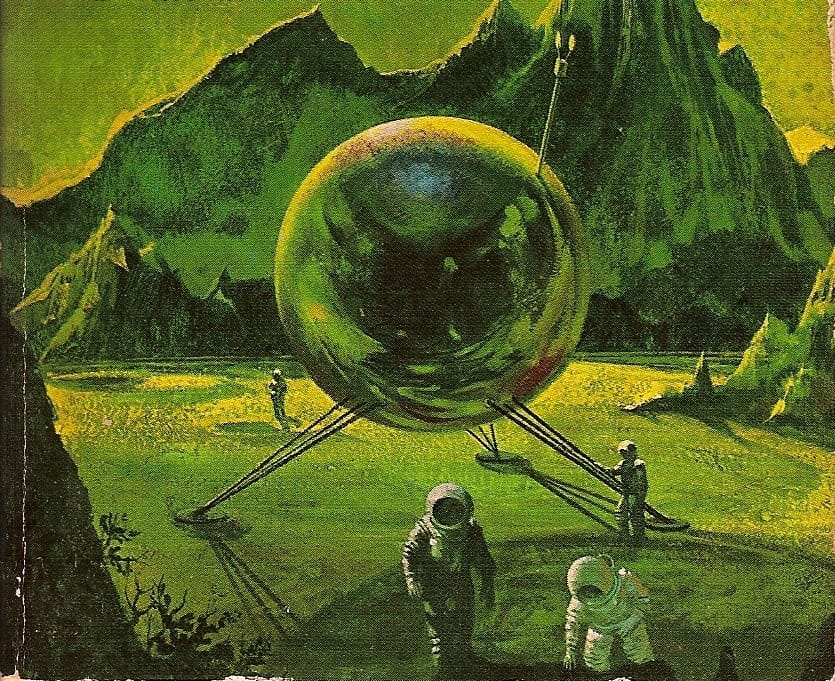
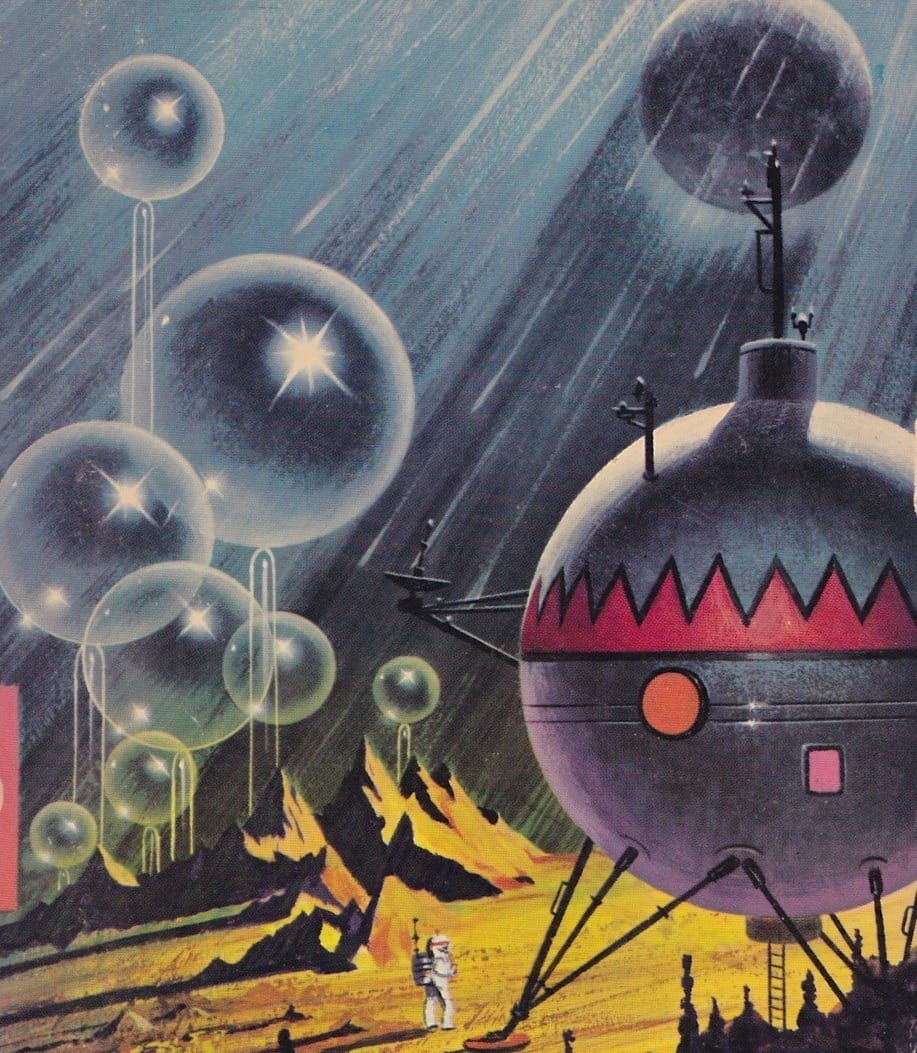
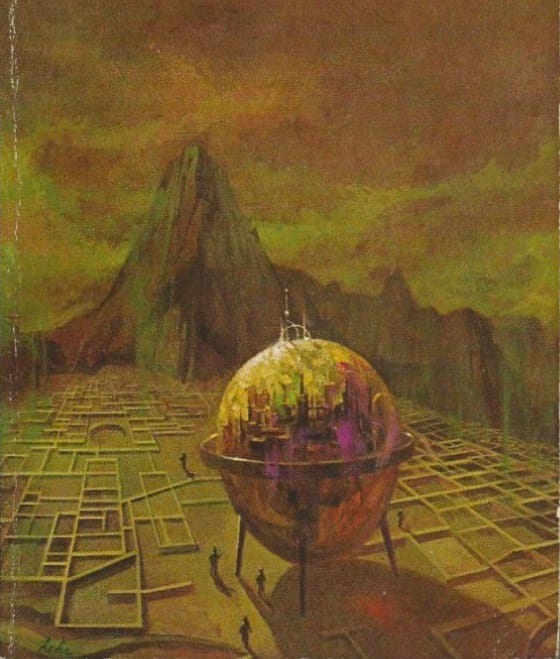
Paul Lehr really liked the sphere-with-legs look; here's another one from him.
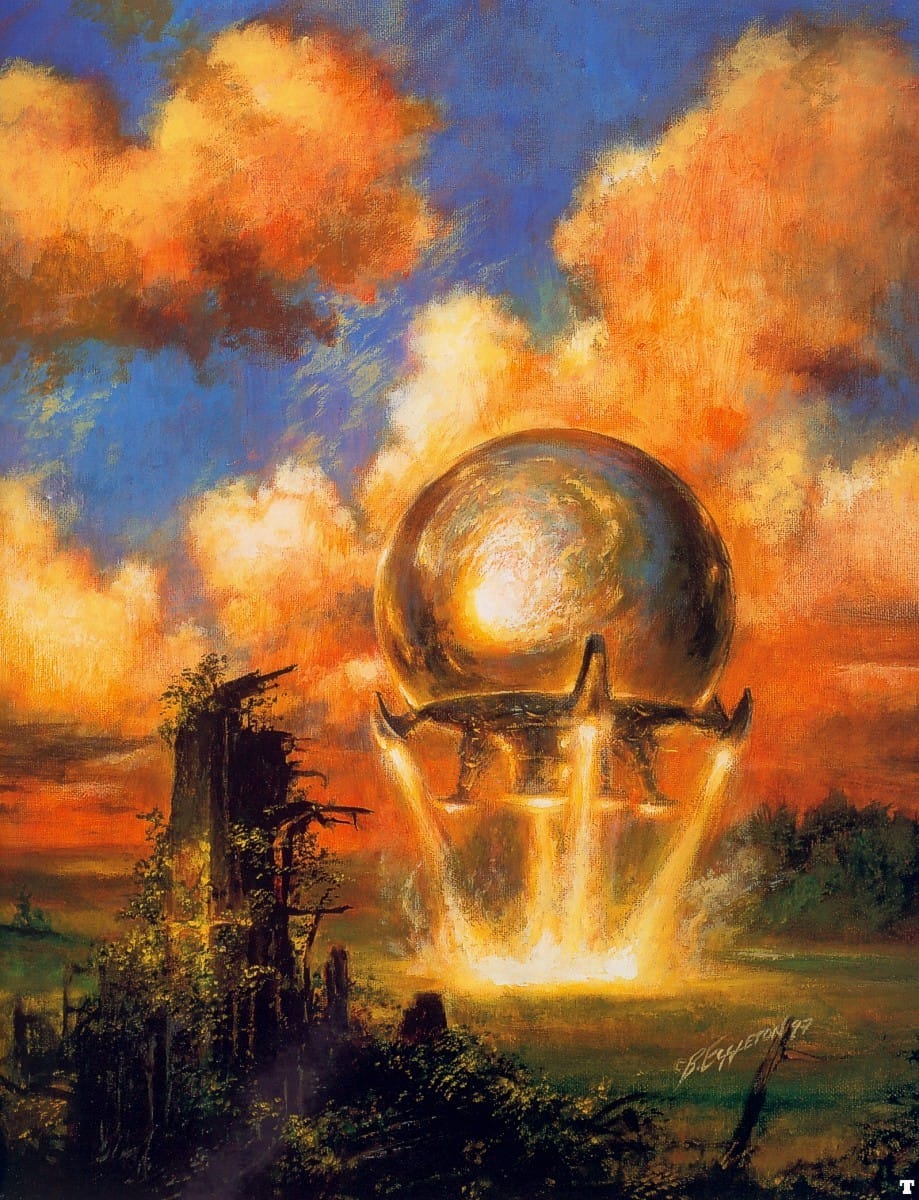
Bob Eggleton has a version with landing legs, too, but this one's taking off.
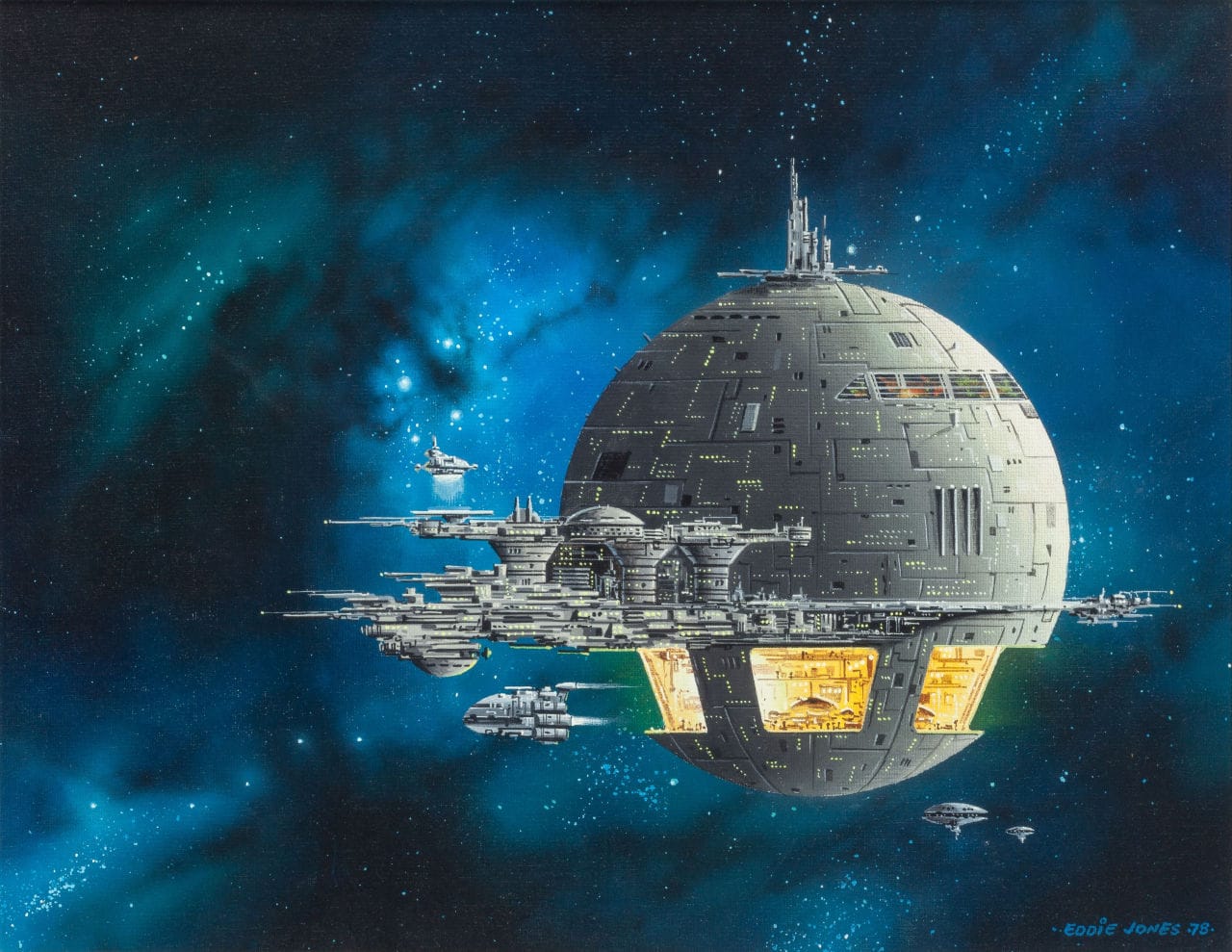
Space stations are often spherical, like this one by Eddie Jones.
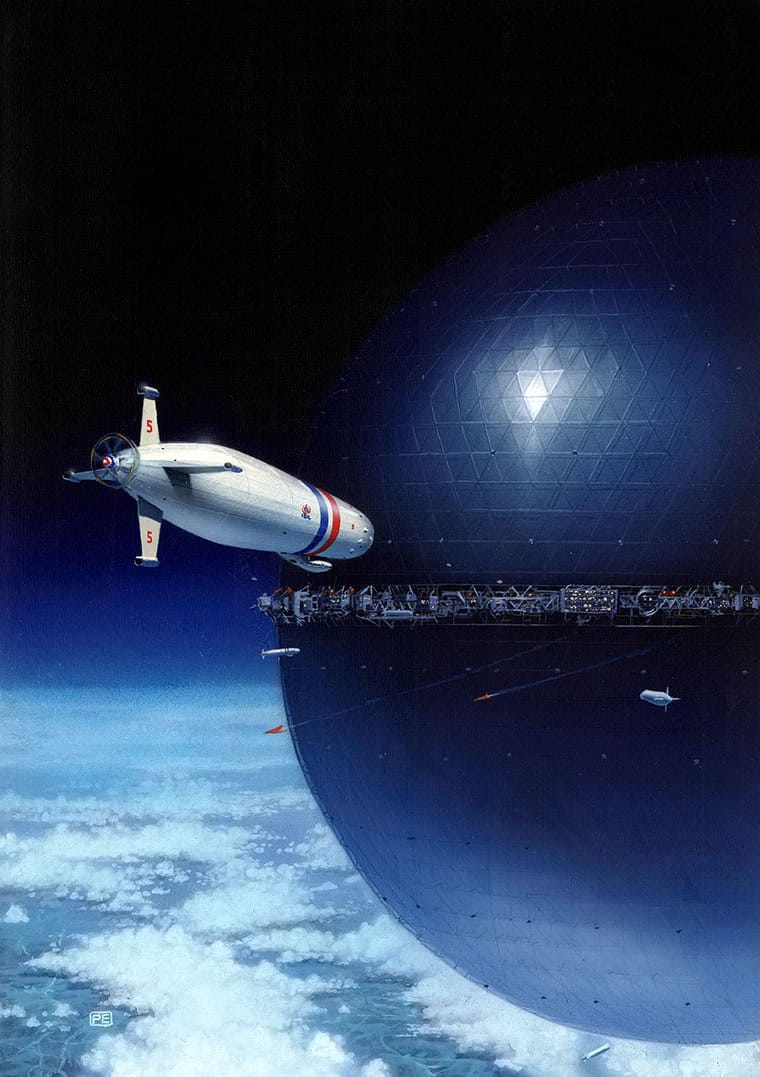
Or this one from Peter Elson.
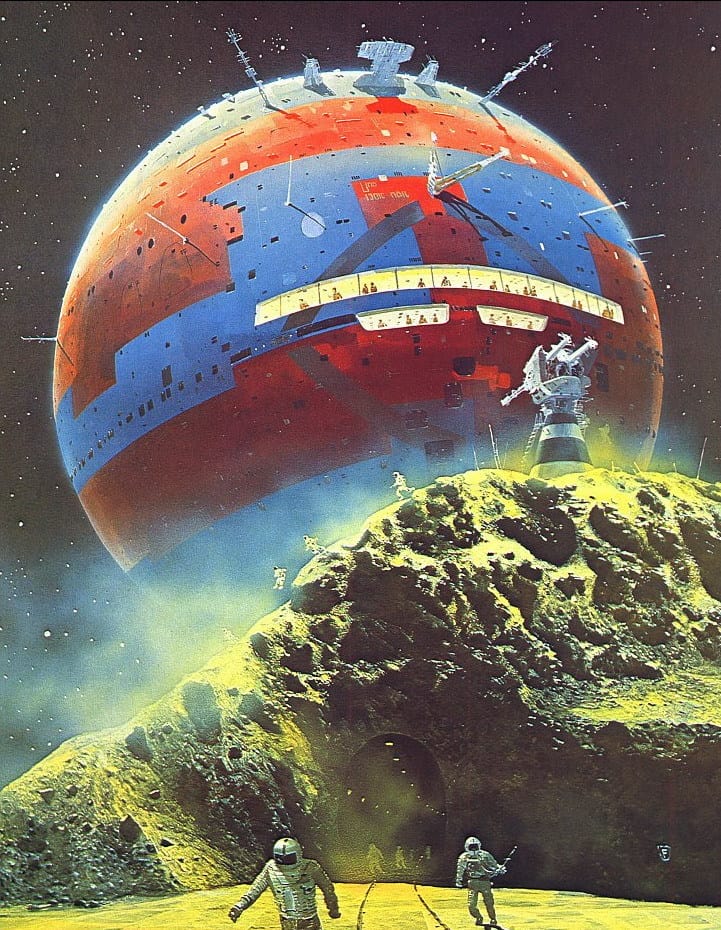
Chris Foss has a colorful station – there's no mistaking this one for a moon. It's flying surprisingly low, too.
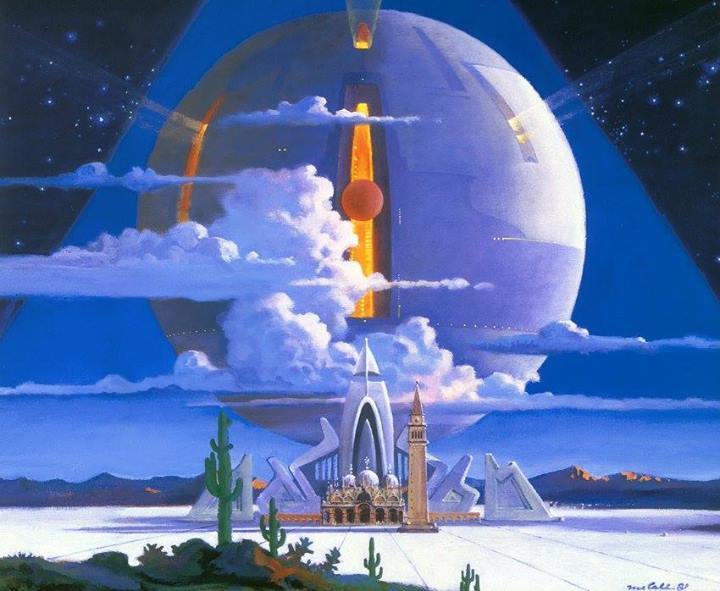
Like that Foss station, Robert McCall's spherical spacecrafts are fine with hovering unrealistically close to the ground. Both artists frequently abide by the rule of cool: If it looks good, there's no need to worry about physics.
Add Peter Elson to that list – here's a low flying ship from 1980's The Fantastic Planet.
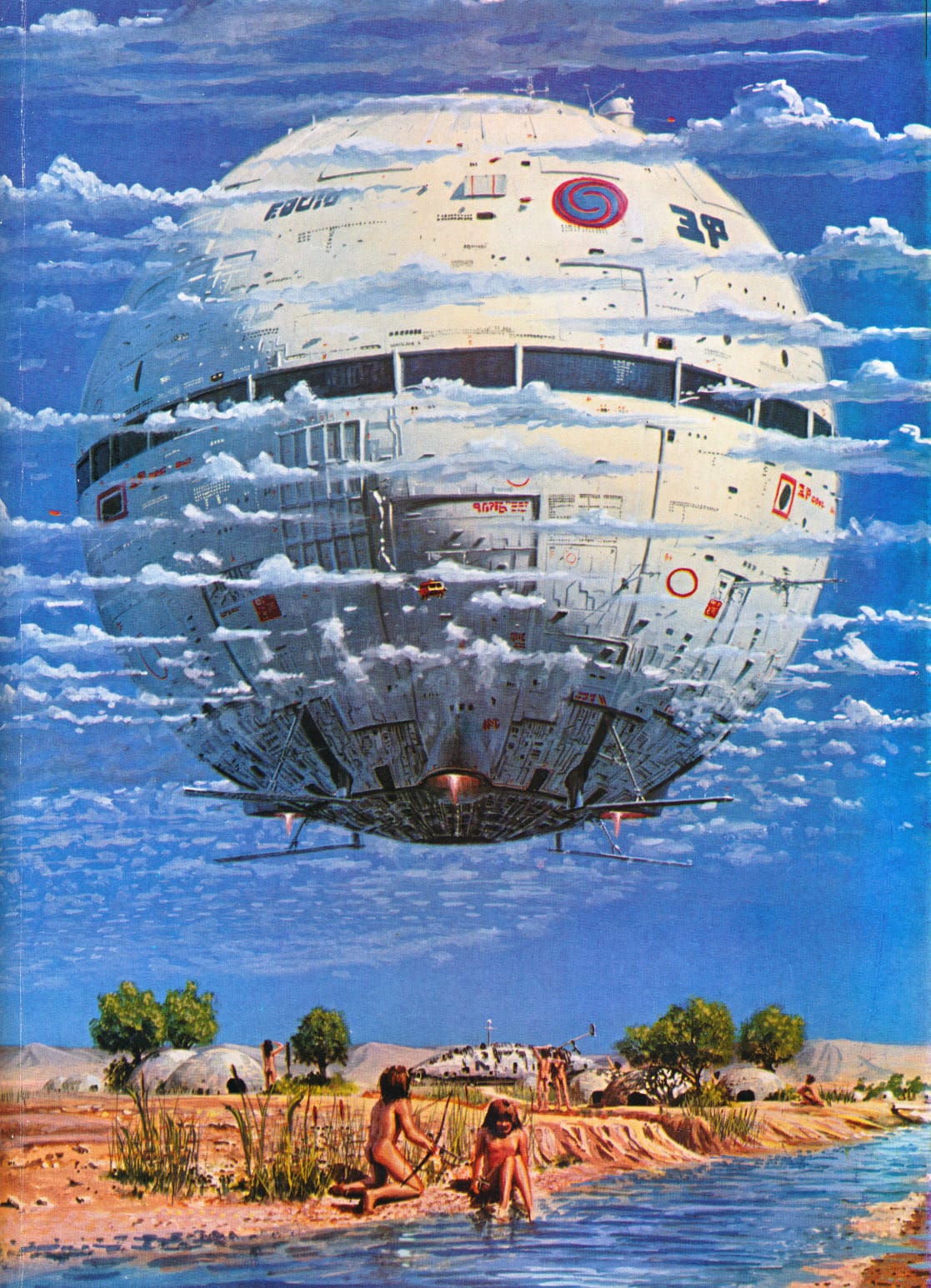
Hey, that's not the Earth! Carl Lundgren and Eric Ladd's 1978 cover art for Tongues of the Moon, by Philip José Farmer.
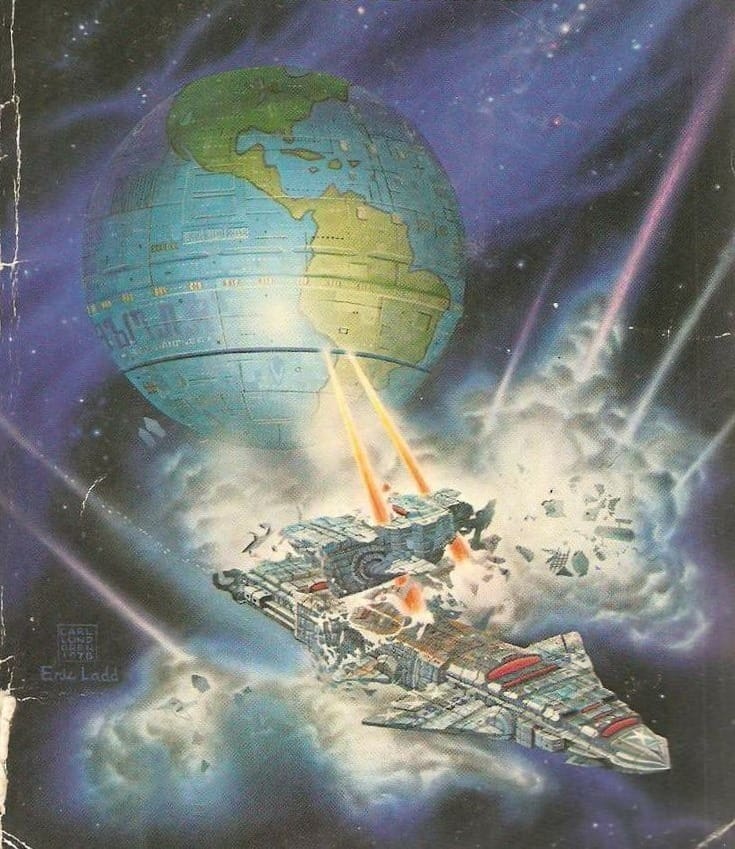
Ed Valigursky adds a lot of doodads to the sphere on his 1978 cover to Currents of Space, by Isaac Asimov.
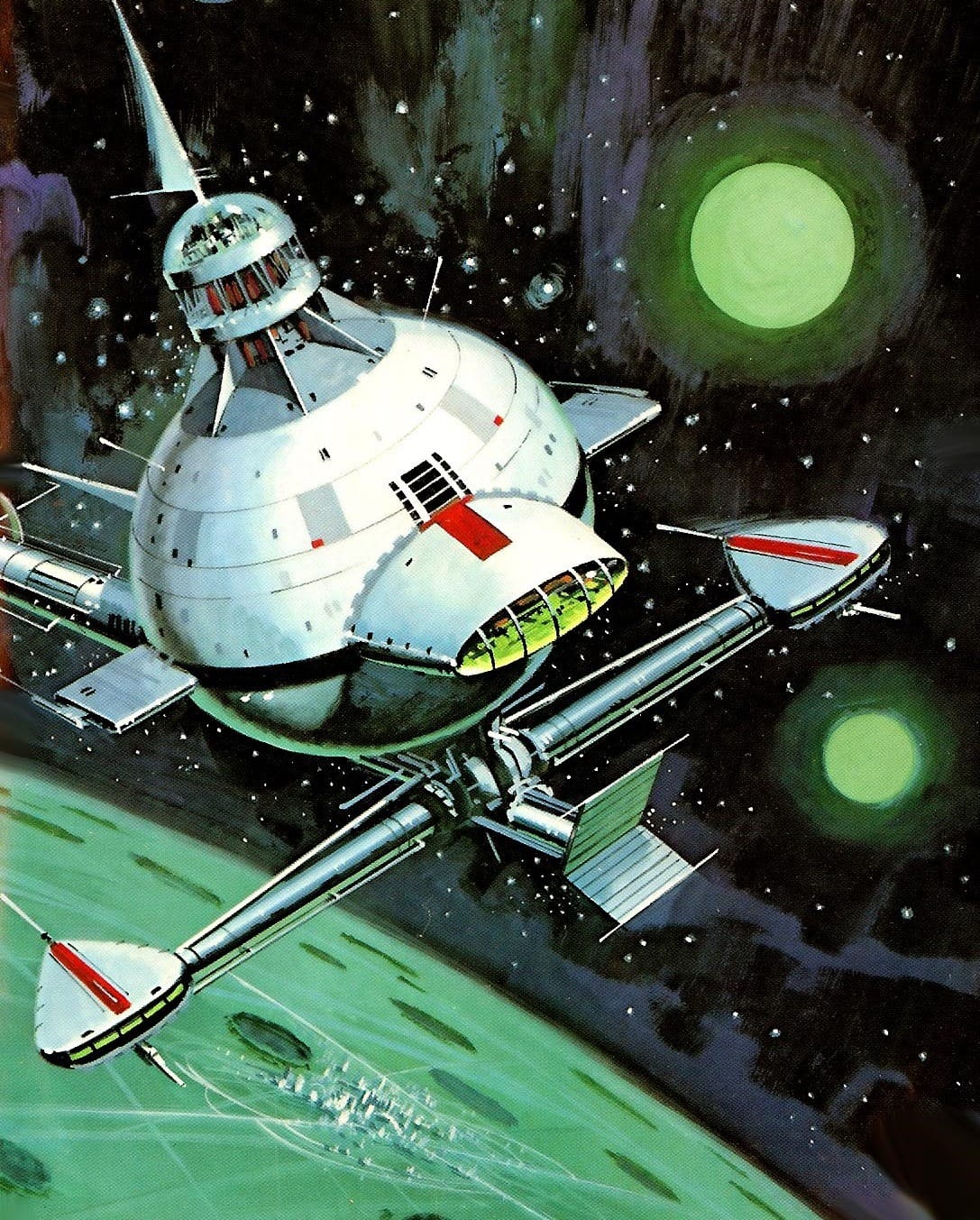
So does Manchu, for this structure composed of a couple spheres.
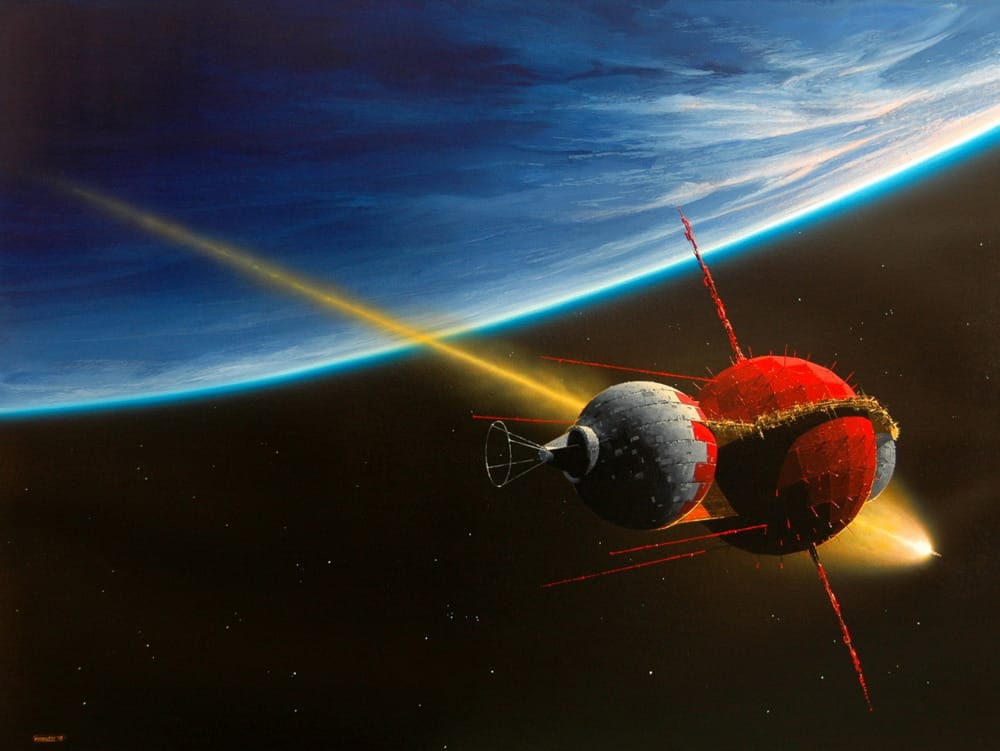
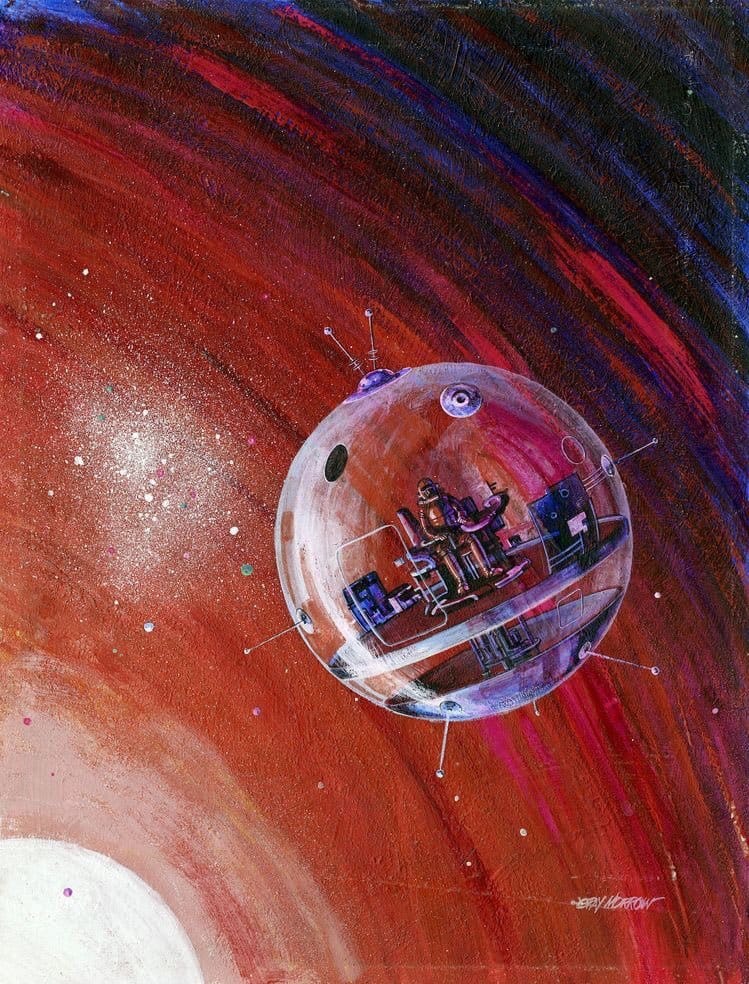
Gray Morrow has a translucent glass version.
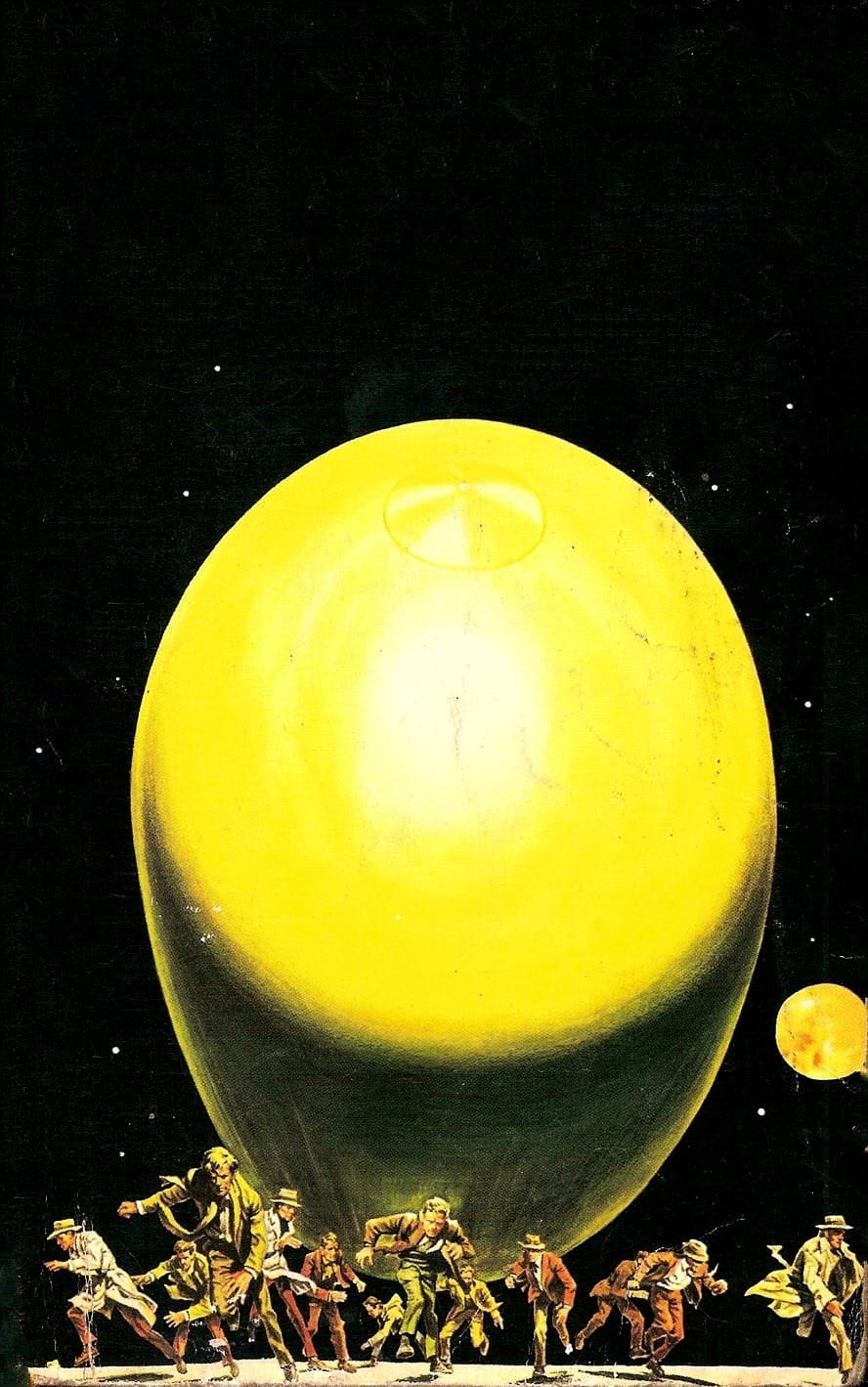
Spherical UFOs with few or no visible seams gain an eerie otherworldliness that helps to sell the concept of a truly alien technology. Josh Kirby's 1971 cover art for Keith Laumer’s The Monitors is a great example.
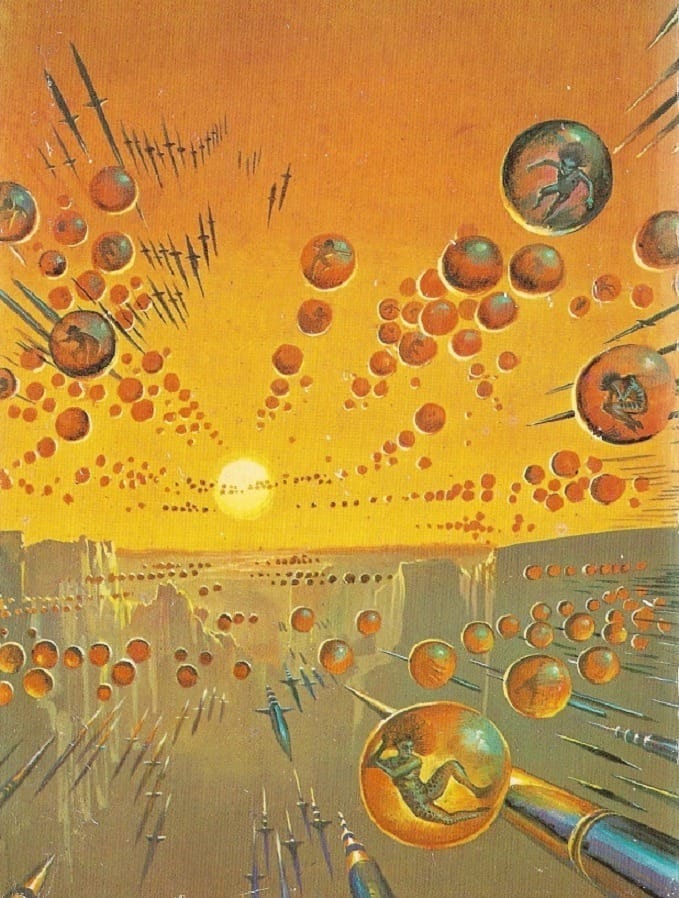
This post could be three times as long if I kept going with every strange spherical presence or surrealist orb that a science fiction artist has deployed over the decades.
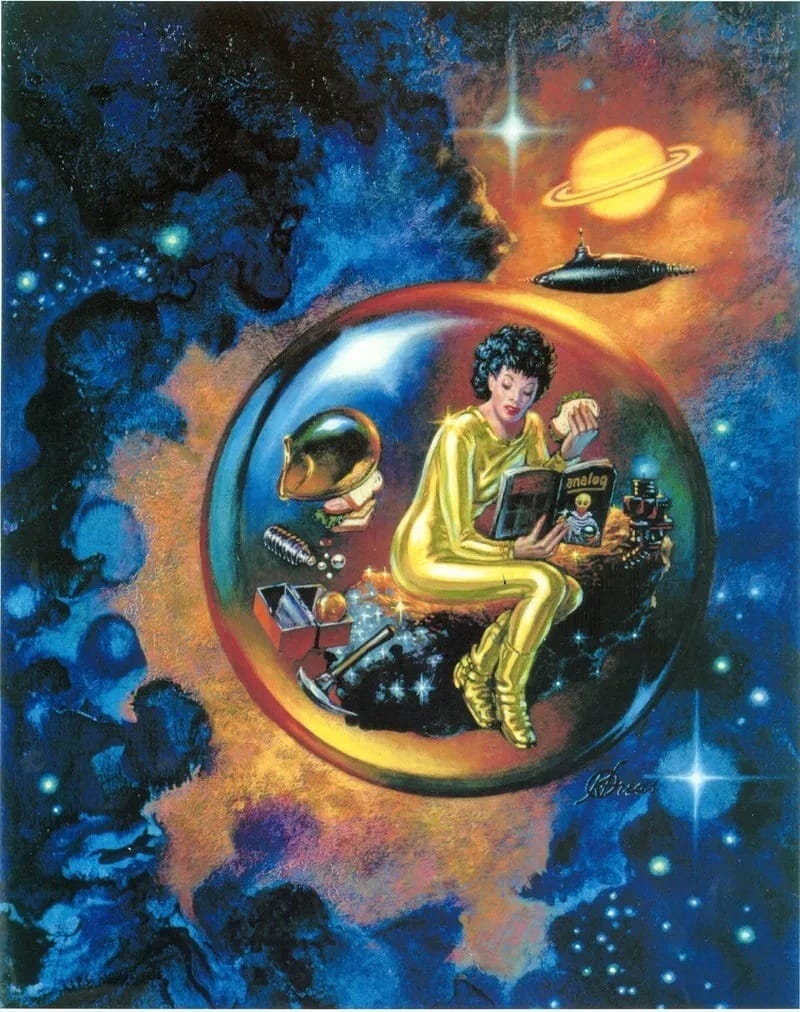
Since I'm limiting the range to spaceships, I'll just include a few edge cases and call it a day. Spherical transportation vehicles might include bubbles – here are two examples, Bruce Pennington's 1975 cover to Laurence James' Backflash and Frank Kelly Freas' January 1990 cover to Analog.
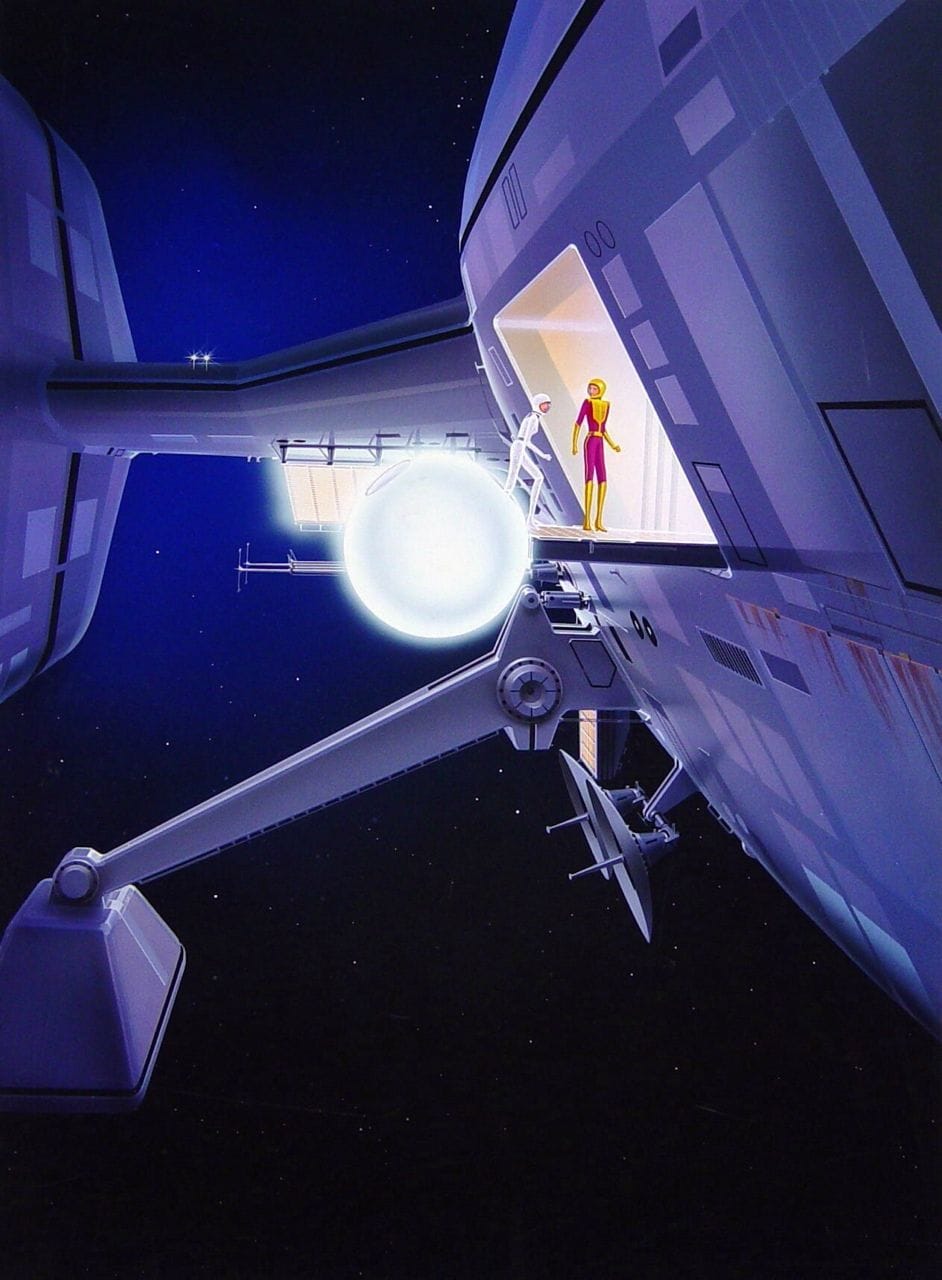
Finally, Shusei Nagaoka has a similarly mysterious glowing white transport orb. I wanna ride in that thing.
Cool Links
Memoirs of a Spacewoman by Naomi Mitchison - Strange Horizons
This review of a 1962 science fiction novel makes it sound pretty fascinating, and is another reminder that the genre is a great outlet for authors who want to write about cultural taboos.
"The novel is about human scientists exploring new worlds and discovering alien sex and communication; about aliens who routinely change sex, human women choosing whether to have babies or not and with whom, the routine dangers for expeditions learning about alien intelligences; about how space travellers manage time dilation, and the tremendous psychic pressure on humans when an alien graft imposes its own somatic imperatives on human reproductive systems. Never before had reproductive planning been explored so thoroughly in an inter-galactic and intra-species context."
Battle of the Brows - Shedunnit
Interesting podcast episode on the concept of highbrow and lowbrow fiction, and its roots to phrenology: The golden age of detective fiction maps pretty well to the golden age of eugenics, it turns out.
William Corman talks Syd Mead: Future Pastime - Numlock News
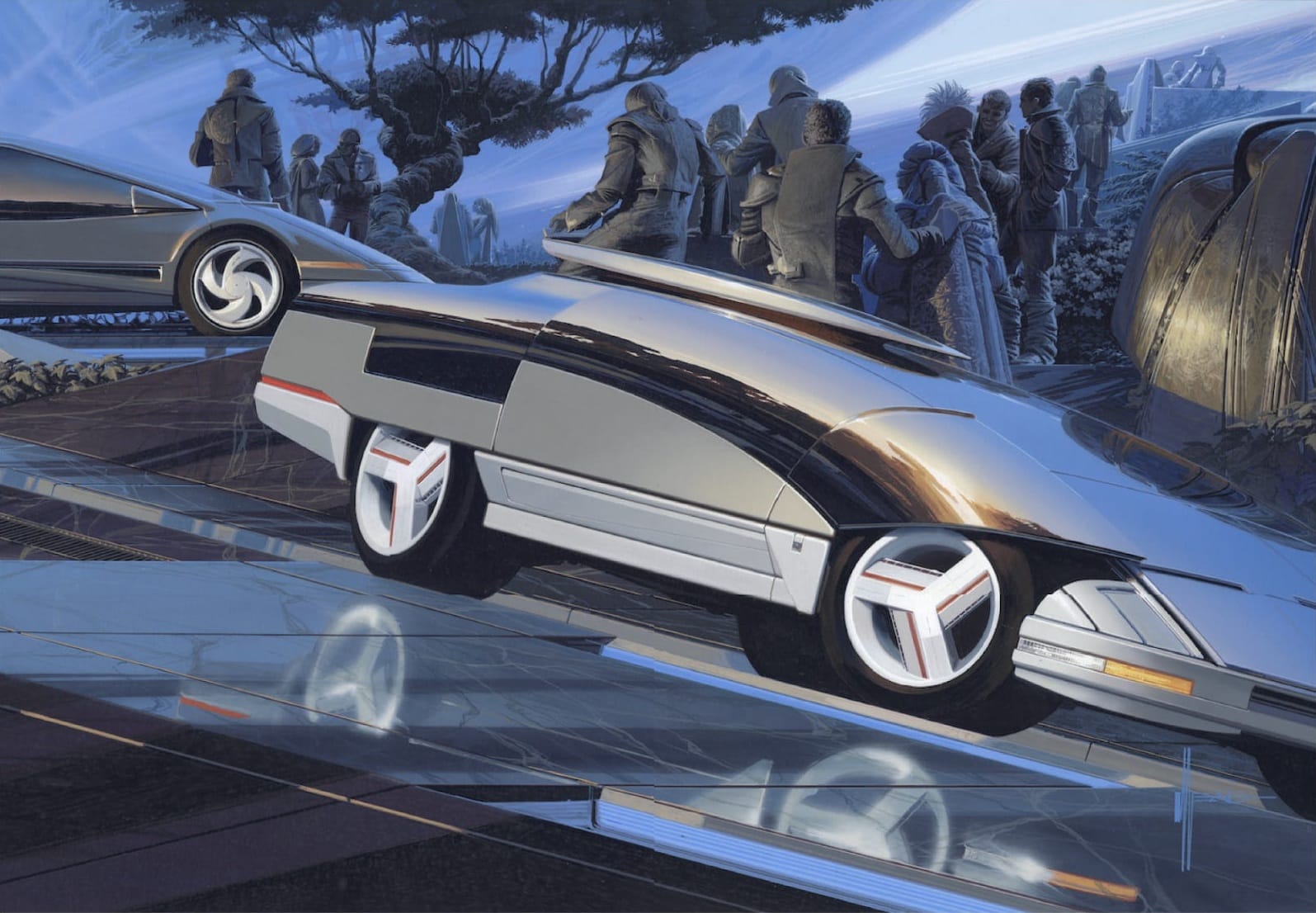
Very cool new interview here discussing Syd Mead's work, tied to the new Mead-centric Bay Area art exhibition now open until December 17. I mentioned the same show when it was in NYC early this year.
The interview has a lot of fun tidbits like this background on the artwork I included here: "Syd was tasked with designing a new wheel. Syd is someone who can’t think of objects in isolation; he needs to think of them and how they live and breathe in the world around them. He has this formative background as this industrial designer and world building has always been very central to his thesis. So, with these wheels, you see him design a whole new car for it. The car behind said car holds the old wheels and Syd has placed it into this world, into this afterparty."
Music Rec: This is very cool – someone has isolated the soundtrack to the 1981 Hitchhiker's Guide to the Galaxy TV show, after ripping it off their Blu-ray. I don't believe the actual soundtrack was ever released, so this is the only way to listen to it aside from watching the entire show.
Next Time: My notes on the most recent edits for my upcoming art collection, including a handful of cool artists that I may need to cut. This one's for paying users only! Sign up for $5/month if you want the inside scoop.
Wait, did I say $5? I meant $4/month or $40/year! If you're interested and you're anything like me, you should honestly sign up right now or you'll just forget.