Space Trash and Future Junkyards

The early iconography of science fiction was largely built in the 1930s by Frank R Paul and a handful of other science fiction magazine cover and interior artists: Sleek gleaming spaceships, bug-eyed-monster aliens, world-ending apocalypses, and stark art deco cities.
Decades later, a new crop of artists raised on those images brought new interpretations and inventions. They shaded in the imagined futures, illustrating the knock-on effects of all this space exploration. One big one: It creates a lot of junk.
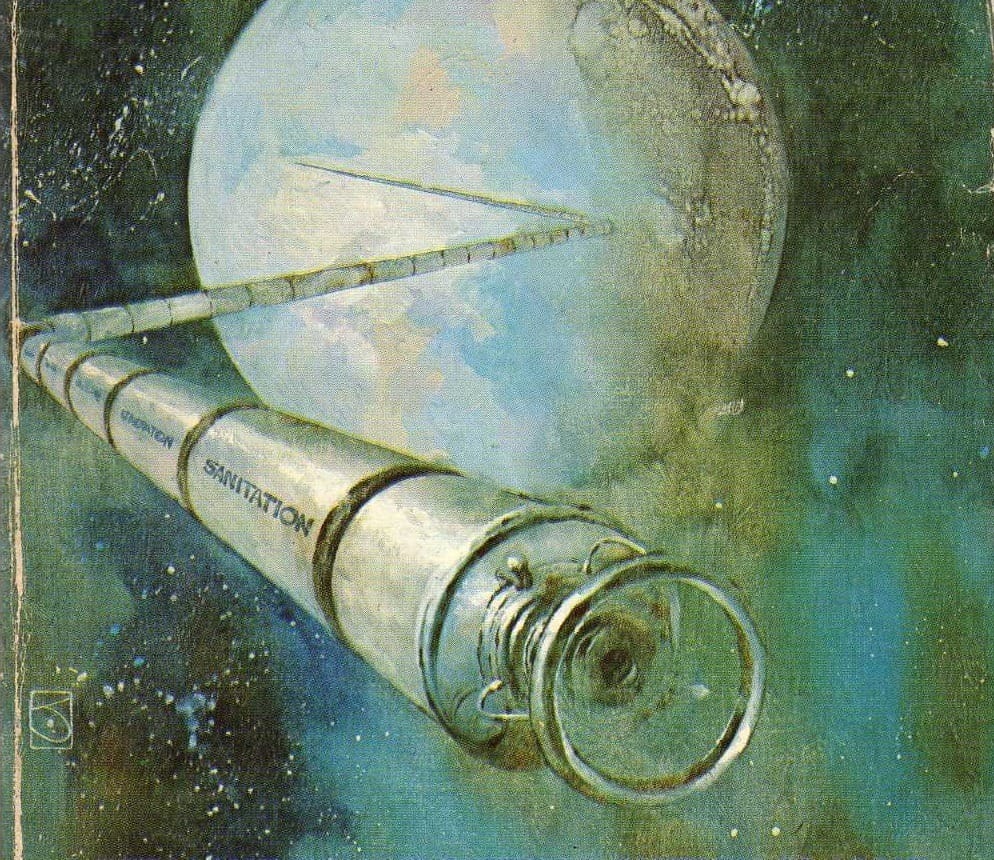
This sanitation tube by Jeffrey Catherine Jones graced the 1973 cover of Charles Platt’s Garbage World, a novel about an asteroid that serves as the dumping ground for waste materials from surrounding planets.
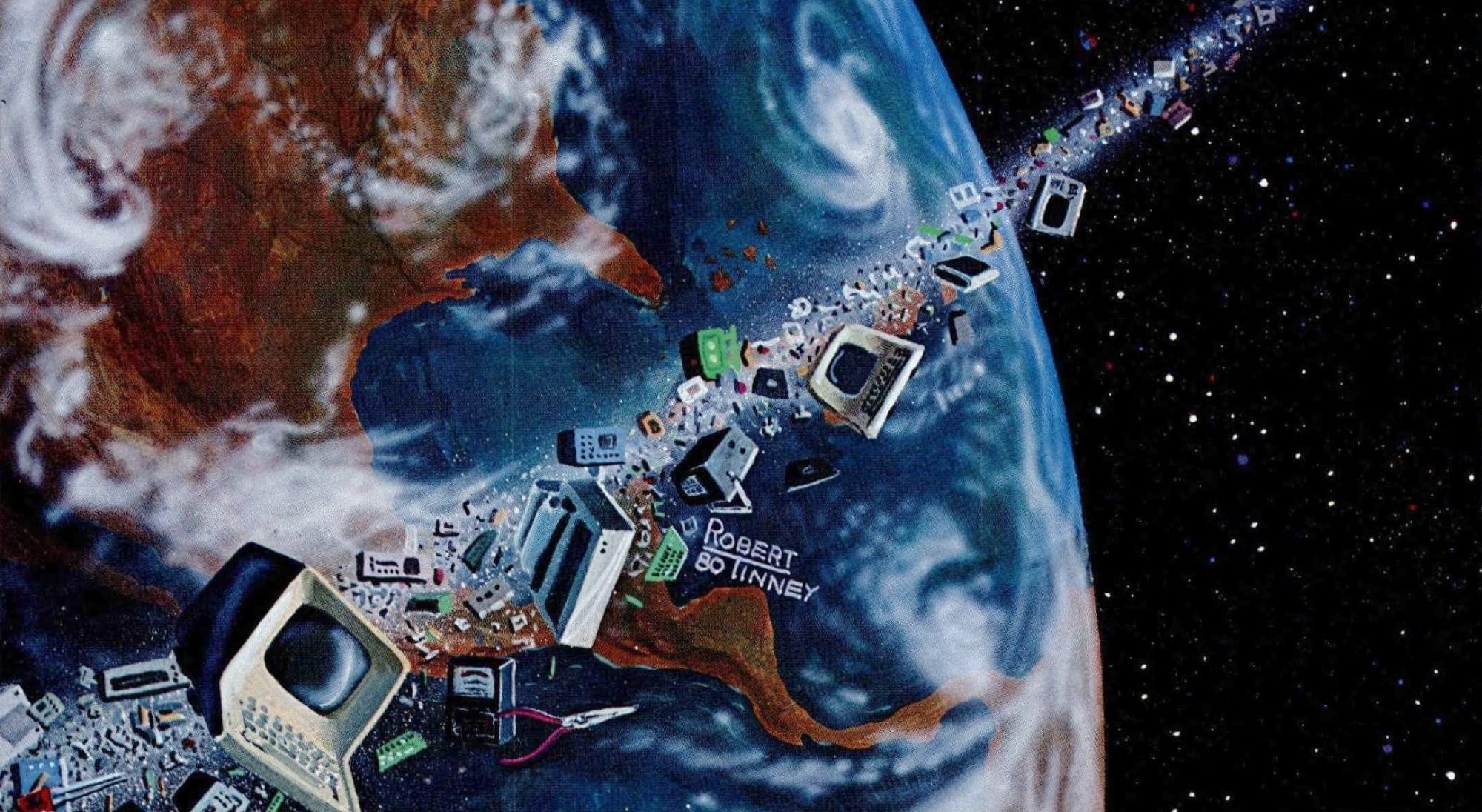
It's a better space-trash system than most planets can boast: Robert Tinney's fall 1980 cover to the Priority One Electronics Engineering Selection Guide is a more realistic vision of the future for the planet Earth.

I didn't have room in my huge Robert Tinney art post to include comparisons with other artists who took on similar concepts, or I would have highlighted this Dean Ellis painting, which ran two years earlier as an interior illustration in Starlog #15, August 1978. Possible inspiration for Tinney?
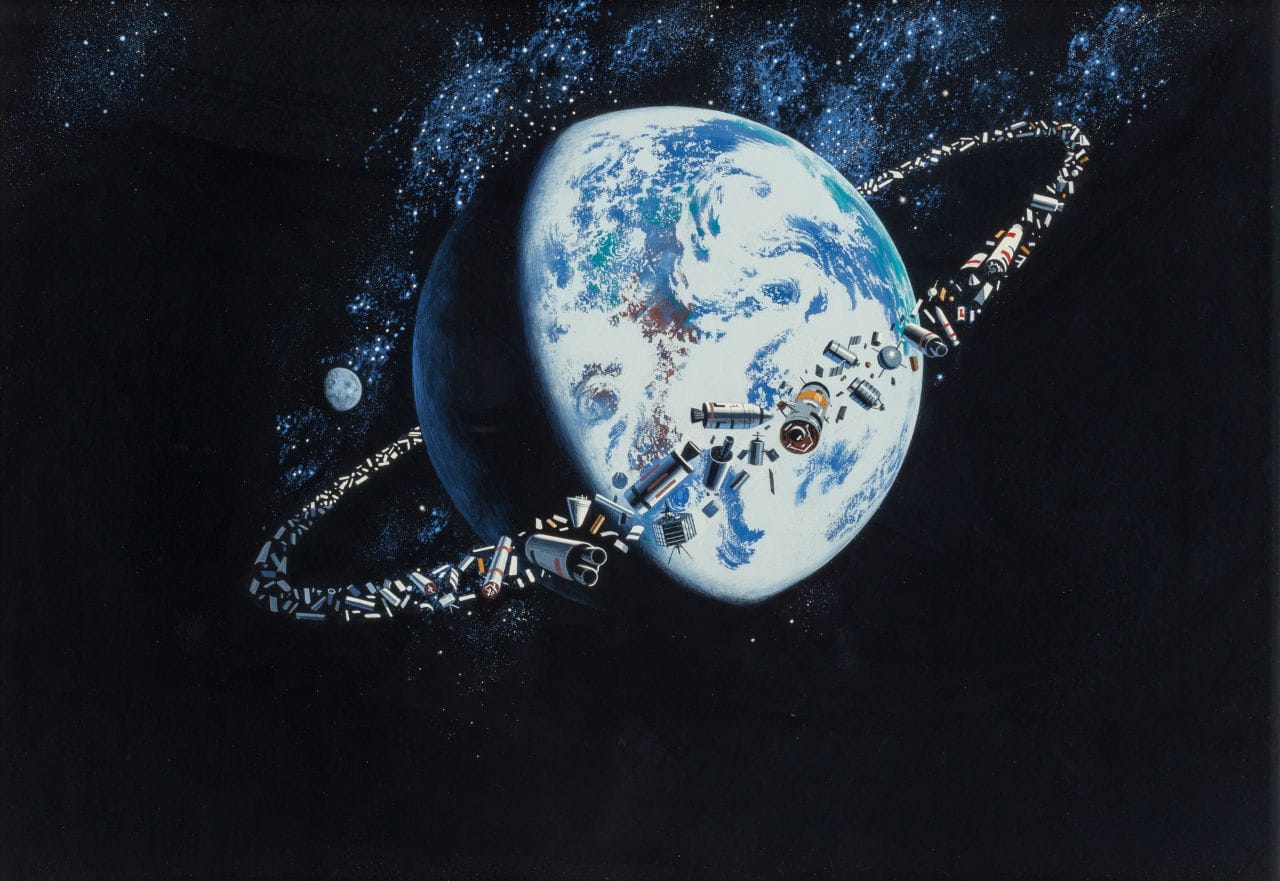
Dean Ellis also has an even earlier 1970 cover art for Deadly Litter, by James White, featuring yet another space-trash ring.

Naturally, we need to discuss Spacewreck: Ghostships and Derelicts of Space, the 1979 Terran Trade Authority art collection, which introduced the concept of space debris and alien junkyards to a generation of wide-eyed '80s kids.
Here's “Spaceship Graveyard,” by Peter Elson, which appeared within Spacewrecks.
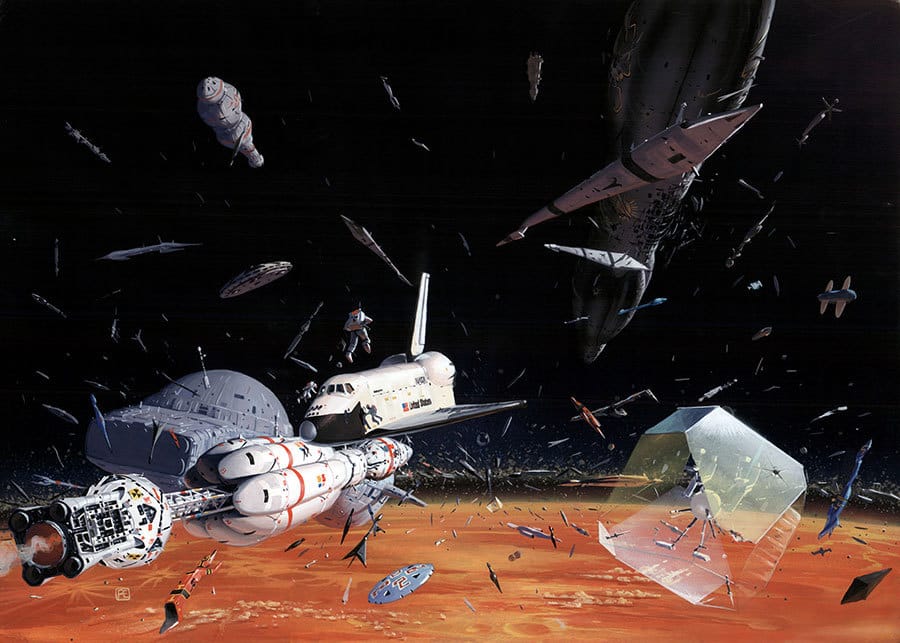
Compare and contrast with this beautiful John Berkey illustration “Space Junk,” for a 1979 Life magazine article.
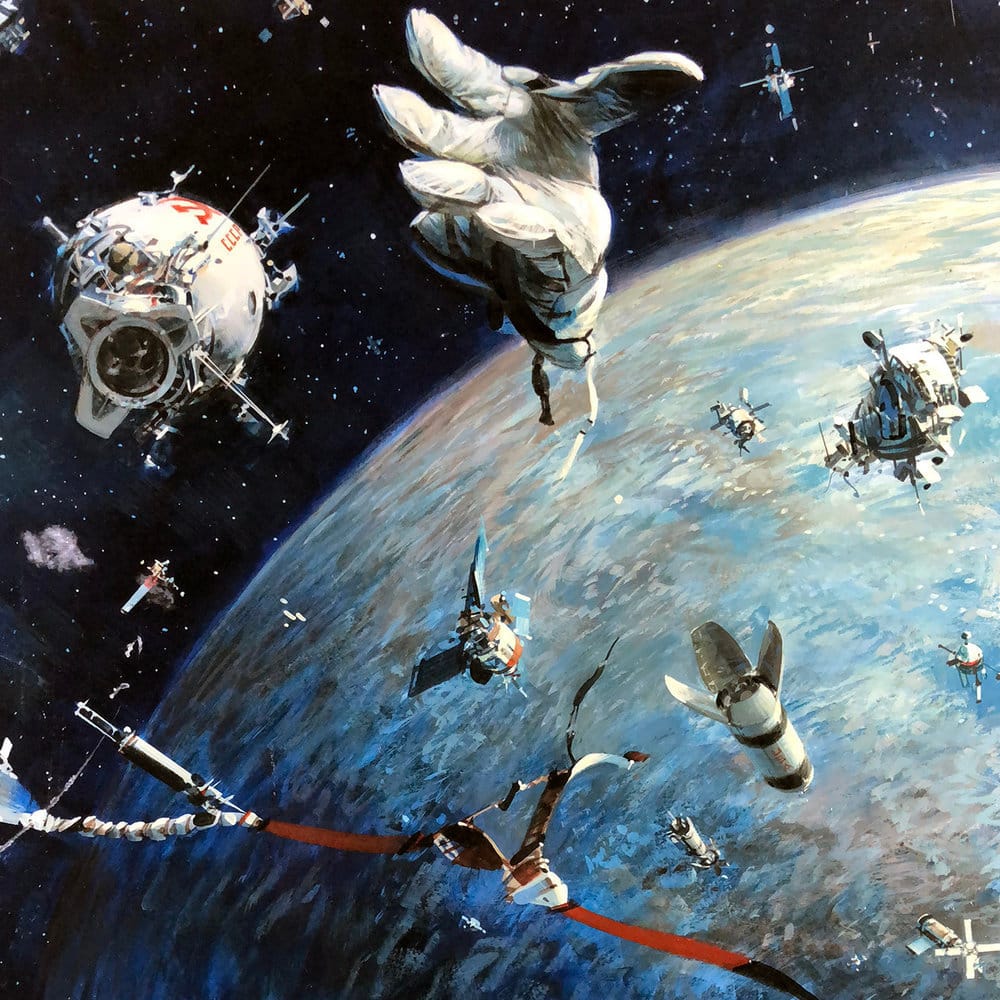
Chris Foss and Tony Roberts have some great depictions of space debris here.


Given that he's a big fan of the down-and-dirty industrialized side of science fiction, it's no surprise that Chris Foss has a few futuristic junkyards under his belt, like this one:
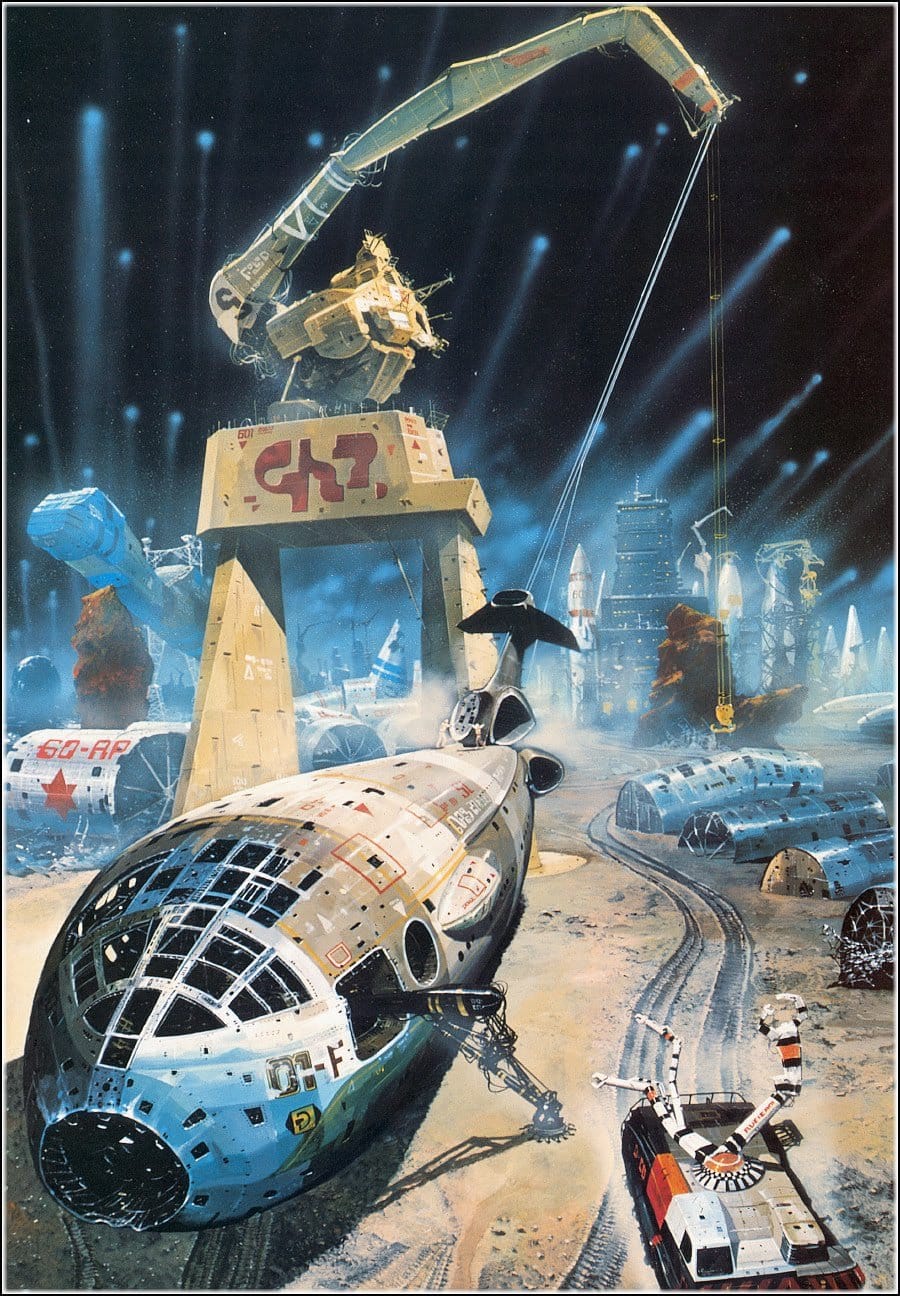
Or this one:

Here are a few massive derelicts from Chris Foss worth including with his junkyards.
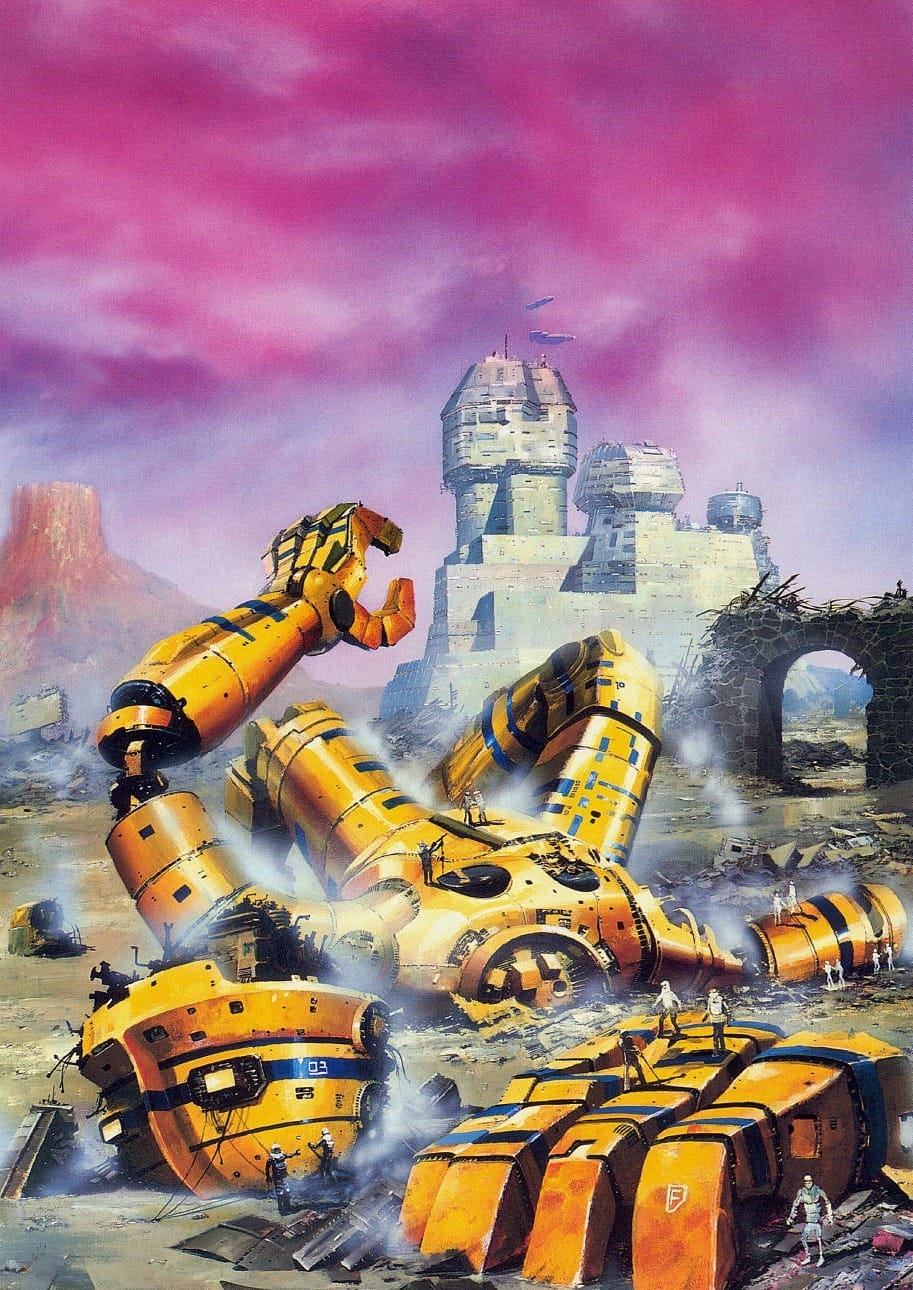

Manchu has a future junkyard of his own, too.
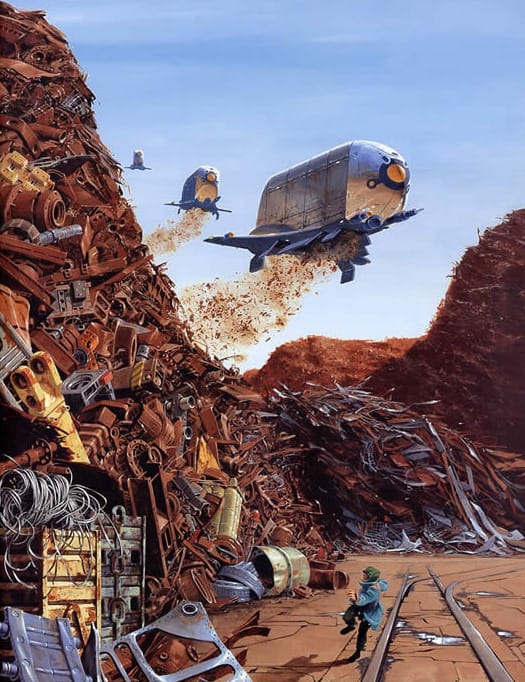
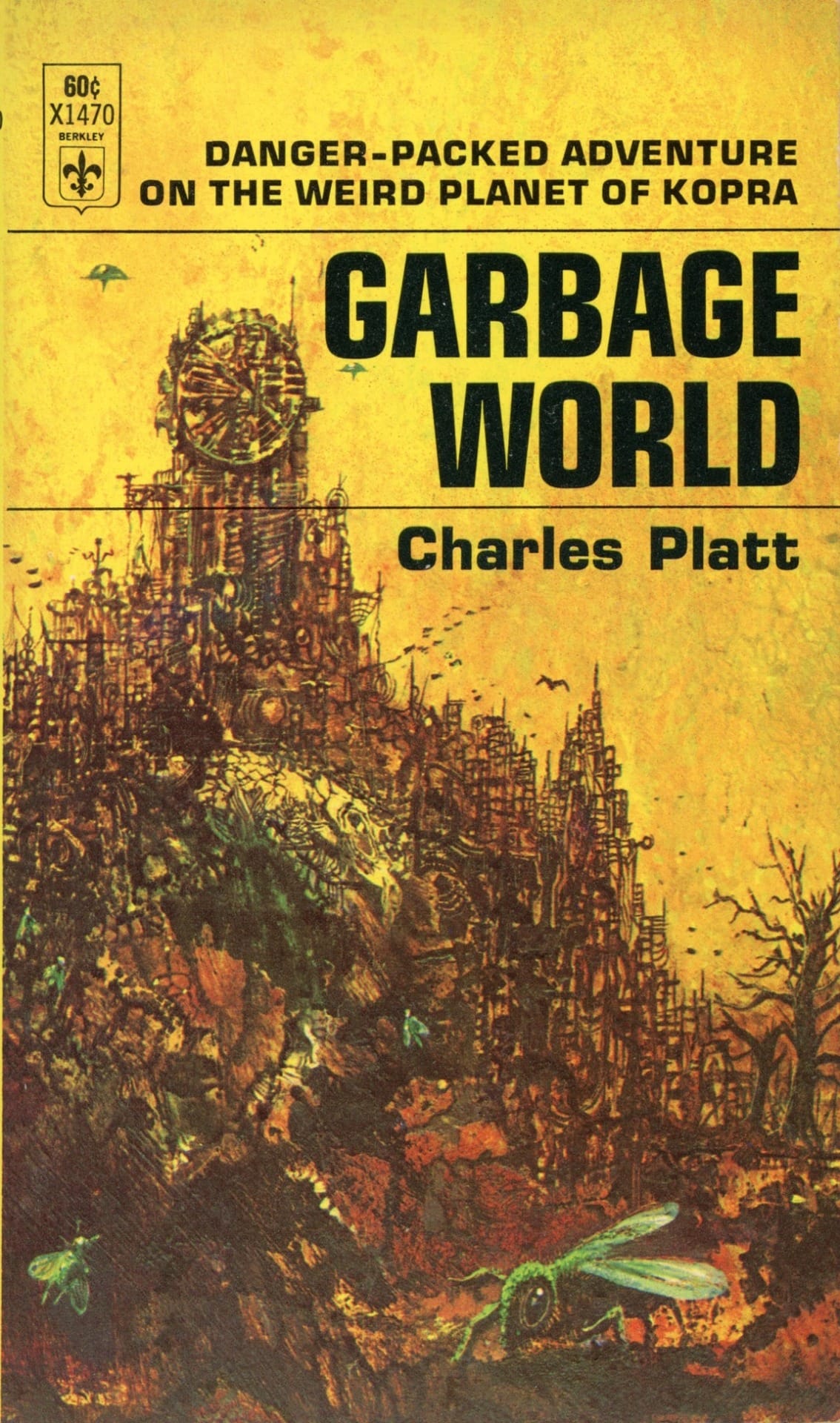
This uncredited 1967 cover to Charles Platt's Garbage World is another great example of a cool junkyard.
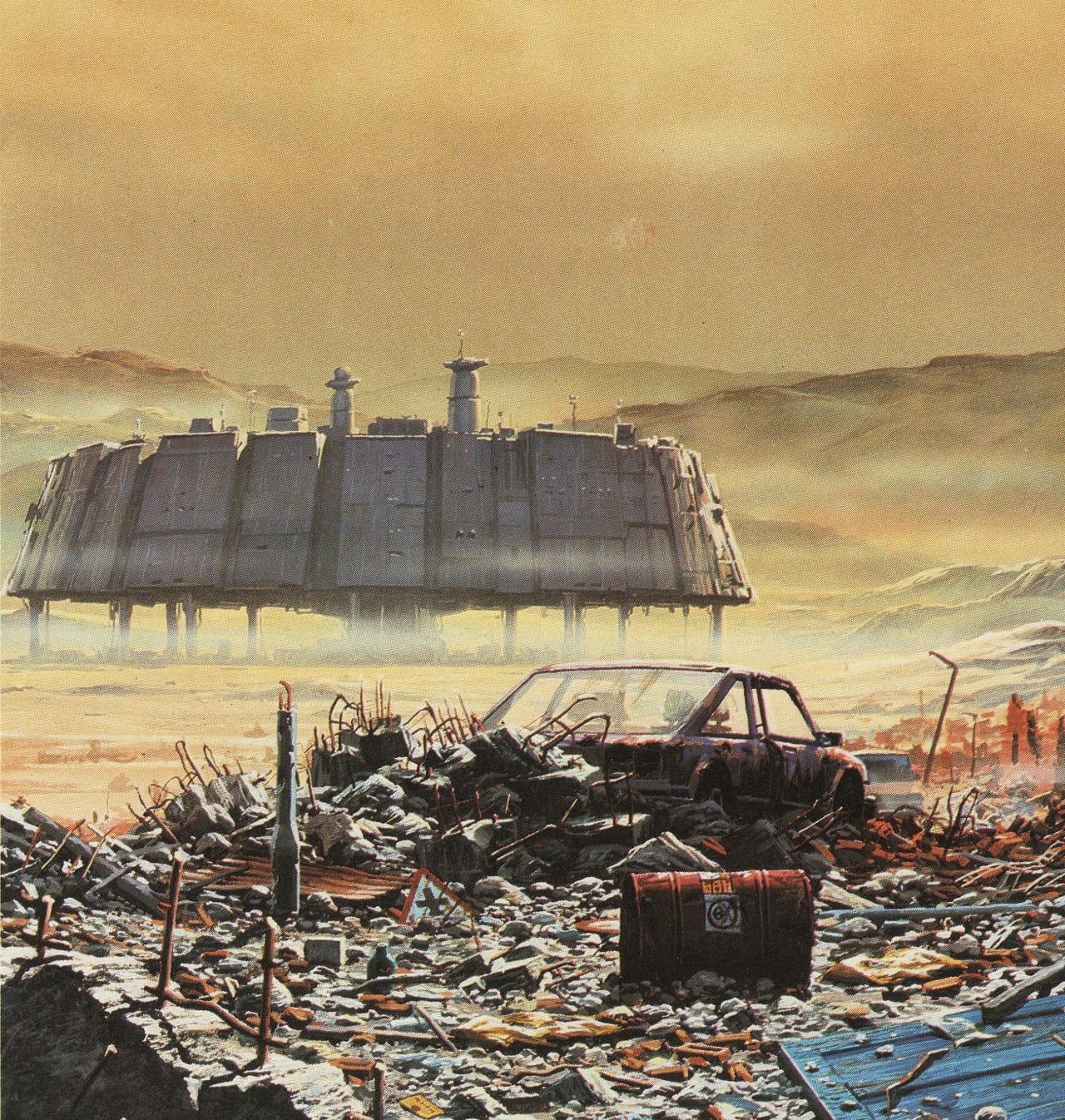
Peter Elson's 1985 cover to Earthworks, by Brian Aldiss.
Finally, here's Ed Emshwiller's typically charming take on the sci-fi junkyard, done as the February 1960 cover to Galaxy magazine.
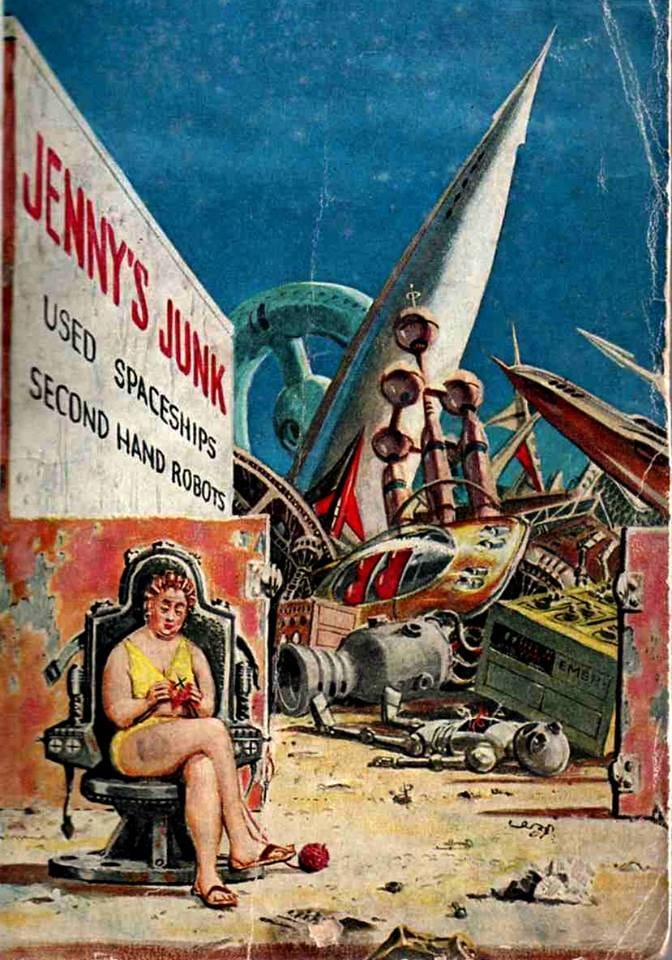
Was George Lucas paying attention to Emsh's shabby junkyard and "used spaceships" sign when he started imagining the famously broken-in world of Star Wars? Some think so.
Of course, as this post shows, science fiction illustration has never lacked for junkyards, before or after 1977.
Cool Links
The Revenge of Margaret Brundage, 'The Queen of the Pulps' - The Atlantic
Interesting article on a 1930s-era pulp artist. Looking up Brundage also led me to this cool 1985 book: A Pictorial History of Horror Stories: 200 Years of Spine Chilling Illustrations from the Pulp Magazines, by Peter Haining, which is available free on the Internet Archive.
This guy sells reproductions of old dust jackets published before 1976.
In a similar vein, here's a website that just displays scans of vintage postcards.
Music rec: The creator behind a few really great collections of video game music centered around themes like water, space, and snow has a new one: Desert.
Next Time: Angus McBride's Legendary Beasts