Space Pirates
In space, no one can hear you scream "Arr matey!"

Long-term readers might recall that I've ranted both about the debt science fiction owes both to the battles and exploration of adventure stories and to nautical concepts in general, thanks to the many parallels between deep space and the deep sea.
Given how cleanly pirates fit in the center of the adventure/nautical Venn diagram, I'm not sure why I took so long to talk about space pirates!
I'm not covering space piracy in a reasonable or tasteful manner, either. Yes, it makes sense that a space-faring future would have robbers who terrorize shipping lanes to steal cargo. Here, however, we're focusing entirely on the ones who also inexplicably theme themselves after the 1650s-1730s golden age of piracy – or, perhaps more accurately, after the pop-culture stereotype of what that era was like.
Eddie Jones gets it. He nestles a skull and crossbones flag decal in among the Chris Foss-style futuristic sigils on this pirate ship, on a 1975 cover to Beyond the Galactic Lens, by Gregory Kern.

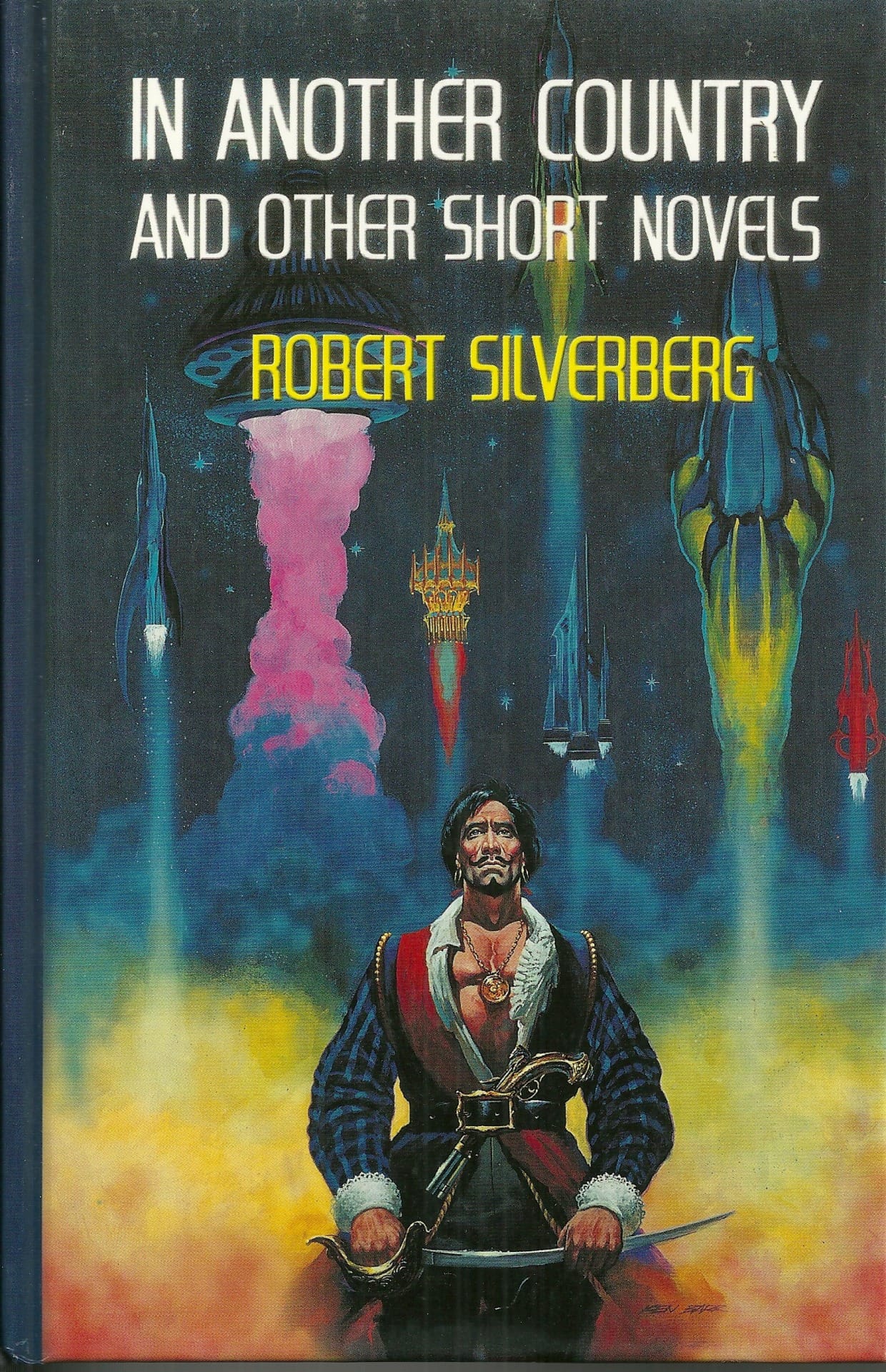
Ken Barr positions a swashbuckler underneath the colorful contrails of a dozen spaceships.
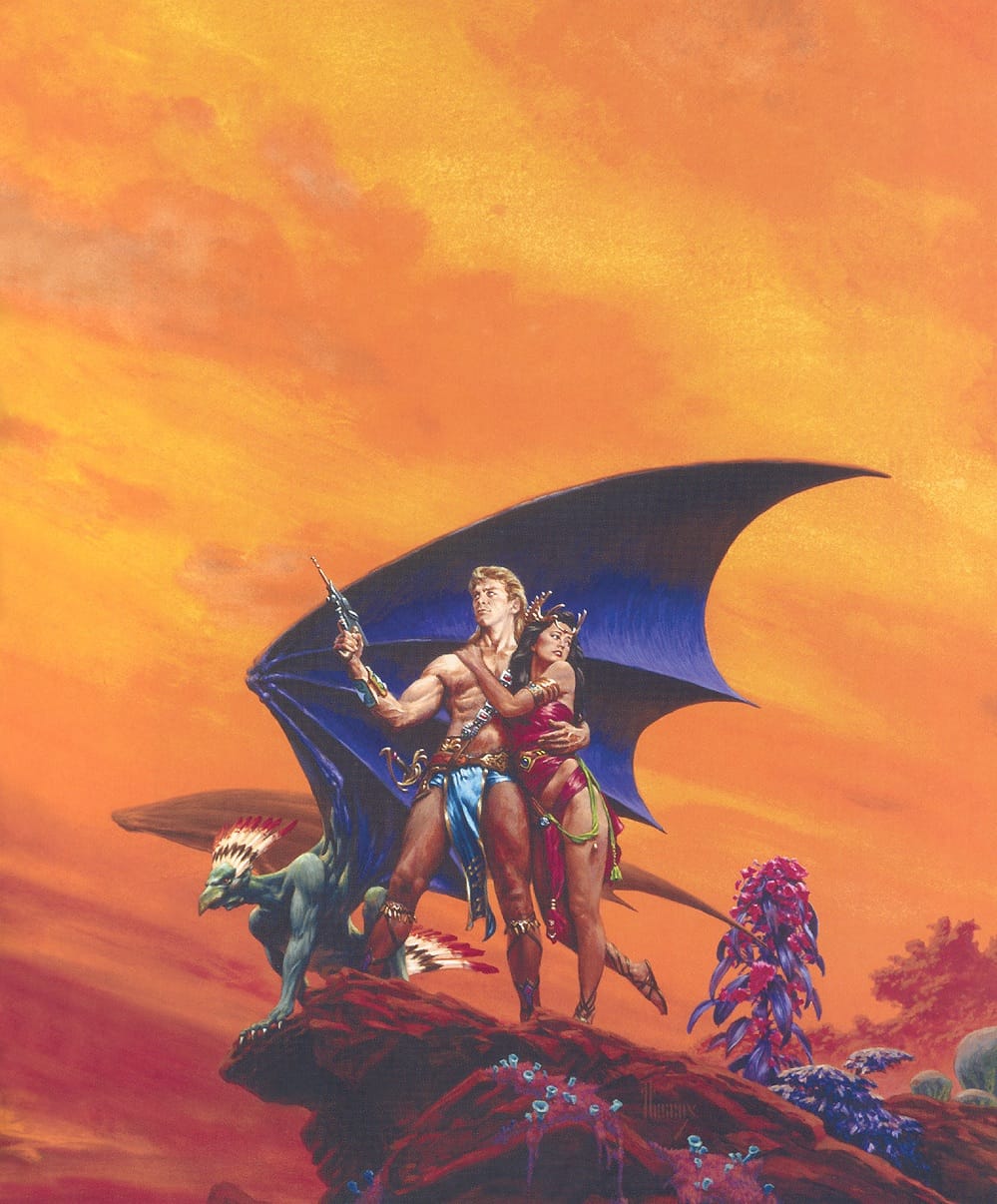
Edgar Rice Burroughs was early to space pirates. Richard Hescox embraces the space-fantasy setting of Burroughs' Pirates of Venus for this cover to a 1991 edition.
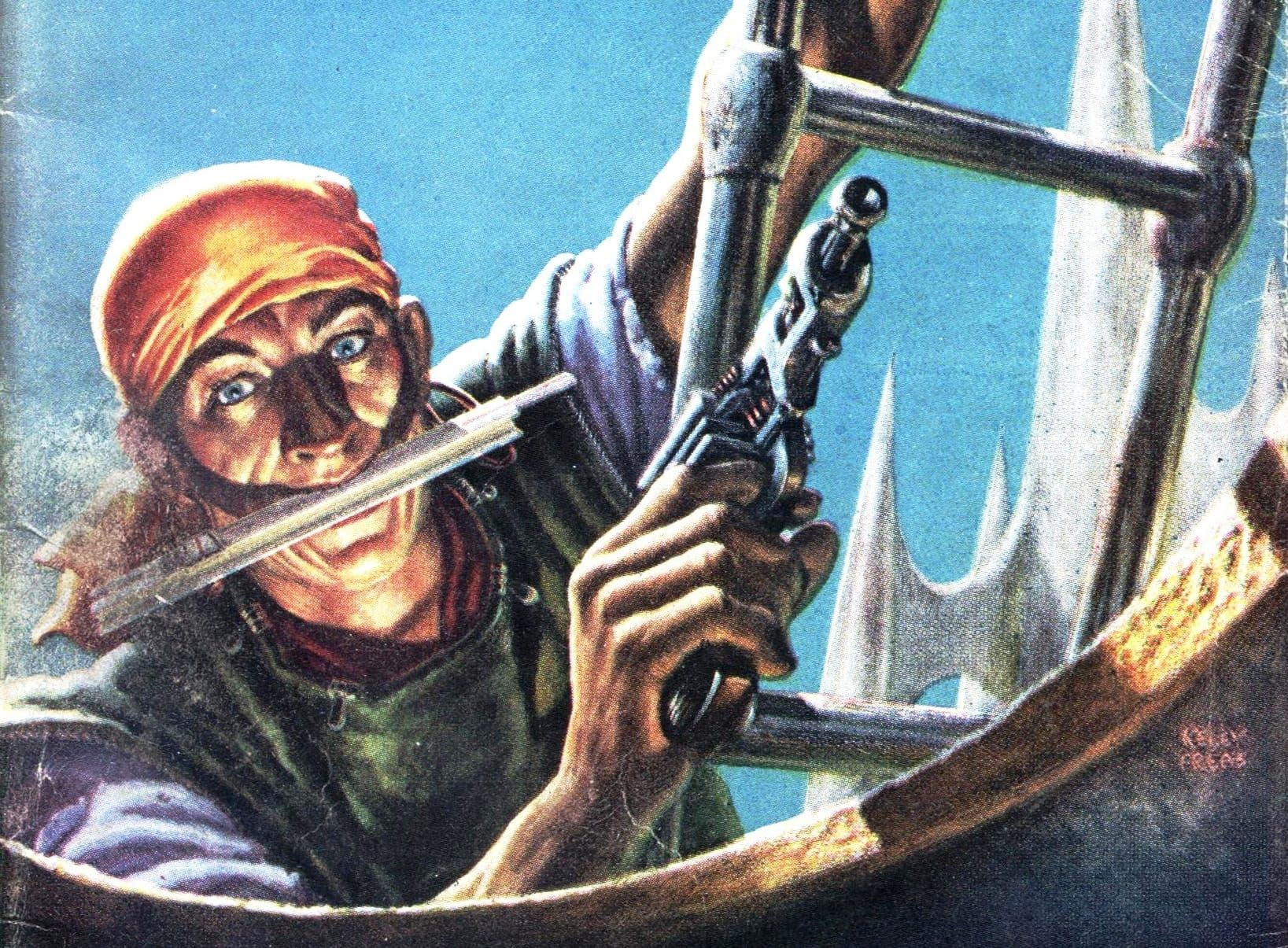
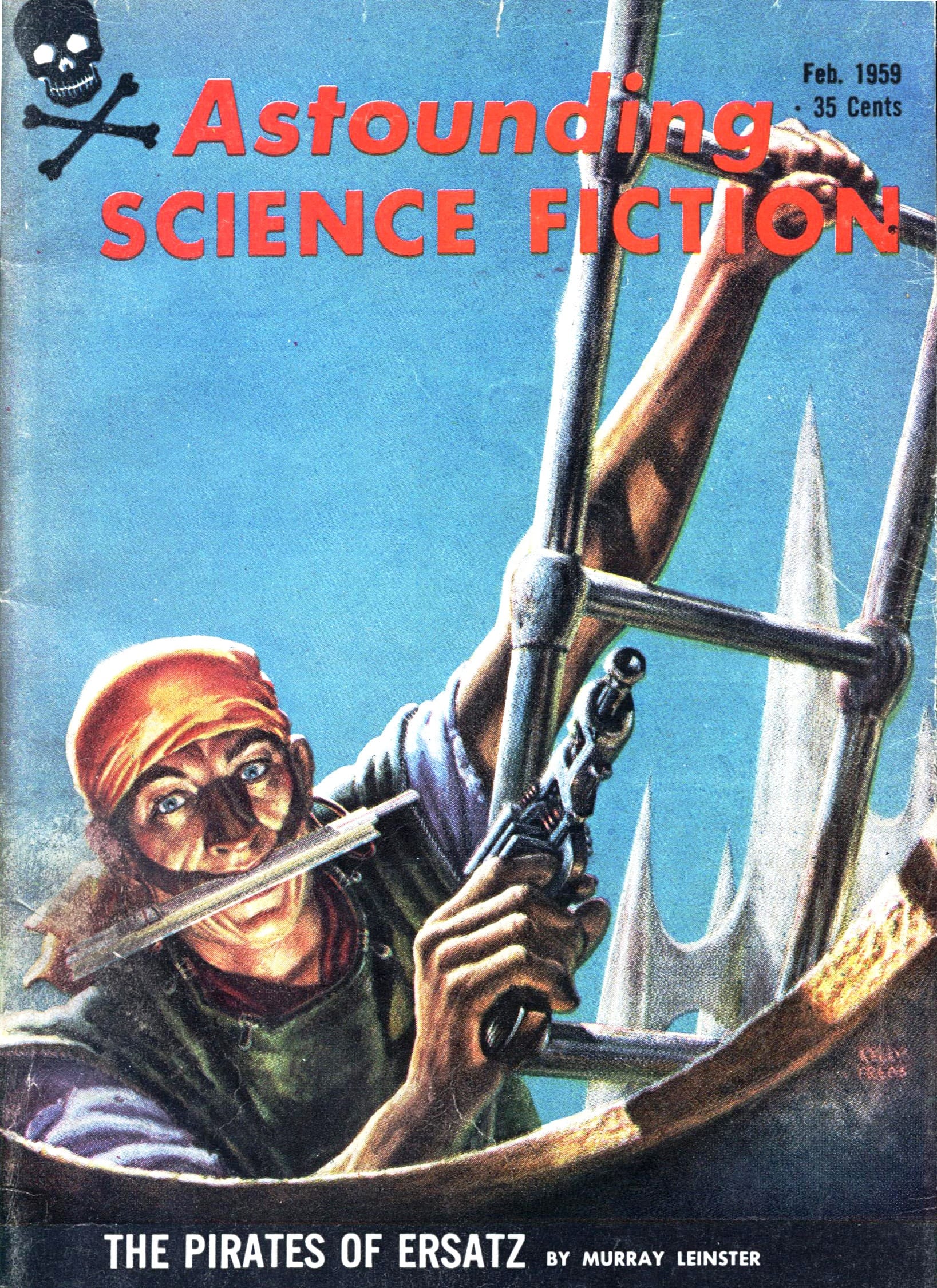
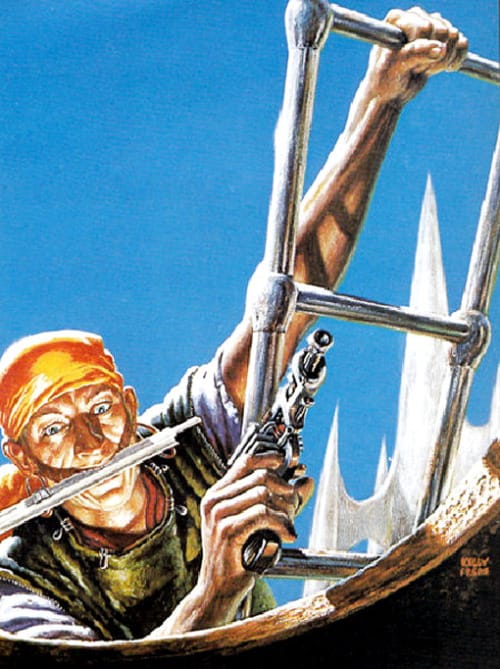
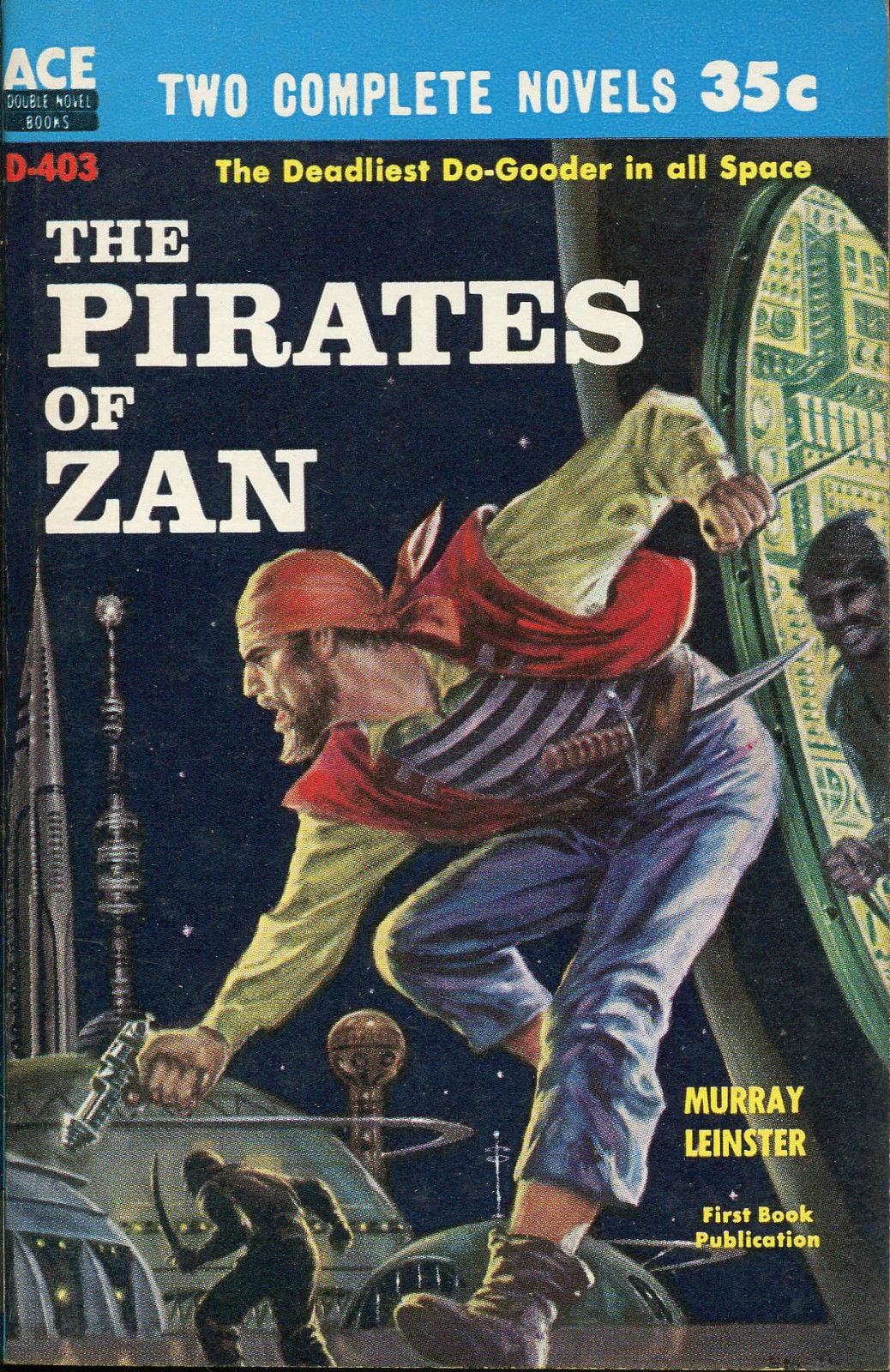
Murray Leinster's 1959 novel The Pirates of Zan featured space pirates, and the top science fiction magazine illustrators of the time took a crack at depicting them. Frank Kelly Freas did a cover for the initial serialization in Astounding Science Fiction, February 1959, when it was still called "The Pirates of Ersatz."
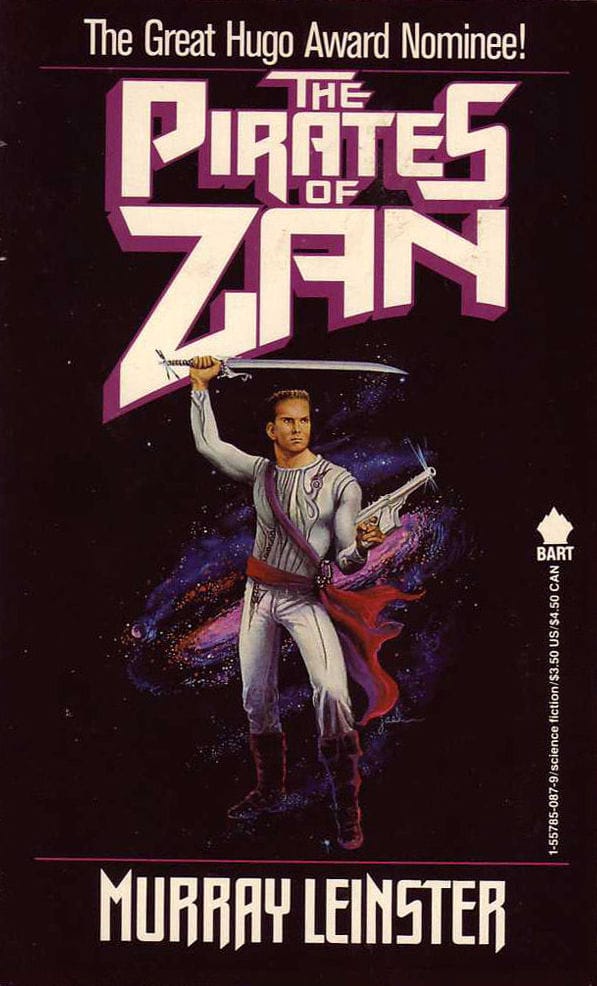
Here's Ed Emshwiller's 1959 cover, Gil Cohen's 1971 cover, and Jael's 1989 cover.

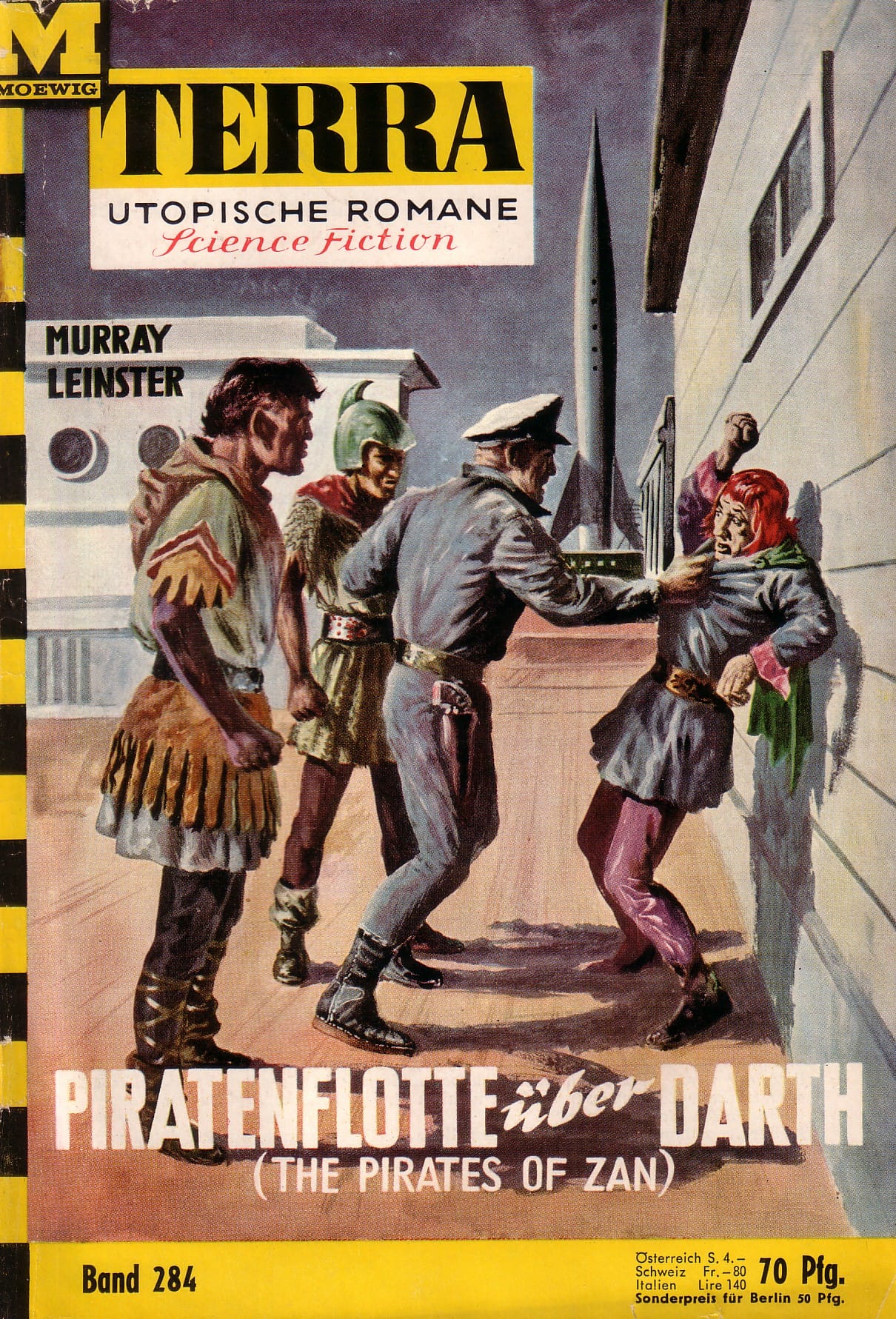
And here's a 1963 German magazine cover by Johnny Bruck, followed by an uncredited 1974 Dutch edition cover.

It's hard to top Bruce Pennington's bat-winged flying ships, done for a 1973 cover to Sky Pirates of Callisto, by Lin Carter.
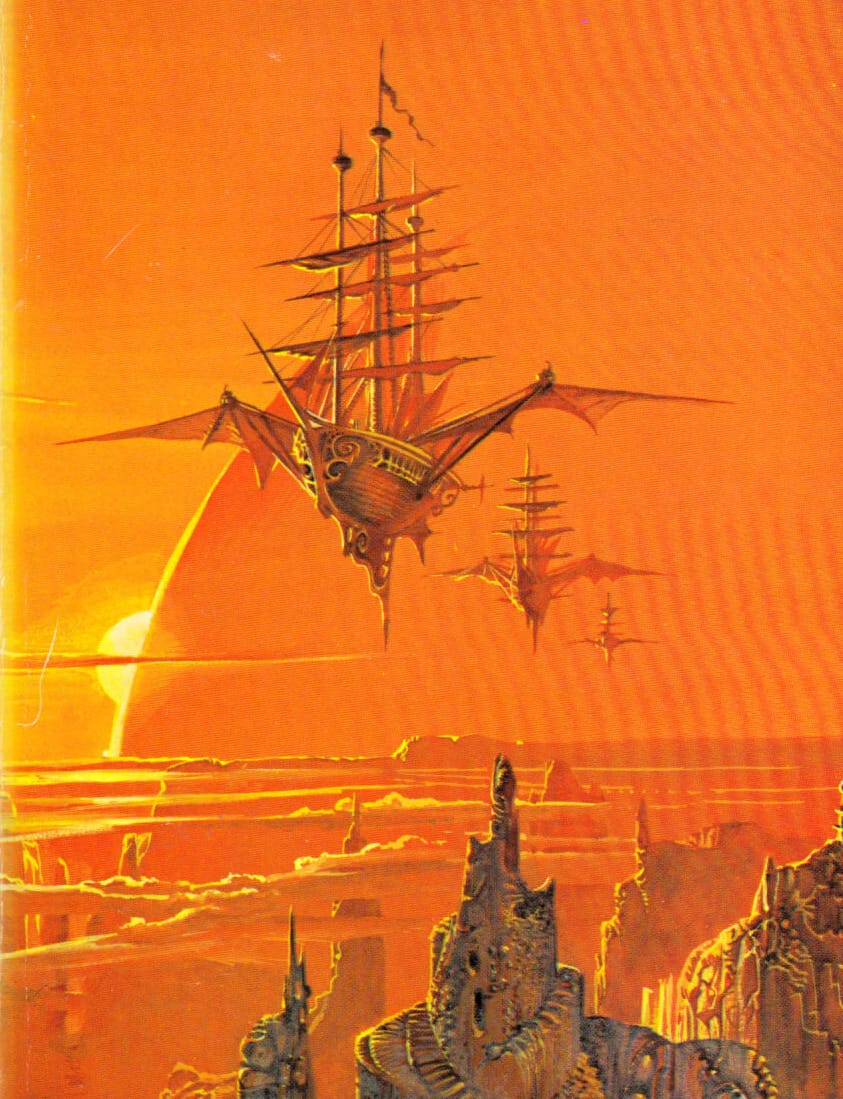
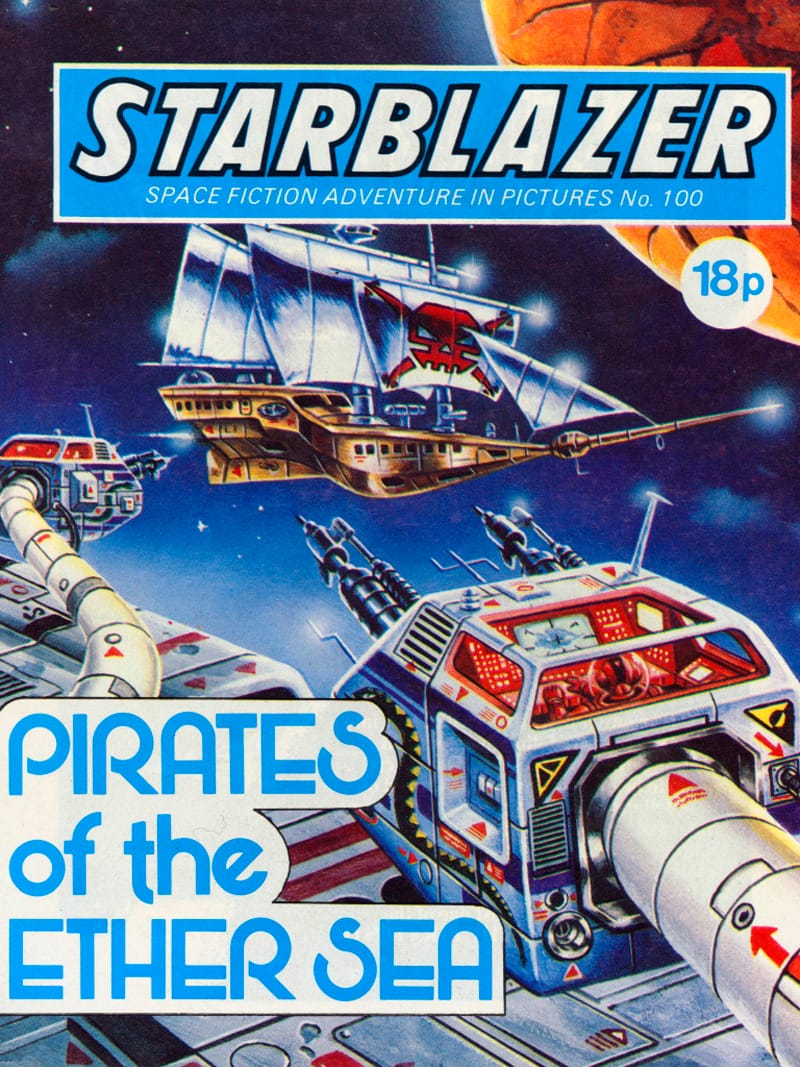
At least Pennington's sailing ships were within the atmosphere. This Starblazer cover by Dave Alexander merely adds some metalic plating to the pirate ship sailing on the ether sea.
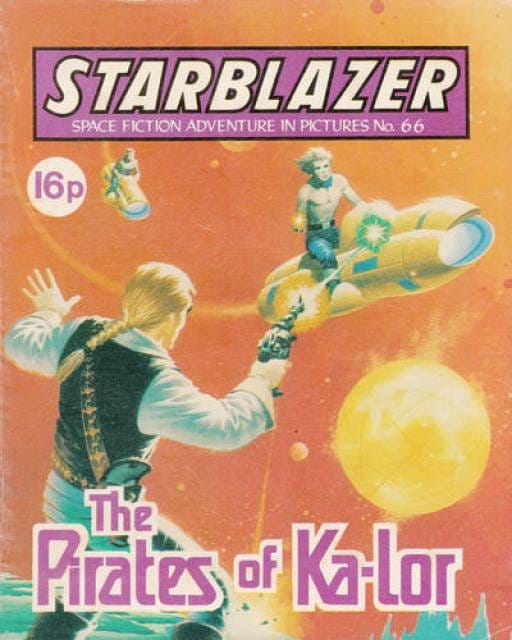
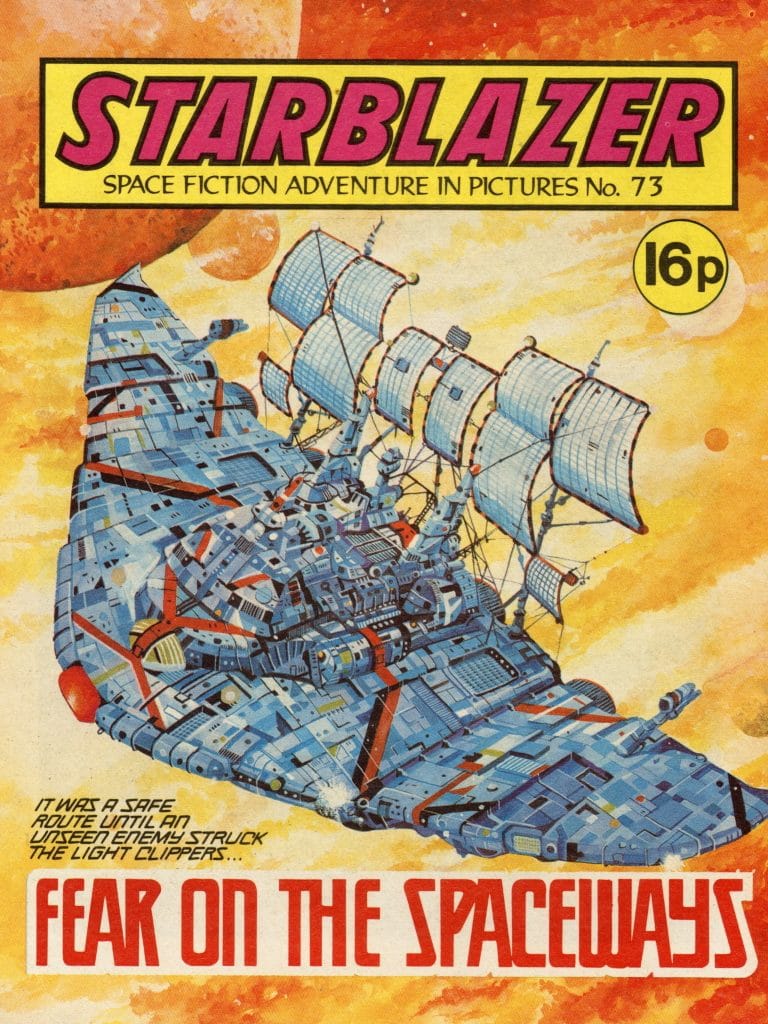
Starblazer never met an adventure trope it couldn't absorb: Here are two more pirate-tangental issues: Ian Kennedy's #66 cover and Keith Robson's #73 cover.
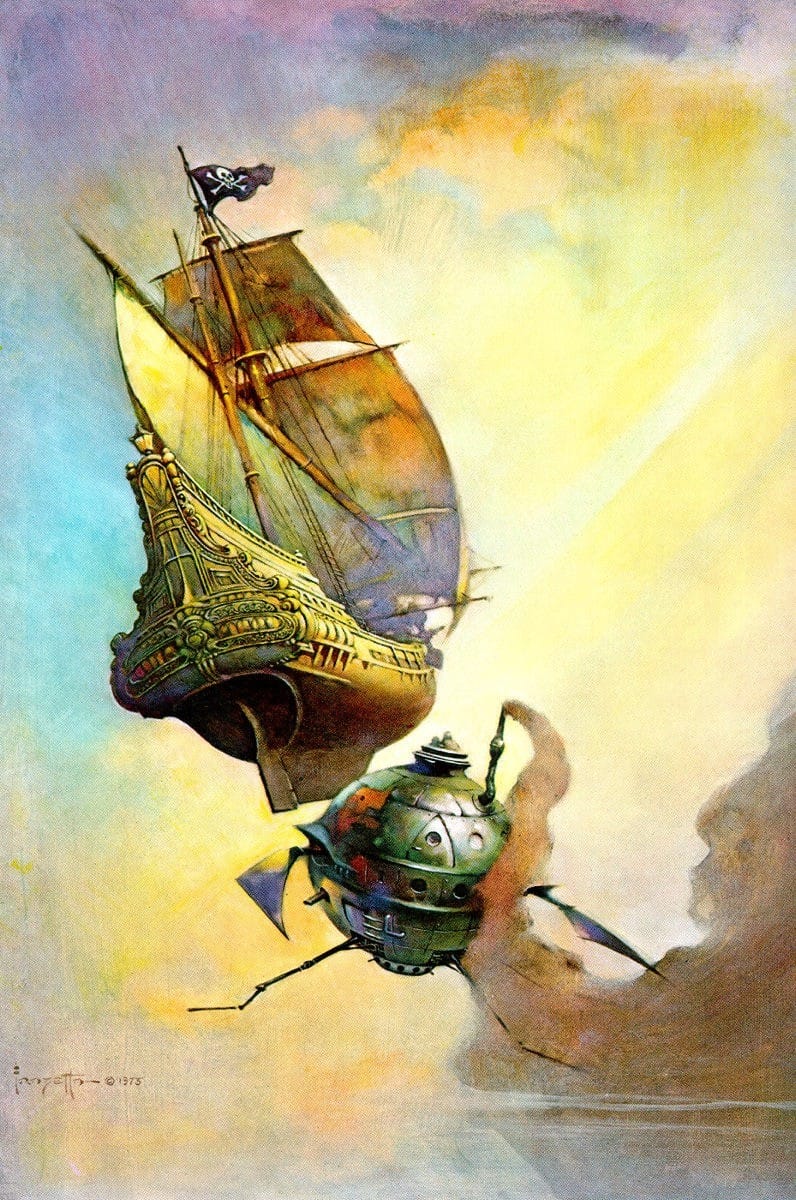
Frank Frazetta includes a bog-standard pirate galleon alongside a sci-fi gizmo for his 1974 cover to Into the Aether, by Richard A. Lupoff.
This 1993 Don Lawrence illustration is great! No better way to justify a floating fishing boat than with a bunch of surreal floating fish.
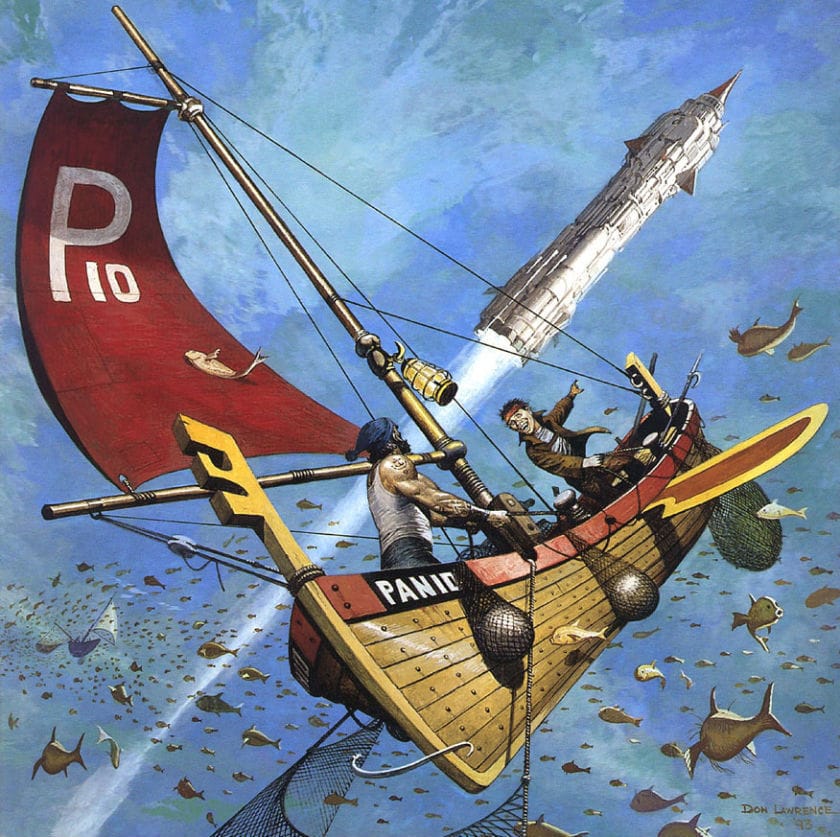
I suppose I don't have evidence that those two Don Lawrence guys are actually pirates, but they don't make any sense, and that's what counts.
The same goes for this 1979 Michael Whelan cover to Poul Anderson's Ensign Flandry, featuring cat sailors alongside a helmet-wearing spaceman.
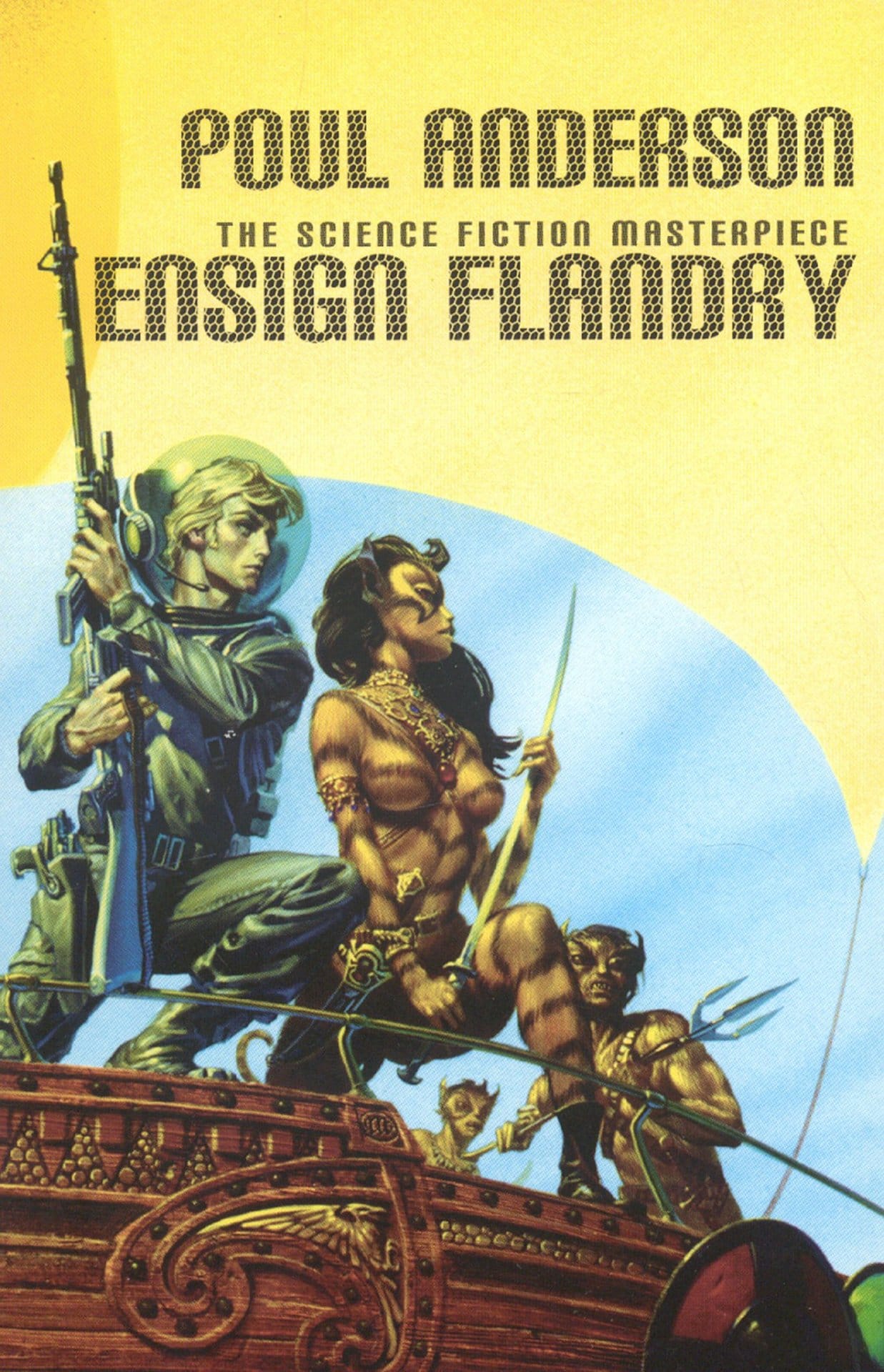
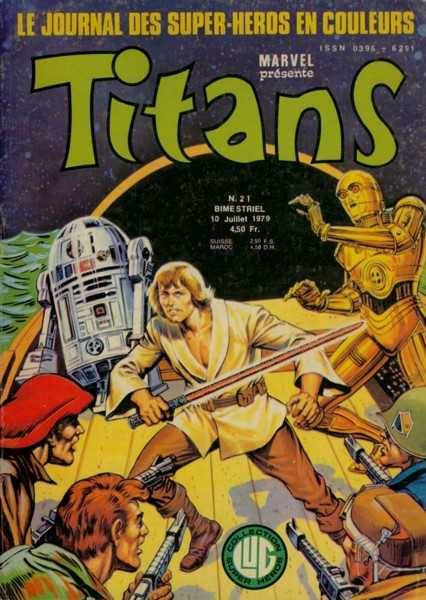
The deck is wooden, but the sailors are armed with rayguns on this French Star Wars-themed cover to Titans #21, July 1979.
Edit: This is a re-painted version of the cover to issue 12 of Marvel's Star Wars comic from 1978, originally pencilled by Carmine Infantino and inked by Terry Austin, according to Michael Ellis Day in the comments!
Michael Kaluta avoided the standard pirate tropes when illustrating the 1978 cover to Jazz-Funk album Lenny White Presents The Adventures Of Astral Pirates.
Instead, he depicts a shiny sphere of a spaceship that's molded to look like a goateed skull with what looks like a spoiler in the rear.

This skull-themed spaceship is from Philippe Druillet's 1980 version of Gustave Flaubert's 1862 historical novel Salammbô – Druillet takes a story set in Carthage around 240 BCE and converts it into a space opera starring his Lone Sloan character.
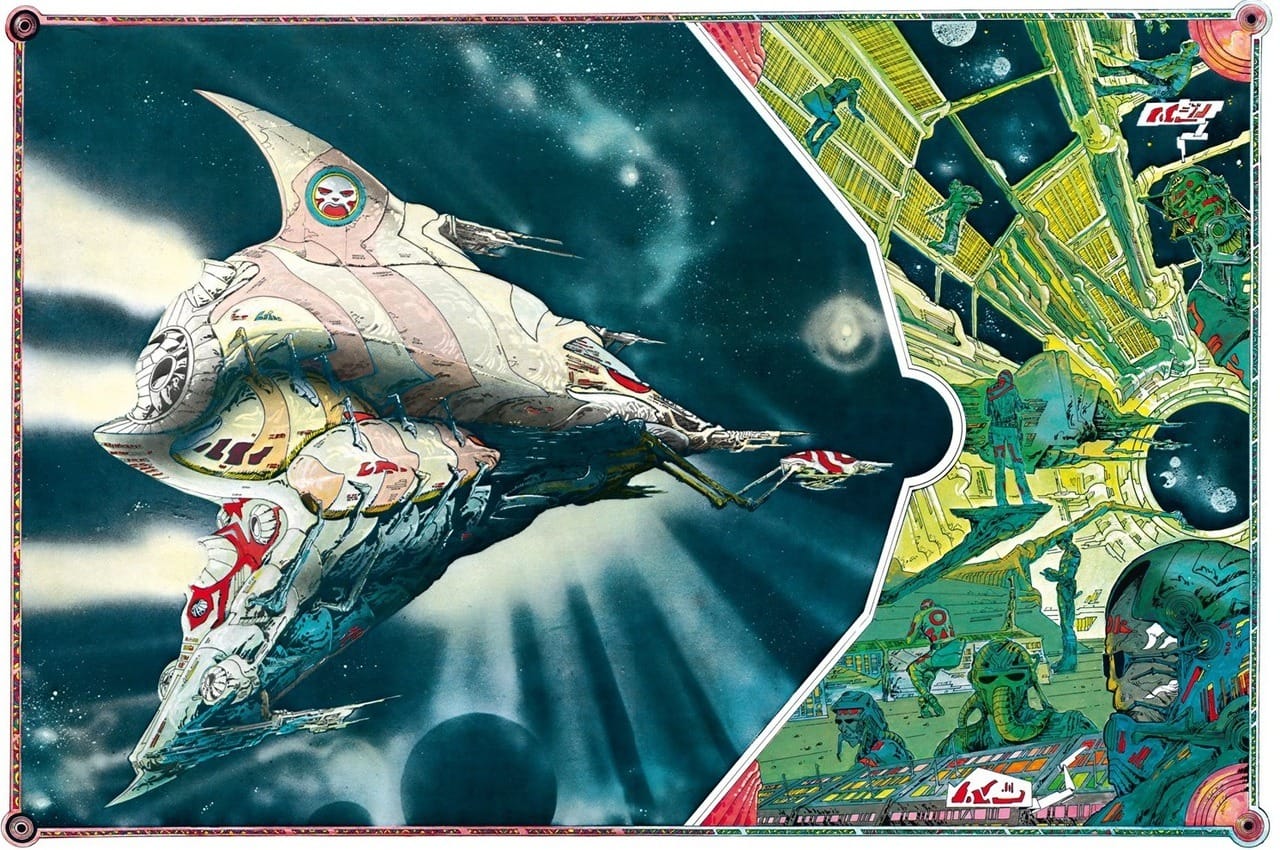
Several movies and TV shows have used the space pirate concept. Disney's 2002 film Treasure Planet might be the most well-known, but it's predated by Captain Harlock, a Japanese manga series written and illustrated by Leiji Matsumoto from January 1977 to June 1979, and turned into an anime in 1978.
Here's his ship, complete with an actual skull and crossbones flag in the back. I posted this a few weeks back, crediting it to Matumoto, and (true to Cunningham's law) was corrected: This illustration is by Yuji Kaida, based on Kazutaka Miyatake's redesign of the Arcadia for a 1979 film adaptation.

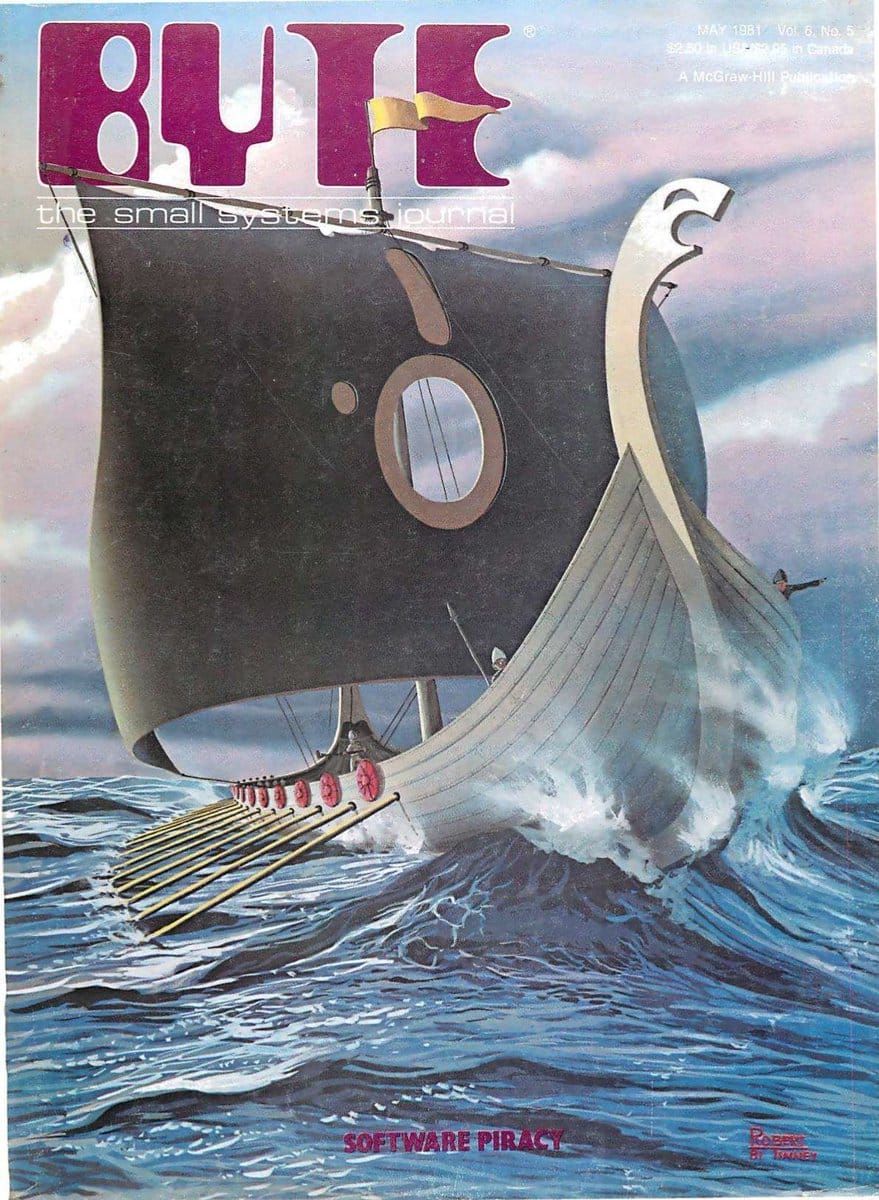
I'll end on a classic Robert Tinney Byte magazine cover, illustrating a feature on software piracy.
If you need further reading, you can skim through the lengthy Wikipedia article dedicated to space pirates or check out my companion post, on Sci-Fi Vikings (where I definitely should have stuck this Byte cover).
Cool Links
Did Marvel Produce Conan Comics That Only Appeared in Italy? - CBR
Apparently some Conan comics have never appeared in English, since he was much more popular in Italy. That sounds intriguing, but this article doesn't have many details and from what I can tell, Conan il Conquistatore only ran two issues in 1997, which is not particularly impressive.
The Art of the Unknown by S. Elizabeth - feuilleton
Review of a just-released art collection - a gateway into the history of artwork on the mysterious. I have a copy of this one and it's pretty great! Although the author is a friend, so I'm biased.
Music Rec: This 80s Hi-NRG mix is great
Next Time: Paying readers get a look at the great Virgil Finlay.