Sheep and the Pastorial

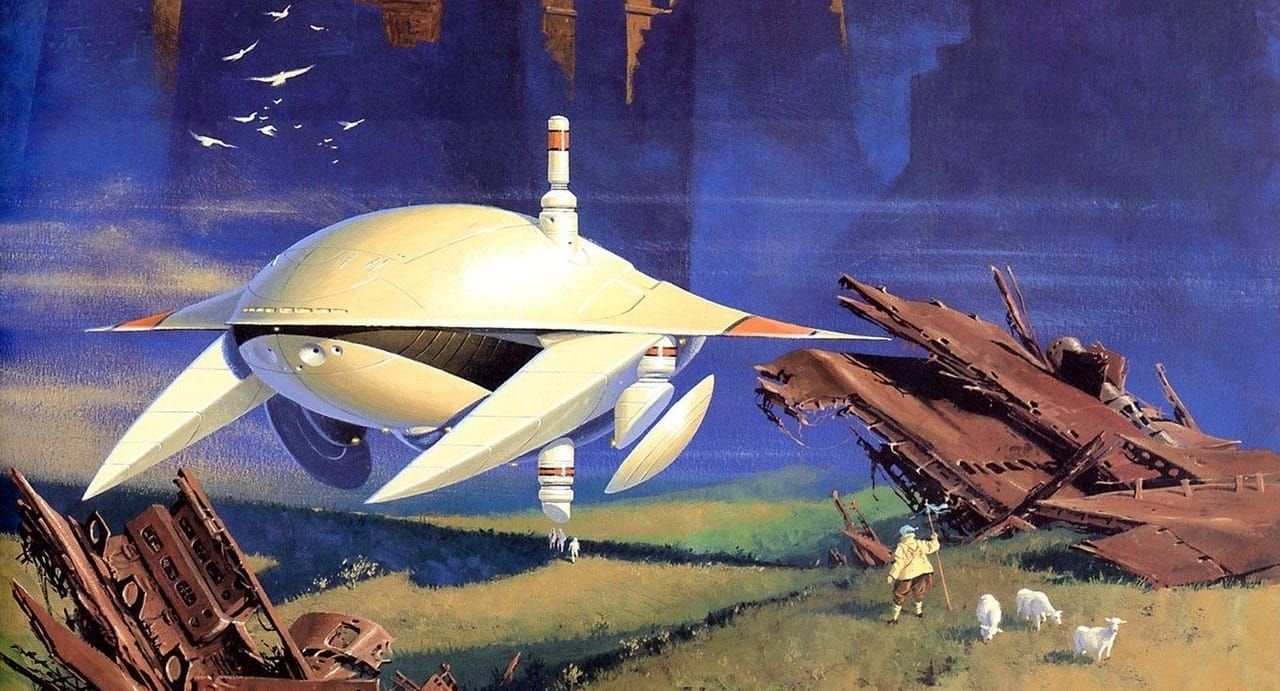
I've mentioned before that a lot of what makes the '60s-'80s cross-section of sci-fi art history stand out is how much it focuses on organic life. Perhaps I'm wrong, but I feel like we've focused more on hardware in past decades, as if fossil fuel lobbyists have to pollute our visions of the future in tandem with the actual future.
At any rate, I'm now adding to my list of nature-themed posts – Grass, Overgrown Ruins, Blue Skies, Computer Plant Life – with one focused on the ways in which retro sci-fi futures have mingled with the frequently sheep-filled pastoral setting.
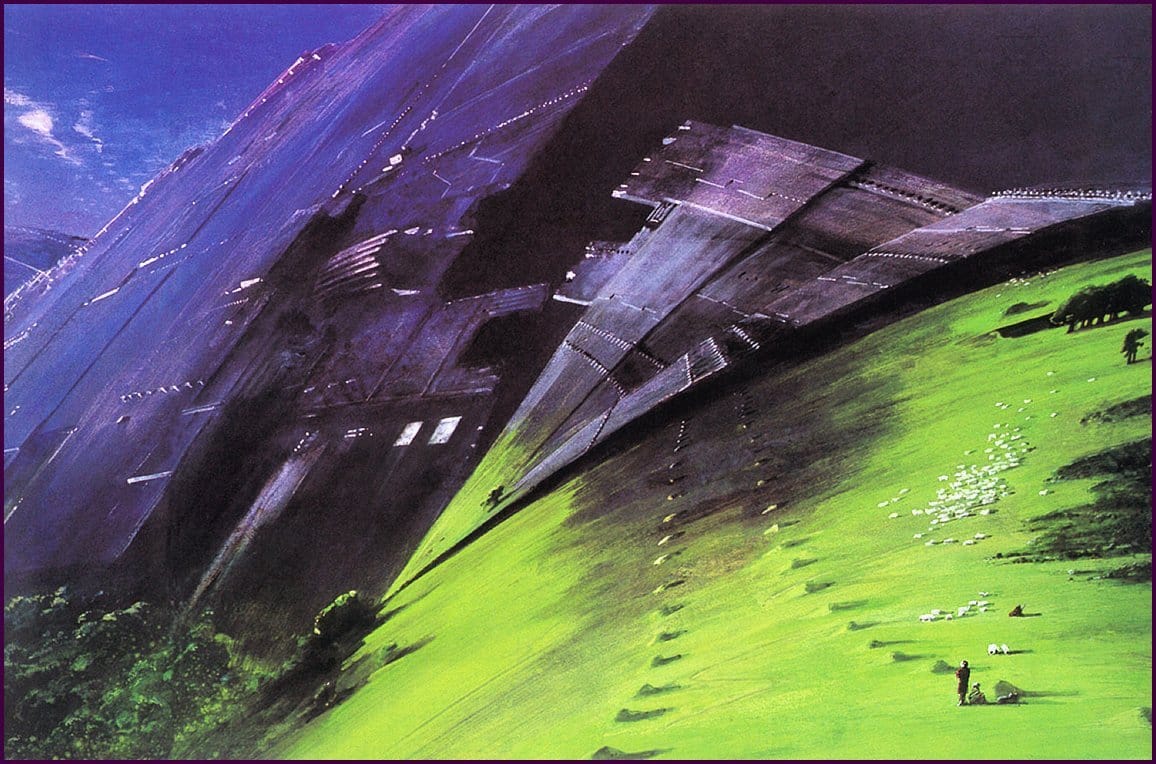
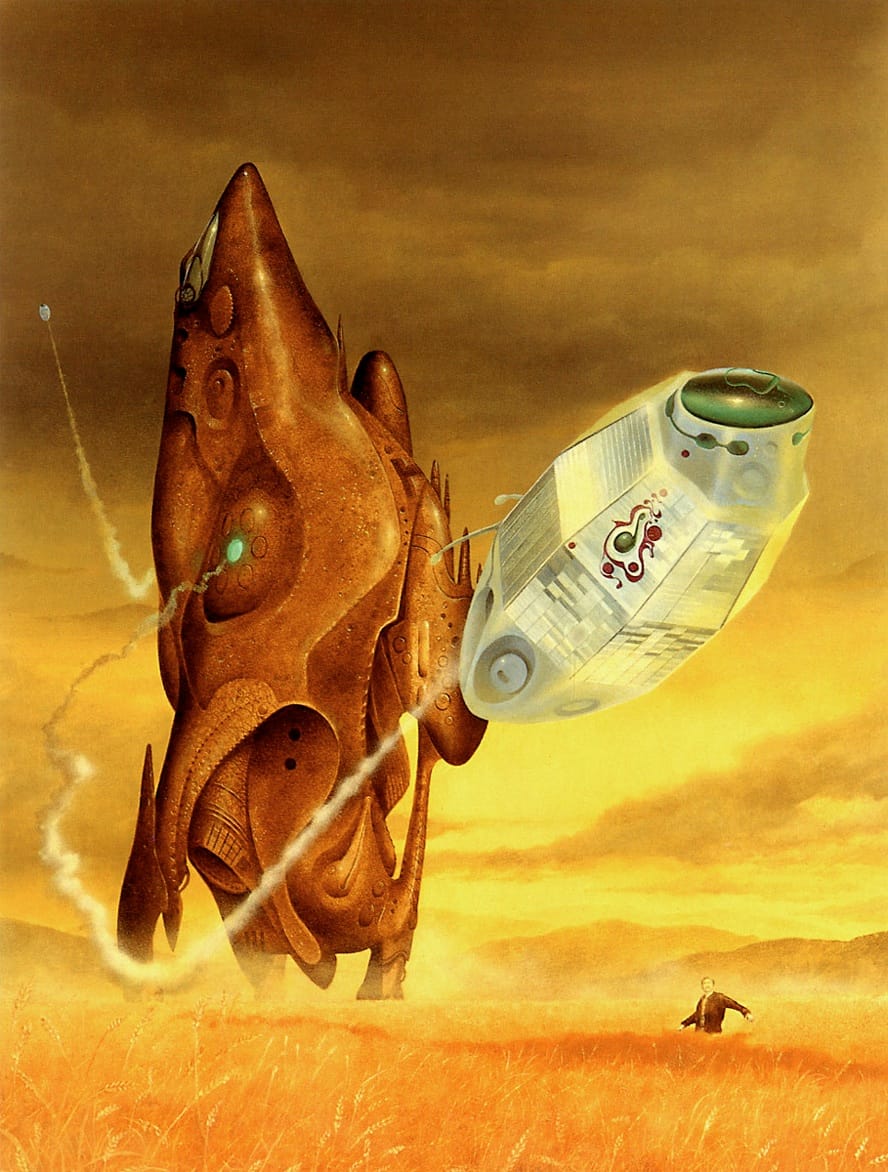
Here's the best example of what I'm talking about: This warped John Harris illustration of a massive spaceship that crashed on Earth long enough to grow a beautiful sheep-attracting crop of grass.
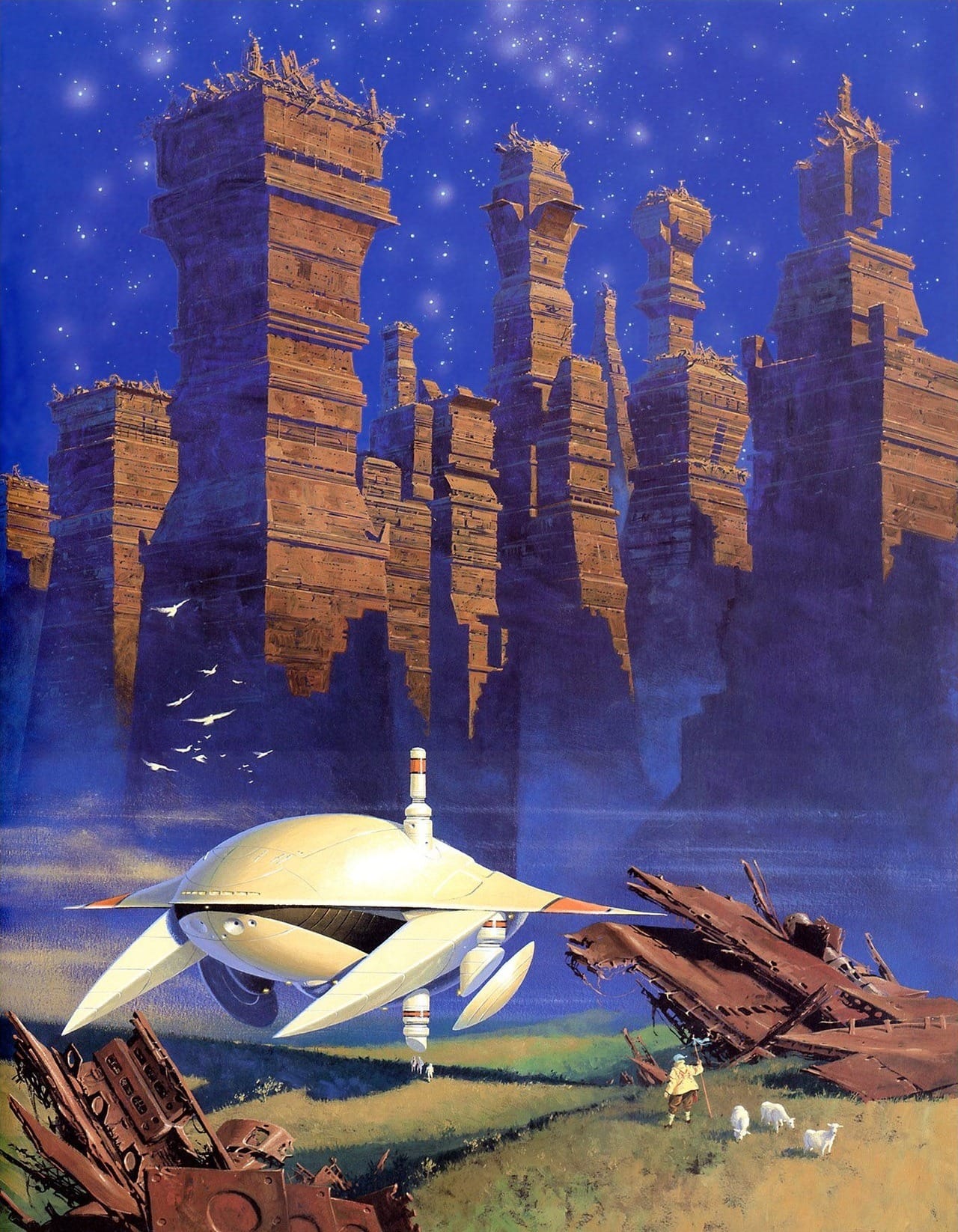
Shepherds and their flocks are an inspired way to depict the concept of nature reclaiming futuristic city ruins, since a grazing herd implies vast amounts of undisturbed land far beyond what the viewer actually sees.
Here's an illustration by Manchu that conveys the same idea.
The shadowy past civilization still towers overhead, separated from the foreground by a barrier of fog.
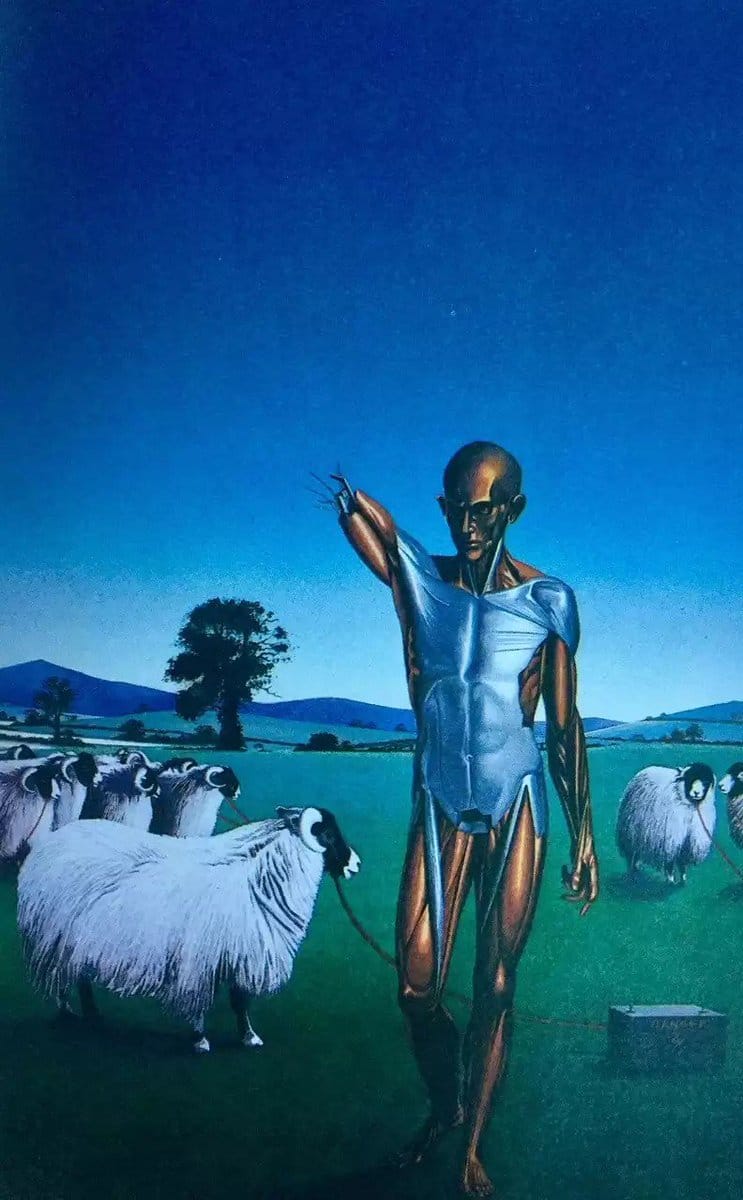
Based on the title of Philip K Dick's Do Androids Dream of Electric Sheep?, you might expect it to make more than one appearance in this post, but there's only one cover that actually features a pasture: Peter Goodfellow's eerie 1982 cover.
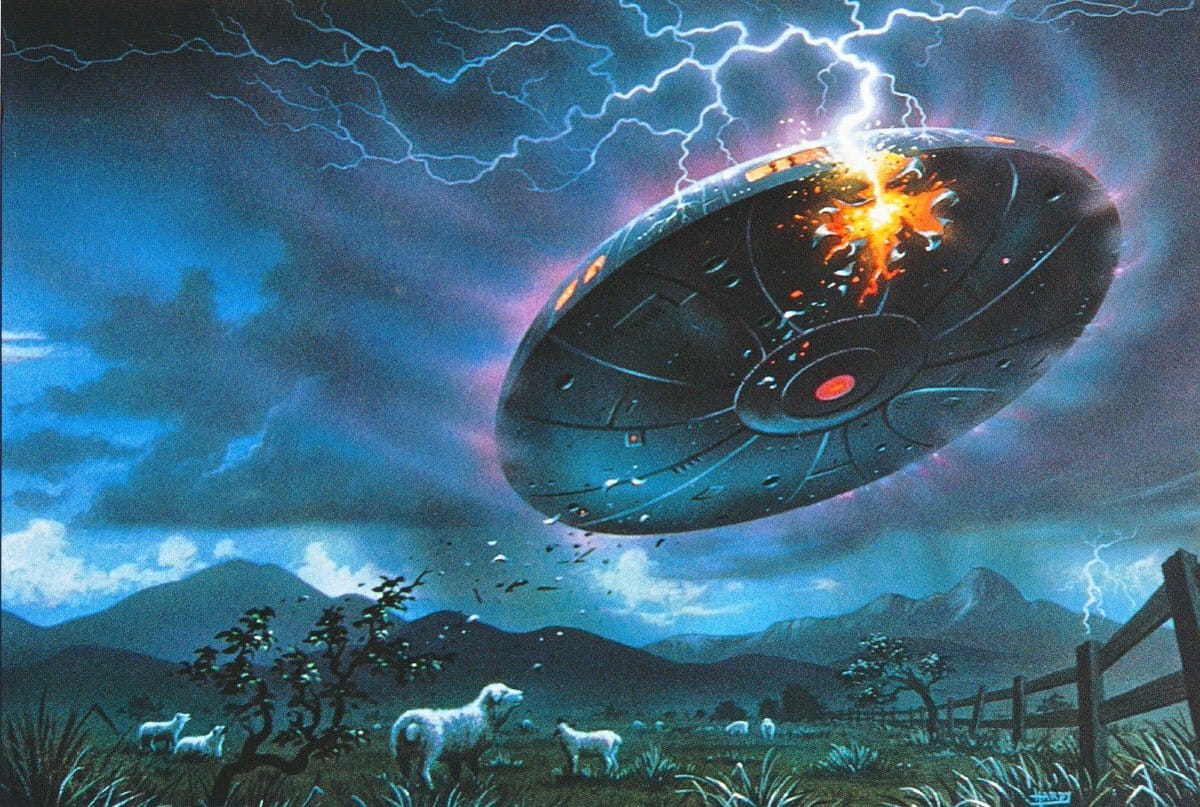
In fact, I'm going to have to expand my definition of "pastorial" beyond just flocks of sheep. It's too niche a concept, and life isn't always peaceful for sheep in a sci-fi illustration. Just ask the ones in this David A. Hardy artwork.
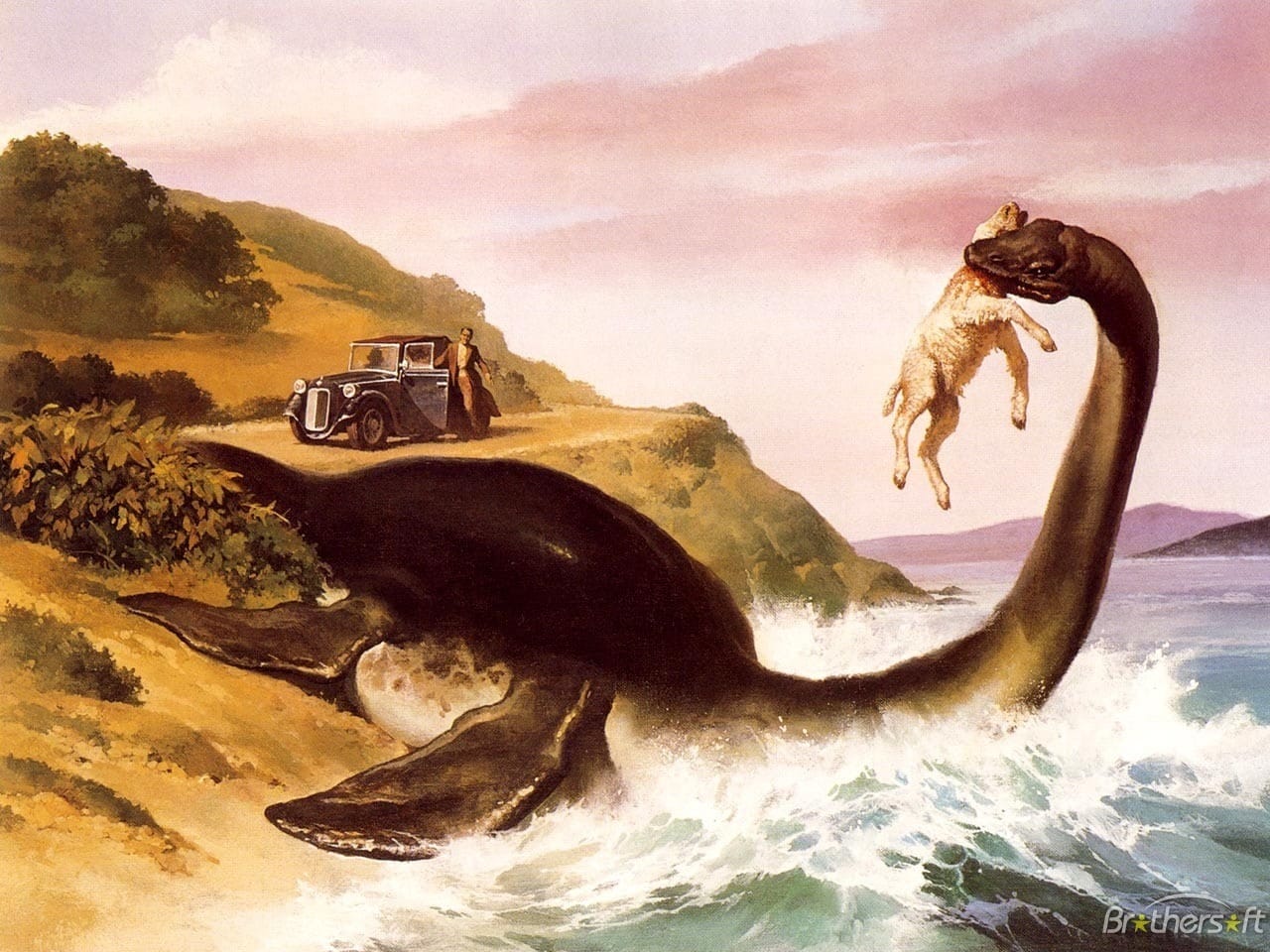
Or worse, this Gino D’Achille illustration of a Loch Ness monster encounter.
No, no, we can find the calm, gentle greenry of a nature-rich wide-lens landscape in plenty of sheepless artworks.
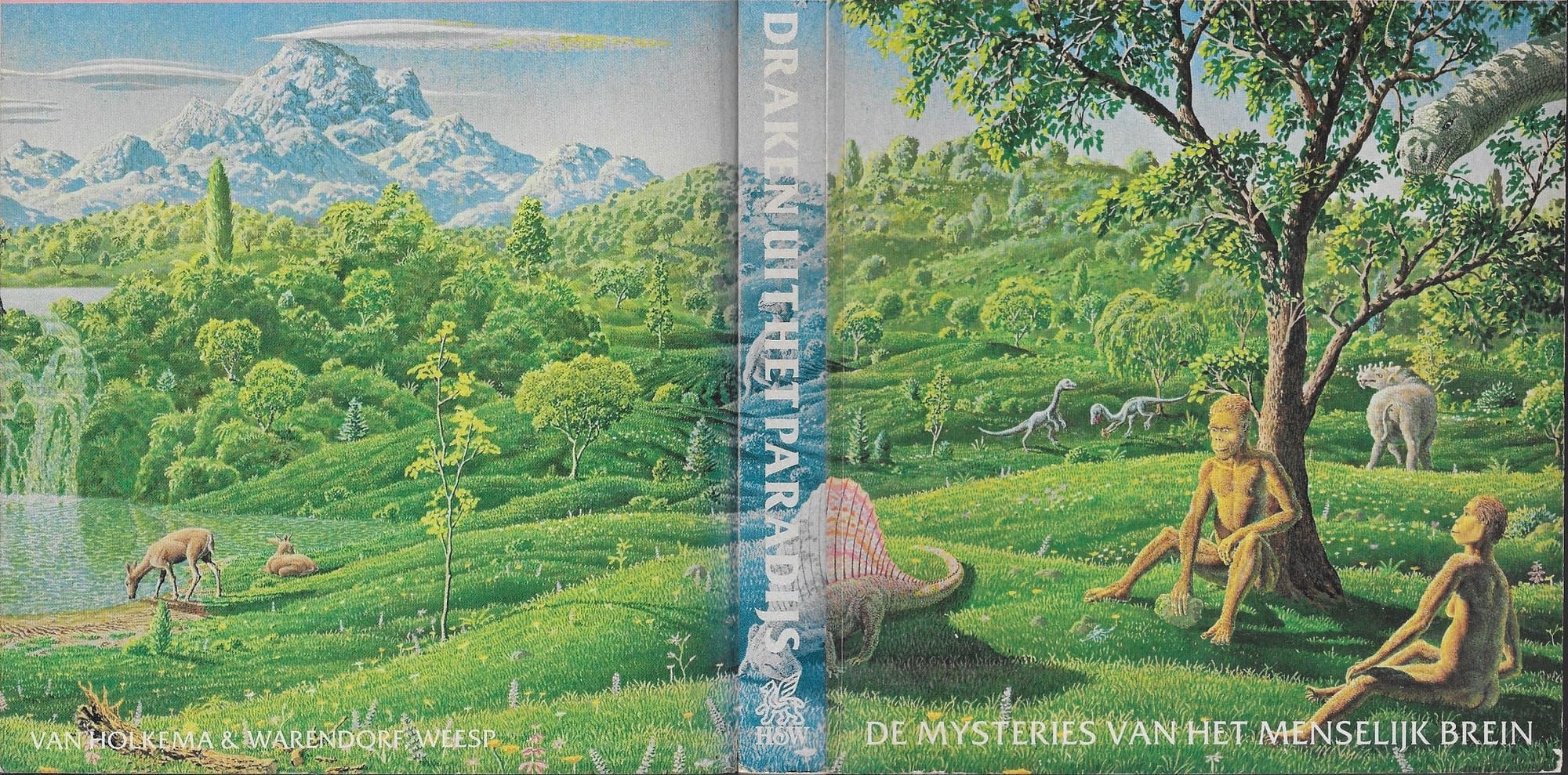
One great example is in the distant past, as seen on Don Davis's 1977 cover art for Carl Sagan’s The Dragons of Eden: Speculations on the Evolution of Human Intelligence.
It's beautiful illustration of a neanderthal Adam and Eve, and packed with details, even if they're very anachronistic ones: I'm reliably informed that you wouldn't have found early humans, a Dimetrodon, a Ceratosaurus, a Uintatherium, and deer in the same time period.
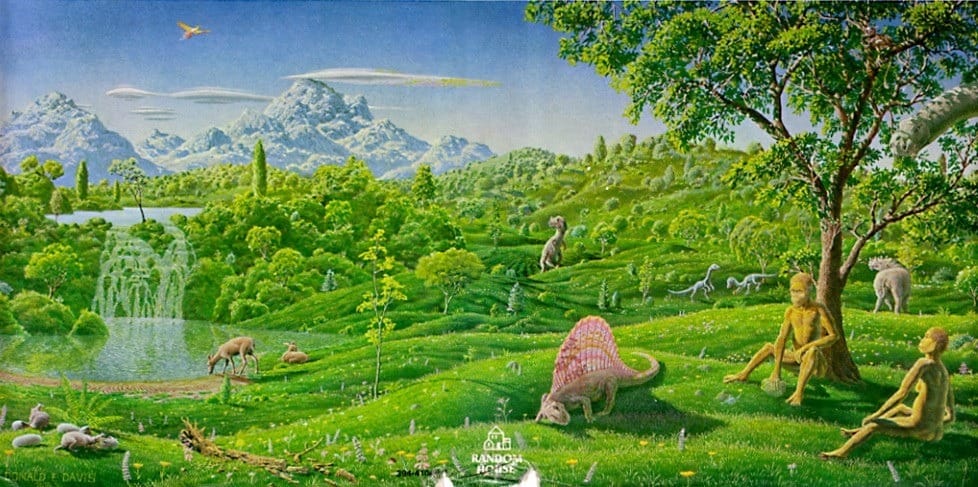
Here's a smaller but cleaner version, although even this one has the Random House logo on it – if anyone has a big scan of this without any text, get in touch!
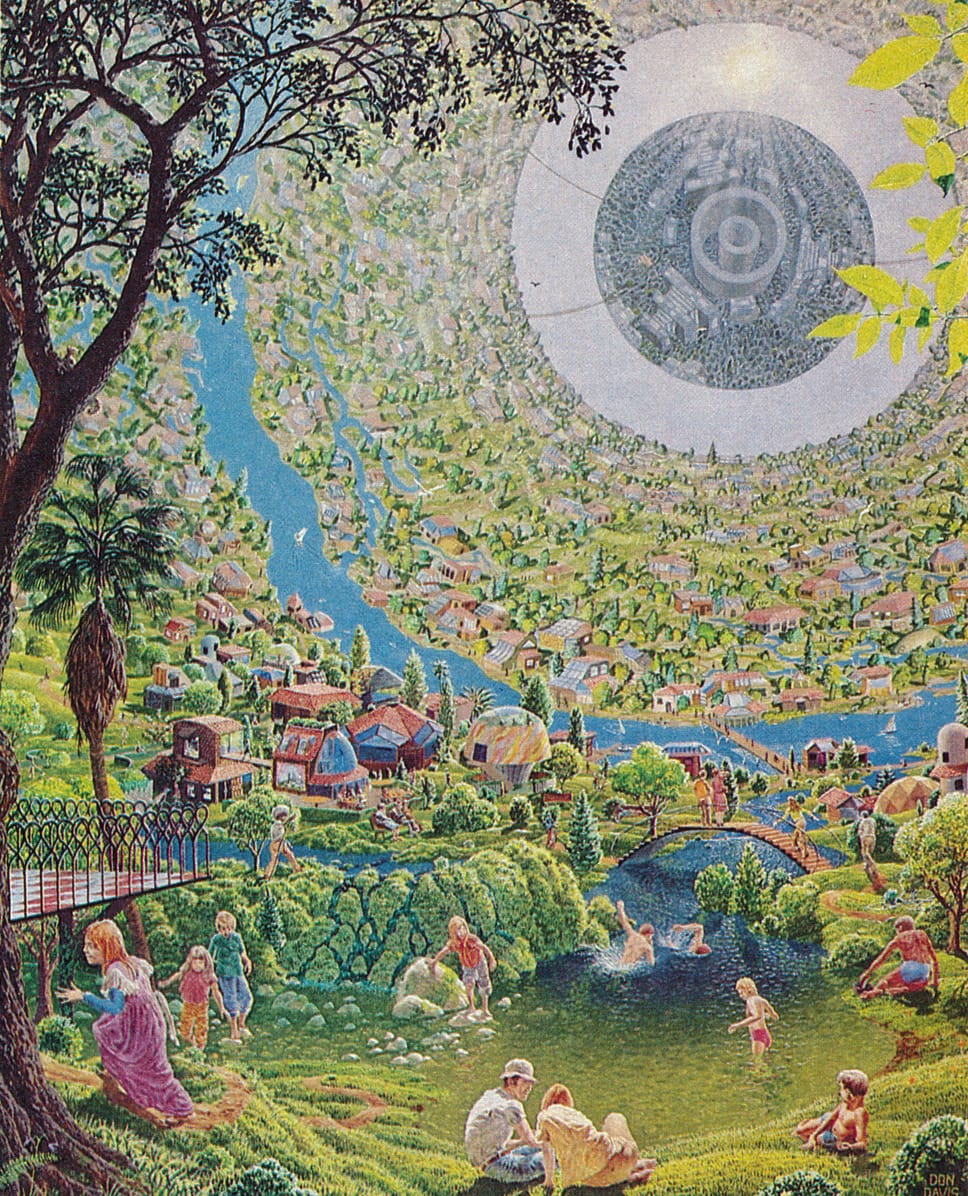
Don Davis also blessed us with another equally green landscape. This one's from the future, with this 1978 Future Life illustration depicting the suburban interior of a space colony.
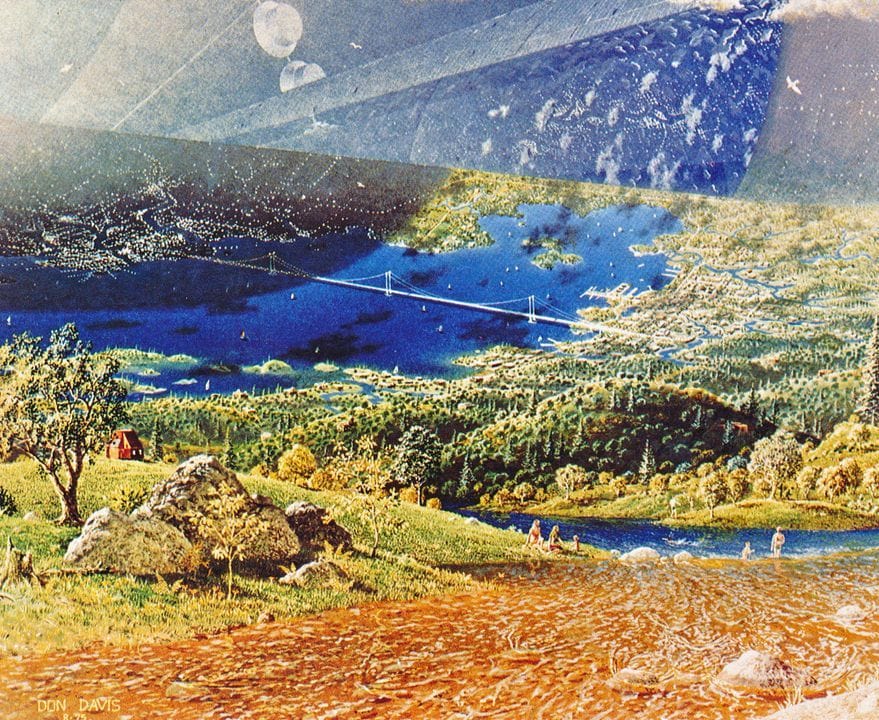
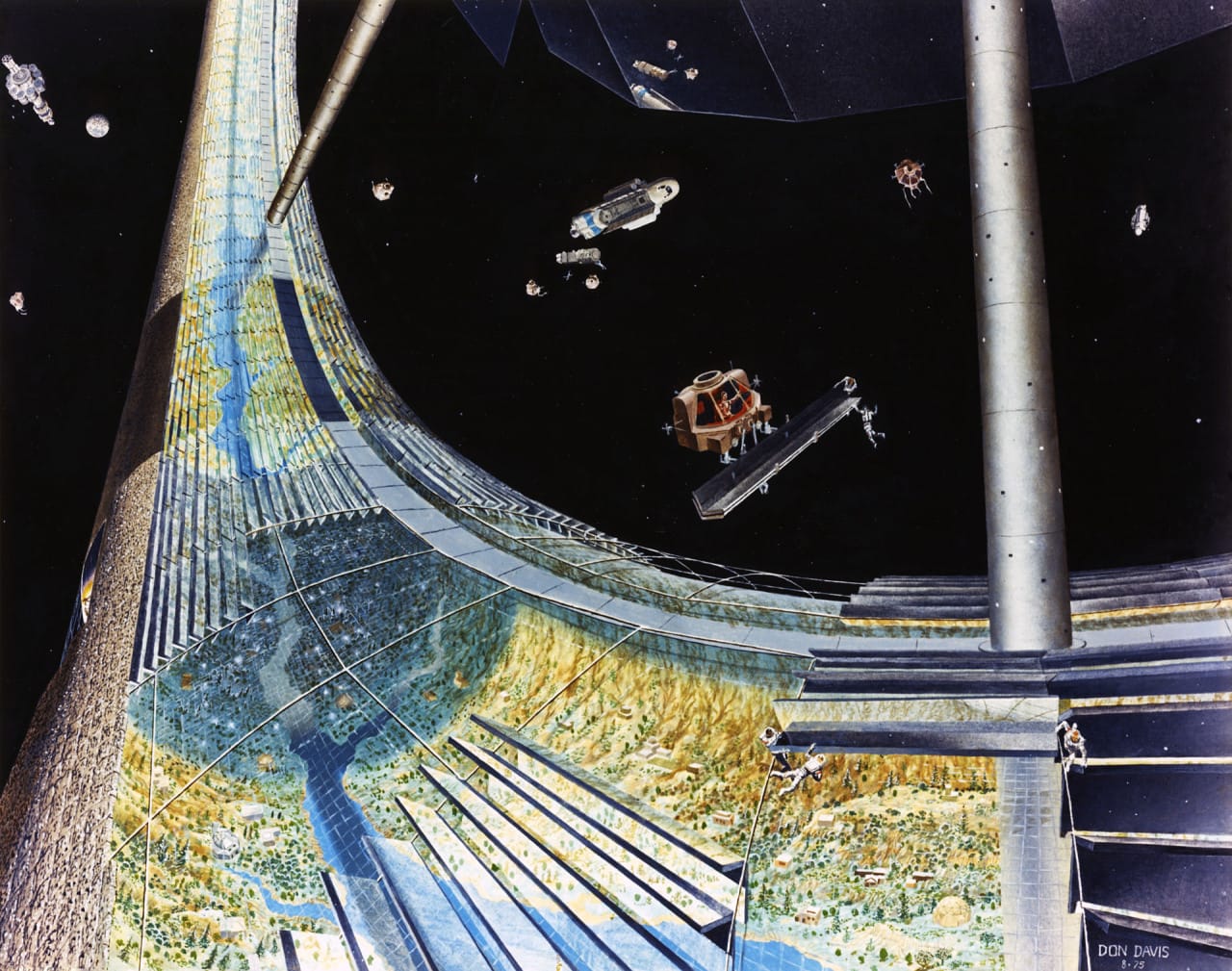
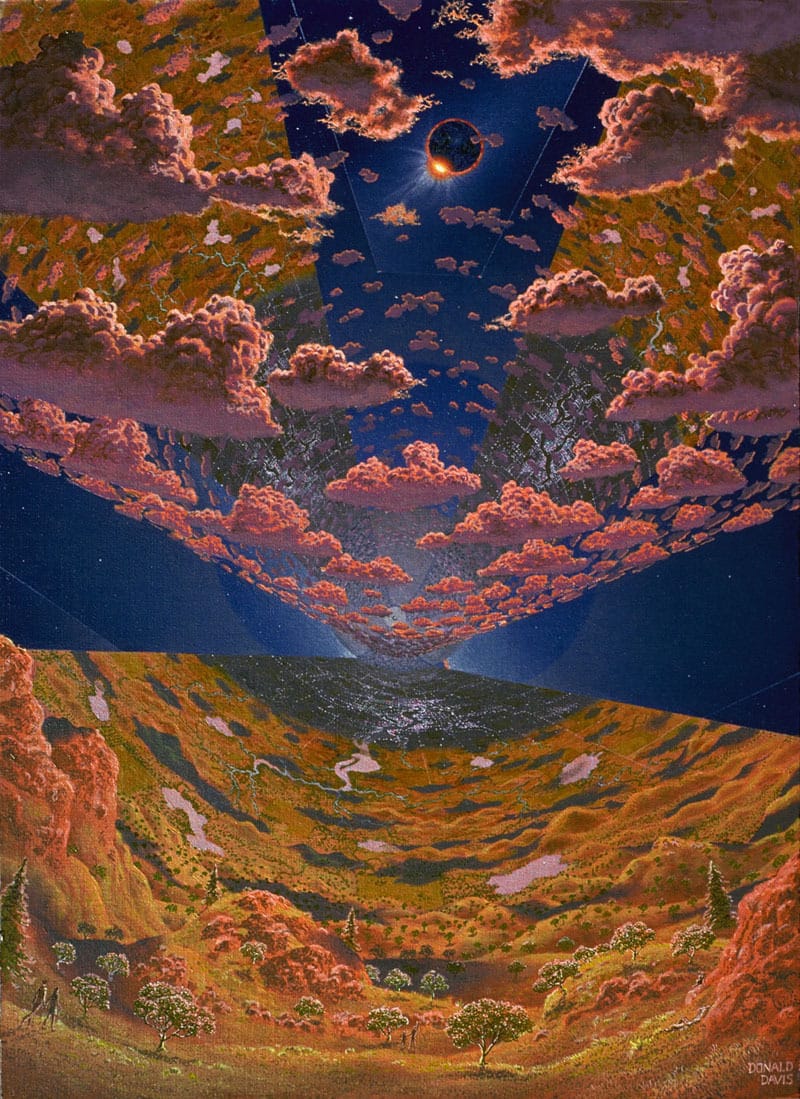
Don Davis illustrated even more wide open fields on massive space stations for his 1975 NASA studies.
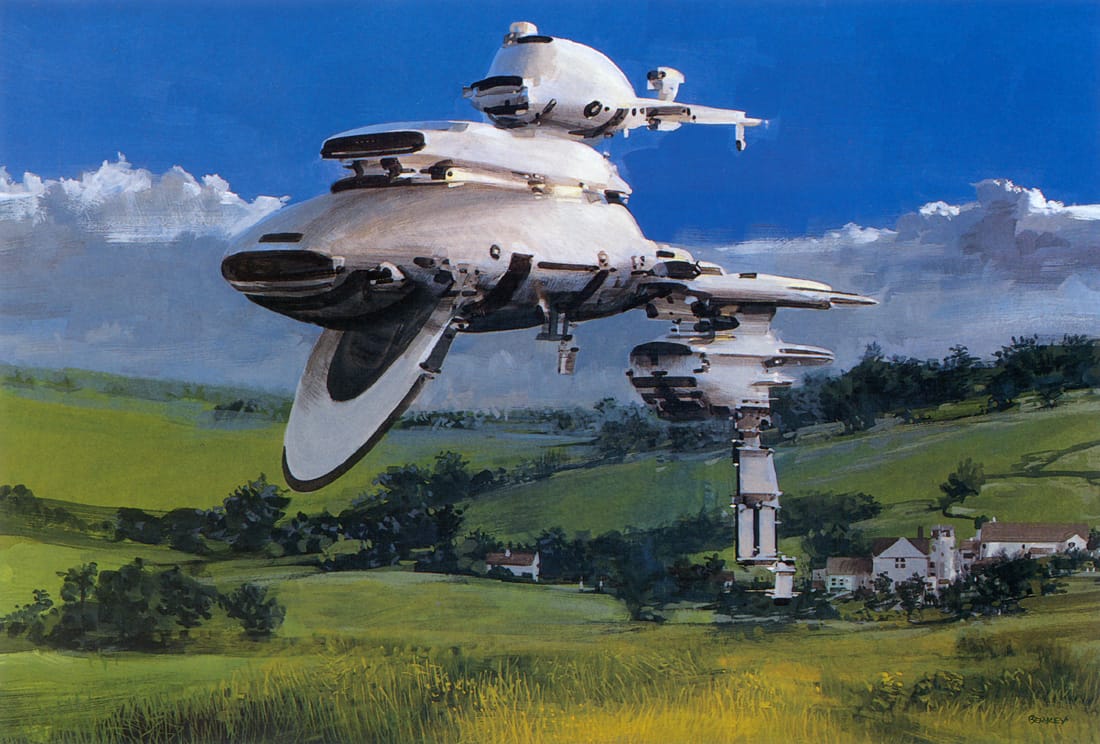
Back on Earth, other artists incorporated pastoral scenes into their shots of wild spaceships. Here's a John Berkey.
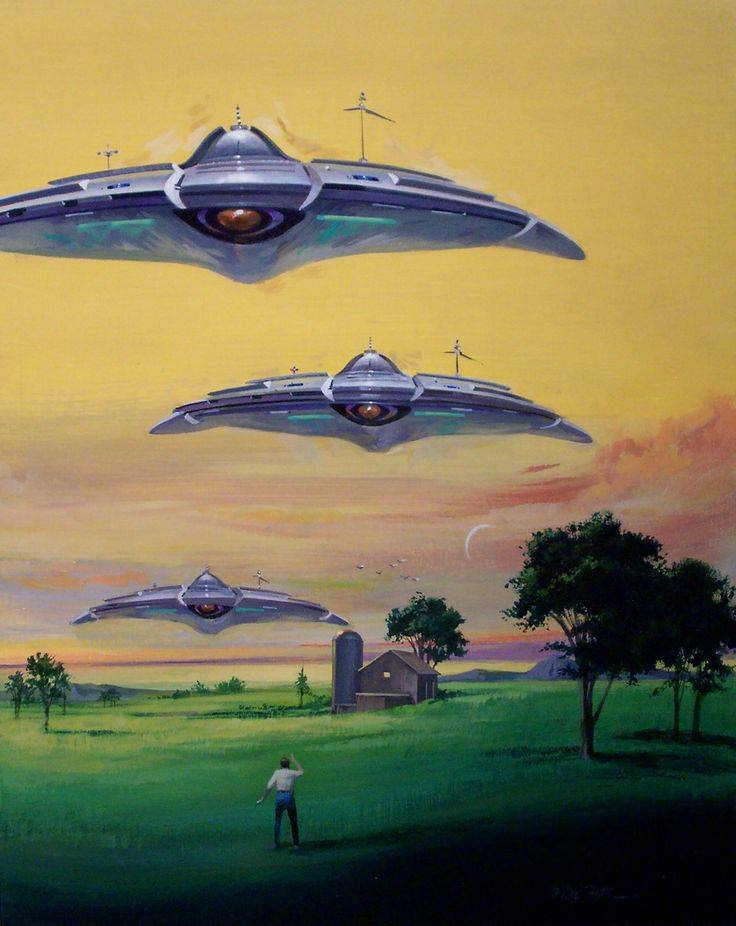
Vincent Di Fate's "Field Full of Saucers" is another great example.
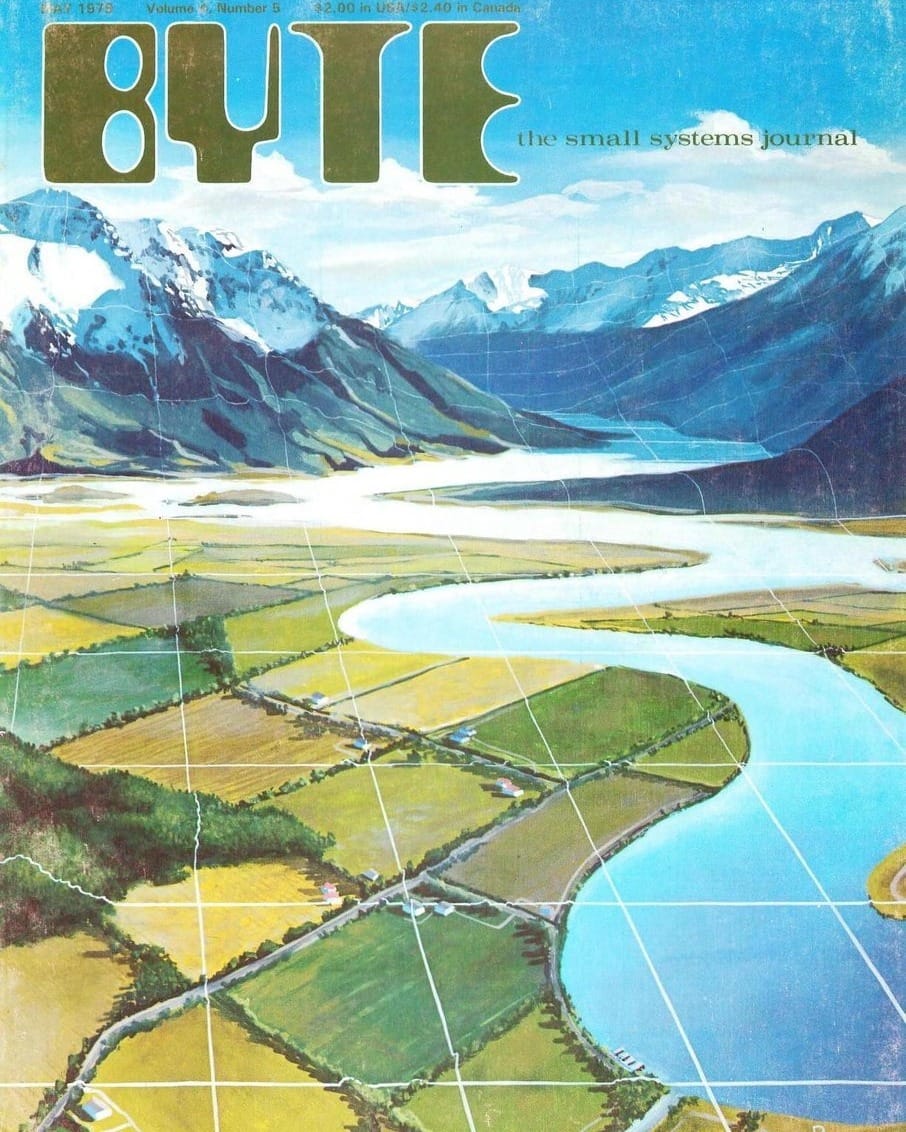
Robert Tinney's May 1979 Byte magazine cover throws an additional grid over the existing plots of land.
Jim Burns has a few examples of fields and spaceships. Here's his 1979 cover for Farnham's Freehold, by Robert A. Heinlein.
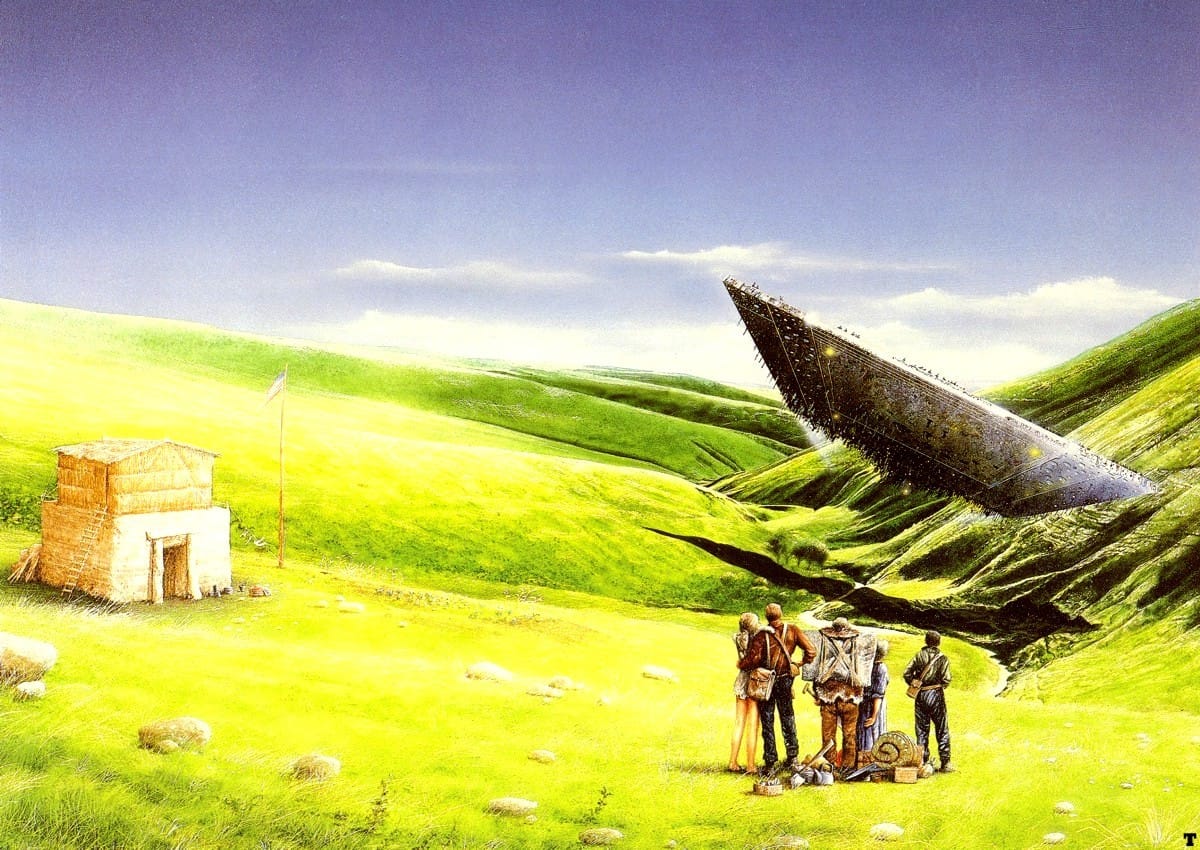
This Jim Burns artwork was published in Great Space Battles, a 1979 Terran Trade Authority book by Stewart Cowley.
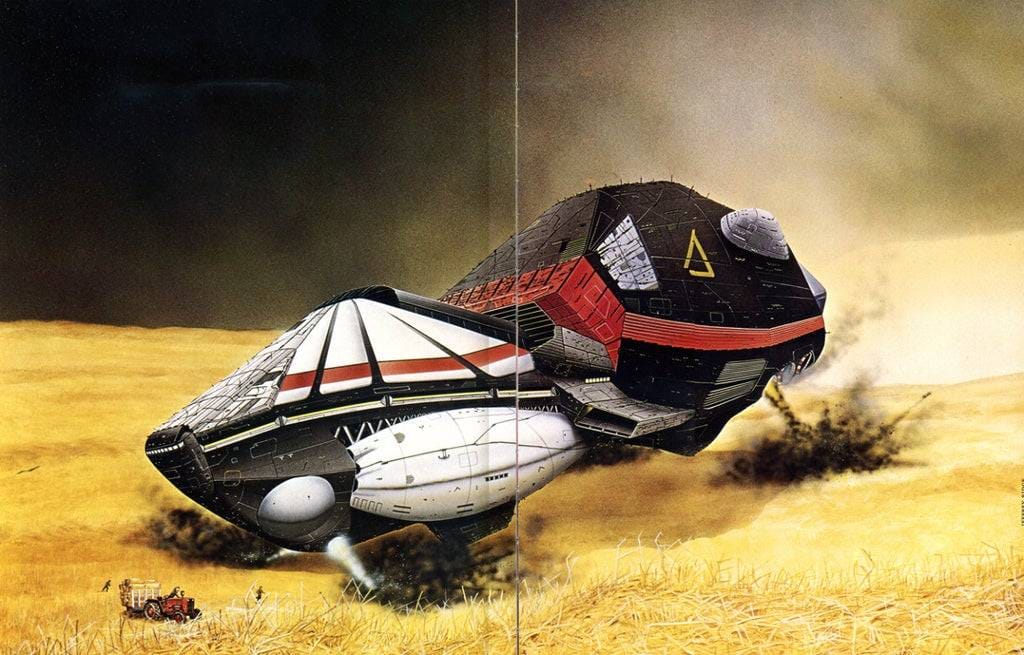
Finally, there's this Jeff Ridge illustration of a spaceship launching from a Nebraskan wheat field, which also showed up in a Terran Trade Authority book.
I can't imagine those tiny farmers are thrilled about the crop circles they'll be left with.
Cool Links
A "horde of sphinxes from NYPL Digital Collections and Wikimedia Commons."
The Pink Panther Theme Was WAY More Intricate Than You Remember - Charles Cornell
17 minute YouTube video of a guy nerding out about the Pink Panther theme.
Indiana Jones and the Last Crusade: Learning from Stoppard
RIP Tom Stoppard. Here's an old article listing the biggest changes he made in his uncredited rewrite of Indiana Jones and the Last Crusade. The same author has an even more detailed guide to Stoppard's changes online. (It doubles as a good explanation for why Indiana wannabes like the Uncharted movie and Fountain of Youth missed the mark, imo)
Music rec: The 80s Running Man soundtrack has chill cyberpunk vibes, mostly thanks to that great main theme.
Next: Time Machines