Robert Tinney: Byte Magazine and Beyond
Robert Tinney's a big name in retro tech. Here's a collection of lesser-known facts and art from the famed Byte magazine cover artist.

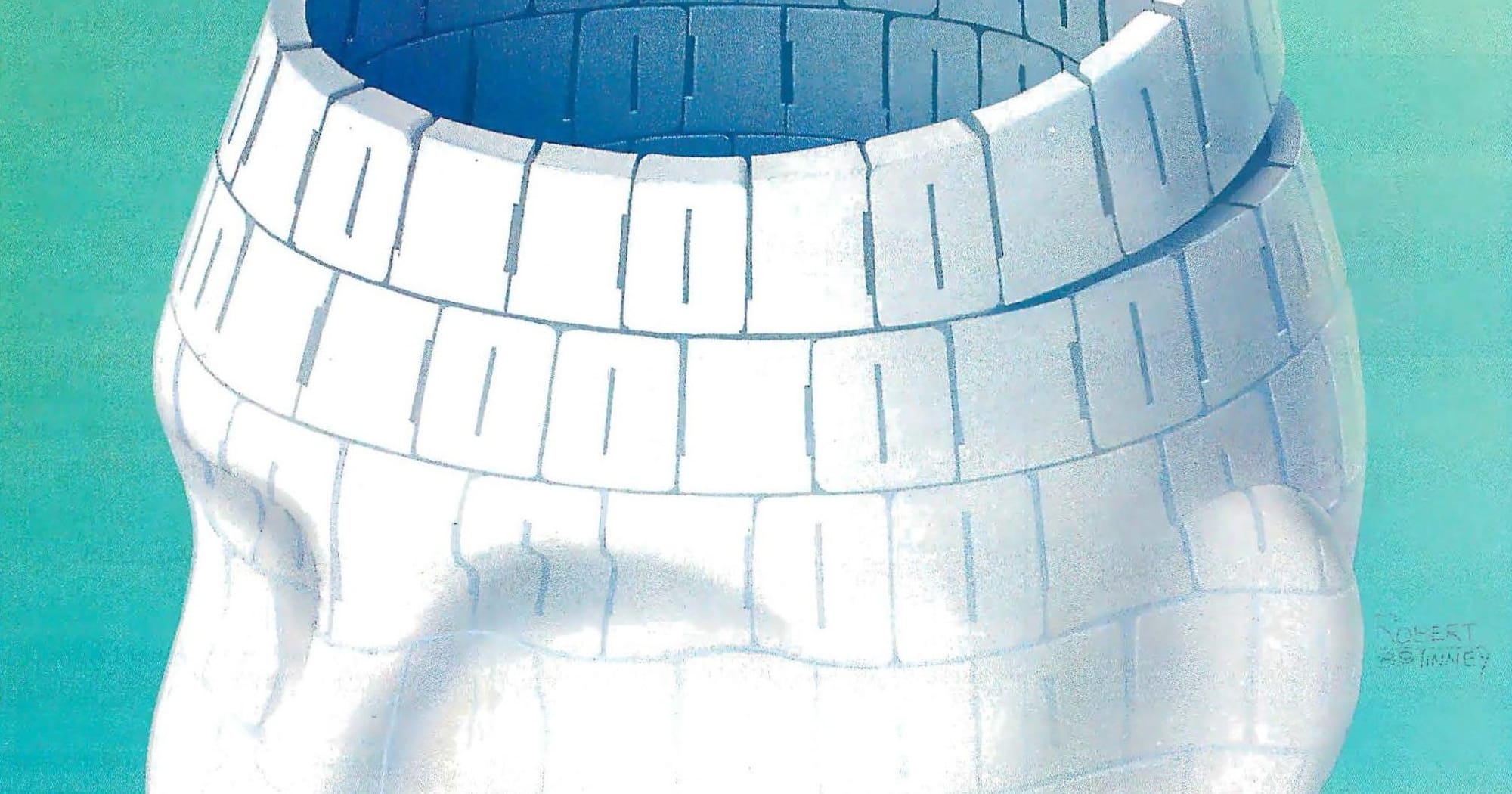
Robert Tinney passed away on February 1st, 2026.
If you were into computers in the '80s, you may not know his name, but you definitely know his work: He was the artist behind the beautiful hand-painted covers of the influential computer hobbiest magazine Byte from the December 1975 issue until the early '90s.
Here are two of his most well-known covers, which appeared back-to-back in April and May 1981.
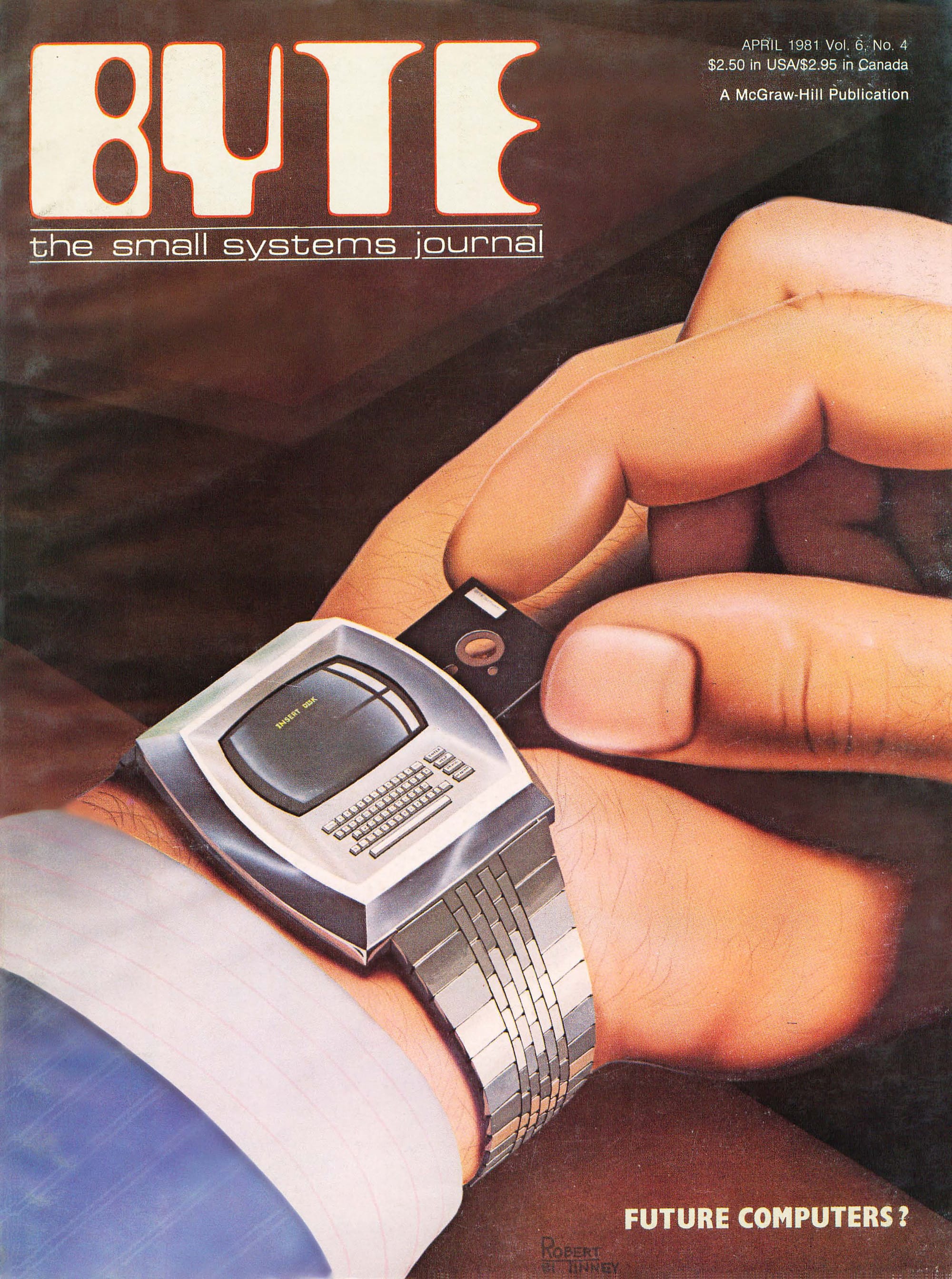
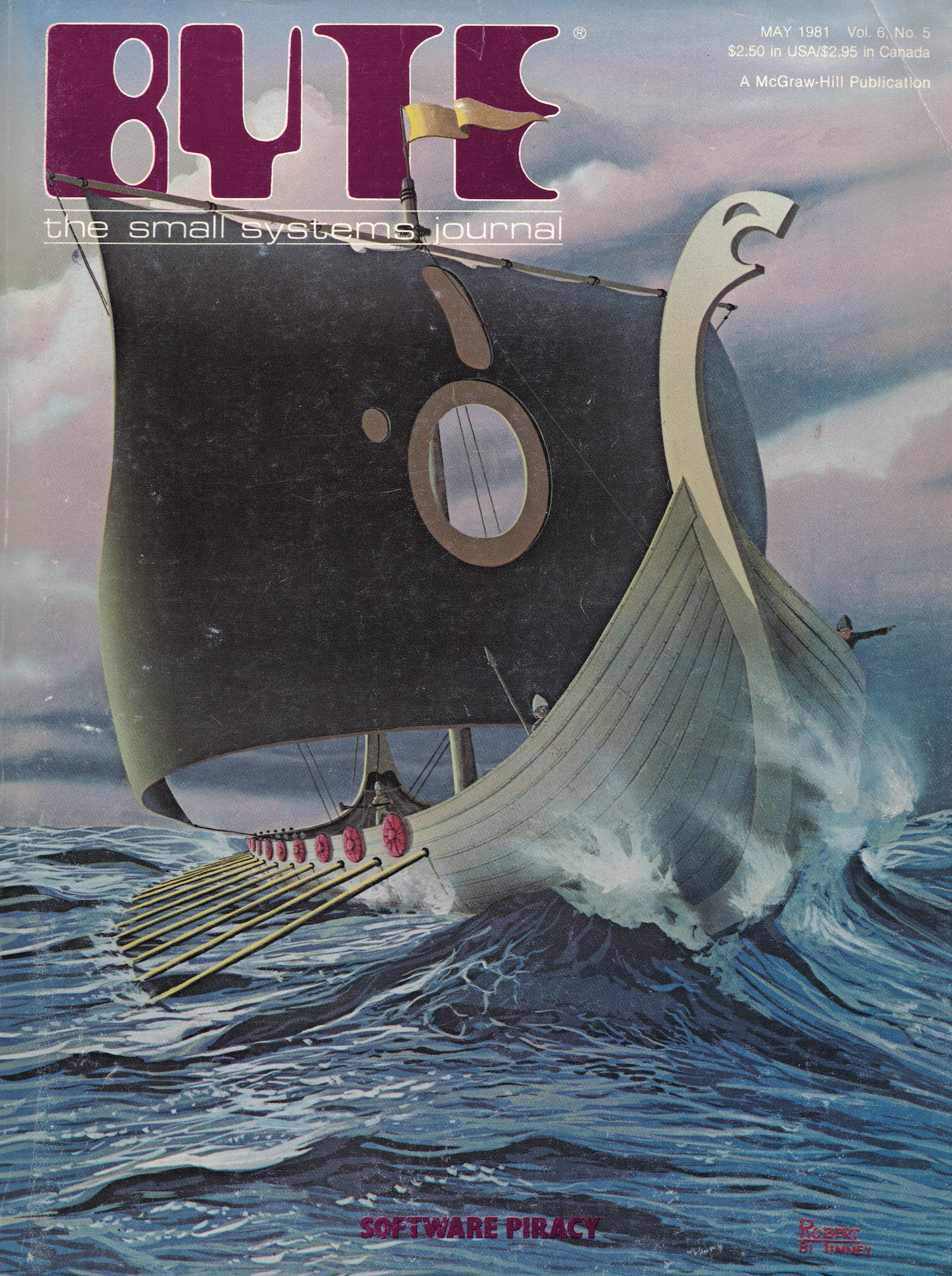
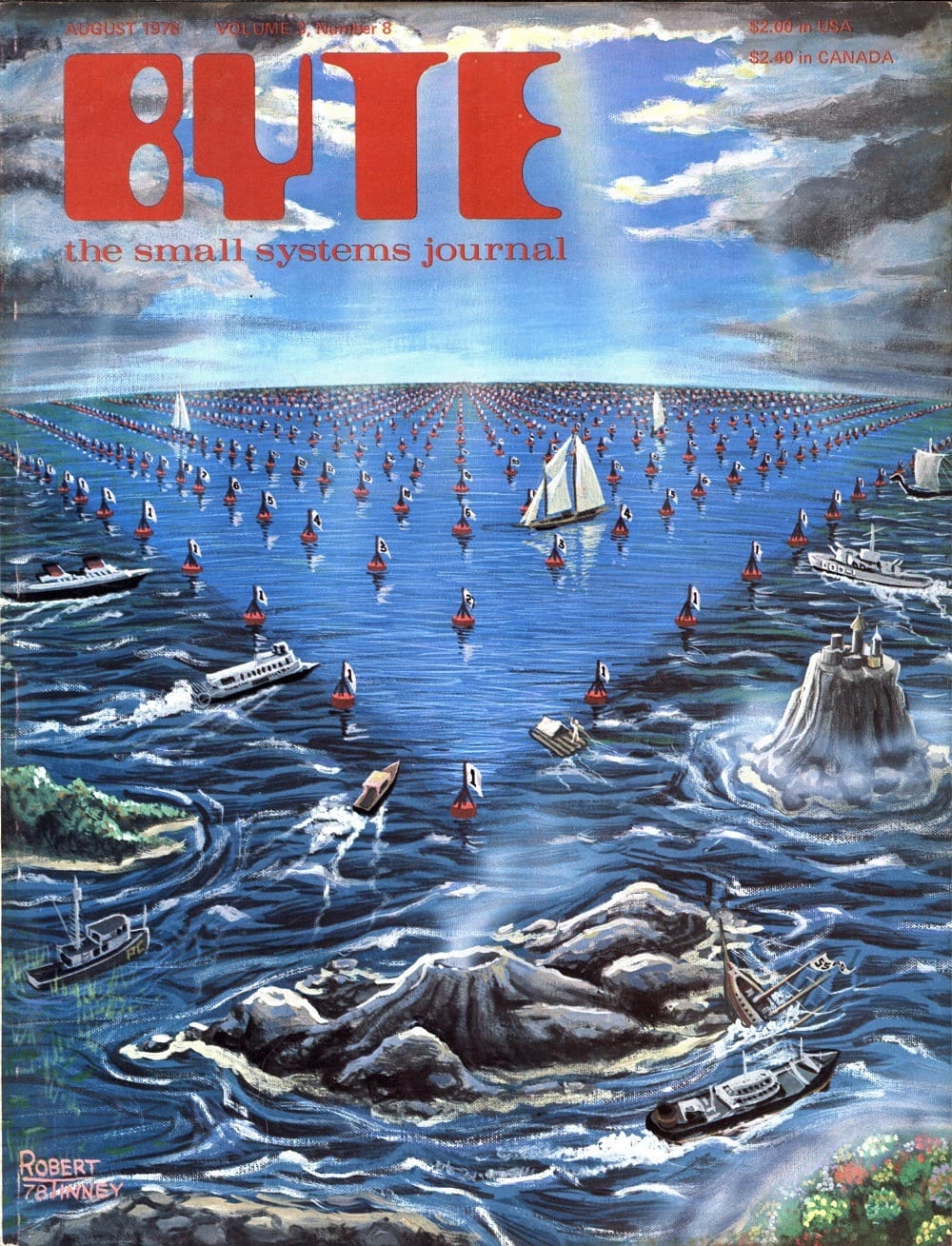
His style was frequently surreal, serving up a visual pun illustrating that issue's cover story – like the floppy disk vikings above, for a story about software piracy, or his "Pascal’s Triangle," an August 1978 Byte cover that depicted an inverted Bermuda triangle to eulogize the Pascal programming language.
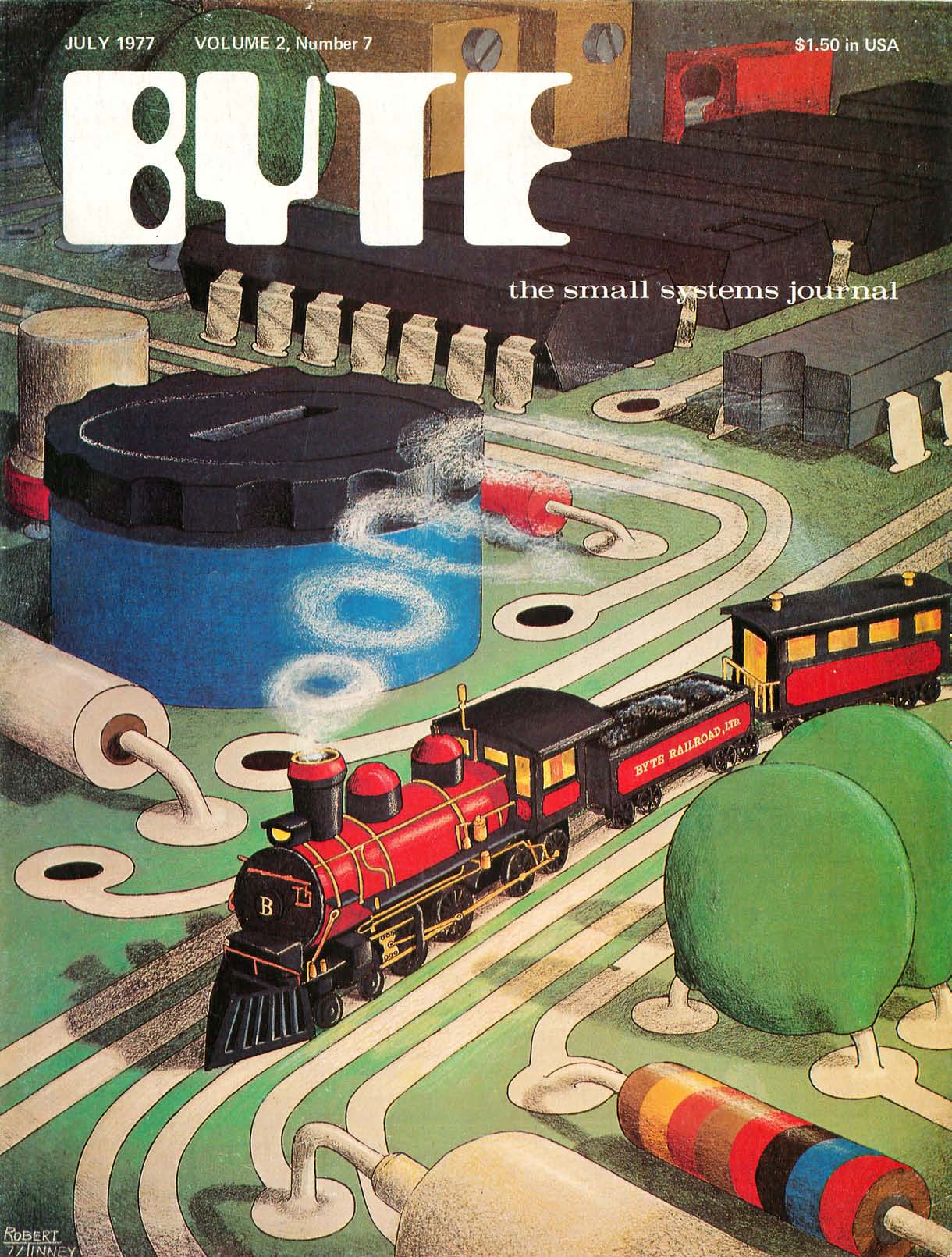
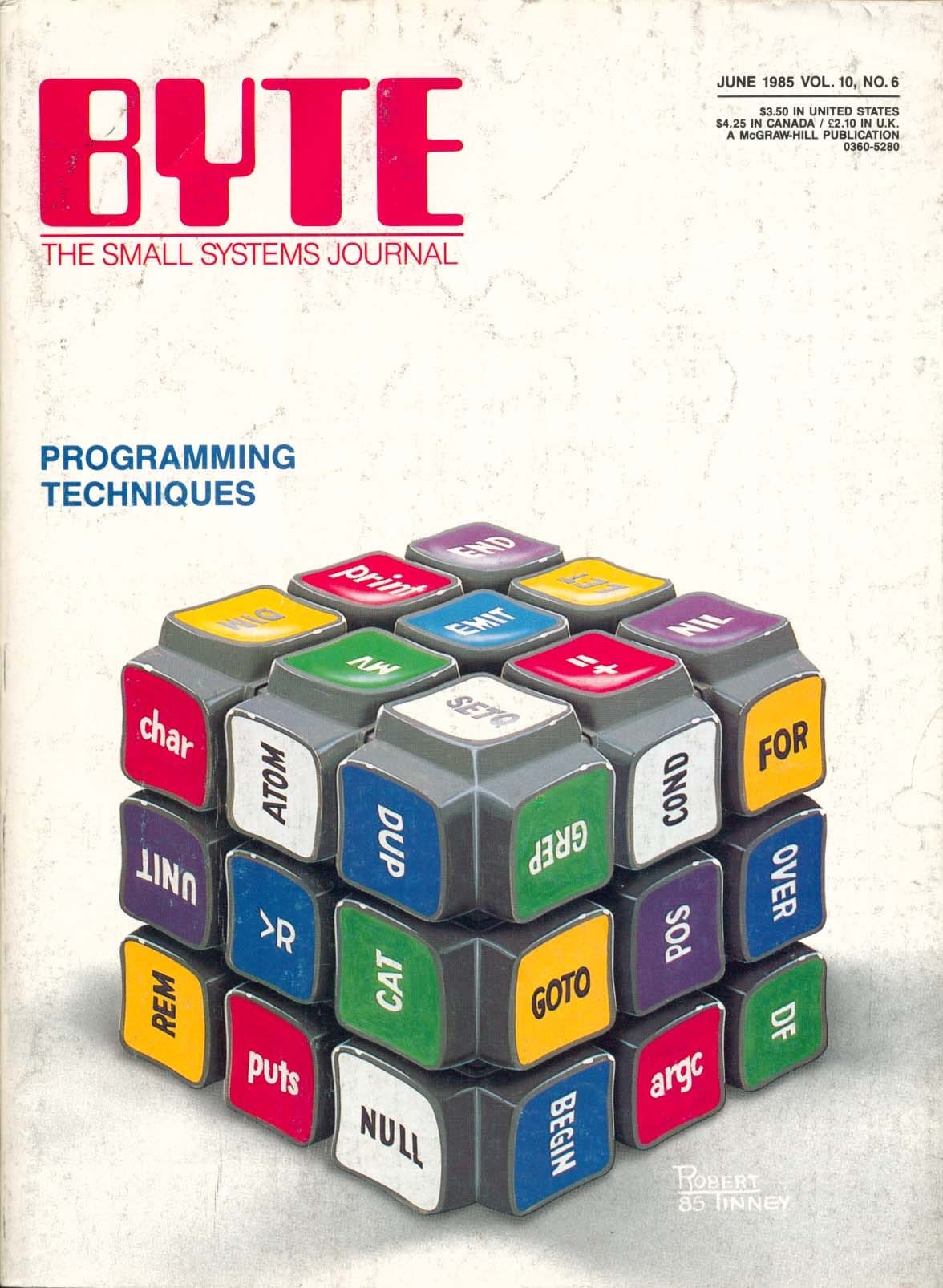
Byte magazine debuted in 1975, the same year that personal micro-computers became available to the general public, albeit in the form of kits that they needed to personally assemble.
It was just the second-ever publication dedicated to micro-computers in general (rather than the broader electronics hobby), after Creative Computing's debut a few months earlier.
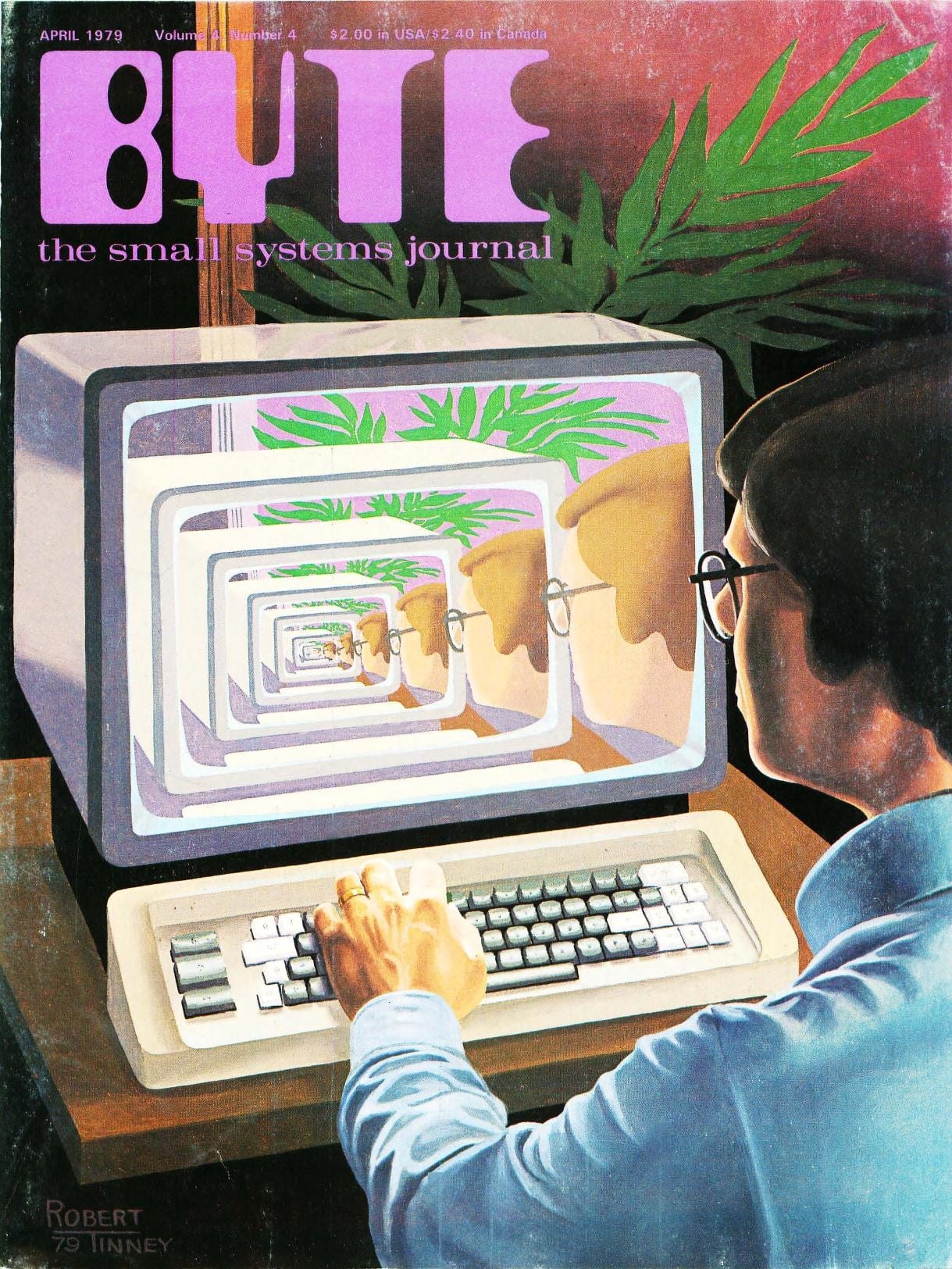
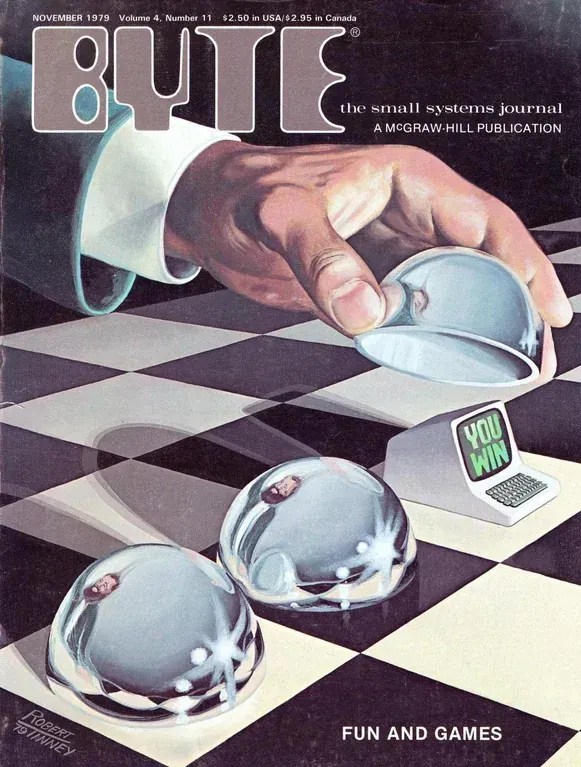
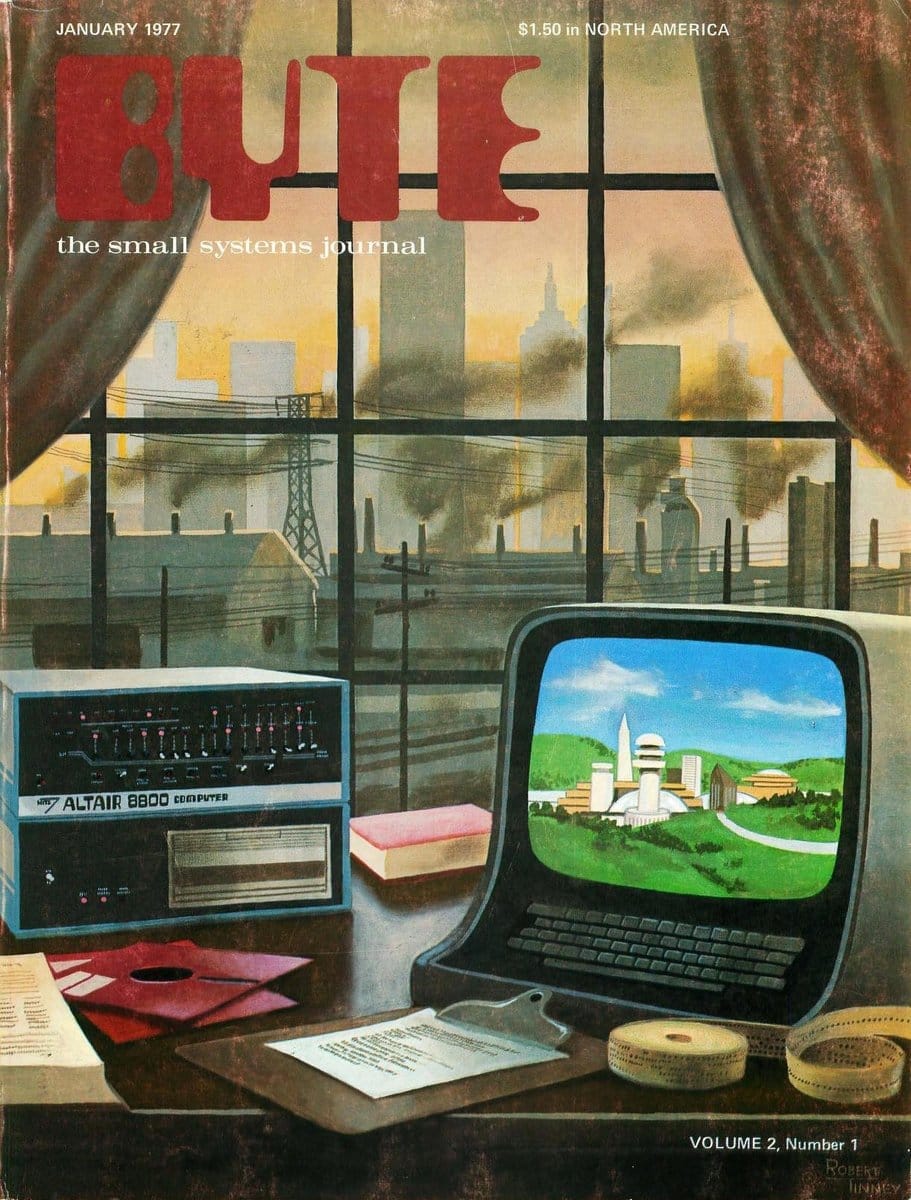
Personal computers might seem inevitable today, but selling them as inevitable was the work of decades, with Byte and Tinney's work at the forefront the whole way.
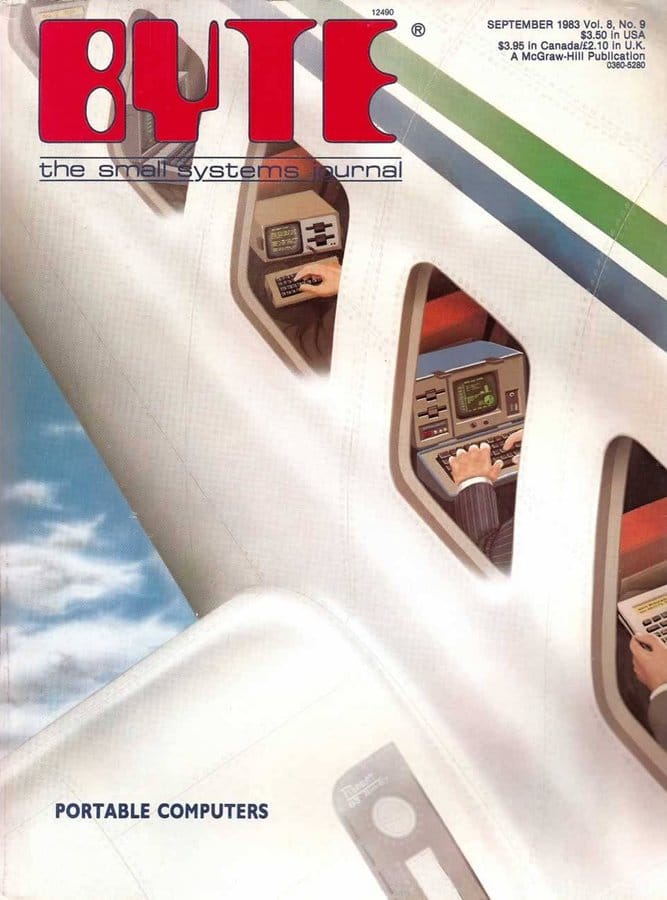
Many covers would imagine a future in which computers were everywhere. My pick for his most accurate prediction is his September 1983 cover, featuring a world in which everyone works on their computer during airplane flights.
Tech is marketing, and Tinney's clean, airbrushed Designer gouache style felt both playful and sophisticated; the perfect format for the era's optimism and hype.
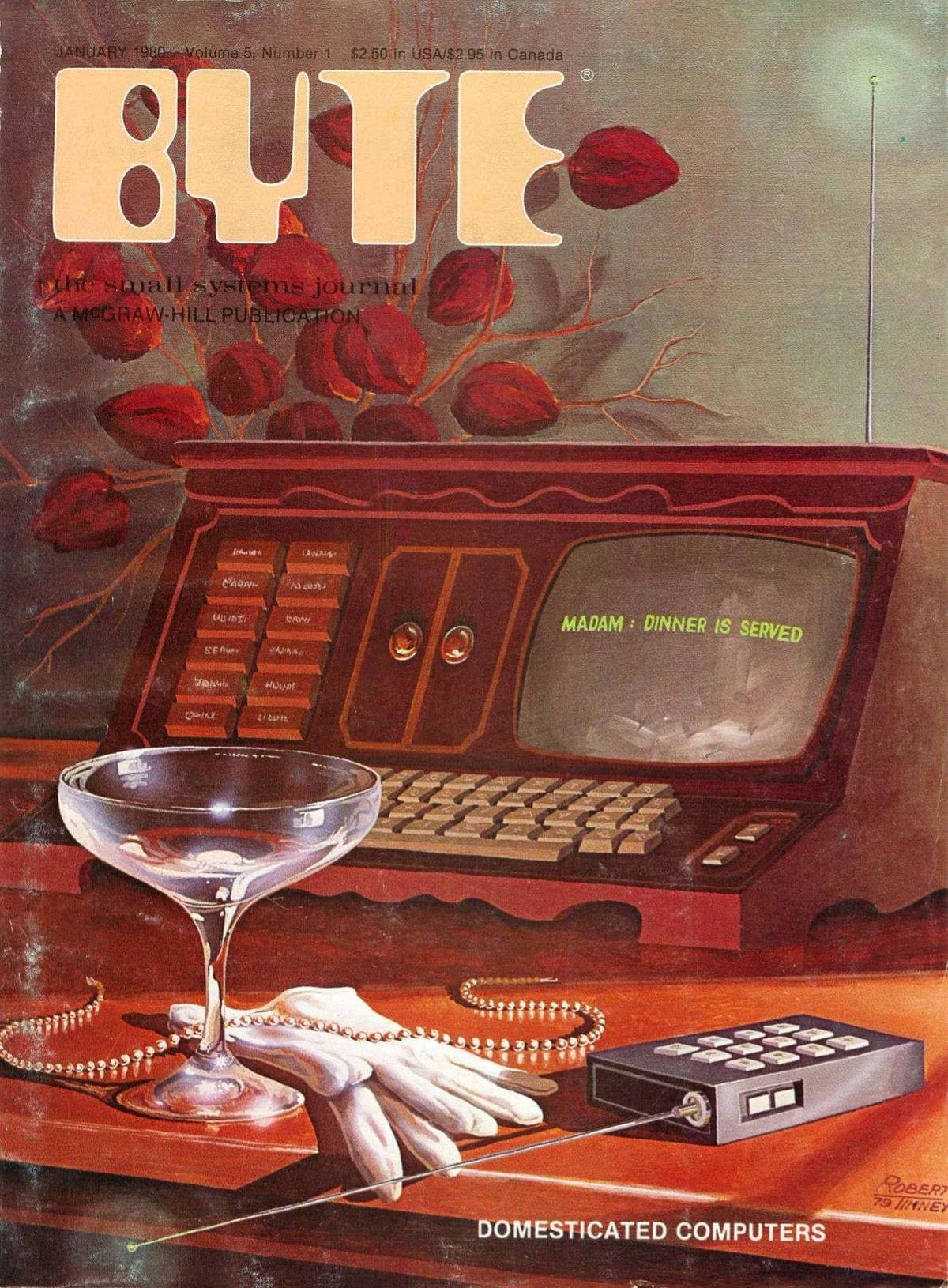
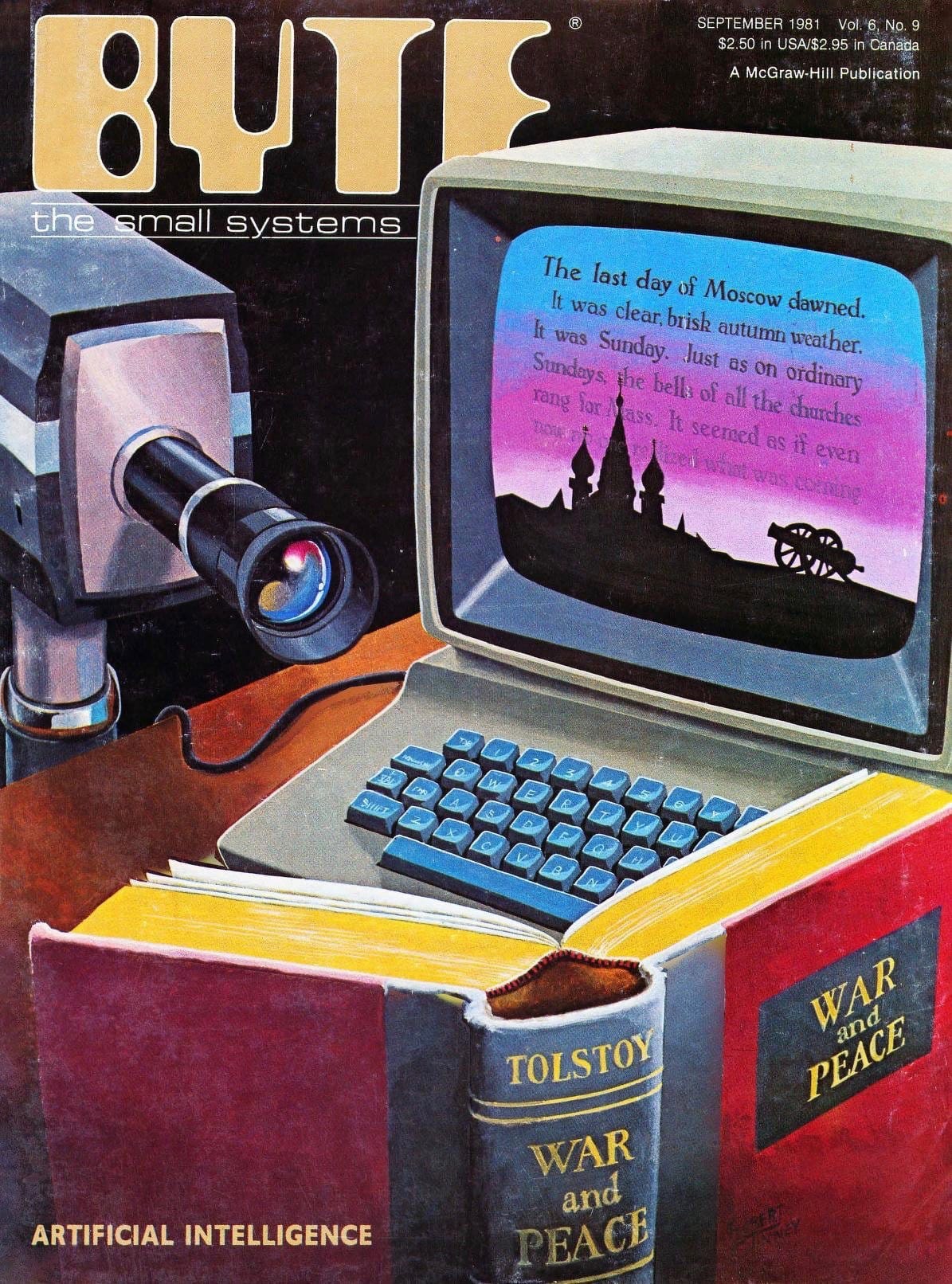
Here are a few Tinney covers where computers replace chores and display artificial intelligence, a few concepts that Silicon Valley is even more preoccupied with selling to the world today.
Tinney was also a big libertarian, an ethos he shared with Byte founding editor Carl Helmers, who initially brought Tinney onboard in 1975.
In fact, it's deeper than that: I haven't seen this mentioned anywhere else online, but according to a 2013 talk from Helmers himself, the two first met in Houston in 1972 when Helmers bought Tinney's black and white print of a "graphic on an Atlas Shrugged theme of somebody holding up the world."
That's right, Tinney's entire Byte career emerged from his love for Ayn Rand.
It's another example of how Tinney and Byte's perspective dovetails with the history of Silicon Valley, which maintains a heavy libertarian streak to this day despite the cozy relationship computing systems have long held with state power.
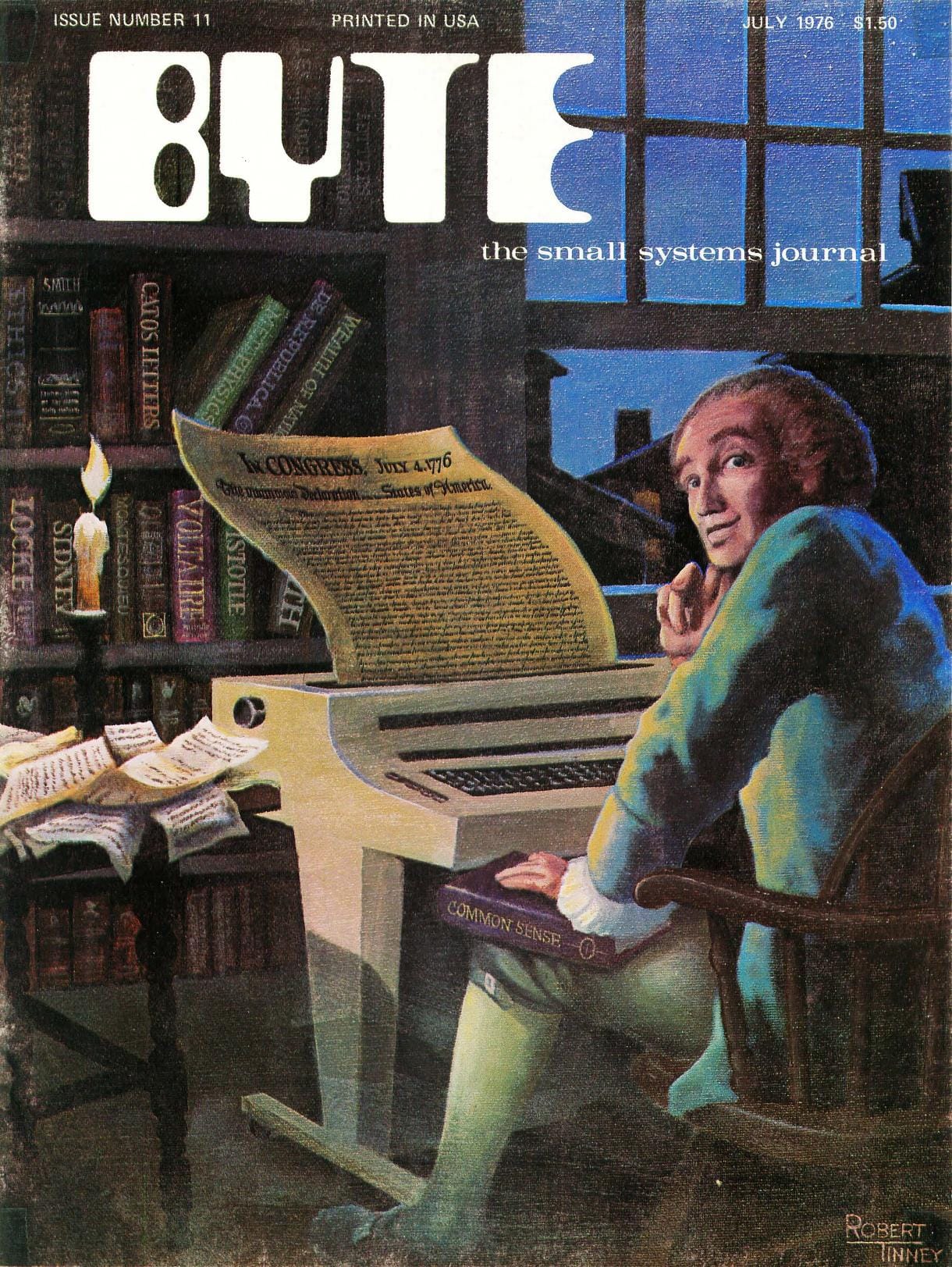
It's tough to overstate Tinney's impact, but if you read through the comments on his Ars Technica obit, you might get an idea. Here are just a couple:
"Byte magazine had a huge impact on my career choice, in no small part because the covers made the whole computer field seem more elegant and sophisticated."
"I drove 200 miles to buy my first issue of Byte. The one with Tinney's painting of Newton under the apple tree. All the way home I kept glancing over at it, Tinney riding along with me on the passenger's seat. RIP Robert Tinney. Thank you for the memories."

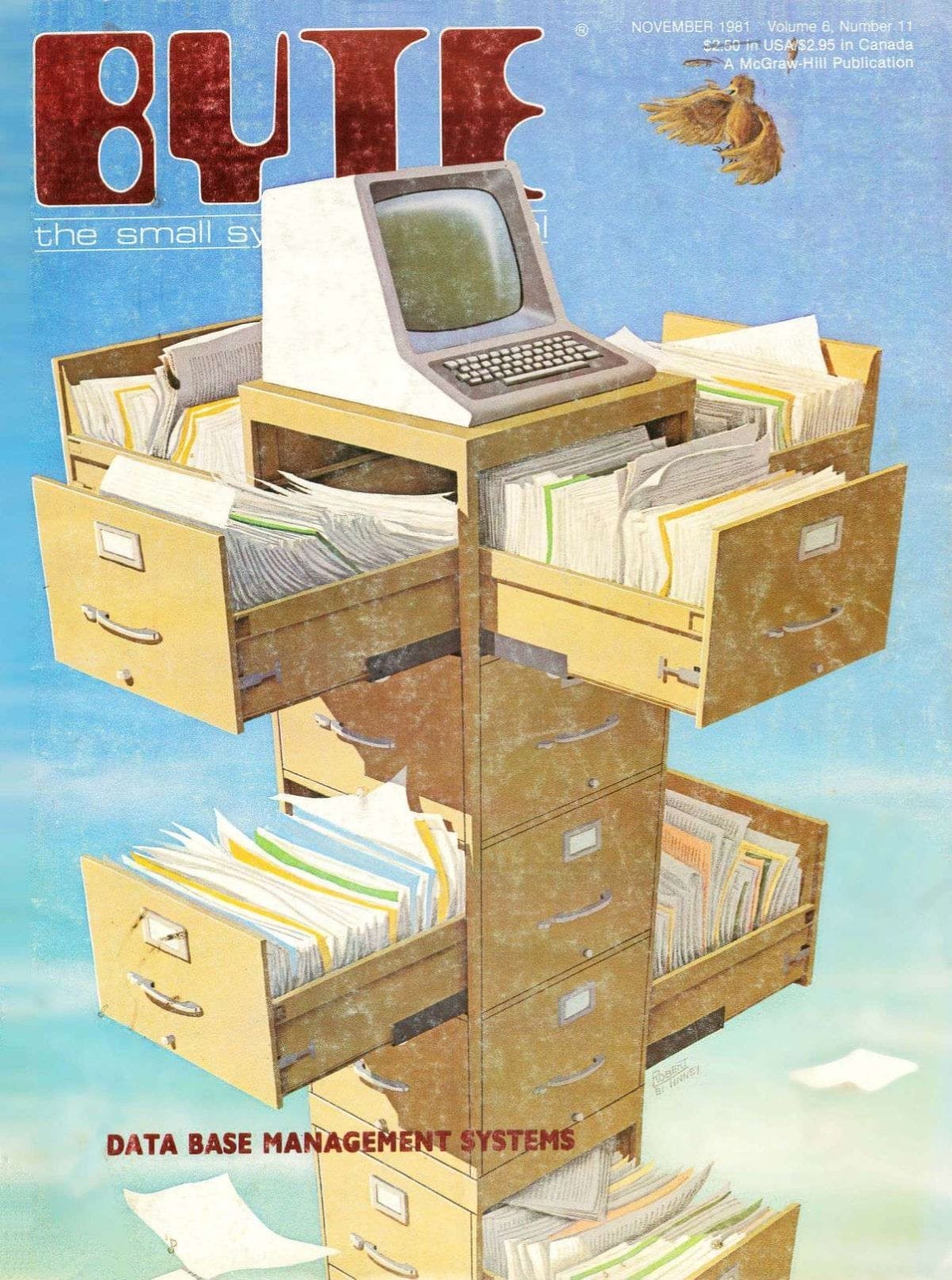
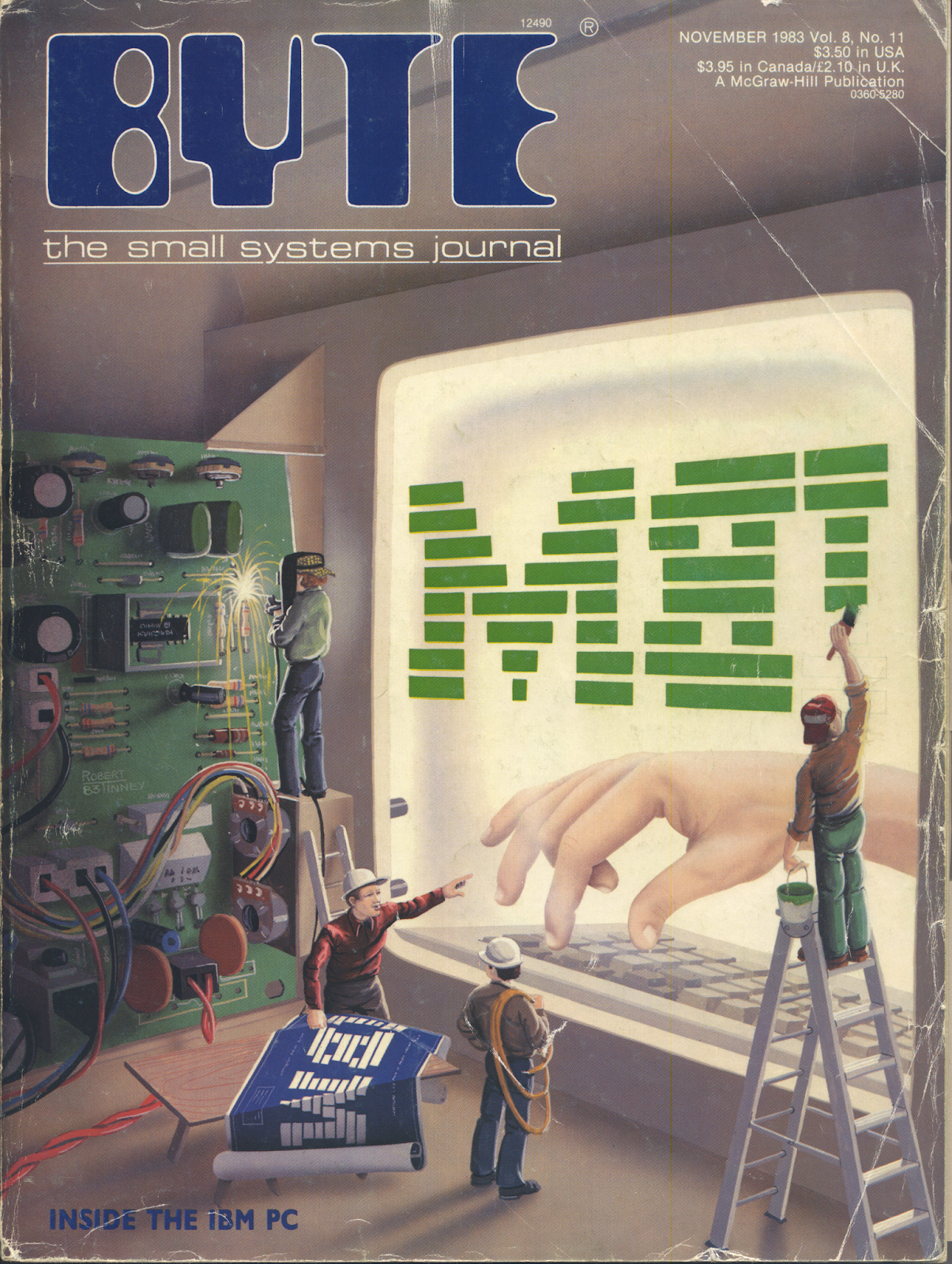
Tinney never produced an art collection dedicated to his work, and many of his original paintings for the Byte covers have been lost. Here's his explanation in a 2006 interview:
"For the first few years BYTE kept the original paintings and framed them for display in their offices in Peterborough, NH., where I’d see them when I made my yearly trek during the second week of October, during the autumn peak. Later the magazine gave the originals back to me — but unfortunately not before several of the really nice ones had been given away to big advertisers, or ended up on the walls of the McGraw-Hill Building in New York when the big publisher owned BYTE."
Here are a few originals that were all used for Byte, and you can find a few more being sold as prints on Tinney's official website here.
The site's operated by Tinney's stepson Stephen Hansen, who I spoke with in July 2022, when I added Tinney's work as a late addition to my science fiction art collection.
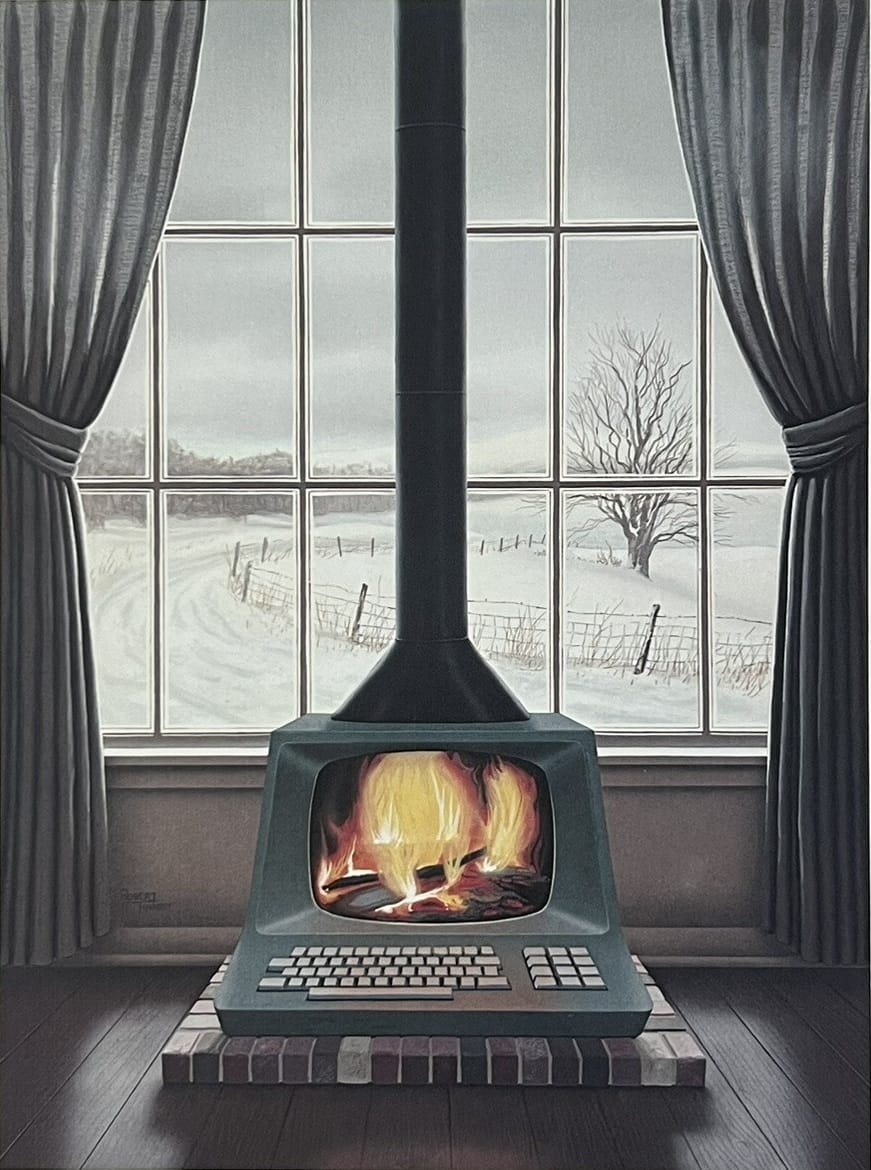
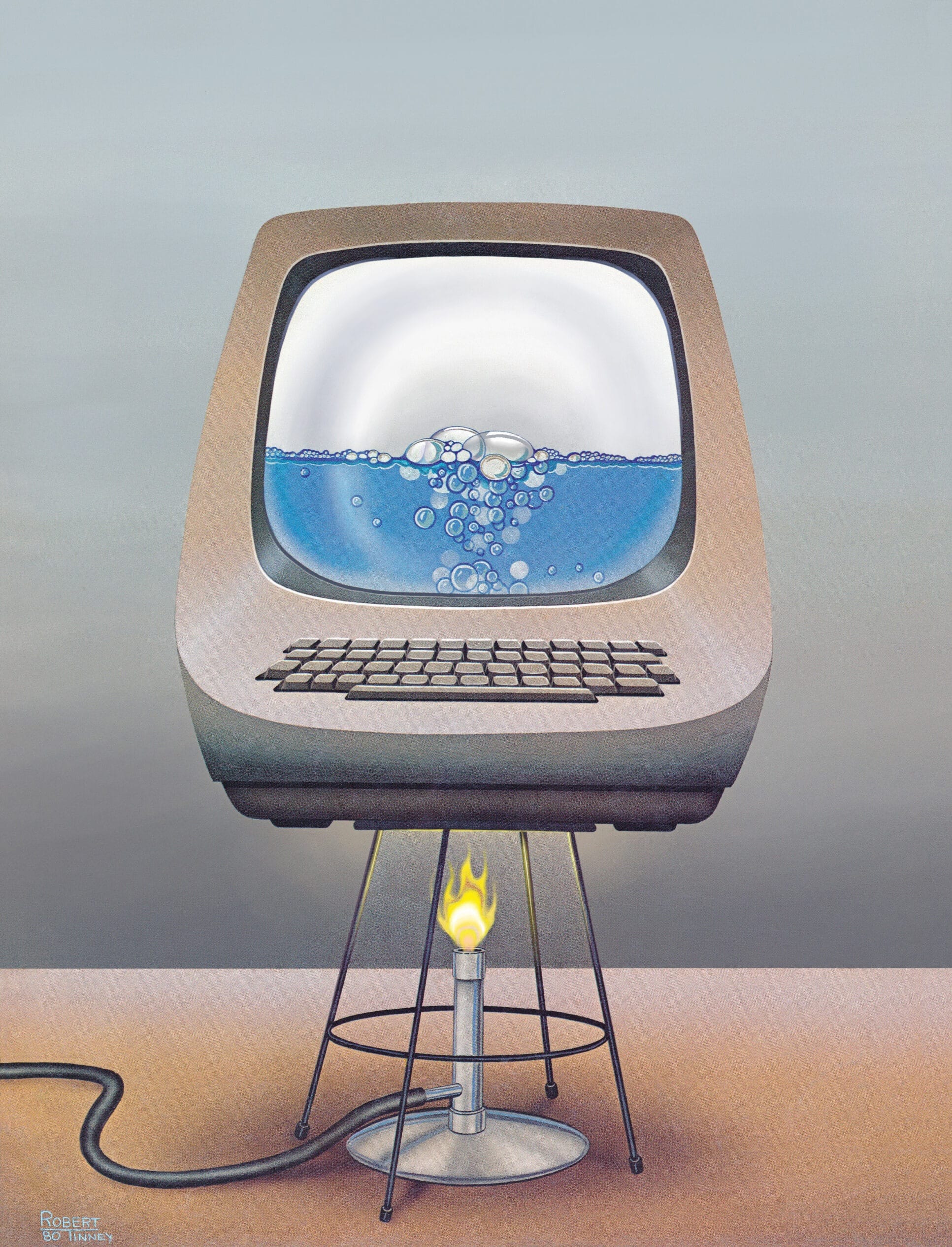
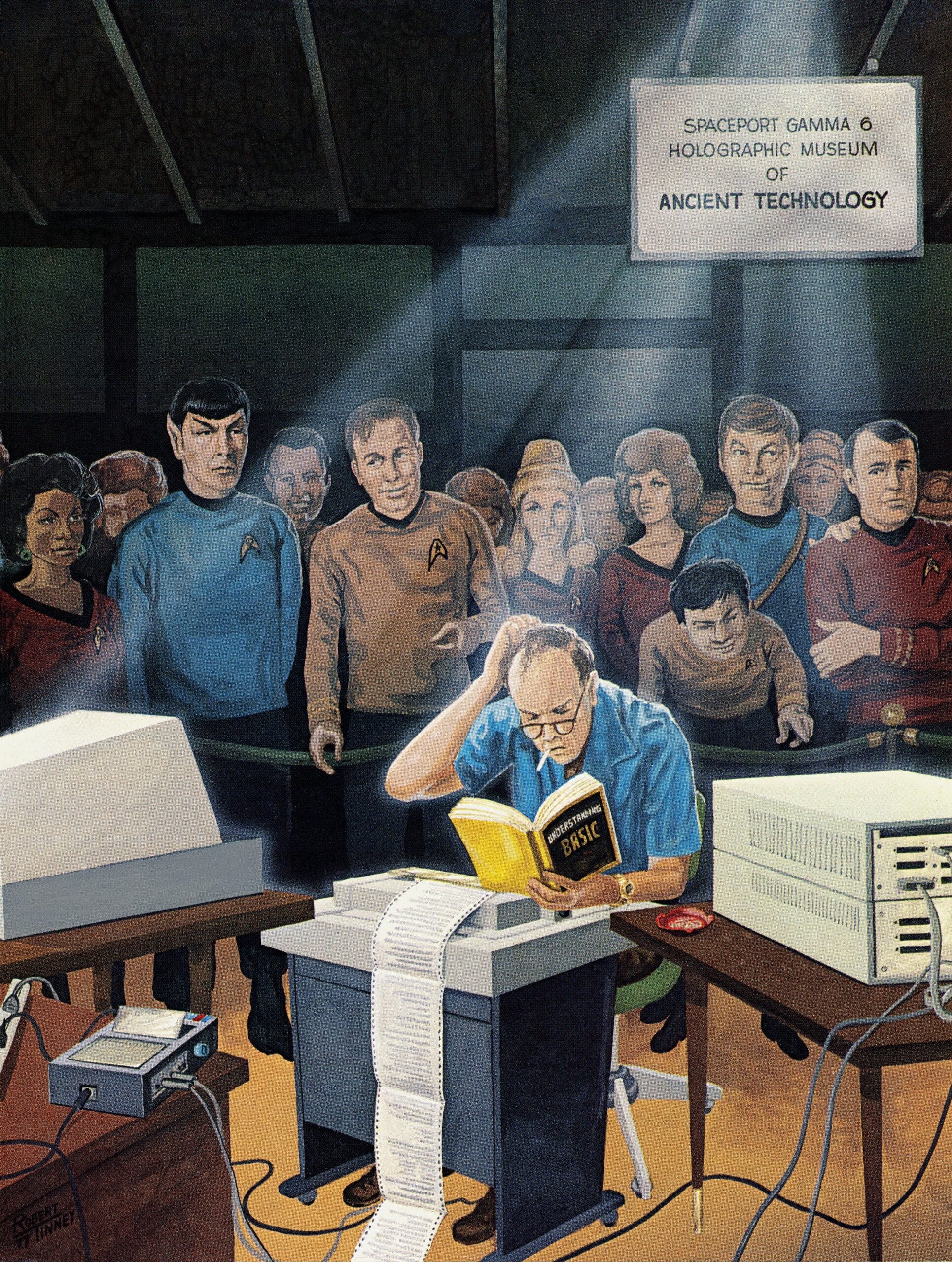
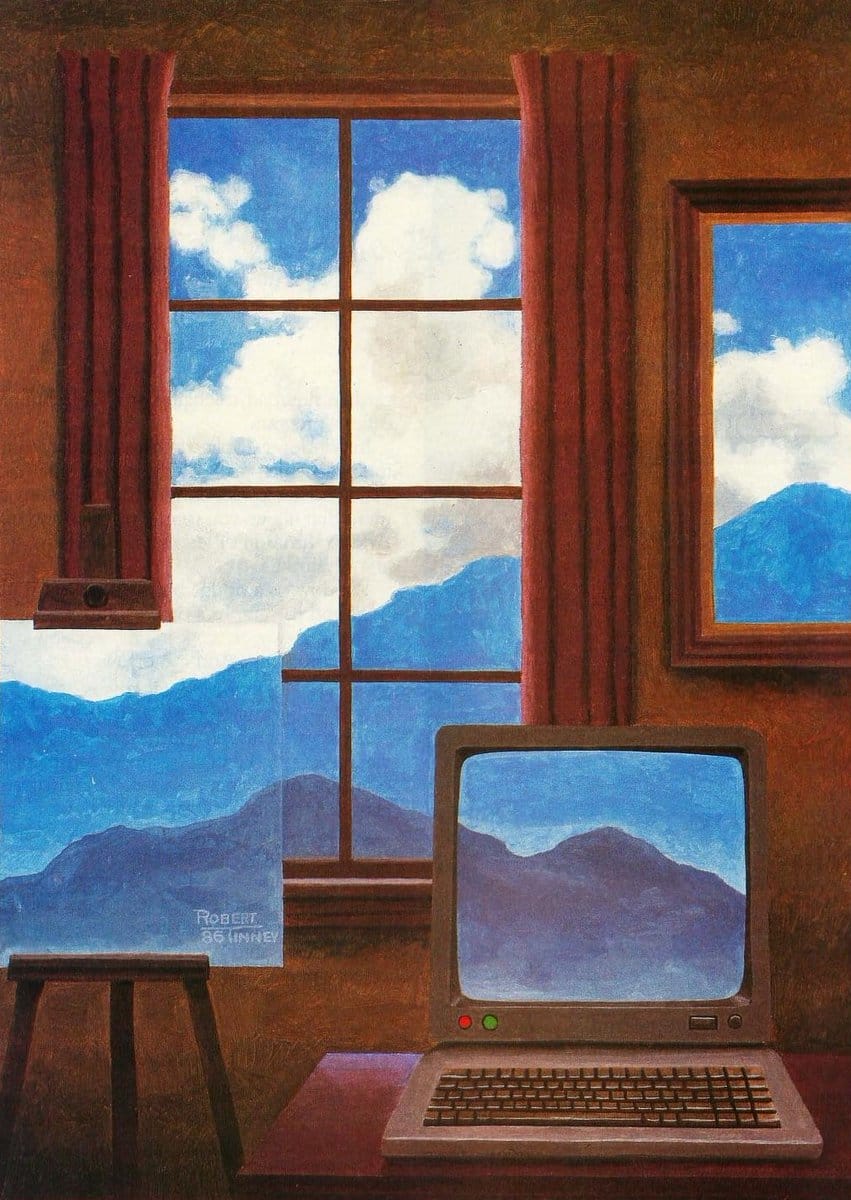
In the mid '80s, Byte magazine began commissioning Tinney less and less frequently, replacing his handpainted covers with product photography. The transition was more or less complete by 1989.
In his 2006 interview, Tinney mentions being brought back one time for a 15th anniversary issue on September 1990, but he appears to have forgotten that he was brought back once more for the June 1993 cover. Here are both.
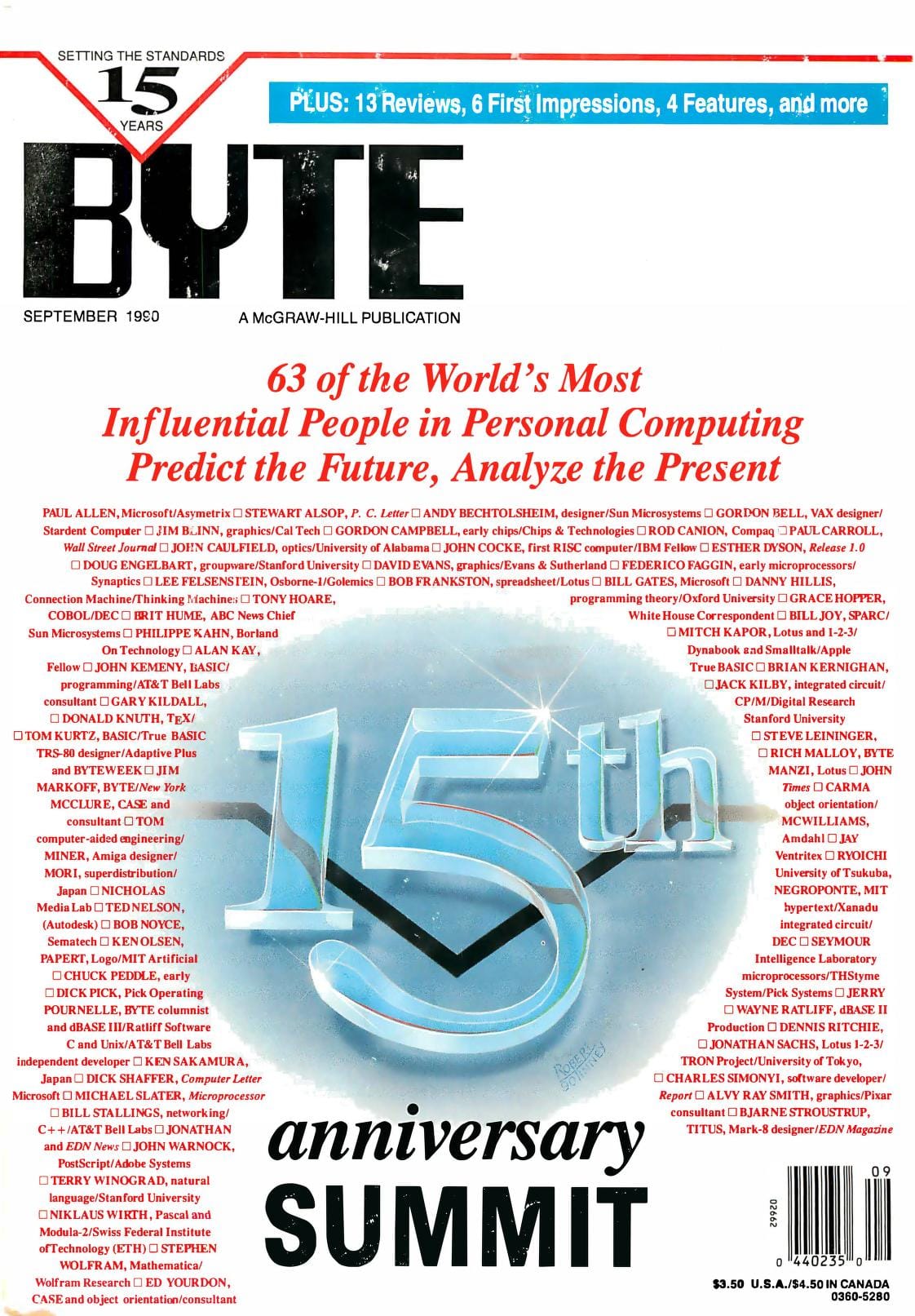
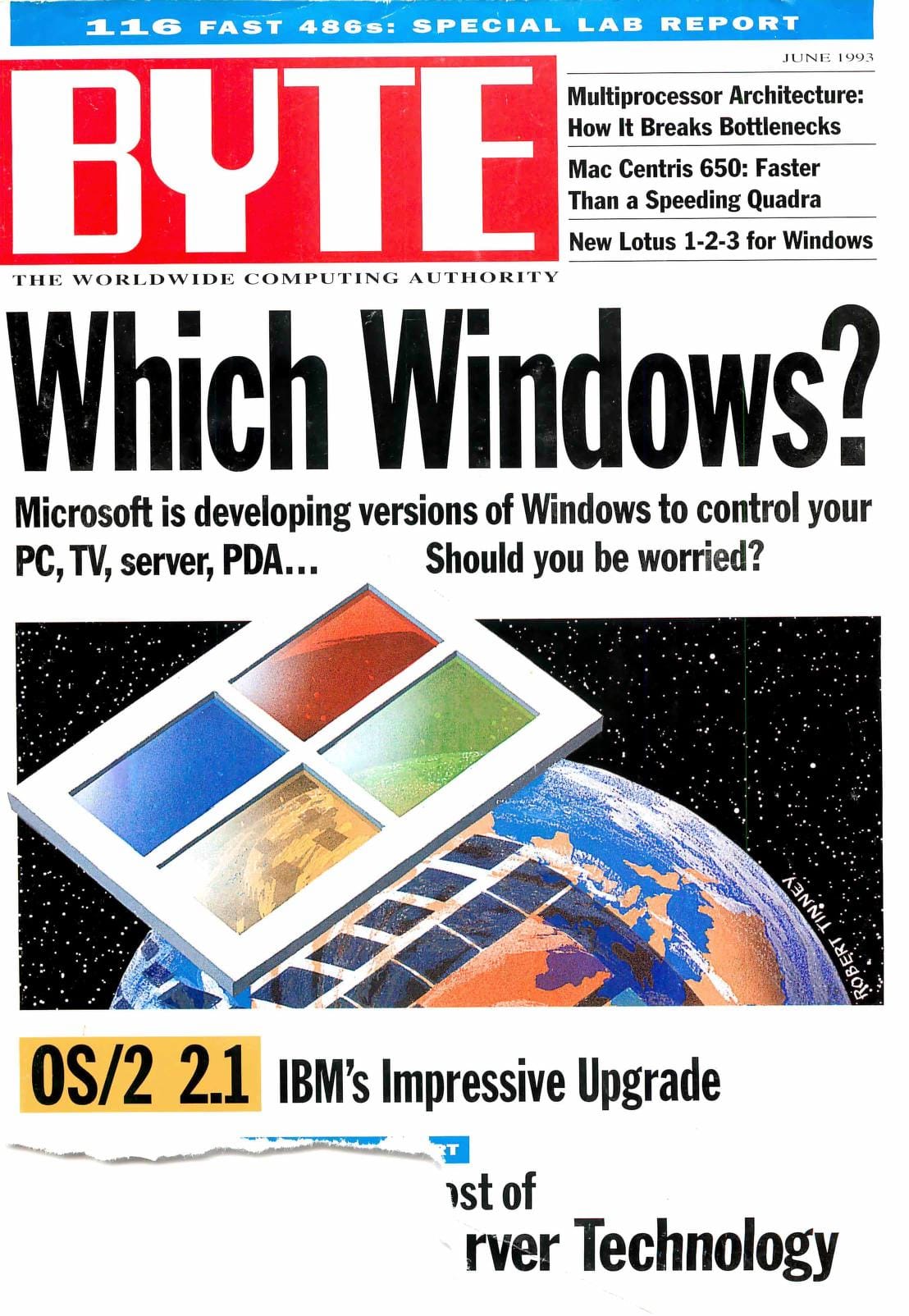
Editor in Chief Dennis Allen said this in the June 1993 issue:
“We’ve also changed our cover look to accommodate the issue-oriented nature of BYTE’s cover stories. There you’ll see art and photography play a lesser role than in the past. Instead, you’ll see a bold headline with a descriptive deck to better convey what the story is all about. Still, we take the cover art very seriously, and that’s why we commissioned Robert Tinney to illustrate this issue’s cover. Many of you will remember when every BYTE cover was a Tinney illustration. While we’ll still use photos and other illustrators, I’m particularly proud to have Tinney back for BYTE’s new design debut.”
The title lasted another five years before ending publication in July 1998 – you can check out this dishy unauthorized explainer on the experience from one of the senior editors at the time for the full story.
You can view the entire Byte archive, including dozens more Tinney covers, at multiple websites: The Internet Archive has a great collection, naturally, and you can also find them at VintageApple.org and on this site (the latter one might have the best image quality).
The coolest and least practical Byte archive is this one, which is a bizarre, scrollable view of every single page of the magazine laid out in one giant mass.
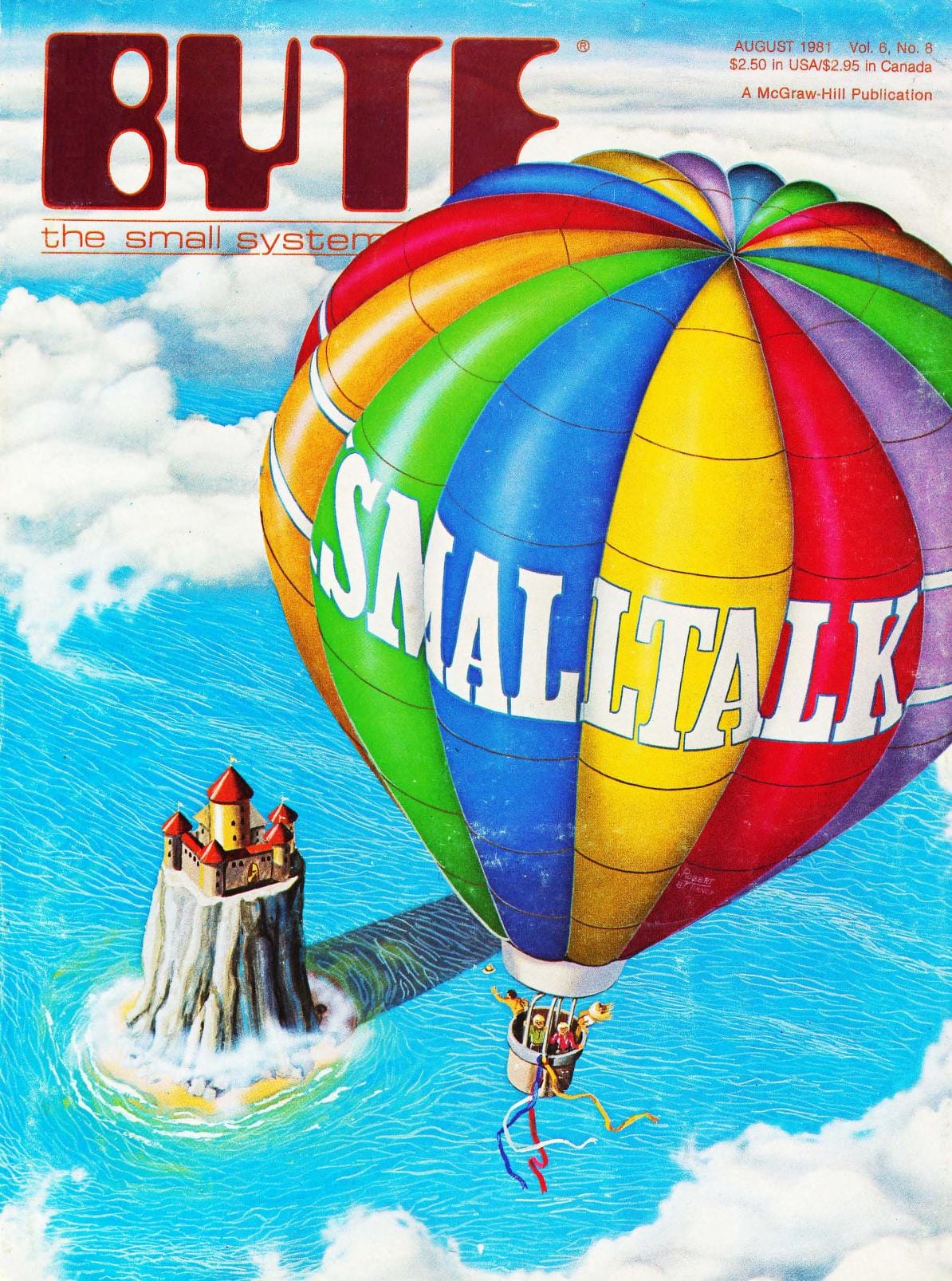
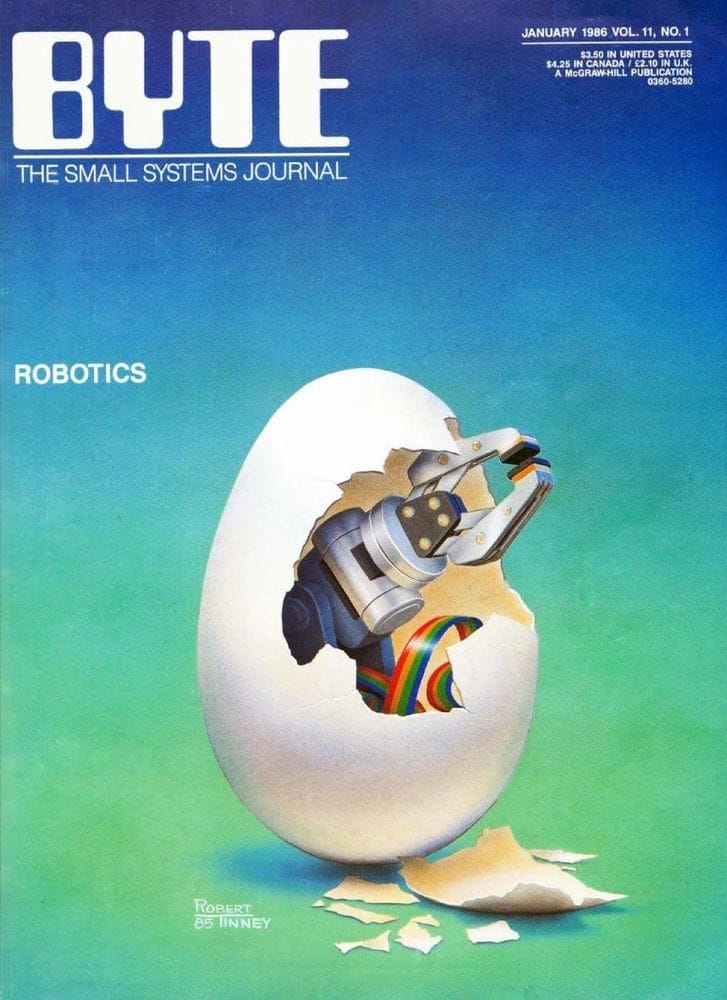
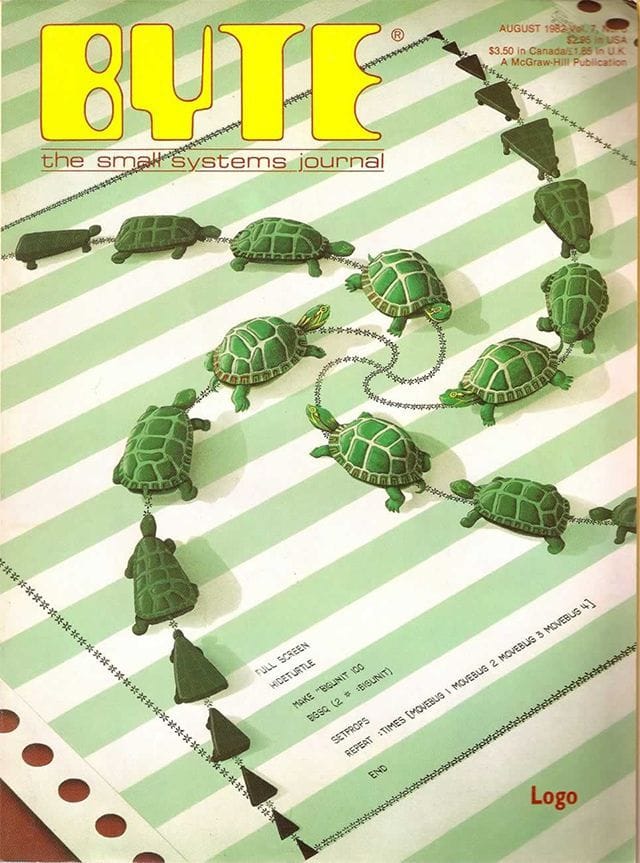
Robert Tinney's Byte interior illustrations
Simply skimming through the covers won't highlight all of Tinney's Byte magazine work: He did a lot of interior art as well.
Take this charming series of full page illustrations that appear as section headers within the huge 10th anniversary September 1985 issue (which used a photograph as its cover).
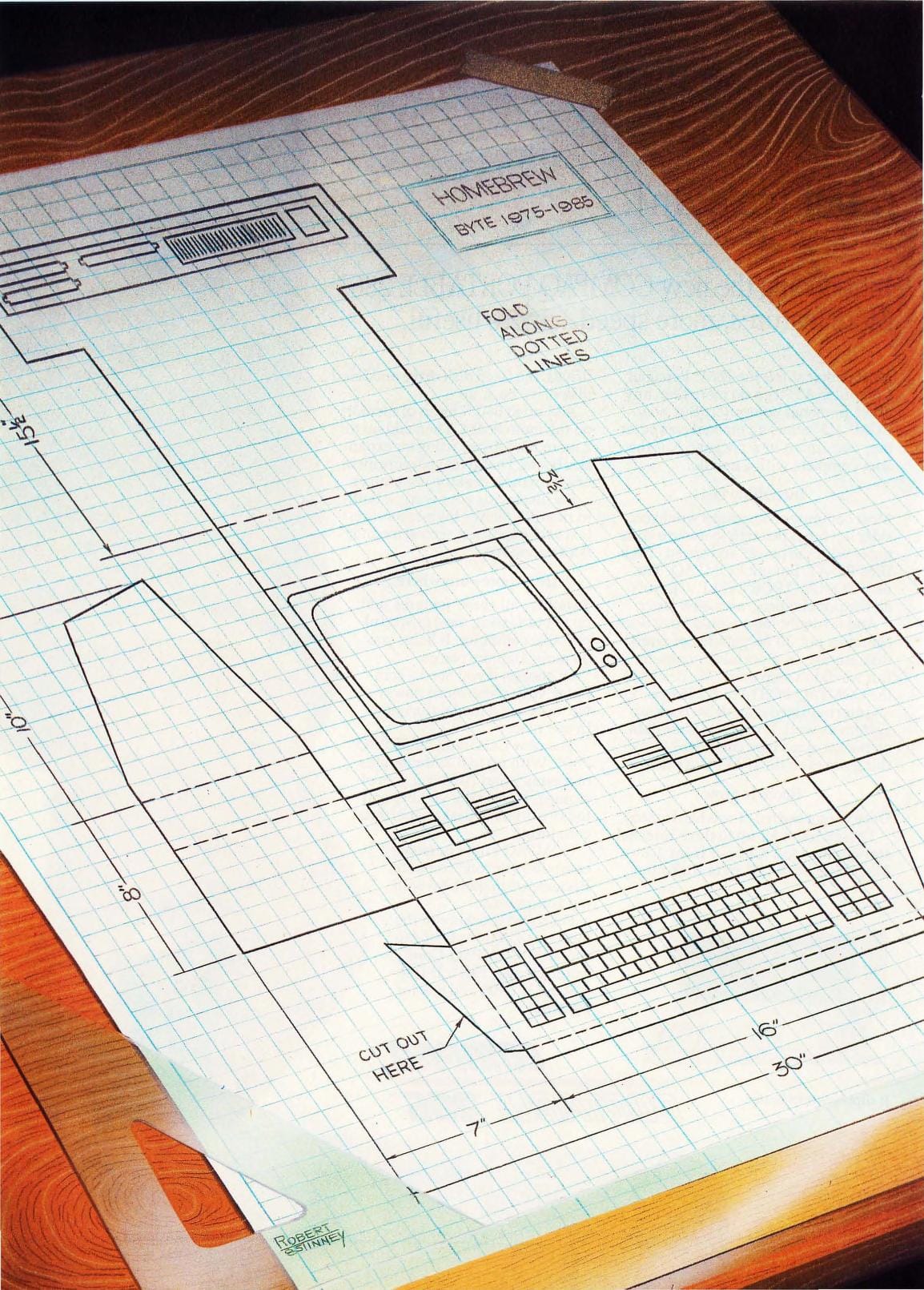
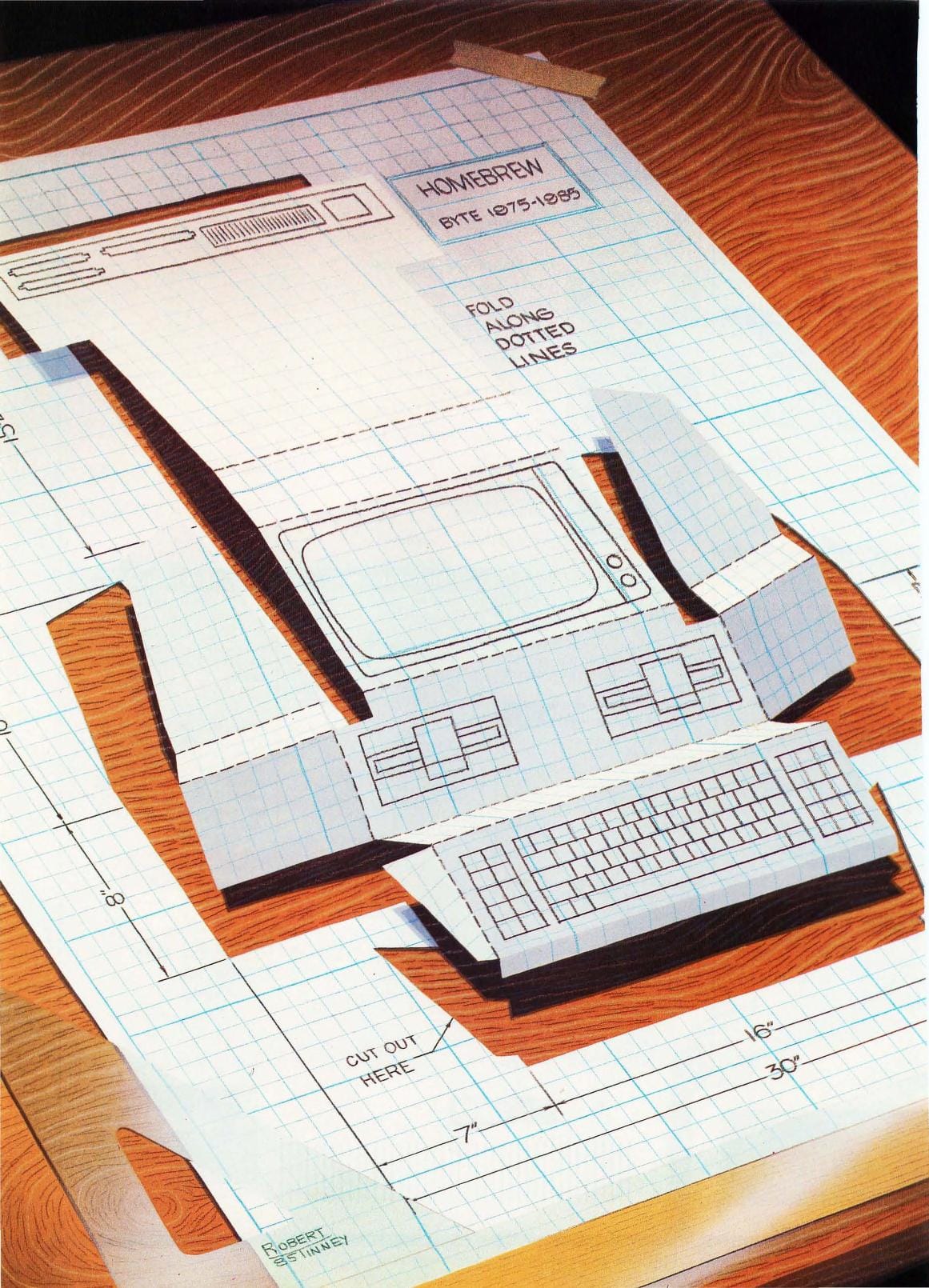
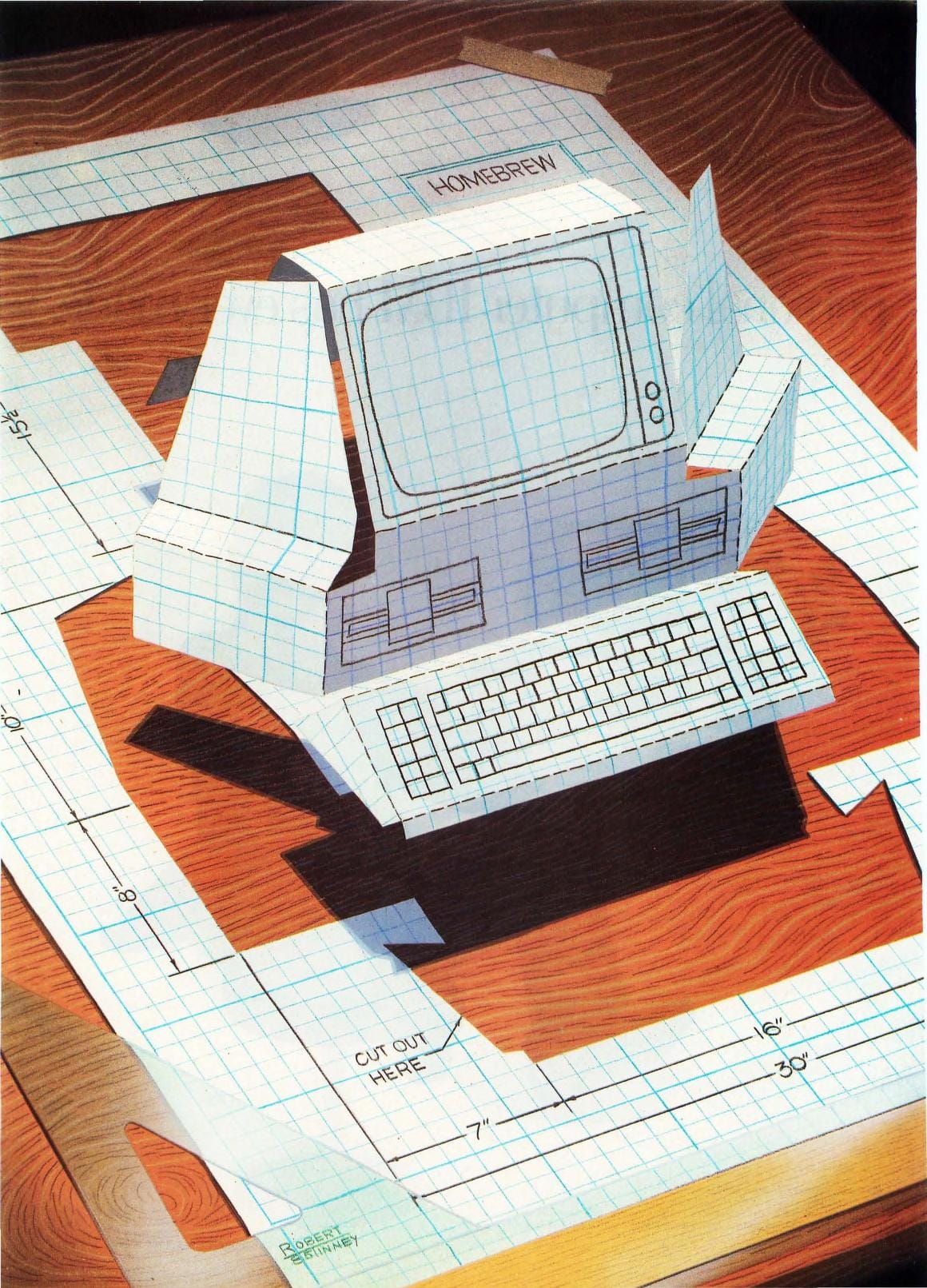
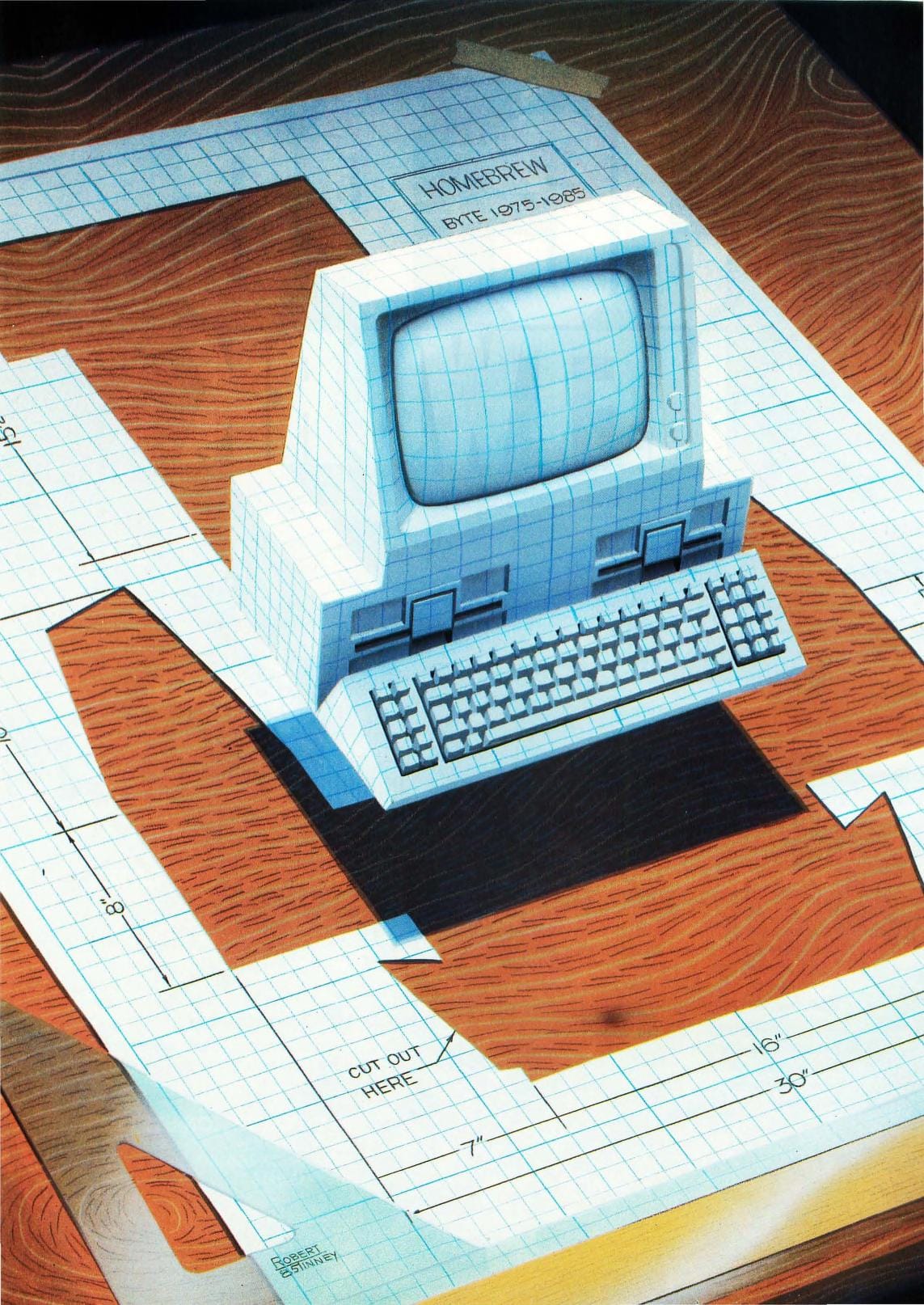
The same issue also holds this depiction of a time machine.
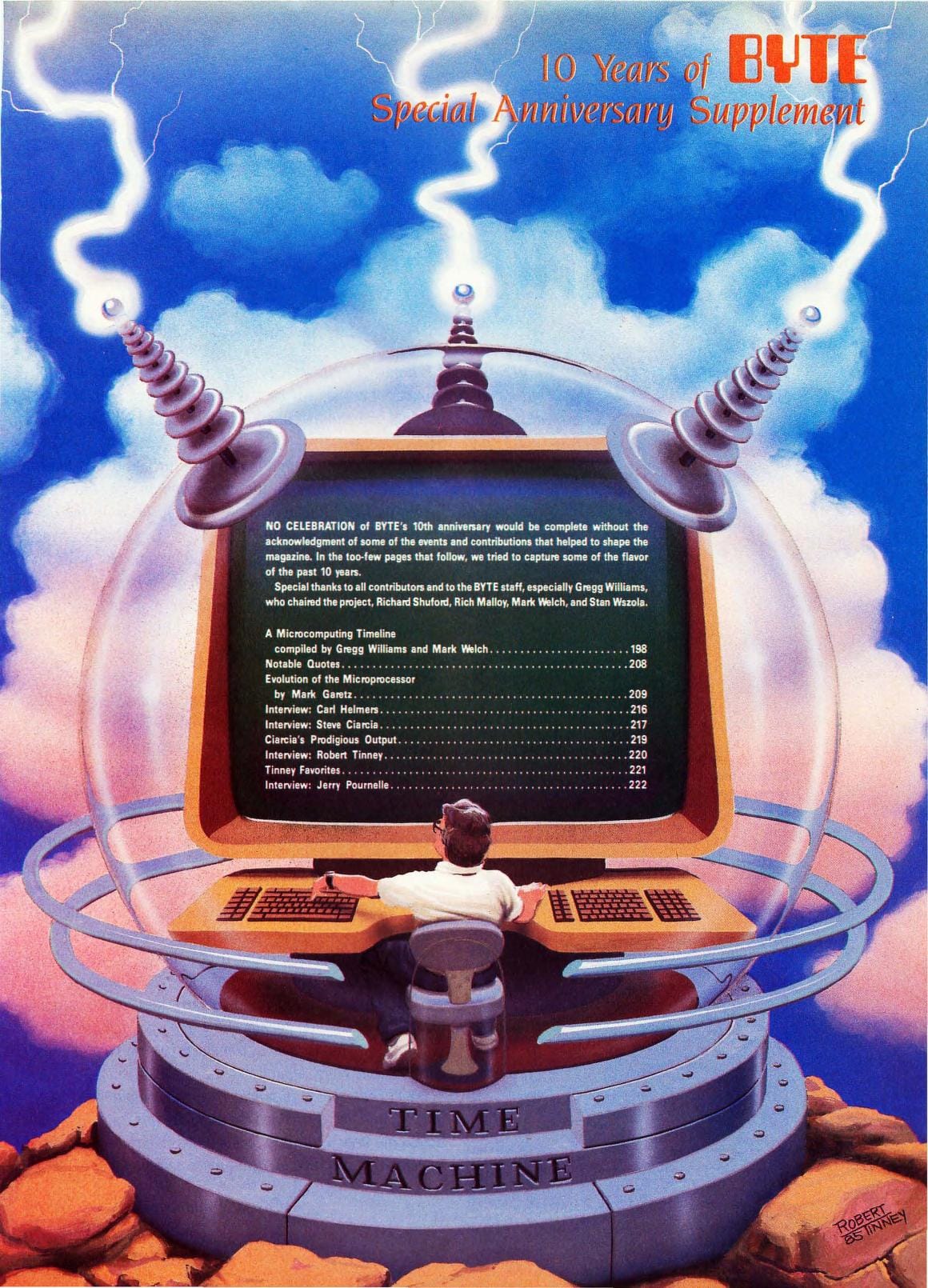
You might notice that there's an interview with Tinney himself on page 220! You can read it online here.
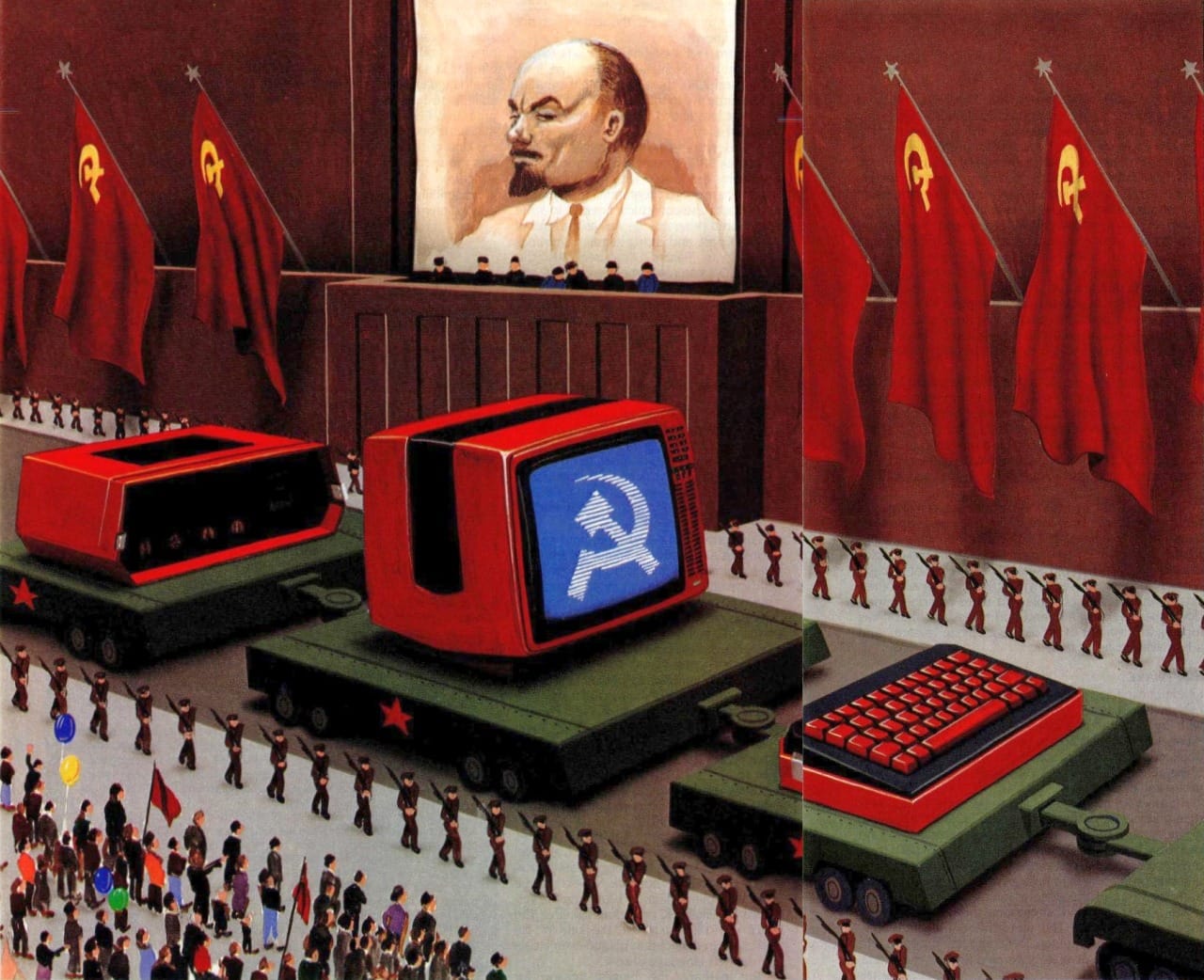
Tinney has this big interior for a November 1984 story that splashed over two pages, which I don't think I've seen from any of his other works.
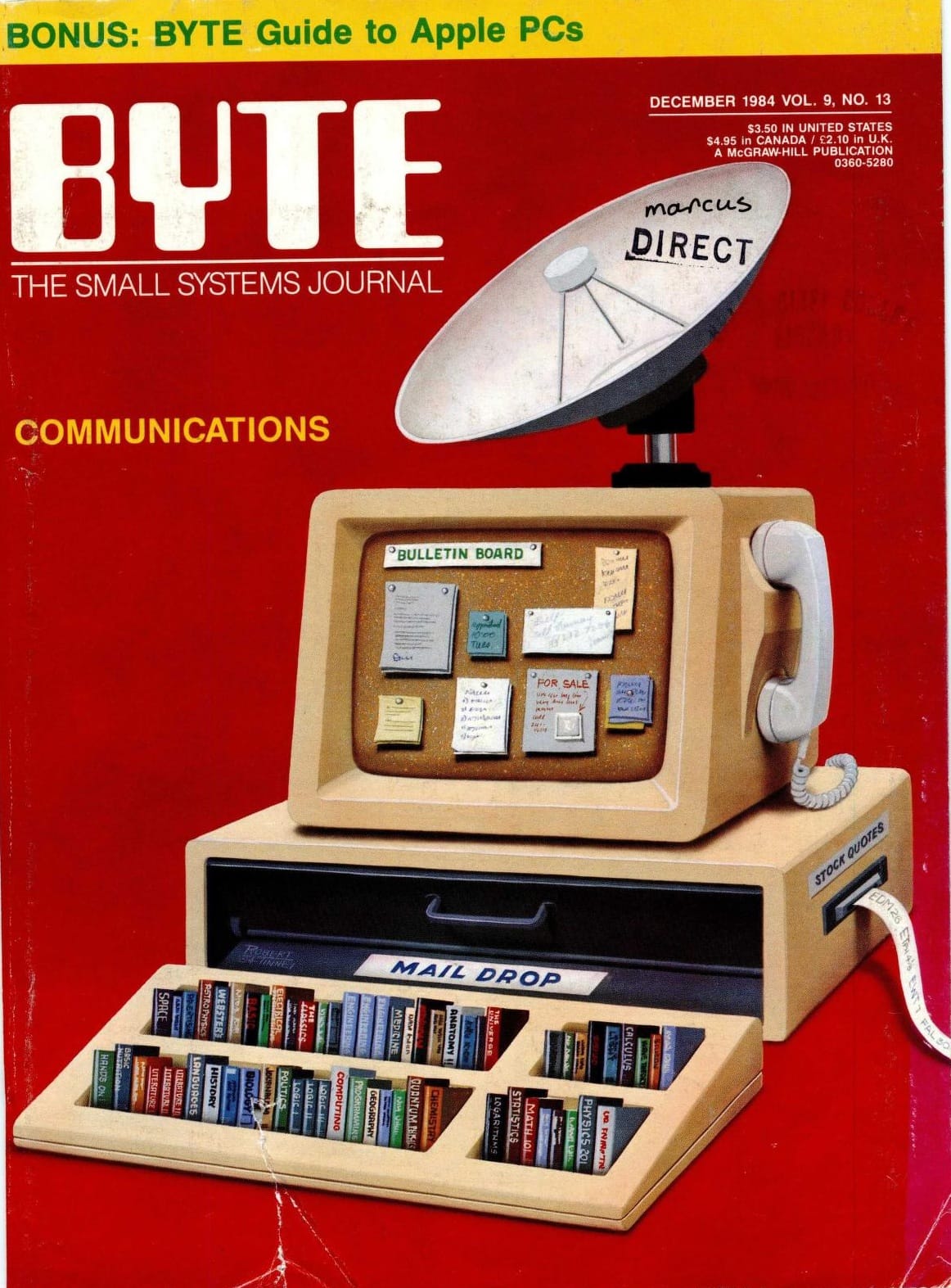
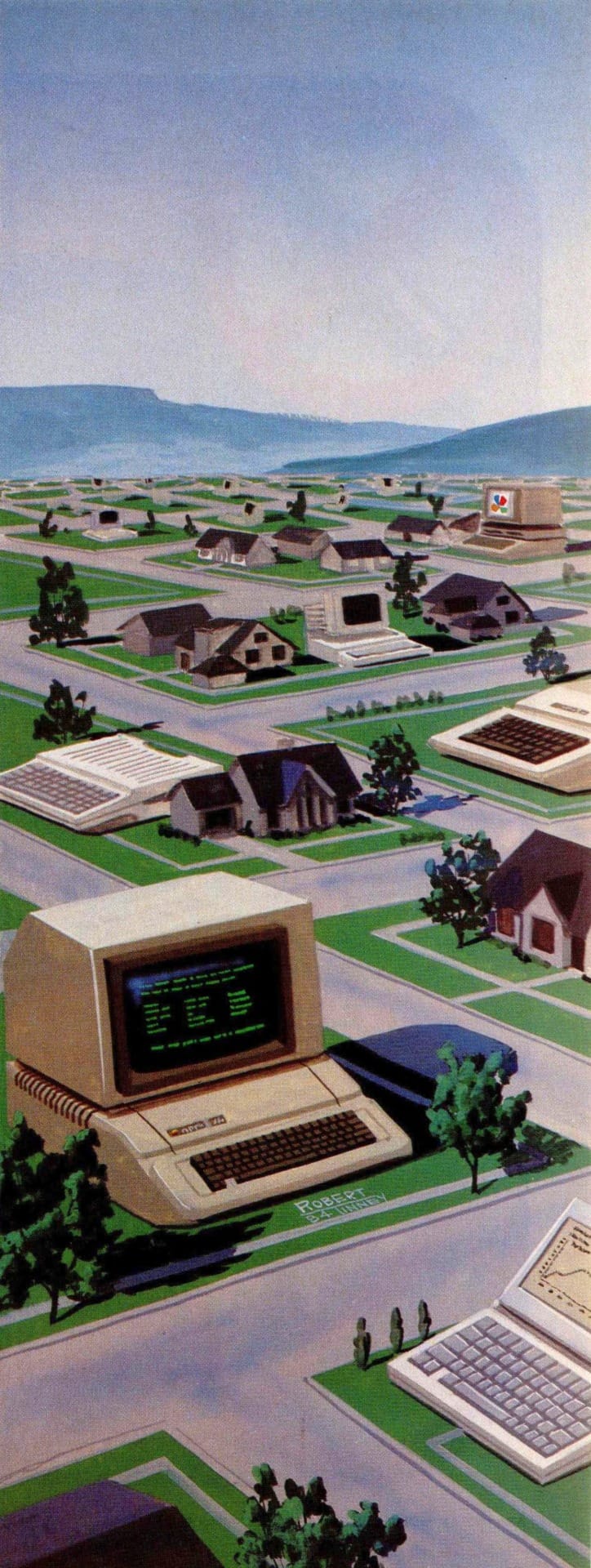
Tinney did a thin interior illustration of a surreal computer suburb in Byte's December 1984 issue, which he also did the cover to. Here are both of them.
Byte's December 1988 issue cover theme was "Groupware," with a collection of stories, not just one.
Not only did Robert Tinney's interior contributions include a spot illustrations for each story, but the collection starts with a full-page illustration that looks suspiciously like it was originally going to be the cover, and the art director decided to go with a photograph instead.
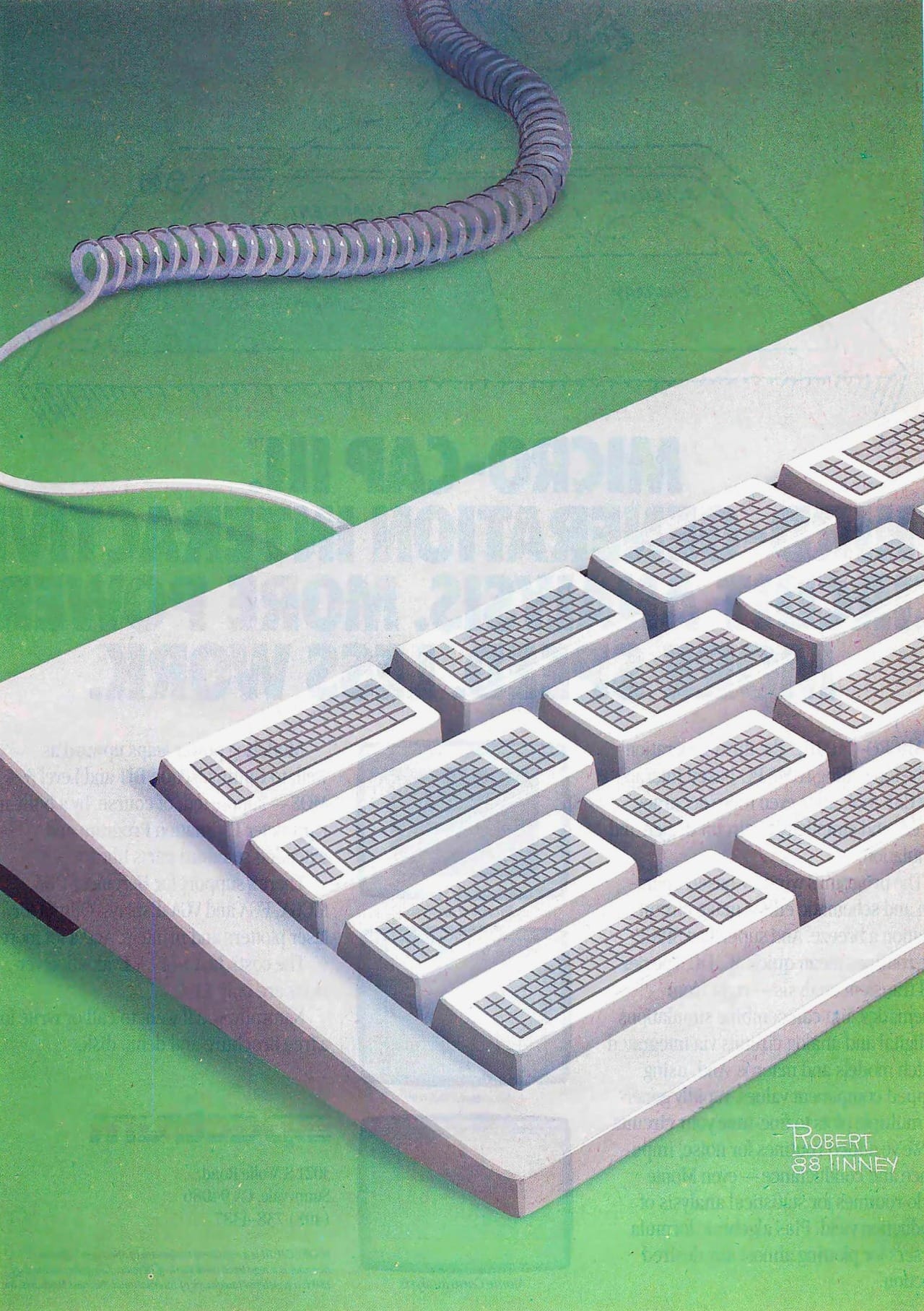
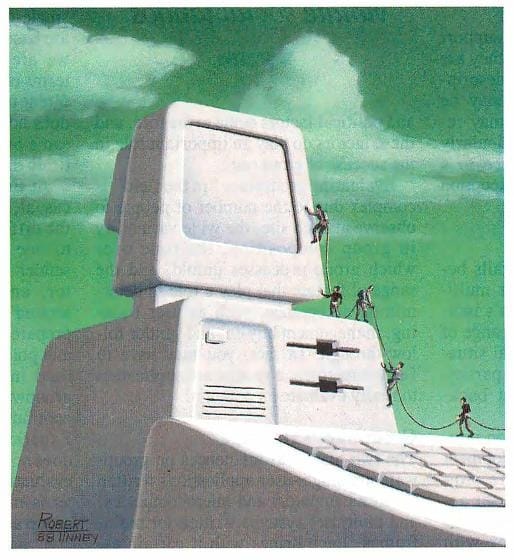
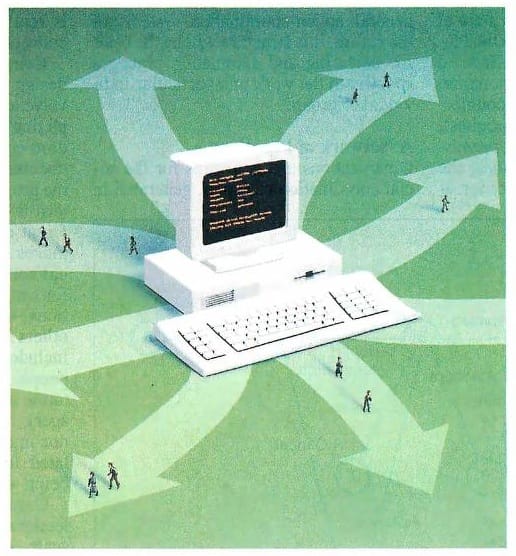
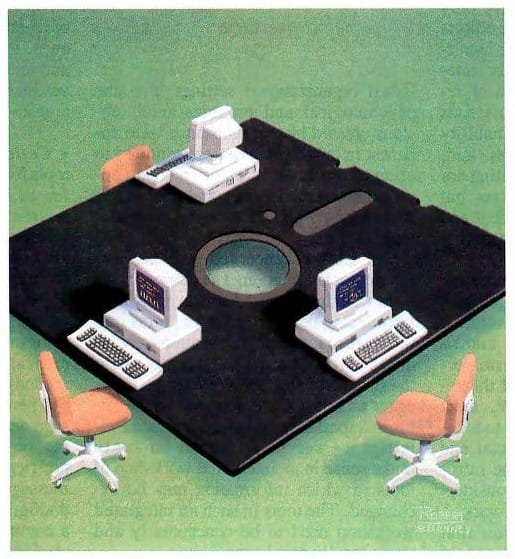
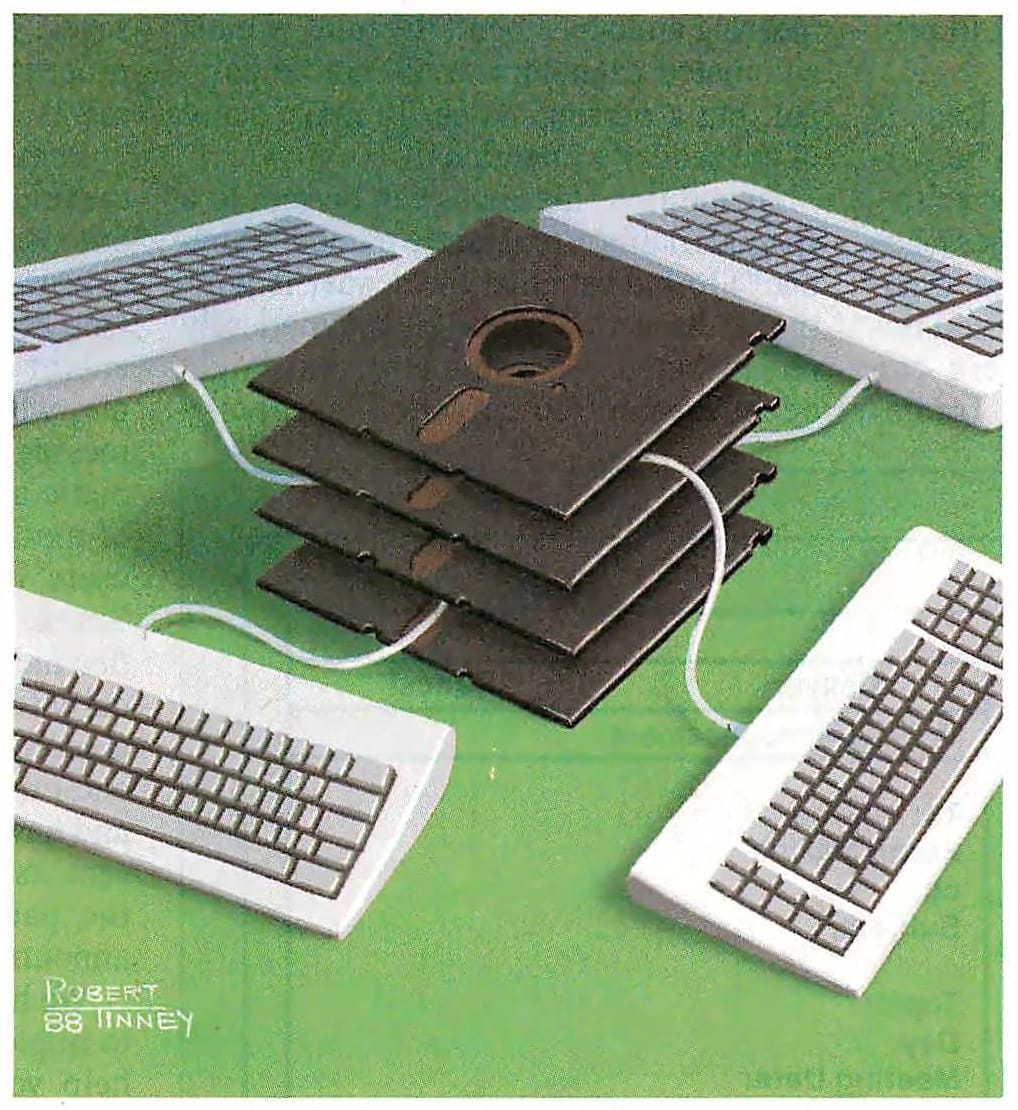
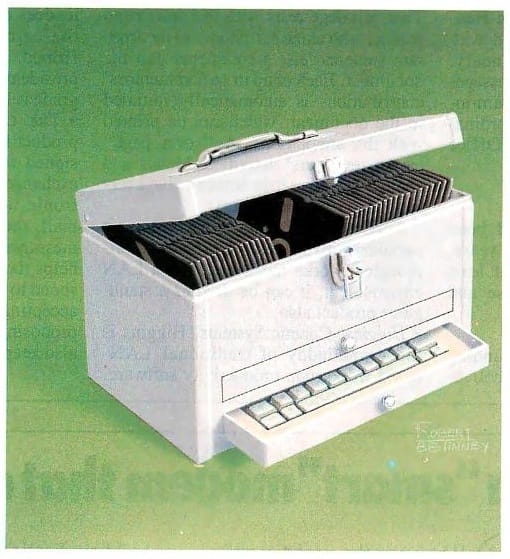
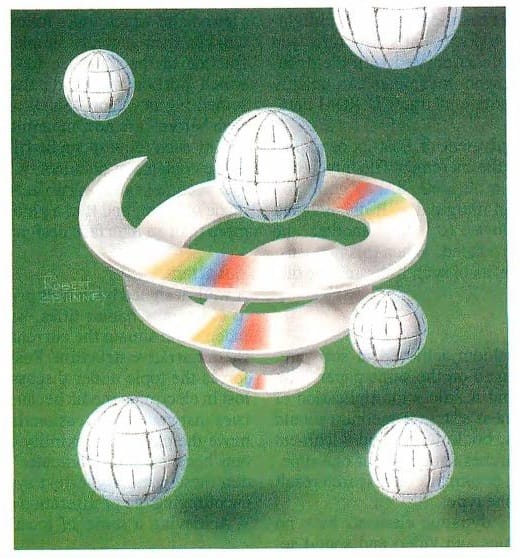
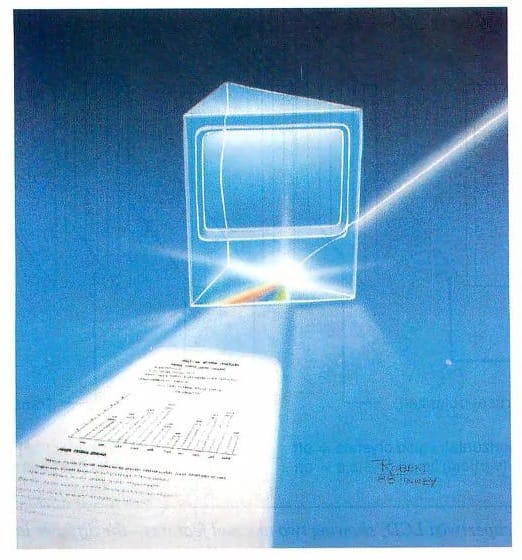
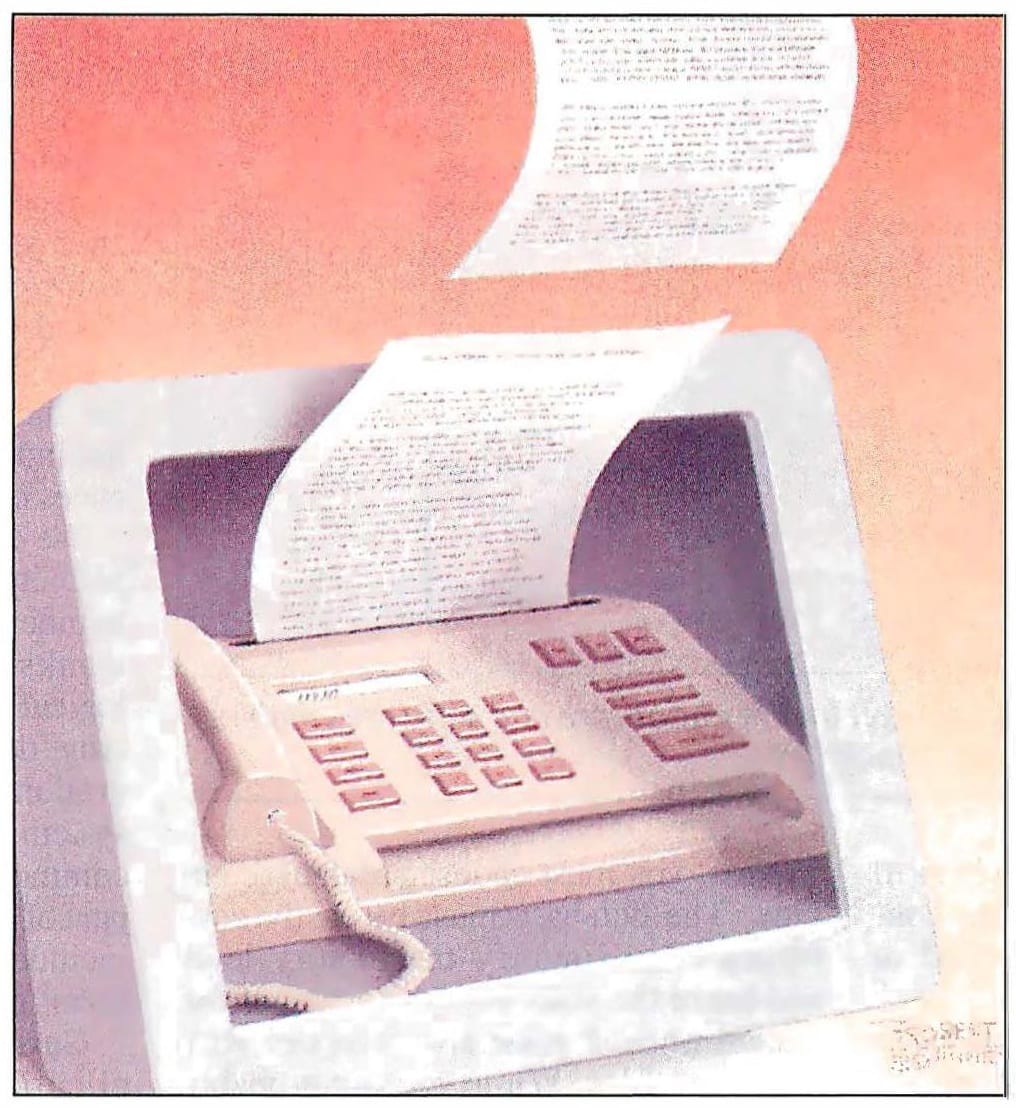
The April 1989 issue has a similar format, although Tinney did just two spot illustrations this time. The subject of this one is CASE, aka "computer-aided software engineering."
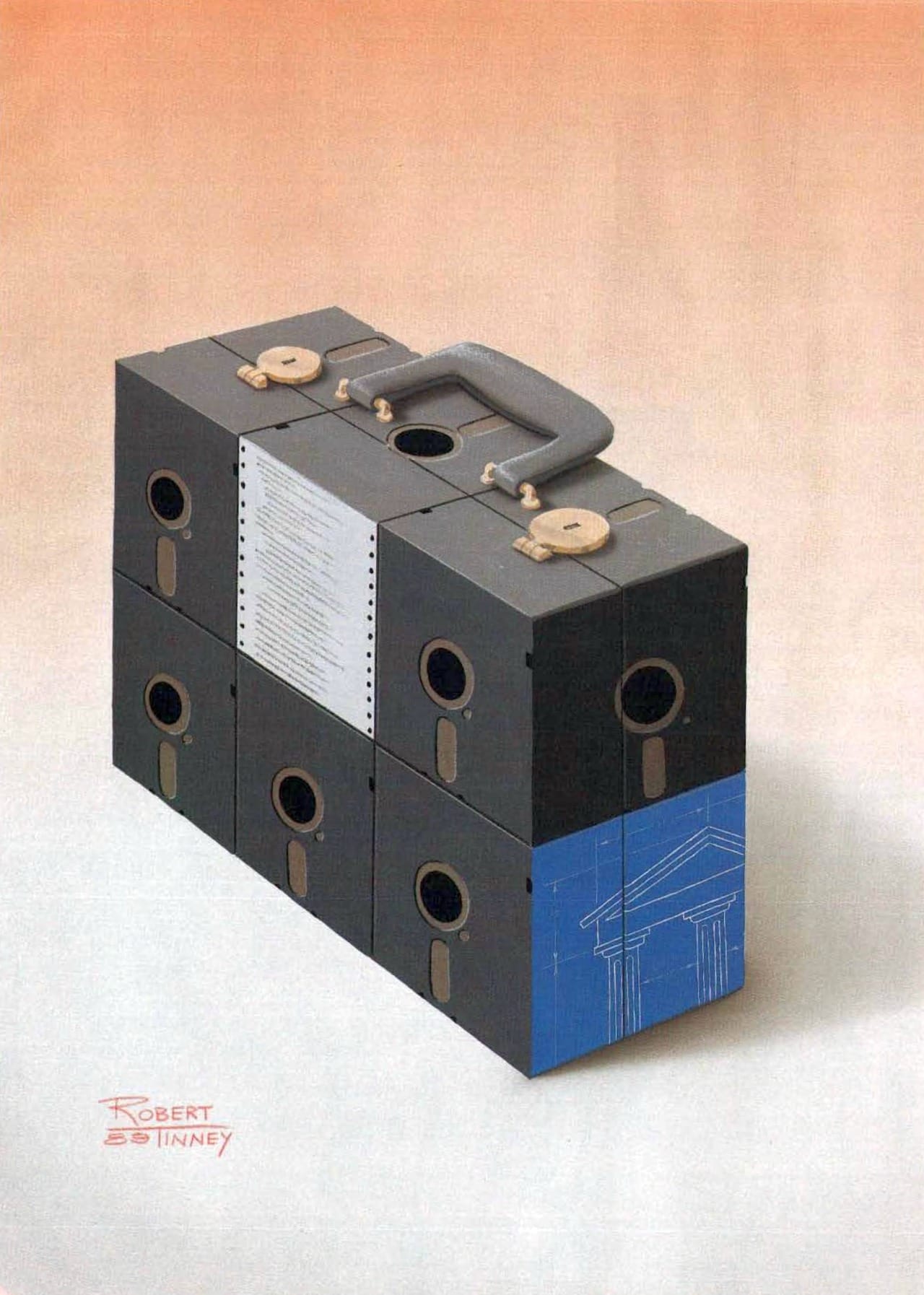
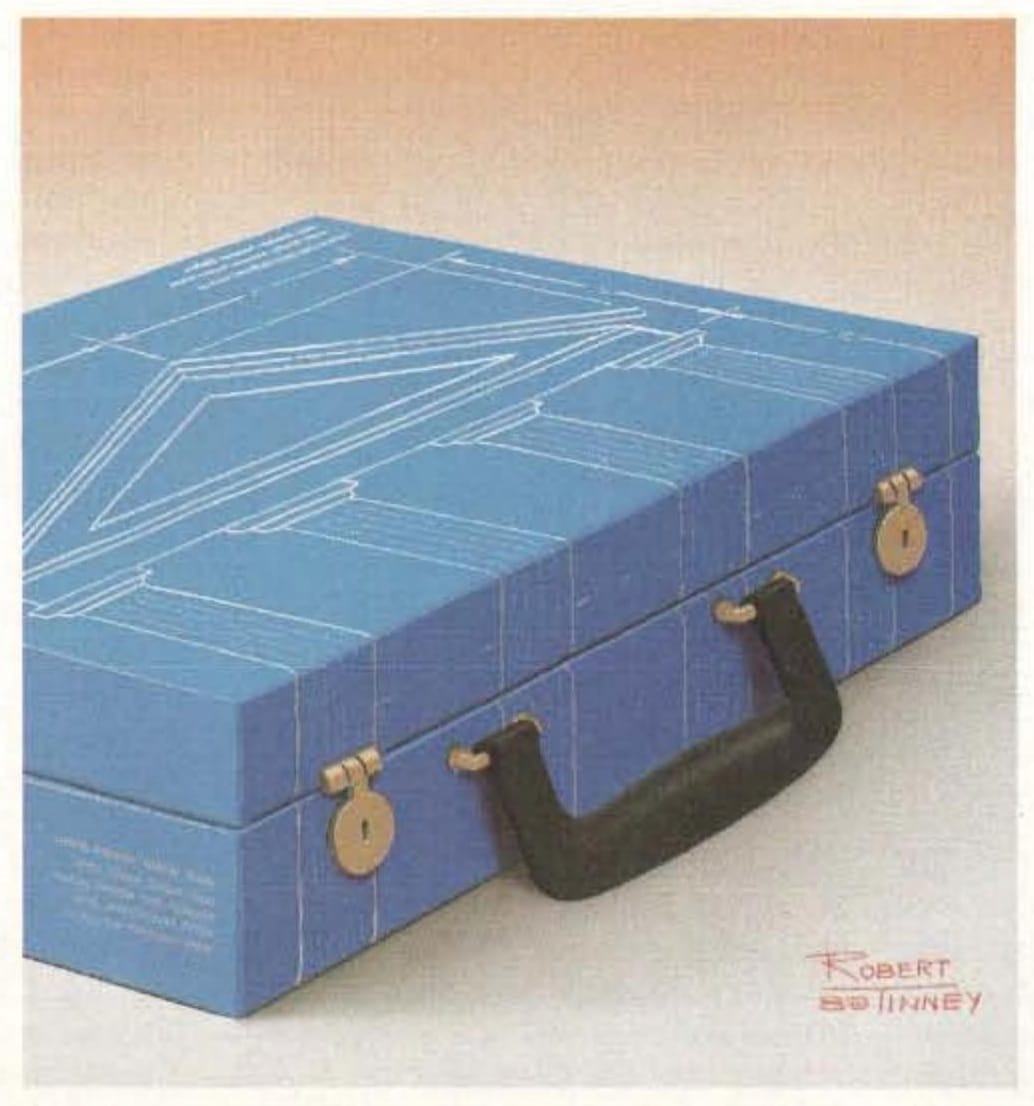
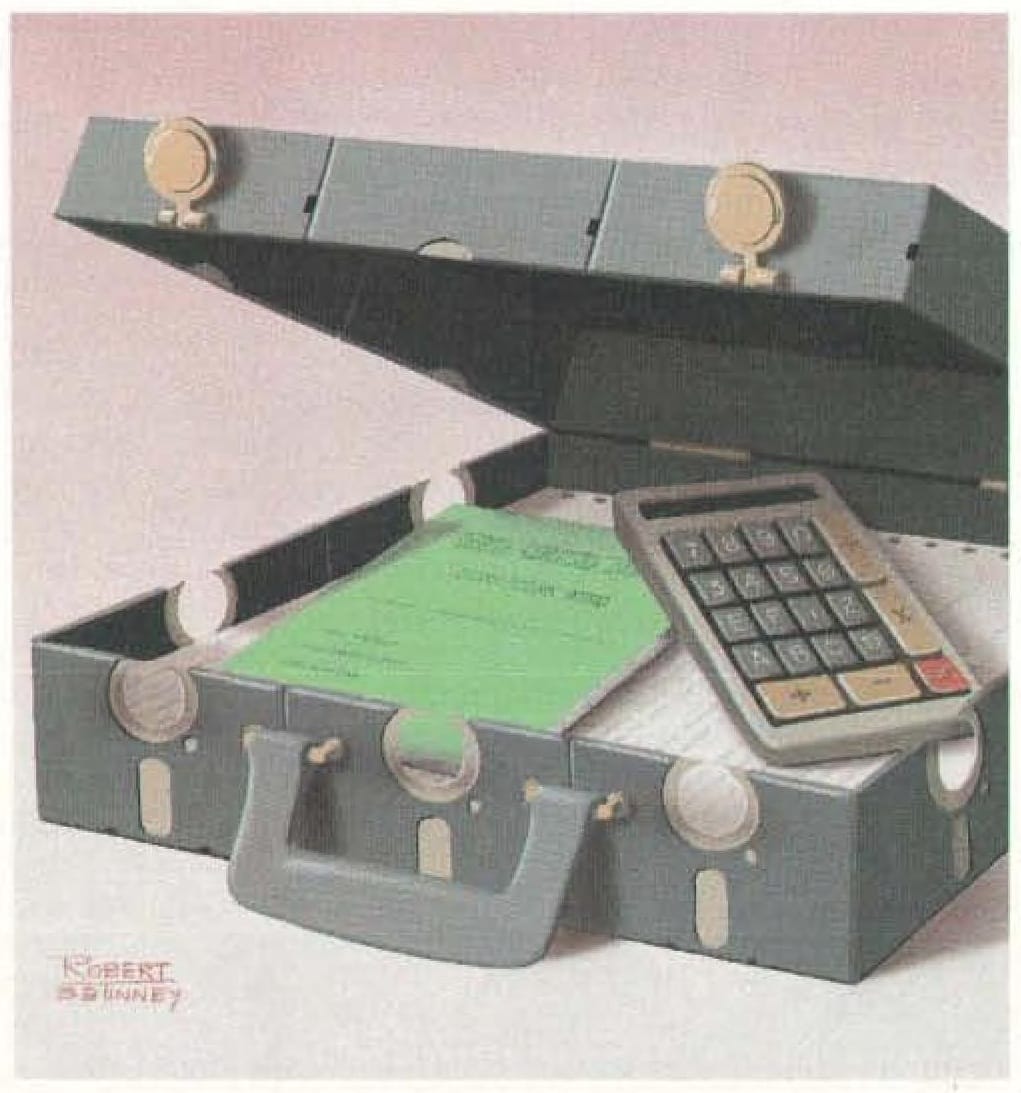
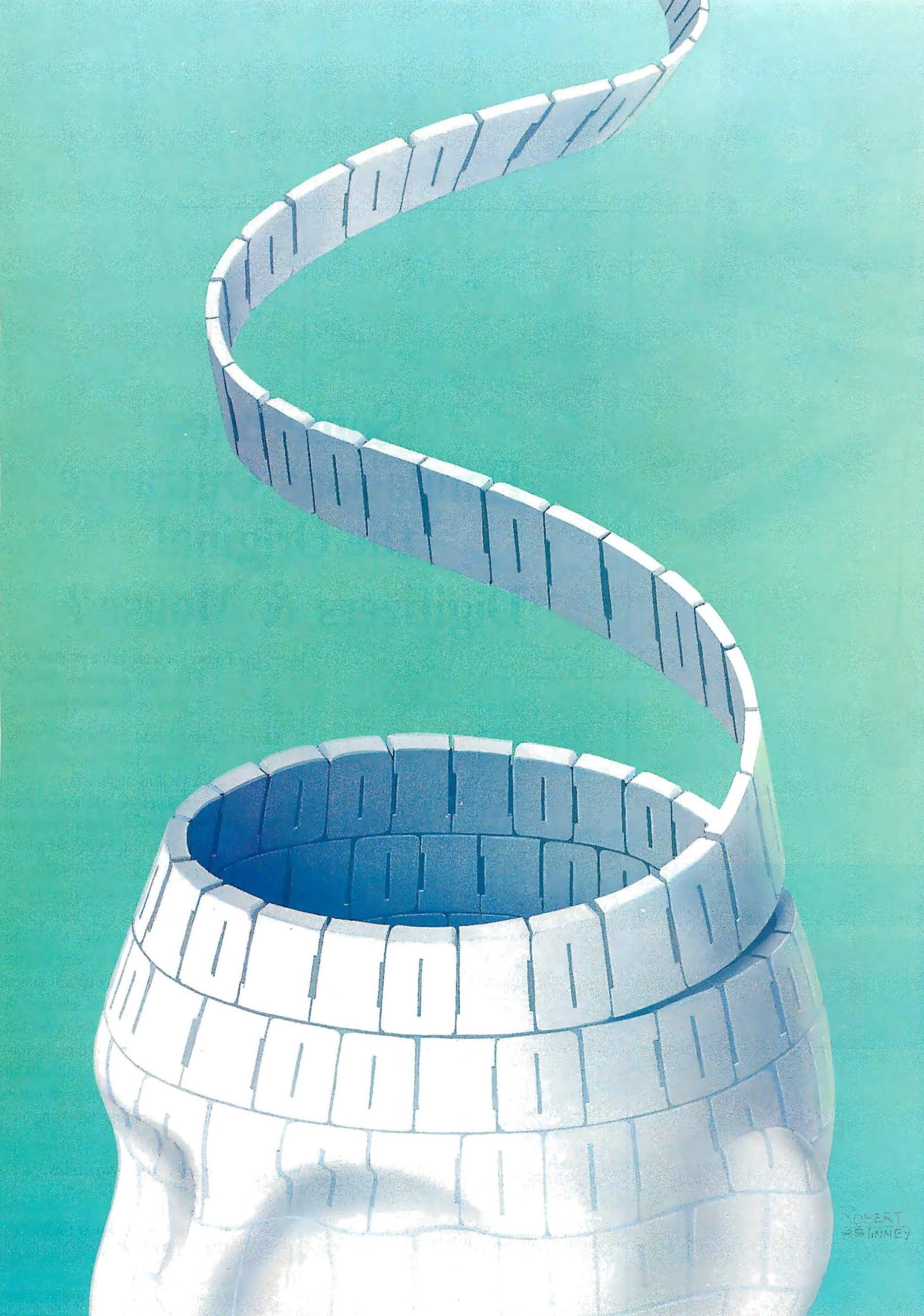
The format repeats again in the August 1989 issue with three spot illustrations, for a series covering neural networks.
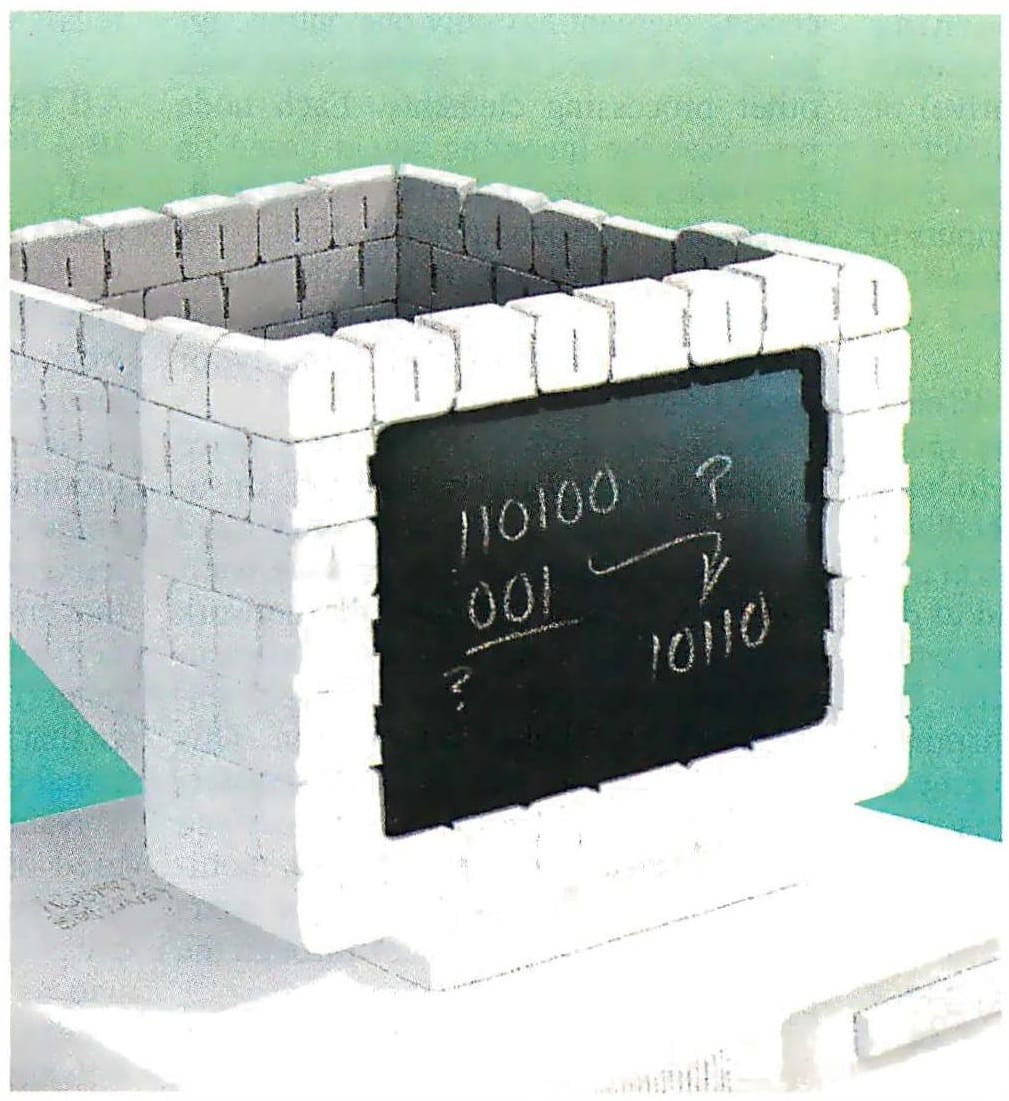
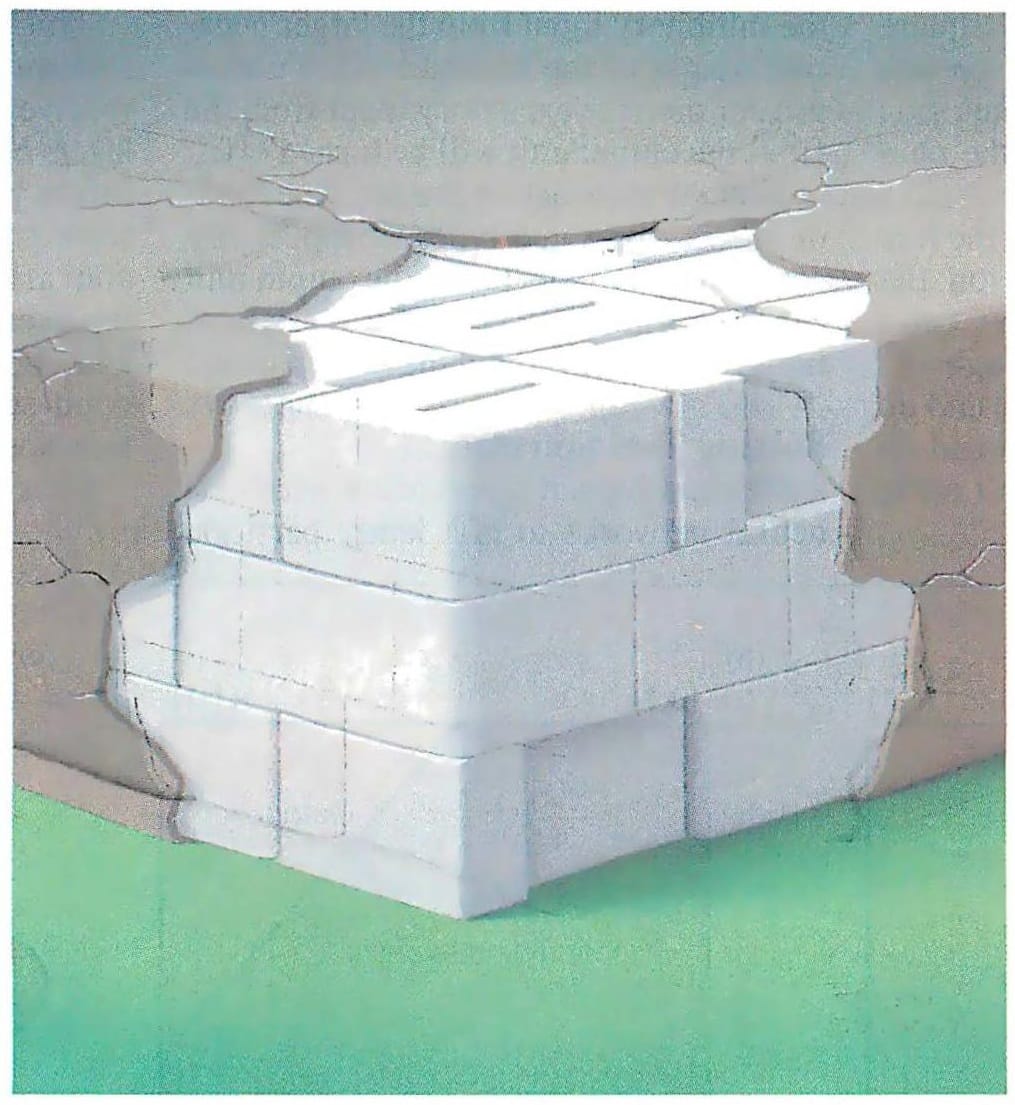
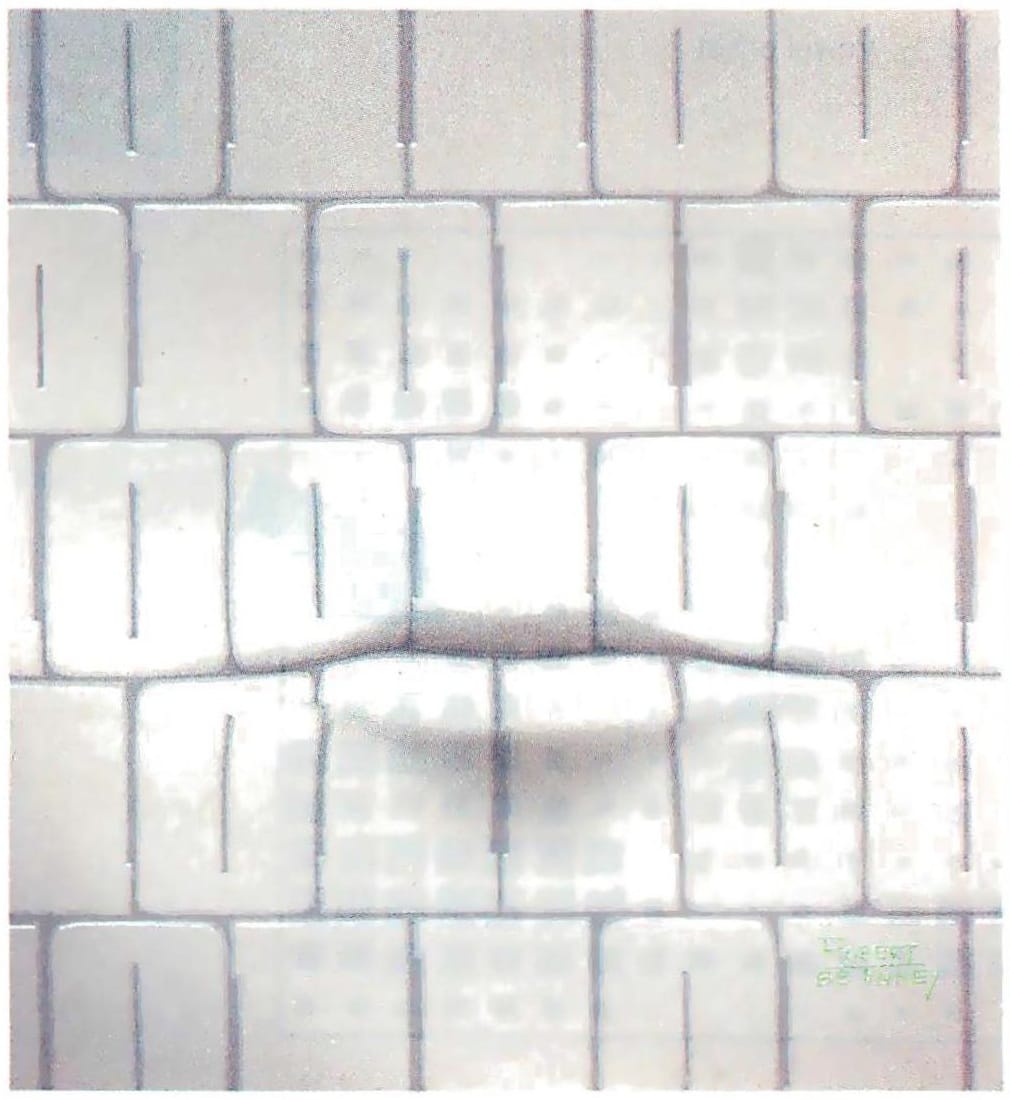
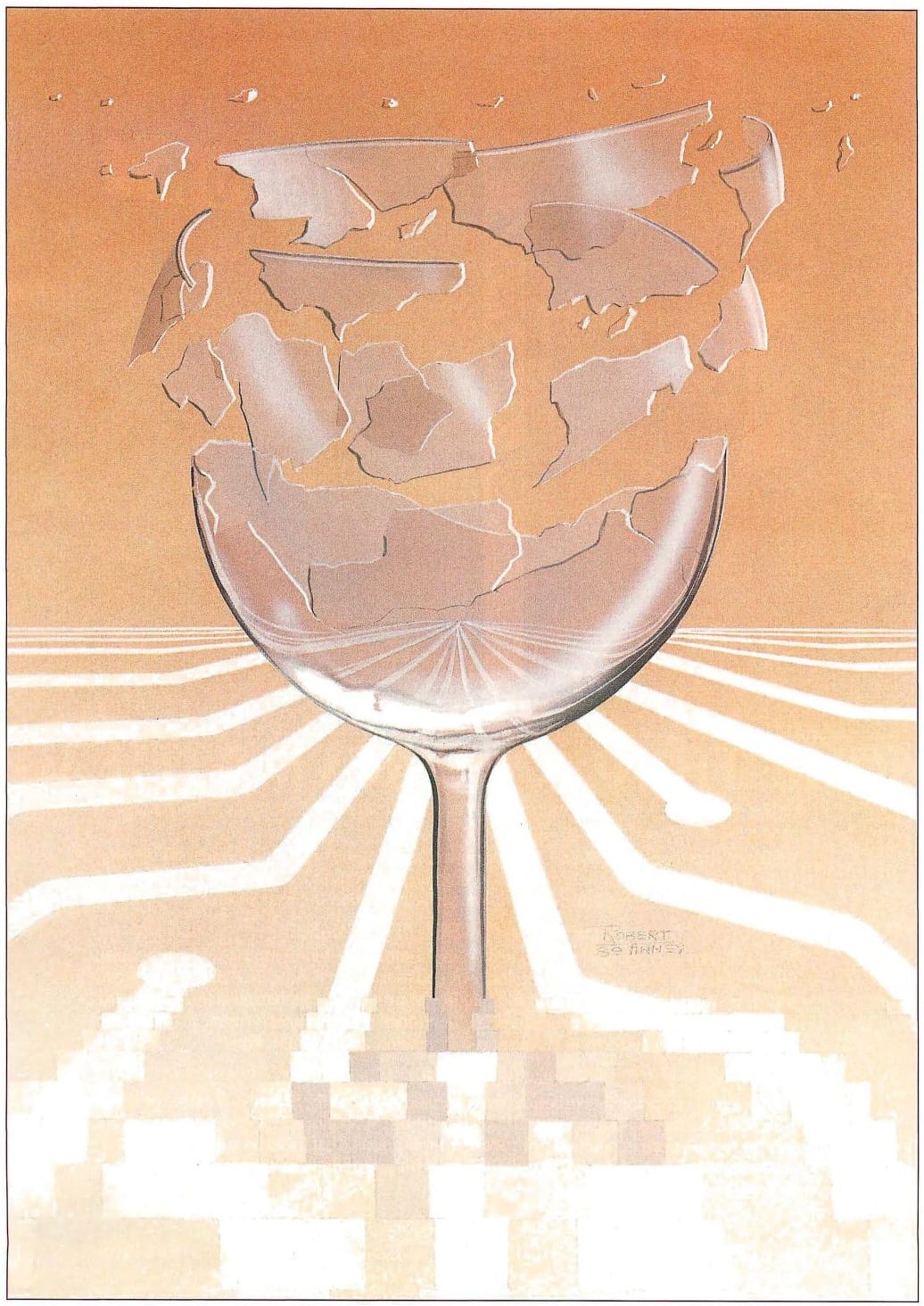
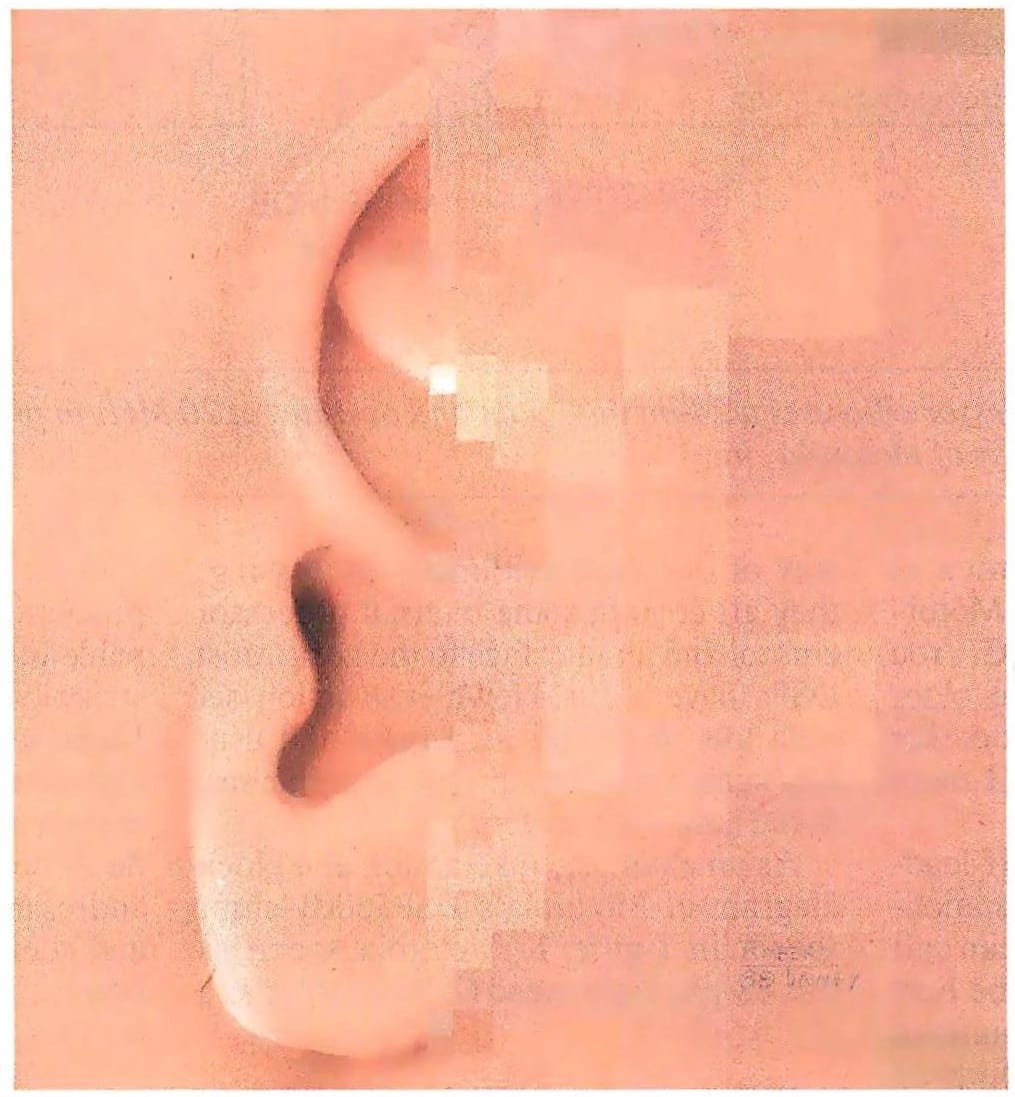
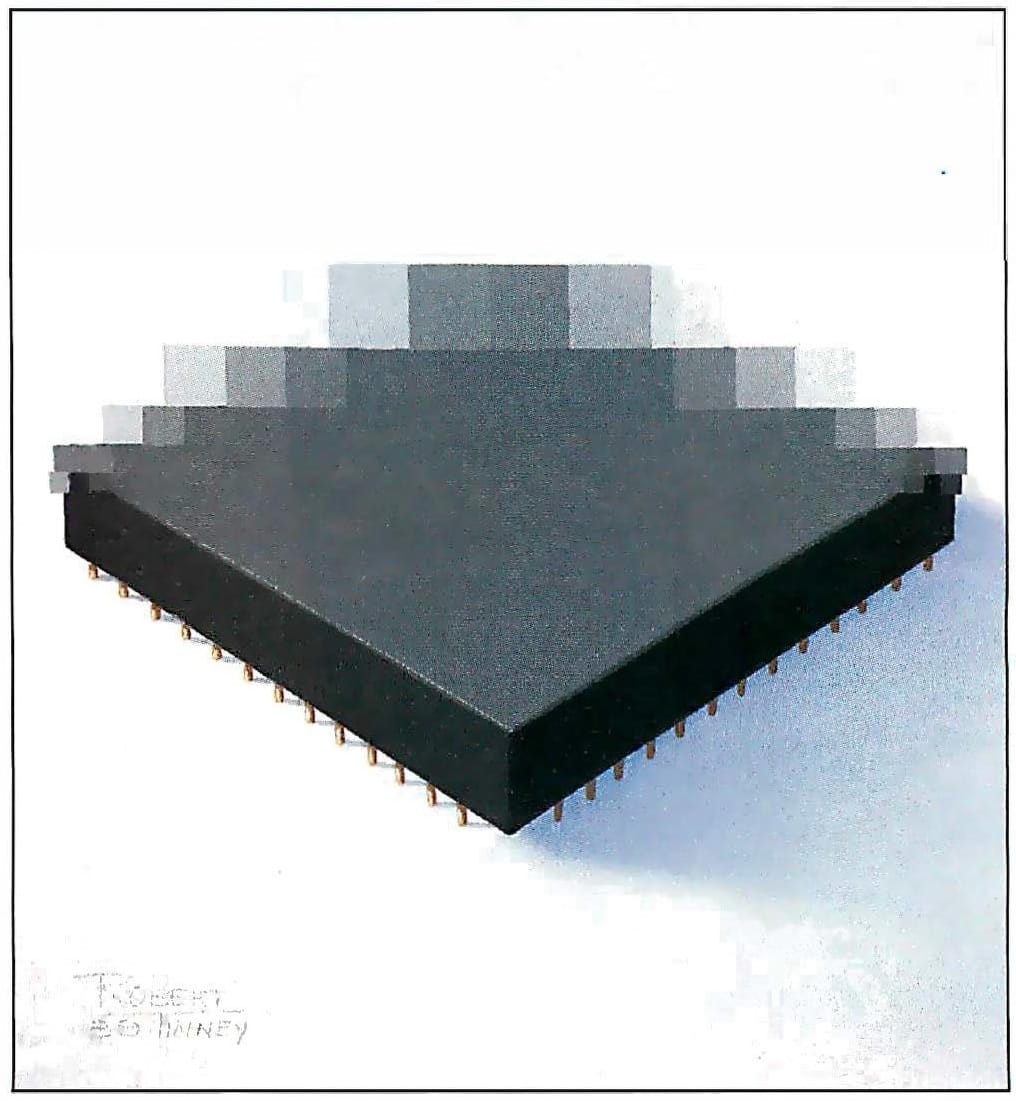
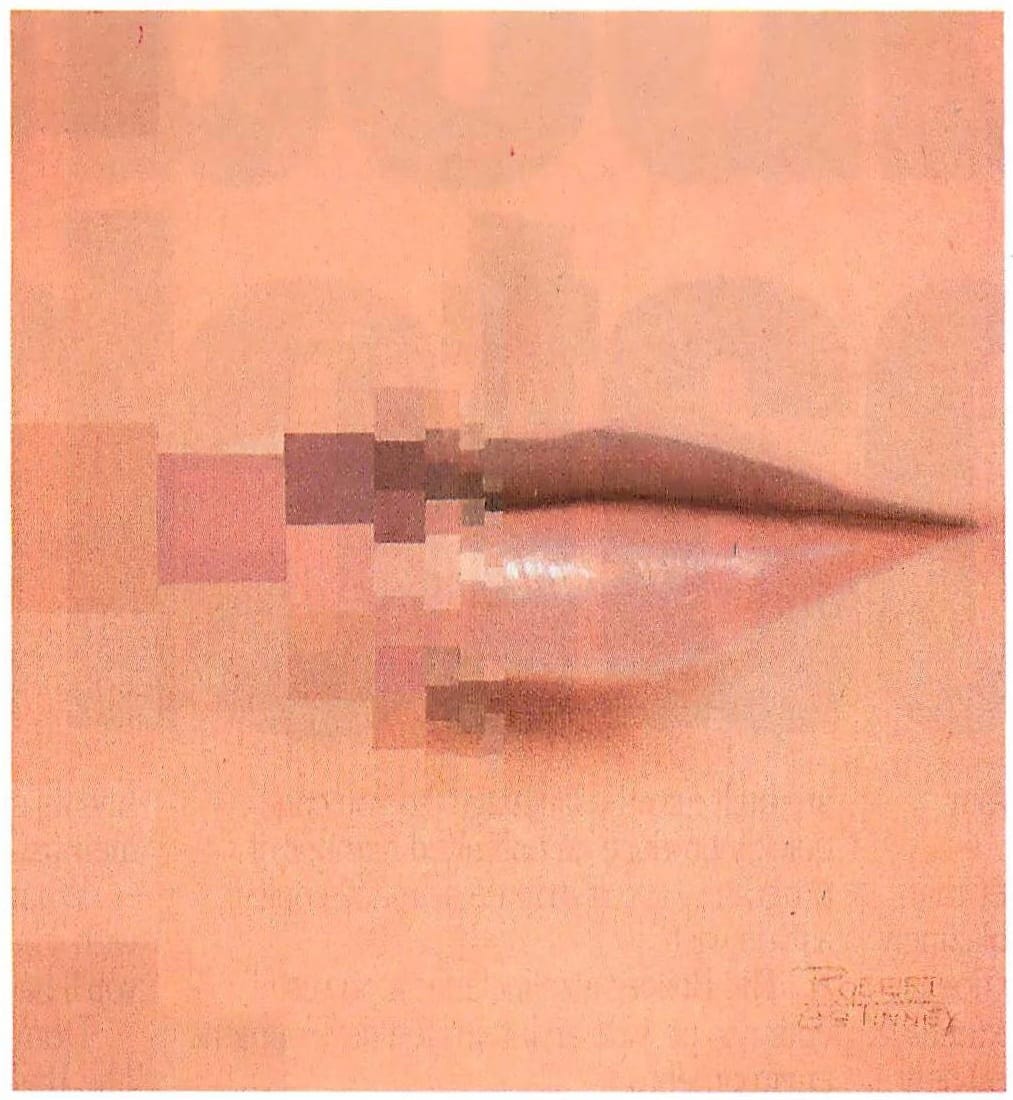
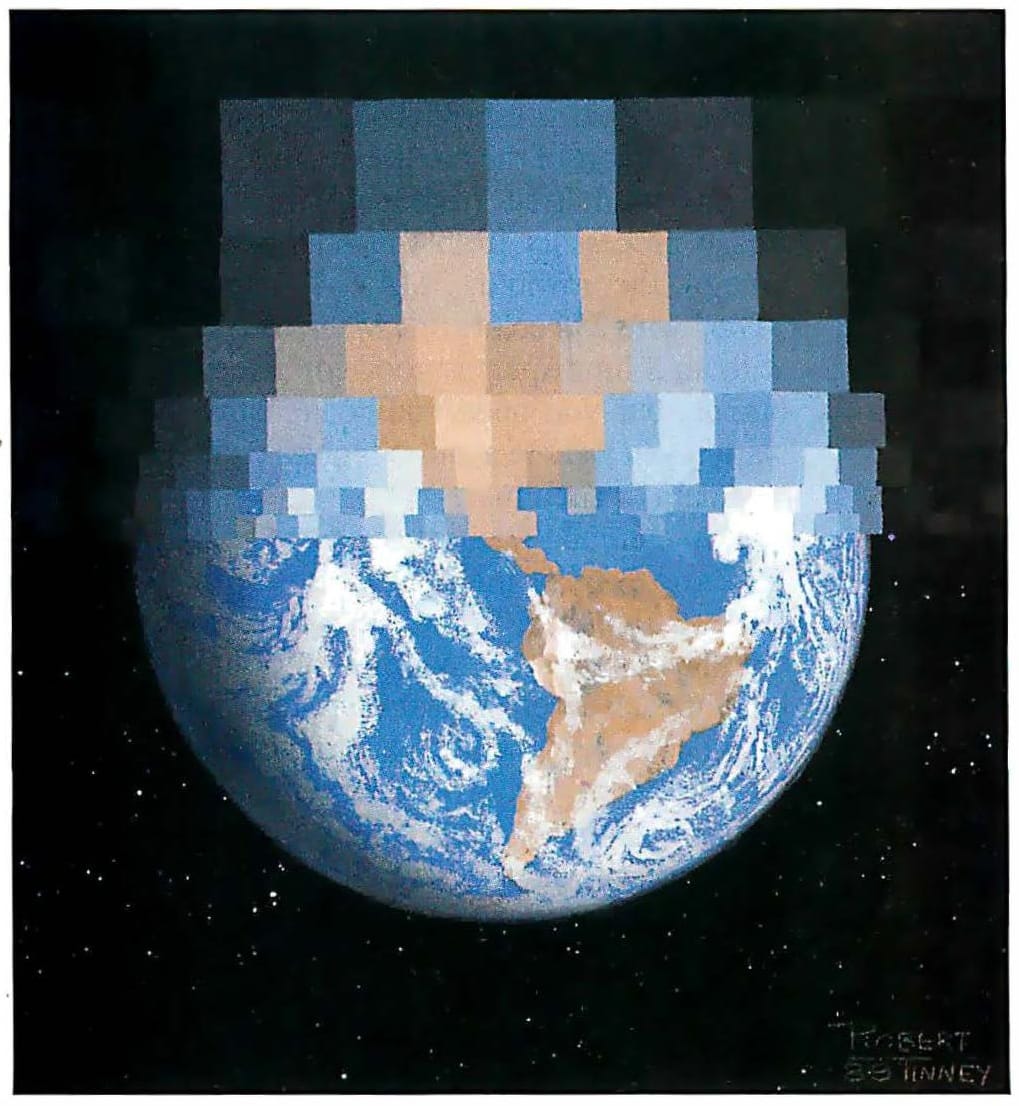
The December 1989 issue's theme was "sound and image processing," with five spot illustrations and some fun hand-made pixelation.
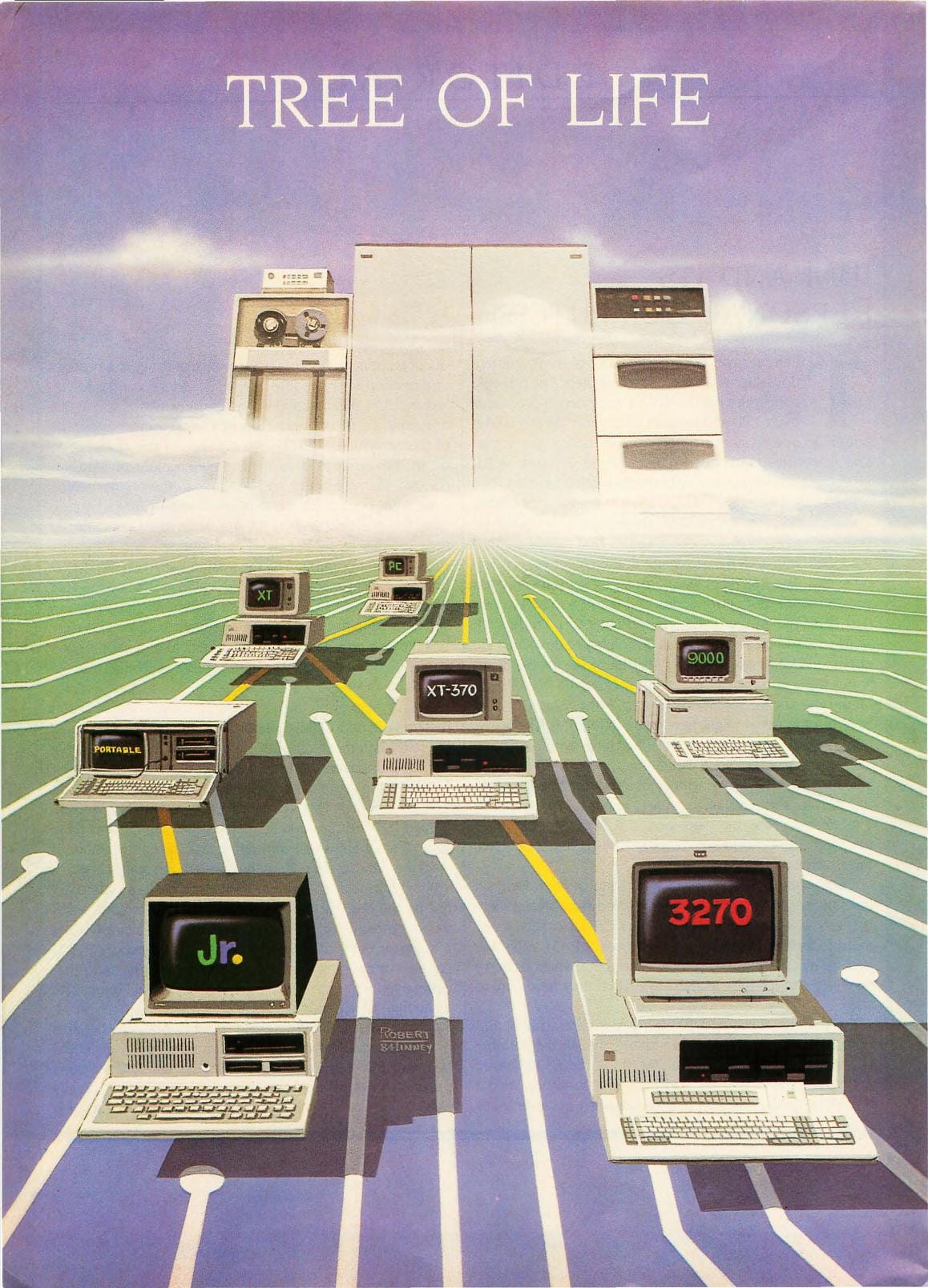
This full-page illustration really seems like it was first intended as the cover: It was included on page 2 of a 1984 special edition of Byte that was a guide to IBM PCs, and the artwork features... all the different IBM PCs! No idea why it was pushed for an unimpressive text-focused cover that says the same thing.
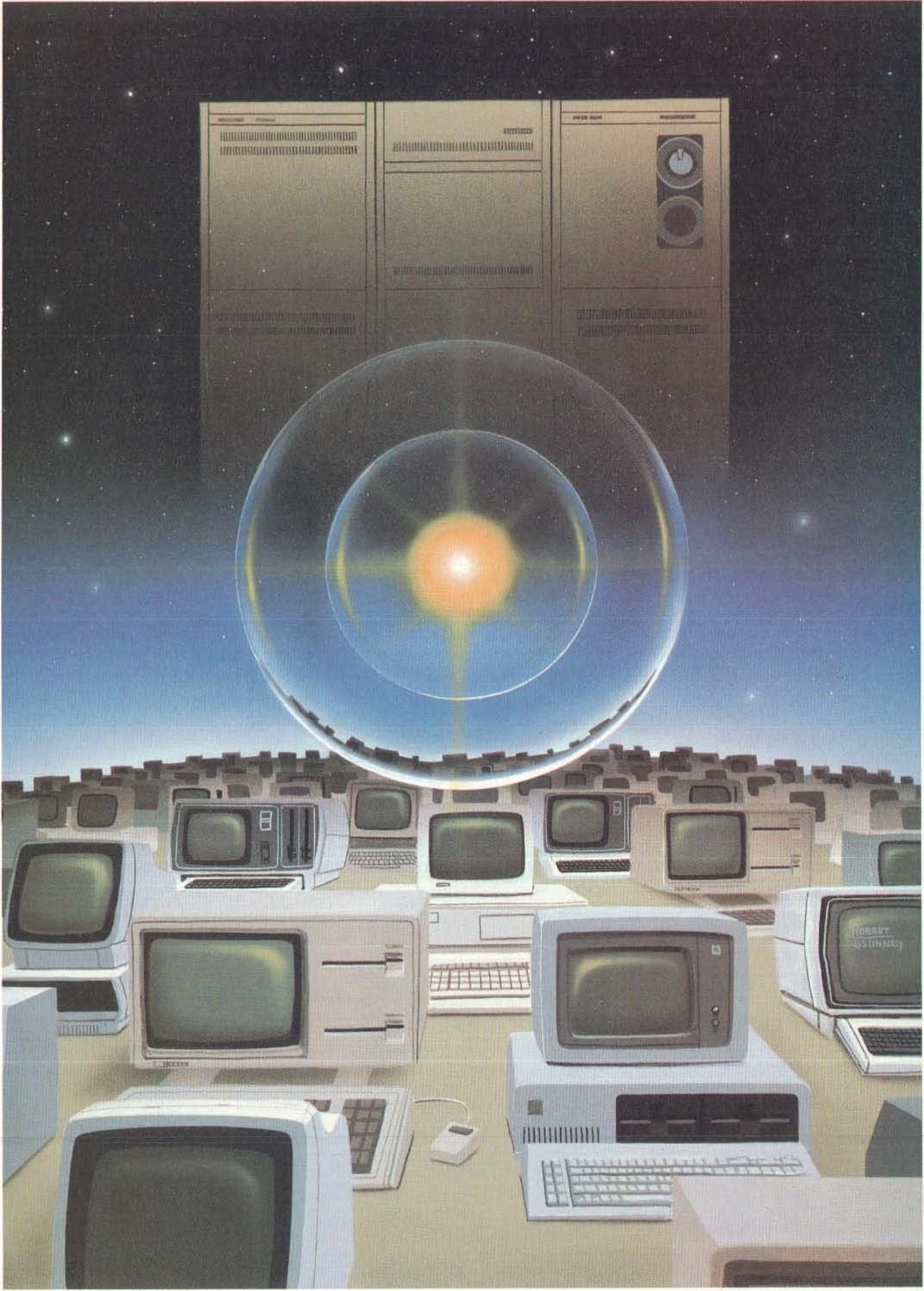
This October 1983 illustration is a similar deal, turning up as an interior illustration for a story about Unix on micro-computers, in an issue with a photograph cover.
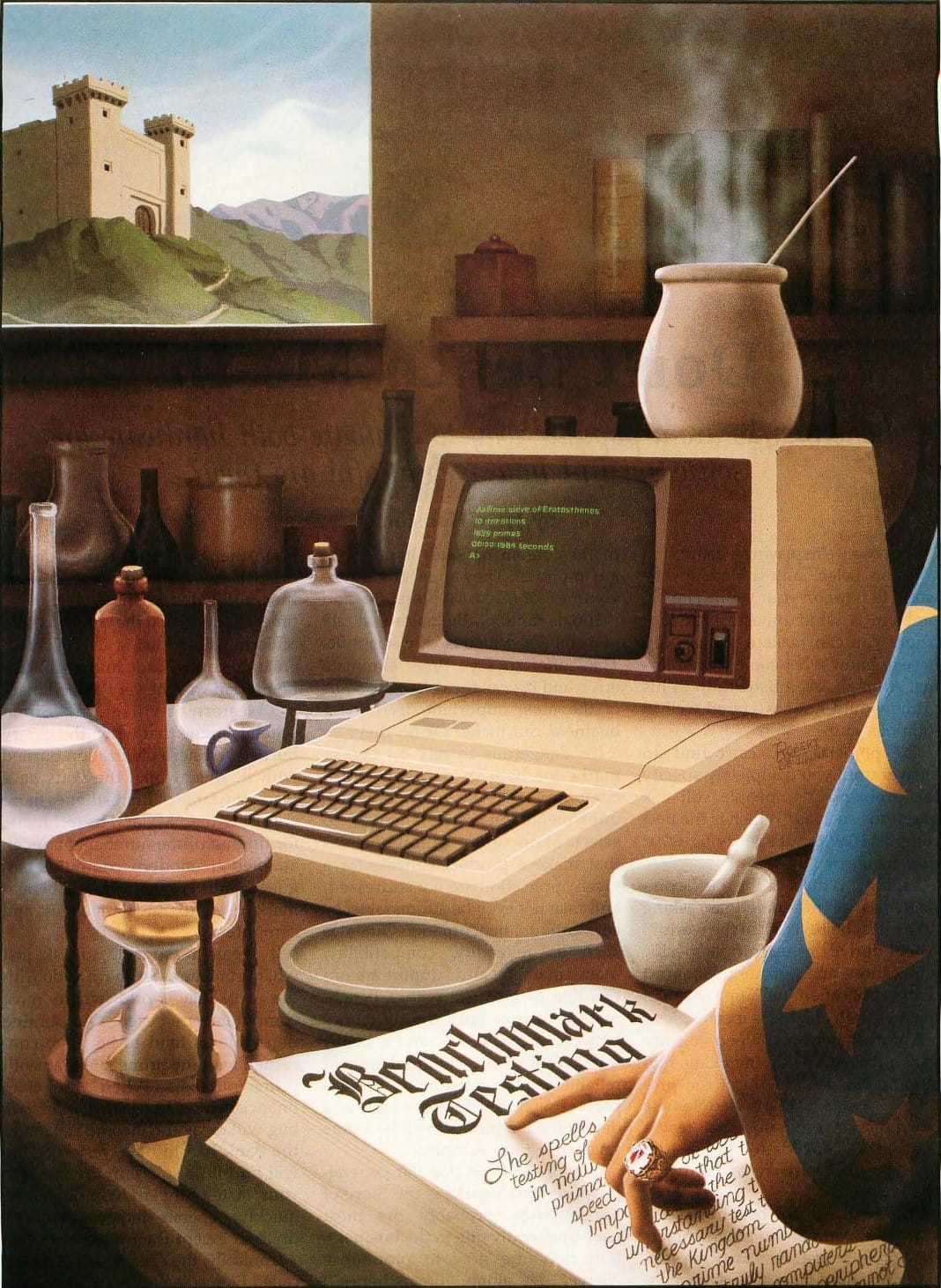
This February 1984 interior illustrated a cover story about benchmarking. You have to admit, this would have been a classic cover.
Robert Tinney's Non-Byte illustrations
Tinney's career didn't begin or end with Byte. He worked for a range of electronics companies and magazines across the 70s, 80s, and 90s, doing plenty of covers and advertisements that have rarely been collected or highlighted. Let's fix that now.
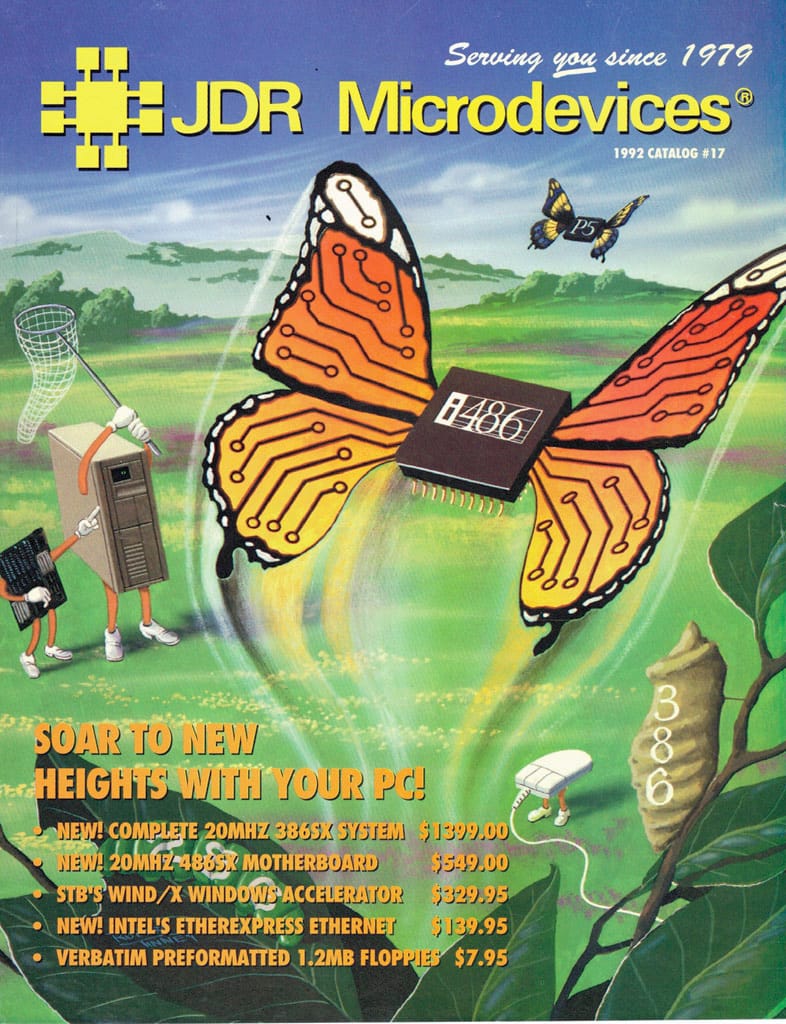
We'll start with the one big collection of non-Byte Tinney work I could scrounge up online – this great blog post, listing nine covers to Priority One Electronics, JDR Microdevices catalogs, and the Computer Applications Journal.
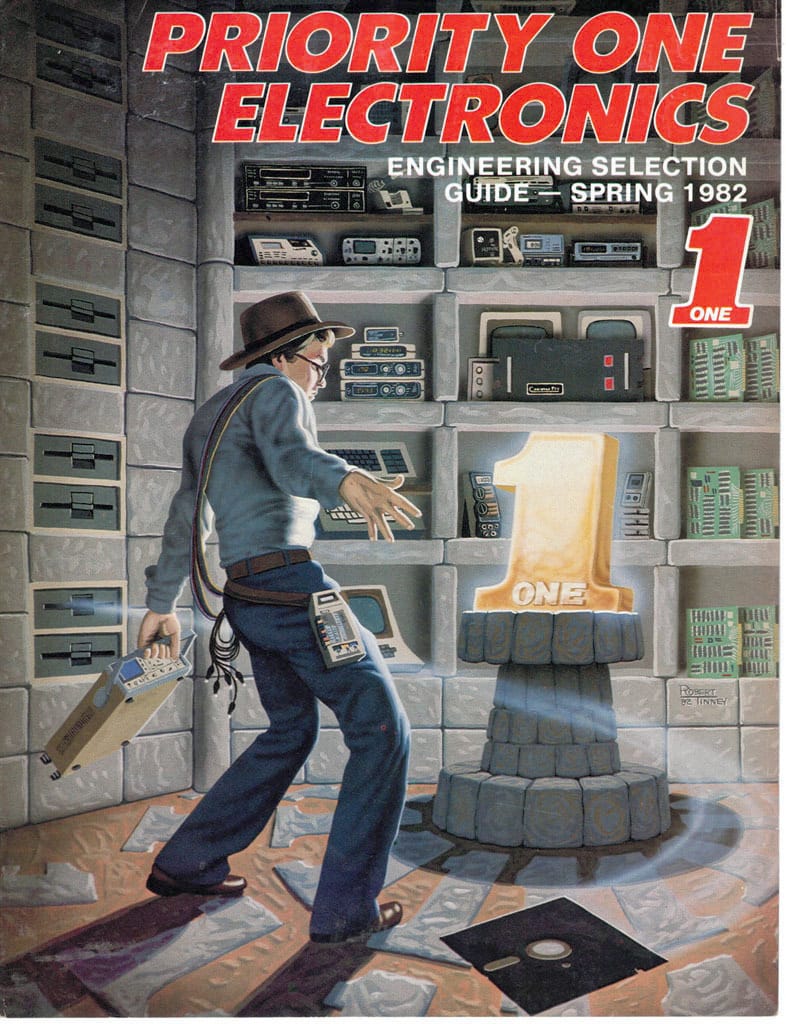
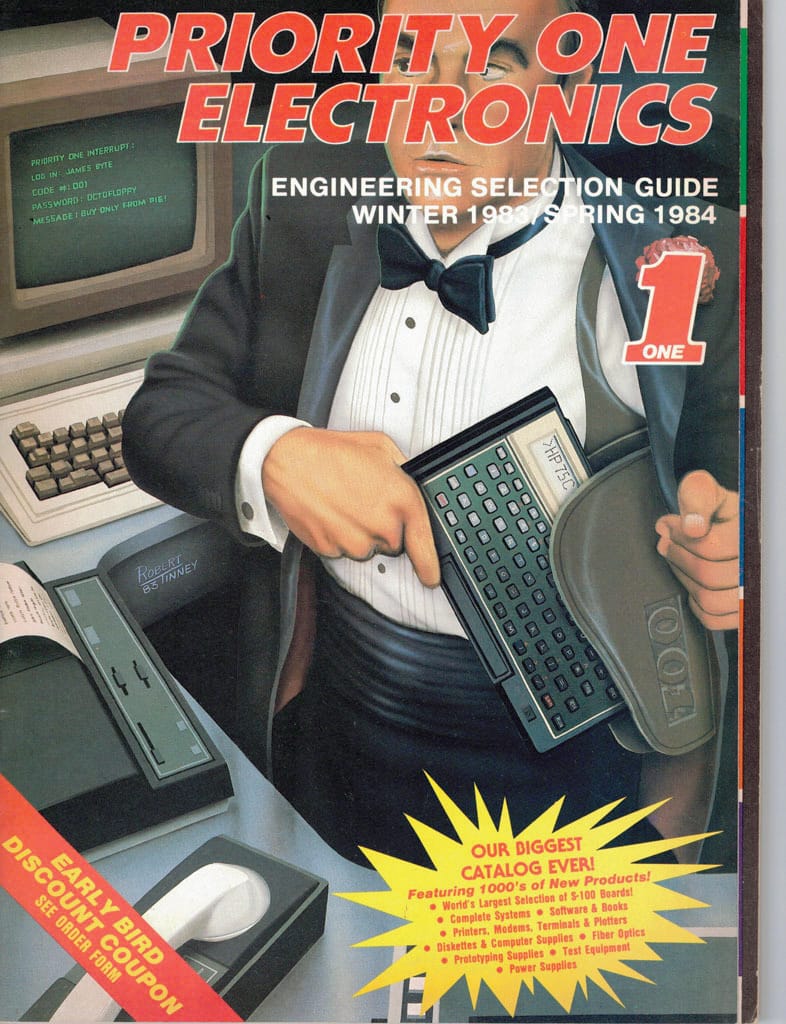
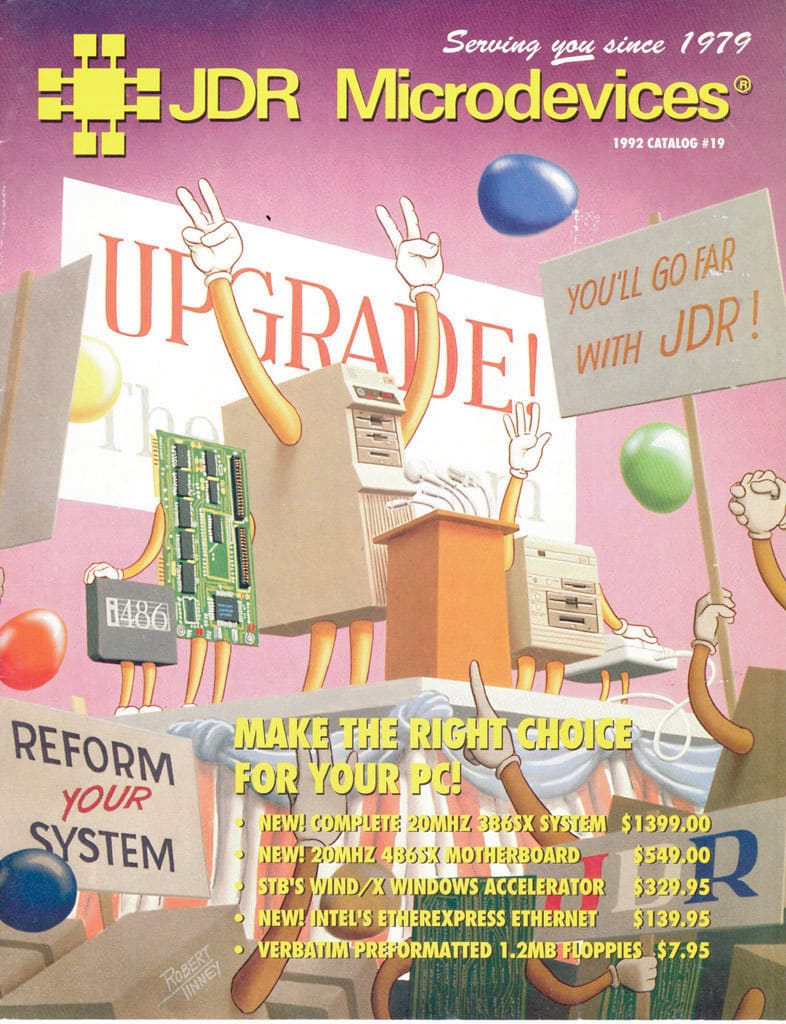
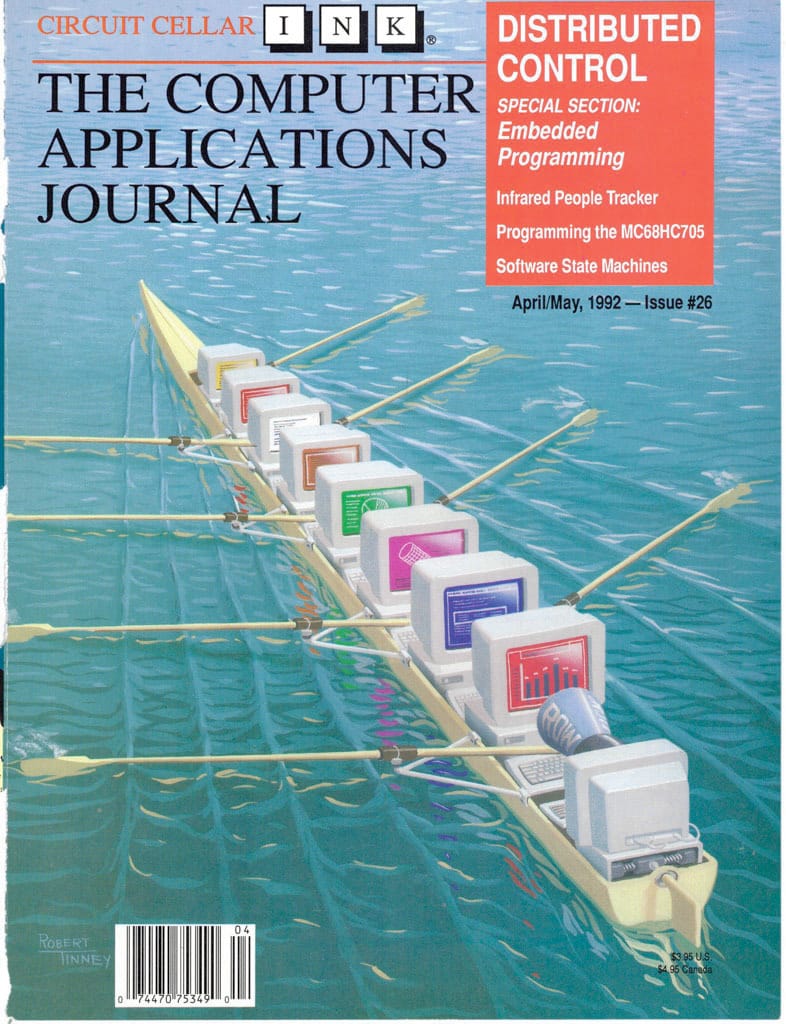
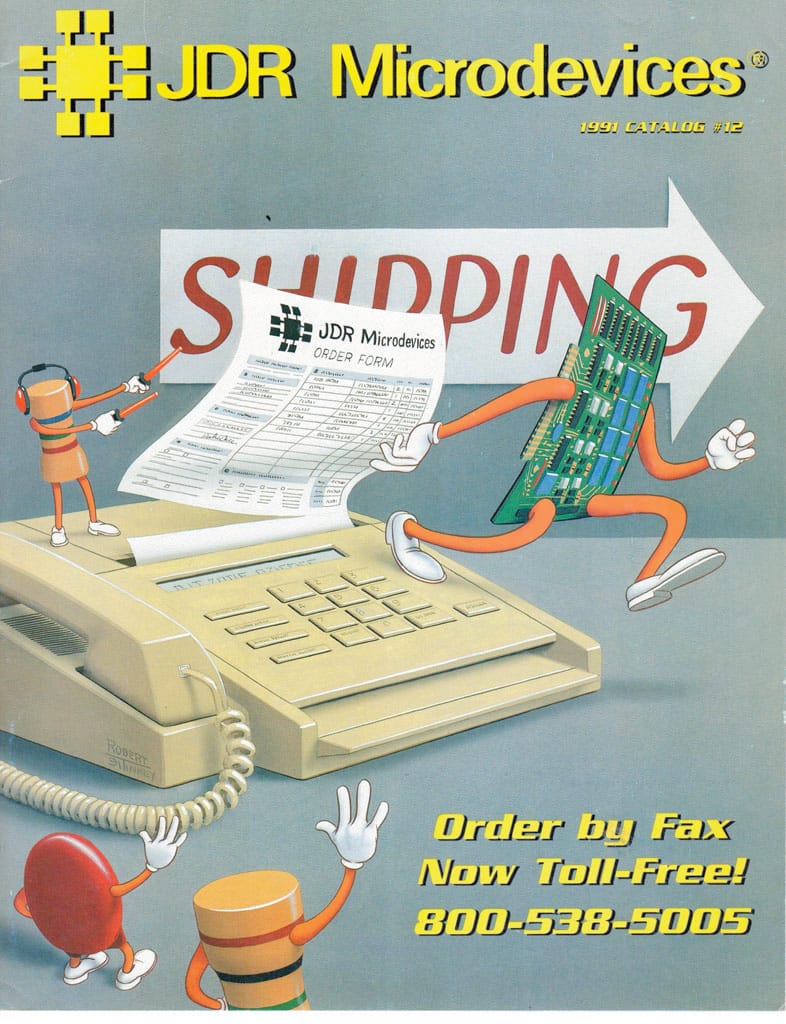
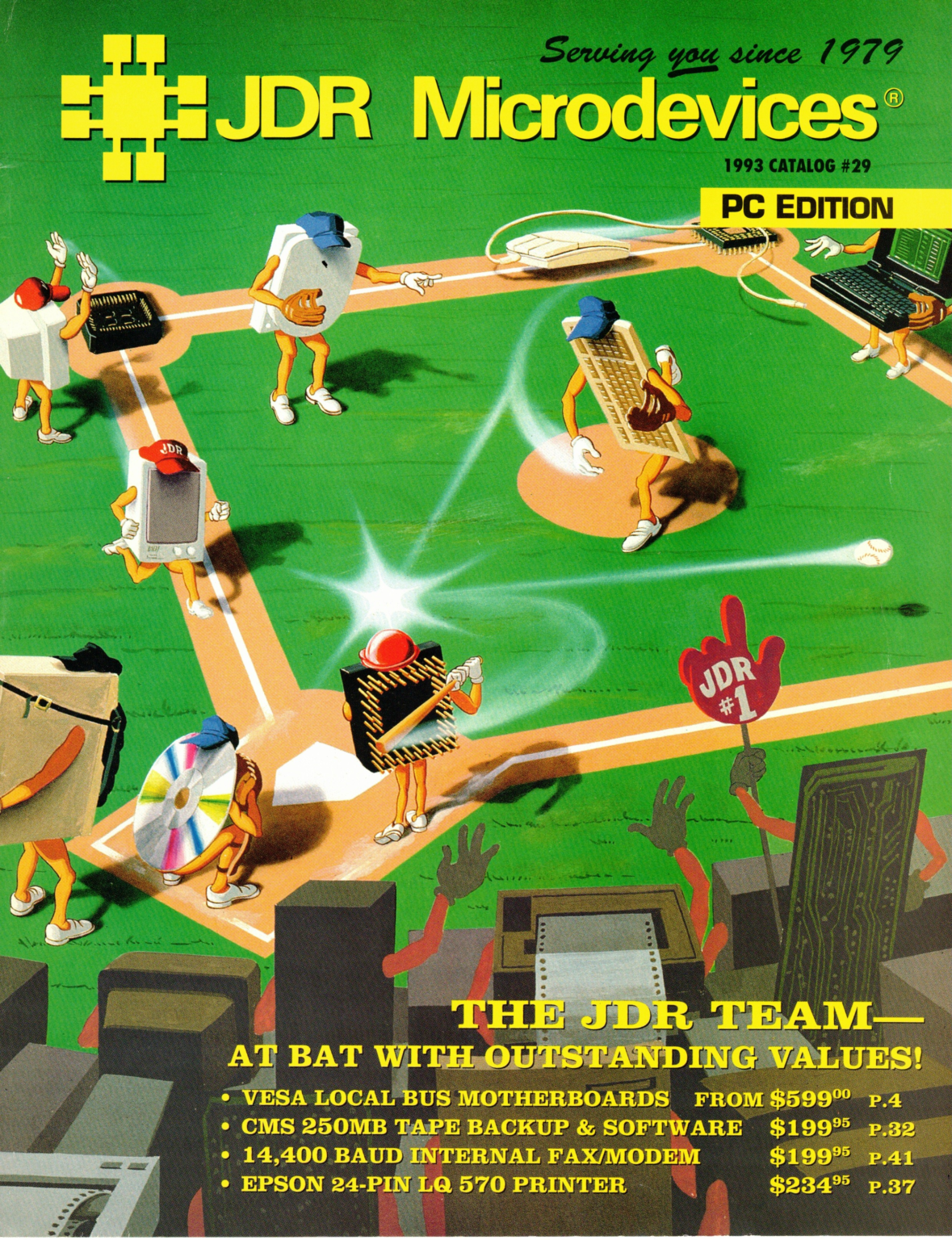
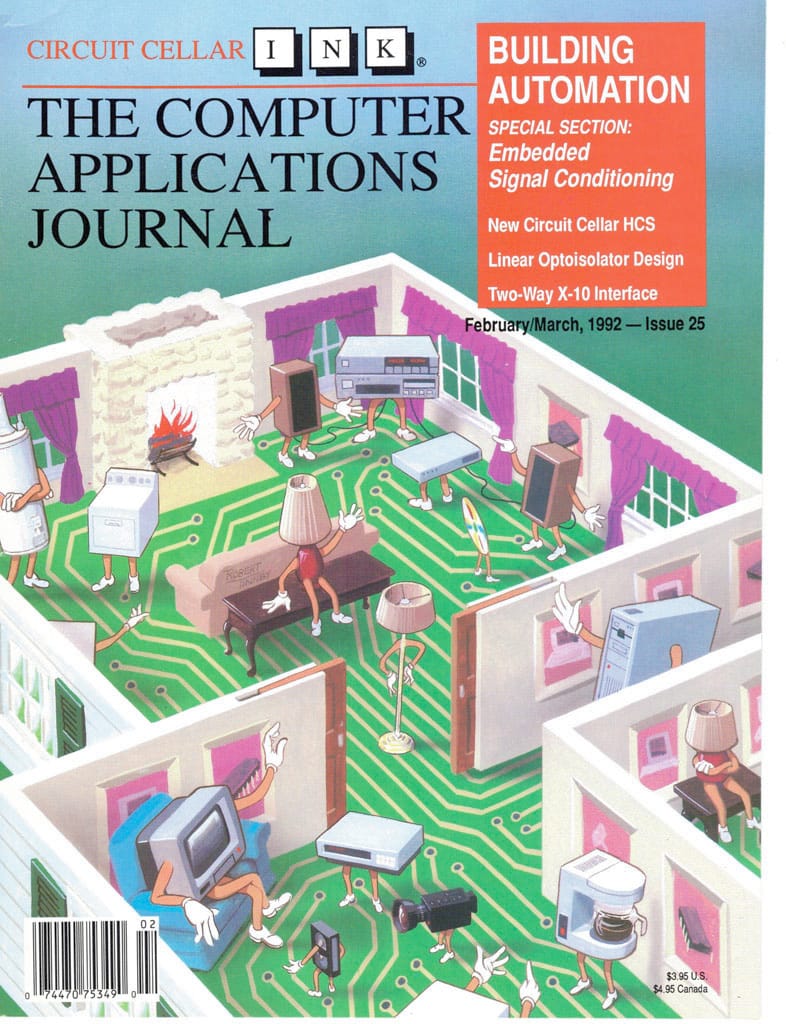
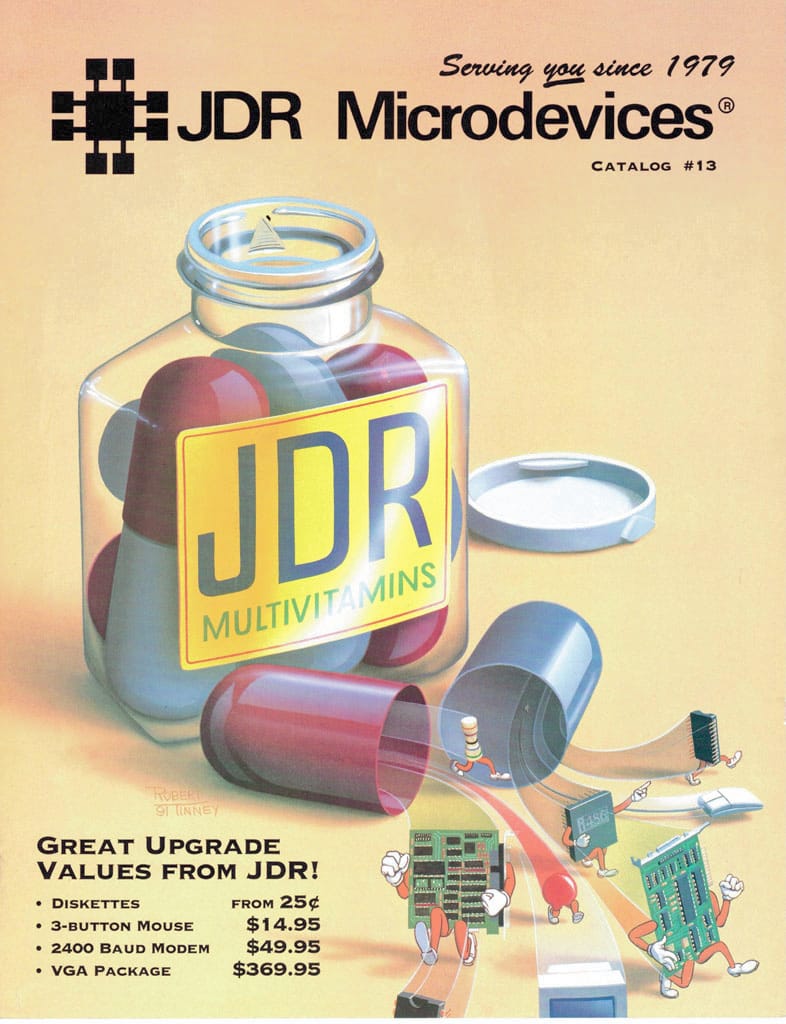
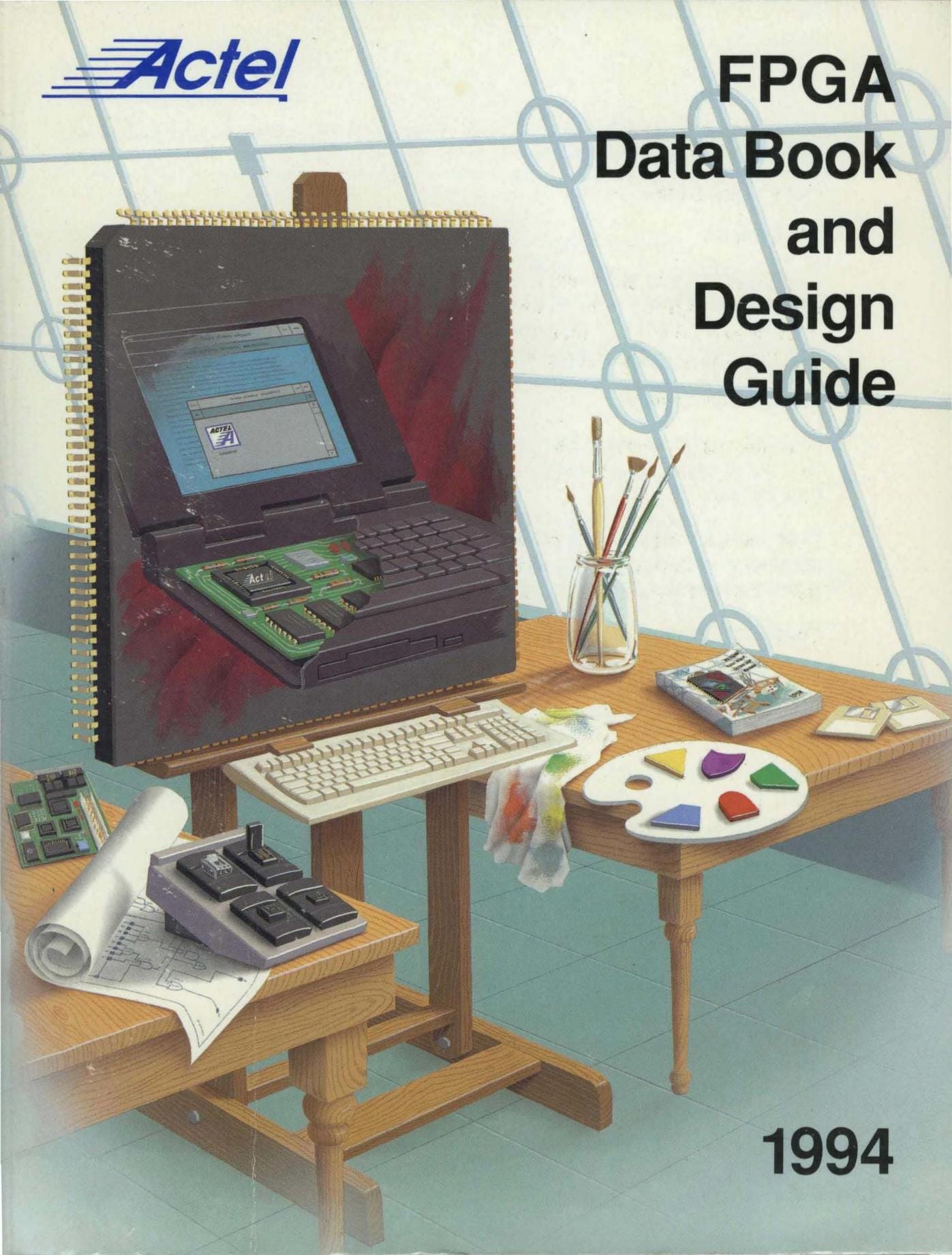
Here's Tinney's 1994 cover to the Actel FPGA Data Book and Design Guide.
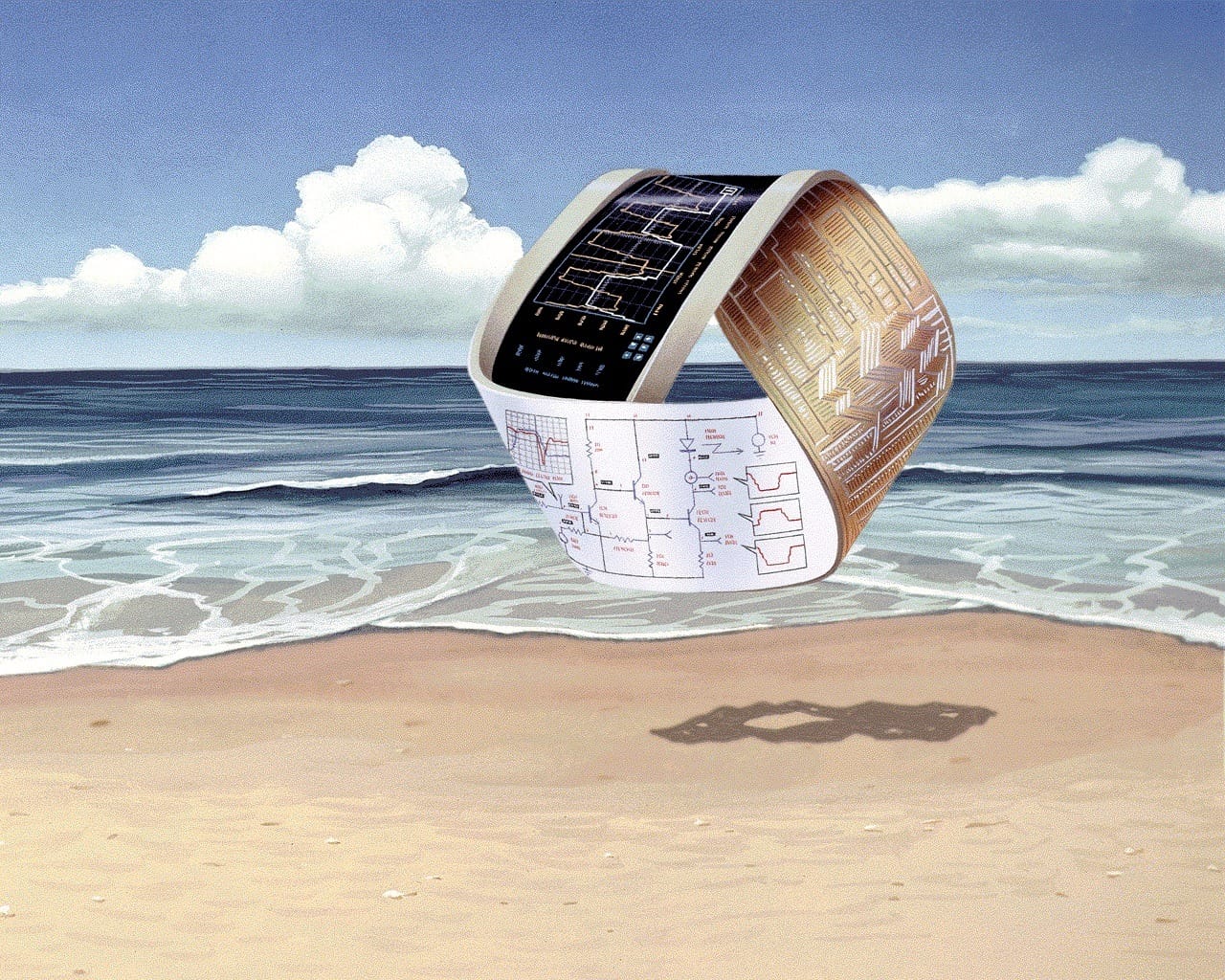
These three beautiful undated Robert Tinney artworks are all still available online as Intusoft wallpapers, on a site that charmingly has "©2002 Copyright" at the bottom.


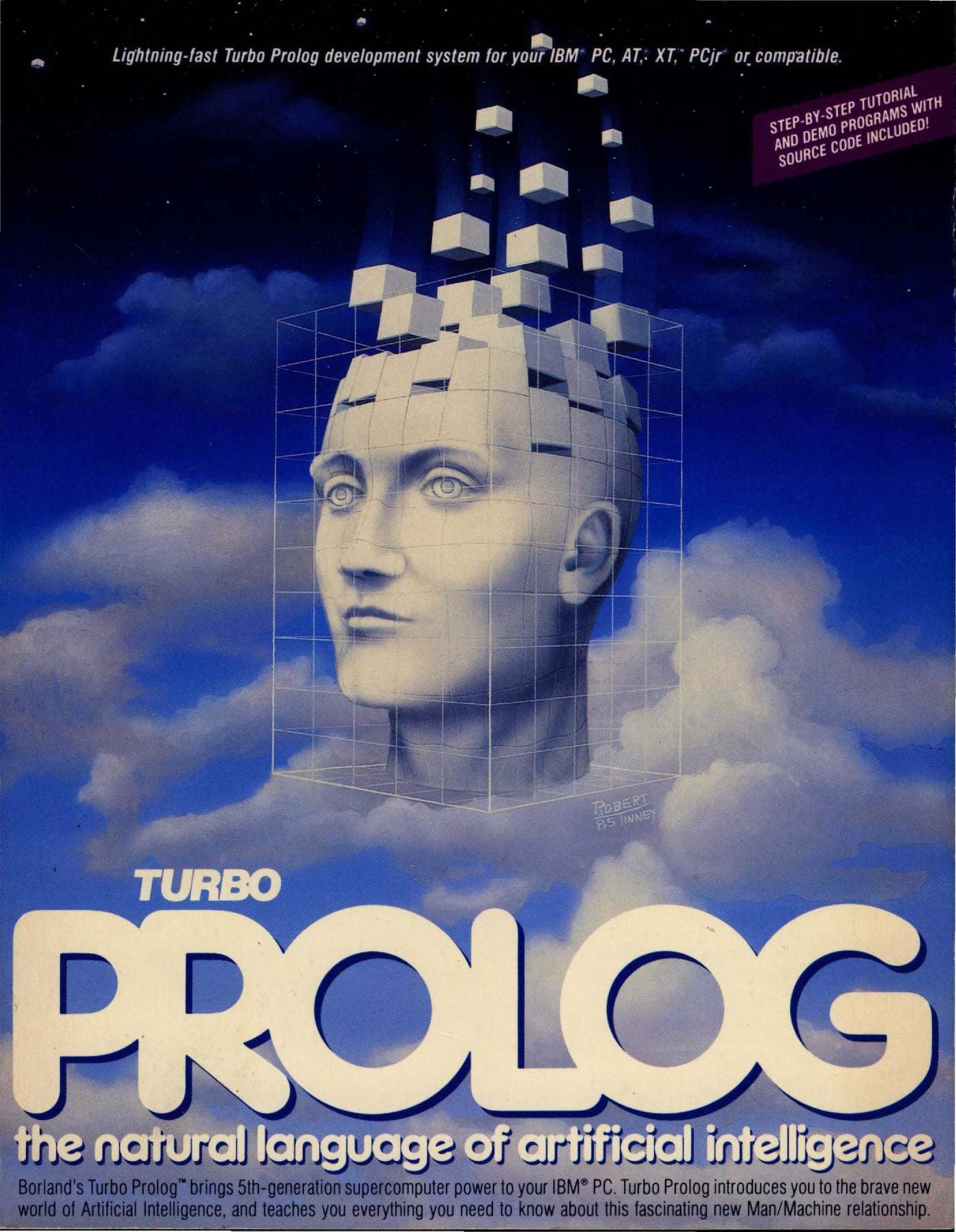
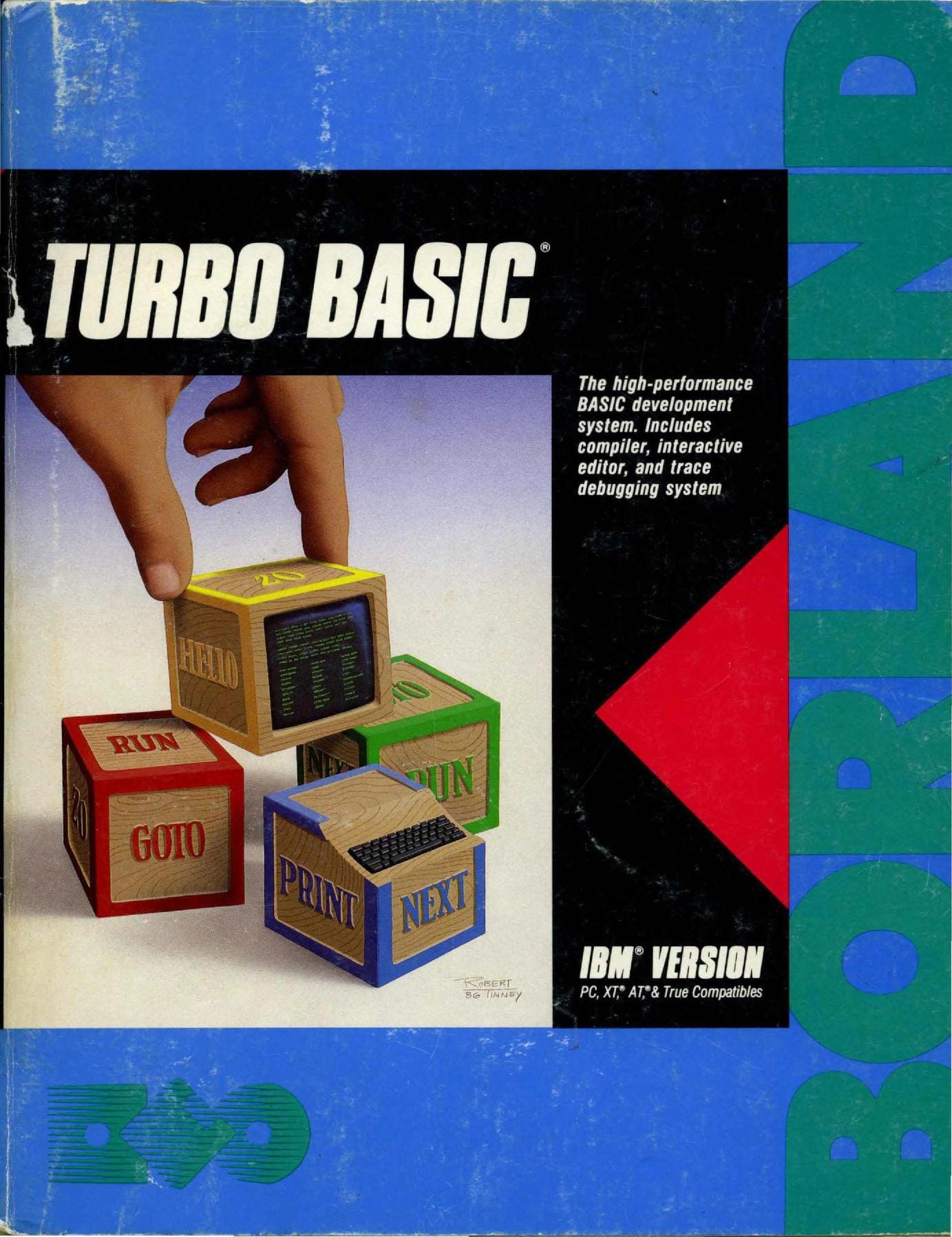
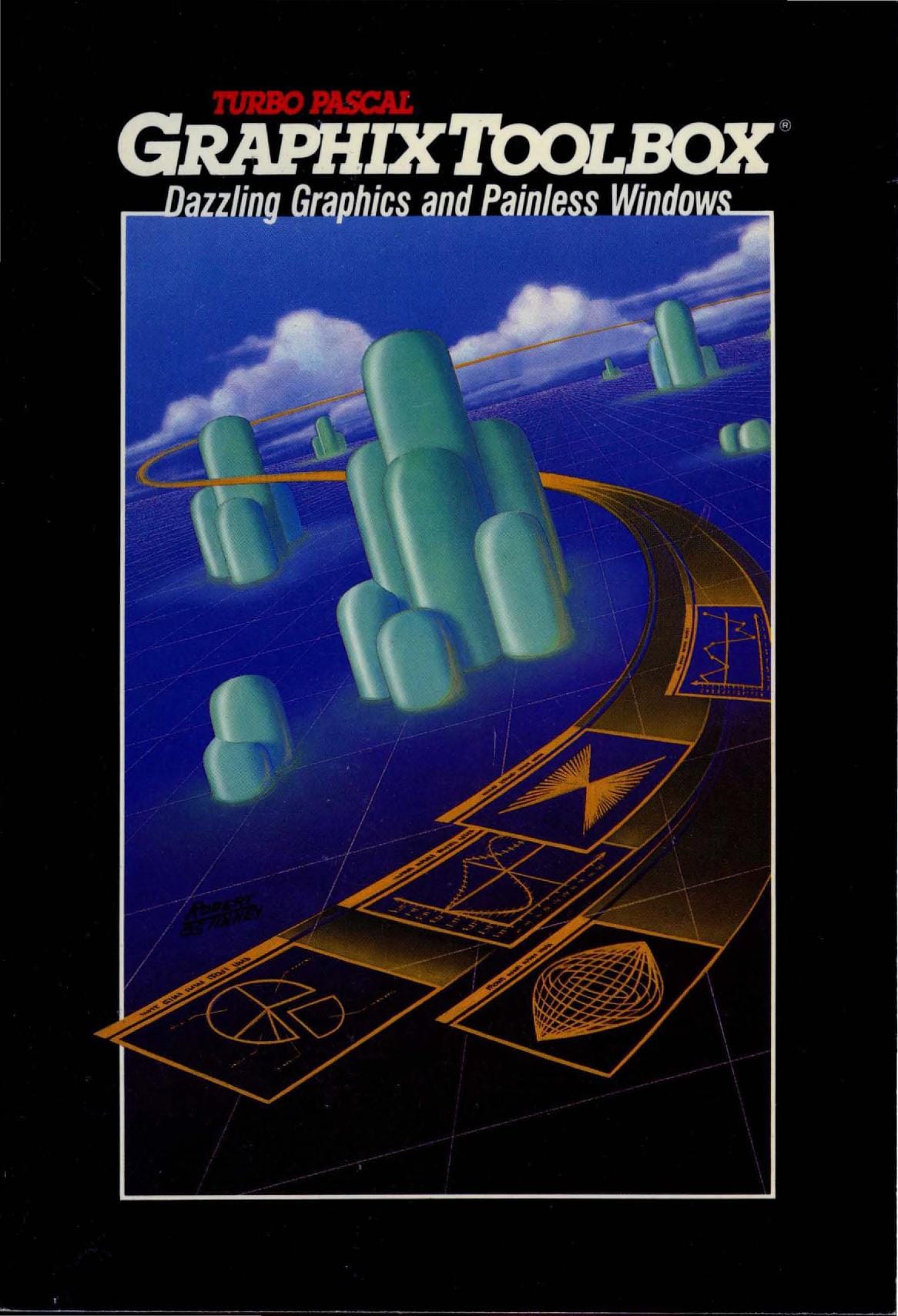
Tinney's covers for Borland’s Turbo Prolog, Turbo Basic, and Turbo Pascal Graphix Toolbox.
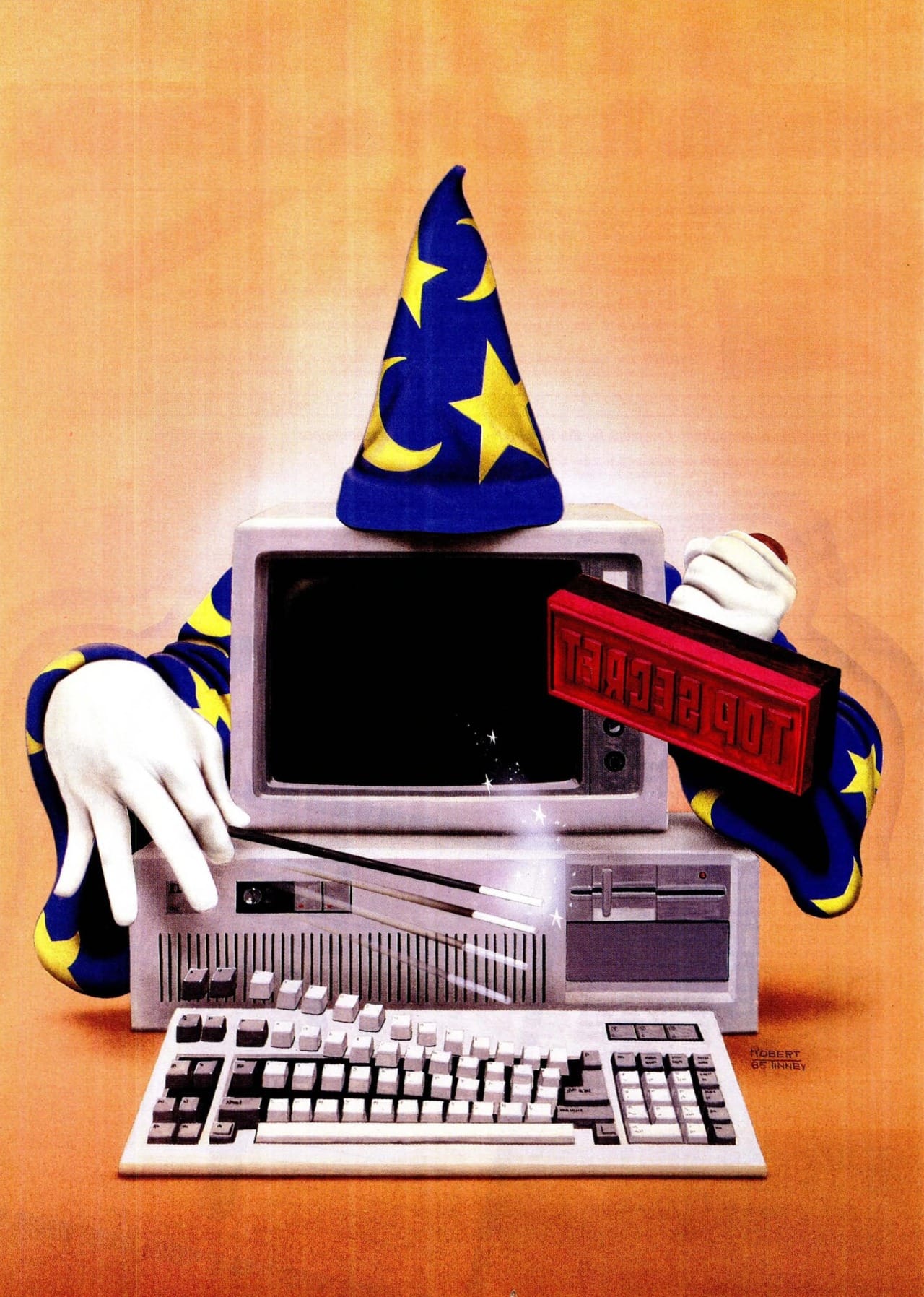
Here's a 1985 Borland ad he did around the same time.
Tinney's Priority One Electronics Fall 1980 cover:

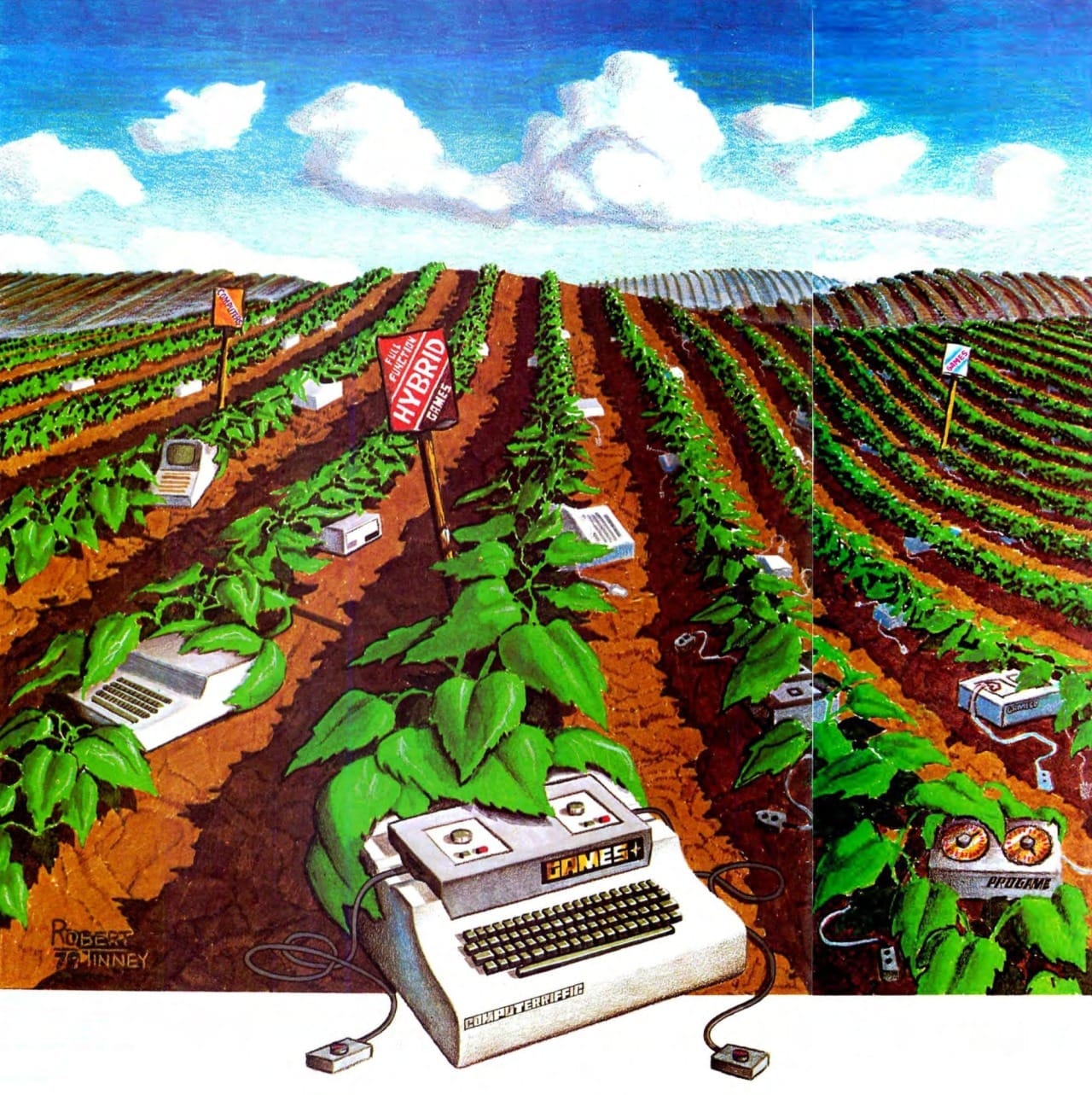
You might recall this Robert Tinney interior illustration from the Fall 1979 issue of onComputing, done for an article on Atari's "hybrid" computer/game consoles, which I featured in my computer plant life post a while back.
Tinney did another interior for onComputing's Spring 1980 issue, and this one includes an easter egg: The corner of Tinney's October 1978 Byte cover art is visible hanging on the wall. Here, compare the two:
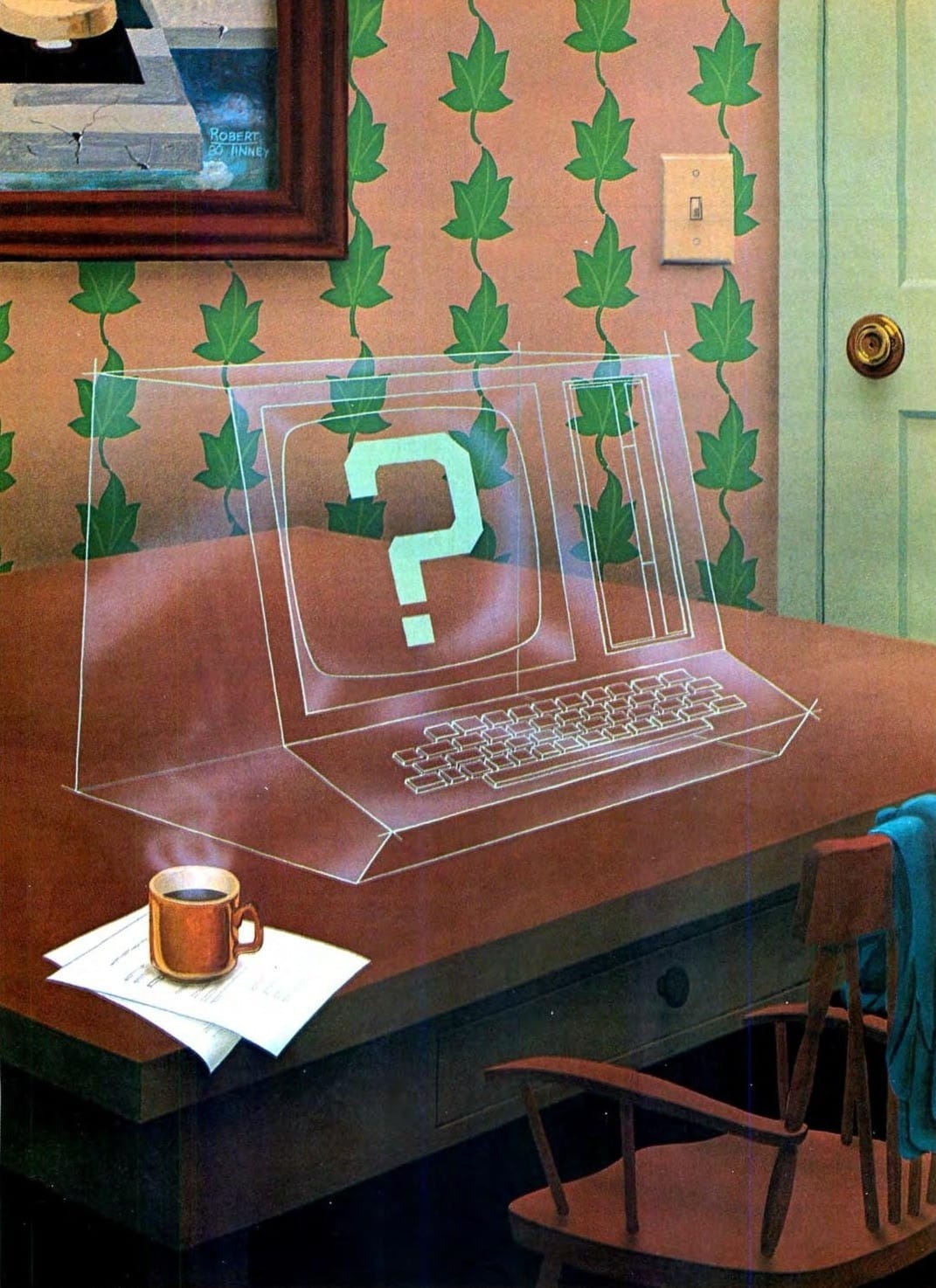
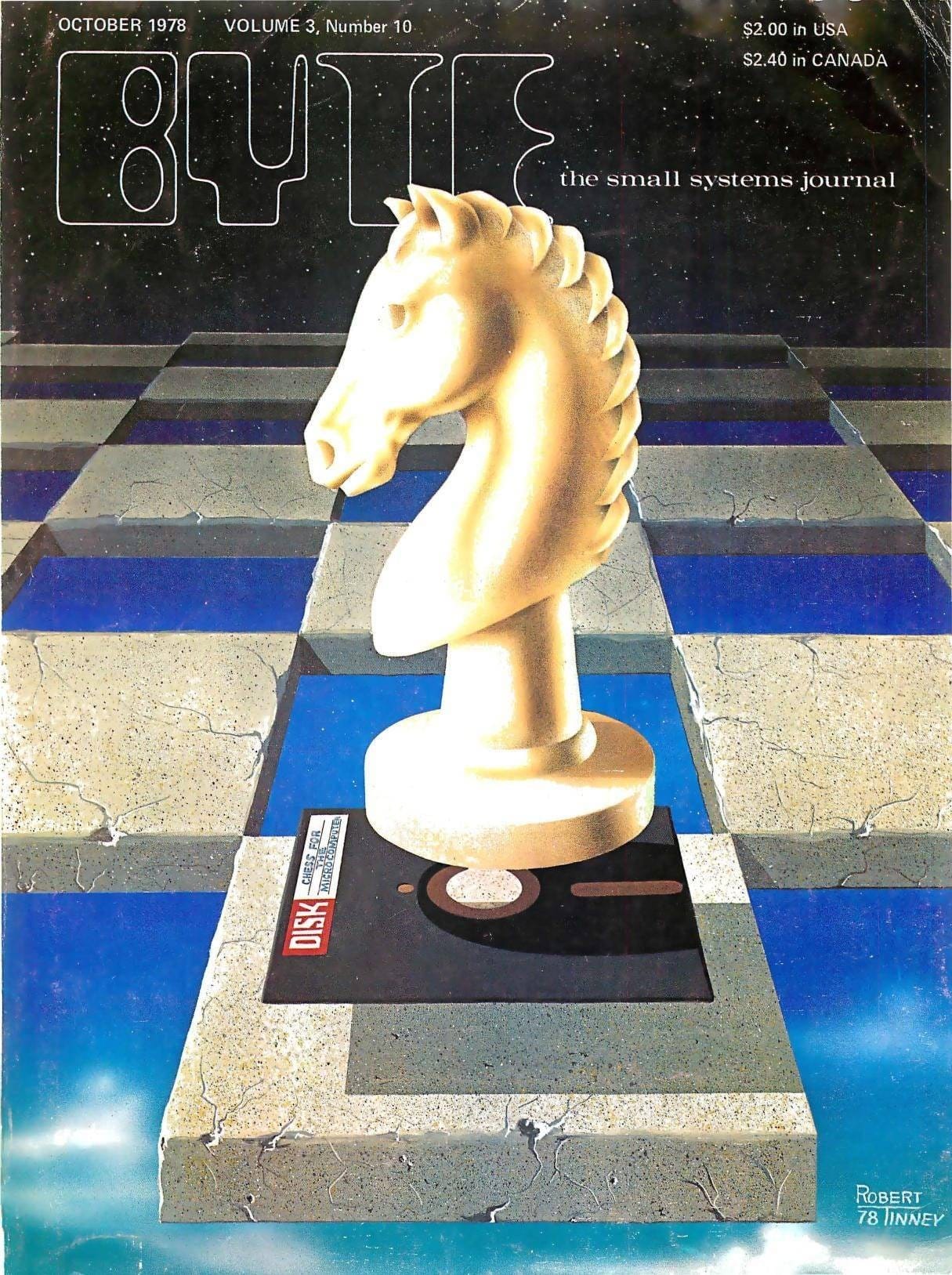
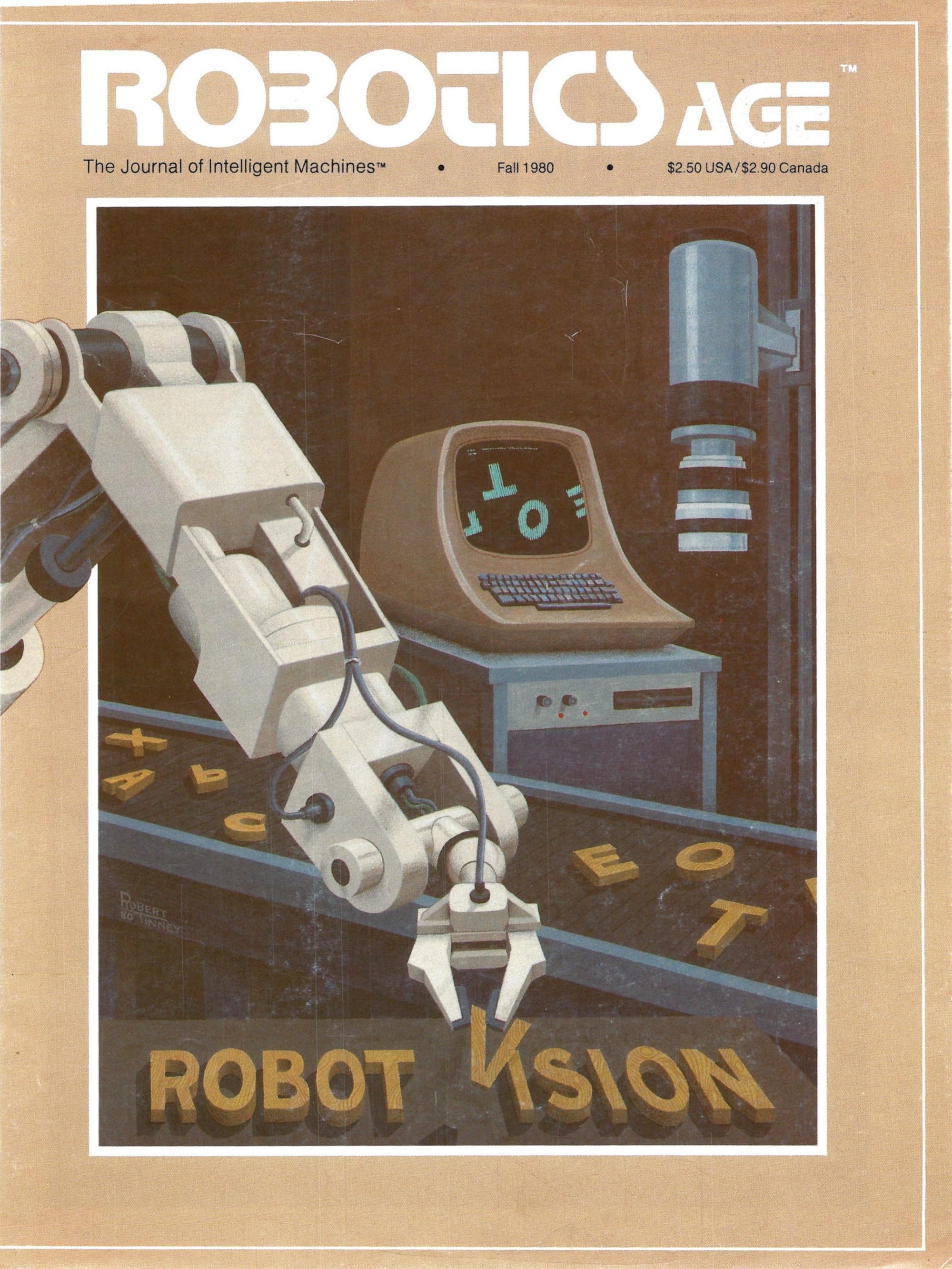
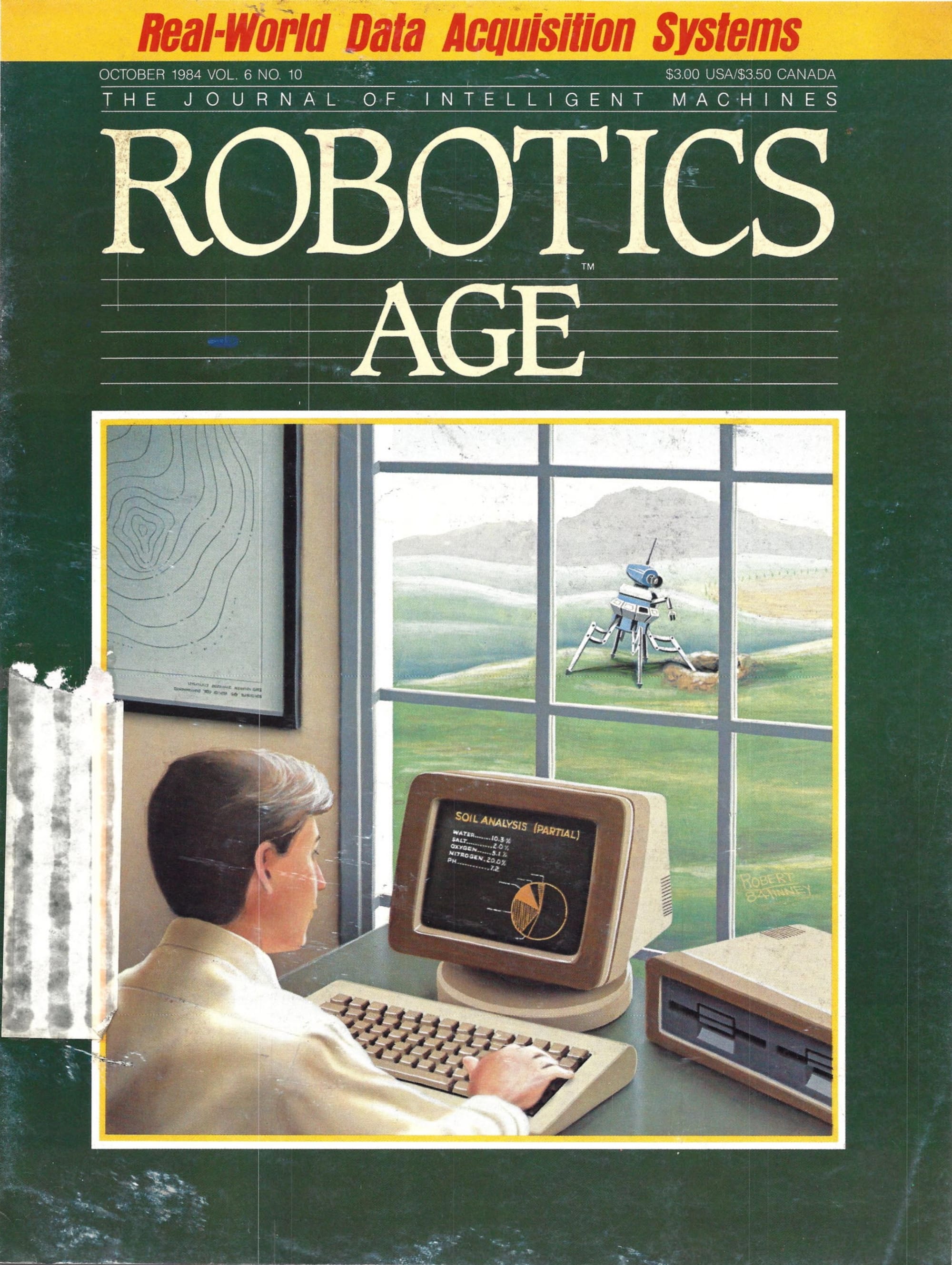
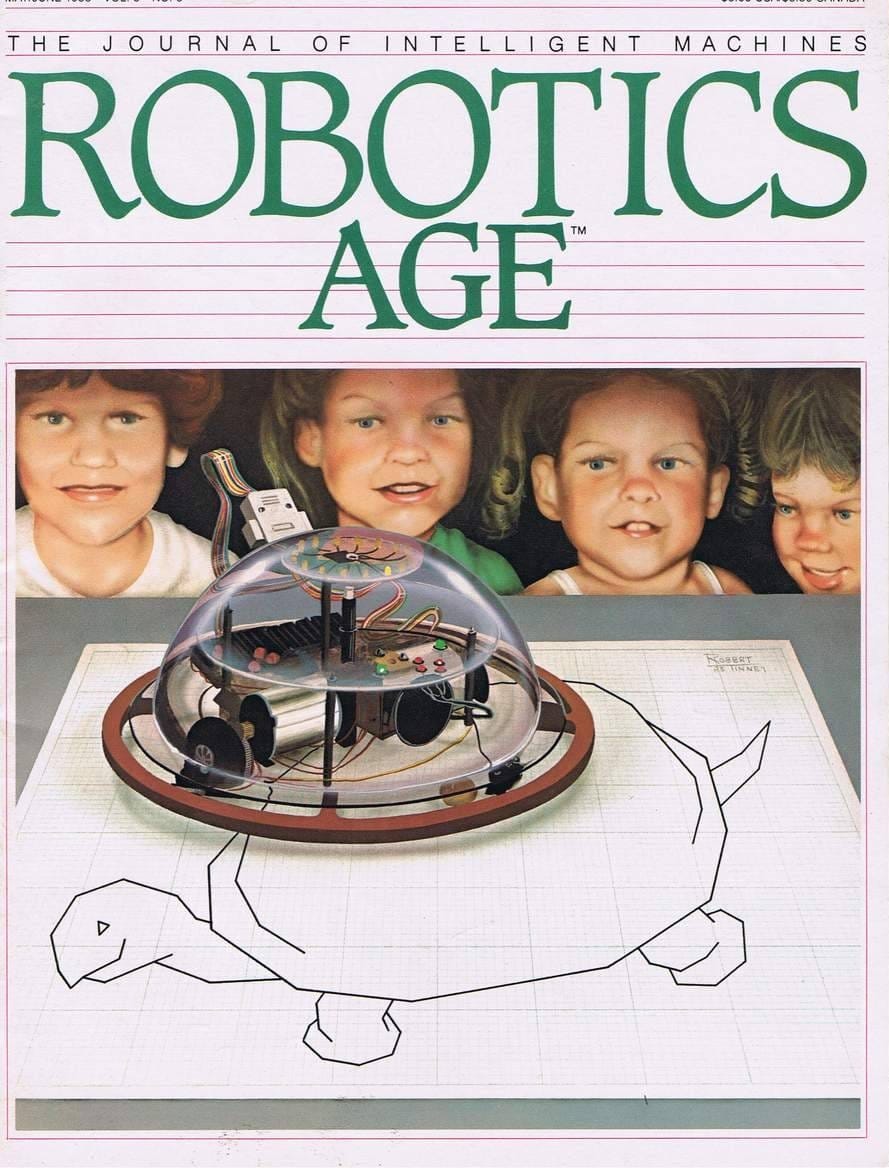
Tinney did covers for Robotics Age magazine (Carl Helmers served as the editor), in addition to this advert for the publication:
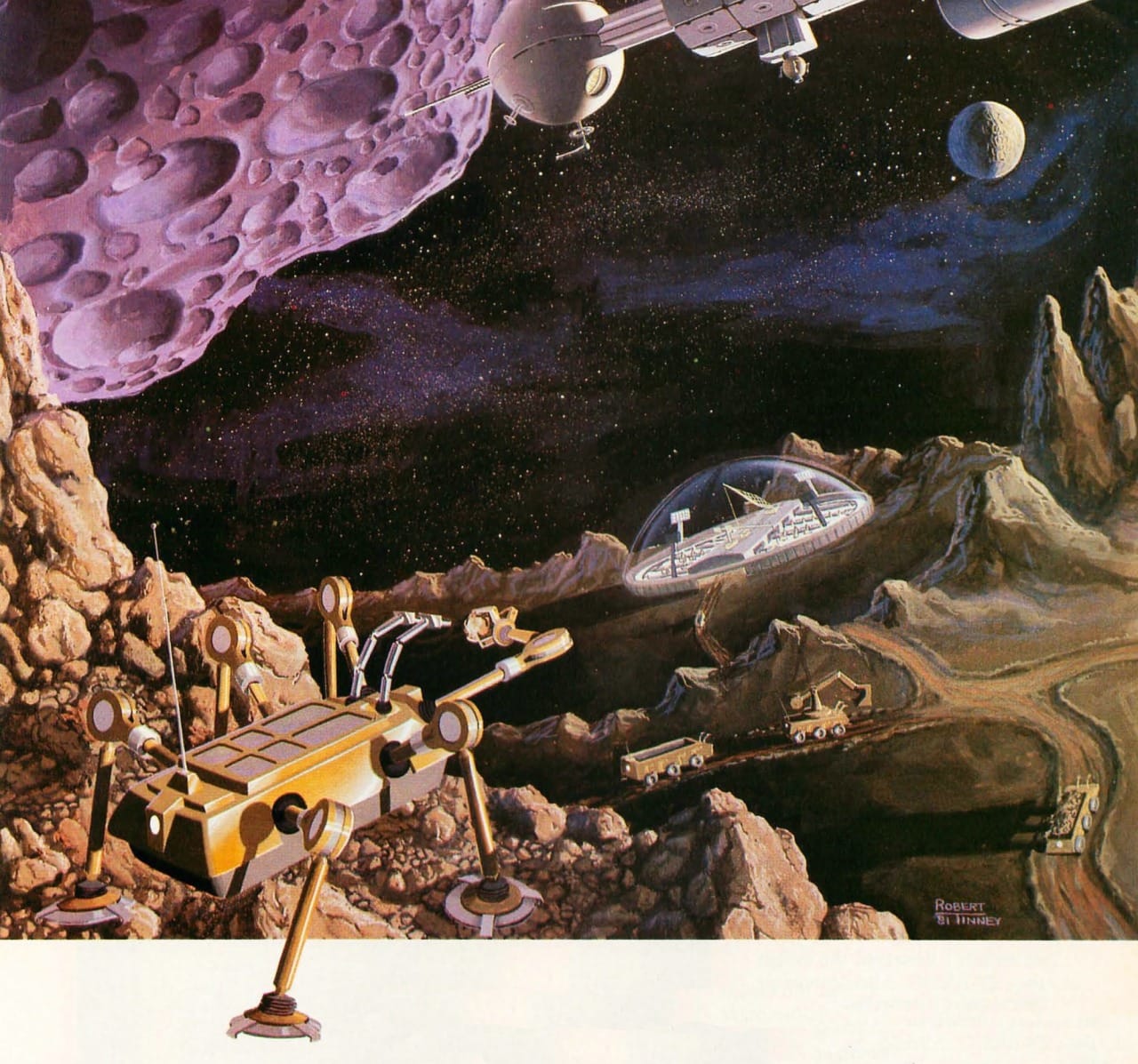
Tinney served as art director and then consulting designer for the magazine for some years. Here are all the Robert Tinney Robotics Age covers I could find on the Internet Archive, along with another I spotted on Tumblr. There may well be more!
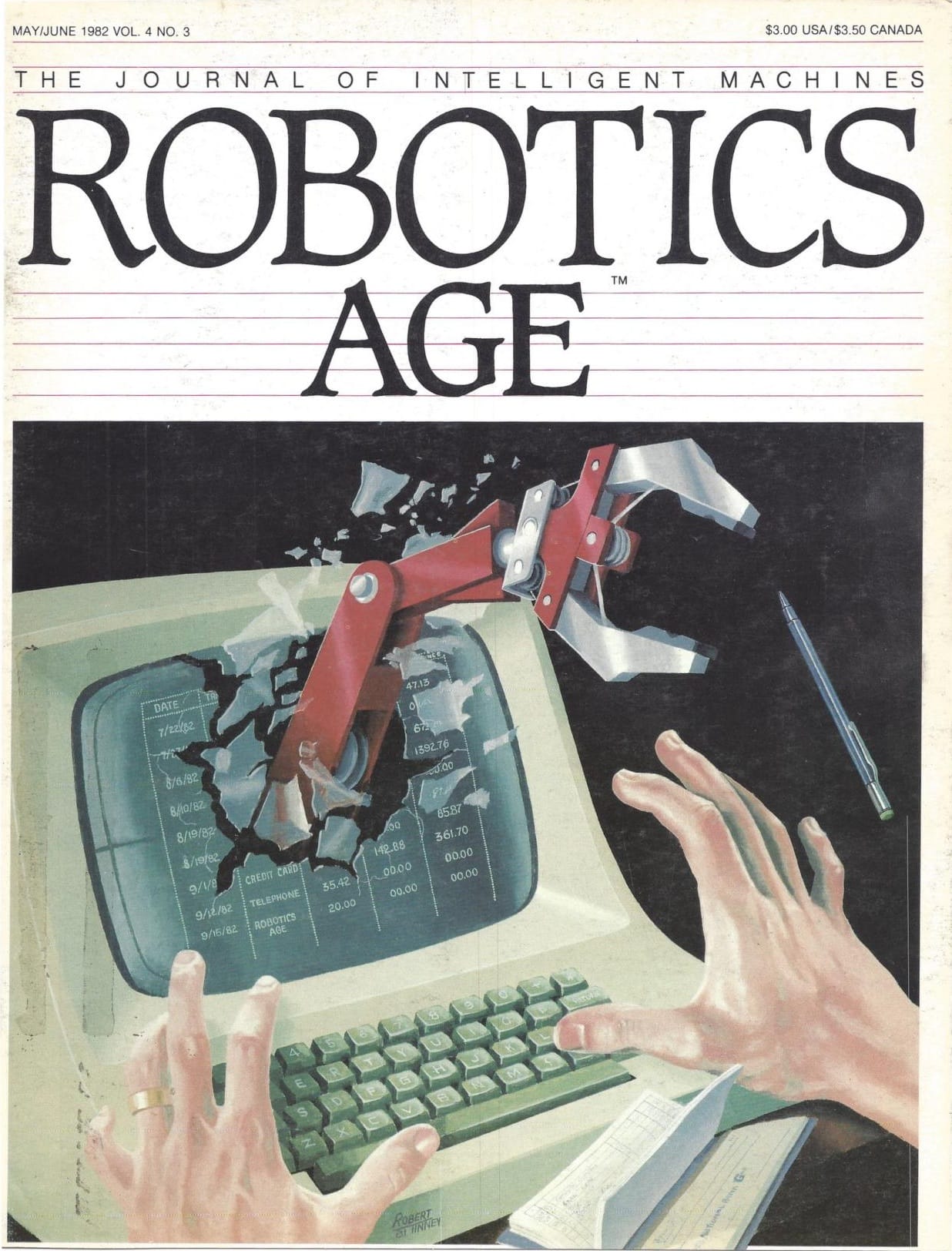
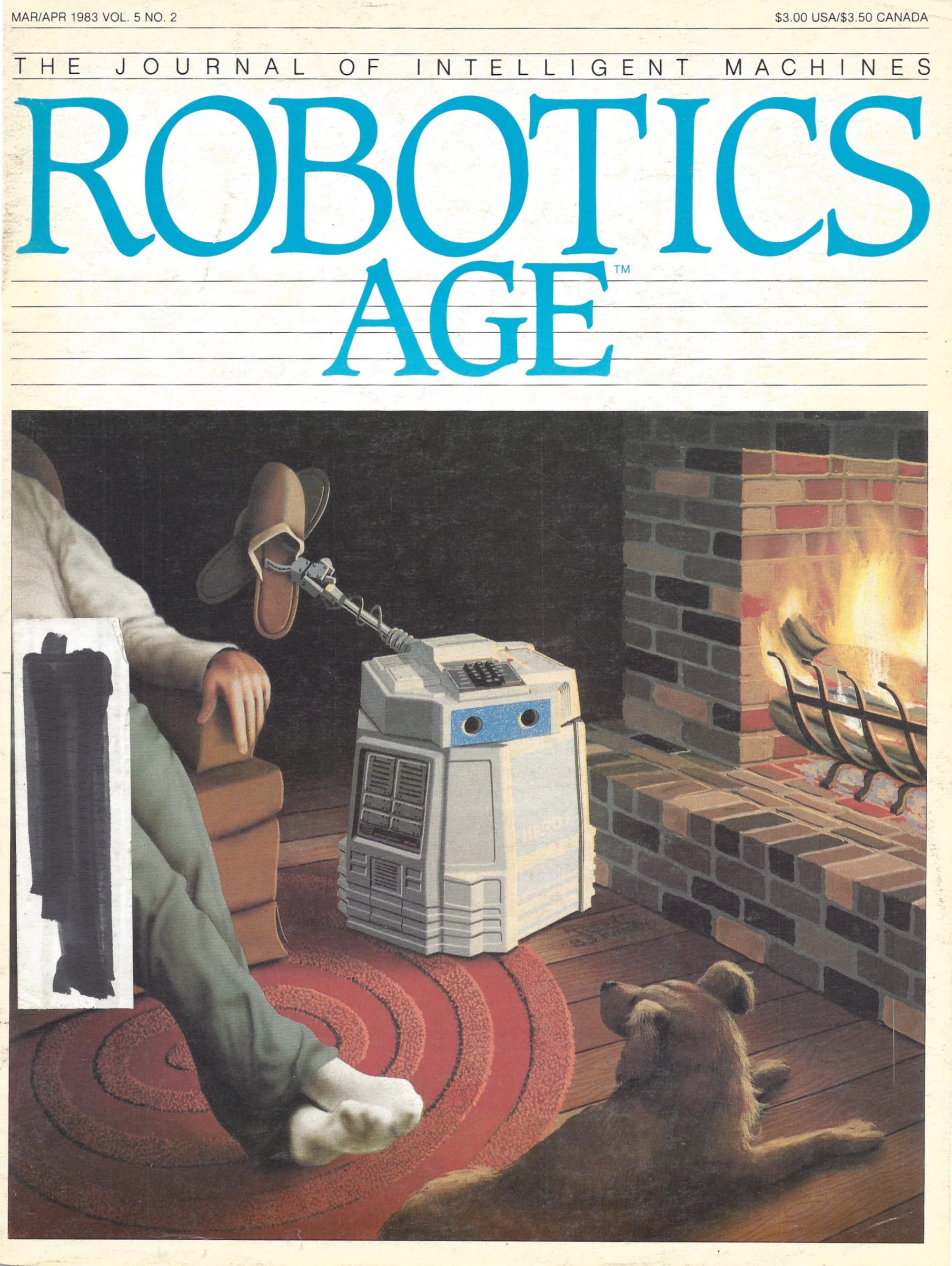
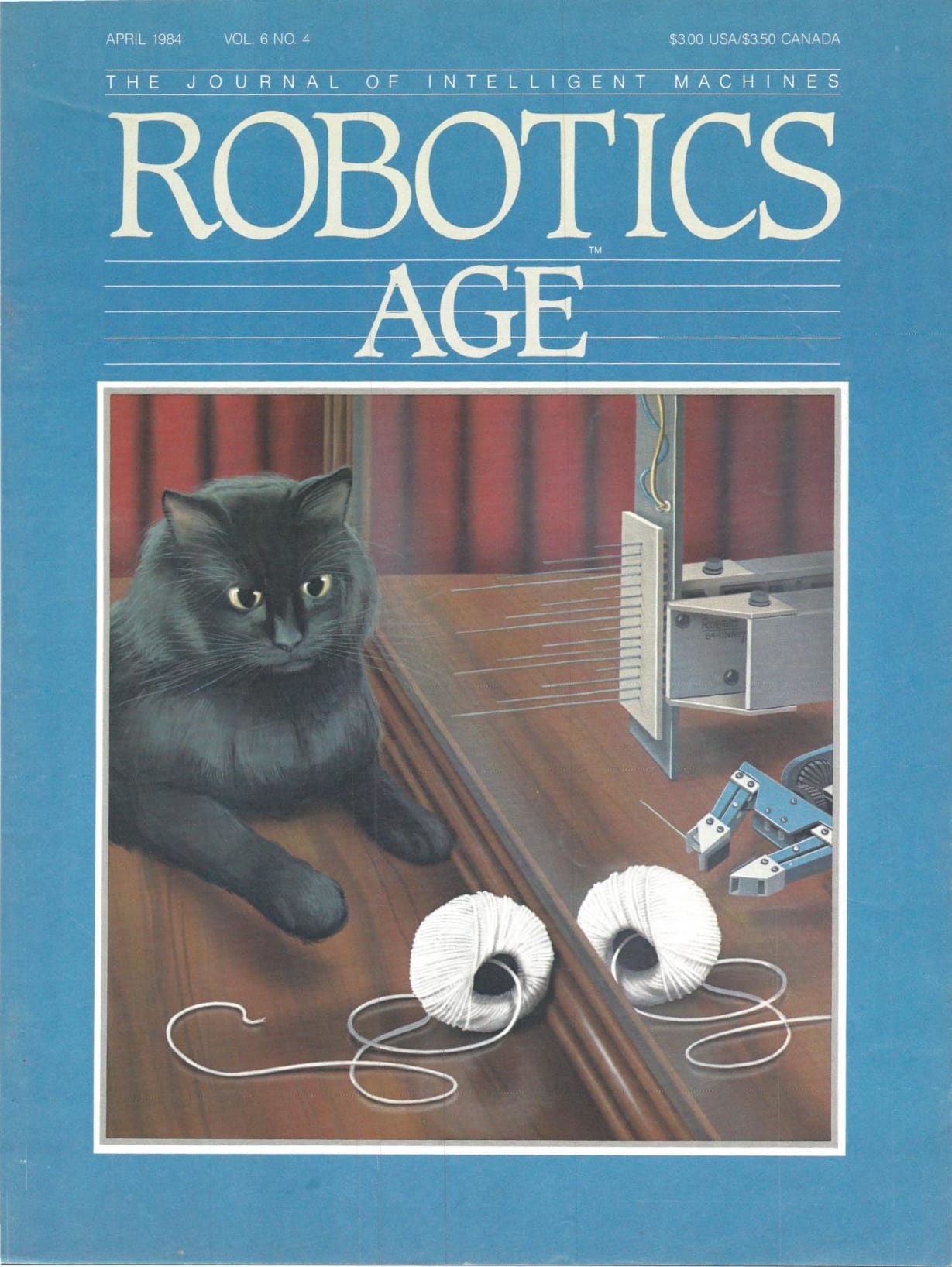
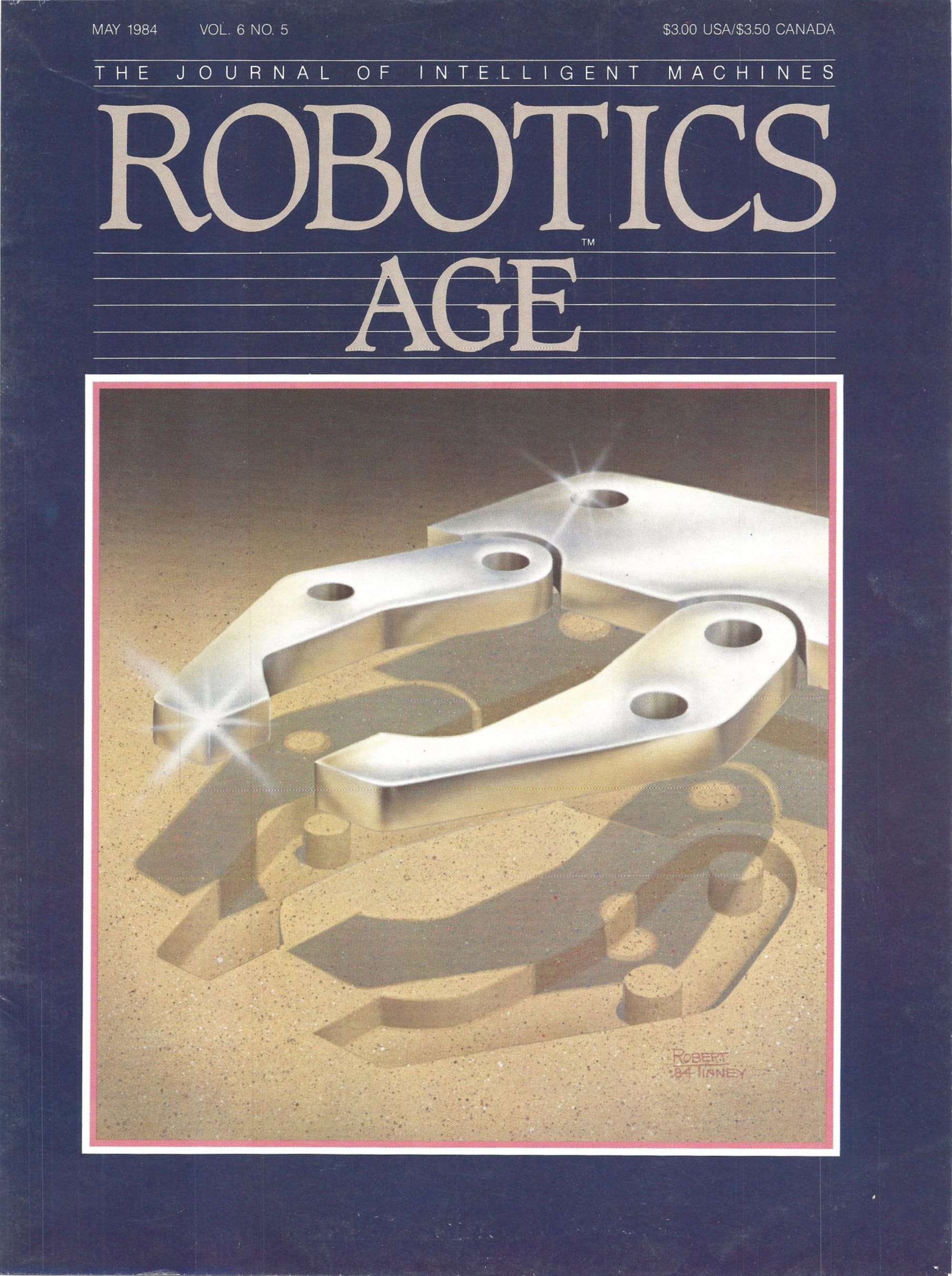
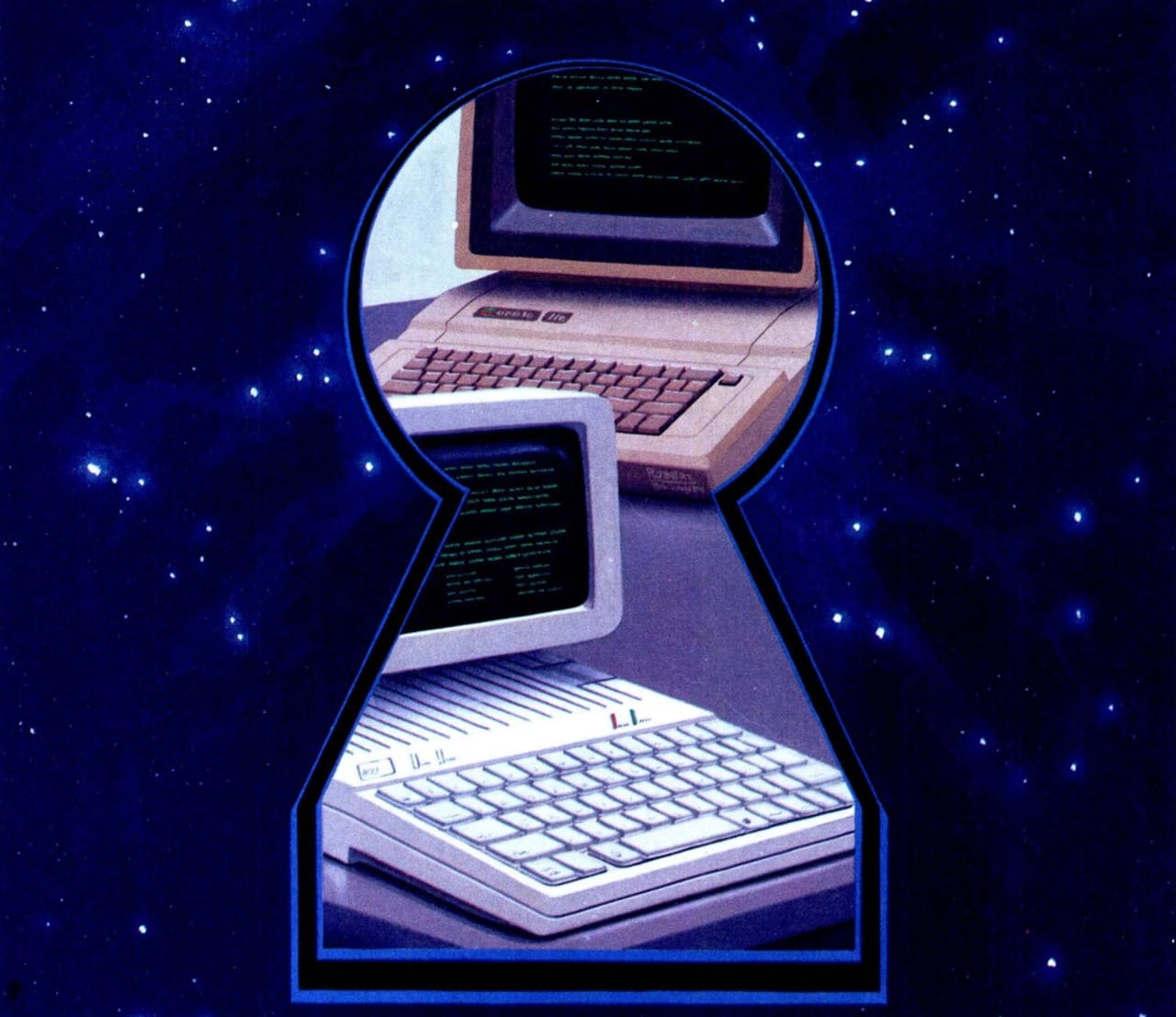
This Tinney illustration appeared as an ad on page 67 of Nibble magazine, January 1986, promising to "unlock the mysteries of your Apple." Thanks to Lookcaitlin for spotting this one, which is only identifiable as Tinney from his signature.
Finally, here's an intriguing collection of Tinney works commissioned by water resources management software company Haestad Methods.
The only information is from this 2009 Bentley forum post, where an employee named Jack says that the Haestad Methods Solution Center in Watertown, CT, has "over 20 original framed paintings" adorning the walls of its office!
They apparently "decorated Haestad Methods' direct mail pieces, web pages and user documentation" for a 15 year period starting in 1990. (I found one cover with a quick search - jump in the comments if you can find more.)
Somewhat annoyingly, the poster makes it very clear that he has great scans of all the art, but only posts four blurry thumbnails, which I've reproduced here. Yes, Jack, I want the scans! Post them! Does anyone reading this know anyone who works at Bentley Software?




Speaking of Tinney artworks that I'd love a better version of, does anyone have a scan of the cover to the BYTE Information Exchange guide that Byte debuted in 1985? I pulled this blurry version from an ad in the main magazine itself, and I'm sure there's a better one out there somewhere.
RIP to one of the greats
You can read more about Tinney in his official In Memoriam, and you can download a free copy of COMPUTE!'s Gazette Magazine here – Tinney's final interview ran in their August 2025 issue, and they made it a free download after his passing.
It's a little light – its author clearly leaned on the 2006 interview that I linked to earlier, even reproducing the incorrect factoid that his final Byte cover was in September 1990 despite his following June 1993 cover. However, it has an interesting tidbit: When asked about today's artificial intelligence, the article says, Tinney "even saw a hopeful role for AI in governance, where its logical processes could be 'more helpful than a bureaucratic kind of situation,' free from the short-term self-interest of politicians."
Regardless of my personal stance on the twin values of tech optimism and libertarianism – there's no denying that Robert Tinney and Byte magazine's resolute support of both made them just about as perfect a mirror for Silicon Valley history as you could ask for. RIP.
Music rec: 80's Japanese City Pop
Next Time: Odds and Ends