Alice in Sci-Fi Wonderland
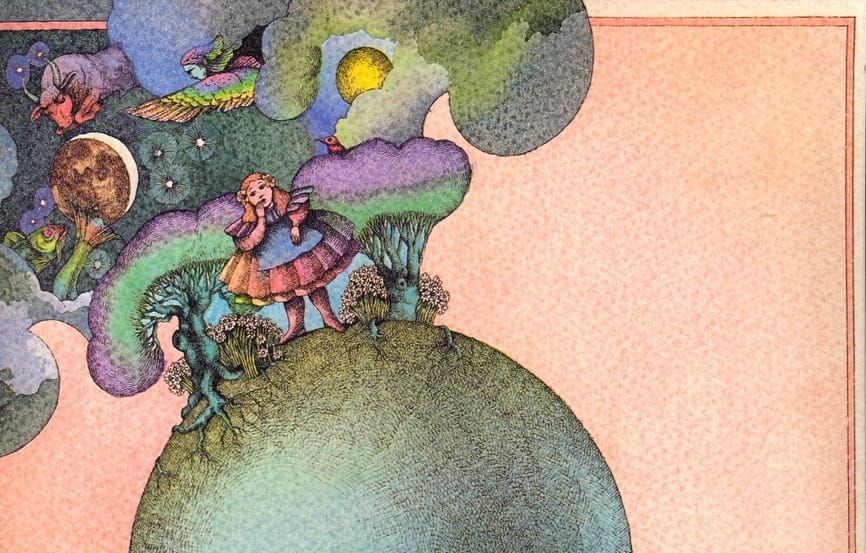
Alice in Wonderland: The 1865 Lewis Carroll story isn't just one of the most well-known kids books ever, it was a trippy inspiration for generations of hippies, stoners, and pop culture icons, to say nothing of Jefferson Airplane.
Science fiction loves swiping Alice in Wonderland iconography, from naming monsters "Bandersnatches" to telling people stuck in the Matrix that they're about to see how deep the rabbit hole goes. And that's when they're not doing an outright reimagining, dark sequel, or parody that uses the "-land" construction – Borderland, Slumberland, Grouchland, Leatherland, Mathmagic Land.
Today, we'll take a look at retro science fiction illustration that tackles Alice references. It's far from exhaustive, because Wonderland references could fill a book, so feel free to jump in the comments if you have another illustration to add.
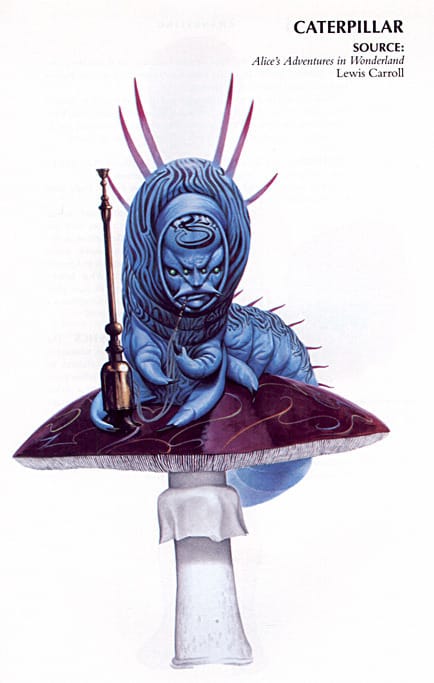
Barlowe's Guide to Fantasy, creature designer Wayne Barlowe's 1996 sidequel (with Neil Duskis) to his breakout 1979 success Barlowe's Guide to Extraterrestrials, portrays a wide range of famous fantasy entities. Here's the Caterpillar, looking regal.
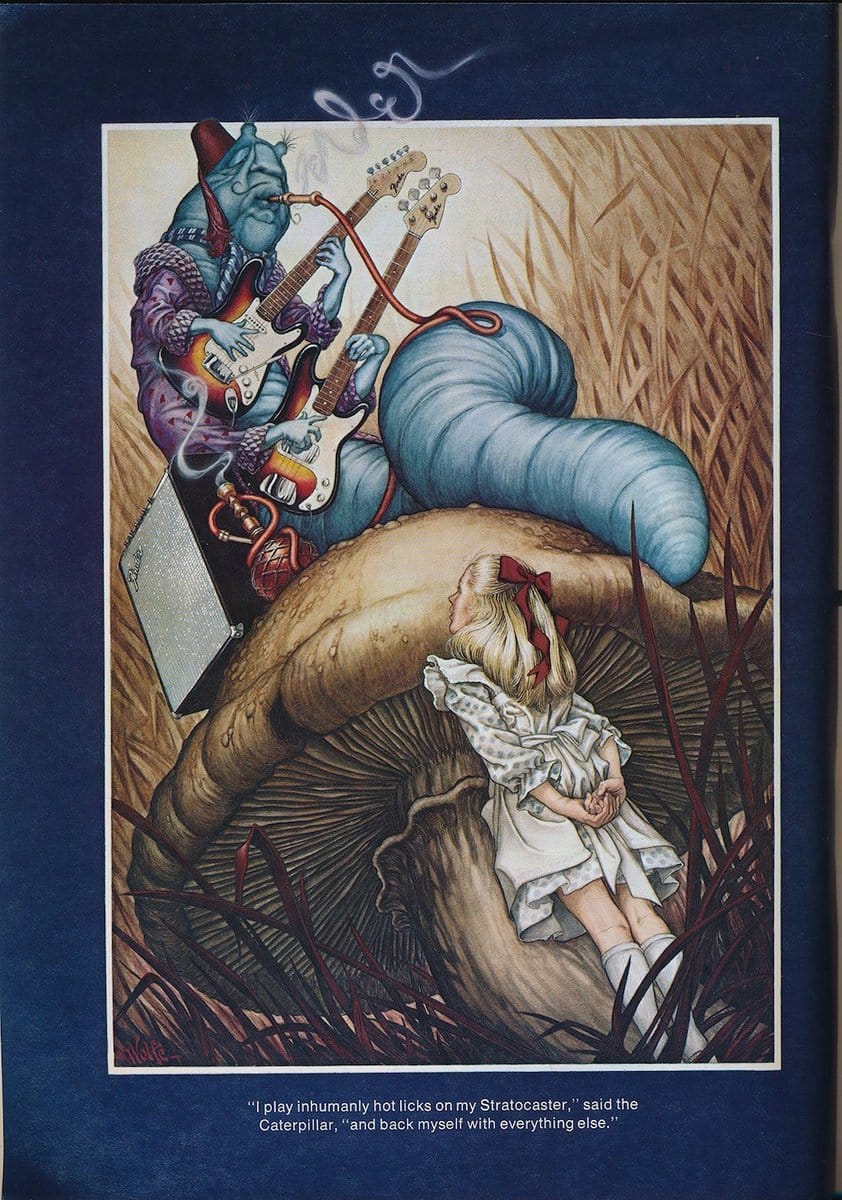
I already covered the entire fairytale-themed 1976 Fender guitar catalog, but I think my favorite illustration from it remains the one where Bruce Wolfe took on Alice in Wonderland.
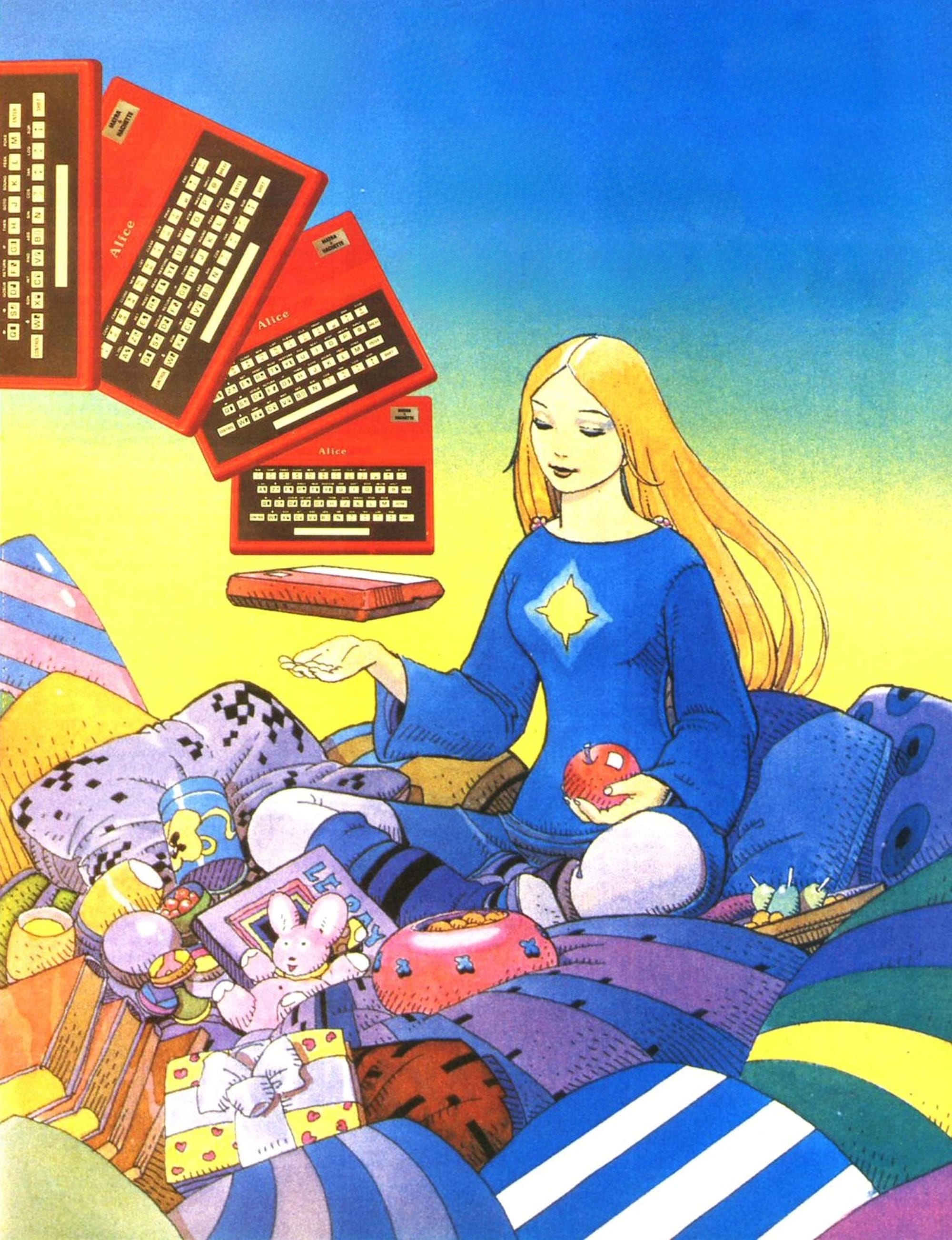
Moebius has a great illustration, done for the 1983 user guide to the Matra-Hachette "Alice" microcomputer. Not sure if this is supposed to be the same Alice from Wonderland fame, but it must be a reference, at the least.
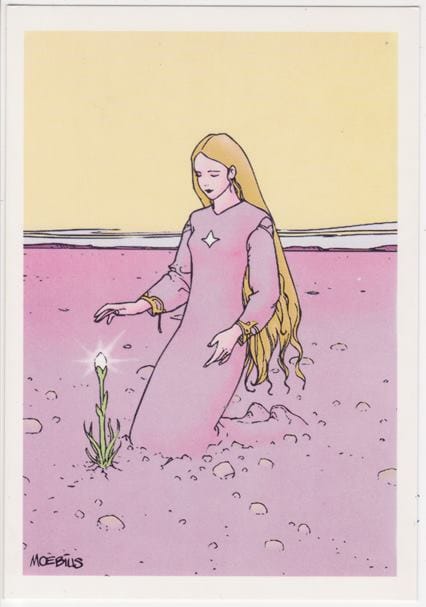
He featured the same woman for a 1993 postcard titled "Alice in the Desert," too.
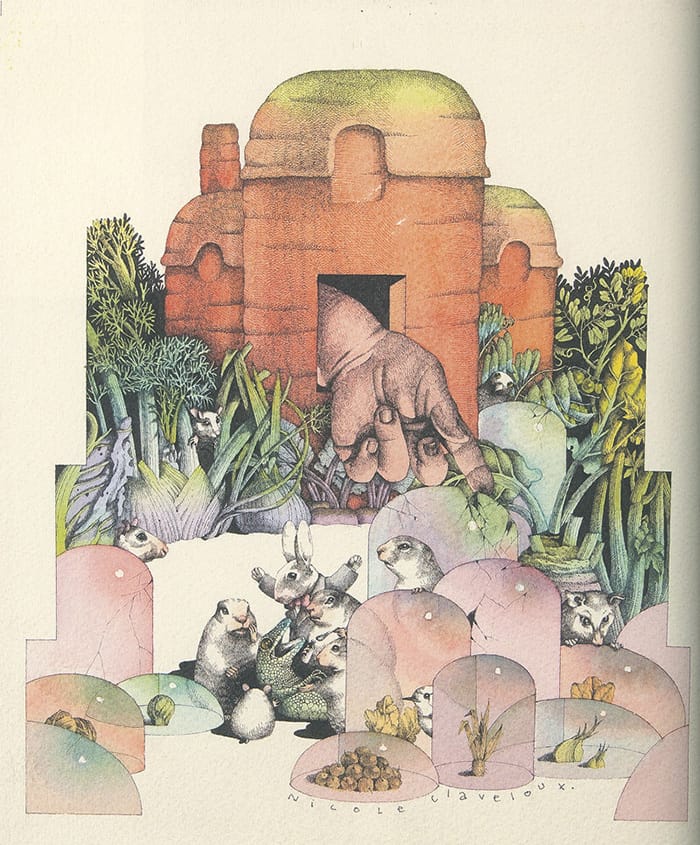
Nicole Claveloux's unsettling yet playful surreal style is a perfect fit for Wonderland, which she proved by illustrating a 1974 French edition.
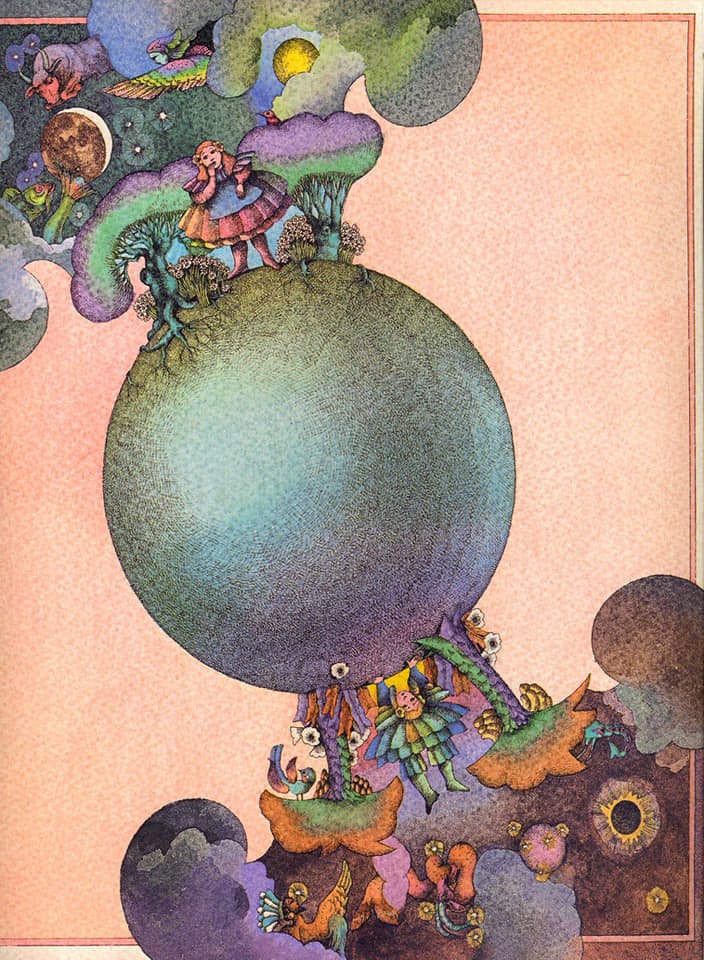
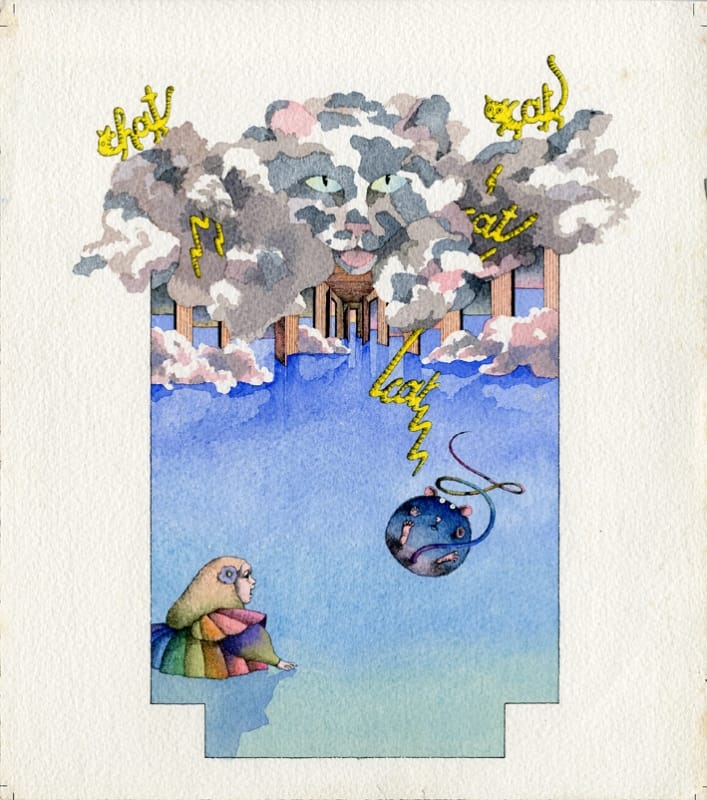
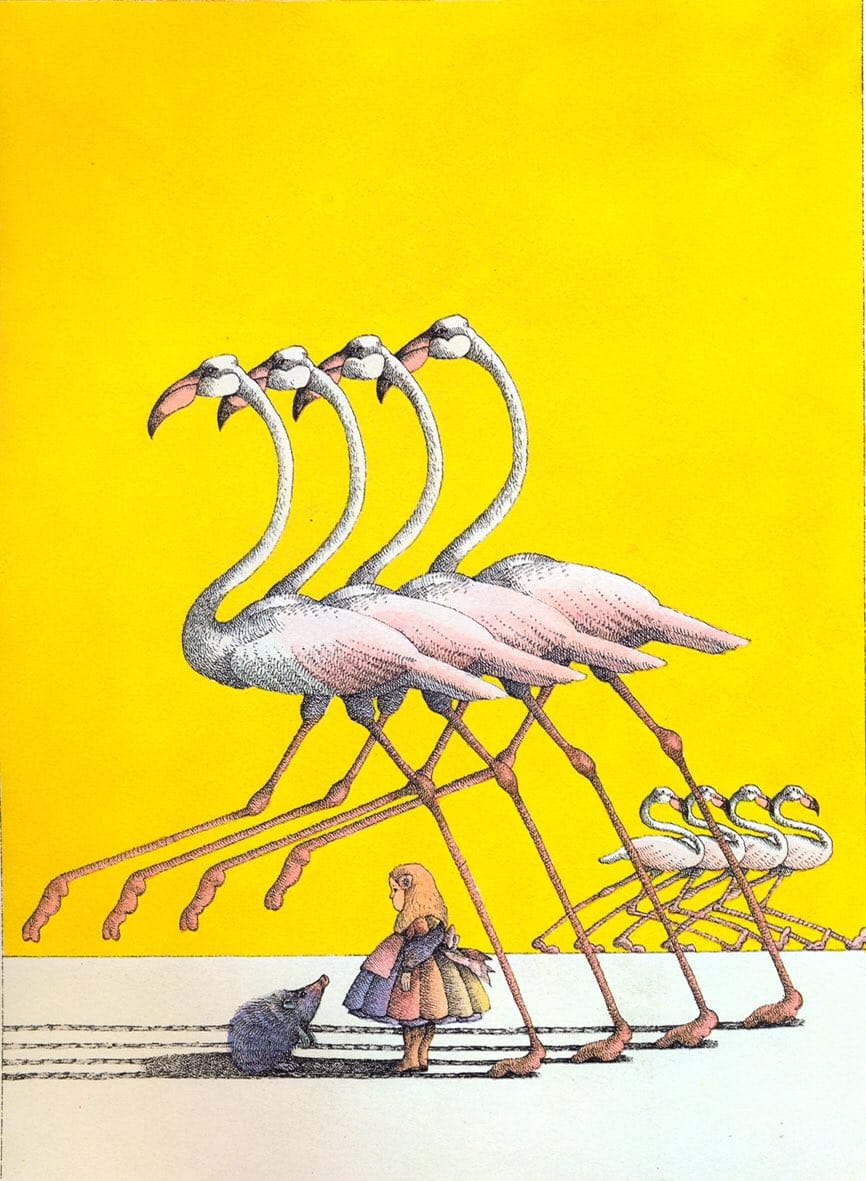
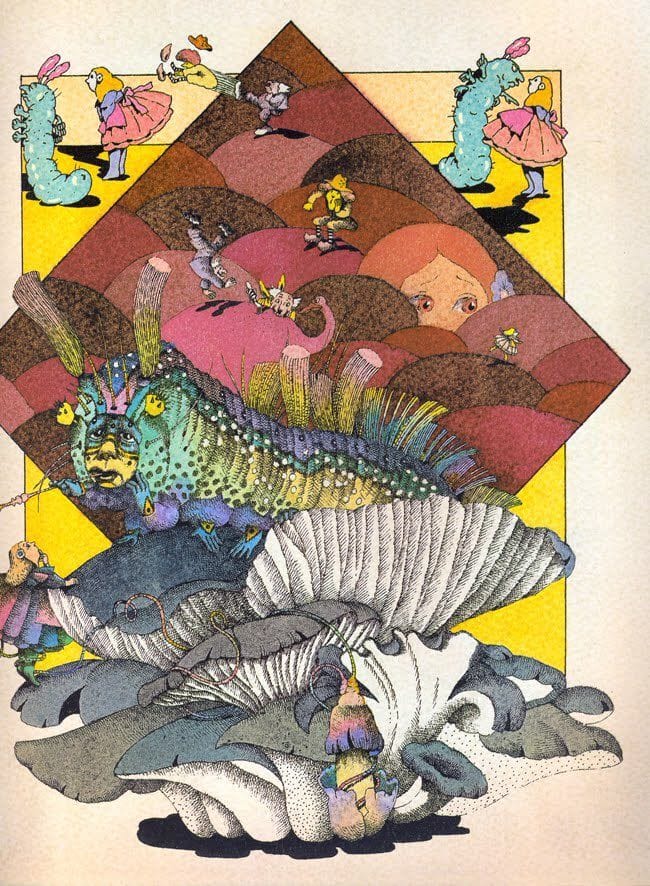
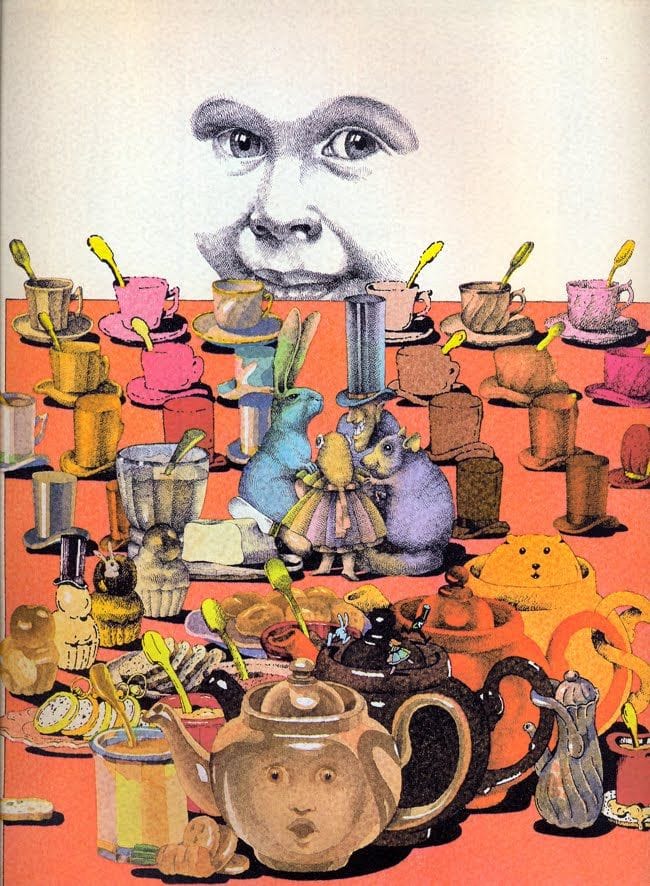
We'll get back to sci-fi after this, but I couldn't resist sharing Ralph Steadman's much more offputting illustrations from a 1967 edition.
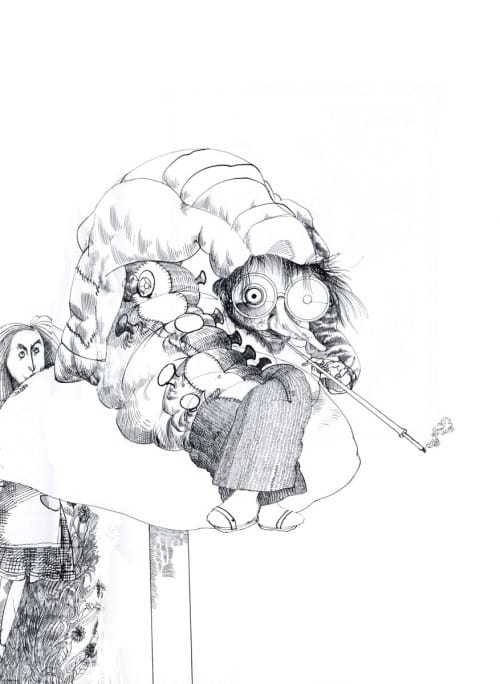
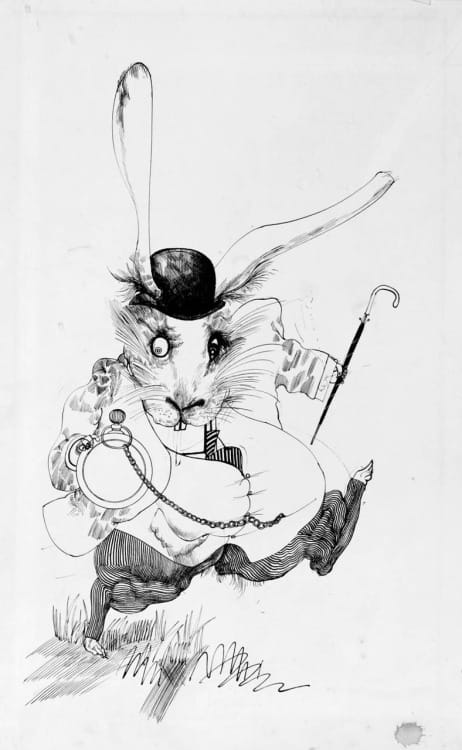
Swedish author Sam J. Lundwall's satirical 1971 novel Alice’s World (also translated as Alice! Alice!) is a big source for Alice references in 70s science fiction cover art.
Here's Josh Kirby's 1971 Alice’s World cover art. Like many Alice illustrators, Kirby takes a cue from the original 1865 John Tenniel wood-cut illustrations and gives Alice a blue and white dress. Technically, the dress wasn't blue until the 1911 color plates, but apparently Tenniel approved them at the time, three years before he passed away at age 93.
(As an aside, Tenniel was the chief cartoonist at Punch magazine, who Carroll himself asked to illustrate the first edition. Carroll also hand-picked Henry Holiday for The Hunting of the Snark.)
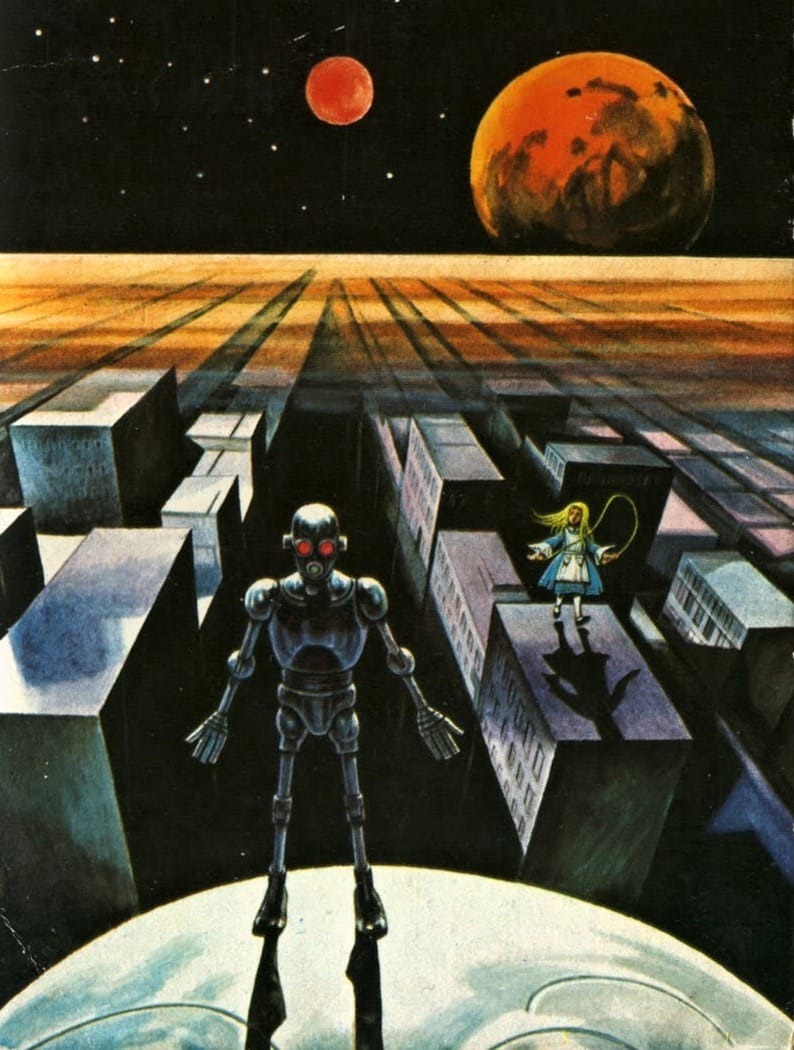
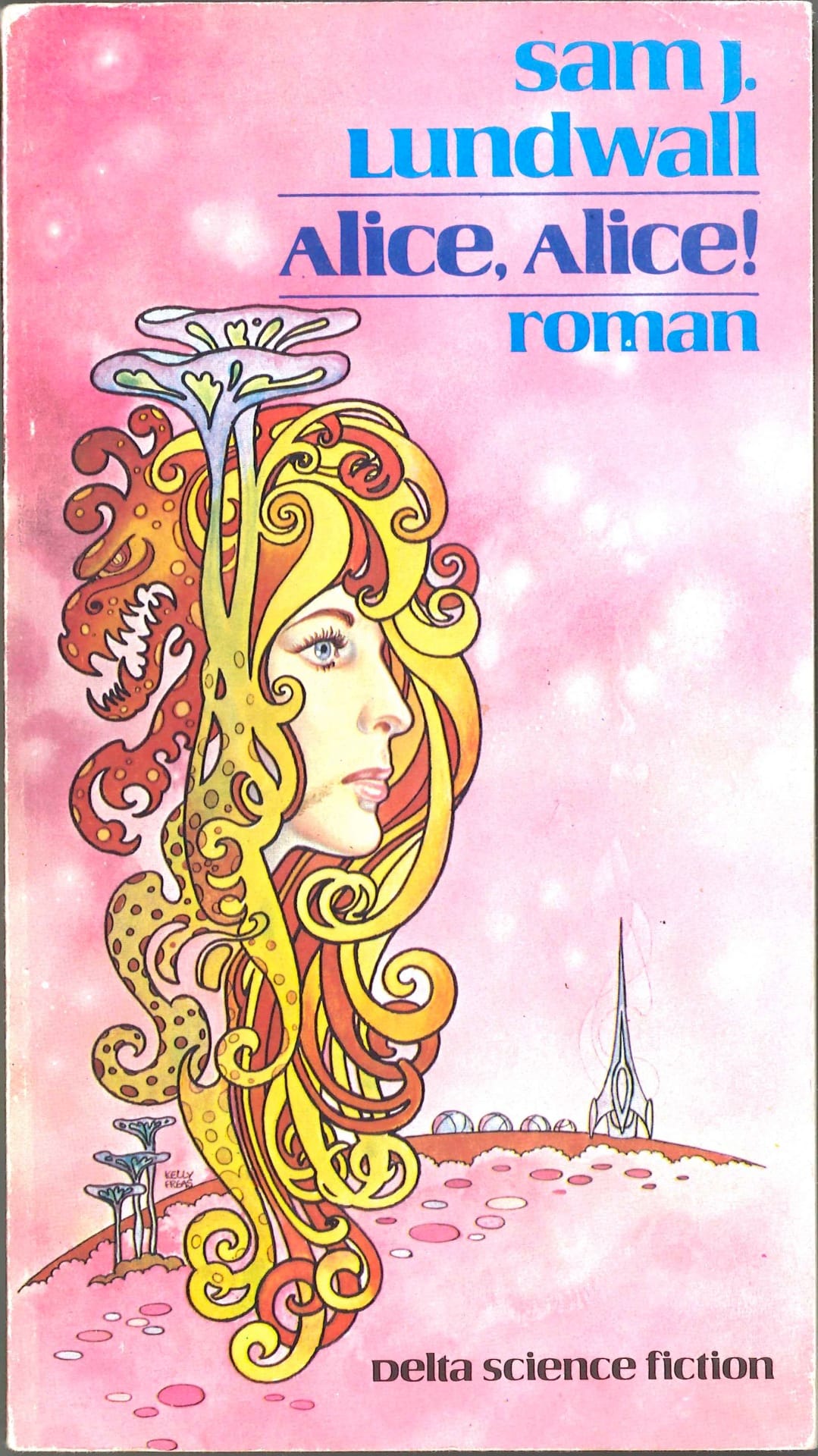
Lundwall's story follows a protagonist named Alice, who winds up on a far-future Earth where authoritarian forces can manipulate everyone's memories and perceptions, even creating fairy tale creatures.
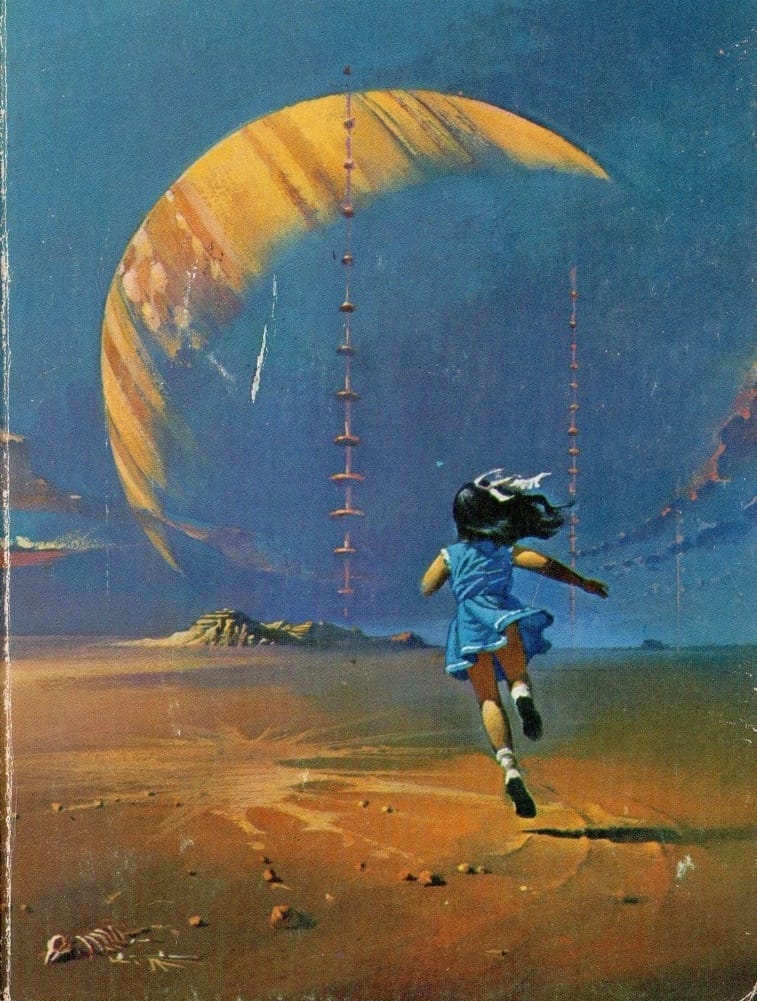
Here's a 1974 Frank Kelly Freas cover and a 1978 Bruce Pennington cover – although the Pennington was apparently first used as a 1971 cover to The Airs of Earth, by Brian W. Aldiss, despite featuring the requisite blue dress.
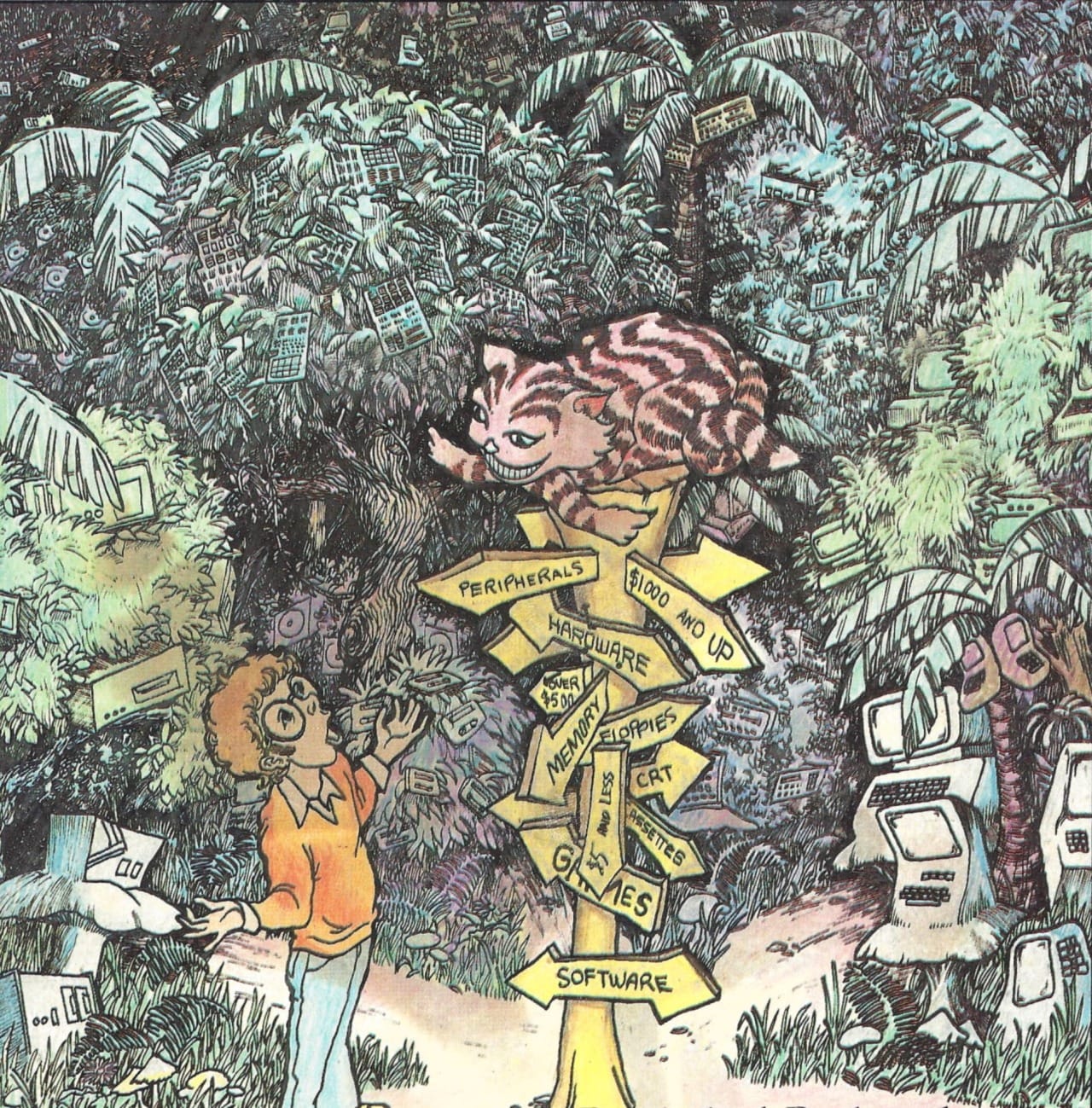
Nancy Lawrence's February 1978 cover to Personal Computing magazine borrows the Cheshire Cat to drive home how confusing personal computers can be to a first-time buyer. Alice has been replaced with what appears to be Arnold from the Magic School Bus.
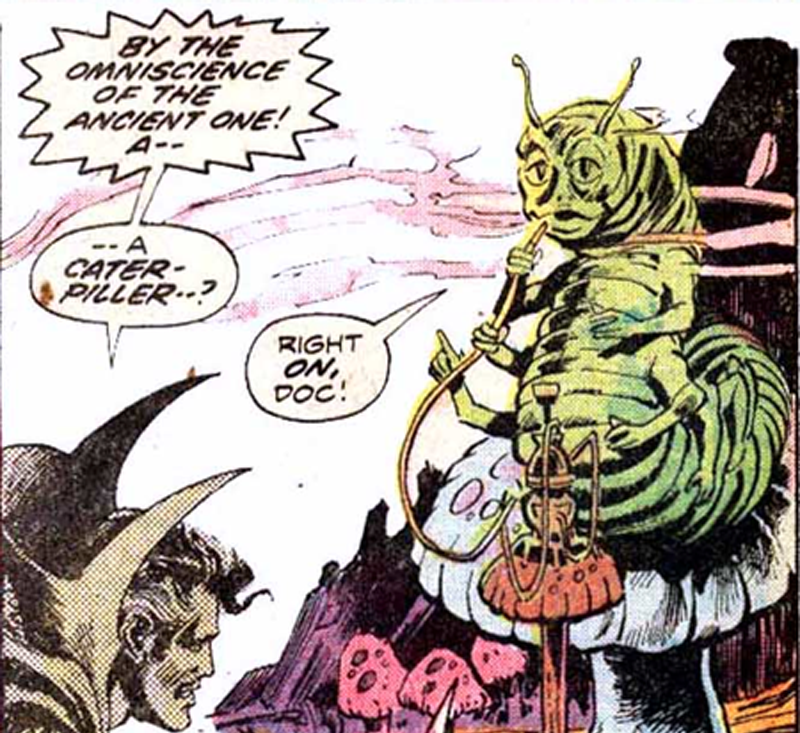
Steve Englehart and Frank Brunner’s Doctor Strange run included a 1974 story, The Silver Dagger, where he met this very familar caterpillar.
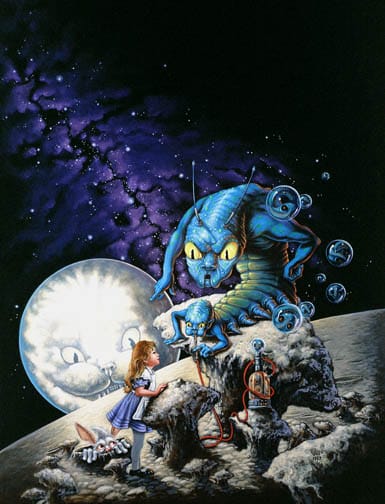
Jill Bauman's "Alice in Alienland" graced the cover to Amazing Stories magazine, Vol. LXVII, No. 5, in 1992.
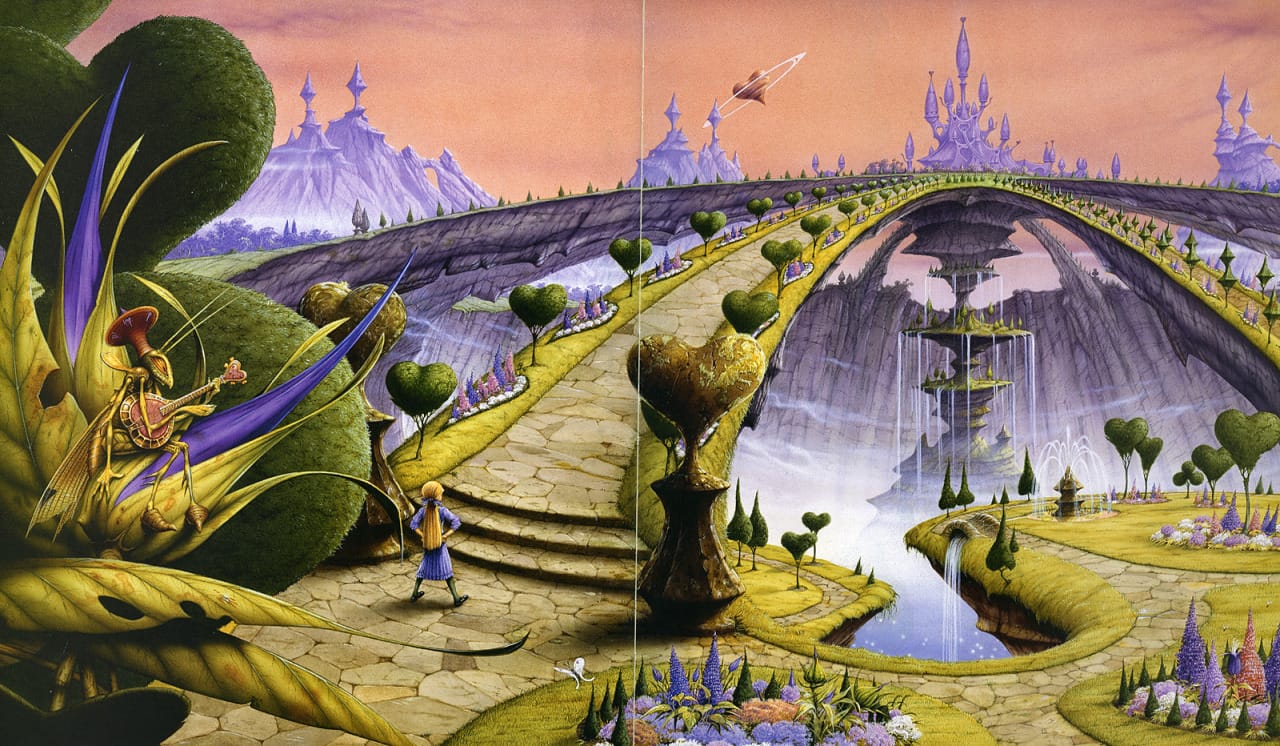
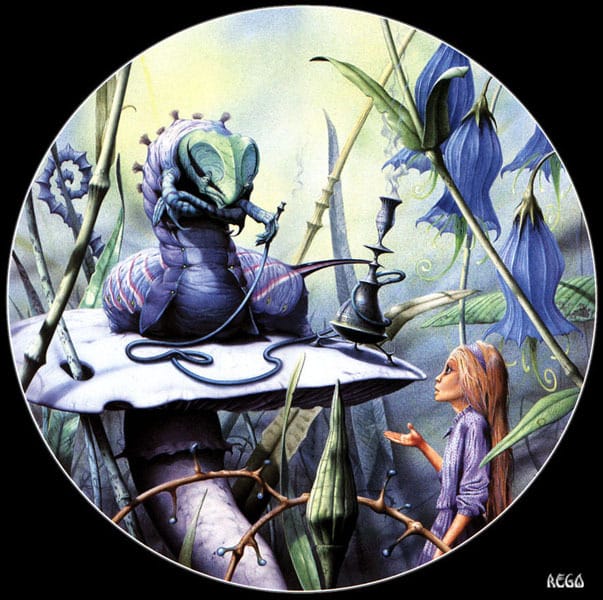
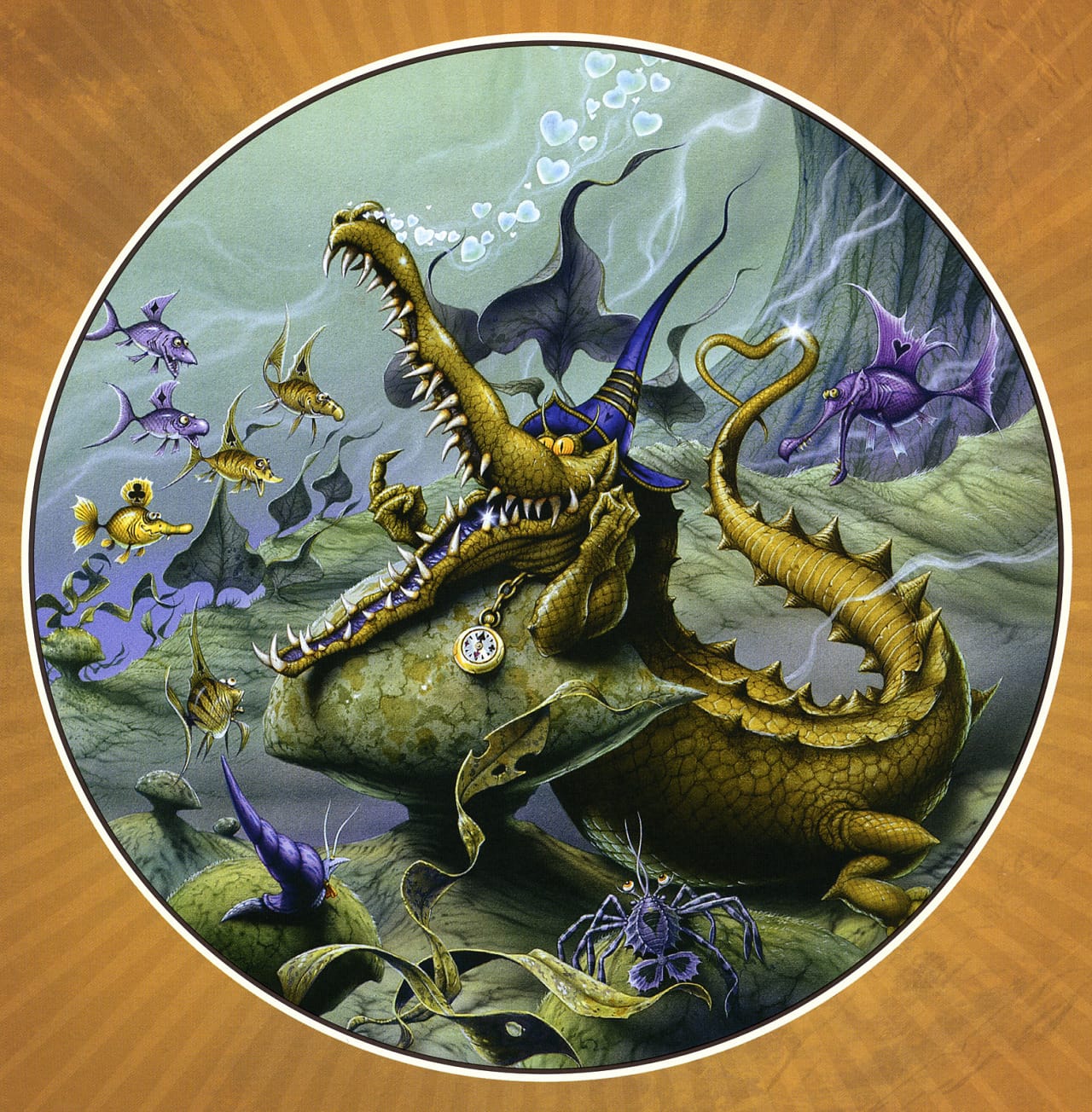
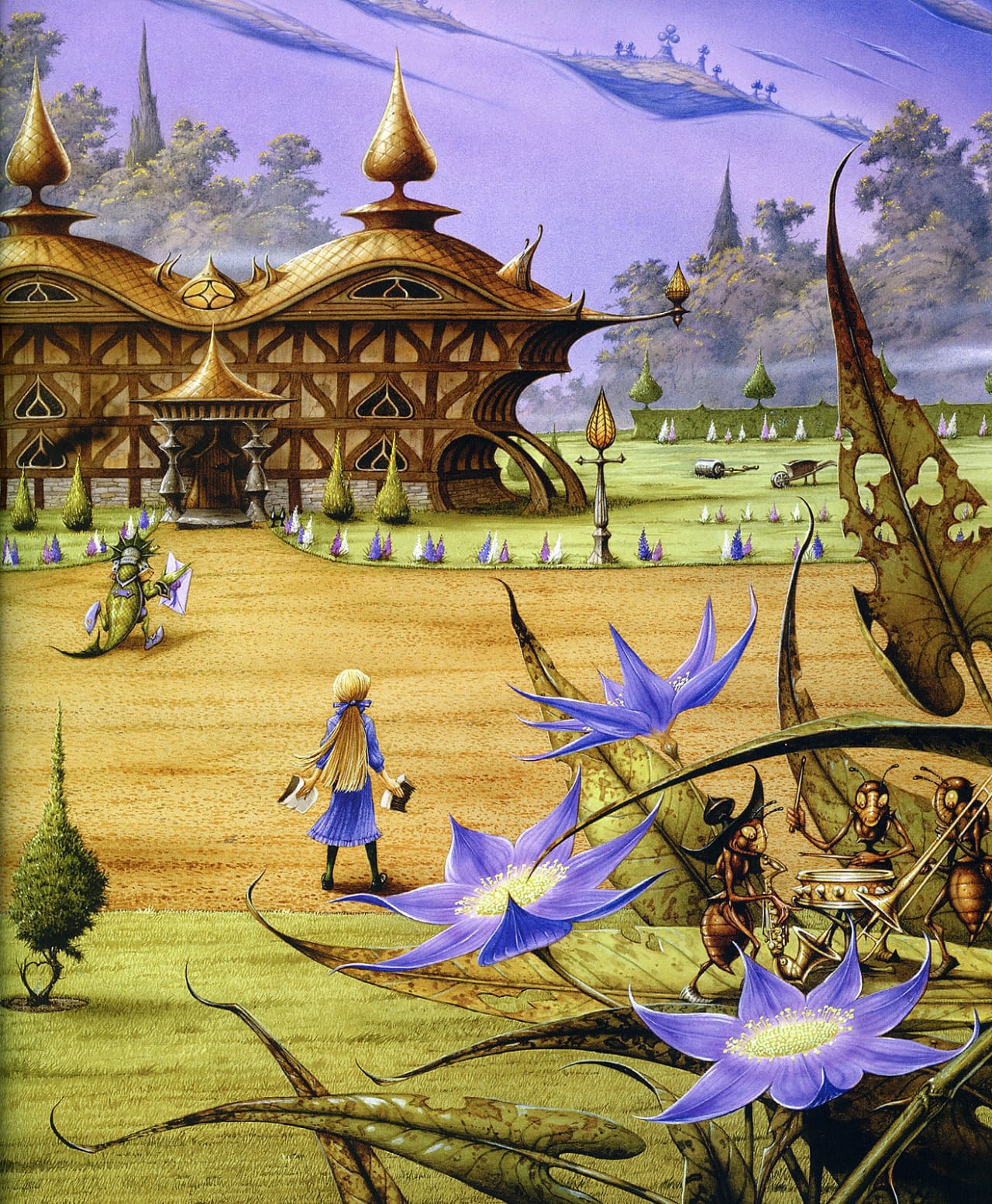
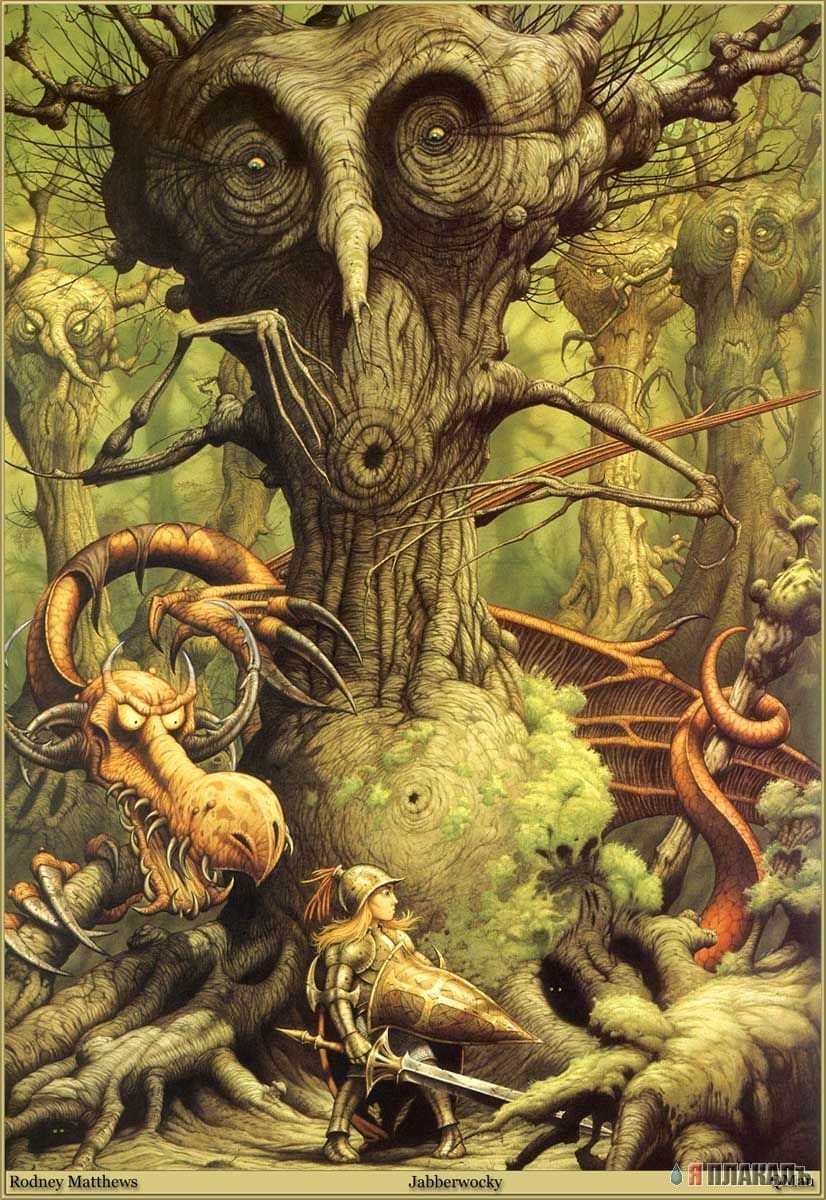
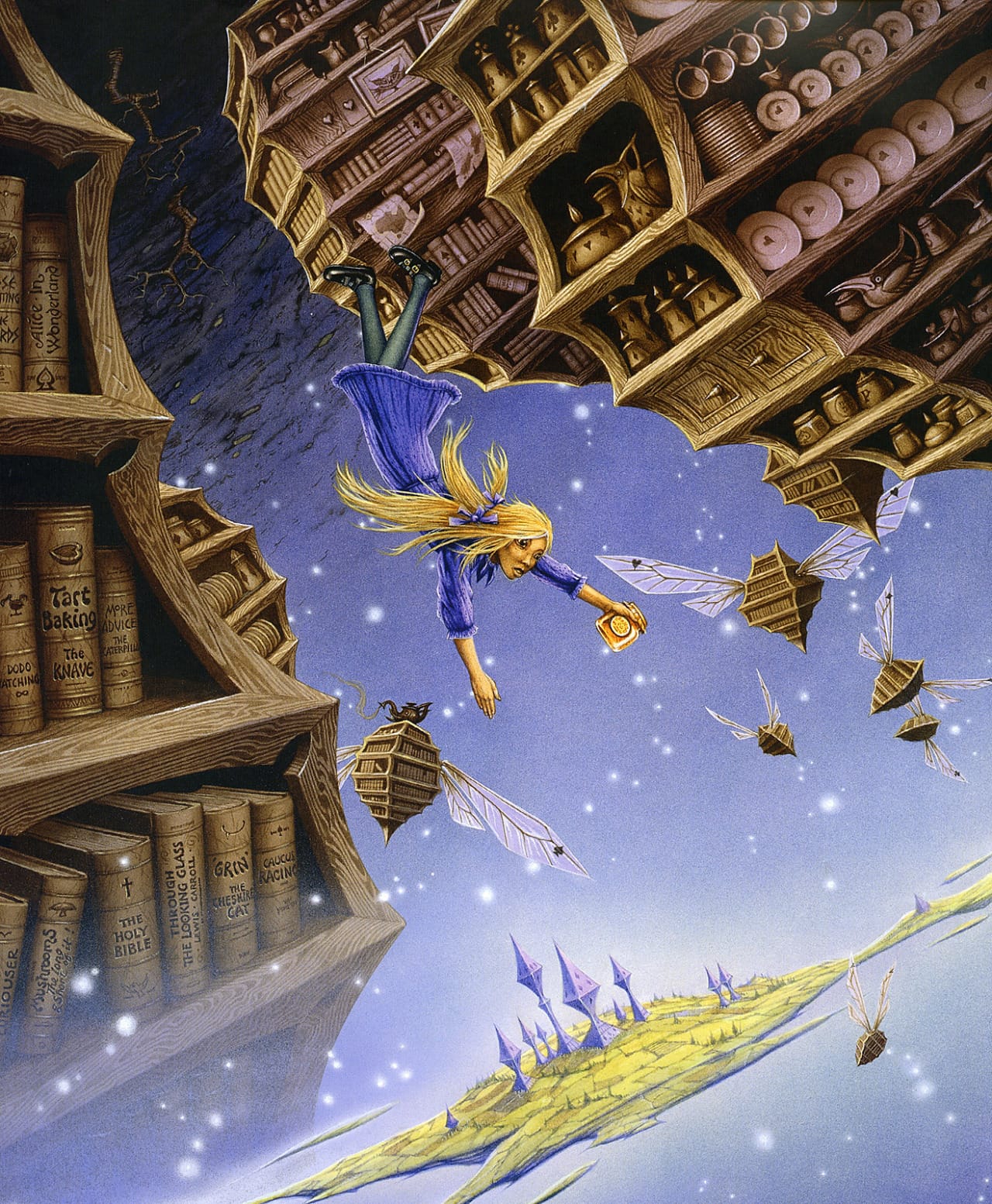
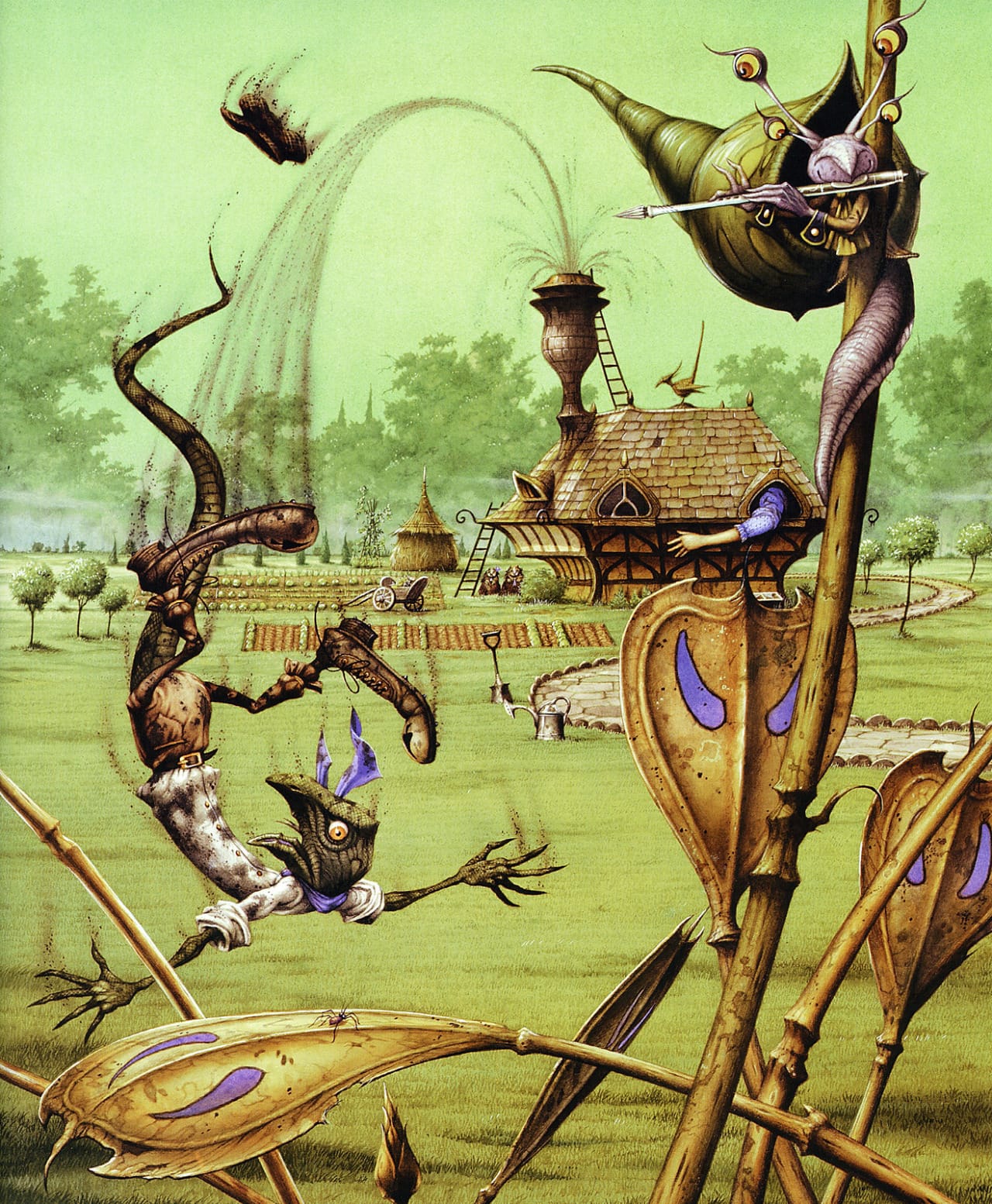
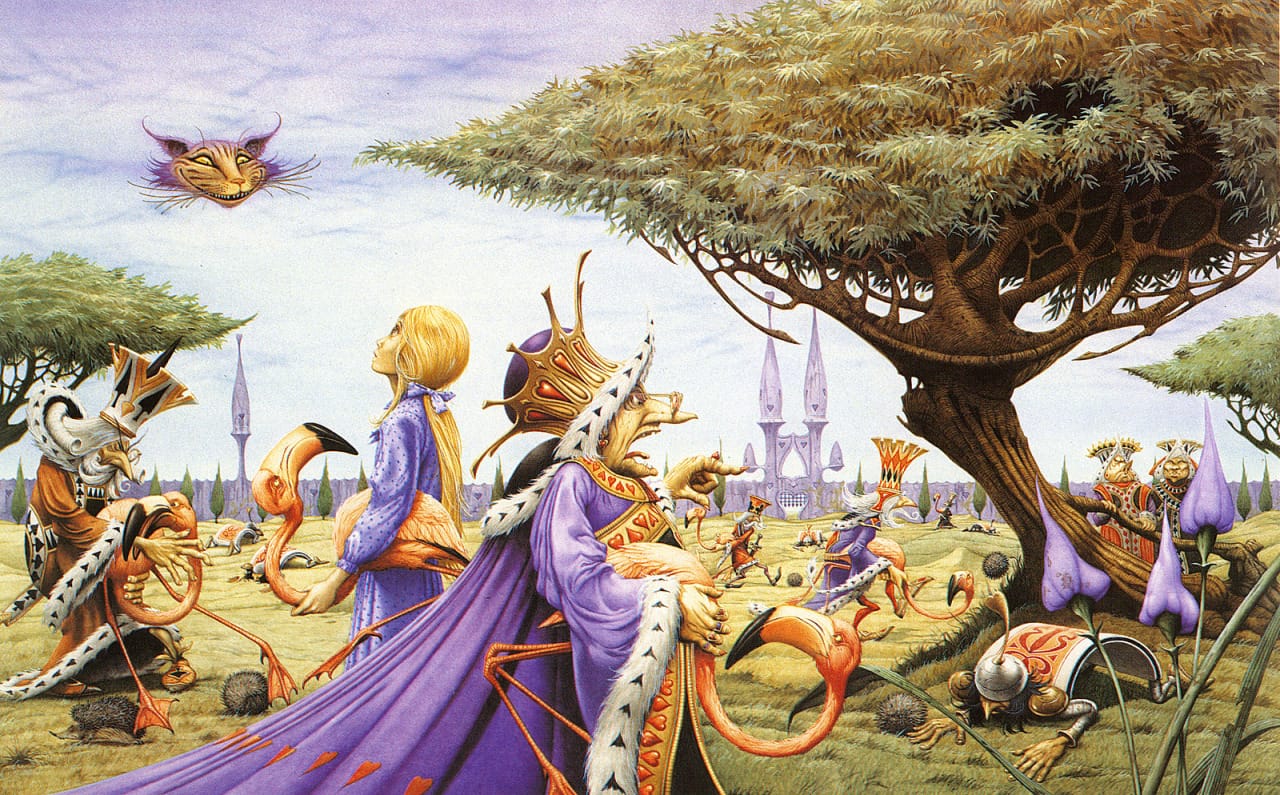
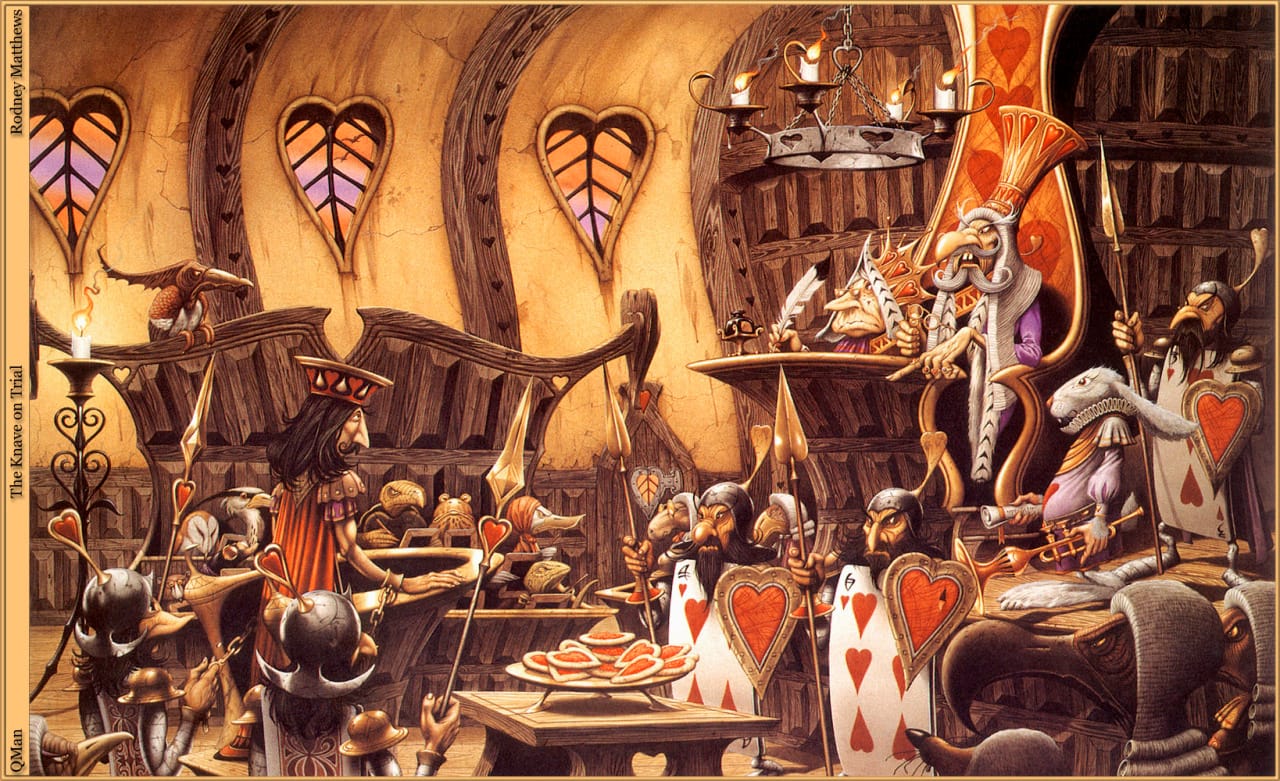
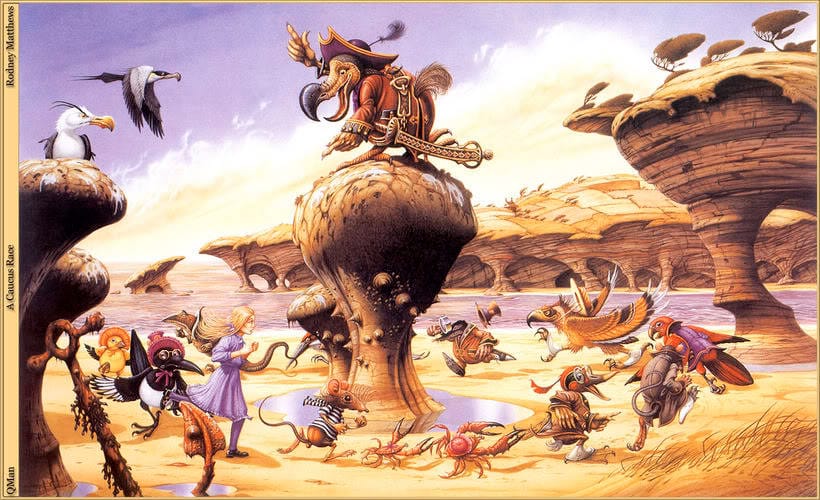
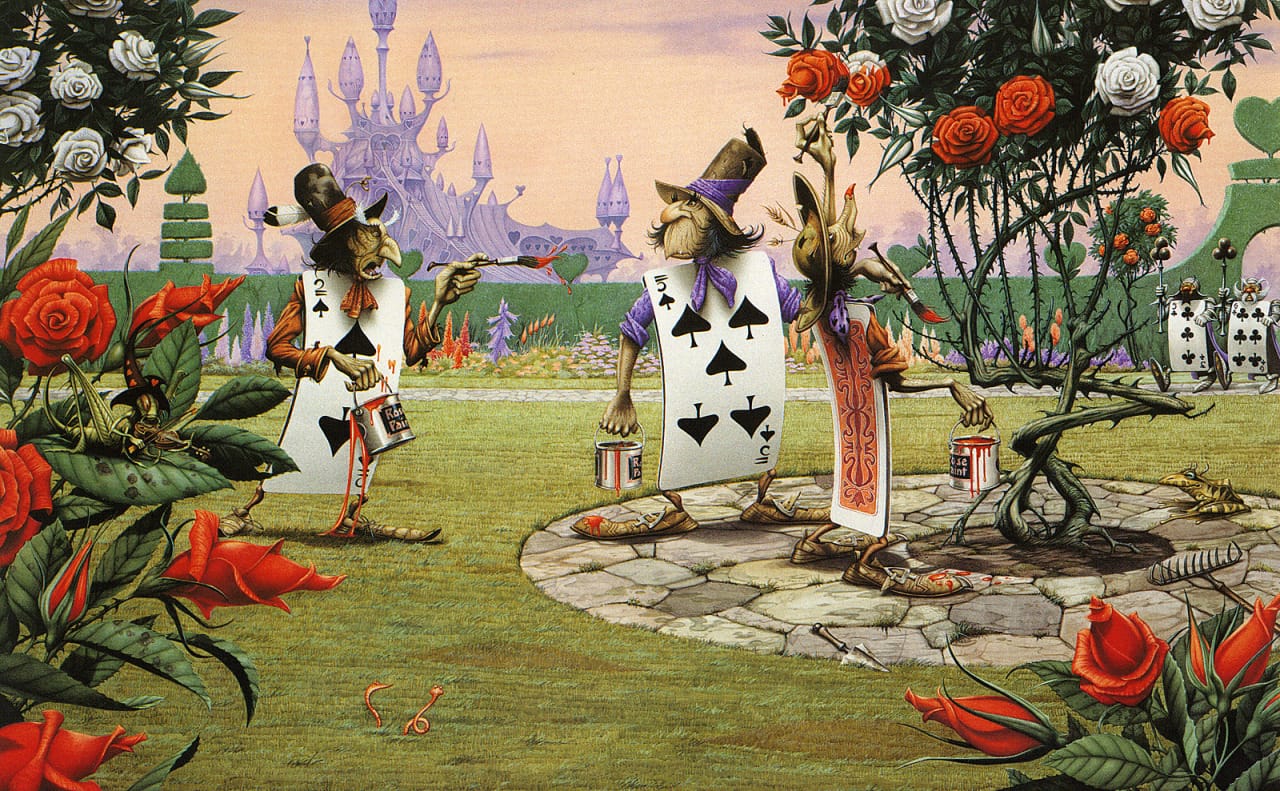
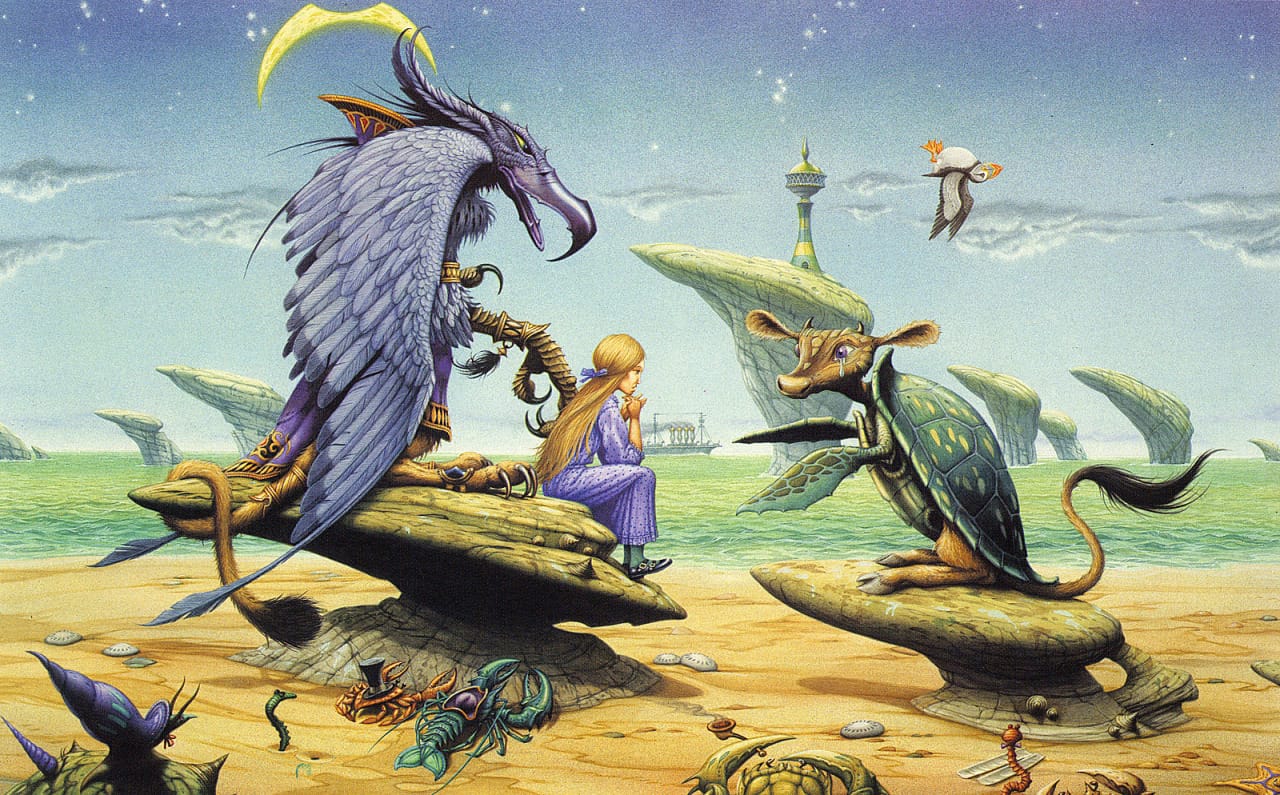
Finally, Rodney Matthews illustrated a 2009 edition of Alice in Wonderland, using his science-fantasy style to smuggle in a few vaguely sci-fi background elements, like the ringed planet in the first illustration here.
Cool Link:
Joseph Clement Coll: The Enemy of Cross Hatching - Illustration Art
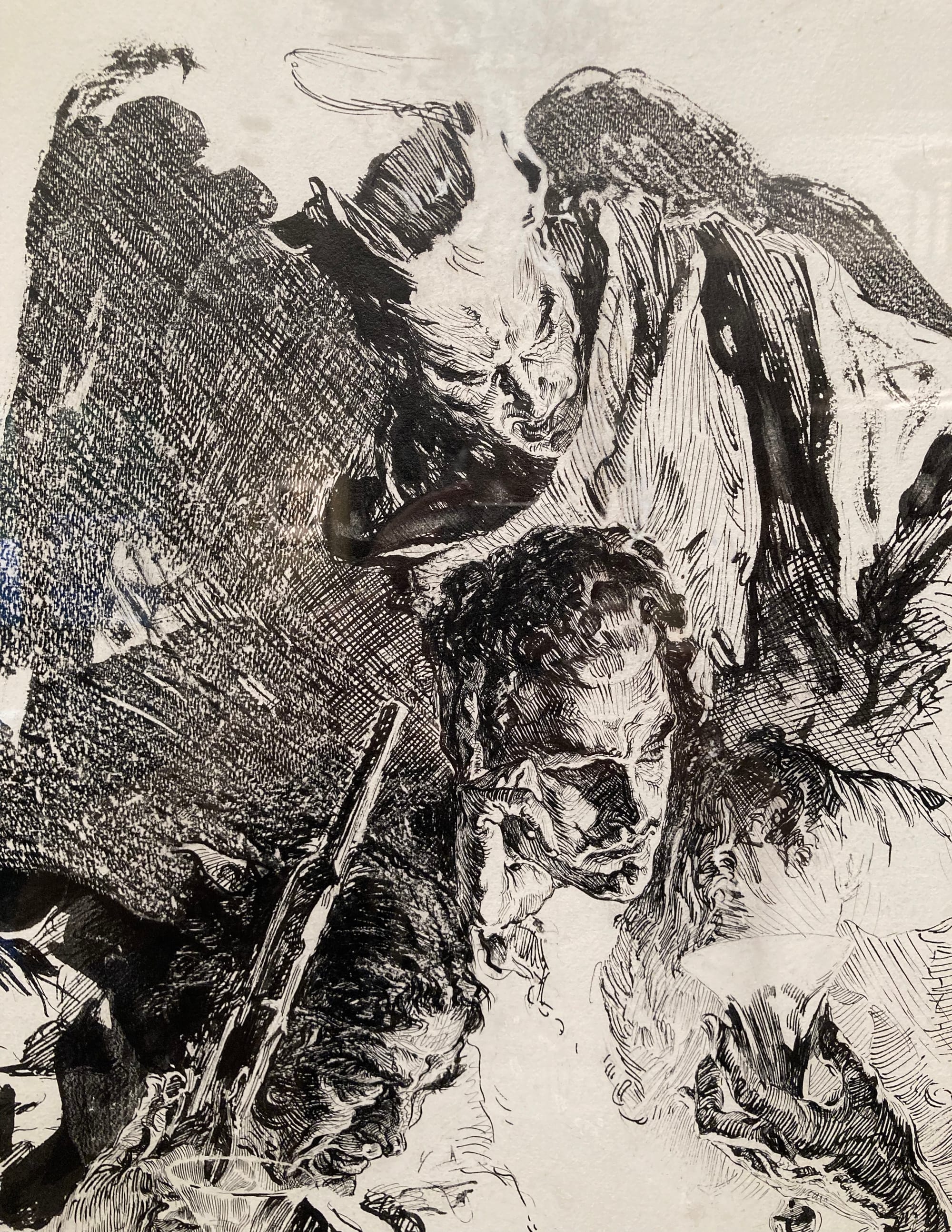
A celebration of artist Joseph Clement Coll, an incredible pen-and-ink artist. Check out the luminous back rim of the martini glass on the bottom left of this one – he created it by cutting out the ink on the paper with a knife.
Music rec: Here's a playlist of good LoFi mixes.
Next Time: Paying users get a first look at a bunch of resources I've been consulting while writing my next art collection. Give me $5/month and you, too, could learn how the first art exhibition in space led to Michael Böhme's artwork exploding in the Columbia shuttle disaster.